What Is the Tesla Charging Membership and Why It Matters Now
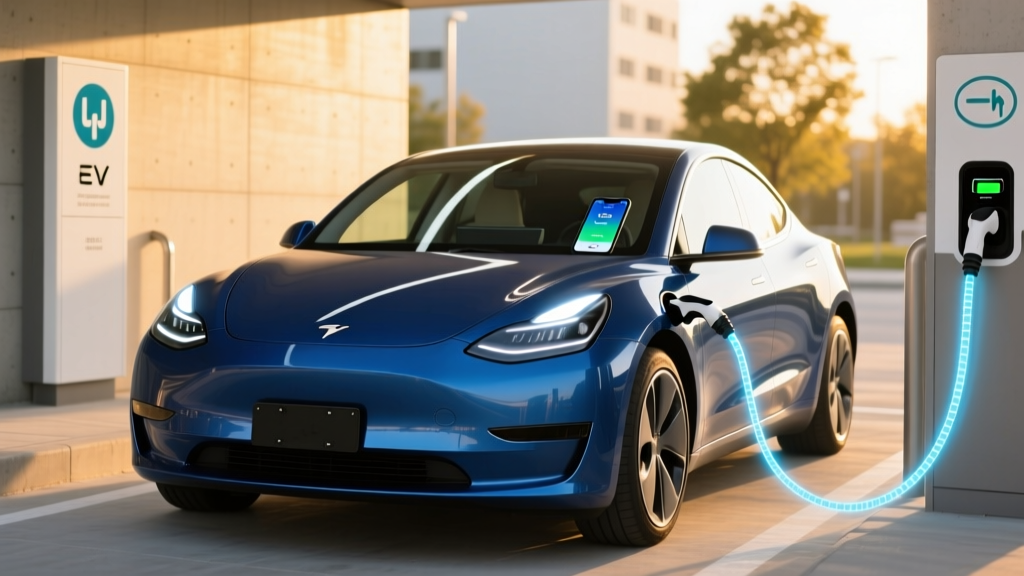
If you own a Tesla—or any EV with a NACS port in 2026—you've likely seen references to a "Tesla charging membership" while navigating the Supercharger network. The term isn't a formal subscription like Tesla's Full Self-Driving plan. Instead, it describes the pricing tier structure Tesla applies to its Supercharger network: members (typically Tesla vehicle owners logged into their Tesla account) receive lower per-kWh rates than non-members or guest users paying via credit card at the kiosk. Since Tesla opened its Supercharger network to non-Tesla EVs via the built-in NACS adapter or CCS-to-NACS adapter, this two-tier pricing has become a significant factor in total charging cost.
This guide breaks down exactly what you'll pay on the Supercharger network, how home Level 2 charging compares, what equipment and electrical work you'll need, and how per-mile charging costs stack up against gasoline in 2026.
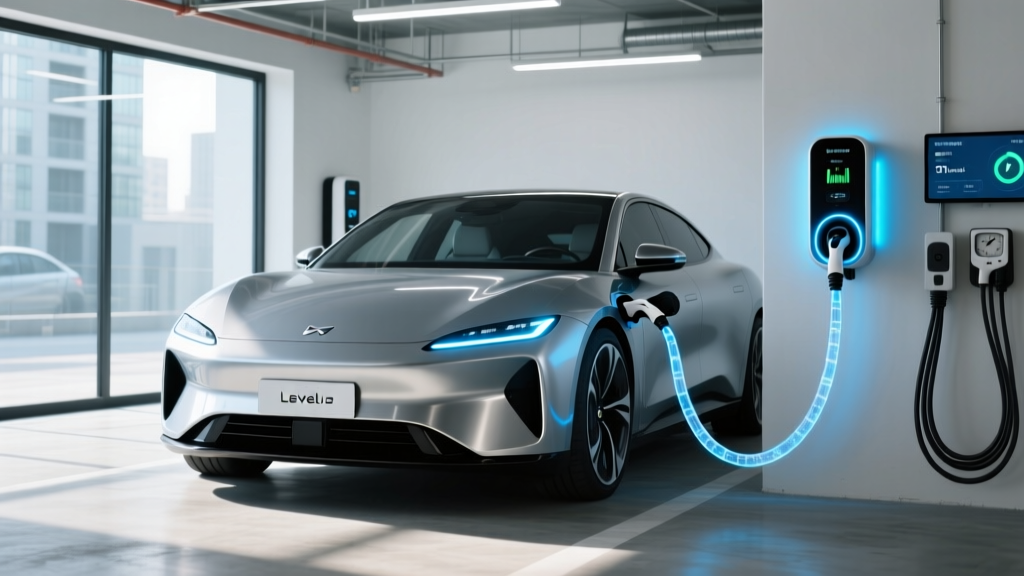
Charging Levels Explained: Speeds, kW, and Miles Per Hour
Before comparing costs, you need to understand the three charging tiers available to EV owners. Power is measured in kilowatts (kW)—the rate at which energy flows into your battery. Energy capacity is measured in kilowatt-hours (kWh)—the total amount your battery holds. Confusing the two is the most common EV literacy mistake. Think of kW as the speed of water from a hose, and kWh as the size of the bucket.
| Level | Voltage | Power (kW) | Miles of Range Added Per Hour | Typical Use Case |
|---|---|---|---|---|
| Level 1 | 120V AC | 1.0–1.4 kW | 3–5 mi/hr | Overnight trickle; PHEVs; emergencies |
| Level 2 | 240V AC | 7.2–19.2 kW | 22–60 mi/hr | Home daily charging; workplace; hotels |
| DC Fast Charging | 400–800V DC | 50–350 kW | 150–1,000+ mi/hr (peak) | Road trips; highway corridors; Superchargers |
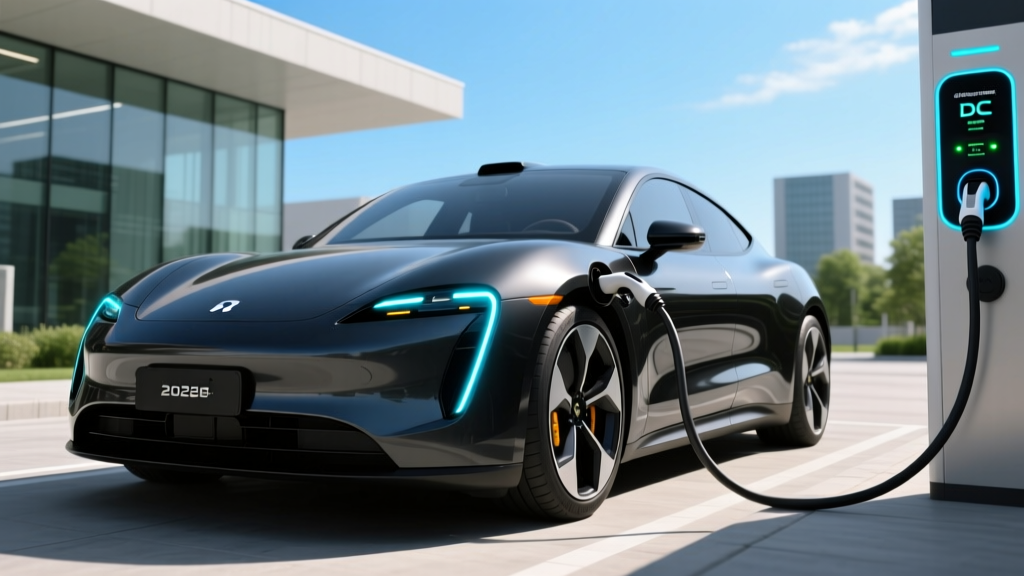
For a Tesla Model Y (75 kWh usable battery, ~310 miles EPA range), a Level 2 home charger at 11.5 kW adds roughly 44 miles of range per hour—enough to fully replenish overnight. On a V3 Supercharger peaking at 250 kW, the same Model Y can charge from 10–80% in approximately 25 minutes, though the charge curve tapers significantly above 80% to protect battery health. Sustained average power during a 10–80% session is typically 130–160 kW, not the peak 250 kW figure.
Tesla Supercharger Pricing: Membership vs. Non-Member Rates
Tesla's Supercharger pricing varies by station, time of day, and whether you're a Tesla account holder. In 2026, typical rates across the U.S. network fall into these ranges:
- Tesla member (logged-in Tesla vehicle or NACS-equipped EV with Tesla account): $0.25–$0.40/kWh depending on location and time-of-use
- Non-member / guest (non-Tesla EV without account, or pay-at-kiosk): $0.40–$0.65/kWh
- Idle fees: $0.50–$1.00/minute if your vehicle remains plugged in after reaching its charge limit at a busy station
The "membership" discount effectively saves Tesla owners and NACS-equipped drivers who create a Tesla account roughly $0.10–$0.25/kWh compared to guest pricing. For a driver who DC fast-charges 200 kWh per month on road trips, that's $20–$50/month in savings—meaningful but not transformative compared to the savings from home charging.
Home Level 2 Charger Installation: Costs, Electrical Requirements, and Upgrades
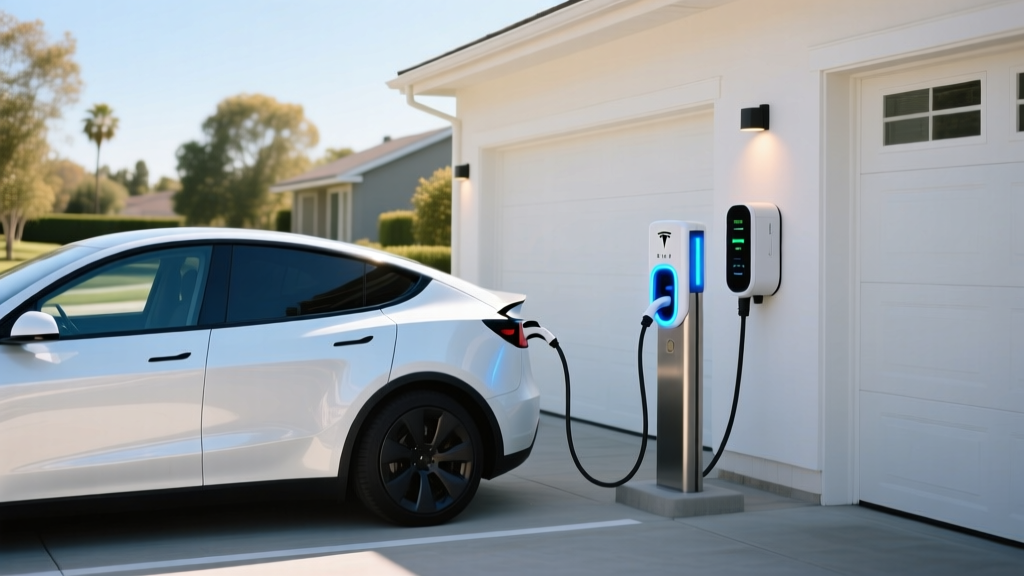
Installing a home Level 2 charger is the single highest-impact decision for EV ownership economics. Here's what's involved electrically and financially.
Electrical Requirements
Most Level 2 home chargers require a dedicated 240V circuit. The most common configurations:
- NEMA 14-50 outlet (50A circuit, 40A continuous): Supports up to 9.6 kW. This is the most popular setup and allows portable charger use.
- Hardwired 60A circuit (48A continuous): Supports up to 11.5 kW. Required for the Tesla Wall Connector at full output. Eliminates the outlet as a failure point.
- Hardwired 80A circuit (64A continuous): Supports up to 15.3–19.2 kW. Only useful if your EV's onboard charger can accept this rate—most Teslas max out at 11.5 kW AC, so this is overkill for Tesla owners but relevant for the Ford F-150 Lightning (with the 80A Charge Station Pro) or certain luxury EVs.
Panel Upgrade Considerations
Many homes built before 2000 have 100A or 150A main electrical panels. Adding a 50–60A dedicated EV circuit may push total calculated load beyond the panel's capacity, requiring a service upgrade to 200A. This is the single biggest cost variable in home charger installation.
| Component | Cost Range | Notes |
|---|---|---|
| Level 2 EVSE equipment | $200–$700 | Tesla Wall Connector ~$450; ChargePoint Home Flex ~$550; Emporia Level 2 ~$200 |
| Electrician labor (standard install, panel to garage <50 ft) | $500–$1,500 | Conduit, wiring, breaker, NEMA 14-50 or hardwire |
| Permit and inspection | $50–$300 | Varies by municipality; required for code compliance |
| Panel upgrade (if needed: 100A→200A) | $1,500–$4,000 | Major cost driver; older homes often need this |
| Total (no panel upgrade) | $750–$2,500 | Most homes with 200A service |
| Total (with panel upgrade) | $2,250–$6,500 | Older homes or high-load households |
Always hire a licensed electrician and pull a permit. Unpermitted EV charger installations can void home insurance claims and create fire risk from undersized wiring or improper connections. The National Electrical Code (NEC) requires a dedicated circuit for EVSE and, in many jurisdictions, GFCI protection for outdoor installations.
Connector Compatibility: NACS, CCS1, CHAdeMO, and Adapters
The connector landscape has shifted dramatically. Tesla's North American Charging Standard (NACS) has become the dominant connector in North America for 2025–2026 model-year vehicles, with Ford, GM, Rivian, Volvo, Hyundai, and others adopting it natively. CCS1 (the previous standard for non-Tesla EVs) is still found on older models and at many Electrify America and third-party stations. CHAdeMO is effectively legacy, found only on the Nissan LEAF and older Japanese-market EVs.
| Connector | Primary Brands (2026 Models) | Home Charging | DC Fast Charging Network |
|---|---|---|---|
| NACS (Tesla) | Tesla, Ford, GM, Rivian, Hyundai, Kia, Volvo, Polestar | Tesla Wall Connector, NACS-equipped ChargePoint/Emporia | Tesla Supercharger, Electrify America (select), EVgo (select) |
| CCS1 | Older VW ID.4, BMW i4, some Stellantis models | CCS-equipped home chargers | Electrify America, EVgo, ChargePoint DC |
| CHAdeMO | Nissan LEAF (legacy only) | Rare for home | Declining availability |
Adapter needs: If you drive a CCS1-equipped EV and want to access Tesla Superchargers, you'll need a CCS-to-NACS adapter. Tesla sells an official adapter for approximately $250. Conversely, Tesla owners charging at CCS-only public stations need a NACS-to-CCS adapter—less common but available from third-party manufacturers. For home Level 2 charging, all EVs use the J1772 standard (or NACS for Teslas), and adapters between the two are inexpensive (~$30–$60) and widely available.
Cost Per Mile: Home Charging vs. Supercharger vs. Gasoline
This is where EV ownership economics become concrete. Below is a comparison based on 2026 average energy prices and a midsize crossover baseline.
| Scenario | Energy Cost | Cost Per Mile (3.5 mi/kWh EV) | Annual Cost (12,000 mi) |
|---|---|---|---|
| Home charging (national avg. off-peak) | $0.13/kWh | $0.037 | $444 |
| Home charging (CA/MA/NY high-rate) | $0.25/kWh | $0.071 | $852 |
| Tesla Supercharger (member rate avg.) | $0.35/kWh | $0.10 | $1,200 |
| Tesla Supercharger (non-member avg.) | $0.55/kWh | $0.157 | $1,884 |
| Public DC fast (Electrify America avg.) | $0.48/kWh | $0.137 | $1,644 |
| Gasoline (28 MPG avg. SUV, $3.40/gal) | $3.40/gallon | $0.121 | $1,452 |
The takeaway is clear: home charging at off-peak rates is dramatically cheaper than any public option and roughly 70% cheaper per mile than gasoline. Even Tesla member Supercharger rates are competitive with gas on a per-mile basis for efficient vehicles. Non-member Supercharger rates, however, can exceed gasoline costs—making the "charging membership" (i.e., simply owning a Tesla or creating a Tesla account with your NACS-equipped EV) a meaningful financial decision.
Recommended Home Charging Equipment for 2026
Below are three proven Level 2 home chargers that cover most EV owners' needs. All support NACS or are NACS-compatible as of 2026.
Tesla Wall Connector (Gen 4)
- Power output: Up to 11.5 kW (48A on a 60A hardwired circuit)
- Connector: NACS native; includes J1772 adapter in box
- Cable length: 24 ft
- Smart features: Wi-Fi, OTA updates, power-sharing with second Wall Connector, Tesla app integration, load management
- Price: ~$450
- Best for: Tesla owners and NACS-native EVs; cleanest integration with Tesla ecosystem
ChargePoint Home Flex
- Power output: Up to 12 kW (50A, configurable via dip switches for 16A–50A)
- Connector: Available in NACS or J1772; NACS version shipping for 2025+ models
- Cable length: 23 ft
- Smart features: Wi-Fi, ChargePoint app scheduling, Alexa integration, energy reports, flexible amperage to match panel capacity
- Price: ~$550
- Best for: Multi-EV households (NACS and CCS vehicles); flexible amperage for older panels
Emporia Vue Level 2 EV Charger
- Power output: Up to 11.5 kW (48A)
- Connector: J1772 (NACS adapter included or sold separately depending on SKU)
- Cable length: 24 ft
- Smart features: Wi-Fi, Emporia app, integration with Emporia home energy monitor for solar-aware charging, scheduled charging, load management
- Price: ~$200–$250
- Best for: Budget-conscious buyers; solar-panel owners who want energy-aware scheduling
Charging Time Examples: 10–80% for Common Battery Sizes
Charging speed isn't linear. Lithium-ion batteries accept charge fastest between roughly 10–50% state of charge (SoC), then taper to protect cell health. Below are estimated 10–80% times for common configurations.
- Tesla Model 3 Long Range (82 kWh, NMC): 10–80% on V3 Supercharger (250 kW peak) in ~25 minutes; on 11.5 kW home Level 2 in ~5 hours
- Tesla Model Y Long Range (75 kWh, NMC): 10–80% on V3 Supercharger in ~24 minutes; on 11.5 kW home Level 2 in ~4.5 hours
- Ford F-150 Lightning Extended Range (131 kWh, NMC): 10–80% on 150 kW DC fast charger in ~55 minutes; on 9.6 kW home Level 2 in ~9.5 hours
- Hyundai Ioniq 5 (77.4 kWh, NMC, 800V architecture): 10–80% on 350 kW charger in ~18 minutes; on 10.9 kW home Level 2 in ~5 hours
Safety, Code, and Permit Considerations
EV charger installation isn't a DIY project. Key safety and code requirements include:
- Dedicated circuit: NEC Article 625 requires EVSE to be on its own dedicated breaker—no sharing with other appliances.
- GFCI protection: Required for outdoor receptacles in most jurisdictions (2023 NEC update expanded this requirement). Hardwired installations may not require GFCI at the breaker, but local codes vary.
- Outdoor rating: If your charger is mounted outdoors, the EVSE must carry a NEMA 4 or IP55+ weather rating. All three chargers recommended above meet this standard.
- Wire gauge: A 50A circuit requires 6 AWG copper wire; a 60A circuit requires 4 AWG. Undersized wire is a fire hazard and will fail inspection.
- Permit and inspection: Most municipalities require an electrical permit for EVSE installation. The inspection verifies wire gauge, breaker sizing, grounding, and GFCI compliance. Skipping the permit risks insurance denial in the event of an electrical fire.
Frequently Asked Questions
How much does it cost to install a home EV charger?
A standard Level 2 home charger installation with a NEMA 14-50 outlet or hardwired connection typically costs $750–$2,500 including equipment, electrician labor, and permit—if your electrical panel has sufficient capacity. If a panel upgrade from 100A to 200A is needed, total cost rises to $2,250–$6,500. Get at least three quotes from licensed electricians, and confirm they have specific EVSE installation experience.
How fast will each charging level add range?
Level 1 (120V) adds 3–5 miles per hour—suitable only for plug-in hybrids or emergency use. Level 2 (240V) at 11.5 kW adds roughly 40–45 miles per hour for a midsize EV like the Tesla Model Y. DC fast charging at 150–250 kW adds 150–500+ miles per hour at peak, but charge-curve taper means real-world 10–80% sessions take 18–30 minutes for most vehicles.
Which connector or charger is compatible with my EV?
For 2026 model-year vehicles, check whether your EV has a NACS port (Tesla, Ford, GM, Rivian, most Hyundai/Kia/Volvo models) or a CCS1 port (older VW, BMW, Stellantis models). For home charging, match your charger's connector to your vehicle's port—or use a J1772-to-NACS adapter (~$40). For public DC fast charging, Tesla Superchargers accept NACS natively; Electrify America stations offer both CCS1 and NACS at many locations.
How much does charging cost per mile compared to gas?
Home charging at the national average electricity rate of $0.13/kWh costs approximately $0.037 per mile for an efficient EV—roughly 70% less than a 28 MPG gasoline SUV at $3.40/gallon ($0.121/mile). Even Tesla Supercharger member rates (~$0.35/kWh) work out to about $0.10/mile, still cheaper than gas. Non-member Supercharger rates ($0.55/kWh, or ~$0.157/mile) can exceed gasoline costs, making the Tesla charging membership pricing tier financially significant for frequent road-trippers.
What electrical upgrades might I need?
The most common upgrade is a panel capacity increase from 100A to 200A, which costs $1,500–$4,000 depending on your utility and local labor rates. Your electrician will perform a load calculation (NEC Article 220) to determine if your existing panel can handle the additional 40–60A EV circuit alongside your current household loads (HVAC, electric oven, dryer, water heater). If you have solar panels or a home battery, your installer may also recommend a smart panel or load-management device to prioritize EV charging during off-peak or solar-production hours.
Is the Tesla charging membership a paid subscription?
No. The "Tesla charging membership" is not a separate subscription you purchase. It refers to the lower per-kWh pricing tier automatically applied when you charge at a Tesla Supercharger using a Tesla vehicle logged into its Tesla account, or a non-Tesla NACS-equipped EV linked to a Tesla account through the Tesla app. Non-members—typically guest users paying by credit card at the kiosk without an account—pay a premium of $0.10–$0.25/kWh more.
Can I charge a non-Tesla EV at a Supercharger?
Yes, as of 2026, Tesla has opened the majority of its Supercharger network to non-Tesla EVs equipped with a NACS charge port. If your EV has a CCS1 port, you'll need a CCS-to-NACS adapter (Tesla's official adapter is ~$250). Download the Tesla app, create an account, and select the station in-app to initiate charging. You'll receive the member pricing tier when logged in through the app.
For official Supercharger station locations and real-time pricing, visit Tesla's Supercharger map. For federal and state EV charging incentive programs (including the §30C alternative fuel infrastructure tax credit for home charger installation), consult the IRS §30C guidelines. For electrical code reference, see the National Fire Protection Association NEC page.