If you have searched for "Dominic Toretto charger" expecting a secret Fast & Furious-branded EV charging station, you are not alone. The term has circulated across forums and social media, sometimes attached to modded Tesla Wall Connectors wrapped in vinyl, sometimes to fictional high-power concepts. Here is the reality: there is no mass-produced, street-legal "Dominic Toretto charger" sold by any major EVSE manufacturer in 2026. What does exist is a robust ecosystem of Level 2 home chargers and DC fast-charging networks that can replenish a modern EV battery faster than Dom could say "quarter mile."
This guide cuts through the meme and gives you the data that actually matters: charging speeds in kW, real installation costs, connector compatibility, and what it takes to set up a home charging system that performs like a pit crew. Whether you drive a Tesla Model Y, a Hyundai Ioniq 5, or a Ford F-150 Lightning, the physics and economics below apply.
The Three Charging Levels: Speeds, Power, and Real-World Range Gains
Before comparing equipment, you need to understand the difference between kW (kilowatts) and kWh (kilowatt-hours). kW measures power — how fast energy flows into your battery, like water pressure from a hose. kWh measures energy — the total capacity stored in your battery, like the size of the tank. A 60 kWh battery charged at 10 kW takes roughly 6 hours from empty. That distinction is the single most important concept in EV ownership.
| Level | Voltage | Power (kW) | Miles of Range per Hour | Typical Use Case |
|---|---|---|---|---|
| Level 1 | 120V AC | 1.0–1.9 kW | 3–5 mi/hr | Overnight trickle; PHEVs; low daily mileage |
| Level 2 | 240V AC | 3.3–19.2 kW | 12–75 mi/hr | Home daily charging; workplace; destination |
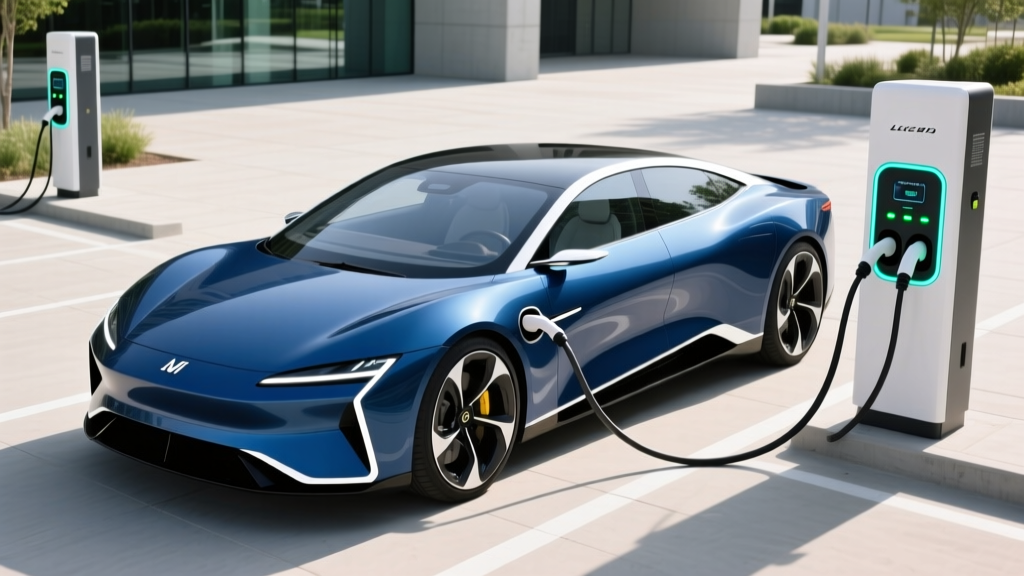
| DC Fast Charge | 200–900V DC | 50–350+ kW | 150–1,200+ mi/hr (peak) | Road trips; highway corridors; rapid top-ups |
Level 1 plugs into a standard household outlet and adds roughly 4 miles of range per hour — enough for a plug-in hybrid with 30 miles of electric range, but painfully slow for a 300-mile BEV. Level 2 is the home-charging standard, requiring a 240V circuit (like a dryer outlet) and delivering enough speed to fully replenish most EVs overnight. DC fast charging bypasses the vehicle's onboard charger entirely, feeding direct current straight to the battery at far higher power — but it is designed for occasional road-trip use, not daily charging, due to long-term battery health considerations and higher per-kWh costs.
Home Charger Installation: Electrical Requirements, Costs, and Panel Upgrades
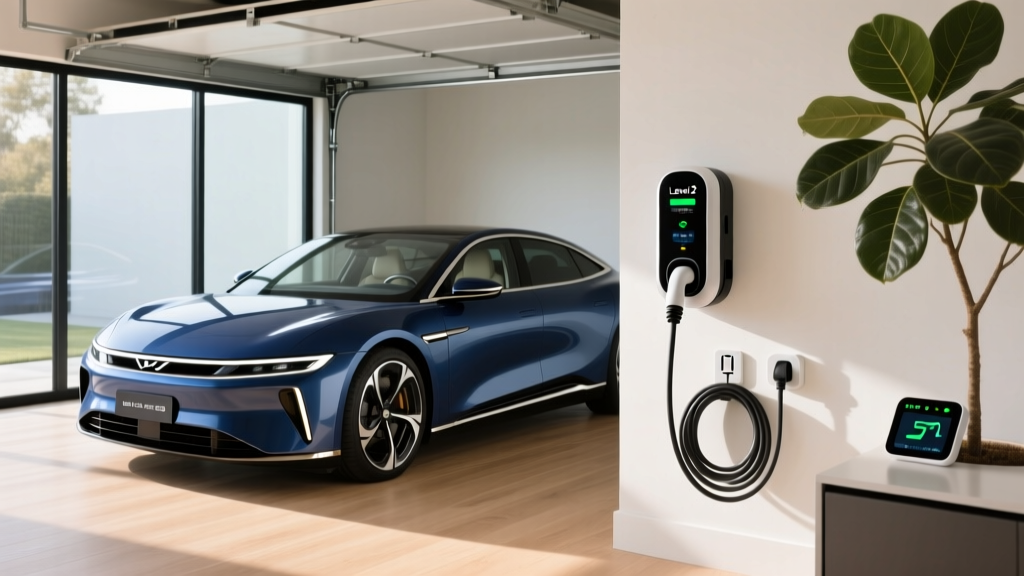
A "Dominic Toretto charger" in spirit means a high-output Level 2 home station that gets you back on the road fast. Achieving that requires understanding your home's electrical capacity. Most Level 2 chargers run on a dedicated 240V circuit. The amperage of that circuit determines your charge speed:
- 40A circuit / 32A continuous = 7.7 kW (adds ~25–30 mi/hr)
- 50A circuit / 40A continuous = 9.6 kW (adds ~30–38 mi/hr)
- 60A circuit / 48A continuous = 11.5 kW (adds ~38–45 mi/hr)
- 100A circuit / 80A continuous = 19.2 kW (adds ~60–75 mi/hr — requires a hardwired unit and significant panel capacity)
The National Electrical Code (NEC) requires that continuous loads (like EV charging, which runs for 3+ hours) use only 80% of a circuit's rated amperage. A 50A breaker therefore delivers 40A continuous, or 9.6 kW at 240V.
Installation Cost Breakdown
| Component | Simple Install (Near Panel) | Complex Install (Long Run / Upgrade) |
|---|---|---|
| Level 2 EVSE Equipment | $350–$700 | $500–$1,200 |
| Electrician Labor | $400–$900 | $1,200–$3,500 |
| Electrical Permit | $50–$200 | $100–$350 |
| Panel Upgrade (if needed) | $0 | $1,500–$4,000 |
| Conduit, Wire, Misc. | $100–$300 | $300–$1,000 |
| Total Estimated Cost | $900–$2,100 | $3,600–$10,050 |
Homes built after 2000 typically have a 200A electrical panel with enough spare capacity for a 40–60A EV circuit. Older homes with 100A or 150A service may need a panel upgrade or a load-management device (like the Emporia VUE or Span smart panel) that dynamically reduces charger amperage when other appliances draw power. Skipping a needed panel upgrade risks tripped main breakers or, worse, overheated wiring. Always get a licensed electrician to perform a load calculation before committing to a circuit size.
Under current IRS §30D rules, the federal Alternative Fuel Vehicle Refueling Property Credit (Form 8911) can cover up to 30% of home charger equipment and installation costs, capped at $1,000 — but only if you live in an eligible census tract (non-urban or low-income area). Verify your eligibility with a tax professional before counting on this credit.
Connector Compatibility: NACS, CCS1, CHAdeMO, and Adapter Realities
The North American charging connector landscape has consolidated significantly since 2024, when Ford, GM, Rivian, Volvo, and most major automakers adopted the North American Charging Standard (NACS) — originally developed by Tesla. By 2026, NACS is the dominant connector for new EVs sold in the US.
| Connector | Brands Using It (Native) | Adapter Needed For |
|---|---|---|
| NACS (Tesla) | Tesla, Ford, GM, Rivian, Volvo, Polestar, Mercedes-Benz, Fisker | Legacy CCS stations (NACS-to-CCS adapters available ~$200) |
| CCS1 | Hyundai, Kia, Volkswagen, BMW, Stellantis, Honda (2024 and older models) | Tesla Superchargers (CCS-to-NACS adapter, often included by OEM) |
| CHAdeMO | Nissan Leaf (legacy); no new 2026 models | Effectively discontinued; limited adapter options |
If you are buying a 2026 model-year EV, it almost certainly has a NACS port. Hyundai and Kia transitioned to NACS for the 2025 Ioniq 5 refresh and 2026 EV6. The practical implication for home charging: most Level 2 home chargers now ship with a NACS connector, and CCS-equipped vehicles can use an adapter. When selecting a home EVSE, match the connector to your vehicle's native port to avoid daily adapter hassle.
Charging Time Examples: How Long Does 10–80% Actually Take?
EV batteries charge fastest between roughly 10% and 50% State of Charge (SoC). Above 80%, the charge curve tapers significantly to protect battery longevity — a 350 kW peak might drop to 50 kW or less past 85%. Here is what to expect with common battery sizes:
| Vehicle | Battery (kWh usable) | Level 2 at 11.5 kW | DC Fast (Peak kW) | DC Fast 10–80% Time |
|---|---|---|---|---|
| Tesla Model Y Long Range | 75 kWh (NMC) | ~4.5 hrs | 250 kW | ~22 min |
| Hyundai Ioniq 5 (2026 NACS) | 77.4 kWh (NMC) | ~4.7 hrs | 238 kW | ~18 min |
| Ford F-150 Lightning Ext. Range | 131 kWh (NMC) | ~8 hrs | 150 kW (sustained ~110 kW avg) | ~45 min |
| Chevrolet Equinox EV | 85 kWh (NMC) | ~5.2 hrs | 190 kW | ~28 min |
| BMW iX xDrive50 | 105.2 kWh (NMC) | ~6.5 hrs | 200 kW | ~34 min |
At home on Level 2, the math is simple: divide the kWh you need by your charger's kW output. A 75 kWh battery needing a 60 kWh refill on an 11.5 kW charger takes roughly 5.2 hours. For most owners who plug in nightly and rarely drop below 30% SoC, a 40A/9.6 kW charger refills daily driving (30–50 miles) in 1–2 hours.
Cold weather adds a wrinkle: lithium-ion batteries charge slower when cold. If your EV lacks a battery preconditioning system, expect DC fast-charge times to increase 20–40% in sub-40°F conditions. Most 2026 models with heat pumps and thermal management (Tesla, Hyundai/Kia, GM Ultium) precondition the battery when you navigate to a charger, mitigating this loss.
Cost to Charge: Home vs. Public vs. Gas — The Per-Mile Breakdown
The economics of EV charging depend heavily on where you charge. Home charging on a residential electric rate is almost always cheaper than public DC fast charging, and both are typically cheaper than gasoline on a per-mile basis.
| Scenario | Rate | Vehicle Efficiency | Cost Per Mile |
|---|---|---|---|
| Home (off-peak TOU rate) | $0.09/kWh | 3.5 mi/kWh (286 Wh/mi) | $0.026 |
| Home (national avg. residential) | $0.17/kWh | 3.5 mi/kWh | $0.049 |
| Public Level 2 (ChargePoint, etc.) | $0.25–$0.49/kWh | 3.5 mi/kWh | $0.071–$0.14 |
| DC Fast (Electrify America / Tesla) | $0.35–$0.65/kWh | 3.0 mi/kWh (highway) | $0.12–$0.22 |
| Gasoline (avg. 2026, 28 MPG combined) | $3.40/gal | 28 MPG | $0.121 |
At the national average residential electricity rate of roughly $0.17/kWh (EIA data), a typical EV achieves a fuel cost of about $0.05 per mile — less than half the cost of a 28 MPG gas car at $3.40/gallon. Off-peak time-of-use (TOU) rates, available from most utilities between 9 PM and 6 AM, can cut that to under $0.03/mile.
DC fast charging at $0.50/kWh is roughly equivalent to gasoline on a per-mile basis. The savings case for EVs rests overwhelmingly on consistent home charging. If you cannot charge at home or at work, the economic advantage narrows significantly — a factor worth weighing before purchasing.
Equipment Picks: 2026 Home Level 2 Chargers Worth Buying
Here are four Level 2 home chargers that deliver reliable performance, proper safety certifications, and smart features — no Fast & Furious branding required.
Tesla Wall Connector (Gen 4)
- Power: Up to 11.5 kW (48A on 60A circuit)
- Connector: NACS native
- Cable: 24 ft
- Smart: Wi-Fi, OTA updates, load sharing with 2nd unit
- Price: ~$475
- Best for: Tesla and NACS-equipped vehicles; clean integrated design
Emporia Level 2 EV Charger
- Power: Up to 11.5 kW (48A)
- Connector: NACS (CCS adapter available)
- Cable: 24 ft
- Smart: Energy monitoring, solar integration, TOU scheduling
- Price: ~$399
- Best for: Budget-conscious buyers wanting detailed energy data
ChargePoint Home Flex (2nd Gen)
- Power: Up to 12 kW (50A adjustable)
- Connector: NACS or CCS1 (configurable)
- Cable: 23 ft
- Smart: App scheduling, Alexa/Google, flexible amperage
- Price: ~$699
- Best for: Mixed-EV households needing connector flexibility
Grizzl-E Smart
- Power: Up to 10 kW (40A)
- Connector: NACS or J1772 (with adapter)
- Cable: 24 ft
- Smart: OCPP-compatible, adjustable amperage via DIP switch
- Price: ~$549
- Best for: Cold-climate durability (rated to -40°F); Canadian-built
All four units are UL-listed or ETL-listed (a non-negotiable safety requirement), support NEMA 14-50 plug-in or hardwired installation, and offer Wi-Fi-connected scheduling. The Emporia and ChargePoint excel at energy monitoring, which is valuable if your utility offers TOU rates. The Grizzl-E's extreme cold rating makes it a standout for garage-less owners in northern states.
Safety, Code, and the Details That Prevent Fires
EV charging draws sustained high current for hours — more like running a welder than plugging in a lamp. Cutting corners on installation is how electrical fires start. Non-negotiable requirements:
- Dedicated circuit: Your EV charger must be on its own breaker, not shared with other outlets or appliances.
- GFCI protection: NEC 2023 and later require ground-fault circuit interrupter protection for all EVSE outlets. Hardwired units have GFCI built in; receptacle-based installs need a GFCI breaker.
- Outdoor rating: If your charger is mounted outside, it must be rated NEMA 4 (weatherproof). All four units above carry outdoor ratings.
- Wire gauge: A 60A circuit requires 6 AWG copper (or 4 AWG aluminum). Undersized wire causes voltage drop and heat buildup. Your electrician will calculate this based on run length.
- Permit and inspection: Most jurisdictions require an electrical permit and post-installation inspection. Skipping this can void your homeowner's insurance coverage for electrical fires.
- NEMA 14-50 receptacle quality: If using a plug-in charger, buy a commercial-grade receptacle (Hubbell, Bryant) — not a $12 big-box-store outlet. Residential-grade 14-50 outlets have been linked to overheating under sustained EV charging loads.
Frequently Asked Questions
How much does it cost to install a home EV charger?
A straightforward Level 2 installation (short wire run, adequate panel capacity) typically costs $900–$2,100 including equipment, electrician labor, and permit. Complex installs requiring long conduit runs, trenching, or a 200A panel upgrade can reach $3,600–$10,000+. Always get a load calculation from a licensed electrician before choosing your circuit size.
How fast will each charging level add range?
Level 1 (120V) adds 3–5 miles per hour. Level 2 (240V) adds 12–75 miles per hour depending on amperage — a 48A/11.5 kW charger adds roughly 40 miles per hour. DC fast charging can add 150–1,200+ miles per hour at peak, but sustained rates taper above 50–60% SoC. For practical planning, a 40A Level 2 charger overnight (8 hours) adds ~240 miles — enough for nearly any daily commute.
Which connector is compatible with my EV?
For 2026 model-year vehicles: Tesla, Ford, GM, Rivian, Volvo, Polestar, Hyundai, and Kia all use NACS natively. Older CCS1-equipped vehicles (2024 and earlier Hyundai/Kia, VW ID.4, BMW iX) can use a CCS-to-NACS adapter at Tesla Superchargers. CHAdeMO is effectively dead for new vehicles. Match your home charger's connector to your vehicle's native port.
How much does charging cost per mile compared to gas?
Home charging at the US average rate ($0.17/kWh) costs about $0.05 per mile — roughly 60% less than a 28 MPG gas car at $3.40/gallon ($0.12/mile). Off-peak TOU rates drop this to $0.03/mile. Public DC fast charging at $0.50/kWh is roughly equivalent to gas ($0.17/mile). The savings case depends on reliable home or workplace charging access.
What electrical upgrades might I need?
Homes with 100A or 150A electrical service may need a panel upgrade ($1,500–$4,000) to add a 40–60A EV circuit. Alternatives include a load-management device that shares capacity between the charger and other appliances, or installing a lower-amperage circuit (e.g., 20A/3.8 kW) that still covers overnight charging for most commuters. A licensed electrician's load calculation will determine your options.
Is there a "Dominic Toretto charger" I can actually buy?
No. There is no commercially available EV charger branded or endorsed as a "Dominic Toretto charger." The term appears to be an internet meme referencing the Fast & Furious franchise, occasionally applied to custom-wrapped Tesla Wall Connectors or high-amperage home setups. The fastest legitimate home charging setup in 2026 is a hardwired 80A Level 2 charger delivering 19.2 kW — but this requires a 100A dedicated circuit and a 200A+ electrical panel, and very few residential EVs can accept that rate on their onboard chargers.