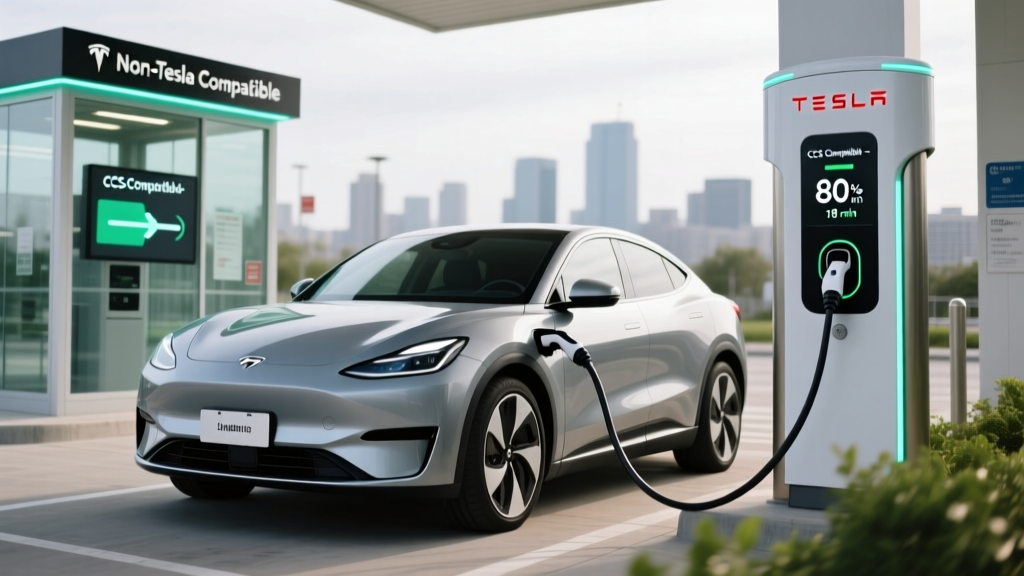
For years, the Tesla Supercharger network was a walled garden—exclusive to Tesla vehicles with their proprietary connector. That era is over. As of 2026, the North American Charging Standard (NACS) has become the dominant EV connector, and the term "Tesla CCS" now captures a pivotal transition: how drivers of CCS-equipped vehicles access Tesla's sprawling Supercharger network, and how Tesla owners can tap into third-party CCS chargers. This guide breaks down the hardware, the speeds, the costs, and the home-charging infrastructure you need to make it all work.
Understanding the Tesla CCS Landscape in 2026
Let's clarify the terminology first, because confusion here is rampant. CCS1 (Combined Charging System) was the standard DC fast-charging connector used by most non-Tesla automakers through 2024. NACS (North American Charging Standard) is Tesla's connector design, which Ford, GM, Rivian, Volvo, and virtually every major automaker adopted starting in 2025. By 2026, nearly all new EVs sold in North America ship with a native NACS port.
So when people search for "Tesla CCS," they're typically asking one of two things:
- CCS-to-NACS adapter: Can I plug my older CCS-equipped EV (say, a 2023 Hyundai Ioniq 5 or 2024 VW ID.4) into a Tesla Supercharger?
- NACS-to-CCS adapter: Can I plug my Tesla into a third-party CCS charger (Electrify America, EVgo, ChargePoint)?
The answer to both is yes—with the right adapter. But the speeds, costs, and compatibility details matter enormously.
Charging Levels Explained: kW, Miles Per Hour, and What They Mean
Before we get into adapters, you need to understand the three charging levels and how they're measured. The critical distinction: kW (kilowatts) measures power—the rate at which energy flows into your battery. kWh (kilowatt-hours) measures energy—the total capacity of your battery, like gallons in a fuel tank. Never confuse them.
| Level | Voltage | Max Power (kW) | Miles of Range Added Per Hour | Typical Use Case |
|---|---|---|---|---|
| Level 1 | 120V AC | 1.4–1.9 kW | 3–5 mi/hr | Overnight trickle; PHEVs and low-mileage drivers |
| Level 2 | 240V AC | 7.2–19.2 kW | 20–60 mi/hr | Home and workplace daily charging |
| DC Fast Charging | 400–800V DC | 50–350 kW | 150–1,000+ mi/hr (peak) | Road trips and rapid top-ups |
A few real-world notes: those "miles per hour" figures assume a vehicle averaging 3–4 mi/kWh (the typical efficiency for a mid-size crossover EV). A heavier, less efficient truck like the Rivian R1T will add fewer miles per kW than a sleek sedan like the Hyundai Ioniq 6. And DC fast-charging speeds are peak rates—your charging curve tapers significantly above 80% state of charge to protect battery health.
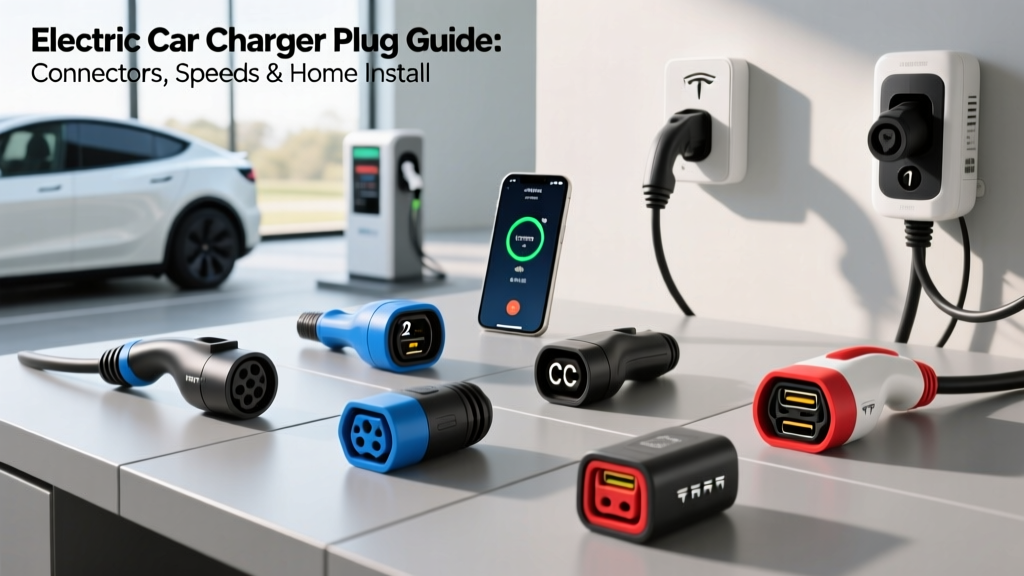
Connector Compatibility: NACS, CCS1, and CHAdeMO
Here's where the Tesla CCS question gets practical. The physical connectors are different, but adapters bridge the gap.
| Connector | Native Vehicles (2026) | Adapter Needed for Superchargers? | Adapter Needed for CCS Networks? |
|---|---|---|---|
| NACS (Tesla) | All Tesla models; Ford, GM, Rivian, Volvo, Polestar, most 2025+ EVs | No (native) | NACS-to-CCS adapter (~$200–$250) |
| CCS1 | 2024 and older Hyundai, Kia, VW, BMW, Mercedes EVs | CCS-to-NACS adapter (~$200–$300) | No (native) |
| CHAdeMO | Nissan Leaf (legacy); essentially discontinued for new vehicles | Not available for Superchargers | Limited network; declining |
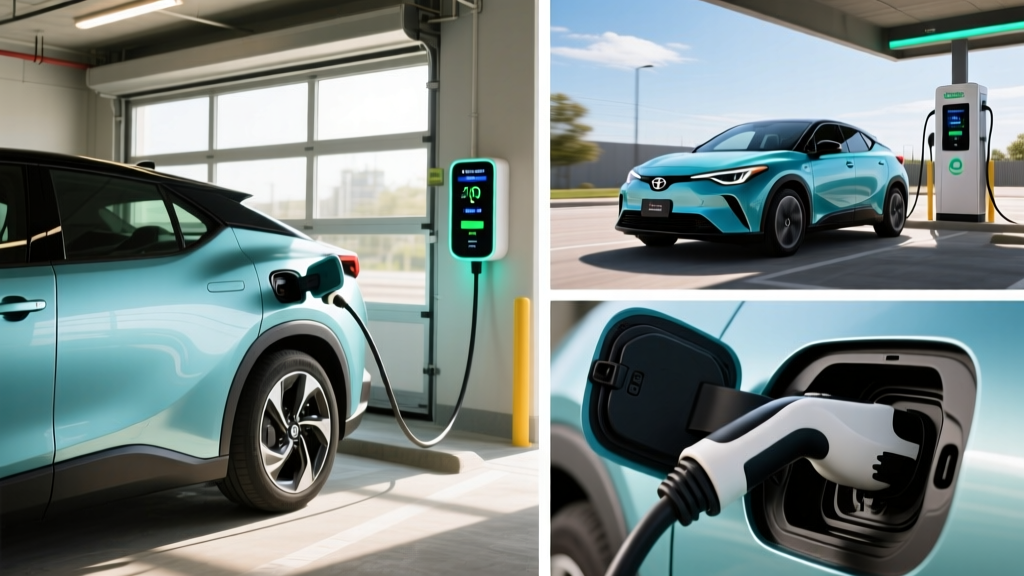
Tesla sells an official CCS Combo 1 Adapter (approximately $250) that lets Tesla vehicles charge at Electrify America and other CCS-equipped stations. For the reverse direction—CCS vehicles accessing Superchargers—several third-party adapters have received certification, and Tesla's own Magic Dock adapter (built into some Supercharger stalls) allows CCS vehicles to charge without a separate dongle at select "Open Supercharger" locations. According to Tesla's official support page, the CCS adapter supports up to 250 kW at V3 Superchargers, though actual sustained speeds depend on your vehicle's charge curve.
Home Charger Installation: Costs, Electrical Requirements, and Gotchas
Most EV charging happens at home, and installing a Level 2 charger is the single best investment an EV owner can make. But the costs vary wildly depending on your electrical panel.
Electrical Requirements for Level 2 Charging
A Level 2 home charger requires a 240V dedicated circuit—the same voltage as your electric dryer or oven. Common configurations:
- 40A circuit / 32A continuous: Delivers 7.7 kW. Sufficient for most EVs with overnight charging.
- 50A circuit / 40A continuous: Delivers 9.6 kW. Good for larger batteries (100+ kWh).
- 60A circuit / 48A continuous: Delivers 11.5 kW. Ideal for high-capacity EVs and faster turnaround.
- 80A circuit / 64A continuous: Delivers 15.4–19.2 kW. Requires robust panel capacity; overkill for most homes.
The National Electrical Code (NEC) requires that continuous loads (like EV charging, which runs for 3+ hours) use only 80% of a circuit's rated amperage. So a 50A breaker delivers a maximum of 40A continuous to your charger.
Installation Cost Breakdown
Here's what you'll actually spend. These are 2026 national averages; costs in high-cost-of-living metro areas can run 30–50% higher.
| Component | Simple Install (Panel Nearby) | Complex Install (Panel Upgrade / Long Run) |
|---|---|---|
| Level 2 Charger (Equipment) | $350–$700 | $350–$700 |
| Electrician Labor | $300–$800 | $1,000–$2,500 |
| Electrical Permit | $50–$200 | $50–$200 |
| Panel Upgrade (if needed) | $0 | $1,500–$4,000 |
| Conduit/Wiring (long runs 50+ ft) | $0–$200 | $400–$1,200 |
| Total Estimated Cost | $700–$1,900 | $3,300–$8,600 |
The panel-upgrade gotcha: If your home has a 100A main panel (common in pre-1990 construction), adding a 50A EV circuit may exceed your panel's capacity. An upgrade to 200A service typically costs $1,500–$4,000. Some homeowners opt for a smart panel or load-management device (like the Emporia Vue with automatic load shedding) to avoid a full upgrade. Always have a licensed electrician perform a load calculation before committing to a circuit size.
Safety and Code Requirements
Don't cut corners here. Per NEC Article 625, your installation must include:
- A dedicated circuit—no sharing with other appliances
- A GFCI breaker (Ground Fault Circuit Interrupter) for any outdoor receptacle
- An outdoor-rated (NEMA 4 or NEMA 4X) charger enclosure if mounted outside
- Proper conduit and wire gauge (6 AWG copper for 50A circuits, 4 AWG for 60A)
- A permit and inspection—this protects your home insurance coverage
How Much Does Charging Cost Per Mile vs. Gas?
This is where EV ownership economics become compelling—or complicated, depending on your local electricity rates.
| Scenario | Cost per kWh | Cost per Mile (at 3.5 mi/kWh) | Annual Fuel Cost (12,000 mi) |
|---|---|---|---|
| Home Off-Peak (Time-of-Use rate) | $0.08–$0.14 | $0.023–$0.040 | $275–$480 |
| Home Standard Rate | $0.14–$0.22 | $0.040–$0.063 | $480–$755 |
| Public Level 2 (ChargePoint, etc.) | $0.25–$0.49 | $0.071–$0.140 | $855–$1,680 |
| DC Fast Charging (Electrify America, Tesla) | $0.35–$0.56 | $0.100–$0.160 | $1,200–$1,920 |
| Gas Vehicle (28 MPG avg, $3.50/gal) | — | $0.125 | $1,500 |
The takeaway: home charging on off-peak rates is 3–5x cheaper than gasoline per mile. But if you rely exclusively on DC fast charging at public stations, your costs can equal or exceed a fuel-efficient gas car. This is why home Level 2 installation isn't optional for cost-conscious EV owners—it's the entire economic thesis.
For the latest utility rate data and EV efficiency figures by model, fueleconomy.gov maintains an up-to-date database of kWh/100mi ratings for every EPA-certified EV sold in the US.
Real-World Charging Times: What to Expect
Manufacturer claims of "10-80% in 18 minutes" are measured under ideal conditions: battery preconditioned to optimal temperature, peak charge rate sustained. In practice, charging curves taper, cold weather slows acceptance rates, and Supercharger stalls share power with neighboring vehicles.
Typical 10-80% Charging Times by Battery Size
- 60 kWh battery (e.g., base Tesla Model 3 RWD):
- Level 2 at 11.5 kW: ~4.5 hours
- DC fast at 170 kW peak: ~22 minutes (expect ~28 min real-world)
- 82 kWh battery (e.g., Tesla Model Y Long Range):
- Level 2 at 11.5 kW: ~6 hours
- DC fast at 250 kW peak: ~25 minutes (expect ~32 min real-world)
- 100 kWh battery (e.g., Ford F-150 Lightning Extended):
- Level 2 at 11.5 kW: ~7.5 hours
- DC fast at 150 kW peak: ~40 minutes (expect ~48 min real-world)
- 131 kWh battery (e.g., GMC Hummer EV):
- Level 2 at 19.2 kW: ~6 hours
- DC fast at 350 kW peak: ~35 minutes (expect ~45 min real-world, limited by pack acceptance rate)
Why real-world times run longer: Charging speed peaks between roughly 10–40% state of charge, then tapers progressively. From 80–100%, speeds can drop below 20 kW even on a 250 kW charger. Cold weather (below 40°F) can reduce peak acceptance by 20–40% unless your vehicle has active battery preconditioning—which Tesla's navigation-to-Supercharger feature handles automatically.
Recommended Home Chargers for 2026
Not all Level 2 chargers are equal. Here are proven picks based on power output, connector type, cable length, smart features, and price.
Tesla Wall Connector (Gen 4)
- Power Output: Up to 11.5 kW (48A on 60A circuit)
- Connector: NACS native; includes J1772 adapter in box
- Cable Length: 24 feet
- Smart Features: Wi-Fi, OTA updates, Power Sharing (link multiple units on one circuit), access control
- Price: ~$475
- Best For: Tesla owners and NACS-native EVs. The 24-foot cable is among the longest available.
ChargePoint Home Flex (2nd Gen)
- Power Output: Up to 12 kW (50A adjustable, configurable from 16A–50A)
- Connector: J1772 standard; NACS adapter included in 2026 kit
- Cable Length: 23 feet
- Smart Features: Wi-Fi, Alexa integration, scheduling, detailed energy reporting via app
- Price: ~$599
- Best For: Multi-EV households with mixed connectors. Adjustable amperage is ideal for homes with limited panel capacity.
Emporia Level 2 EV Charger
- Power Output: Up to 11.5 kW (48A)
- Connector: J1772 (NACS version available)
- Cable Length: 24 feet
- Smart Features: Wi-Fi, solar integration with Emporia Vue energy monitor, load management to avoid panel upgrades
- Price: ~$399
- Best For: Budget-conscious buyers and solar-equipped homes. The load-management feature can save thousands by avoiding a panel upgrade.
Grizzl-E Smart (United Chargers)
- Power Output: Up to 10 kW (40A) or 12 kW (48A, newer model)
- Connector: J1772 or NACS
- Cable Length: 24 feet
- Smart Features: Wi-Fi, OCPP compatibility, adjustable amperage, extreme-weather rated (-40°F)
- Price: ~$449–$549
- Best For: Cold-climate owners. Built in Canada, tested to -40°F, with a rugged aluminum case.
Federal Tax Credit for Home Charger Installation
The IRS Residential Clean Energy Credit (often conflated with the §30D vehicle credit, but technically a separate provision under §25C) covers 30% of home EV charger equipment and installation costs, up to $1,000. Key caveats for 2026:
- The charger must be installed at your primary residence
- It must be new equipment (used chargers don't qualify)
- The credit is non-refundable—it reduces your tax liability but won't generate a refund beyond what you owe
- The $1,000 cap applies to the combined equipment + installation cost, meaning you need to spend at least ~$3,334 to max out the credit
- Always consult a tax professional to confirm eligibility based on your specific filing situation
Frequently Asked Questions
How much does it cost to install a home EV charger?
A straightforward Level 2 installation (panel has capacity, short wire run, indoor mounting) typically costs $700–$1,900 including the charger unit, electrician labor, and permit. Complex installs requiring a 200A panel upgrade, long conduit runs, or outdoor mounting can reach $3,300–$8,600. The federal residential energy credit can offset up to $1,000 of that cost.
How fast will each charging level add range?
Level 1 (120V) adds roughly 3–5 miles of range per hour—adequate only for PHEVs or very low-mileage drivers. Level 2 (240V) adds 20–60 miles per hour depending on circuit amperage and vehicle efficiency. DC fast charging adds 150–1,000+ miles per hour at peak rates, but tapers significantly above 80% SoC.
Which connector is compatible with my EV?
If your EV is a 2025+ model from Ford, GM, Rivian, Volvo, Polestar, or any Tesla, you almost certainly have a NACS port. If it's a 2024 or older Hyundai, Kia, VW, or BMW EV, you likely have CCS1. Check your owner's manual or the port itself. Adapters exist for both directions (CCS-to-NACS and NACS-to-CCS), but verify compatibility with your specific vehicle and charging network before purchasing.
How much does EV charging cost per mile vs. gas?
Home charging on off-peak electricity rates costs $0.02–$0.04 per mile—roughly 3–5x cheaper than a 28 MPG gas car at $3.50/gallon ($0.125/mile). Public DC fast charging costs $0.10–$0.16 per mile, which is comparable to or slightly more expensive than gasoline. The economic advantage of EVs depends heavily on access to affordable home charging.
What electrical upgrades might I need for a home charger?
If your home has a 100A main electrical panel (common in pre-1990 construction), you'll likely need a panel upgrade to 200A, costing $1,500–$4,000. Even with a 200A panel, a load calculation may show insufficient spare capacity if you have electric heating, a large AC system, or an electric oven. Alternatives include installing a lower-amperage circuit (e.g., 30A/24A continuous for 5.8 kW) or using a smart load-management device that dynamically reduces charger draw when other appliances activate.
Can I use a Tesla CCS adapter at any Supercharger?
Not all Superchargers are open to non-Tesla vehicles. Tesla designates specific stalls as "Open Superchargers" accessible to CCS-equipped EVs either via Tesla's Magic Dock (built into the stall) or with a certified CCS-to-NACS adapter. Use the Tesla app or your vehicle's navigation to identify open locations. As of 2026, Tesla has opened a growing percentage of its US network, but coverage varies by region. Check Tesla's non-Tesla Supercharging page for the latest station list.
Is it safe to use third-party CCS adapters with Tesla Superchargers?
Certified adapters from reputable manufacturers that comply with SAE and UL standards are safe for use. Avoid uncertified adapters sold on marketplace sites—they may lack proper thermal protection, communication protocols, or overcurrent safeguards. A quality adapter will include a temperature sensor at the connection point and support the CCS communication handshake that manages charge rate negotiation.