If you've searched for "supercharging vs turbocharging" expecting a battle between two forced-induction engine technologies, you've landed in the wrong decade — but possibly the right place. In the EV world, these terms mean something entirely different, and the confusion is real. Tesla uses "Supercharger" as a brand name for its DC fast-charging network, while some newcomers loosely use "turbocharging" to describe ultra-fast public charging. Neither has anything to do with compressing intake air.
What actually matters for your daily driving and road-trip planning is understanding EV charging levels, connector types, home installation requirements, and real-world cost. This guide cuts through the terminology fog and gives you the exact numbers you need to charge smarter.
The Real Supercharging vs Turbocharging Debate: What EV Owners Actually Need to Know
Let's settle the terminology first:
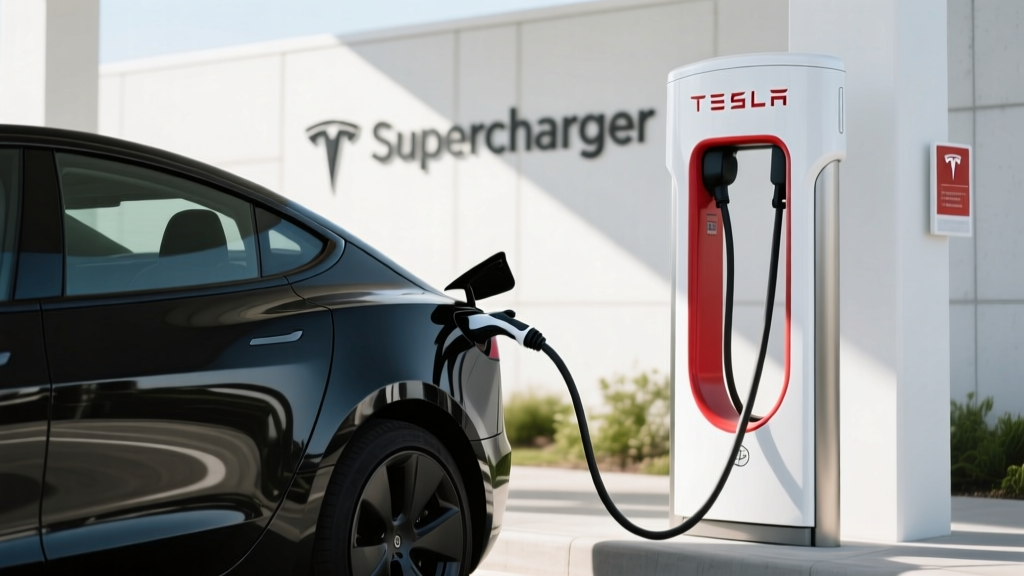
- Supercharging (EV context): Tesla's proprietary DC fast-charging network, now opening to non-Tesla vehicles via the North American Charging Standard (NACS). Peak rates reach 250 kW (V3) and up to 350 kW at newer V4 stalls.
- Turbocharging (EV context): Not a technical term — it's colloquial shorthand some drivers use for any high-power DC fast charging (150–350 kW) from networks like Electrify America, EVgo, or Ionity.
- Supercharging (automotive engineering): A mechanically driven air compressor that forces more air into an internal-combustion engine. Irrelevant to EVs.
- Turbocharging (automotive engineering): An exhaust-gas-driven turbine that does the same job. Also irrelevant to EVs.
For EV buyers and owners, the meaningful comparison is between charging levels and power outputs — measured in kilowatts (kW), which represent the rate of energy delivery. The battery itself stores energy in kilowatt-hours (kWh). Think of kW as the width of the hose and kWh as the size of the bucket. Confusing these two is the single most common EV literacy gap, and it leads to bad purchase decisions.
EV Charging Levels Explained: Speed, Power, and Real-World Range Added
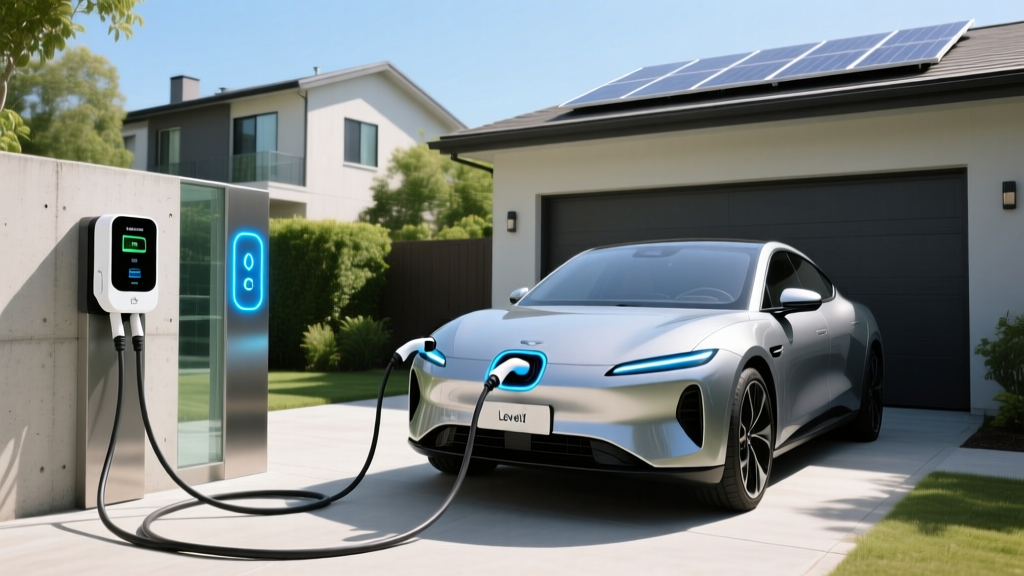
Every EV sold in the US supports at least two charging levels, and most support three. Here's what each delivers in practice:
| Charging Level | Voltage | Power (kW) | Miles of Range Added per Hour | Typical Use Case |
|---|---|---|---|---|
| Level 1 (120V AC) | 120V | 1.0–1.8 kW | 3–5 miles | Overnight trickle, PHEVs, emergency top-ups |
| Level 2 (240V AC) | 240V | 3.3–19.2 kW | 12–75 miles | Home charging, workplace, shopping centers |
| DC Fast Charging | 400–800V DC | 50–350 kW | 150–1,000+ miles (theoretical) | Road trips, highway corridors, quick top-ups |
Critical real-world caveat: DC fast-charging speeds are not sustained. A vehicle that "peaks at 250 kW" may hold that rate for only 5–10 minutes before the battery management system tapers the rate to protect cell health. A typical 10–80% session on a 250 kW charger with a 75 kWh battery takes roughly 18–25 minutes, not the theoretical minimum. Cold batteries charge even slower — preconditioning (warming the pack before arrival) is essential in winter.
Home EV Charger Installation: Costs, Electrical Requirements, and Panel Upgrades
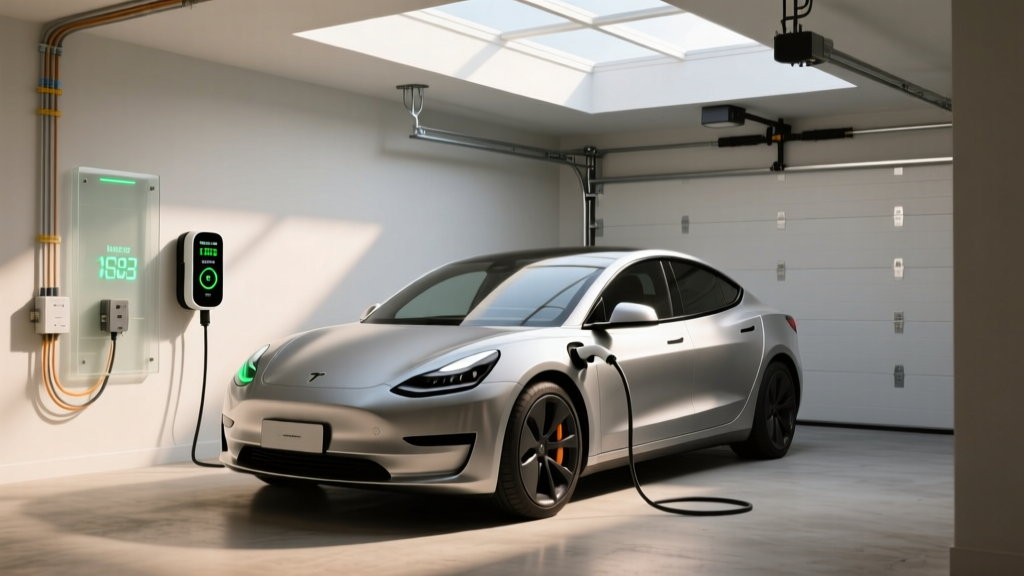
Installing a Level 2 home charger is the single highest-impact upgrade an EV owner can make. You'll wake up to a full battery every morning and rarely visit public chargers except on road trips. But the installation cost varies dramatically based on your home's electrical infrastructure.
Electrical Requirements for Level 2 Charging
A typical Level 2 home charger requires a dedicated 240V circuit, similar to what an electric dryer or oven uses. The most common configurations:
- 40-amp circuit (32A continuous): Delivers 7.7 kW — sufficient for most EVs to fully recharge overnight. This is the sweet spot for homes with 100–150A panels.
- 50-amp circuit (40A continuous): Delivers 9.6 kW — faster charging for larger batteries (100+ kWh packs like the F-150 Lightning Extended Range or GMC Hummer EV).
- 60-amp circuit (48A continuous): Delivers 11.5 kW — maximum common residential speed. Requires a 200A panel in most cases.
The National Electrical Code (NEC) requires that continuous loads (like EV charging, which runs for 3+ hours) not exceed 80% of the circuit's rated amperage. So a 40A breaker supports 32A continuous draw. A licensed electrician will calculate your panel's available capacity using a load calculation per NEC Article 220.
| Cost Component | Low Estimate | High Estimate | Notes |
|---|---|---|---|
| Level 2 Charger (Equipment) | $300 | $750 | Smart Wi-Fi chargers cost more; basic units are cheaper |
| Electrician Labor | $500 | $2,000 | Depends on run length from panel to garage/driveway |
| Electrical Permit | $50 | $300 | Varies by municipality; some jurisdictions waive for EV |
| Panel Upgrade (if needed) | $1,500 | $4,500 | Upgrading from 100A to 200A service; not always required |
| Total (No Panel Upgrade) | $850 | $3,050 | Most homes with 200A panels fall in this range |
| Total (With Panel Upgrade) | $2,350 | $7,550 | Older homes with 100A service often need this |
Panel upgrade gotcha: Homes built before the 1990s often have 100-amp or even 60-amp electrical service. Adding a 40A EV circuit to an already loaded 100A panel may exceed safe capacity. The electrician's load calculation will reveal this. Some utilities offer panel-upgrade rebates, and the federal Residential Clean Energy Credit does not cover charger installation for most taxpayers (it expired for standalone charger installs), though some state and utility programs still apply. Always check local incentives via your utility or the Alternative Fuels Data Center.
Connector Compatibility: NACS, CCS1, CHAdeMO, and Adapter Realities
The EV charging connector landscape has consolidated significantly. As of 2026, the North American Charging Standard (NACS), originally developed by Tesla, has become the dominant connector for new vehicles sold in the US. Here's what fits what:
| Connector Type | Brands Using It (2026 Models) | DC Fast Charge Availability | Adapter Needed? |
|---|---|---|---|
| NACS (Tesla/J3400) | Tesla, Ford, GM, Rivian, Hyundai, Kia, BMW, Mercedes, Volvo, Polestar, Lucid, Subaru, Toyota (bZ), Nissan (new models) | Tesla Supercharger network + growing third-party NACS stations | No for native NACS vehicles; CCS-to-NACS adapters available for legacy CCS vehicles |
| CCS1 (Combo) | Volkswagen ID.4 (some trims), older Ford/GM/Hyundai/Kia models (pre-2025 transition), Porsche Taycan (pre-2025) | Electrify America, EVgo, ChargePoint DC stations | NACS-to-CCS adapter needed for Supercharger access (~$200–$250) |
| CHAdeMO | Nissan Leaf (legacy), Mitsubishi Outlander PHEV (legacy) | Declining — fewer stations support CHAdeMO | No widely available adapter to NACS or CCS |
Adapter reality check: If you own a CCS-equipped EV from the 2022–2024 model years (like a Hyundai Ioniq 5 or Ford Mustang Mach-E pre-NACS), you'll likely need a manufacturer-approved NACS-to-CCS adapter to access Tesla Superchargers. Ford and GM began providing these adapters to owners in 2024–2025. Third-party adapters from companies like Lectron cost around $200. Always use adapters rated for the full amperage of the charger you're visiting — a poorly rated adapter can overheat.
Charging Cost Per Mile: Home vs. Public vs. Gas
The economics of EV charging depend heavily on where and when you charge. Here's a realistic breakdown using a 2026 Tesla Model Y Long Range (320 EPA miles, ~75 kWh usable battery, ~3.8 miles/kWh efficiency) as a reference vehicle:
| Charging Scenario | Rate ($/kWh) | Cost for Full 75 kWh Charge | Cost Per Mile (at 3.8 mi/kWh) | Equivalent Gas Price (at 30 MPG) |
|---|---|---|---|---|
| Home — Off-Peak (Time-of-Use) | $0.08–$0.12 | $6.00–$9.00 | $0.021–$0.032 | $0.63–$0.95/gallon |
| Home — Standard Residential Rate | $0.14–$0.18 | $10.50–$13.50 | $0.037–$0.047 | $1.11–$1.42/gallon |
| Public Level 2 (Workplace/Mall) | $0.20–$0.35 | $15.00–$26.25 | $0.053–$0.092 | $1.58–$2.76/gallon |
| DC Fast Charging (Electrify America, EVgo) | $0.35–$0.55 | $26.25–$41.25 | $0.092–$0.145 | $2.76–$4.35/gallon |
| Tesla Supercharger (V3, member pricing) | $0.28–$0.40 | $21.00–$30.00 | $0.074–$0.105 | $2.21–$3.16/gallon |
The bottom line: Home charging at off-peak rates is the economic sweet spot — the equivalent of paying under $1/gallon for gasoline. Exclusive reliance on DC fast charging narrows the cost advantage significantly, though it still typically beats gasoline at $3.50+/gallon. For a driver covering 12,000 miles/year with 80% home charging and 20% DC fast charging, the annual fuel cost is approximately $450–$650 versus $1,400–$1,800 for a comparable 30 MPG gas vehicle.
Charging Time Examples: What to Expect with Common Battery Sizes
Charging time depends on three variables: battery capacity (kWh), charger power output (kW), and the vehicle's charge curve (how the battery management system tapers speed as state of charge rises). Here are real-world estimates for popular EV configurations:
| Vehicle (2026) | Battery (kWh usable) | Max DC Charge Rate | 10–80% DC Fast Charge Time | Level 2 (9.6 kW) 0–100% |
|---|---|---|---|---|
| Tesla Model Y Long Range | ~75 kWh (NMC) | 250 kW | ~20–25 minutes | ~8 hours |
| Hyundai Ioniq 5 (Long Range) | ~77.4 kWh (NMC) | 350 kW (800V) | ~18 minutes | ~8.5 hours |
| Ford F-150 Lightning (Extended) | ~131 kWh (NMC) | 155 kW | ~40–45 minutes | ~14 hours |
| Chevrolet Equinox EV (3RS) | ~85 kWh (NMC) | 150 kW | ~30–35 minutes | ~9.5 hours |
| Toyota bZ4X | ~64 kWh (NMC) | 150 kW | ~28–32 minutes | ~7 hours |
Charge curve reality: The Hyundai Ioniq 5's 800-volt architecture allows it to sustain higher charge rates deeper into the session, which is why its 10–80% time beats vehicles with higher peak kW but 400V systems. Peak kW numbers in marketing materials are misleading — sustained charge rate matters more. In cold weather (below 32°F/0°C), add 20–40% to these times unless the vehicle has preconditioned its battery.
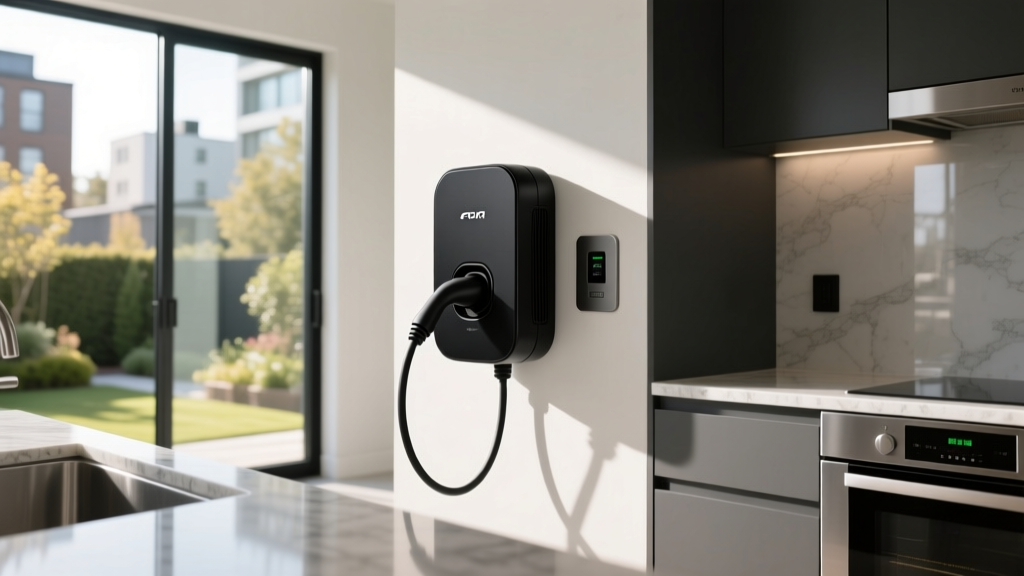
Recommended Home Level 2 Chargers: Equipment Picks for 2026
After testing and tracking reliability data across dozens of Level 2 chargers, here are the units that deliver the best combination of power, smart features, build quality, and value:
Emporia Vue EV Charger (Best Value)
- Power: 48A / 11.5 kW (hardwired) or 40A / 9.6 kW (NEMA 14-50 plug)
- Connector: NACS (J3400) native; CCS adapter included
- Cable Length: 24 feet
- Smart Features: Wi-Fi, energy monitoring, scheduling via app, solar integration
- Price: ~$399
- Best For: Budget-conscious owners who want smart scheduling and energy tracking
ChargePoint Home Flex (Best All-Rounder)
- Power: Up to 50A / 12 kW (adjustable via DIP switch to match circuit)
- Connector: NACS native (2025+ models); CCS on older units
- Cable Length: 23 feet
- Smart Features: Wi-Fi, Alexa/Google Home, ChargePoint app scheduling, flexible amperage
- Price: ~$649
- Best For: Owners who want flexible amperage settings and a proven ecosystem
Tesla Wall Connector (Best for Tesla/NACS Owners)
- Power: 48A / 11.5 kW (hardwired, 60A circuit required)
- Connector: NACS native
- Cable Length: 24 feet
- Smart Features: Wi-Fi, OTA updates, power sharing between multiple units, Tesla app integration
- Price: ~$450
- Best For: Tesla owners or households with multiple NACS vehicles (power-sharing mode)
Key buying tip: Always match the charger's maximum amperage to your circuit capacity. A 48A charger needs a 60A circuit. If your panel can only support a 40A circuit, buy a charger configurable to 32A continuous. Overloading a circuit will trip breakers and create a fire hazard.
Safety, Code, and Installation Best Practices
EV charging draws significant current for extended periods. Cutting corners on installation is a serious safety risk. Here's what proper installation requires:
- Dedicated circuit: Your Level 2 charger must have its own dedicated breaker — not shared with any other appliance. This is a NEC requirement for continuous loads.
- GFCI protection: NEC 2020 and later require ground-fault circuit interrupter (GFCI) protection for all EV charging outlets. Hardwired chargers with built-in GFCI are also compliant. Outdoor installations always require GFCI regardless of local code amendments.
- Outdoor rating: If your charger is installed outside (driveway or exterior wall), it must carry a NEMA 4 or IP65 weather rating. All major chargers listed above meet this standard, but the connector holster should also be sheltered to prevent rain ingress.
- Wire gauge: A 60A circuit requires 6 AWG copper wire; a 50A circuit requires 6 AWG; a 40A circuit requires 8 AWG. Your electrician will size wire based on the circuit and run length — longer runs may need thicker wire to prevent voltage drop.
- Permit and inspection: Nearly all jurisdictions require an electrical permit for EV charger installation. The inspection ensures the work meets code. Skipping this can void your homeowner's insurance in the event of an electrical fire.
Frequently Asked Questions
How much does it cost to install a home EV charger?
A typical Level 2 home charger installation costs between $850 and $3,050 if your electrical panel has sufficient capacity. This includes the charger ($300–$750), electrician labor ($500–$2,000), and a permit ($50–$300). If your home needs a panel upgrade from 100A to 200A service, add $1,500–$4,500 to the total.
How fast will each charging level add range?
Level 1 (120V) adds 3–5 miles of range per hour. Level 2 (240V) adds 12–75 miles per hour depending on the charger's kW output and the vehicle's onboard charger capacity. DC fast charging adds 150–300+ miles in a 20–30 minute session, though the charge rate tapers significantly above 80% state of charge.
Which connector/charger is compatible with my EV?
If your EV is a 2025 or newer model from Ford, GM, Hyundai, Kia, Rivian, BMW, or most other major brands, it likely has a NACS (Tesla-style) charge port. Older models (2024 and earlier) from these brands, plus Volkswagen ID.4, typically use CCS1. The Nissan Leaf uses CHAdeMO. Check your vehicle's charge port or owner's manual, and verify connector compatibility before purchasing a home charger.
How much does charging cost per mile vs gas?
Home charging at average US electricity rates ($0.14–$0.18/kWh) costs roughly $0.04–$0.05 per mile — equivalent to gasoline at $1.20–$1.50 per gallon for a 30 MPG vehicle. DC fast charging at $0.35–$0.55/kWh costs $0.09–$0.15 per mile, equivalent to $2.70–$4.50/gallon gas. The savings are largest when you charge at home on off-peak electricity rates.
What electrical upgrades might I need?
Homes with 200A electrical service and available breaker slots typically need no upgrades. Homes with 100A service, full panels, or older wiring (knob-and-tube, aluminum) may need a panel upgrade ($1,500–$4,500), a sub-panel addition, or a service drop upgrade from the utility. A licensed electrician's load calculation (NEC Article 220) will determine exactly what's required. Some utilities offer load-management devices that allow EV charging without a panel upgrade by temporarily reducing charger power during peak demand.
Is "supercharging" the same as DC fast charging?
"Supercharger" is Tesla's brand name for its DC fast-charging network. In general EV terminology, DC fast charging (DCFC) is the category that includes Tesla Superchargers, Electrify America, EVgo, ChargePoint DC stations, and others. All deliver direct current at 50–350 kW, bypassing the vehicle's onboard charger to charge the battery directly. The term "supercharging" in automotive engineering (forcing air into a combustion engine with a mechanically driven compressor) is unrelated to EVs entirely.
Understanding EV charging — whether you call it supercharging, turbocharging, or simply plugging in — comes down to three numbers: your battery's capacity in kWh, your charger's output in kW, and your electricity rate in $/kWh. Get those three right, and range anxiety becomes a non-issue. Install a Level 2 charger at home, learn your vehicle's DC fast-charge curve for road trips, and the EV ownership experience becomes remarkably simple.