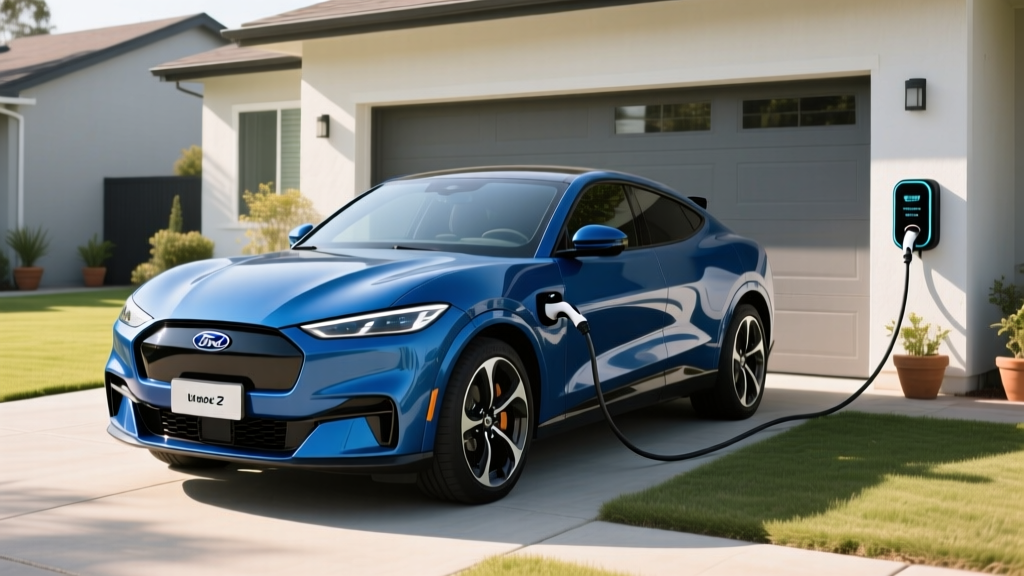
If you're planning a home EV charging setup or evaluating public charging hardware, one surprisingly common question comes up during logistics and installation planning: how much does a charger weigh? Whether you're mounting a Level 2 wallbox in your garage, routing cable through a conduit, or sizing a pedestal for a commercial lot, the physical mass and dimensions of EV charging equipment matter more than most buyers expect.
This guide covers charger weights across every charging level, the electrical requirements behind each, real installation costs, connector compatibility, and the per-mile economics of charging versus gasoline. We'll also recommend specific 2026 hardware so you know exactly what to buy and budget.
Charger Weights by Type: Level 1, Level 2, and DC Fast
EV chargers vary enormously in weight depending on their power output, internal components, and whether they include cable management systems. Here's what you'll encounter in 2026:
Level 1 (120V, 1.4–1.9 kW): The portable cord that ships with most EVs weighs between 4 and 8 lbs. It's essentially a thick cable with a control box brick roughly the size of a hardcover book. No mounting required — just plug into a standard NEMA 5-15 or 5-20 outlet.
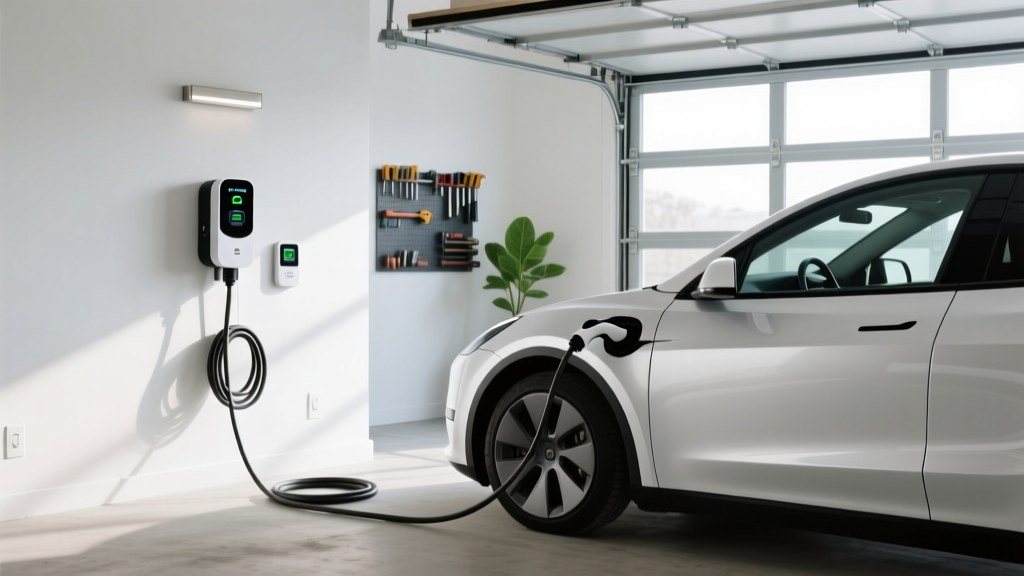
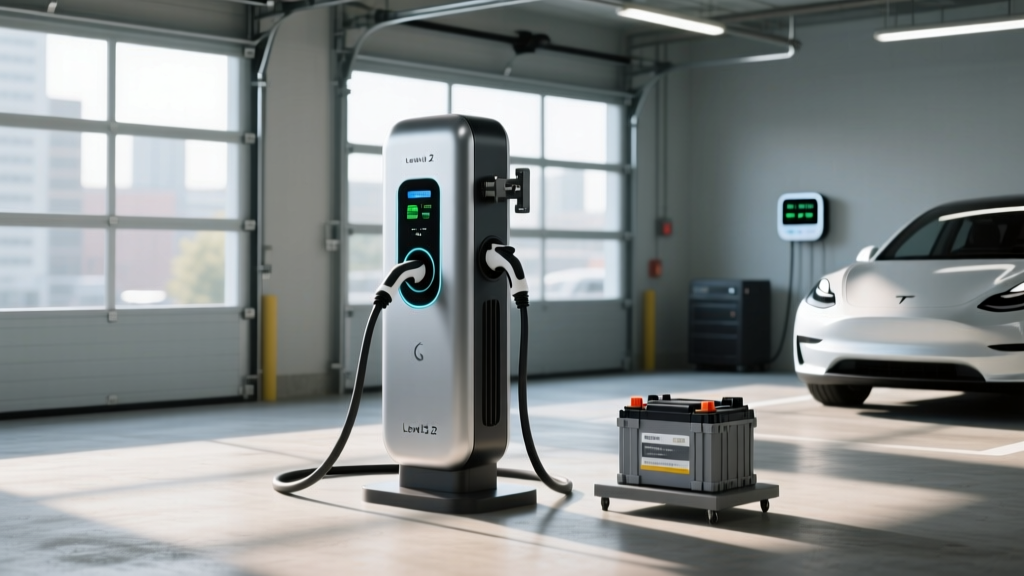
Level 2 (240V, 7.2–19.2 kW): Wall-mounted home chargers range from 12 to 35 lbs depending on cable length, build materials, and internal components. A compact 32-amp unit like the Emporia Vue runs about 13 lbs, while a 48-amp ChargePoint Home Flex with a 25-foot cable lands around 22 lbs. Heavy-duty commercial-grade Level 2 stations with integrated cable management and NEMA 4 outdoor enclosures can hit 35–50 lbs.
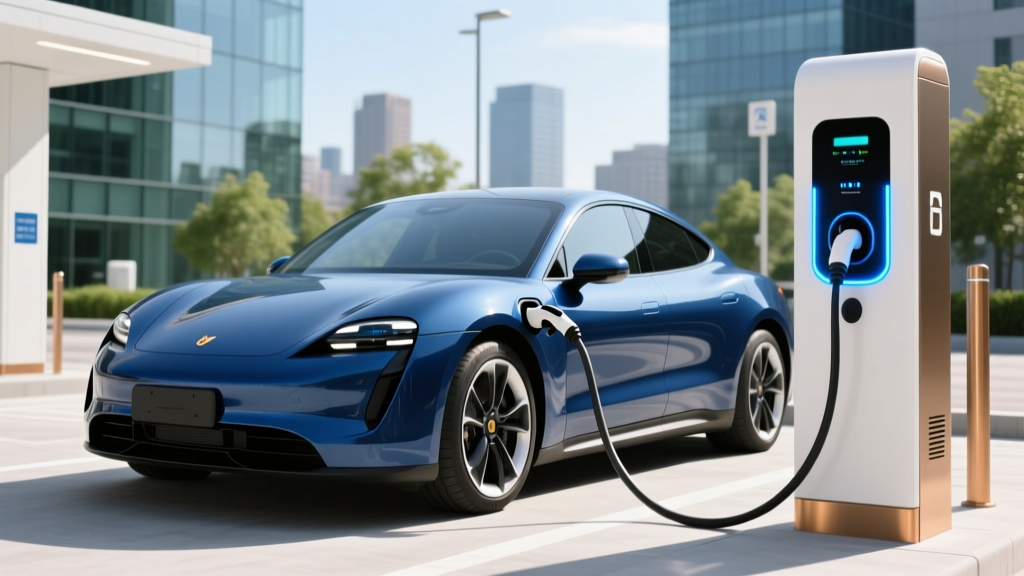
DC Fast Chargers (50–400 kW): These are industrial equipment. A standalone 50 kW CHAdeMO/CCS pedestal weighs 150–300 lbs. Modern 150–350 kW dispensers from Electrify America or Tesla Supercharger V4 cabinets weigh 250–800+ lbs per unit, not counting the separate power cabinet. These require concrete pads, commercial-grade electrical service, and professional rigging to install.
Charging Levels Explained: Speed, Power, and Range Added
Before choosing equipment, you need to understand the three charging levels and what each delivers. Remember the critical distinction: kW (kilowatts) measures power — how fast energy flows into your car. kWh (kilowatt-hours) measures energy — the total capacity of your battery. Think of kW as the width of a pipe and kWh as the size of the tank you're filling.
| Level | Voltage | Power (kW) | Miles of Range/Hour | Typical Use |
|---|---|---|---|---|
| Level 1 | 120V AC | 1.4–1.9 kW | 3–5 mi/hr | Overnight top-up, PHEVs, low-mileage drivers |
| Level 2 | 240V AC | 7.2–19.2 kW | 20–60 mi/hr | Home daily charging, workplace, destinations |
| DC Fast | 400–900V DC | 50–400 kW | 150–1,200+ mi/hr | Road trips, highway corridors, fleet depots |
Real-world charging time examples (10–80% State of Charge):
- Hyundai Ioniq 5 (84 kWh battery, 350 kW peak DC): ~18 minutes on a 350 kW charger, tapering significantly above 80%
- Tesla Model Y Long Range (75 kWh usable, 250 kW peak DC): ~25 minutes on a V3 Supercharger
- Ford F-150 Lightning Extended Range (131 kWh battery, 150 kW peak DC): ~42 minutes on a 150 kW DC station
- Level 2 at home (11.5 kW / 48A): A full 10–80% session on an 84 kWh battery takes roughly 5.5 hours — ideal for overnight
DC fast charging follows a charge curve: your car pulls peak kW only in the lower portion of the battery (roughly 10–50% SoC), then tapers progressively to protect the cells. A charger rated at 250 kW won't sustain that rate for the entire session. This is why 10–80% time is a more useful metric than peak kW alone.
How Much Does It Cost to Install a Home EV Charger?
Home Level 2 installation costs vary widely based on your electrical panel's capacity, the distance from panel to charger, and local permit requirements. Here's a realistic 2026 breakdown:
| Component | Typical Range | Notes |
|---|---|---|
| Level 2 charger hardware | $300–$750 | 32A–48A smart Wi-Fi chargers |
| Electrician labor (standard install) | $400–$1,200 | Short run from panel, same wall or adjacent |
| Electrician labor (long/complex run) | $1,200–$3,000+ | Conduit through attic, crawlspace, or long distance |
| Electrical permit | $50–$250 | Varies by municipality |
| Panel upgrade (if needed) | $1,500–$4,000 | Upgrading from 100A to 200A service |
| Total (no panel upgrade) | $750–$2,200 | Most homes with 200A service |
| Total (with panel upgrade) | $2,250–$6,200 | Older homes with 100A or less |
Electrical requirements for a typical Level 2 install:
- Voltage: 240V (same as an electric dryer or oven)
- Amperage: 40A or 60A dedicated circuit (breaker rated 125% of continuous load per NEC Article 625)
- Wire gauge: 6 AWG copper for 40A circuits, 4 AWG for 60A circuits
- Outlet vs. hardwired: NEMA 14-50 outlet offers portability; hardwired avoids GFCI breaker nuisance trips (a known issue with some 240V GFCI breakers on EV loads)
- GFCI protection: NEC 2020+ requires GFCI for receptacle-based installs; hardwired units are exempt in most jurisdictions
Which Connector Is Compatible With My EV?
The connector landscape shifted dramatically in 2024–2025 when most major automakers adopted the North American Charging Standard (NACS), originally developed by Tesla. Here's where things stand in 2026:
| Connector | Brands Using It (Native) | Notes |
|---|---|---|
| NACS (Tesla) | Tesla, Ford, GM, Rivian, Volvo, Polestar, Mercedes-Benz, Nissan, Honda, Fisker, Lucid (2025+) | Now the dominant standard; access to Tesla Supercharger network |
| CCS1 | Hyundai, Kia, BMW, Volkswagen, Stellantis (some models) | Still widely deployed on public chargers; adapters available |
| CHAdeMO | Nissan Leaf (legacy) | Being phased out; new vehicles no longer use it |
Adapter situations to know about:
- CCS vehicle → NACS Supercharger: Tesla sells a CCS-to-NACS adapter (~$250). Ford and GM also provide or sell adapters for their NACS-equipped vehicles to use legacy CCS public chargers.
- NACS vehicle → CCS public charger: Most NACS vehicles can use a NACS-to-CCS adapter to access Electrify America, EVgo, and other CCS networks. Adapters cost $200–$300.
- CHAdeMO: Adapters to CCS or NACS are not commercially available. CHAdeMO vehicles are limited to remaining CHAdeMO-equipped stations.
For home Level 2 charging, connector choice matters less — you buy the charger that matches your car's inlet. Most home chargers in 2026 ship with either a NACS or CCS connector, and some manufacturers offer swap-able connector heads.
How Much Does Charging Cost Per Mile vs. Gas?
The economics of EV charging depend heavily on where and when you charge. Here's a realistic comparison using a 2026 average EV efficiency of 3.0 miles/kWh and a comparable gas vehicle at 28 MPG combined:
| Scenario | Cost per kWh | Cost per Mile | Annual Cost (12,000 mi) |
|---|---|---|---|
| Home (off-peak utility rate) | $0.09–$0.14 | $0.03–$0.047 | $360–$564 |
| Home (standard residential rate) | $0.15–$0.20 | $0.05–$0.067 | $600–$804 |
| Public Level 2 (ChargePoint, etc.) | $0.25–$0.49 | $0.083–$0.163 | $996–$1,956 |
| DC Fast Charging (EA, EVgo, Tesla) | $0.35–$0.55 | $0.117–$0.183 | $1,404–$2,196 |
| Gasoline ($3.50/gal, 28 MPG) | — | $0.125 | $1,500 |
| Gasoline ($4.00/gal, 28 MPG) | — | $0.143 | $1,716 |
The takeaway: Home charging at off-peak rates delivers the lowest per-mile cost — roughly 70–75% cheaper than gasoline. Even at standard residential rates, home charging beats gas. However, exclusive reliance on DC fast charging can equal or exceed gasoline costs, which is why home or workplace Level 2 access is the economic foundation of EV ownership.
Time-of-use (TOU) utility plans can dramatically reduce home charging costs. Many utilities offer rates as low as $0.06–$0.09/kWh during overnight hours (typically 11 PM – 7 AM). Set your charger's scheduling feature to charge during these windows.
2026 Equipment Recommendations: Best Home Level 2 Chargers
Based on power output, reliability, smart features, and value, these are our top home charger picks for 2026:
Emporia Vue Level 2
- Power: 48A / 11.5 kW (hardwired) or 40A / 9.6 kW (NEMA 14-50)
- Connector: NACS or CCS1
- Cable length: 24 ft
- Weight: ~13 lbs
- Smart features: Wi-Fi, app scheduling, energy monitoring, solar integration
- Price: $349–$399
- Best for: Budget-conscious buyers wanting full smart features
ChargePoint Home Flex
- Power: Configurable 16A–50A (up to 12 kW)
- Connector: NACS or CCS1 (swappable)
- Cable length: 25 ft
- Weight: ~22 lbs
- Smart features: Wi-Fi, Alexa/Google Home, detailed app, load sharing
- Price: $549–$649
- Best for: Flexibility across amperages and connector types
Tesla Wall Connector
- Power: 48A / 11.5 kW
- Connector: NACS native (includes J1772 adapter for non-Tesla EVs)
- Cable length: 24 ft
- Weight: ~15 lbs
- Smart features: Wi-Fi updates, power sharing between units, Tesla app
- Price: $475
- Best for: Tesla and NACS-vehicle owners
Grizzl-E Smart
- Power: 40A / 9.6 kW
- Connector: NACS or J1772/CCS
- Cable length: 24 ft
- Weight: ~18 lbs
- Smart features: Wi-Fi, OCPP-compatible, adjustable amperage
- Price: $449–$499
- Best for: Extreme cold durability (rated to -40°F), Canadian-made
Safety, Code, and Installation Best Practices
EV charging involves sustained high-current draw — more like running an electric furnace for 8 hours than briefly using a microwave. Safety and code compliance are non-negotiable:
- Dedicated circuit: Your Level 2 charger must be on its own dedicated circuit. Never share a circuit with other major appliances.
- NEC Article 625: EV charging is classified as a continuous load, meaning the circuit breaker must be rated at 125% of the charger's maximum draw. A 48A charger requires a 60A breaker.
- Outdoor rating: If mounting outdoors, choose a charger rated NEMA 4 (weatherproof) or NEMA 4X (corrosion-resistant). Indoor-only units in an unconditioned garage are generally fine but check manufacturer specs for temperature range.
- Cable management: A 25-foot cable weighs several pounds and can be a tripping hazard. Use a cable holster or retractor, especially in shared driveways.
- Permit and inspection: Most jurisdictions require an electrical permit for a new 240V circuit. The inspection ensures proper wire gauge, breaker sizing, grounding, and GFCI compliance. Skipping the permit risks insurance claim denials and code violations discovered at home sale time.
- Utility notification: Some utilities require you to notify them before installing an EV charger, particularly if you want a TOU rate plan or if your transformer serves multiple homes.
Frequently Asked Questions
How much does it cost to install a home EV charger?
A straightforward Level 2 installation in a home with adequate electrical service typically costs $750–$2,200 including equipment, electrician labor, and permit. If your home needs a panel upgrade from 100A to 200A service, add $1,500–$4,000, bringing the total to $2,250–$6,200. Always get 2–3 quotes from licensed electricians who have specific EV charger installation experience.
How fast will each charging level add range?
Level 1 (120V) adds roughly 3–5 miles per hour — enough for plug-in hybrids or drivers covering under 30 miles daily. Level 2 (240V) adds 20–60 miles per hour depending on amperage, easily replenishing a full day's driving overnight. DC fast charging adds 150–1,200+ miles per hour at peak rates, enabling 10–80% charges in 18–45 minutes depending on vehicle and charger capability.
Which connector/charger is compatible with my EV?
Check your vehicle's charge port. In 2026, most new EVs from Ford, GM, Rivian, Tesla, Volvo, and others use NACS. Hyundai, Kia, BMW, and VW largely still use CCS1. The Nissan Leaf (discontinued after 2025) used CHAdeMO. For home charging, simply buy a charger with the matching connector. For public DC charging, adapters bridge most gaps — Tesla's CCS-to-NACS adapter and third-party NACS-to-CCS adapters cover the majority of scenarios.
How much does charging cost per mile vs gas?
Home charging at off-peak rates costs $0.03–$0.05 per mile — roughly 70% less than gasoline at $3.50/gallon in a 28 MPG vehicle ($0.125/mile). Standard residential rates bring EV costs to $0.05–$0.07/mile. Exclusive DC fast charging at $0.35–$0.55/kWh costs $0.12–$0.18/mile, which can equal or exceed gas. The economic case for EVs rests on consistent access to affordable home or workplace Level 2 charging.
What electrical upgrades might I need?
The most common upgrade is a panel replacement from 100A to 200A service ($1,500–$4,000). Older homes may also need new wiring from the meter to the panel, or a utility transformer upgrade if the existing transformer is undersized for the added load. Some homes benefit from a load management device (like the Emporia Smart Load Center or Tesla Wall Connector power-sharing feature) that dynamically reduces charger draw when other appliances activate, avoiding a panel upgrade entirely.
Does the federal tax credit apply to home charger installation?
The IRS Residential Clean Energy Credit previously covered 30% of home EV charger hardware and installation costs (up to $1,000). However, this credit has undergone legislative changes — check current irs.gov guidance and consult a tax professional before assuming eligibility. Some states and utilities offer separate rebates for charger equipment and installation that stack with any remaining federal incentives.
For more on EV efficiency ratings and real-world range data, the EPA's fueleconomy.gov database provides MPGe and kWh/100mi figures for every certified electric vehicle sold in the United States.