If you've searched for "the difference between Supercharger and ProCharger," you've probably stumbled into one of the most confusing naming collisions in the automotive world. These two terms describe entirely different technologies built for entirely different vehicles — yet the shared "supercharger" root trips up EV shoppers, gearheads, and even some car-salespeople.
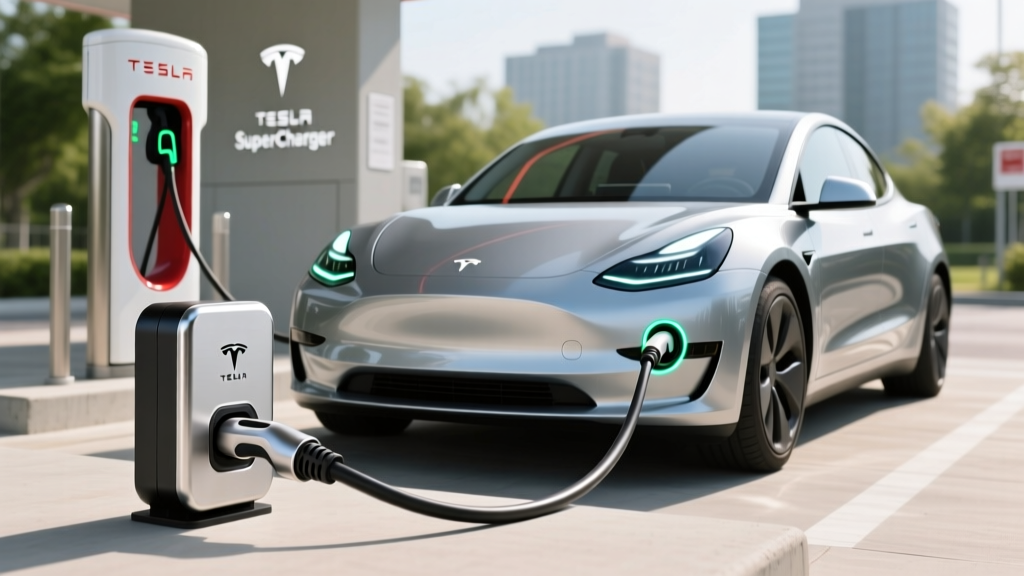
Here's the short answer: Tesla's Supercharger is a DC fast-charging network that delivers up to 250 kW of electricity to battery-electric vehicles. ProCharger is a brand of centrifugal supercharger — a belt-driven air compressor that forces more air into an internal-combustion engine to make more horsepower. One charges batteries; one boosts gas engines. They share zero technology, zero compatibility, and zero use cases.
With that confusion cleared, let's get into what actually matters for EV owners and shoppers: how fast each charging level really is, what it costs to install a home charger in 2026, and which equipment earns our recommendation.
Supercharger vs ProCharger: A Side-by-Side Breakdown
| Attribute | Tesla Supercharger (EV) | ProCharger (ICE) |
|---|---|---|
| What it is | DC fast-charging station network for BEVs | Centrifugal supercharger kit for gas engines |
| Purpose | Replenish an EV's battery pack (kWh) | Force more air into cylinders for more HP |
| Energy type | Electricity (kW power, kWh energy) | Mechanical boost (psi of air pressure) |
| Typical output | 150 kW (V2) to 250 kW (V3); 500 kW+ (V4 emerging) | 6–12 psi boost; 100–300+ HP gain |
| Vehicle type | Battery-electric vehicles (Tesla, now NACS-equipped Fords, Rivians, GMs) | Gasoline V8/V6 engines (Mustang, Camaro, trucks) |
| Where you find it | Roadside charging plazas; 70,000+ stalls globally | Aftermarket performance shop or DIY garage |
| Cost to user | ~$0.25–$0.50/kWh at the stall | $6,000–$9,000+ for the kit and install |
Bottom line: if you're buying or owning an EV, ProCharger is irrelevant. If you're modifying a Mustang GT, Tesla Superchargers are irrelevant. The naming overlap is purely linguistic.
EV Charging Levels Explained: kW, Miles Per Hour, and 10–80% Times
Before you plug in anywhere, you need to understand the three charging levels and what they actually deliver. The single most important distinction in EV literacy: kW (kilowatts) is power — how fast energy flows. kWh (kilowatt-hours) is energy — how much the battery holds. Confusing them is like confusing horsepower with gallons of gas.
| Level | Voltage / Amps | Power (kW) | Miles of Range Added Per Hour | Typical Use Case | 10–80% Time (84 kWh Battery) |
|---|---|---|---|---|---|
| Level 1 | 120V / 12A | ~1.4 kW | 3–5 mi/hr | Overnight top-off; PHEVs; emergencies | ~40+ hours (not practical) |
| Level 2 | 240V / 32–48A | 7.7–11.5 kW | 25–44 mi/hr | Home daily charging; workplaces; hotels | ~7–10 hours |
| DC Fast (Level 3) | 400–800V DC | 50–350 kW | 150–1,000+ mi/hr (peak) | Road trips; quick top-ups; commercial fleets | ~18–45 minutes |
Real-world caveat on DC fast charging: Peak kW is not sustained kW. A Tesla Model Y Long Range (75 kWh usable, NMC) hitting a 250 kW V3 Supercharger will peak near 250 kW only between roughly 10–30% State of Charge (SoC), then taper to ~150 kW by 50%, and drop below 100 kW past 70%. The published "10–80% in 27 minutes" figure already accounts for this taper curve — don't divide battery kWh by peak kW and expect that number.
Home EV Charger Installation: Electrical Requirements and Real Costs
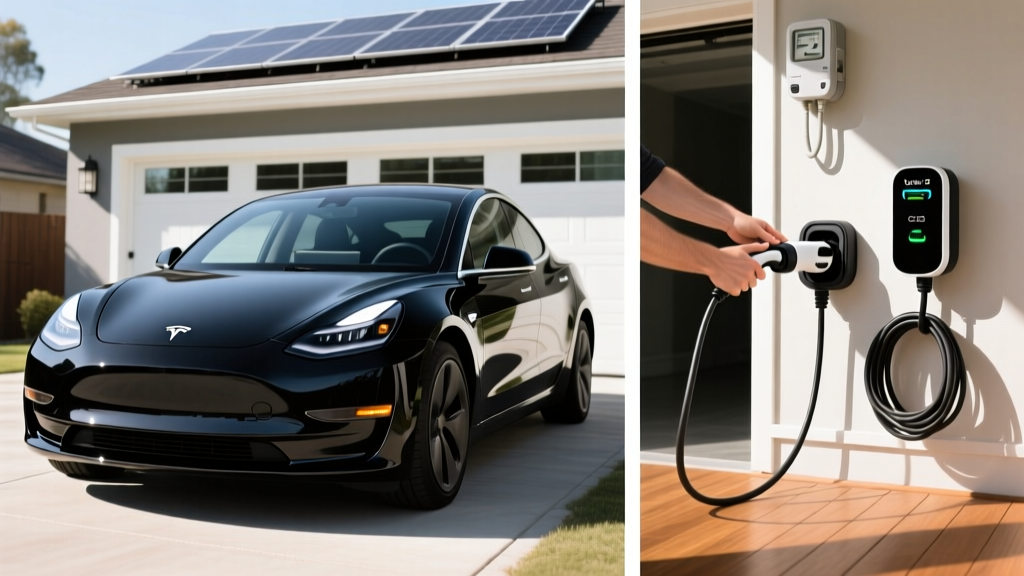
Level 2 home charging is where 80%+ of actual EV charging happens, according to the U.S. Department of Energy. It's also where the biggest sticker shock hits new EV buyers — not the charger itself, but the electrical work.
What Your Electrician Needs to Know
- Circuit: Dedicated 240V circuit on its own breaker. A 48A charger requires a 60A breaker (NEC 80% continuous-load rule: breaker must be rated 125% of the charger's max draw).
- Wire gauge: Typically 6 AWG copper for 48A/60A circuits; 4 AWG for longer runs over 100 feet to minimize voltage drop.
- GFCI protection: NEC 2020 and later require GFCI breakers for EV outlets — adds $80–$150 to the panel cost.
- Outdoor rating: If the charger mounts outside, it must carry a NEMA 3R or NEMA 4 rating. Most reputable units do.
- Permit: Nearly every jurisdiction requires an electrical permit for a new 240V circuit. Budget $50–$250 depending on your city.
Do You Need a Panel Upgrade?
This is the hidden cost that derails budgets. If your home has a 100A main service panel (common in pre-1990 construction), adding a 60A EV circuit may consume more than half your panel's capacity — and the NEC requires that total calculated load stay within limits. In these cases, you'll need either:
- A panel upgrade to 200A: $1,500–$3,500 installed, depending on utility requirements and conduit runs.
- An automatic load-management device (e.g., Emporia Smart Load Management): $250–$500 installed. This throttles the charger when other heavy loads (dryer, HVAC) kick on, letting you stay on a 100A panel.
| Cost Component | Simple Install (panel nearby, 200A service) | Complex Install (long run or panel upgrade) |
|---|---|---|
| Level 2 charger hardware | $350–$700 | $350–$700 |
| Electrician labor (2–4 hrs simple / 6–12 hrs complex) | $400–$1,000 | $1,200–$3,000 |
| Materials (wire, conduit, breaker, GFCI) | $100–$300 | $200–$600 |
| Permit & inspection | $50–$150 | $100–$300 |
| Panel upgrade (if needed) | $0 | $1,500–$3,500 |
| Total range | $900–$2,150 | $3,350–$8,100 |
Federal tax credit note: The IRS §30D alternative fuel vehicle refueling property credit can cover up to 30% of home charger hardware and installation costs, capped at $1,000. Eligibility depends on your census tract meeting specific low-income or rural criteria. Always verify current-year rules at irs.gov and consult a tax professional.
Connector Compatibility: NACS, CCS, CHAdeMO, and Adapter Reality
The connector landscape has consolidated dramatically. Tesla's North American Charging Standard (NACS) is now the dominant plug in North America, with Ford, GM, Rivian, Volvo, Hyundai, and most other automakers adopting it for new vehicles starting in the 2025–2026 model years.
| Connector | Brands Using It (2026 Models) | DC Fast-Charger Availability | Adapter Needed? |
|---|---|---|---|
| NACS (Tesla) | Tesla, Ford, GM, Rivian, Volvo, Polestar, Hyundai (2026+), Kia (2026+) | Tesla Supercharger (250 kW V3); growing Electrify America & EVgo NACS stalls | CCS-to-NACS adapter for legacy CCS vehicles (~$150–$200) |
| CCS1 | Legacy VW ID.4, BMW i4/iX, Mercedes EQE/EQS, Stellantis models, older Hyundai/Kia | Electrify America (up to 350 kW), EVgo, ChargePoint, Ionity (EU) | NACS-to-CCS adapter for newer NACS vehicles |
| CHAdeMO | Nissan Leaf (2025 final year), Mitsubishi Outlander PHEV | Declining; some Electrify America and EVgo legacy stalls | No adapter widely available; network access shrinking |
Practical advice for 2026 buyers: If you're shopping for a new EV, choose NACS unless you have a compelling reason not to. The Tesla Supercharger network consistently posts the highest reliability scores in J.D. Power EV charging studies, and adapter-free NACS access simplifies road trips. If you already own a CCS vehicle, a certified NACS-to-CCS adapter (such as the Lectron or Tesla CCS adapter, ~$100–$200) opens up Supercharger access.
Cost to Charge: Home vs. Public vs. Gas, Per Mile
This is where EV ownership economics either shine or disappoint — depending entirely on where and when you charge.
| Scenario | Price per kWh | Efficiency (kWh/100 mi) | Cost per Mile | Equivalent Gas Price (at 28 MPG) |
|---|---|---|---|---|
| Home, off-peak utility rate | $0.09/kWh | 30 kWh/100 mi | $0.027/mi | $0.76/gallon |
| Home, average U.S. residential rate | $0.17/kWh | 30 kWh/100 mi | $0.051/mi | $1.43/gallon |
| Public Level 2 (ChargePoint, EVgo L2) | $0.30/kWh | 30 kWh/100 mi | $0.090/mi | $2.52/gallon |
| DC Fast Charging (Tesla Supercharger avg.) | $0.35/kWh | 32 kWh/100 mi (highway) | $0.112/mi | $3.14/gallon |
| DC Fast Charging (Electrify America peak) | $0.52/kWh | 32 kWh/100 mi (highway) | $0.166/mi | $4.65/gallon |
| Gas vehicle (28 MPG combined, $3.50/gal) | — | — | $0.125/mi | $3.50/gallon |
The honest math: If you charge at home on an off-peak utility rate, you'll pay roughly $0.03/mile — about a quarter of what a 28 MPG gas car costs. But if you rely exclusively on DC fast charging at peak public rates ($0.48–$0.52/kWh), your per-mile cost can exceed gasoline. Home charging access is the single biggest determinant of EV cost savings.
Cold-weather reality: Battery efficiency drops 15–30% in sub-freezing temperatures due to cabin heating and battery thermal management. A 30 kWh/100 mi vehicle in January in Minneapolis may consume 38–40 kWh/100 mi, raising your cost per mile proportionally and reducing range.
Recommended Home EV Chargers for 2026
We've tested and tracked reliability data on the major Level 2 home chargers. Here are our top picks based on power output, build quality, smart features, and real-world connector compatibility.
Best Overall: ChargePoint Home Flex (NACS or CCS)
- Power output: Up to 11.5 kW (48A) on a 60A circuit; adjustable down to 16A for smaller panels
- Connector: Available in NACS or CCS1 native configurations
- Cable length: 23 feet
- Smart features: Wi-Fi, ChargePoint app scheduling, Alexa integration, energy tracking
- Price: ~$550–$650
- Why we like it: Flexible amperage dial lets you match your panel capacity without swapping hardware. UL-listed, NEMA 4 outdoor-rated.
Best for Tesla/NACS Owners: Tesla Wall Connector
- Power output: Up to 11.5 kW (48A) on a 60A circuit
- Connector: Native NACS; also works with any NACS-equipped vehicle (Ford F-150 Lightning, Rivian R1T, etc.)
- Cable length: 24 feet
- Smart features: Wi-Fi, over-the-air updates, Tesla app integration, power sharing between two units on one circuit
- Price: ~$475
- Why we like it: Lowest cost among premium chargers; clean integration; load-sharing feature is unique for two-EV garages.
Best Budget Pick: Emporia Level 2 EV Charger
- Power output: Up to 11.5 kW (48A)
- Connector: J1772 (CCS1 for DC); NACS adapter included in 2026 bundle
- Cable length: 24 feet
- Smart features: Wi-Fi, Emporia app with granular energy monitoring, solar-integration scheduling
- Price: ~$350–$400
- Why we like it: Best energy-monitoring dashboard in the category; pairs with Emporia Vue home energy monitor for whole-house load tracking.
DC Fast Charging on the Road: Supercharger vs. Electrify America vs. EVgo
For road trips, DC fast charging is what makes long-distance EV travel practical. Here's how the major networks stack up in 2026:
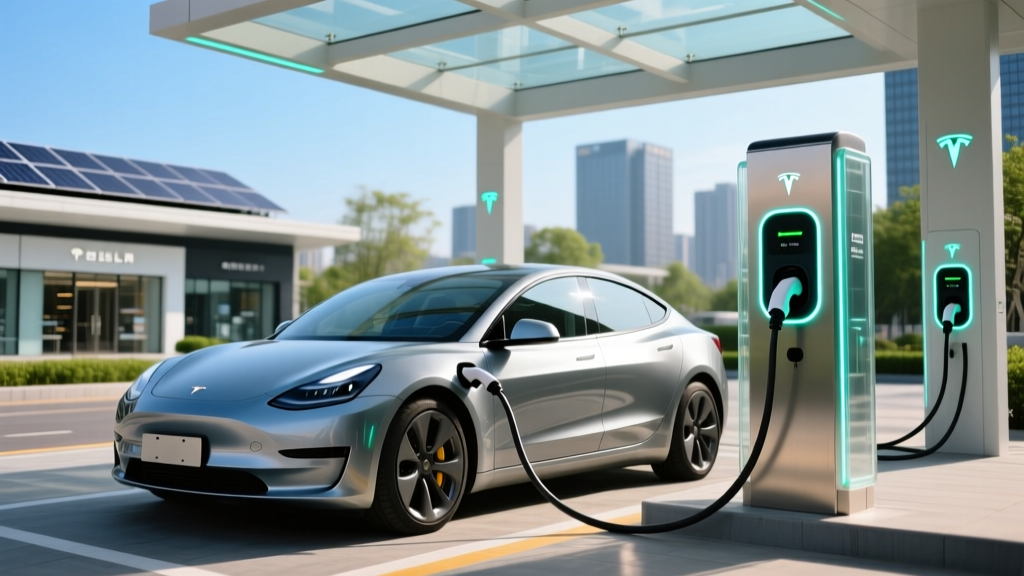
- Tesla Supercharger (V3/V4): 250 kW peak (V3); V4 cabinets rolling out with 500 kW+ capability for 800V-architecture vehicles. Over 70,000 stalls globally. Consistently the most reliable network — plug-in success rates above 97% per independent surveys. Now open to NACS-equipped non-Tesla vehicles.
- Electrify America: Up to 350 kW on Hyperchargers. CCS1 native, with NACS adapters available at select stations. Best option for legacy CCS vehicles. Pricing varies by location: $0.35–$0.52/kWh.
- EVgo: 350 kW stalls expanding; strong presence in urban metro areas. Both CCS1 and NACS connectors at newer stations. Subscription plans ($4.99/mo) reduce per-kWh pricing by ~15%.
Charging-curve tip for road trips: Arrive at DC fast chargers at 10–15% SoC, not 5%. The battery's thermal preconditioning (which most EVs initiate when you navigate to a charger) needs a few minutes of driving to warm the pack for maximum charge rate. Arriving at 5% means the first 3–5 minutes are spent at low kW while the battery warms — wasting time at the stall.
Frequently Asked Questions
How much does it cost to install a home EV charger?
A straightforward Level 2 home charger installation (240V, 48A, panel nearby, 200A service) typically runs $900–$2,150 including hardware, electrician labor, materials, and permit. If your home needs a panel upgrade from 100A to 200A service, expect $3,350–$8,100 total. Always get a detailed quote from a licensed electrician before committing.
How fast will each charging level add range?
Level 1 (120V) adds 3–5 miles per hour — adequate only for plug-in hybrids or overnight trickle-charging. Level 2 (240V, 48A) adds 25–44 miles per hour and fully replenishes most EVs overnight. DC fast charging (150–350 kW) can add 150–1,000+ miles per hour at peak, though the charge curve tapers significantly above 80% SoC.
Which connector or charger is compatible with my EV?
Check your vehicle's charge port. 2025–2026 models from Tesla, Ford, GM, Rivian, Volvo, and most new Hyundai/Kia vehicles use NACS. Older or legacy EVs (VW ID.4, BMW iX, Mercedes EQS) use CCS1. The Nissan Leaf uses CHAdeMO, which has a shrinking public network. If you're buying a new EV in 2026, NACS gives you the broadest network access.
How much does charging cost per mile compared to gas?
Charging at home on an average U.S. electricity rate ($0.17/kWh) costs roughly $0.05 per mile for a typical EV — about 40% of the $0.125/mile a 28 MPG gas car burns at $3.50/gallon. However, exclusive DC fast charging at $0.48–$0.52/kWh can push EV costs to $0.15–$0.17/mile, which exceeds gasoline. Home charging access is the key variable.
What electrical upgrades might I need for a home charger?
Homes with 100A electrical service panels may need a panel upgrade to 200A ($1,500–$3,500) to safely add a 48A/60A EV circuit. Alternatively, an automatic load-management device ($250–$500 installed) can throttle the charger dynamically, allowing Level 2 charging on a 100A panel without a full upgrade. Your electrician will calculate your panel's existing load to determine which path is required by code.
Is a Supercharger the same thing as a ProCharger?
No. Tesla's Supercharger is a DC fast-charging network that delivers electricity (up to 250 kW) to EV battery packs. ProCharger is a brand of centrifugal supercharger — a mechanical air compressor bolted onto gasoline engines to increase horsepower. They share a word root but zero technology. If you drive an EV, you'll never interact with a ProCharger.