What Is Supercharger V4 and Why Does It Matter?
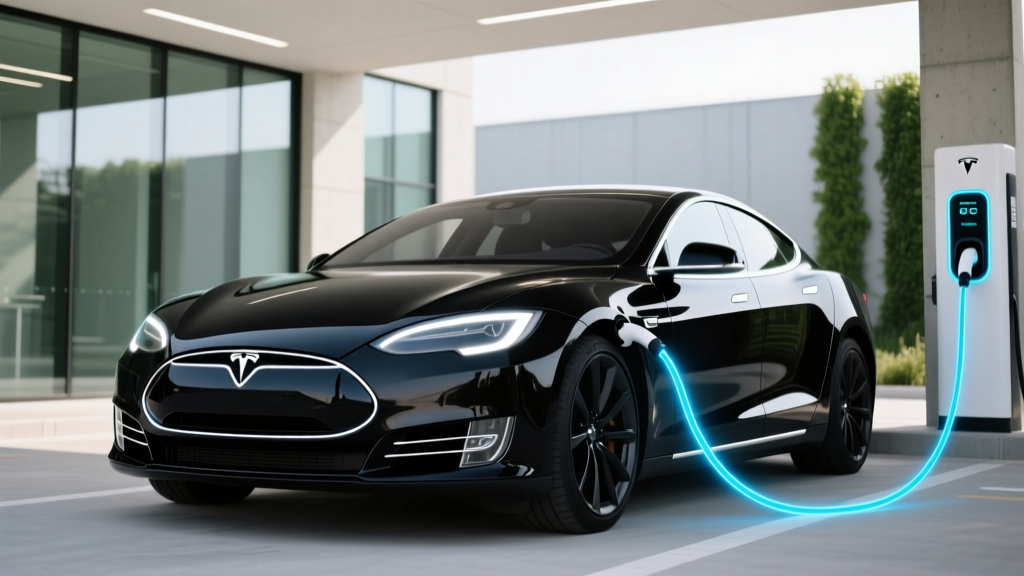
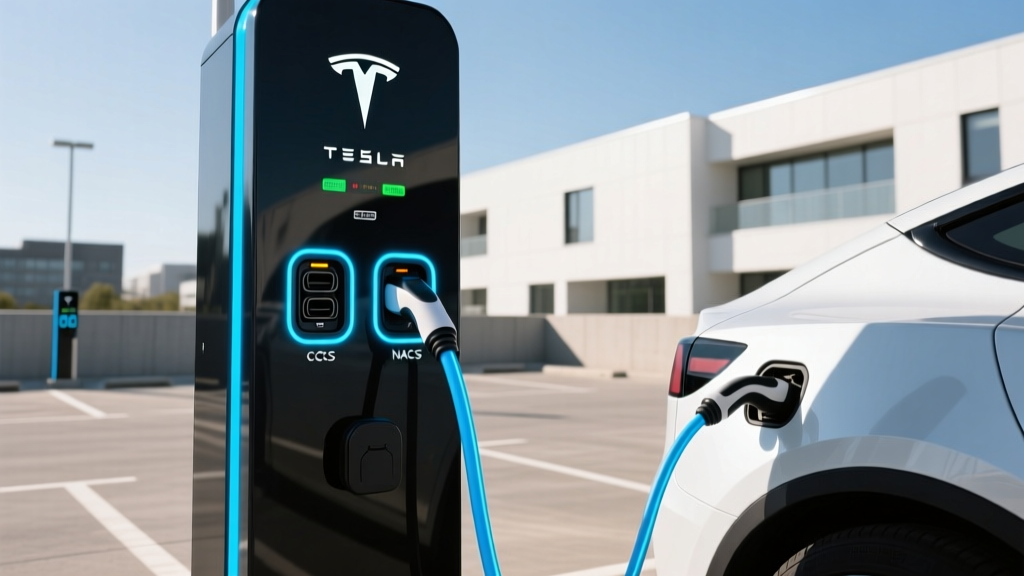
Tesla's Supercharger V4 architecture, now rolling out across North America and Europe, represents a significant shift in DC fast-charging capability — not just for Tesla owners, but for the broader EV market. Unlike earlier Supercharger generations that relied on proprietary connectors, V4 stations are designed from the ground up to support both the North American Charging Standard (NACS) and CCS1 connectors, opening Tesla's industry-leading charging network to vehicles from Ford, Rivian, Hyundai, GM, and others that have adopted NACS or carry approved adapters.
The headline number: Supercharger V4 cabinets support up to 350 kW of peak DC power delivery per stall, a substantial leap from the 250 kW ceiling of V3 stations. But as any experienced EV road-tripper knows, peak power is only part of the story. Sustained charging rates, thermal management, and your vehicle's onboard charge curve determine how fast you actually get back on the road.
This guide covers what V4 means in practice, how it fits into the broader charging ecosystem (Level 1, Level 2, and DC fast), what you'll pay to charge and install at home, and which equipment to buy. We'll also address the single most common point of confusion for new EV owners: the difference between kW (power — the rate of energy flow) and kWh (energy — the total amount stored in your battery). Think of kW as the width of a hose and kWh as the size of the bucket.
Charging Levels Explained: Speeds, Power, and Real-World Range Gains
Every EV owner needs to understand three charging levels. The table below shows typical power outputs and how many miles of range each adds per hour of charging.
| Level | Voltage | Power (kW) | Miles of Range Per Hour | Best For |
|---|---|---|---|---|
| Level 1 | 120V AC | 1.0–1.4 kW | 3–5 mi/hr | Overnight top-ups, PHEVs, emergencies |
| Level 2 | 240V AC | 3.3–19.2 kW | 12–75 mi/hr | Daily home charging, workplaces, destinations |
| DC Fast (V3 Supercharger) | 400–800V DC | 50–250 kW | 150–1,000+ mi/hr | Road trips, quick stops |
| DC Fast (V4 Supercharger) | 400–1000V DC | 50–350 kW | 200–1,300+ mi/hr | Next-gen road trips, high-voltage architectures |
A few critical nuances:
- Level 2 variance is huge. A 40-amp circuit delivers roughly 9.6 kW (about 35 mi/hr for an efficient sedan like the Tesla Model 3). A 48-amp circuit on a 60-amp breaker delivers 11.5 kW. An 80-amp hardwired unit can push 19.2 kW — but only if your EV's onboard charger can accept it. Most EVs max out at 11.5 kW (48 amps) onboard.
- DC fast charging isn't linear. A V4 stall may deliver 350 kW at 10% state of charge (SoC), but by 50% SoC the rate tapers significantly. By 80%, most vehicles pull under 100 kW. This is why manufacturers quote 10–80% charge times rather than 0–100%.
- Your vehicle is the bottleneck. Even at a 350 kW V4 stall, a vehicle with a 400V battery architecture (like the Hyundai Ioniq 5's earlier models or the Ford Mustang Mach-E) will typically peak around 235–270 kW. Vehicles with 800V architectures — the Porsche Taycan, Kia EV6/EV9, Hyundai Ioniq 5 (refreshed), and Lucid Air — can more fully exploit V4's headroom.
Supercharger V4 Technical Deep Dive
Tesla's V4 Supercharger architecture separates the power cabinet from the charging post (the pedestal you plug into). A single cabinet can serve multiple posts, dynamically distributing power based on each vehicle's demand. Key specifications:
- Peak power per stall: 350 kW (CCS/NACS connector)
- Voltage range: Up to 1,000V DC, supporting both 400V and 800V battery architectures
- Connector options: NACS (native Tesla and NACS-adopting vehicles) and CCS1 (via integrated cable or adapter)
- Cable length: Approximately 9.8 feet (3 meters) — slightly longer than V3, improving reach to charge ports on various vehicle designs
- Credit card reader: V4 posts include built-in payment terminals, eliminating the app-only requirement that frustrated non-Tesla drivers at earlier stations
Real-World 10–80% Charging Time Examples at V4
Charge times depend on battery size, chemistry, thermal preconditioning, and vehicle architecture. Here are estimates for common EVs at a V4 stall with proper battery preconditioning:
| Vehicle | Battery (kWh usable) | Architecture | Peak kW | 10–80% Time (est.) |
|---|---|---|---|---|
| Tesla Model 3 Highland (Long Range) | 75 kWh (NMC) | ~400V | ~250 kW | ~22 min |
| Hyundai Ioniq 5 (2026 refresh) | 84 kWh (NMC) | 800V | ~320 kW | ~16 min |
| Ford F-150 Lightning (Extended Range) | 131 kWh (NMC) | ~400V | ~230 kW | ~35 min |
| Kia EV6 GT-Line (AWD) | 77.4 kWh (NMC) | 800V | ~300 kW | ~17 min |
| Chevrolet Equinox EV (RS AWD) | 85 kWh (NMC) | ~400V | ~190 kW | ~30 min |
These figures assume the battery is preconditioned (warmed to optimal temperature via the vehicle's thermal management system before arrival). Without preconditioning — especially in cold weather — expect 10–80% times to increase by 30–50%.
Connector Compatibility: NACS, CCS1, and CHAdeMO
The connector landscape has consolidated significantly since 2023, when Ford, GM, Rivian, and others announced NACS adoption. As of 2026, here's where things stand:
| Connector | Native Vehicles | Adapter Required? | V4 Support |
|---|---|---|---|
| NACS (Tesla standard) | Tesla (all), Ford (2025+), GM (2025+), Rivian (2025+), Hyundai (2026+), Kia (2026+) | No (native NACS port) | Yes — native cable |
| CCS1 | VW ID.4, BMW iX/i4 (pre-2026), some older Hyundai/Kia, Volvo EX30/EX90 (varies) | NACS-to-CCS adapter for Tesla stalls | Yes — CCS cable at select V4 posts, or via adapter |
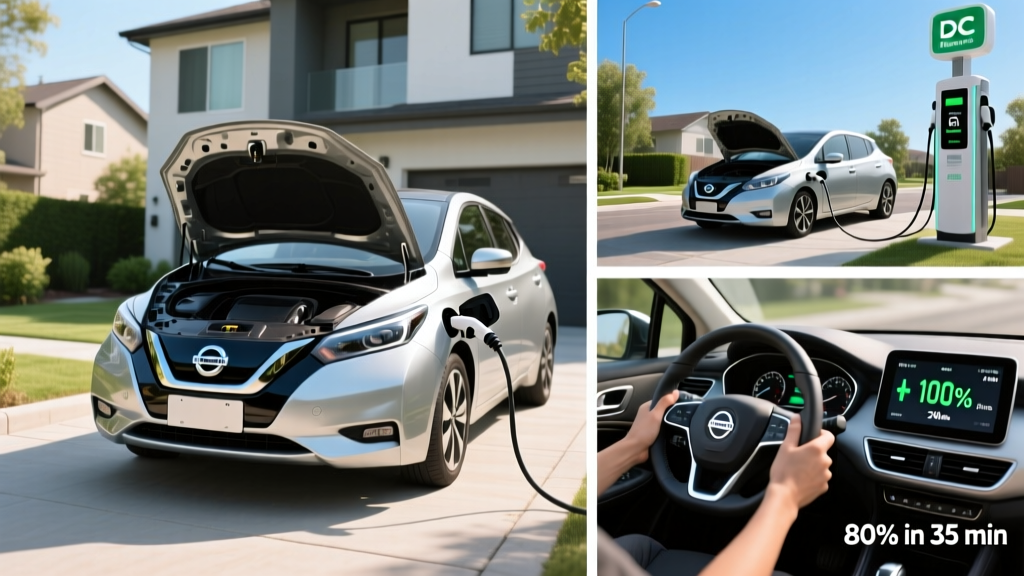
| CHAdeMO | Nissan Leaf (legacy), Mitsubishi Outlander PHEV (legacy) | Not compatible with V4 | No — CHAdeMO being phased out |
Adapter note: If your EV has a CCS1 port and you want to use Tesla Superchargers (V3 or V4), you'll need a NACS-to-CCS adapter. Tesla sells an official adapter (~$250), and third-party options from Lectron and A2Z are available for $150–$200. Ford and GM provide adapters to early NACS-transition buyers. Verify that any adapter is rated for the full amperage your vehicle can draw — cheap adapters may throttle charging speed or pose safety risks.
For a comprehensive list of compatible vehicles, check Tesla's Non-Tesla Supercharger support page and your vehicle manufacturer's charging guide.
Home Charging Installation: Costs, Electrical Requirements, and Upgrades
While Supercharger V4 is a road-trip solution, 80% or more of EV charging happens at home. Here's what a Level 2 home installation actually requires and costs.
Electrical Requirements
A typical Level 2 home charger runs on a 240V dedicated circuit, similar to an electric dryer or oven. Common configurations:
- 40-amp circuit (48-amp breaker): Delivers 9.6 kW — sufficient for most EVs and the most common residential install.
- 50-amp circuit (60-amp breaker): Delivers 12 kW (48 amps continuous) — matches the onboard charger limit of most EVs (Tesla Model 3/Y, Hyundai Ioniq 5, Ford Mach-E).
- 60-amp circuit (70-amp breaker): Delivers 14.4 kW — useful for vehicles with larger onboard chargers (some Tesla models with 11.5 kW or 14.4 kW onboard capability, Lucid Air).
- 80-amp circuit (100-amp breaker): Delivers 19.2 kW — maximum Level 2, requires substantial panel capacity. Rare in older homes.
Panel upgrade reality: Most homes built before 2000 have 100-amp or 150-amp main service panels. Adding a 50-amp EV circuit may push total load beyond 80% of panel capacity — the National Electrical Code (NEC) threshold that triggers a required upgrade. A 200-amp panel upgrade typically costs $1,500–$3,500, and in some jurisdictions with older infrastructure, the utility may need to upgrade your service drop as well.
Installation Cost Breakdown
| Component | Low End | Typical | High End | Notes |
|---|---|---|---|---|
| Level 2 charger (hardware) | $300 | $500–$700 | $1,200 | Varies by brand, power, smart features |
| Electrician labor | $400 | $800–$1,500 | $3,000+ | Depends on run length, conduit, wall type |
| Permit and inspection | $50 | $100–$250 | $500 | Varies by municipality; some waive for EV |
| Panel upgrade (if needed) | $1,500 | $2,000–$3,000 | $5,000 | Required if panel lacks capacity |
| Total (no panel upgrade) | $750 | $1,400–$2,450 | $4,700 | Most common scenario |
| Total (with panel upgrade) | $2,250 | $3,400–$5,450 | $9,700 | Older homes, high-power installs |
Some utilities offer rebates of $200–$1,000 for Level 2 installations, and the federal Alternative Fuel Vehicle Refueling Property Credit (IRC §30C) covers up to 30% of home charging equipment and installation costs, capped at $1,000, for eligible taxpayers in qualifying census tracts. Check irs.gov for current eligibility rules — income limits and geographic restrictions apply.
Cost to Charge: Per-Mile Economics vs. Gasoline
The financial case for EV charging depends heavily on where and when you charge. Here's a realistic breakdown using a mid-efficiency EV consuming 3.0 miles per kWh (roughly 33 kWh/100 mi — typical for a Tesla Model Y or Hyundai Ioniq 5):
| Scenario | Rate ($/kWh) | Cost Per Mile | Equivalent Gas MPG (at $3.50/gal) |
|---|---|---|---|
| Home off-peak (utility time-of-use) | $0.08–$0.12 | $0.027–$0.040 | 88–130 MPG |
| Home standard rate (national avg) | $0.16 | $0.053 | 66 MPG |
| Public Level 2 (workplace, mall) | $0.20–$0.35 | $0.067–$0.117 | 30–52 MPG |
| DC fast — Electrify America / EVgo | $0.35–$0.55 | $0.117–$0.183 | 19–30 MPG |
| Tesla Supercharger V4 (member rate) | $0.25–$0.40 | $0.083–$0.133 | 26–42 MPG |
| Tesla Supercharger V4 (non-Tesla) | $0.35–$0.55 | $0.117–$0.183 | 19–30 MPG |
The bottom line: Charging at home on off-peak rates delivers fuel costs equivalent to 90–130 MPG — a massive savings over any gasoline vehicle. Exclusive reliance on DC fast charging erodes the advantage, bringing per-mile costs close to or above an efficient hybrid. Plan your ownership around home or workplace Level 2 charging, with DC fast charging as a road-trip supplement, and the economics strongly favor electric.
For official efficiency data on specific models, the EPA's fueleconomy.gov provides kWh/100mi figures and MPGe ratings for every EV sold in the US.
Recommended Home Charging Equipment (2026)
These Level 2 chargers represent the best options across budget, performance, and smart features. All support NACS or CCS1 (or both via cable/adapter compatibility).
Emporia Level 2 EV Charger
- Power: 48 amps (11.5 kW) on a 60-amp circuit
- Connector: J1772 (NACS adapter included with newer units)
- Cable length: 24 feet
- Smart features: Wi-Fi, app scheduling, solar integration, energy monitoring, load management
- Price: ~$400
- Best for: Budget-conscious buyers who want smart scheduling and solar-aware charging
Tesla Wall Connector (Gen 4)
- Power: 48 amps (11.5 kW) on a 60-amp circuit
- Connector: Native NACS
- Cable length: 24 feet
- Smart features: Wi-Fi, OTA updates, Power-Share load balancing between two units, vehicle-specific access control
- Price: ~$475
- Best for: Tesla and NACS-native vehicle owners; cleanest integration with Tesla app
ChargePoint Home Flex (2nd Gen)
- Power: Configurable 16–50 amps (up to 12 kW) — adjustable to match your circuit
- Connector: J1772 or NACS (model-dependent)
- Cable length: 23 feet
- Smart features: Wi-Fi, Alexa integration, detailed energy reports, flexible amperage dial
- Price: ~$550–$700
- Best for: Homes with limited circuit capacity (can dial down to 32 amps on a 40-amp breaker)
Grizzl-E Smart (United Chargers)
- Power: 40 amps (9.6 kW) on a 50-amp circuit
- Connector: J1772 or NACS
- Cable length: 24 feet
- Smart features: OCPP-compatible, works with multiple apps, firmware updates
- Price: ~$450
- Best for: Cold-climate durability (rated to -40°F), outdoor installs, Canadian/US dual support
Safety, Code, and Installation Best Practices
EV charging draws sustained high current for hours — unlike a dryer that cycles on and off. This makes proper installation non-negotiable:
- Dedicated circuit: Your Level 2 charger must have its own dedicated circuit — never shared with other appliances. NEC Article 625 governs EV charging installations.
- GFCI protection: The 2023 NEC revision (and subsequent local adoptions) requires GFCI protection for outdoor EV receptacles. Hardwired chargers (no plug) often avoid this requirement, which is why most electricians recommend hardwiring.
- Outdoor rating: If installing outdoors, the charger must carry a NEMA 4 (or IP65+) weather rating. All chargers listed above meet this standard.
- Continuous load derating: NEC defines EV charging as a continuous load, meaning the circuit must be rated at 125% of the charger's maximum draw. A 48-amp charger requires a 60-amp breaker — never a 50-amp.
- Permit and inspection: Virtually all jurisdictions require an electrical permit and final inspection for EV charger installations. Skipping this step risks insurance denial in the event of an electrical fire and may violate local code.
- Use a licensed electrician: While some plug-in (NEMA 14-50) chargers can technically be self-installed into an existing outlet, we strongly recommend professional installation. An electrician will verify wire gauge, breaker sizing, panel capacity, and grounding — preventing the overheating and fire risks that have plagued DIY installs using undersized wiring or consumer-grade receptacles.
Frequently Asked Questions
How much does it cost to install a home EV charger?
A typical Level 2 home installation (hardware, electrician labor, and permit) costs $1,400–$2,450 if your electrical panel has sufficient capacity. If a panel upgrade is required — common in homes with 100-amp or 150-amp service — total costs range from $3,400 to $5,450 or more. The federal §30C credit may cover up to $1,000 (30% of equipment and install) for eligible taxpayers in qualifying areas.
How fast will each charging level add range?
Level 1 (120V) adds 3–5 miles per hour. Level 2 (240V) adds 12–75 miles per hour depending on amperage and your vehicle's onboard charger. DC fast charging at a Supercharger V4 can add 200+ miles in 10–15 minutes for vehicles with 800V architectures, though real-world speeds depend on battery size, state of charge, and temperature.
Which connector is compatible with my EV?
If you drive a 2025+ Tesla, Ford, GM, Rivian, or 2026+ Hyundai/Kia EV, your vehicle likely has a native NACS port — plug directly into any Supercharger V4 stall. If your EV has a CCS1 port (VW ID.4, older BMWs, some Volvos), you'll need a NACS-to-CCS adapter. CHAdeMO vehicles (Nissan Leaf) cannot use Supercharger V4 stations.
How much does charging cost per mile vs gas?
Home charging on off-peak rates costs roughly $0.03–$0.04 per mile — equivalent to 88–130 MPG in a gas car. Public DC fast charging costs $0.12–$0.18 per mile, closer to a 19–30 MPG gas vehicle. The greatest savings come from consistent home charging.
What electrical upgrades might I need?
If your home has a 200-amp main panel with available capacity, you likely need only a new dedicated circuit — no panel work. Homes with 100-amp or 150-amp panels, or those already running high-draw appliances (electric heat, pool equipment, workshop tools), may require a panel upgrade to 200 or 400 amps. Your electrician will perform a load calculation per NEC Article 220 to determine this. Some utilities offer "make-ready" programs that cover the cost of wiring from the transformer to your panel.
Can non-Tesla vehicles use Supercharger V4 stations?
Yes. V4 stations are designed to serve both Tesla and non-Tesla EVs. Vehicles with native NACS ports can plug in directly. CCS1-equipped vehicles need an approved adapter. Non-Tesla vehicles may pay a slightly higher per-kWh rate unless enrolled in Tesla's membership program ($12.99/month for reduced pricing). The V4 post's built-in credit card reader simplifies payment without requiring the Tesla app.