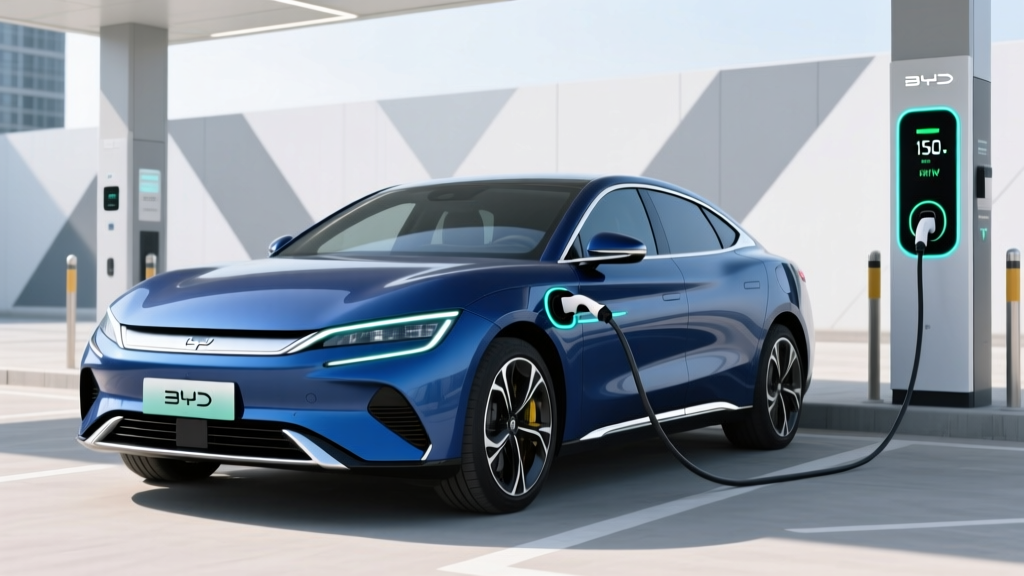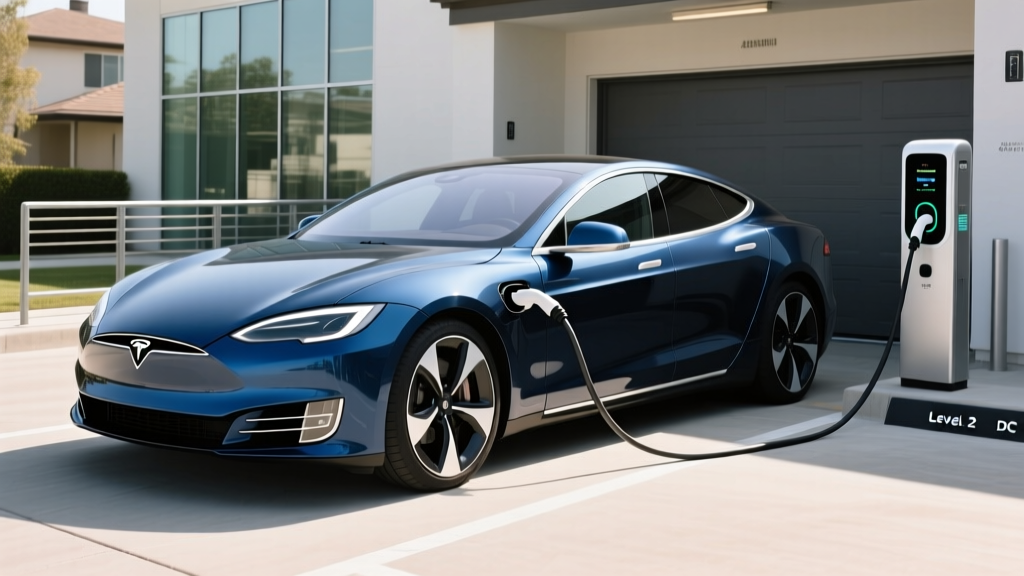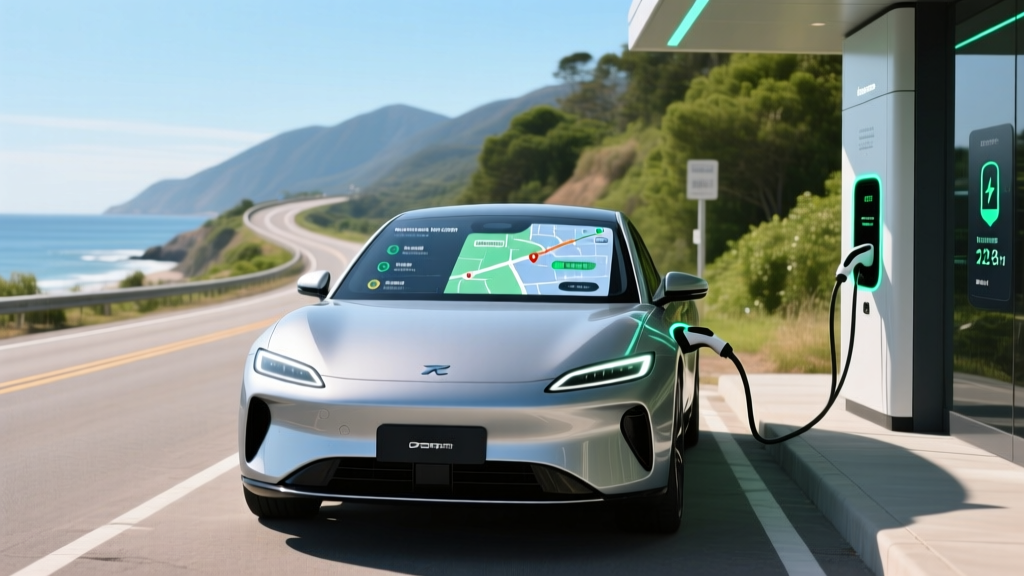
Plotting a 600-mile road trip in a battery-electric vehicle requires more than a full charge and a hopeful glance at the dashboard. You need to know where the fast chargers are, how long each stop will take, what you will pay, and whether your vehicle's connector will physically plug in. A supercharger route planner pulls all of that into a single interface — but the numbers behind the map pins are what actually determine whether you arrive on time or stranded at a broken kiosk in rural Nebraska.
This guide breaks down the physics, economics, and hardware realities that every route-planning tool relies on. Whether you drive a Tesla with native NACS, a Hyundai Ioniq 5 using a CCS-to-NACS adapter, or a Rivian R1T tapping the expanding Supercharger network, the fundamentals of kW, kWh, charge curves, and connector compatibility are the same.
How Route Planners Calculate Your Charging Stops
Every competent EV route planner — Tesla's built-in navigation, A Better Route Planner (ABRP), PlugShare, or ChargeWay — starts with three inputs: your battery's usable capacity in kWh (kilowatt-hours, the unit of stored energy), the charger's maximum output in kW (kilowatts, the unit of power delivery), and the vehicle's efficiency in kWh per mile. From those, the tool estimates how far you can drive, how long a charge stop will take, and how much it will cost.
The most critical distinction for any EV owner: kW is the rate of energy flow; kWh is the total energy stored or delivered. Think of kW as the width of a pipe and kWh as the volume of water in a tank. A 250 kW charger does not deliver 250 kWh in one hour — it delivers energy at a rate of 250 kW, meaning it could theoretically add 250 kWh in 60 minutes under perfect sustained conditions. In reality, charge curves taper significantly above 80% state of charge (SoC), so your average charging speed is well below the peak.
Charging Levels: Speeds, Power, and Miles Per Hour
Route planners segment charging into three levels. Understanding the power output and practical range added per hour at each level lets you evaluate whether a suggested stop is viable or whether you should push on to the next station.
| Level | Voltage / Phase | Power (kW) | Miles of Range Added per Hour | Typical Use Case |
|---|---|---|---|---|
| Level 1 | 120V AC, single-phase | 1.0–1.9 kW | 3–5 mi/hr | Overnight trickle; PHEVs and low-mileage commutes |
| Level 2 | 240V AC, single-phase | 3.3–19.2 kW | 12–75 mi/hr | Home daily charging; workplace; destination (hotels, malls) |
| DC Fast Charge | 200–900V DC | 50–350 kW | 150–1,200+ mi/hr (at peak) | Road trips; highway corridors; 10–80% in 15–40 min |
For road-trip planning, DC fast charging is the only level that matters en route. A 2026 Tesla Model 3 Long Range (75 kWh usable battery, ~4.0 mi/kWh efficiency) charging at a V4 Supercharger peaking at 250 kW can add roughly 200 miles of range in about 15 minutes under ideal thermal conditions. A Hyundai Ioniq 5 with its 800V architecture and 77.4 kWh battery can accept up to 240 kW on compatible CCS chargers, achieving a 10–80% charge in approximately 18 minutes.
Connector Compatibility: NACS, CCS, and CHAdeMO in 2026
The North American charging landscape has consolidated heavily around NACS (North American Charging Standard, originally Tesla's proprietary connector) since Ford, GM, Rivian, Volvo, and most other major automakers adopted it for new vehicles starting in the 2025–2026 model years. However, hundreds of thousands of CCS1-equipped EVs remain on the road, and CHAdeMO persists on older Nissan Leaf and Mitsubishi Outlander PHEV models.
| Connector | Native Vehicles | Supercharger Access | Adapter Required? |
|---|---|---|---|
| NACS (Tesla) | Tesla (all), Ford (2025+), GM (2025+), Rivian (2025+), Volvo/Polestar (2025+), Hyundai/Kia (2026+) | Full native access | None for Superchargers; may need NACS-to-CCS for older Electrify America stations |
| CCS1 | Hyundai/Kia (2024 and earlier), VW ID.4 (2024 and earlier), BMW iX, older Ford/GM EVs | Via Tesla Magic Dock or NACS adapter | Yes — OEM-supplied or aftermarket NACS adapter ($200–$400) |
| CHAdeMO | Nissan Leaf, Mitsubishi Outlander PHEV (older) | Limited; not compatible with Superchargers | No reliable adapter; rely on Electrify America / EVgo CHAdeMO stalls |
When using a supercharger route planner, filter by your vehicle's native connector. If you drive a CCS1 vehicle planning to use Tesla Superchargers, confirm that the specific station has a Magic Dock (Tesla's built-in CCS adapter) or that you carry a manufacturer-approved NACS adapter. Not all Supercharger stalls support non-Tesla vehicles, even at "open" stations — the Tesla app and route planners like ABRP now flag this per-stall.
What Charging Costs Per Mile vs. Gasoline
The economic case for EV road trips hinges on the cost per mile of electricity versus gasoline. The variables are your vehicle's efficiency (kWh/100mi or MPGe), the price per kWh at the charger, and the price per gallon of gas in your region.
| Scenario | Price per kWh | Vehicle Efficiency | Cost Per Mile | Gas Equivalent (30 MPG @ $3.60/gal) |
|---|---|---|---|---|
| Home Level 2 (off-peak utility rate) | $0.08–$0.14 | 3.5 mi/kWh (28.5 kWh/100mi) | $0.023–$0.040 | $0.120/mi |
| Home Level 2 (standard residential) | $0.14–$0.20 | 3.5 mi/kWh | $0.040–$0.057 | $0.120/mi |
| Public Level 2 (workplace, mall) | $0.20–$0.35 | 3.5 mi/kWh | $0.057–$0.100 | $0.120/mi |
| DC Fast — Tesla Supercharger | $0.28–$0.42 | 3.5 mi/kWh | $0.080–$0.120 | $0.120/mi |
| DC Fast — Electrify America / EVgo | $0.35–$0.55 | 3.5 mi/kWh | $0.100–$0.157 | $0.120/mi |
For a 600-mile road trip in a Tesla Model Y Long Range at an average Supercharger price of $0.35/kWh and an efficiency of 3.3 mi/kWh, expect to spend roughly $64 on charging. The same trip in a 30 MPG gas vehicle at $3.60/gallon costs about $72. The EV savings narrow on road trips compared to daily home charging, but the EV still wins — and wins decisively if your route includes free destination charging at hotels or workplaces.
Home Charger Installation: Electrical Requirements and Costs
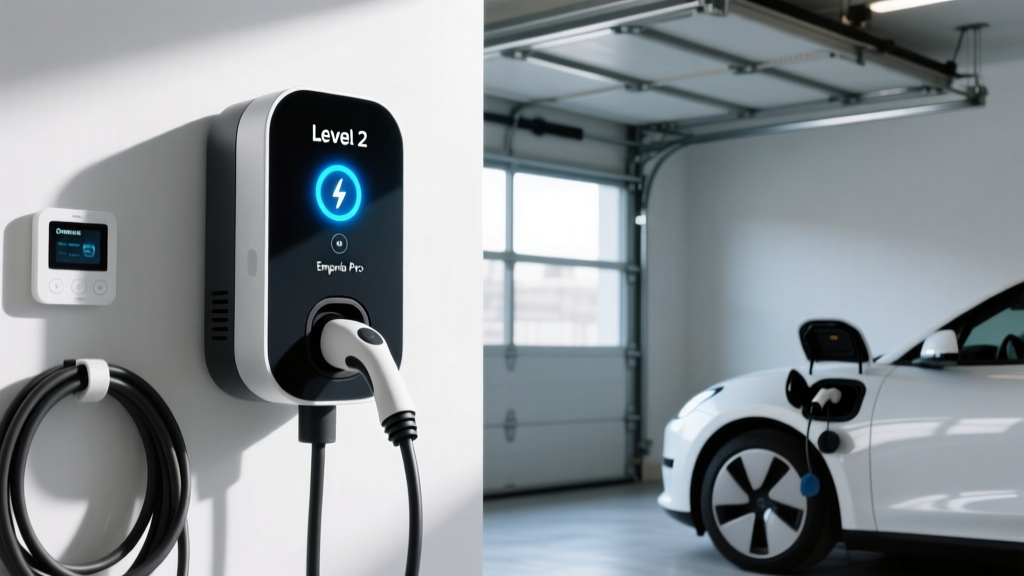
The best route planner in the world won't help if you leave home with an empty battery. A Level 2 home charger is the foundation of practical EV ownership, delivering 25–44 miles of range per hour of charging at 9.6–11.5 kW — enough to fully replenish even a 100 kWh battery overnight.
Electrical Requirements
A Level 2 charger requires a 240-volt dedicated circuit, similar to what powers an electric dryer or oven. Common configurations:
- 40A circuit / 32A continuous charge: 7.7 kW — sufficient for most daily needs; works with a NEMA 14-50 outlet or hardwired connection
- 50A circuit / 40A continuous: 9.6 kW — popular for 48A-capable chargers like the Tesla Wall Connector
- 60A circuit / 48A continuous: 11.5 kW — maximum for most residential chargers; requires 6 AWG copper wire
The National Electrical Code (NEC) requires that continuous loads (including EV charging) not exceed 80% of a circuit breaker's rating. A 48A charger therefore needs a 60A breaker.
Panel Upgrade Considerations
Most modern homes with 200A electrical service can accommodate a 40–60A EV circuit without a panel upgrade. However, older homes with 100A service, homes already running multiple high-draw appliances (electric range, dryer, HVAC, tankless water heater), or homes with full panels may need a service upgrade to 200A or even 300A. This is the single largest variable in home charger installation cost.
| Component | Low End | Typical | High End |
|---|---|---|---|
| Level 2 Charger (equipment) | $300 (Emporia Vue) | $500 (ChargePoint Home Flex) | $750 (Tesla Wall Connector) |
| Electrician labor (standard install, <50 ft run) | $400 | $800 | $1,500 |
| Electrical permit | $50 | $150 | $300 |
| Conduit, wiring, and materials | $100 | $250 | $500 |
| Panel upgrade (if needed: 100A → 200A) | $1,500 | $2,500 | $4,500 |
| Total (no panel upgrade) | $850 | $1,700 | $3,050 |
| Total (with panel upgrade) | $2,350 | $4,200 | $7,550 |
The IRS §30D tax credit does not cover home charging equipment directly for most taxpayers, but the Alternative Fuel Vehicle Refueling Property Credit (IRC §30C) provides up to $1,000 (30% of cost, capped) for home charger installation in eligible census tracts. Check IRS §30C guidelines and consult a tax professional for eligibility.
Recommended Home Charging Equipment (2026)
The charger you install at home should match your vehicle's onboard charger capacity. Most 2026 EVs accept between 9.6 kW and 11.5 kW on Level 2 AC. Here are three proven options:
Emporia Vue Level 2 Smart Charger
- Power output: 48A / 11.5 kW (hardwired) or 40A / 9.6 kW (NEMA 14-50 plug)
- Connector: NACS native (2025+ model); CCS available
- Cable length: 24 ft
- Smart features: Wi-Fi scheduling, solar integration, energy monitoring, utility demand-response compatible
- Price: ~$399
ChargePoint Home Flex
- Power output: Adjustable 16–50A / 3.8–12 kW
- Connector: J1772 (NACS adapter included for 2025+ models)
- Cable length: 23 ft
- Smart features: Wi-Fi, Alexa integration, flexible amperage setting to match circuit, ChargePoint network account
- Price: ~$549
Tesla Wall Connector (Gen 4)
- Power output: 48A / 11.5 kW
- Connector: NACS native; Magic Dock variant available for CCS vehicles
- Cable length: 24 ft
- Smart features: Wi-Fi, over-the-air updates, power-sharing between two units on one circuit, Tesla app integration
- Price: ~$475 (standard) / $650 (Magic Dock)
Safety, Code, and Installation Best Practices
EV charging draws sustained high current for hours — a duty cycle far more demanding than most household appliances. Cutting corners on installation invites fire risk, breaker trips, and insurance claim denials.
- Dedicated circuit: Your Level 2 charger must be on its own dedicated breaker. Sharing a circuit with other appliances is a code violation and a fire hazard.
- GFCI protection: NEC 2020 and later requires GFCI (ground-fault circuit interrupter) protection for all EV receptacles. Hardwired chargers with built-in ground-fault protection satisfy this requirement.
- Outdoor rating: If your charger is installed outside or in an unconditioned garage, it must carry a NEMA 4 or IP65 weather rating. All three chargers recommended above meet this standard.
- Wire gauge: A 60A circuit requires 6 AWG copper (or 4 AWG aluminum). A 50A circuit requires 6 AWG copper. Never undersize wire — voltage drop over long runs (>50 ft) may require upsizing.
- Permit and inspection: Most jurisdictions require an electrical permit and post-installation inspection for EV charger circuits. Your electrician should pull this permit; DIY installations without permits can void homeowners insurance coverage for electrical fires.
- Load calculation: A licensed electrician will perform a NEC Article 220 load calculation to verify your panel can handle the new circuit. If the calculation shows you are near capacity, a panel upgrade is mandatory — not optional.
Charging Time Examples for Common 2026 EVs
Route planners estimate stop duration based on your specific vehicle. Here are representative 10–80% DC fast-charging times for popular 2026 models, assuming battery preconditioning and a compatible charger at or above the vehicle's peak acceptance rate:
| Vehicle | Battery (kWh usable) | Peak DC Rate (kW) | 10–80% Time | Connector |
|---|---|---|---|---|
| Tesla Model 3 Long Range | 75 | 250 | ~22 min | NACS |
| Tesla Model Y Long Range | 78 | 250 | ~24 min | NACS |
| Hyundai Ioniq 5 (800V) | 77.4 | 240 | ~18 min | NACS (2026+) |
| Kia EV6 GT-Line (800V) | 77.4 | 240 | ~18 min | NACS (2026+) |
| Ford F-150 Lightning Ext. Range | 131 | 170 | ~41 min | NACS (2025+) |
| Chevrolet Equinox EV 3RS | 85 | 190 | ~28 min | NACS (2025+) |
| Rivian R1T Dual-Motor Max Pack | 141 | 220 | ~42 min | NACS (2025+) |
| VW ID.4 Pro S | 77 | 175 | ~28 min | CCS1 |
Data sourced from manufacturer specifications and EPA fueleconomy.gov. Actual times vary with ambient temperature, battery preconditioning state, charger availability, and concurrent stall usage. Cold-weather sessions (below 32°F / 0°C) without preconditioning can add 40–60% to these times.
Using Route Planners Effectively: Tips From Real Road Trips
After logging tens of thousands of highway miles across multiple EVs, here are the practical lessons that no route planner algorithm fully captures:
- Precondition before every DC stop. Tesla navigation does this automatically when a Supercharger is your destination. For non-Tesla EVs, manually activate battery preconditioning 15–30 minutes before arrival if your vehicle supports it (Hyundai/Kia 800V models, Ford, and GM Ultium vehicles do). This alone can shave 5–10 minutes off a charge stop.
- Plan for 10–80%, not 10–100%. Charging above 80% SoC at a DC fast charger is painfully slow due to the charge curve taper. A session from 80–100% can take as long as 10–80%. Route planners that target 80% arrival at the next stop are optimizing correctly.
- Buffer for real-world range loss. EPA range is measured on a dynamometer under controlled conditions. Highway driving at 75 mph, cold weather (below 40°F), mountain grades, and headwinds can reduce real-world range by 15–35%. Set your route planner's arrival SoC buffer to 15–20% rather than the default 5–10%.
- Check station status before committing. Use PlugShare or the network app (Tesla, Electrify America, EVgo) to confirm that stalls are operational. Route planners sometimes direct you to stations with out-of-service chargers. A 30-second check saves a 30-mile detour.
- Charge where you stop anyway. The most efficient road-trip charging happens at locations where you would stop regardless — restrooms, food, coffee. A 25-minute charge at a Supercharger next to a restaurant feels like zero wasted time.
Frequently Asked Questions
How much does it cost to install a home EV charger?
A typical Level 2 home charger installation costs between $850 and $3,050 when no panel upgrade is needed, covering the charger unit ($300–$750), electrician labor ($400–$1,500), permit ($50–$300), and materials. If your home requires a panel upgrade from 100A to 200A service, add $1,500–$4,500, bringing the total to $2,350–$7,550. Always get a detailed quote from a licensed electrician that breaks down each component.
How fast will each charging level add range?
Level 1 (120V) adds 3–5 miles of range per hour. Level 2 (240V, 9.6–11.5 kW) adds 30–44 miles per hour for a typical EV. DC fast charging (50–350 kW) can add 150–1,200+ miles of range per hour at peak, though sustained rates taper significantly above 50% SoC. For a 75 kWh battery EV averaging 3.5 mi/kWh, a 150 kW DC session adds roughly 50 miles in 10 minutes at peak rate.
Which connector and charger is compatible with my EV?
For 2026 model-year vehicles, most new EVs from Tesla, Ford, GM, Rivian, Hyundai, Kia, and Volvo use NACS natively and can plug directly into Tesla Superchargers. Older CCS1 vehicles (2024 and earlier model years) require a NACS adapter ($200–$400) or must use a Supercharger stall with Tesla's Magic Dock. CHAdeMO vehicles (Nissan Leaf) cannot use Superchargers and must rely on Electrify America or EVgo stations with CHAdeMO connectors. Check your vehicle's owner's manual or the NHTSA vehicle database for your specific connector type.
How much does EV charging cost per mile compared to gas?
Home Level 2 charging at $0.14/kWh costs approximately $0.04 per mile for an EV averaging 3.5 mi/kWh — roughly one-third the cost of a 30 MPG gas car at $3.60/gallon ($0.12/mile). DC fast charging at $0.35–$0.42/kWh on a road trip costs $0.10–$0.12 per mile, roughly equal to or slightly less than gas. The biggest savings come from daily home charging, not road-trip fast charging.
What electrical upgrades might I need for a home charger?
Homes with 200A electrical service and available breaker spaces typically need no upgrades beyond a new 40–60A double-pole breaker and wiring run. Homes with 100A service, fully loaded panels, or high existing loads (electric heat, tankless water heater, double oven) may need a panel upgrade to 200A or 300A service, costing $1,500–$4,500. A licensed electrician will perform a NEC load calculation to determine this. Some utilities offer smart-panel solutions (like Span or Lumin) that manage loads dynamically to avoid a full panel upgrade.
Can I use a Tesla Supercharger with a non-Tesla EV?
Yes, provided your vehicle has a NACS charge port (2025+ Ford, GM, Rivian, Volvo, and 2026+ Hyundai/Kia models) or you carry an approved NACS adapter for your CCS1 vehicle. Tesla has opened thousands of Supercharger stalls to non-Tesla EVs, but not all stalls at every station are open — the Tesla app and route planners like ABRP flag which specific stalls accept non-Tesla vehicles. Non-Tesla vehicles pay a slightly higher per-kWh rate unless enrolled in a Tesla membership plan.
Does a supercharger route planner account for charge curve taper?
Advanced planners like A Better Route Planner (ABRP) model charge curve taper based on your specific vehicle's known DC charging profile. Tesla's built-in navigation also factors taper into its arrival SoC estimates. Simpler planners may use a linear average charge rate, which can underestimate stop times by 5–15 minutes on longer charges. For accurate trip planning, use a tool that models the specific charge curve of your vehicle and battery chemistry (LFP batteries, for example, have a flatter charge curve than NMC, sustaining higher rates longer).
Effective EV road-trip planning in 2026 is a solved problem — if you understand the numbers behind the route. A supercharger route planner is only as good as the data you feed it: your real-world efficiency, your vehicle's true charge curve, connector compatibility, and a realistic arrival buffer. Master those fundamentals, and a 600-mile drive in any modern EV becomes as routine as filling up at a gas station used to be.