Quick Verdict: Who the Emporia Pro With PowerSmart Is For
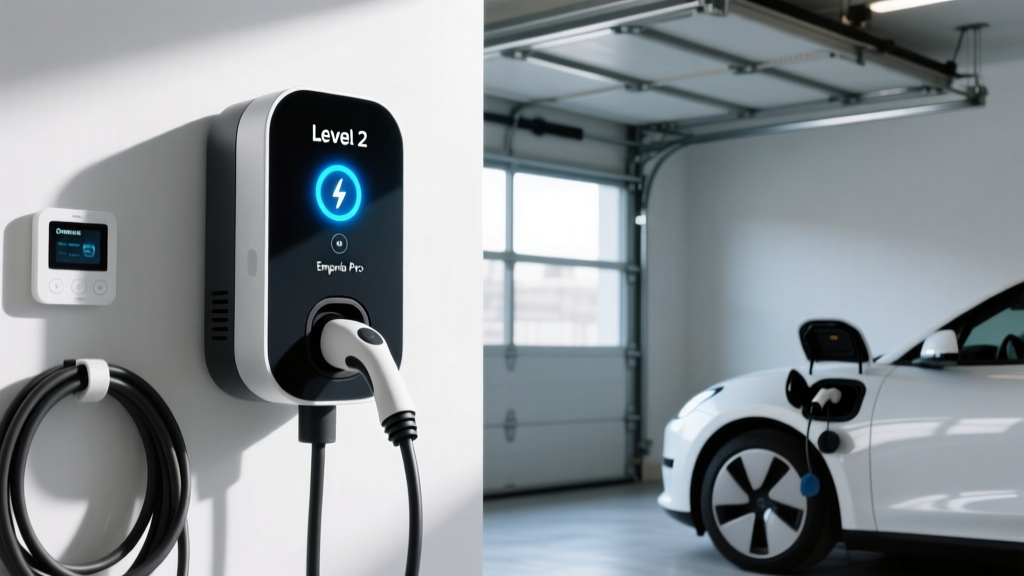
The Emporia Pro Level 2 EV charger with PowerSmart is a 48-amp, Wi-Fi-enabled home charging station designed for EV owners who want granular energy monitoring, load management, and utility demand-response integration — all at a sub-$600 equipment price point. PowerSmart is Emporia's demand-response and energy-management platform, which lets participating utilities remotely adjust your charging schedule during peak grid events in exchange for bill credits.
If you drive a modern EV with a 75–100 kWh battery and have a 200-amp electrical panel with spare capacity, the Emporia Pro delivers up to 11.5 kW of continuous Level 2 power (on a 60-amp dedicated circuit), adding roughly 35–44 miles of range per hour depending on your vehicle's onboard charger acceptance rate. The PowerSmart layer makes this unit especially compelling if your utility participates in Emporia's demand-response program — but it works perfectly as a standalone smart charger even without utility integration.
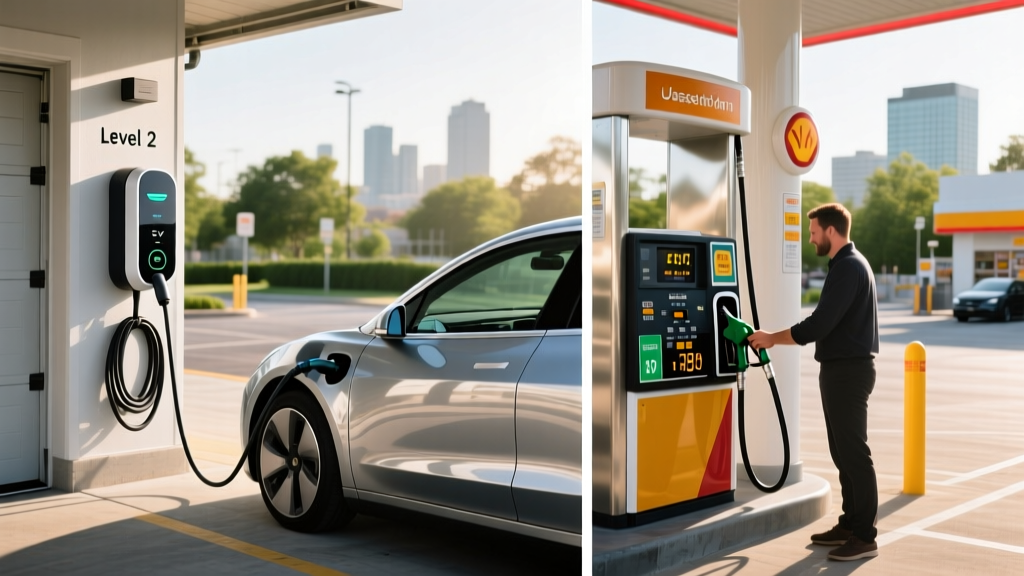
Understanding Charging Levels: Level 1 vs. Level 2 vs. DC Fast
Before diving into the Emporia Pro's specifics, here is a refresher on the three charging levels available to EV owners. The critical distinction is kW (kilowatts), which measures power — the rate at which energy flows into your battery — versus kWh (kilowatt-hours), which measures total energy capacity. Think of kW as the width of a hose and kWh as the size of the bucket.
| Level | Voltage | Max Power (kW) | Miles of Range Added Per Hour | Typical Use Case |
|---|---|---|---|---|
| Level 1 | 120V AC | 1.2–1.9 kW | 3–5 mi/hr | Overnight trickle; PHEVs; emergency backup |
| Level 2 | 240V AC | 3.3–19.2 kW | 12–75 mi/hr | Daily home & workplace charging |
| DC Fast Charge | 200–900V DC | 50–350+ kW | 150–1,200+ mi/hr (peak) | Road trips; rapid top-ups; 10–80% in 18–45 min |
The Emporia Pro operates at Level 2, delivering up to 11.5 kW on a 240-volt, 60-amp circuit (48 amps continuous, per the National Electrical Code's 80% rule for continuous loads). At this rate, a Tesla Model Y with a ~75 kWh usable battery can go from 10% to 80% in roughly 5–6 hours at home. That's overnight charging that fills your daily driving needs with energy to spare.
Electrical Requirements: What Your Home Needs for the Emporia Pro
The Emporia Pro Level 2 EV charger with PowerSmart supports hardwired installation on a dedicated 60-amp, 240-volt circuit to deliver its full 48-amp (11.5 kW) output. It can also be configured on a 40-amp circuit (delivering 32 amps / 7.7 kW continuous) if your panel lacks the capacity for a 60-amp breaker.
Key Electrical Specifications
- Voltage: 240V (split-phase, standard US residential)
- Circuit breaker: 60A for full 48A output, or 40A for 32A output
- Wire gauge: 6 AWG copper for 60A circuit; 8 AWG for 40A circuit
- Connection type: Hardwired (recommended) or NEMA 14-50 plug (50A max circuit, 40A continuous / 9.6 kW)
- Dedicated circuit required: Yes — NEC Article 625 requires EV charging equipment to be on its own dedicated branch circuit
- GFCI protection: Required for receptacle (plug-in) installations per NEC 2020/2023; hardwired installations may be exempt depending on local jurisdiction
Will You Need a Panel Upgrade?
This is the question that catches many homeowners off guard. Here's the math: electrical code requires your total calculated load to stay within 80% of your panel's rated capacity. A 200-amp panel provides 160 amps of usable continuous capacity. If your existing loads (HVAC, electric range, dryer, water heater) already consume 120+ amps of calculated load, adding a 60-amp EV circuit pushes you over the limit.
Homes with 100-amp panels almost certainly need an upgrade to 200 amps before installing a 48-amp EV charger. Even some 200-amp panels in all-electric homes (heat pump, electric range, electric dryer, electric water heater) may need a load calculation by a licensed electrician to confirm headroom.
An alternative to a costly panel upgrade is a load-management device — and this is where the Emporia Pro's PowerSmart platform earns its keep. Emporia's system can integrate with your home's Emporia Vue energy monitor to dynamically throttle charging power when other circuits are drawing heavily, keeping total draw within your panel's safe limit. This can let you install the Emporia Pro on a 100-amp panel without upgrading, though at reduced peak charging speed during high-load periods.
Installation Cost Breakdown: Equipment, Electrician, and Permits
Home EV charger installation costs vary widely based on your home's electrical infrastructure, the distance from your panel to the charging location, and local labor rates. Here's a realistic 2026 breakdown:
| Component | Low-End Estimate | High-End Estimate | Notes |
|---|---|---|---|
| Emporia Pro charger (equipment) | $549 | $599 | 48A Wi-Fi model with PowerSmart; price varies by retailer |
| Electrical permit | $50 | $250 | Varies by municipality; some jurisdictions bundle with inspection |
| Electrician labor (standard install) | $500 | $1,500 | Panel-adjacent garage install, short wire run, no panel upgrade |
| Electrician labor (complex install) | $1,500 | $3,500 | Long wire run (50+ ft), conduit, trenching, attic/crawlspace routing |
| Panel upgrade (100A → 200A) | $2,000 | $5,000 | Only if needed; includes new panel, breakers, utility coordination |
| NEMA 14-50 receptacle (if plug-in) | $75 | $200 | Industrial-grade receptacle; Hubbell or Bryant recommended |
| Total (standard, no panel upgrade) | $1,100 | $2,350 | Most common scenario for modern homes with 200A panels |
| Total (with panel upgrade) | $3,100 | $7,350 | Older homes or all-electric homes with maxed-out panels |
Always get at least two quotes from licensed electricians who have EV charger installation experience. Ask specifically whether their quote includes the permit, a load calculation per NEC Article 220, and a final inspection. Some utilities offer rebates of $250–$1,000 for Level 2 charger installation — check with your local provider before scheduling work.
Connector Compatibility: NACS, CCS1, and Adapter Requirements
The Emporia Pro ships with a J1772 connector (the North American standard for Level 2 AC charging). As of 2026, the connector landscape has shifted significantly:
| Connector | Vehicles Using It (2026 Models) | Emporia Pro Compatibility |
|---|---|---|
| J1772 (native) | Most non-Tesla EVs through 2024 model year; some 2025 models | Direct plug-in — no adapter needed |
| NACS (Tesla / North American Charging Standard) | Tesla (all years); Ford, GM, Rivian, Hyundai, Kia, BMW, and most others starting 2025–2026 model years | J1772-to-NACS adapter required (~$150–$250); or order Emporia Pro with native NACS connector if available |
| CHAdeMO | Nissan Leaf (legacy); discontinued on new models post-2025 | J1772-to-CHAdeMO adapters are extremely rare and not recommended for home use |
If you're buying a 2026 model-year EV from Ford, GM, Hyundai, Kia, Rivian, or most other manufacturers, your vehicle likely has a NACS charge port. You'll need a J1772-to-NACS adapter to use the Emporia Pro — or you can order the Emporia Pro configured with a NACS connector directly. Tesla owners have always used NACS (Tesla's proprietary connector, now the industry standard) and will need the same adapter setup.
According to the SAE J3400 standard that formalized NACS, adapters are safe for home Level 2 use and do not affect charging speed. Just ensure any adapter you purchase is UL-listed or certified to relevant safety standards.
Charging Speed and Cost: Real Numbers for Common EVs
Here's what the Emporia Pro's 11.5 kW output translates to in real charging times and costs for popular 2025–2026 EVs:
| Vehicle (2025/2026 MY) | Battery (kWh usable) | Onboard AC Charger | 10–80% Time (Emporia Pro) | Cost per Full Charge (Home, $0.14/kWh) |
|---|---|---|---|---|
| Tesla Model Y Long Range | ~75 kWh | 11.5 kW | ~5.0 hours | $10.50 |
| Hyundai Ioniq 5 (Long Range) | ~77.4 kWh | 10.9 kW | ~5.3 hours | $10.84 |
| Ford F-150 Lightning (Ext. Range) | ~131 kWh | 19.2 kW (optional) / 11.3 kW (std) | ~8.5 hours (std) / ~7.9 hours (opt) | $18.34 |
| Chevrolet Equinox EV | ~85 kWh | 11.5 kW | ~5.7 hours | $11.90 |
| BMW iX xDrive50 | ~105.2 kWh | 11 kW | ~7.3 hours | $14.73 |
Charging Cost Scenarios
| Scenario | Rate ($/kWh) | Cost for 60 kWh | Cost Per Mile (at 3.5 mi/kWh) |
|---|---|---|---|
| Home, off-peak (overnight TOU) | $0.08–$0.10 | $4.80–$6.00 | $0.023–$0.029 |
| Home, standard residential rate | $0.14 | $8.40 | $0.040 |
| Public Level 2 (ChargePoint, EVgo L2) | $0.25–$0.39 | $15.00–$23.40 | $0.071–$0.111 |
| DC Fast Charge (Electrify America, Tesla Supercharger) | $0.35–$0.55 | $21.00–$33.00 | $0.100–$0.157 |
Even at public DC fast-charging rates, EVs are generally cheaper per mile than gas cars. But home charging on an off-peak rate with the Emporia Pro is where the economics really shine — often one-third the per-mile cost of gasoline.
PowerSmart Features: Utility Integration and Energy Management
The PowerSmart platform is what differentiates the Emporia Pro from competitors like the ChargePoint Home Flex or Wallbox Pulsar Plus. Here's what it offers:
- Utility demand response: If your utility partners with Emporia, PowerSmart allows the utility to briefly reduce or pause your charging during peak grid events (typically 2–4 hours, a few times per year). In exchange, you earn bill credits — typically $5–$15 per event. You can opt out of any event via the app.
- Real-time energy monitoring: The Emporia app shows live kW draw, session kWh delivered, cost per session (based on your configured rate), and historical charging data. If paired with an Emporia Vue whole-home monitor, you see your EV's share of total household consumption.
- Scheduled and solar-aware charging: Set charging windows to align with off-peak TOU rates or surplus solar production. The charger can automatically start/stop based on your solar inverter's output.
- Dynamic load management: When paired with Emporia's load-management hardware, the Pro can throttle its output in real time to prevent your panel from overloading — critical for homes with limited electrical capacity.
Equipment Comparison: How the Emporia Pro Stacks Up
Emporia Pro Level 2 (48A) with PowerSmart
- Power output: 11.5 kW (48A continuous, 60A circuit)
- Connector: J1772 (NACS available or via adapter)
- Cable length: 24 ft
- Smart features: Wi-Fi, app scheduling, PowerSmart utility integration, energy monitoring, solar-aware charging, load management
- Outdoor rating: NEMA 4 (suitable for outdoor installation)
- Price: ~$549–$599
- Warranty: 3 years
ChargePoint Home Flex (up to 50A)
- Power output: 12 kW (50A continuous, 60A circuit max; adjustable down to 16A)
- Connector: J1772 or NACS
- Cable length: 23 ft
- Smart features: Wi-Fi, app scheduling, Alexa integration, energy reports
- Outdoor rating: NEMA 4
- Price: ~$649–$699
- Warranty: 3 years
The Emporia Pro wins on value and utility integration — if your utility supports PowerSmart, the demand-response credits can offset the charger's cost within a few years. The ChargePoint Home Flex offers slightly more flexibility with its adjustable amperage (useful if you want to dial down to a 20A or 30A circuit) and has broader brand recognition, but lacks the energy-monitoring depth and demand-response capability of the Emporia ecosystem.
Safety, Code, and Installation Best Practices
Level 2 EV chargers draw significant continuous current for hours at a time. Proper installation isn't optional — it's a safety requirement. Here are the non-negotiable code and safety considerations per the National Electrical Code (NEC) and best practices:
- Dedicated circuit: The charger must be on its own dedicated breaker — no sharing with other outlets or appliances.
- GFCI protection: NEC 2020 and later require GFCI protection for receptacle-based EV charger installations (e.g., NEMA 14-50). Hardwired installations may not require GFCI in all jurisdictions, but some local codes mandate it regardless. Your electrician will determine what applies.
- Outdoor rating: If mounting outdoors or in an open carport, the charger must carry a NEMA 4 (or higher) rating. The Emporia Pro is NEMA 4 rated, meaning it withstands rain, snow, and hose-directed water.
- Wire sizing: Undersized wire causes overheating and fire risk. For a 60A circuit, 6 AWG copper is standard; for runs over 100 feet, your electrician may upsize to 4 AWG to reduce voltage drop.
- Permit and inspection: Virtually all jurisdictions require an electrical permit and post-installation inspection for EV charger circuits. Skipping this voids your homeowner's insurance coverage for any related electrical fire.
- Cable management: Use a holster or cable wrap to keep the charging cable off the ground, preventing tripping hazards and protecting the connector from moisture and debris.
Frequently Asked Questions
How much does it cost to install a home EV charger?
For the Emporia Pro Level 2 EV charger with PowerSmart, expect to pay $1,100–$2,350 total (equipment + electrician + permit) for a standard installation with a 200-amp panel and short wire run. If your home needs a panel upgrade from 100A to 200A, total costs can reach $3,100–$7,350. Always get a load calculation from your electrician before committing.
How fast will the Emporia Pro add range?
At its maximum 11.5 kW output, the Emporia Pro adds approximately 35–44 miles of range per hour for a typical EV crossover (efficiency of 3.0–3.8 mi/kWh). Over an 8-hour overnight session, that's 280–352 miles — more than enough to fully replenish most daily driving. Larger vehicles like the F-150 Lightning will see closer to 25–30 miles per hour due to lower efficiency (2.0–2.5 mi/kWh).
Which connector do I need for my 2026 EV?
Most 2026 model-year EVs now use the NACS (Tesla-style) connector, including Ford, GM, Hyundai, Kia, Rivian, and BMW. The Emporia Pro ships with J1772, so you'll need a J1772-to-NACS adapter (approximately $150–$250) unless you order the Pro with a native NACS cable. Older non-Tesla EVs (2024 and earlier) typically use J1772 natively and need no adapter.
How much does charging cost per mile vs. gas?
Home charging on the Emporia Pro at the national average residential rate of $0.14/kWh costs roughly $0.04 per mile for a typical EV. Off-peak TOU rates drop this to $0.023–$0.029 per mile. A comparable gas vehicle at 28 MPG and $3.50/gallon costs $0.125 per mile. Over 12,000 miles annually, home EV charging saves $1,000–$1,200 per year versus gasoline.
What electrical upgrades might I need?
If your home has a 100-amp panel, you'll likely need an upgrade to 200 amps ($2,000–$5,000). Even with a 200-amp panel, homes with multiple large electric loads (heat pump, electric range, electric dryer, electric water heater) may need a load calculation to confirm the panel can support a 60-amp EV circuit. The Emporia Pro's PowerSmart load-management feature can reduce or eliminate the need for a panel upgrade by dynamically adjusting charge rate based on real-time household consumption.
Can I use the Emporia Pro outdoors?
Yes. The Emporia Pro carries a NEMA 4 enclosure rating, meaning it's designed for outdoor installation and can withstand rain, snow, dust, and splashing water. Ensure your electrician uses weatherproof conduit fittings and that the unit is mounted at least 18 inches above grade per typical local code requirements.
Does the Emporia Pro qualify for any tax credits or rebates?
The federal Alternative Fuel Vehicle Refueling Property Credit (IRC §30C) covers up to 30% of the cost of home EV charging equipment, capped at $1,000. However, eligibility depends on your census tract meeting specific low-income or non-urban criteria as defined by the IRS. Many utilities also offer rebates of $250–$750 for smart Level 2 chargers — check with your local provider. Consult a tax professional to confirm your eligibility before claiming any credit.