Why Supercharged Jaguar XF Owners Are Eyeing EVs in 2026
The supercharged Jaguar XF — especially the beloved X351 generation with its 3.0L or 5.0L V6/V8 — remains one of the most engaging sport sedans ever built. But with premium fuel hovering above $4.00/gallon in most metro areas and maintenance costs climbing as these cars age, many XF owners are running the numbers on going electric. The question isn't just "should I switch?" — it's whether the charging infrastructure, home electrical upgrades, and per-mile economics actually beat a well-maintained supercharged XF.
This guide breaks down exactly what EV charging looks like in 2026 — home installation costs, charging speeds, connector compatibility, and real cost-per-mile math — so you can make a data-driven decision.
EV Charging Levels Explained: Speeds, Power, and Range Added
The single most important concept in EV charging is the difference between kW (kilowatts — the rate of power delivery, like water pressure) and kWh (kilowatt-hours — the total energy stored or delivered, like gallons of water). A 100 kWh battery charged at 10 kW takes 10 hours. The same battery at 150 kW DC fast charging can go from 10-80% in roughly 25-35 minutes depending on the vehicle's charge curve.
| Level | Voltage | Power (kW) | Miles of Range Added Per Hour | Typical Use Case |
|---|---|---|---|---|
| Level 1 | 120V AC | 1.0 – 1.4 kW | 3 – 5 mi/hr | Emergency / overnight trickle |
| Level 2 (Home) | 240V AC | 7.2 – 11.5 kW | 25 – 45 mi/hr | Daily home charging |
| DC Fast Charging | 400V – 800V DC | 50 – 350 kW | 150 – 800+ mi/hr (peak) | Road trips, quick top-ups |
Real-world note: DC fast charging peak rates (e.g., 250 kW) are sustained only between roughly 10-50% State of Charge (SoC). Above 80%, the charge curve tapers significantly to protect battery health. A "250 kW" charger doesn't deliver 250 kW for the entire session — expect average rates closer to 60-70% of peak over a full 10-80% session.
Home Charger Installation: Electrical Requirements and Real Costs
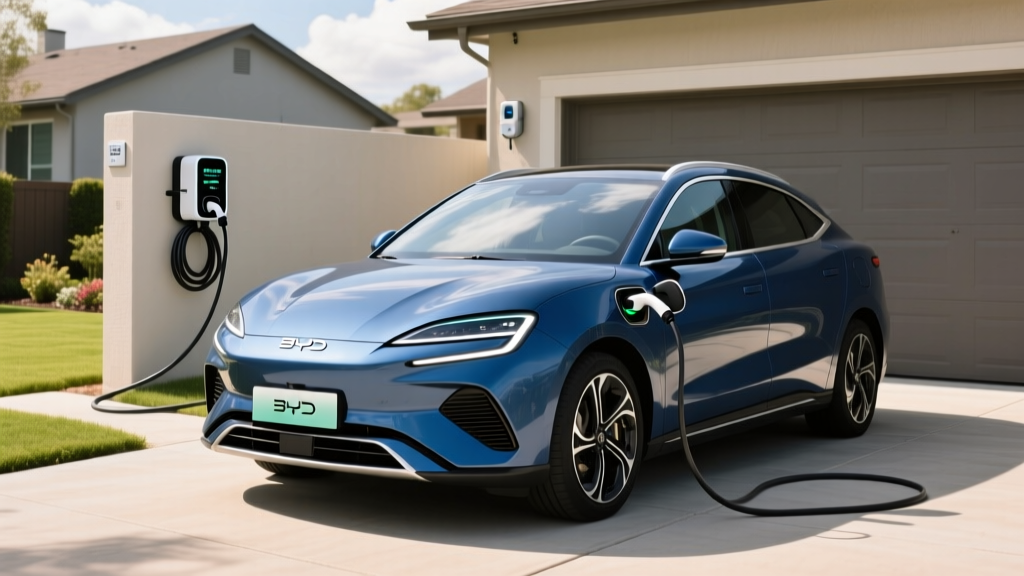
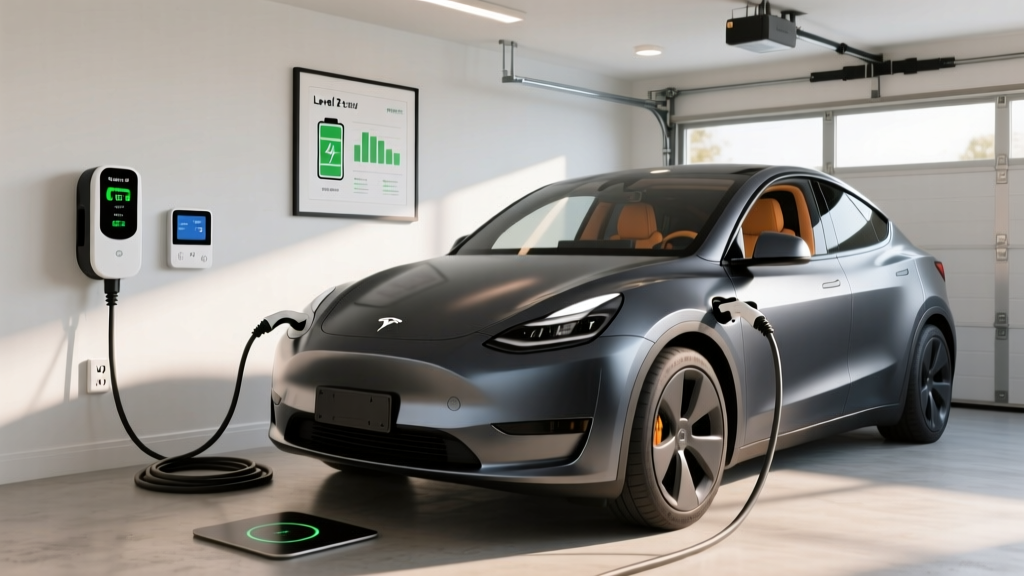
Most EV owners do 80%+ of their charging at home on Level 2. A proper home installation requires a dedicated 240V circuit — typically 40A, 50A, or 60A depending on the charger's maximum draw. The National Electrical Code (NEC) requires that continuous loads (like EV charging) not exceed 80% of the circuit breaker rating, so a 48A charger needs a 60A breaker.
What Electrical Upgrades Might You Need?
Homes built before 2000 often have 100A or 150A main service panels. Adding a 60A EV circuit to an already-loaded panel may require a panel upgrade to 200A ($1,500-$3,000) or a smart load-management system that shares capacity between the EV charger and other appliances. Some utilities offer secondary meters or EV-specific rate panels that avoid a full panel upgrade.
| Component | Low End | High End | Notes |
|---|---|---|---|
| Level 2 Charger (hardware) | $350 | $750 | Smart Wi-Fi chargers, 32A-48A |
| Electrician labor (standard install) | $500 | $1,500 | Varies by run length, conduit, wall type |
| Electrical permit | $50 | $200 | Required in most jurisdictions |
| Panel upgrade (if needed) | $1,500 | $3,500 | 100A → 200A service upgrade |
| Load management device (optional) | $200 | $500 | Emporia, Span, or utility-provided |
| Total (no panel upgrade) | $900 | $2,450 | Most homes with 200A service |
| Total (with panel upgrade) | $2,400 | $5,950 | Older homes or high-load panels |
The federal Residential Clean Energy Credit (26 USC §25D) covers 30% of charger hardware and installation costs up to $1,000 for equipment placed in service through 2032. Check your state and utility for additional rebates — many cover $250-$500 of the hardware cost.
Connector Compatibility: NACS, CCS, and CHAdeMO in 2026
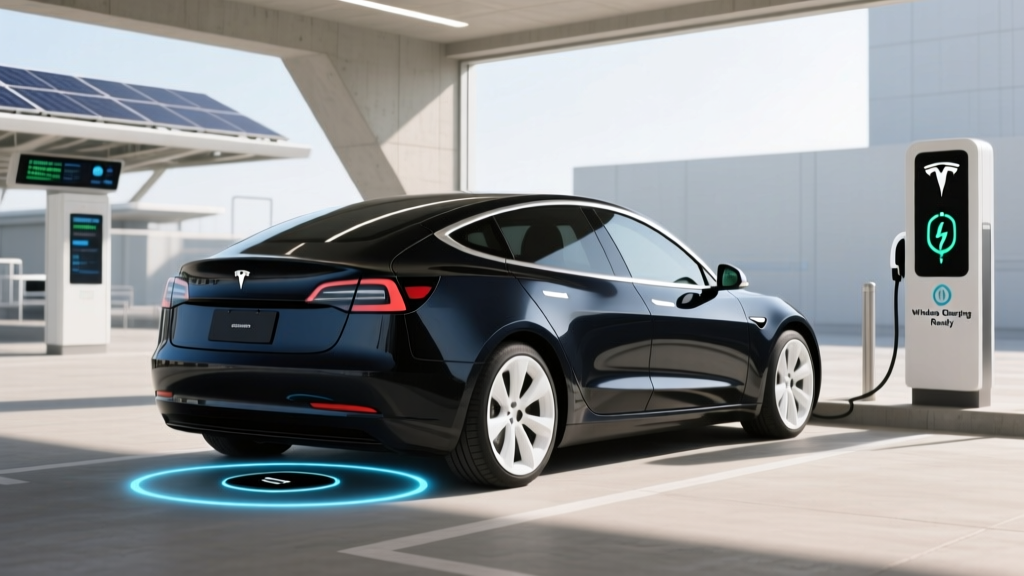
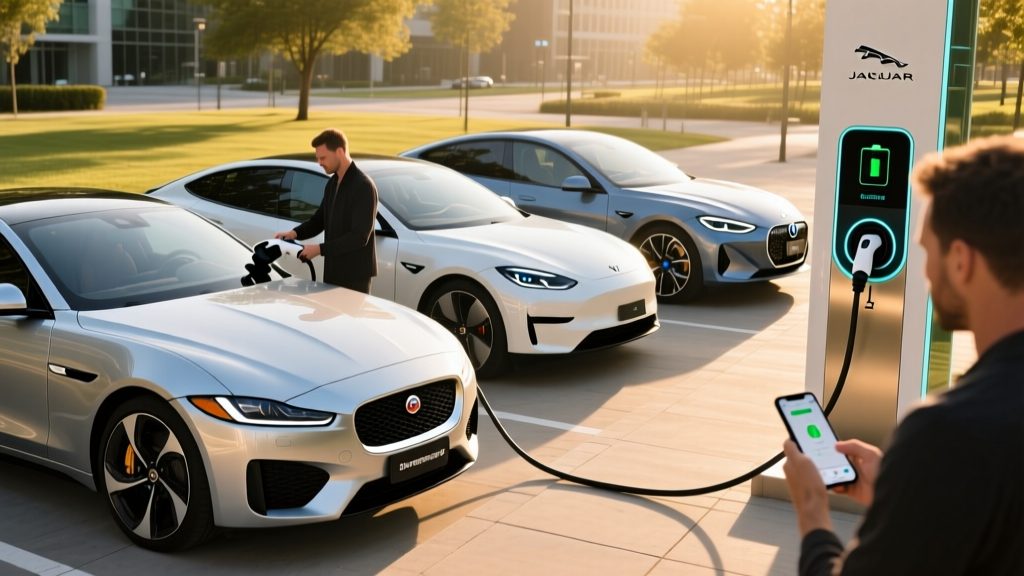
The connector landscape has consolidated significantly since Ford, GM, Rivian, Hyundai, and most major automakers adopted the North American Charging Standard (NACS) — originally developed by Tesla. As of 2026, nearly all new EVs sold in the U.S. ship with a native NACS port. Legacy CCS1 vehicles can access the Tesla Supercharger network via a NACS adapter, and CHAdeMO vehicles (primarily the Nissan Leaf) remain supported at many stations but are effectively a dead standard for new vehicles.
| Connector | Brands Using It (2026) | Network Access |
|---|---|---|
| NACS (native) | Tesla, Ford, GM, Rivian, Hyundai, Kia, Volvo, Polestar, Mercedes | Tesla Superchargers + all NACS-equipped public stations |
| CCS1 | Legacy models (pre-2025 VW ID.4, BMW i4, etc.) | Electrify America, EVgo, ChargePoint; Superchargers via adapter |
| CHAdeMO | Nissan Leaf (discontinued after 2025) | Limited and shrinking network |
Practical advice: If you're buying a new EV in 2026, insist on native NACS. If you own a CCS vehicle, budget $200-$250 for a certified NACS adapter to unlock ~20,000+ Tesla Supercharger stalls.
Cost to Charge Per Mile vs. Gas: Supercharged XF Compared
Here's where the math gets compelling for anyone currently fueling a supercharged Jaguar XF. The 3.0L supercharged V6 in the XF S (2013-2019) returns an EPA-rated 18 city / 27 highway / 21 combined MPG — but real-world owners report 17-19 MPG in mixed driving. The 5.0L V8 variants drop to 15-16 MPG combined.
| Vehicle | Energy Source | Efficiency | Cost Per Mile | Annual Fuel/Cnergy (12,000 mi) |
|---|---|---|---|---|
| Jaguar XF 3.0 SC (21 MPG) | Premium gas @ $4.50/gal | 21 MPG combined | $0.214/mi | $2,571 |
| Jaguar XF 5.0 SC (16 MPG) | Premium gas @ $4.50/gal | 16 MPG combined | $0.281/mi | $3,375 |
| Hyundai Ioniq 6 SE (home L2) | Home electricity @ $0.13/kWh | 3.6 mi/kWh (140 MPGe) | $0.036/mi | $432 |
| Hyundai Ioniq 6 SE (DC fast) | Public DCFC @ $0.48/kWh | 3.6 mi/kWh | $0.133/mi | $1,600 |
| Tesla Model 3 LR (home L2) | Home electricity @ $0.13/kWh | 3.8 mi/kWh (132 MPGe) | $0.034/mi | $411 |
| Tesla Model 3 LR (Supercharger) | Supercharger @ $0.35/kWh | 3.8 mi/kWh | $0.092/mi | $1,105 |
The verdict: Charging at home on Level 2 at typical residential rates saves a supercharged XF owner between $2,100 and $2,950 per year in fuel costs alone. Even relying exclusively on DC fast charging — the most expensive EV fueling method — still undercuts premium gasoline in a 16-MPG V8 XF by roughly $1,700 annually.
Check your utility's EV-specific rate plans. Time-of-use (TOU) rates can drop off-peak electricity to $0.06-$0.09/kWh in many markets, cutting your per-mile cost to under $0.025/mi.
Charging Time Examples: What to Expect with Common Battery Sizes
Battery sizes in 2026 EVs range from ~58 kWh (compact models) to ~100+ kWh (large SUVs and trucks). Here's what charge times look like across different scenarios:
| Battery Size | Level 2 (11.5 kW / 48A) | DCFC 150 kW peak | DCFC 250 kW peak | DCFC 350 kW peak |
|---|---|---|---|---|
| 58 kWh (e.g., base EVs) | ~4 hr 15 min | ~28 min | ~22 min | ~18 min |
| 77 kWh (e.g., mid-size sedans) | ~5 hr 40 min | ~35 min | ~25 min | ~20 min |
| 100 kWh (e.g., large SUVs/trucks) | ~7 hr 15 min | ~45 min | ~30 min | ~24 min |
Charge curve reality check: These DCFC times assume the vehicle can accept the charger's peak rate. Many EVs peak at 150-180 kW even at a 350 kW station. Always check the vehicle's maximum DC charge rate — a spec often buried in manufacturer literature but critical for road-trip planning. Also, preconditioning the battery (warming it to optimal temperature via the vehicle's navigation system) can shave 5-10 minutes off a DC fast-charge session, especially in cold weather.
Recommended Home Level 2 Chargers for 2026
Not all Level 2 chargers are created equal. Here are three proven options spanning budget to premium, all NACS-compatible out of the box or via included adapter:
Emporia Vue Level 2 Smart Charger
Power: 48A / 11.5 kW (hardwired) or 40A / 9.6 kW (NEMA 14-50 plug)
Cable length: 24 ft
Smart features: Wi-Fi scheduling, energy monitoring, solar integration, load management with Emporia panel monitor
Connector: NACS (J1772 adapter included)
Price: ~$399 (hardwired) / ~$449 (plug-in)
Best for: Budget-conscious buyers who want energy monitoring and solar-aware scheduling.
ChargePoint Home Flex (2nd Gen)
Power: Up to 50A / 12 kW (adjustable via DIP switches for 16A-50A)
Cable length: 23 ft
Smart features: Wi-Fi, app scheduling, Alexa integration, flexible amperage to match panel capacity
Connector: NACS native (2025+ models)
Price: ~$599
Best for: Homes with limited panel capacity — the adjustable amperage avoids costly panel upgrades.
Tesla Wall Connector (Gen 4)
Power: 48A / 11.5 kW
Cable length: 24 ft
Smart features: Wi-Fi, OTA updates, Power Sharing (daisy-chain up to 6 units on one circuit), vehicle-integrated scheduling
Connector: NACS native
Price: ~$475
Best for: Tesla owners or multi-EV households wanting the cleanest NACS-native integration.
Safety, Electrical Code, and Installation Best Practices
EV charging is a continuous high-draw load — unlike a dryer or oven that cycles on and off, a Level 2 charger can pull maximum current for 6-8 hours straight. This makes proper installation non-negotiable:
- Dedicated circuit: Your EV charger must have its own breaker — never share a circuit with other appliances.
- GFCI protection: NEC 2023/2026 requires GFCI protection for all outdoor receptacles. Hardwired installations typically use the charger's internal GFCI. Plug-in installations on a NEMA 14-50 outlet require a GFCI breaker ($50-$100 additional).
- Outdoor rating: If your charger is installed outdoors or in an unconditioned garage, ensure it carries a NEMA 4 (weatherproof) rating. All three chargers above are NEMA 4 rated.
- Wire gauge: A 60A circuit requires 6 AWG copper wire (THHN in conduit) or 4 AWG for NM-B cable. Your electrician will spec this based on run length and local code.
- Permit and inspection: Every jurisdiction requires an electrical permit for new 240V circuits. The inspection ensures the installation meets NEC standards — don't skip this step, as unpermitted work can void home insurance claims.
For detailed code requirements, reference the NFPA National Electrical Code (NEC) and consult a licensed electrician familiar with EV installations.
Frequently Asked Questions
How much does it cost to install a home EV charger?
A standard Level 2 home charger installation costs between $900 and $2,450 including equipment, electrician labor, and permits — assuming your home already has a 200A electrical panel. If a panel upgrade is needed, expect an additional $1,500-$3,500. The federal §25D tax credit covers 30% of costs up to $1,000, bringing a typical $1,500 install down to roughly $1,050 after the credit.
How fast will each charging level add range?
Level 1 (120V) adds 3-5 miles of range per hour — adequate only for plug-in hybrids or emergency trickle charging. Level 2 (240V, 48A) adds 25-45 miles per hour, easily replenishing a full day's driving overnight. DC fast charging adds 150-800+ miles per hour at peak rates, though the charge curve tapers significantly above 80% SoC.
Which connector and charger is compatible with my EV?
For 2026 model-year vehicles, nearly all new EVs use the NACS connector natively. If you own a 2024 or older CCS-equipped EV, you'll need a NACS adapter (~$200-$250) to access the Tesla Supercharger network. CHAdeMO is effectively discontinued — only the Nissan Leaf used it, and the Leaf ended production after 2025. When buying a home charger, choose one with a NACS plug for future-proofing.
How much does charging cost per mile compared to gas?
Home Level 2 charging at the U.S. average of $0.13/kWh costs roughly $0.03-$0.04 per mile for a typical EV. A supercharged Jaguar XF getting 18-21 MPG on $4.50 premium gasoline costs $0.21-$0.28 per mile. That's a 5x-7x cost advantage for EVs when charging at home. Even exclusive DC fast charging at $0.40-$0.50/kWh remains cheaper than premium gas in a low-MPG sedan.
What electrical upgrades might I need for a home charger?
The most common upgrade is a panel capacity increase from 100A or 150A to 200A, which costs $1,500-$3,500 and is typically needed in homes built before 2000 or those with electric heat, dryers, and ranges already on the panel. Alternatives include installing a smart load-management device ($200-$500) that dynamically shares capacity, or requesting a separate EV meter from your utility — some utilities offer this at reduced cost to avoid panel upgrades while providing cheaper TOU rates.
Is it worth switching from a supercharged Jaguar XF to an EV?
The math favors EVs for daily commuting and fuel costs — saving $2,000-$3,000 annually in fuel alone, plus eliminating oil changes, supercharger belt replacements, and transmission fluid services. However, the XF's driving dynamics, interior quality, and enthusiast appeal aren't easily replicated in EVs under $60,000. If your XF is paid off and driven under 8,000 miles/year, the fuel savings may not justify the switch. For higher-mileage drivers or those facing major XF service bills (supercharger coolant reservoir, timing chain tensioner, air suspension), a modern EV like the Hyundai Ioniq 6, Tesla Model 3, or BMW i4 offers compelling total-cost-of-ownership advantages.