If you've ever typed "can you supercharge a turbo car" into a search bar, you're not alone. The question sits at the crossroads of two very different automotive worlds: internal-combustion forced induction (turbos and superchargers) and electric-vehicle DC fast charging — which Tesla famously branded "Supercharging." The short answer is no, you cannot supercharge a turbo car in the EV sense, because the word means something entirely different depending on whether you're talking about an engine or a battery. Below, we'll untangle the terminology once and for all, then give you the real, data-backed guide to EV charging levels, home installation costs, connector compatibility, and per-mile costs that the search engines usually skip.
Why "Supercharging" Means Two Completely Different Things
In the internal-combustion world, a supercharger is a belt-driven air compressor that forces more oxygen into an engine's cylinders, allowing it to burn more fuel and produce more power. A turbocharger does the same job but is driven by exhaust gases instead of a belt. Putting a supercharger on a car that already has a turbo — sometimes called a "twin-charging" setup — has been done (the 2010s VW 1.4 TSI engine is one example), but it's a complex, expensive engineering exercise, not a bolt-on weekend project. It also has nothing to do with electric vehicles.
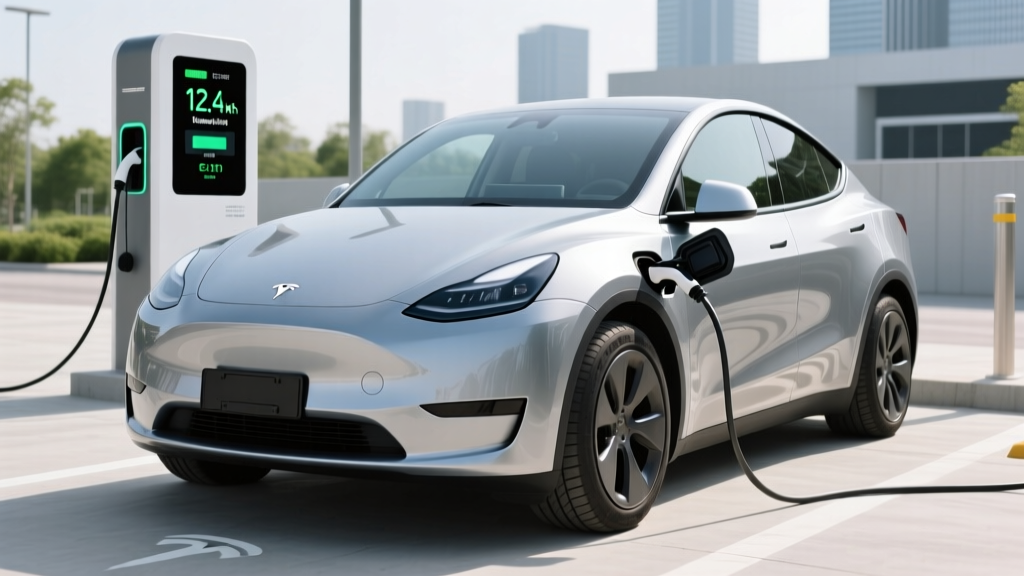
In the EV world, Supercharger is Tesla's trademarked name for its DC fast-charging network, now opening to non-Tesla vehicles via the NACS connector standard. When an EV owner says "I'm supercharging," they mean they're pulling 150–350 kW of direct current into their battery at a public station — not compressing intake air. The confusion is understandable, but the physics are completely unrelated.
EV Charging Levels: How Fast Each One Adds Range
Every EV sold in the U.S. charges at one of three levels. The critical distinction is between kW (kilowatts — a measure of power, or how fast energy flows) and kWh (kilowatt-hours — a measure of energy, or how much the battery holds). Think of kW as the flow rate of a hose and kWh as the size of the bucket. Here's what each level delivers in practice:
| Level | Voltage / Amperage | Power (kW) | Miles of Range Added per Hour | Best For |
|---|---|---|---|---|
| Level 1 (120V) | 120V / 12–16A | 1.4–1.9 kW | 3–5 mi/hr | Overnight top-ups, PHEVs |
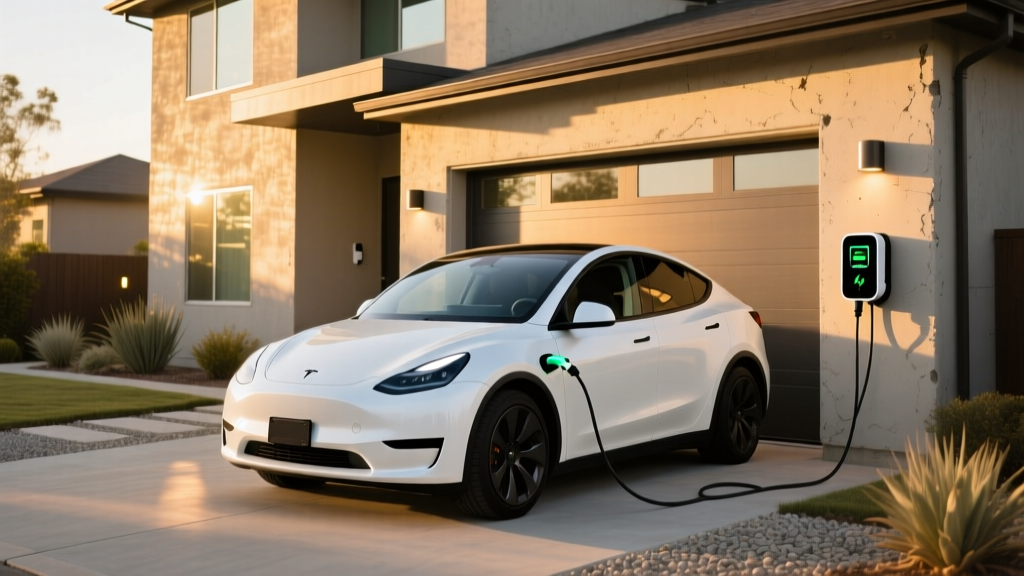
| Level 2 (240V) | 240V / 32–48A | 7.7–11.5 kW | 25–44 mi/hr | Daily home charging |
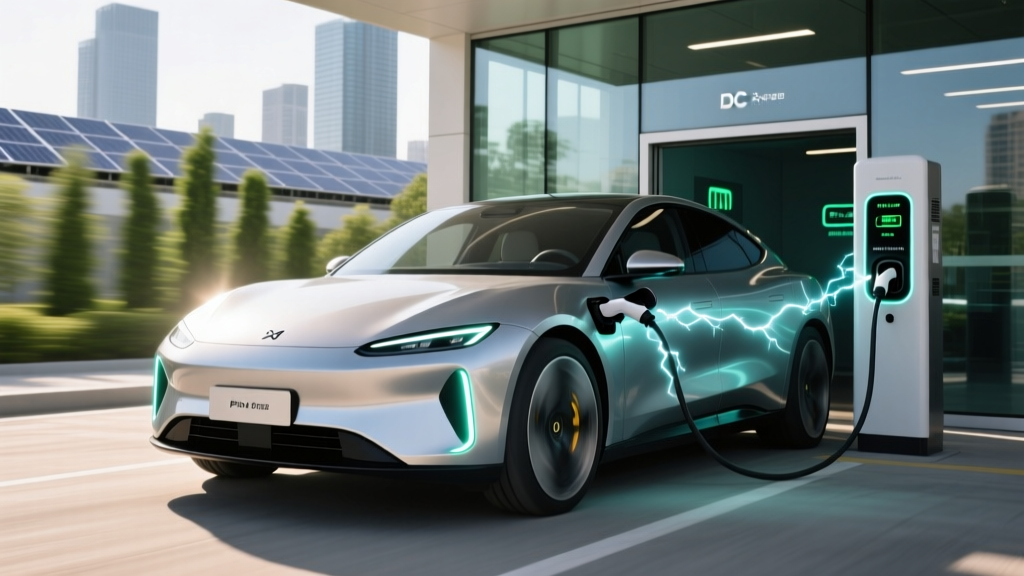
| DC Fast Charge | 400–800V DC | 50–350 kW | 180–1,300+ mi/hr | Road trips, quick stops |
Real-world context: A Level 2 charger at 11.5 kW will fully replenish a 77 kWh battery (like the Hyundai Ioniq 5's) from empty in roughly 7–8 hours. A 250 kW DC fast charger can take that same battery from 10% to 80% in about 18 minutes — though peak rates only hold for a portion of the session. Charging curves taper significantly above 80% State of Charge (SoC) to protect battery health, which is why you'll rarely see EV owners charging past 80% on road trips.
Home Charger Installation: What It Actually Costs
Installing a Level 2 home charger is the single biggest infrastructure decision an EV buyer makes. Costs vary enormously based on your home's electrical panel, the distance from panel to charging location, and local permit fees. Here's the honest breakdown:
| Item | Simple Install (Panel Nearby) | Complex Install (Panel Far / Upgrade Needed) |
|---|---|---|
| Level 2 EVSE equipment (hardwired, 48A) | $500–$750 | $500–$750 |
| Electrician labor (2–4 hrs simple; 6–10+ hrs complex) | $300–$800 | $1,200–$3,000 |
| Permit & inspection | $50–$200 | $100–$350 |
| Electrical panel upgrade (100A → 200A, if needed) | N/A | $1,500–$4,000 |
| Total Range | $850–$1,750 | $3,300–$8,100 |
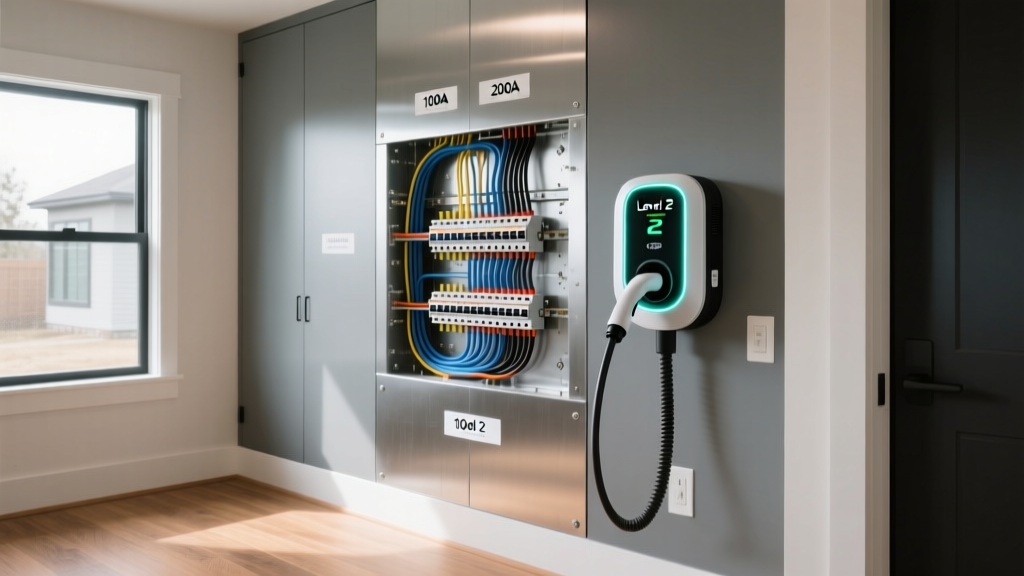
The panel-upgrade gotcha: Many homes built before 2000 have 100-amp electrical panels. A 48-amp EV charger draws 11.5 kW continuously — which, under National Electrical Code (NEC) rules, requires a circuit rated for 125% of the continuous load (i.e., a 60-amp breaker). If your panel is already near capacity running A/C, an electric dryer, and an electric oven, adding a 60A circuit may require a panel upgrade to 200A. Budget for this possibility — it's the single biggest cost surprise for new EV owners.
Connector Compatibility: NACS, CCS1, and CHAdeMO
The EV industry has largely converged on the North American Charging Standard (NACS), originally developed by Tesla. As of 2025–2026, nearly every major automaker — Ford, GM, Rivian, Hyundai, Kia, Volvo, BMW, and others — has adopted NACS for new vehicles. The legacy CCS1 (Combined Charging System) connector is being phased out on new models but remains common at existing public stations. CHAdeMO, used primarily by the Nissan Leaf, is effectively discontinued in North America.
| Connector | Vehicles Using It | Adapter Needed? |
|---|---|---|
| NACS (Tesla-style) | Tesla (all), Ford F-150 Lightning & Mustang Mach-E (2025+), GM Ultium vehicles (2025+), Rivian (2025+), Hyundai/Kia (2026+), Volvo/Toyota bZ | CCS1→NACS adapter (~$200) for older CCS stations |
| CCS1 | VW ID.4 (pre-2026), older Hyundai Ioniq 5/Kia EV6, BMW i4/iX (pre-NACS), Audi e-tron (older) | NACS→CCS1 adapter (~$200–$250) for Tesla Superchargers |
| CHAdeMO | Nissan Leaf (all years), Mitsubishi Outlander PHEV (older) | No reliable adapter to NACS/CCS; limited station availability |
Practical advice: If you're buying a new EV in 2026, prioritize a NACS-equipped vehicle. It gives you native access to Tesla's Supercharger network (over 25,000 stalls in North America) plus a growing number of third-party stations. If you own an older CCS1 vehicle, budget $200–$250 for a NACS adapter from a reputable supplier like Lectron or A2Z EV.
Cost to Charge: EV vs. Gas Per Mile
The economic case for an EV hinges on fuel-cost savings, but those savings depend heavily on where and when you charge. Here's a realistic comparison using a 2026 Hyundai Ioniq 5 (3.5 miles per kWh, per fueleconomy.gov) versus a 28 MPG combined gas sedan at $3.40/gallon:
| Scenario | Rate ($/kWh) | Cost Per Mile (Ioniq 5) | Annual Cost (12,000 mi) |
|---|---|---|---|
| Home off-peak (utility time-of-use) | $0.08–$0.12 | $0.023–$0.034 | $275–$410 |
| Home standard rate (national avg.) | $0.16 | $0.046 | $550 |
| Public Level 2 (ChargePoint, etc.) | $0.25–$0.40 | $0.071–$0.114 | $855–$1,370 |
| DC Fast Charge (Electrify America, Tesla) | $0.35–$0.55 | $0.10–$0.157 | $1,200–$1,885 |
| Gasoline (28 MPG, $3.40/gal) | — | $0.121 | $1,457 |
The takeaway: Home charging at off-peak rates saves 75–80% versus gasoline. But if you rely exclusively on DC fast charging, your fuel costs can actually exceed a gas car. The economics strongly favor home Level 2 installation — which is why we recommend budgeting for it upfront.
Real Charging Times: 10–80% for Common Battery Sizes
EV buyers fixate on peak kW figures, but sustained charging speed matters more. A vehicle that peaks at 250 kW but tapers hard after 50% SoC will be slower in practice than one that holds 200 kW longer. Here are real-world 10–80% times for popular 2026 models:
- Hyundai Ioniq 5 (77.4 kWh, NMC, 800V architecture): Peaks at ~240 kW, 10–80% in approximately 18 minutes on a 350 kW station.
- Tesla Model Y Long Range (~75 kWh, NMC): Peaks at ~250 kW, 10–80% in approximately 22–25 minutes on a V3 Supercharger.
- Ford F-150 Lightning Extended Range (131 kWh, NMC): Peaks at ~170 kW, 10–80% in approximately 41 minutes (large battery = longer session even at decent speeds).
- Chevrolet Equinox EV (85 kWh, NMC): Peaks at ~150 kW, 10–80% in approximately 30 minutes.
- BMW iX xDrive50 (111.5 kWh usable, NMC): Peaks at ~195 kW, 10–80% in approximately 31 minutes.
Charge-curve reality check: All lithium-ion batteries charge fastest between 10–50% SoC. Above 80%, the Battery Management System (BMS) drastically reduces current to prevent lithium plating and heat damage. This is why EV road-trippers charge to 80% and move on — the last 20% can take as long as the first 70%.
Equipment Recommendations: 2026 Home Chargers Worth Buying
Not all Level 2 chargers are created equal. Here are four units we recommend based on power output, build quality, smart features, and connector type — all current as of 2026:
ChargePoint Home Flex
Power: Up to 11.5 kW (48A, 240V)
Connector: NACS (J3400) or J1772 (configurable)
Cable length: 23 ft
Smart features: Wi-Fi, app scheduling, Alexa integration, energy reporting
Price: ~$650–$700
Best for: Most homeowners wanting flexible amperage settings (can be dialed down to 16A for older panels)
Tesla Wall Connector
Power: Up to 11.5 kW (48A, 240V)
Connector: NACS native (J1772 adapter included)
Cable length: 24 ft
Smart features: Wi-Fi, OTA updates, Power-Share (load balancing between two units), access control
Price: ~$475
Best for: Tesla owners and NACS-adopters; best value-per-watt on the market
Grizzl-E Smart
Power: Up to 9.6 kW (40A, 240V)
Connector: J1772 (NACS adapter available separately)
Cable length: 24 ft
Smart features: OCPP-compatible, app control, adjustable amperage
Price: ~$450–$550
Best for: Cold-climate durability (rated to -40°F), Canadian-built, rugged housing
Emporia Vue EV Charger
Power: Up to 11.5 kW (48A, 240V)
Connector: J1772 (NACS adapter available)
Cable length: 24 ft
Smart features: Integrates with Emporia Vue whole-home energy monitor, solar-aware scheduling
Price: ~$550–$650
Best for: Homes with solar panels wanting to charge only from excess solar production
FAQ: Your EV Charging Questions Answered
Can I plug an EV charger into a regular outlet?
Yes, but only for Level 1 charging at 120V, which adds just 3–5 miles of range per hour. This works for plug-in hybrids with small batteries (e.g., Toyota RAV4 Prime's 42-mile electric range charges overnight on 120V) but is impractical for full EVs with 70+ kWh batteries. A dedicated 240V circuit for Level 2 is strongly recommended.
How much does it cost to install a home EV charger?
A straightforward install with a nearby 200A panel typically runs $850–$1,750 including equipment, electrician labor, and permit. If you need a panel upgrade from 100A to 200A, expect $3,300–$8,100 total. Get at least three quotes from licensed electricians and confirm they pull a permit.
How fast will each charging level add range?
Level 1 (120V): 3–5 miles/hour. Level 2 (240V, 48A): 25–44 miles/hour depending on vehicle efficiency. DC Fast Charging: 180–1,300+ miles/hour at peak, but sessions are measured in minutes (typically 18–35 minutes for 10–80%) because you don't charge for a full hour.
Which connector/charger is compatible with my EV?
Check your vehicle's charge port. 2026 models from Tesla, Ford, GM, Rivian, Hyundai, Kia, and most others use NACS. Older CCS1 vehicles (pre-2025 VW ID.4, older Ioniq 5) need a NACS-to-CCS1 adapter (~$200–$250) to use Tesla Superchargers. CHAdeMO vehicles (Nissan Leaf) face the most limited public charging options.
How much does charging cost per mile vs. gas?
Home charging at off-peak rates costs roughly $0.03/mile — about 75% less than a 28 MPG gas car at $3.40/gallon ($0.12/mile). Public DC fast charging at $0.45/kWh costs roughly $0.13/mile, which is comparable to or slightly more than gas. The financial case for EVs depends heavily on access to affordable home charging.
What electrical upgrades might I need?
The most common upgrade is a panel replacement from 100A to 200A service ($1,500–$4,000). You may also need a new dedicated 60A circuit, conduit runs (if the charger is far from the panel), and a GFCI breaker for outdoor installations. Homes with solar may benefit from a smart charger that integrates with their inverter to charge only from excess production.