What Is the Superbee Charger and Who Is It For?
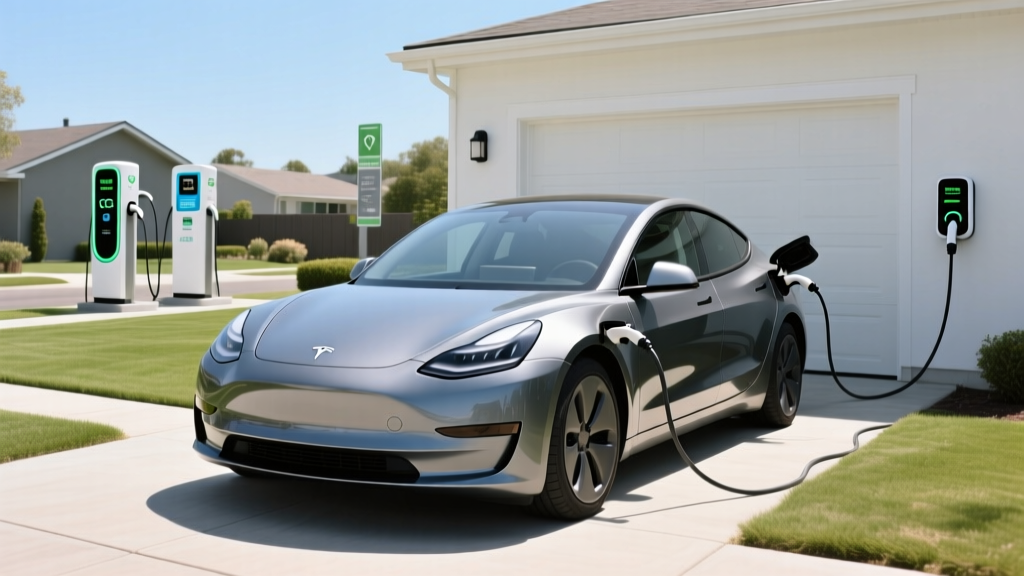
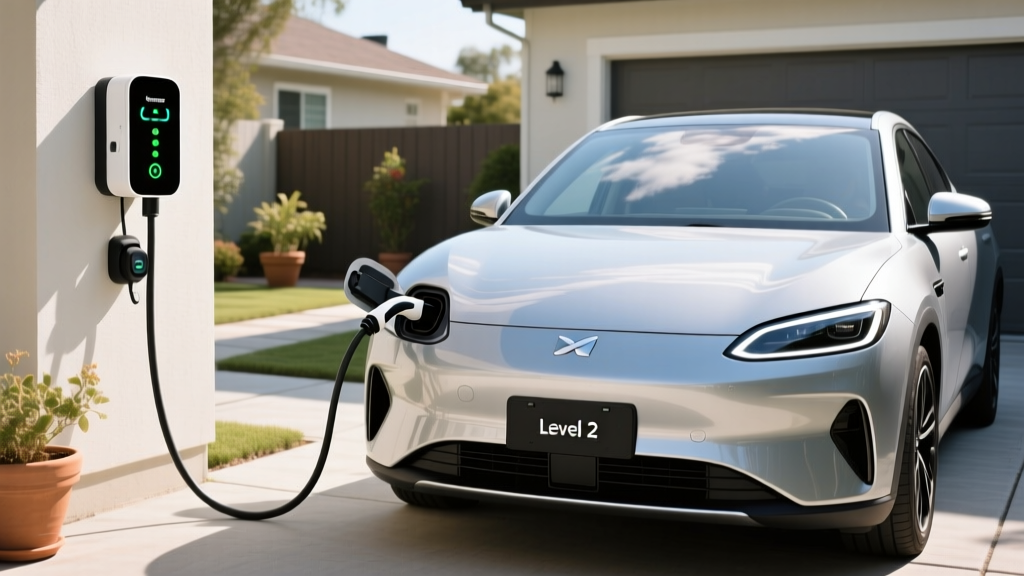
The Superbee charger is a Level 2 home EV charging station rated at 48 amps (11.5 kW on a 240V circuit) with Wi-Fi connectivity, a 25-foot cable, and native NACS (North American Charging Standard) connector output. It targets EV owners who want a hardwired, smart-capable wall unit without paying the premium of OEM-branded equipment from Tesla or Ford.
For context, 11.5 kW is the practical ceiling for most residential electrical panels without a dedicated 100A subpanel upgrade. That output translates to roughly 35–44 miles of range added per hour of charging for a typical midsize EV like the Tesla Model Y or Hyundai IONIQ 5 — enough to fully replenish a 75–84 kWh battery overnight in 7–9 hours.
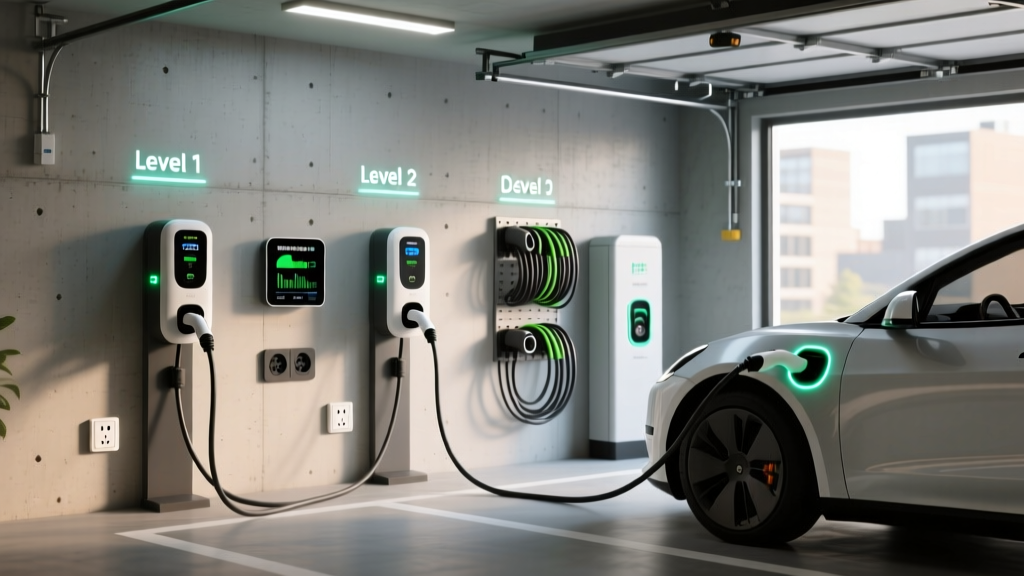
Charging Levels Explained: Speed, Power, and Range Per Hour
Before evaluating the Superbee specifically, here's how it fits into the broader EV charging ecosystem. The single most important distinction in EV charging is between kW (kilowatts), which measures power flow rate, and kWh (kilowatt-hours), which measures total energy stored. Think of kW as how fast water flows through a hose, and kWh as the total gallons in the bucket.
| Level | Voltage / Amps | Power (kW) | Miles of Range / Hour | Typical Use |
|---|---|---|---|---|
| Level 1 | 120V / 12A | 1.4 kW | 3–5 mi/hr | Overnight trickle, PHEVs |
| Level 2 (Superbee) | 240V / 48A | 11.5 kW | 35–44 mi/hr | Primary home charging |
| Level 2 (common 32A) | 240V / 32A | 7.7 kW | 23–29 mi/hr | Budget home installs, NEMA 14-50 |
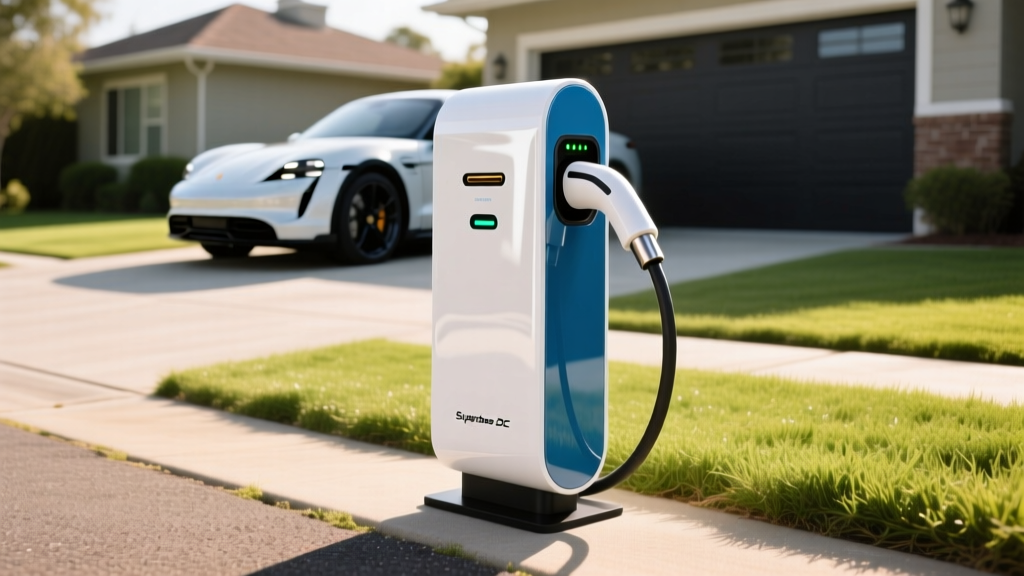
| DC Fast (150 kW) | 400–800V DC | 150 kW peak | ~500+ mi/hr (peak) | Road trips, 10–80% in 18–25 min |
| DC Fast (350 kW) | 800V DC | 350 kW peak | ~1,000+ mi/hr (peak) | 800V vehicles (IONIQ 5, Taycan) |
Superbee Charger Specifications and Equipment Details
Here's what the Superbee delivers on paper and in practice:
- Max output: 48A / 11.5 kW (hardwired, 240V)
- Connector: NACS (native Tesla-compatible); CCS1 adapter available separately (~$150–$200)
- Cable length: 25 feet (sufficient for most garage and driveway setups)
- Wi-Fi: 2.4 GHz, enables scheduling, energy monitoring, and utility demand-response programs
- Enclosure rating: NEMA 4 (indoor/outdoor, weather-resistant)
- Weight: ~12 lbs (wall-mounted unit)
- Warranty: 3 years limited
- Estimated price: $499–$599 (charger unit only, before installation)
Superbee 48A (Hardwired)
Output: 11.5 kW
Connector: NACS
Smart features: Wi-Fi scheduling, energy dashboard
Price: ~$549
Best for: Tesla, Ford, Rivian, GM (2025+) owners wanting max home speed
ChargePoint Home Flex (Comparison)
Output: Up to 12 kW (50A)
Connector: NACS or J1772
Smart features: Alexa, app scheduling, utility integration
Price: ~$699
Best for: Flexibility across connector types, brand recognition
Tesla Wall Connector (Comparison)
Output: 11.5 kW (48A)
Connector: NACS native
Smart features: Wi-Fi, OTA updates, Power-Share
Price: ~$450
Best for: Tesla-only households, lowest price at 48A
Home Installation: Electrical Requirements, Permits, and Total Cost
The Superbee requires a dedicated 60-amp circuit breaker with 6 AWG copper wire for its 48A continuous draw (the National Electrical Code requires the breaker to be rated at 125% of continuous load: 48A × 1.25 = 60A). This is a hardwired unit — there is no plug, which means a licensed electrician must make the connection inside the unit's junction box.
What Electrical Upgrades Might I Need?
Your home's main electrical panel determines whether a Superbee install is straightforward or requires significant work:
- 200A main panel with available capacity: Most modern homes (built after ~2000) have a 200A service. If your panel has physical breaker slots and a load calculation shows available headroom, the electrician adds a 60A breaker and runs conduit to the charger location. This is the best-case scenario.
- 100A or 150A panel: Common in homes built before the 1990s. Adding a 60A EV circuit may push the panel past its safe load calculation, especially if you already run electric heat, an electric dryer, and an electric range. A panel upgrade to 200A typically costs $1,500–$3,000 before the charger circuit.
- No available breaker slots: Even on a 200A panel, if all physical slots are filled, you may need a subpanel ($400–$800) or tandem breakers (if the panel accepts them).
- Long wire runs: If the charger location is more than 50–75 feet from the panel, wire cost increases significantly. 6 AWG copper at long runs can add $200–$600 in materials alone.
| Cost Component | Simple Install (200A panel, short run) | Moderate Install (long run, conduit) | Complex Install (panel upgrade) |
|---|---|---|---|
| Superbee charger unit | $549 | $549 | $549 |
| Electrician labor (2–8 hrs) | $300–$500 | $600–$1,200 | $1,500–$3,000 |
| Materials (wire, conduit, breaker) | $100–$200 | $250–$600 | $400–$1,200 |
| Permit & inspection | $50–$150 | $50–$200 | $100–$300 |
| Panel upgrade (if needed) | N/A | N/A | $1,500–$3,000 |
| Total Estimated Range | $999–$1,399 | $1,449–$2,549 | $4,049–$8,049 |
Always get at least two quotes from licensed electricians. Ask specifically whether their quote includes the permit and final inspection — some municipalities require both, and skipping them can void your homeowner's insurance coverage for electrical fires.
Connector Compatibility: Will the Superbee Work With Your EV?
The Superbee ships with a native NACS connector. As of the 2025–2026 model years, NACS has become the dominant light-duty EV connector in North America, adopted by Tesla (native), Ford, GM, Rivian, Hyundai, Kia, and others. However, many EVs on the road still use CCS1 or CHAdeMO.
| Connector Type | Compatible Brands (2025–2026 Models) | Superbee Compatibility |
|---|---|---|
| NACS | Tesla (all), Ford (2025+), GM (2025+), Rivian, Hyundai (2025+), Kia (2026+), Volvo, Polestar | ✅ Native — plug directly in |
| CCS1 | Volkswagen ID.4, BMW i4/iX, older Ford Mustang Mach-E (2021–2024), older Hyundai IONIQ 5 (2022–2024), Chevrolet Bolt EV/EUV | ⚠️ Requires NACS-to-CCS1 adapter ($150–$250) |
| CHAdeMO | Nissan LEAF (all years), Mitsubishi Outlander PHEV (older) | ❌ No adapter widely available — not recommended |
| J1772 | All non-Tesla EVs/PHEVs (legacy AC standard) | ⚠️ Requires NACS-to-J1772 adapter ($100–$180) |
If you own a CCS1-equipped EV and plan to keep it for several more years, factor in the adapter cost. Adapters from reputable brands like Lectron or A2Z add roughly $150–$250 but introduce a slight convenience penalty — you'll need to keep the adapter at home and connect it each time you charge.
Charging Time Examples: 10–80% for Common Battery Sizes
Here's how long the Superbee at its full 11.5 kW output takes to charge popular EV batteries from 10% to 80% State of Charge (SoC). Note that Level 2 charging does not taper significantly until above ~95% SoC, unlike DC fast charging where the curve drops sharply past 80%.
- Tesla Model Y Long Range (75 kWh usable): ~4.5 hours (10–80%)
- Ford F-150 Lightning Extended Range (131 kWh usable): ~8 hours (10–80%)
- Hyundai IONIQ 5 (77.4 kWh usable): ~4.7 hours (10–80%)
- Chevrolet Equinox EV (85 kWh usable): ~5.2 hours (10–80%)
- Toyota RAV4 Prime PHEV (18.1 kWh usable): ~1.1 hours (10–80%) — note: limited by 6.6 kW onboard charger
- BMW i4 eDrive40 (81.5 kWh usable): ~5 hours (10–80%) — requires NACS adapter
For most daily driving (30–50 miles), you'll only need 1–2 hours of charging to replenish what you used. The overnight window (8–10 hours) covers even the largest batteries from nearly empty to full.
Cost to Charge: Home vs. Public vs. Gas Per Mile
The economics of EV charging depend heavily on where and when you plug in. The Superbee's primary value is enabling cheap, convenient overnight home charging.
| Scenario | Rate ($/kWh) | Cost per 300 Miles* | Cost per Mile |
|---|---|---|---|
| Home off-peak (utility TOU rate) | $0.08–$0.12 | $7.20–$10.80 | $0.024–$0.036 |
| Home standard rate (no TOU) | $0.14–$0.18 | $12.60–$16.20 | $0.042–$0.054 |
| Public Level 2 (ChargePoint, etc.) | $0.20–$0.35 | $18.00–$31.50 | $0.060–$0.105 |
| DC Fast Charging (Electrify America, EVgo) | $0.35–$0.55 | $31.50–$49.50 | $0.105–$0.165 |
| Gas car (28 MPG combined, $3.40/gal) | — | $36.43 | $0.121 |
*Based on an EV efficiency of 3.0 miles/kWh (approximately 112 MPGe), representative of a midsize crossover like the Model Y or IONIQ 5. Source: fueleconomy.gov
Home charging on an off-peak time-of-use (TOU) rate delivers the lowest per-mile cost in personal transportation — roughly 3¢ per mile versus 12¢ for a typical gas car. Even at standard residential rates without TOU optimization, home Level 2 charging undercuts gasoline by 50–65%. The Superbee's Wi-Fi scheduling feature lets you set charging windows to coincide with your utility's cheapest hours (typically 10 PM – 6 AM).
Safety, Electrical Code, and Permit Considerations
EV charging stations draw significant continuous current for hours at a time — this is fundamentally different from intermittent loads like a microwave or dryer. The National Electrical Code (NEC Article 625) governs EV charging installations specifically:
- Dedicated circuit required: The Superbee must be on its own 60A breaker — no sharing with other outlets or appliances.
- GFCI protection: NEC 2020 and later require ground-fault circuit interrupter protection for EV charging outlets. Hardwired units like the Superbee typically incorporate internal GFCI protection, but verify with your electrician and local inspector.
- Outdoor rating: The Superbee's NEMA 4 rating allows outdoor installation. If mounting outside, ensure the conduit and wire entry points are sealed against moisture ingress.
- Permit required: Most jurisdictions require an electrical permit for EV charger installation. The permit cost is typically $50–$200, and a final inspection verifies code compliance. Skipping the permit risks insurance denial in the event of an electrical fire.
- Wire gauge: 6 AWG copper (THHN in conduit, or NM-B/Romex where local code allows) for a 60A circuit. Aluminum wire would require 4 AWG but is less common for short residential runs.
Is the Superbee Charger Worth It? Decision Framework
Choose the Superbee charger if:
- You own or plan to buy a NACS-equipped EV (Tesla, Ford 2025+, GM 2025+, Rivian, Hyundai 2025+)
- Your electrical panel has capacity for a 60A dedicated circuit
- You want maximum Level 2 speed (11.5 kW) without paying a brand premium
- You value Wi-Fi scheduling for off-peak utility rates
Look at alternatives if:
- You drive a CHAdeMO vehicle (Nissan LEAF) — no viable adapter path
- You need a plug-in (NEMA 14-50) unit for portability between homes
- Your panel is maxed out at 100A — consider a 32A/7.7 kW charger on a 40A circuit instead
- You want a longer warranty — Tesla Wall Connector offers 4 years vs. Superbee's 3 years
Frequently Asked Questions
How much does it cost to install a Superbee home EV charger?
Expect $1,000–$1,400 for a straightforward install on a modern 200A panel with a short wire run (under 30 feet). This includes the $549 charger unit, $300–$500 electrician labor, $100–$200 in materials, and a $50–$150 permit. Complex installs requiring a panel upgrade can reach $4,000–$8,000 total. Always get a load calculation from your electrician before committing.
How fast will the Superbee add range compared to a regular outlet?
The Superbee at 11.5 kW adds roughly 35–44 miles of range per hour — about 10× faster than a standard 120V Level 1 outlet (3–5 miles/hour). For a Tesla Model Y with 310 miles of EPA range, the Superbee replenishes a 10–80% charge in approximately 4.5 hours versus roughly 45+ hours on Level 1.
Which connector does the Superbee use, and will it fit my non-Tesla EV?
The Superbee uses the NACS connector natively. This fits all Tesla vehicles and the growing list of 2025–2026 models from Ford, GM, Rivian, Hyundai, Kia, and Volvo. For CCS1-equipped vehicles (older IONIQ 5, VW ID.4, BMW i4), you'll need a NACS-to-CCS1 adapter costing $150–$250. CHAdeMO vehicles (Nissan LEAF) are not compatible.
How much does charging at home cost per mile compared to gas?
Home charging on off-peak rates costs approximately $0.024–$0.036 per mile (based on $0.08–$0.12/kWh and 3.0 mi/kWh efficiency). A comparable gas car at 28 MPG and $3.40/gallon costs about $0.121 per mile. That's a 70–80% per-mile savings with home Level 2 charging. Even at standard residential rates ($0.14–$0.18/kWh), you'll save 50–65% versus gasoline.
What electrical upgrades might my home need before installing the Superbee?
The most common upgrade is a panel capacity increase from 100A or 150A to 200A ($1,500–$3,000), needed in older homes where the existing panel can't safely support a new 60A continuous circuit alongside existing loads. Other potential upgrades include adding a subpanel if breaker slots are full ($400–$800), running longer conduit for detached garages ($200–$600 in materials), or upgrading the utility service drop if your home has only 100A service from the street ($2,000–$5,000, utility-dependent). A licensed electrician's load calculation will determine exactly what's needed — request this before purchasing the charger.
Does the Superbee qualify for any tax credits or utility rebates?
The federal Alternative Fuel Vehicle Refueling Property Credit (IRC §30C) covers up to 30% of home charger equipment and installation costs, capped at $1,000, for equipment placed in service through 2025. Check current IRS guidance for 2026 extensions. Many utilities also offer rebates of $200–$500 for smart Level 2 chargers — check with your local provider. Eligibility varies by income, location, and census tract; consult a tax professional for your specific situation.