Understanding Slate EV Range: EPA Sticker vs. Real-World Miles
The Slate EV is engineered as an urban commuter with a compact footprint and a lithium iron phosphate (LFP) battery pack. LFP chemistry trades some energy density for exceptional cycle life and thermal stability — meaning less degradation over years of daily use. The EPA-estimated range for the base Slate EV sits at approximately 150 miles on a full charge, paired with a usable battery capacity of roughly 40 kWh. Efficiency lands near 26–28 kWh/100mi (or ~110 MPGe combined), which is competitive for a lightweight city-oriented EV.
| Spec | Slate EV (Base) |
|---|---|
| EPA Range | 150 mi |
| Battery (usable) | ~40 kWh, LFP |
| Efficiency | ~27 kWh/100mi (110 MPGe) |
| Max DC Fast Charge | ~50 kW (CCS1/NACS) |
| Level 2 Acceptance | ~7.2 kW (32A @ 240V) |
| 10–80% DCFC Time | ~35–40 min |
| 0–60 mph | ~8.5 sec |
| Horsepower | ~150 HP |
| Base MSRP (2026) | ~$28,000 |
| Battery Warranty | 8 yr / 100,000 mi |
Charging Levels Explained: Speeds in kW and Miles Per Hour
The single most common EV confusion is between kW (kilowatts — the rate of power delivery, like water pressure) and kWh (kilowatt-hours — total energy stored, like gallons in a tank). A 40 kWh battery charged at 7.2 kW takes roughly 5.5 hours from empty. Here is how each level applies to the Slate EV:
| Level | Voltage / Amperage | Power (kW) | Miles Added/Hour | Best For |
|---|---|---|---|---|
| Level 1 | 120V / 12A | ~1.4 kW | ~4–5 mi/hr | Overnight top-ups, emergencies |
| Level 2 (Home) | 240V / 32A | ~7.2 kW | ~25–28 mi/hr | Daily home charging |
| Level 2 (Max) | 240V / 48A | ~11.5 kW | ~28 mi/hr (vehicle-limited) | Future-proofing; Slate caps at 7.2 kW |
| DC Fast | 400V+ DC | Up to 50 kW | ~120–150 mi/hr (peak) | Road trips, rapid top-ups |
Charging curve reality: The Slate EV's 50 kW peak DC rate is sustained roughly from 10% to 55% State of Charge (SoC). Above 60%, the rate tapers to ~30 kW, and above 80% it drops below 15 kW to protect the LFP cells. This is normal behavior — peak kW is never sustained across the full session.
Home Charger Installation: Electrical Requirements & Costs
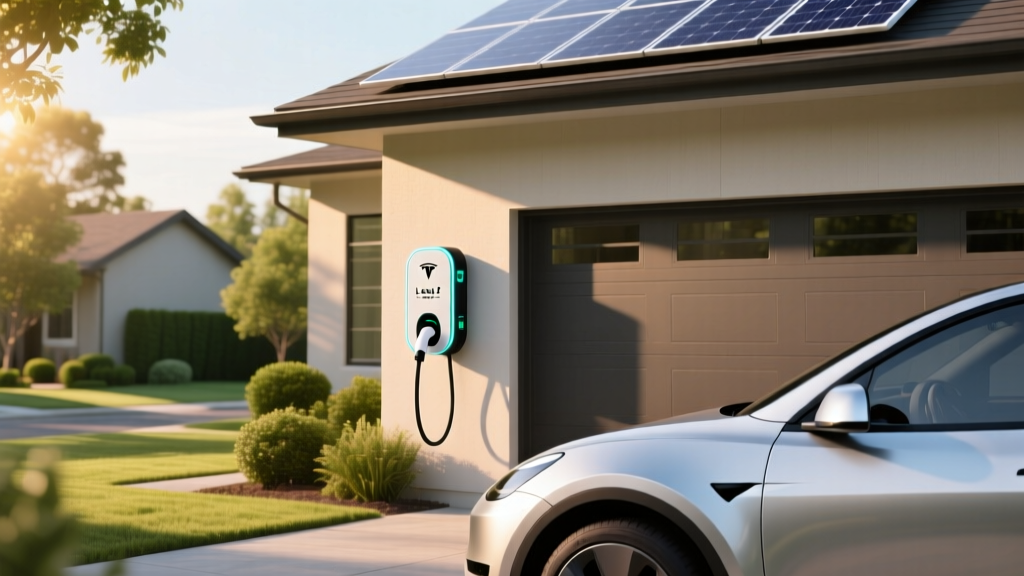
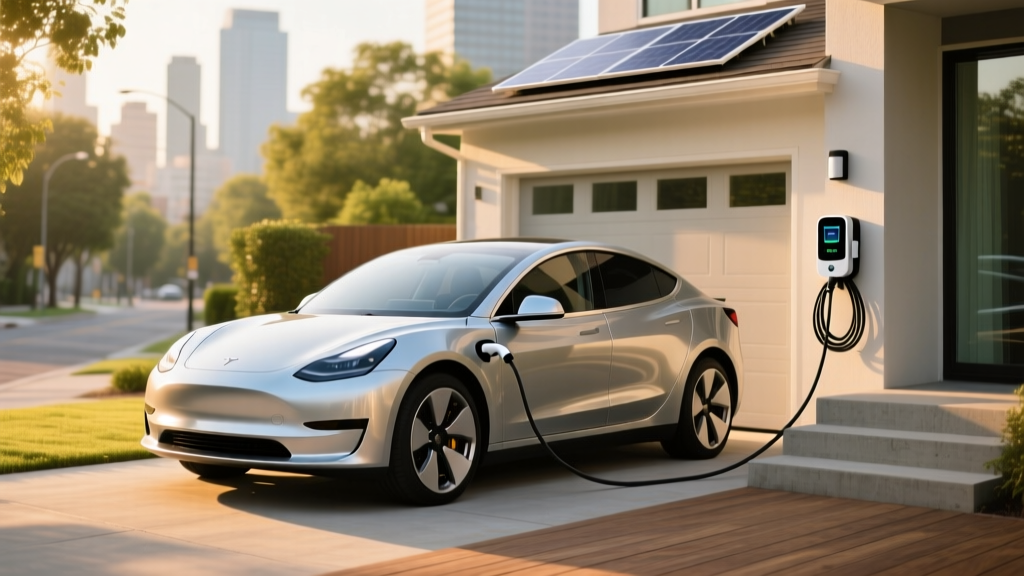
Installing a Level 2 home charger is the single highest-impact upgrade for EV ownership. For the Slate EV's 7.2 kW onboard charger, a 240V / 40A dedicated circuit (NEMA 14-50 outlet or hardwired) is ideal. This provides headroom above the car's acceptance rate, which is good electrical practice — circuits should be rated at 125% of continuous load per NEC Article 625.
What Electrical Upgrades Might You Need?
- Panel capacity: Most modern homes have 150–200A service. A 40A EV circuit draws ~9.6 kW, which is manageable on a 200A panel with typical household loads. Homes with 100A service or heavy existing loads (electric heat, pool, workshop) may need a panel upgrade ($1,500–$3,500) or a smart load-management device like the Emporia Smart SPAN.
- Dedicated circuit: EV chargers require their own breaker — you cannot share a circuit with a dryer or oven. A 40A breaker with 6 AWG copper wire (or 4 AWG aluminum) is standard.
- GFCI protection: NEC 2020+ requires GFCI protection for 14-50 receptacles in garages. Hardwired chargers often bypass this requirement and are preferred by many electricians for reliability.
- Permit: Most jurisdictions require an electrical permit ($50–$200) and a final inspection. Skipping this can void home insurance coverage for electrical fires.
| Component | Low End | High End | Notes |
|---|---|---|---|
| Level 2 Charger (Equipment) | $350 | $700 | 32A–48A smart chargers |
| Electrician Labor | $400 | $1,200 | Varies by run length, conduit |
| Materials (wire, conduit, breaker) | $100 | $400 | Longer runs = more copper |
| Permit & Inspection | $50 | $200 | Local jurisdiction |
| Panel Upgrade (if needed) | $1,500 | $3,500 | 100A → 200A service |
| Total (no panel upgrade) | $900 | $2,500 | Typical installation |
| Total (with panel upgrade) | $2,400 | $6,000 | Older homes |
The IRS §30D tax credit does not cover home charger equipment directly for most taxpayers in 2026 (the §30C alternative fuel infrastructure credit expired for residential use), but some states and utilities offer rebates of $250–$500 for Level 2 equipment and installation. Check your local utility's EV program page.
Connector Compatibility: NACS, CCS1, and CHAdeMO
By 2026, the North American Charging Standard (NACS, originally Tesla's connector) has become the dominant plug for new EVs. The Slate EV ships with a NACS charge port on 2026 models, with CCS1 compatibility available via adapter. CHAdeMO is effectively legacy — only older Nissan Leaf and Mitsubishi models still use it natively.
| Connector | Used By (2026) | Slate EV Compatible? | Adapter Needed? |
|---|---|---|---|
| NACS (J3400) | Tesla, Ford, GM, Rivian, Slate, Volvo, Polestar | Yes (native, 2026+) | No |
| CCS1 | Hyundai, Kia, VW, BMW, legacy Electrify America stalls | Yes | NACS-to-CCS adapter (~$150–$200) |
| CHAdeMO | Nissan Leaf (pre-2026), Mitsubishi | No | Not available; avoid CHAdeMO-only stations |
| J1772 (Level 2 AC) | All EVs (AC charging standard) | Yes (NACS includes J1772 inlet or use adapter) | Often included with vehicle |
Practical tip: If you plan to use Electrify America or other CCS-heavy networks, budget $150–$200 for a NACS-to-CCS adapter from a reputable brand like Lectron or Tesla's official adapter. Tesla Superchargers (now open to NACS-equipped non-Teslas) require no adapter for the Slate EV.
Cost to Charge: Per-Mile Economics vs. Gasoline
The economic case for the Slate EV hinges on electricity cost per mile versus gasoline. With a ~40 kWh battery and 150-mile range, efficiency is approximately 0.267 kWh/mile. Here's what that costs across scenarios:
| Scenario | $/kWh | Cost per Full Charge (40 kWh) | Cost per Mile | Equivalent Gas MPG (at $3.50/gal) |
|---|---|---|---|---|
| Home Off-Peak (utility rate) | $0.09 | $3.60 | $0.024 | 146 MPG |
| Home Average (national) | $0.16 | $6.40 | $0.043 | 82 MPG |
| Public Level 2 (ChargePoint, etc.) | $0.30 | $12.00 | $0.080 | 44 MPG |
| DC Fast (Electrify America, Tesla) | $0.40–$0.55 | $16–$22 | $0.107–$0.147 | 24–33 MPG |
For comparison, a 30 MPG gas car at $3.50/gallon costs $0.117/mile. Home charging on an off-peak rate makes the Slate EV roughly 5× cheaper per mile than gasoline. Even public DC fast charging is competitive with gas on a per-mile basis. The key is maximizing home charging — per the DOE's fueleconomy.gov, 80%+ of EV charging happens at home.
Recommended Home Chargers for the Slate EV
Since the Slate EV accepts up to 7.2 kW (32A), any quality 32A–48A Level 2 charger will max it out. Buying a 48A unit future-proofs for your next EV. All recommendations below support NACS natively or via included adapter:
Emporia Level 2 Smart Charger (48A)
- Power: 11.5 kW max (48A @ 240V)
- Connector: NACS native (2026 model) or J1772
- Cable: 24 ft
- Smart features: Wi-Fi, app scheduling, solar integration, load management
- Price: ~$399
- Best for: Budget-conscious buyers with solar panels
ChargePoint Home Flex (50A)
- Power: 12 kW max (50A @ 240V, configurable)
- Connector: NACS or J1772 (configurable)
- Cable: 23 ft
- Smart features: Wi-Fi, Alexa, scheduling, detailed energy reports
- Price: ~$599
- Best for: Reliability-focused owners wanting UL-listed hardware
Tesla Wall Connector (48A)
- Power: 11.5 kW (48A @ 240V)
- Connector: NACS native
- Cable: 24 ft
- Smart features: Wi-Fi, OTA updates, power-sharing for multi-charger setups
- Price: ~$450
- Best for: NACS-native EVs like the Slate; cleanest install
Safety, Code, and Installation Best Practices
EV charging is a continuous high-draw load — your charger may run at full power for 4–6 hours straight. This is fundamentally different from a dryer or oven that cycles on and off. Key safety requirements per NEC Article 625 and NFPA 70:
- Dedicated circuit: Never share. A 40A breaker for a 32A continuous load (125% rule).
- Wire gauge: 6 AWG copper (THHN in conduit) or 4 AWG aluminum (SER cable) for 40A circuits.
- Outdoor rating: If installing outside, use a NEMA 3R or 4-rated enclosure and a charger rated for outdoor use (IP55+). All three recommendations above carry outdoor ratings.
- GFCI: Required for receptacle-based installs in garages per NEC 2020+. Hardwired installs may not require GFCI at the breaker, which reduces nuisance trips — discuss with your electrician.
- Load management: If your panel is near capacity, devices like the Emporia SPAN or ChargePoint load-sharing can dynamically reduce charger draw when other loads spike, avoiding a panel upgrade.
Frequently Asked Questions
How much does it cost to install a home EV charger for the Slate EV?
A typical Level 2 installation (40A circuit, 48A charger, 20–30 ft wire run) costs $900–$2,500 including equipment, electrician labor, materials, and permit. If your home needs a panel upgrade from 100A to 200A service, add $1,500–$3,500. Get 2–3 quotes from licensed electricians who have EV charger experience.
How fast will each charging level add range to the Slate EV?
Level 1 (120V) adds ~4–5 miles per hour — sufficient only for overnight top-ups of 30–40 miles. Level 2 (240V, 32A) adds ~25–28 miles per hour, fully recharging the 40 kWh battery in ~5.5 hours. DC fast charging at 50 kW adds roughly 100 miles in 30 minutes (10–80% in ~35–40 min).
Which connector and charger is compatible with the 2026 Slate EV?
The 2026 Slate EV uses NACS natively for both AC and DC charging. For CCS1 stations (common on Electrify America), you'll need a NACS-to-CCS adapter (~$150–$200). CHAdeMO is not compatible. For home Level 2, any NACS or J1772 (with adapter) charger rated 32A+ will work.
How much does charging the Slate EV cost per mile vs. gas?
At a national average home electricity rate of $0.16/kWh, the Slate EV costs ~$0.043/mile — equivalent to an 82 MPG gas car. Off-peak utility rates ($0.09/kWh) drop it to $0.024/mile (146 MPG equivalent). A comparable 30 MPG gas car costs $0.117/mile at $3.50/gallon. Home charging is 3–5× cheaper.
What electrical upgrades might my home need for a Level 2 charger?
Homes with 200A service typically need only a dedicated 40A breaker and wire run. Homes with 100A service, electric heating, or heavy loads may require a panel upgrade ($1,500–$3,500) or a smart load-management device. Your electrician will perform a load calculation per NEC Article 220 to determine this before quoting.