The Federal Tax Credit for Electric Car Chargers: What You Need to Know
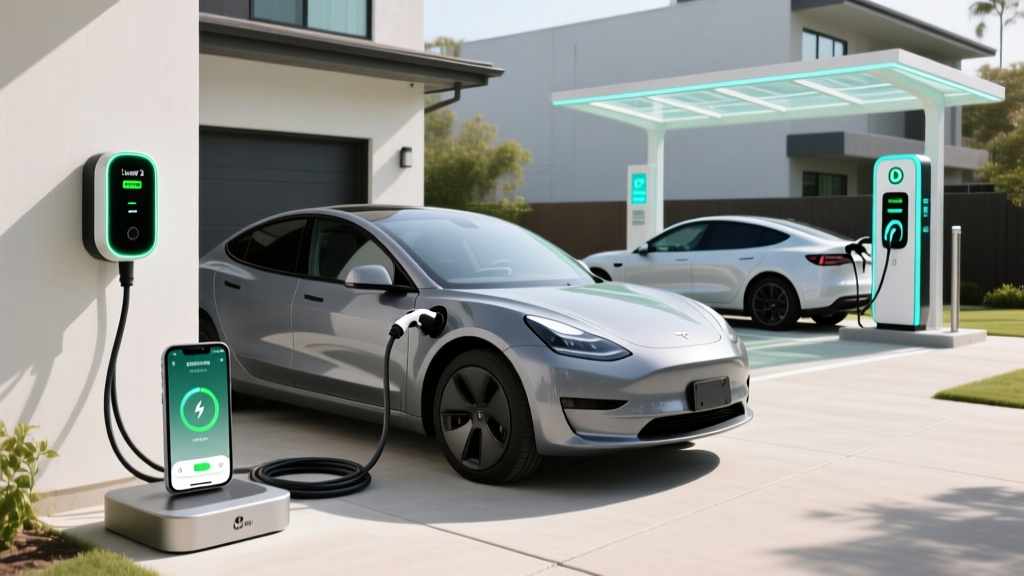
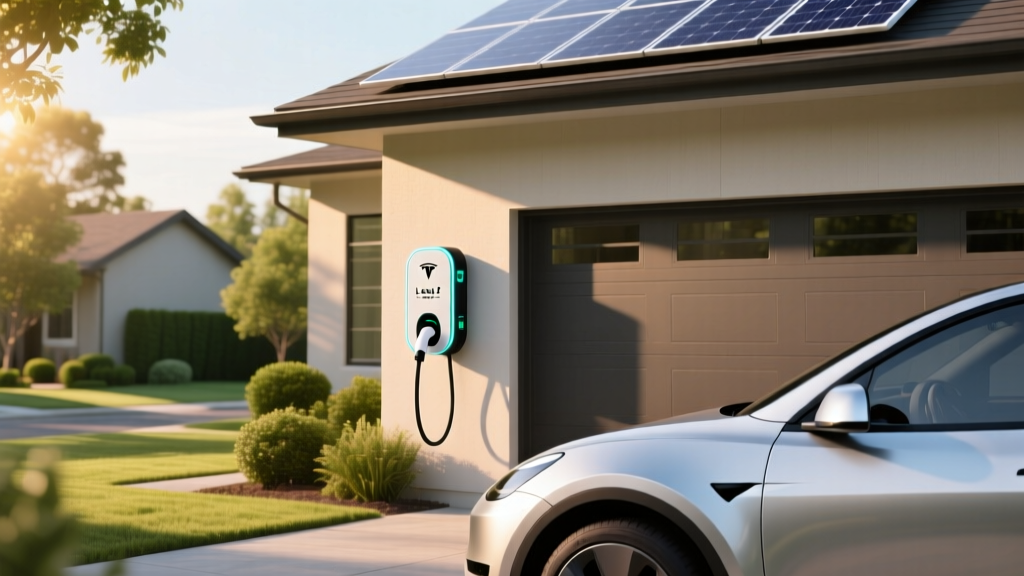
If you're installing a home charging station, the federal tax credit for an electric car charger can offset a meaningful portion of your hardware and installation costs. Known officially as the Alternative Fuel Vehicle Refueling Property Credit (IRS §30C), this incentive covers up to 30% of qualified equipment and installation expenses, capped at $1,000 per tax year for residential property.
Here's a concrete example: if you spend $800 on a Level 2 charger and $1,200 on electrician labor and permits ($2,000 total), your credit would be $600 (30% of $2,000). If your total cost is $4,000 due to a panel upgrade, you'd hit the $1,000 cap (30% of $4,000 = $1,200, but max is $1,000).
Key eligibility rules for 2026 (per IRS §30C guidelines):
- The charger must be installed at your primary residence in the United States.
- The property must be placed in service between January 1, 2023, and December 31, 2032 (current law).
- The credit is non-refundable — it can reduce your tax liability to zero but won't generate a refund beyond that.
- Equipment must be new and meet applicable safety standards (UL-listed).
- There is no income cap for §30C (unlike the §30D vehicle credit), and no MSRP cap applies.
- If you live in a census tract classified as "low-income" or "non-urban," the credit may be higher — check the IRS tract lookup tool.
Always consult a tax professional before claiming, as individual circumstances (AMT, carry-forward rules, state stacking) vary.
Understanding EV Charging Levels: kW, Speeds, and Range Added
Before buying equipment, you need to understand the three charging levels and what they actually deliver. The distinction between kW (kilowatts — the rate of power delivery) and kWh (kilowatt-hours — the energy stored in your battery) is critical. Think of kW as how fast water flows from a hose; kWh is the total volume in the bucket.
| Level | Voltage | Power (kW) | Miles of Range Per Hour | Best For |
|---|---|---|---|---|
| Level 1 | 120V AC | 1.0–1.4 kW | 3–5 mi/hr | Overnight top-ups, low-mileage drivers |
| Level 2 | 240V AC | 3.3–19.2 kW | 12–75 mi/hr | Daily home charging, most EV owners |
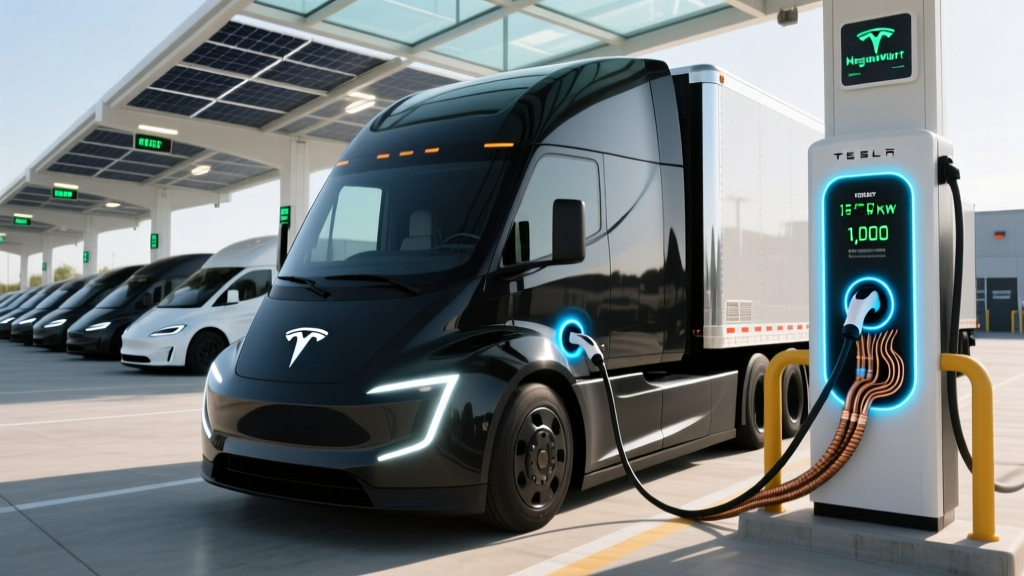
| DC Fast Charge | 400–800V DC | 50–350 kW | 150–1,200+ mi/hr | Road trips, quick top-ups away from home |
Real-world context: A Level 2 charger at 11.5 kW (48 amps on a 60-amp circuit) adds roughly 40–45 miles of range per hour for an efficient sedan like the Tesla Model 3, or about 30–35 miles per hour for a heavier SUV like the Ford Mustang Mach-E. Most EVs charge from 10–80% on Level 2 in 4–8 hours depending on battery size.
Charging Time Examples (10–80% State of Charge)
| Battery Size | Example Vehicle | Level 2 at 7.7 kW (32A) | Level 2 at 11.5 kW (48A) | DC Fast (peak kW) |
|---|---|---|---|---|
| ~58 kWh usable | VW ID.4 | ~6.5 hours | ~4.5 hours | ~28 min at 135 kW peak |
| ~75 kWh usable | Tesla Model Y LR | ~8 hours | ~5.5 hours | ~22 min at 250 kW peak |
| ~95 kWh usable | BMW iX xDrive50 | ~10 hours | ~7 hours | ~31 min at 150 kW peak |
Note: DC fast charging speeds peak early in the session and taper significantly above 80% SoC to protect battery health. Advertised peak kW is sustained for only a portion of the curve.
Home Charger Installation: Electrical Requirements and Cost Breakdown
The single biggest variable in your total cost isn't the charger — it's your home's electrical panel. Here's what determines the scope of work:
Electrical Requirements for a Level 2 Charger
- Voltage: 240V (same as a clothes dryer or electric oven)
- Amperage: Most Level 2 chargers draw 32A or 48A, requiring a dedicated 40A or 60A circuit respectively (NEC code requires circuits rated at 125% of continuous load)
- Wire gauge: 6 AWG copper for 48A circuits; 8 AWG for 32A (varies by run length and local code)
- Dedicated circuit: Your charger must have its own breaker — sharing with other appliances is a code violation
Panel Upgrade: The Hidden Cost
Many homes built before 2000 have 100A or 150A main panels. If your panel is near capacity (running electric HVAC, dryer, oven, and water heater), adding a 60A EV circuit may require upgrading to a 200A panel. This is the single most expensive line item in a home charging setup.
| Component | Simple Install (panel has capacity) | Complex Install (panel upgrade needed) |
|---|---|---|
| Level 2 Charger (hardware) | $350–$700 | $350–$700 |
| Electrician labor (2–4 hrs) | $400–$1,000 | $800–$1,500 |
| Electrical permit | $50–$200 | $100–$300 |
| Panel upgrade (if needed) | $0 | $1,500–$3,500 |
| Conduit/wire (long runs 50+ ft) | $100–$300 | $200–$500 |
| Total | $900–$2,200 | $2,950–$6,500 |
With the §30C tax credit, you can recover up to $1,000 of these costs. Many utilities also offer rebates of $200–$500 for smart charger installations — check with your local provider.
Connector Compatibility: NACS, CCS, and CHAdeMO Explained
Your EV's charge port determines which public chargers you can use and which home charger to buy. As of 2026, the North American market has largely consolidated around NACS (North American Charging Standard, used by Tesla and now adopted by most major automakers) and CCS1 (Combined Charging System).
| Connector | Brands Using It (new vehicles) | Home Charger Availability |
|---|---|---|
| NACS (Tesla) | Tesla, Ford, GM, Rivian, Volvo, Polestar, Mercedes (new models) | Tesla Wall Connector, ChargePoint Home Flex (NACS), Emporia (NACS) |
| CCS1 | Hyundai, Kia, VW, BMW, Subaru, legacy models from Ford/GM | ChargePoint Home Flex, Emporia Vue, JuiceBox |
| CHAdeMO | Nissan Leaf (legacy — no new models since 2025) | Limited home options; mostly public DC |
Adapter reality: If you own a CCS-equipped vehicle but want access to Tesla Superchargers (now open to other brands via adapters), you'll need a CCS-to-NACS adapter (~$200–$250 from Tesla or third parties like Lectron). The reverse — NACS vehicles charging at CCS stations — also requires an adapter. For home charging, buy a charger with the native connector your vehicle uses; adapters are for public charging flexibility.
Cost to Charge: Per-Mile Economics vs. Gasoline
The economics of EV charging depend heavily on where and when you charge. Here's a realistic comparison using a 2026 Tesla Model Y Long Range (averaging ~3.0 miles per kWh) vs. a comparable gas SUV at 25 MPG combined.
| Scenario | Rate | Cost Per Mile (EV at 3 mi/kWh) | Cost Per Mile (Gas at 25 MPG, $3.40/gal) |
|---|---|---|---|
| Home, off-peak utility rate | $0.10/kWh | $0.033 | $0.136 |
| Home, average US rate | $0.16/kWh | $0.053 | $0.136 |
| Public Level 2 (ChargePoint, EVgo) | $0.30/kWh | $0.100 | $0.136 |
| DC Fast Charge (Electrify America) | $0.48/kWh | $0.160 | $0.136 |
The takeaway: home charging is 3–4x cheaper per mile than gasoline. Public DC fast charging can be more expensive than gas per mile, which is why it should be reserved for road trips, not daily use. Time-of-use (TOU) utility plans can cut your home charging cost by 30–50% by shifting sessions to overnight hours.
Recommended Level 2 Home Chargers (2026 Picks)
Tesla Wall Connector
- Power: 11.5 kW (48A)
- Connector: NACS native
- Cable length: 24 ft
- Smart features: Wi-Fi, OTA updates, load sharing, Tesla app scheduling
- Price: ~$475
- Best for: Tesla owners and NACS-equipped Fords/GMs
ChargePoint Home Flex
- Power: Up to 12 kW (50A) — adjustable via DIP switch
- Connector: Available in NACS or CCS1
- Cable length: 23 ft
- Smart features: Wi-Fi, app scheduling, energy tracking, Alexa
- Price: ~$550–$650
- Best for: Multi-EV households, flexible amperage
Emporia Vue Level 2
- Power: 11.5 kW (48A)
- Connector: NACS or CCS1 options
- Cable length: 24 ft
- Smart features: Solar integration, energy monitoring, app control
- Price: ~$399–$499
- Best for: Budget-conscious buyers, solar homes
All three chargers are UL-listed, support indoor and outdoor installation (NEMA 4 rated), and qualify for the §30C tax credit when professionally installed.
Safety, Code, and Installation Best Practices
A Level 2 charger is a continuous high-power load — it runs at full draw for hours. This demands proper installation to prevent fire risk:
- Dedicated circuit: NEC Article 625 requires EVSE to be on its own breaker. Do not share with a dryer or HVAC.
- GFCI protection: Required for outdoor receptacles and increasingly for indoor installations per 2023 NEC updates. Hardwired installations (no plug) often bypass this requirement since many chargers have built-in ground-fault protection.
- Hardwired vs. plug-in: Hardwired (directly connected to a junction box) is preferred for 48A+ chargers — it avoids the NEMA 14-50 receptacle, which has been associated with overheating incidents if not installed with a commercial-grade receptacle. A 60A hardwired circuit is the safest path for 48A chargers.
- Outdoor rating: If your charger mounts outside, ensure it carries a NEMA 4 or IP65 rating for weather resistance.
- Permit and inspection: Most jurisdictions require an electrical permit and final inspection. Skipping this can void insurance coverage if a fire occurs.
Always hire a licensed electrician familiar with NEC Article 625 (Electric Vehicle Charging System Equipment). Ask for a load calculation on your panel before committing to a 60A circuit.
Frequently Asked Questions
How much does it cost to install a home EV charger?
A straightforward Level 2 installation on an existing 200A panel with short wire runs typically costs $900–$2,200 (charger + electrician + permit). If your home needs a panel upgrade to 200A, expect $2,950–$6,500 total. The §30C tax credit recovers up to $1,000 of qualified expenses.
How fast will each charging level add range?
Level 1 (120V) adds 3–5 miles per hour. Level 2 (240V) adds 12–75 miles per hour depending on amperage and vehicle efficiency. DC fast charging adds 150–1,200+ miles per hour at peak power, though speeds taper significantly above 80% SoC.
Which connector/charger is compatible with my EV?
Check your vehicle's charge port: Tesla, Ford, GM, Rivian, and Volvo (2025+) use NACS. Hyundai, Kia, VW, and BMW use CCS1. Match your home charger's connector to your vehicle. For public charging flexibility, carry a CCS-to-NACS or NACS-to-CCS adapter as needed.
How much does charging cost per mile vs. gas?
At home on an average US electricity rate ($0.16/kWh), an EV at 3 mi/kWh costs about $0.05/mile — roughly one-third the cost of a 25 MPG gas car at $3.40/gallon ($0.14/mile). Public DC fast charging at $0.48/kWh can exceed gas cost per mile, so prioritize home or workplace charging.
What electrical upgrades might I need?
If your home has a 100A or 150A main panel that's already heavily loaded, you'll likely need a panel upgrade to 200A ($1,500–$3,500). Homes with existing 200A panels and available breaker slots usually need no upgrade. Some utilities offer "managed charging" programs that allow a lower-amperage circuit (e.g., 20A/3.3 kW) to avoid panel work entirely — slower but functional for overnight charging.