The Chevrolet Silverado EV is a massive truck with a massive battery—up to 200 kWh usable in some configurations—delivering an EPA-estimated range of up to 440 miles. But achieving that Silverado EV range in the real world, and replenishing it efficiently, depends entirely on your charging setup. A 200 kWh battery is an energy reservoir that requires serious infrastructure to refill in a reasonable timeframe. Plugging a Silverado EV into a standard 120V household outlet is like trying to fill a swimming pool with a garden hose.
This guide cuts through the confusion around kW (power, or how fast energy flows) and kWh (energy, or how much the battery holds) to give you exact numbers on charging speeds, home installation costs, and the real-world economics of keeping a Silverado EV on the road in 2026.
Real-World Silverado EV Range vs. The EPA Sticker
Before sizing a charger, you need to know how much energy you're actually replacing. The EPA's official figures rate the 4WT trim with the larger battery at 440 miles of range. However, real-world physics alters that number significantly.
- Highway Driving: Aerodynamic drag on a full-size truck is immense. Expect 330–370 miles at sustained 75 mph speeds.
- Cold Weather: LFP and NMC chemistries both lose efficiency in freezing temps. A 15–25% reduction is normal, dropping the 440-mile sticker to roughly 330 miles in sub-30°F conditions.
- Towing/Hauling: If you're using the Silverado EV's 10,000+ lb tow rating, cut the range in half. 200–220 miles is realistic when towing a heavy trailer.
Because you'll rarely drain the 200 kWh battery to absolute zero or charge it to 100% daily, your "usable" window for road trips is typically 10% to 80% State of Charge (SoC).
Charging Levels: Speeds, kW, and Miles Per Hour
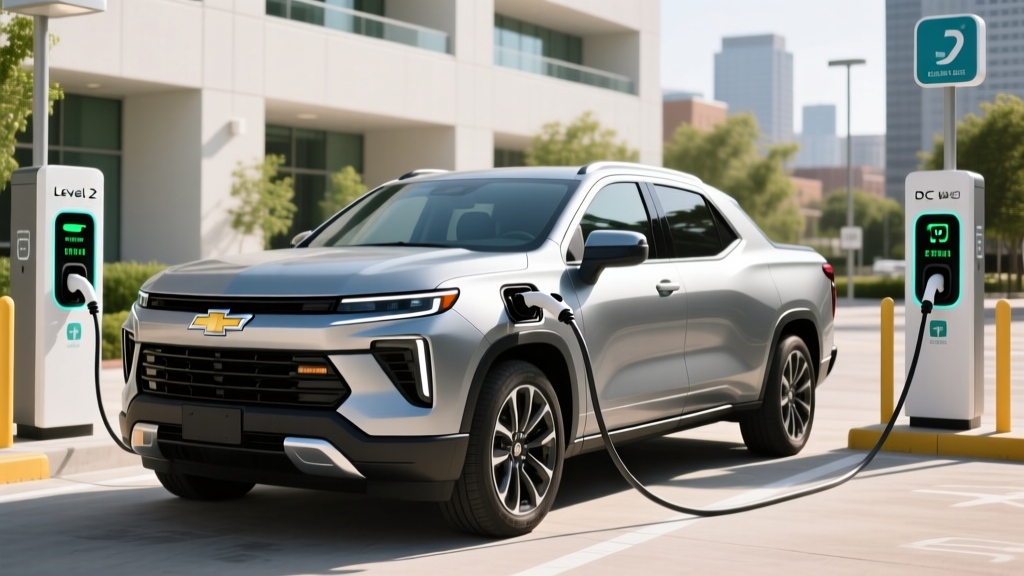
Understanding the three levels of EV charging is critical. We measure speed in kilowatts (kW), not miles per hour, because miles added depends on the truck's efficiency (roughly 2.0–2.2 kWh/mi for the Silverado EV).
| Level | Voltage | Max Power (kW) | Miles of Range Added Per Hour | Best Use Case |
|---|---|---|---|---|
| Level 1 | 120V AC | 1.0 – 1.4 kW | ~0.5 miles | Emergency / Overnight trickle (not viable for 200 kWh) |
| Level 2 | 240V AC | 7.2 – 19.2 kW | 15 – 45 miles | Daily home charging; overnight replenishment |
| DC Fast | 400V+ DC | 150 – 350 kW | 500+ miles (equivalent) | Road trips; 10–80% in 20–40 minutes |
The Math: To add 300 miles of range to a Silverado EV, you need roughly 600 kWh of energy. On a 11.5 kW Level 2 charger (common in older homes), that takes 52 hours. On a 19.2 kW charger (modern standard for large batteries), it takes 31 hours. On a 350 kW DC fast charger, you can add that range in about 45–55 minutes, accounting for the charge curve taper above 80% SoC.
Home Charger Installation: Electrical Requirements and Costs
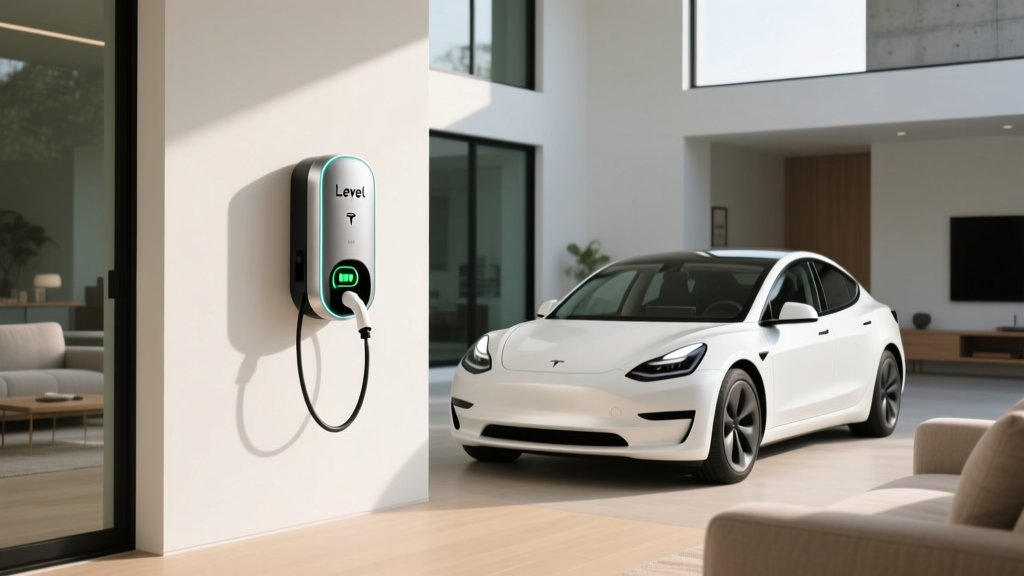
The Silverado EV's onboard charger accepts up to 19.2 kW of AC power. To unlock that speed, you need a hardwired Level 2 wall connector on a dedicated 100-amp circuit. Most homes built before 2020 have 100A or 150A main service panels, which may not have the spare capacity for a 100A EV circuit.
Do You Need a Panel Upgrade?
If your home has a 200A service panel and your existing loads (HVAC, electric oven, dryer) are high, adding an 80A continuous load (required for a 100A breaker) will likely trip the main breaker. In this case, you have two options:
- Service Upgrade: Upgrading to a 325A or 400A panel. This is expensive ($3,000–$6,000+) but future-proofs the home.
- Smart Load Management: Devices like the Emporia V2 with automatic load shedding can throttle the charger when the house draws high power, avoiding a panel upgrade.
Installation Cost Breakdown (2026 Estimates)
| Item | Typical Cost Range | Notes |
|---|---|---|
| Level 2 Charger (48A–80A) | $600 – $1,200 | Hardwired units are safer for high-amp loads than NEMA 14-50 outlets. |
| Electrician Labor (Basic) | $800 – $2,000 | Assumes panel is near the garage and no drywall repair is needed. |
| Permit & Inspection | $150 – $400 | Required by NEC code for new 240V circuits. |
| Panel Upgrade (if needed) | $3,000 – $6,500 | Major cost driver for older homes. |
| Total (No Panel Upgrade) | $1,550 – $3,600 | The path for most modern homes. |
| Total (With Panel Upgrade) | $4,550 – $10,100 | Common in pre-2010 construction. |
Always hire a licensed electrician and pull a permit. Unpermitted high-amperage work is a fire risk and can void your home insurance.
Connector Compatibility: NACS vs. CCS1 in 2026
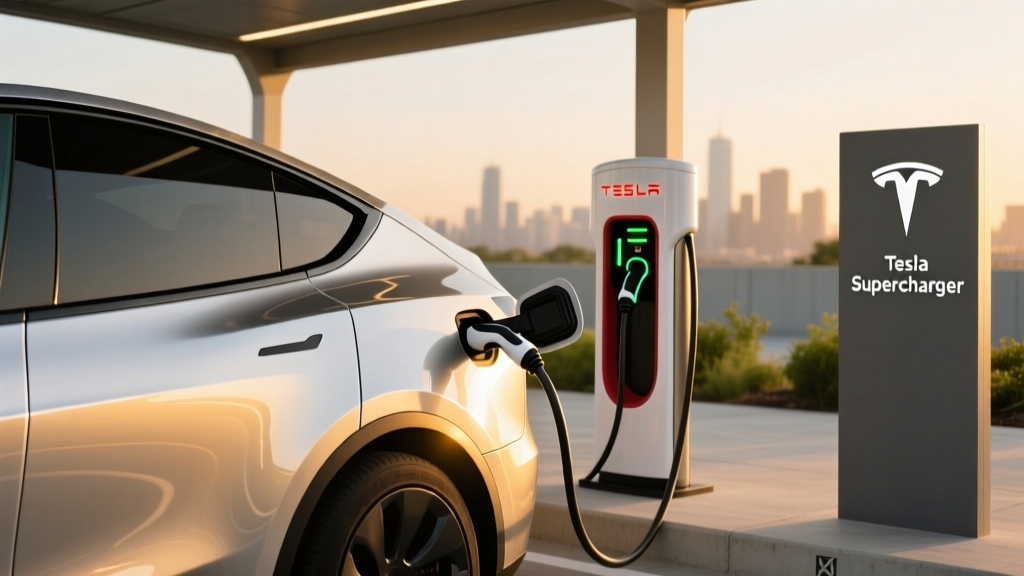
For the 2025 and 2026 model years, the Chevrolet Silverado EV is equipped with the NACS (North American Charging Standard) port, aligning with Tesla's Supercharger network. This is a major advantage for road-trip range reliability.
| Connector | Network Access | Adapter Needed for Silverado EV? |
|---|---|---|
| NACS (Tesla) | Tesla Superchargers, Electrify America (new stalls), Rivian Adventure Network | No — native port on 2025+ Silverado EV. |
| CCS1 | Legacy Electrify America, EVgo, ChargePoint DC stations | Yes — NACS-to-CCS adapter (provided by Chevy or ~$200 aftermarket). |
| CHAdeMO | Largely deprecated in North America | Not recommended; adapters are rare and expensive. |
Cost to Charge: Silverado EV vs. Gas Truck Per Mile
Let's compare the cost to "fill up" a Silverado EV (200 kWh battery, 440 mi range) against a gas-powered Silverado 1500 (20 MPG combined) in 2026.
| Scenario | Rate | Cost for 400 Miles | Cost Per Mile |
|---|---|---|---|
| Home (Off-Peak Utility Rate) | $0.14 / kWh | $28.00 | $0.07 / mi |
| Home (Peak/Standard Rate) | $0.28 / kWh | $56.00 | $0.14 / mi |
| Public Level 2 (ChargePoint/EVgo) | $0.45 / kWh | $90.00 | $0.225 / mi |
| DC Fast Charging (350 kW) | $0.55 / kWh | $110.00 | $0.275 / mi |
| Gas Truck (20 MPG @ $3.50/gal) | $3.50 / gallon | $70.00 | $0.175 / mi |
The Verdict: Home charging is dramatically cheaper than gas. However, if you rely exclusively on DC fast charging at $0.55/kWh, the Silverado EV actually costs more per mile to "fuel" than a 20 MPG gas truck. This is why a home Level 2 installation is non-negotiable for EV truck economics.
Equipment Recommendations: Chargers That Handle 200 kWh
For a battery this large, we recommend 80A-capable hardwired units. Avoid plug-in NEMA 14-50 outlets for daily 19.2 kW loads, as the receptacle can overheat over time.
Tesla Wall Connector (Gen 4)
- Power: 11.5 kW (48A) or up to 19.2 kW (80A if supported by vehicle and circuit).
- Connector: Native NACS.
- Features: Wi-Fi updates, Power Sharing (run two chargers on one circuit), integrated cable management.
- Price: ~$475.
Emporia Vue V2 with Load Management
- Power: Up to 19.2 kW (80A).
- Connector: NACS (2025+ models).
- Features: Real-time home energy monitoring; automatic load shedding to avoid panel upgrades.
- Price: ~$800 (charger + monitoring hardware).
ChargePoint Home Flex (NACS Version)
- Power: Up to 12 kW (50A) — slower for the 200 kWh battery, but sufficient if you drive < 150 miles/day.
- Connector: NACS or J1772.
- Features: Excellent app, Amazon Alexa integration, flexible amperage settings.
- Price: ~$650.
Safety, Code, and the 30D Tax Credit
High-power charging requires strict adherence to the National Electrical Code (NEC). A 19.2 kW charger requires a 100A breaker and 100A-rated wiring (typically 1 AWG copper). The circuit must be GFCI-protected if it involves an outdoor receptacle, though hardwired indoor units often bypass this requirement.
Regarding the IRS §30D Federal Tax Credit: While the Silverado EV may qualify for up to $7,500, this is for the vehicle purchase, not the charger. However, the Alternative Fuel Vehicle Refueling Property Credit (25C) may cover 30% of your home charger installation costs (up to $1,000) if you live in an eligible census tract. Consult a tax professional for your specific situation.
Frequently Asked Questions
How long does it take to charge a Silverado EV from 10% to 80%?
On a 350 kW DC fast charger, the Silverado EV's battery management system can sustain high speeds, typically achieving a 10–80% charge in roughly 35–45 minutes. On a 19.2 kW home Level 2 charger, that same 10–80% window takes about 14–16 hours.
Can I use a standard dryer outlet (NEMA 14-50) for my Silverado EV?
Yes, but it will be slow. A 14-50 outlet provides a maximum of 40A continuous (9.6 kW). Adding range to a 200 kWh battery at this speed will take nearly two full days for a complete refill. It's fine for overnight top-ups if your daily drive is under 100 miles.
Does charging to 100% every night hurt the battery?
If your Silverado EV uses NMC (Nickel Manganese Cobalt) chemistry, daily 100% charging accelerates degradation. GM recommends setting the charge limit to 80% for daily use and only charging to 100% immediately before a long road trip.
What is the battery warranty on the 2026 Silverado EV?
Chevrolet covers the high-voltage battery for 8 years or 100,000 miles, whichever comes first, against defects and excessive capacity loss (typically defined as dropping below 70% of original capacity).