Why Charging a Supercharged Chevy Truck Is Different From a Sedan
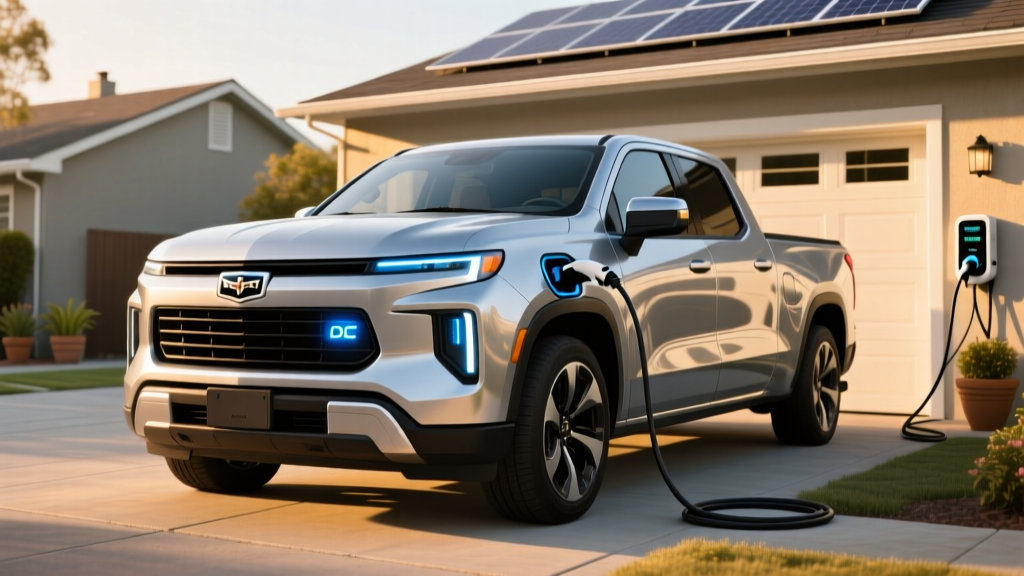
The Chevrolet Silverado EV isn't just a large battery on wheels — it's a platform built around GM's Ultium architecture with up to 200 kWh of usable battery capacity (on the 4WT and top trims) and available 800-volt DC fast-charging capability. When owners search for a "supercharged Chevy truck," they're typically referring to the Silverado EV's massive power output (up to 754 hp on the RST First Edition) and its ability to accept ultra-fast charging. But that capability means nothing if your home electrical system or local charging infrastructure can't support it.
This guide breaks down exactly what it takes to charge a Silverado EV — or any large-battery electric truck like the Ford F-150 Lightning or Rivian R1T — at home and on the road, with real numbers for cost, speed, and electrical requirements.
Charging Levels Explained: kW, Miles Per Hour, and What Each Level Means
Before we get into equipment, let's clarify the single most important distinction in EV charging: kW (kilowatts) measures power — how fast energy flows into the battery. kWh (kilowatt-hours) measures energy — the total capacity of the battery. Think of kW as the width of a hose and kWh as the size of the bucket.
| Level | Voltage | Power (kW) | Miles of Range Added Per Hour | Typical Use Case |
|---|---|---|---|---|
| Level 1 | 120V AC | 1.0–1.4 kW | 3–5 mi/hr | Emergency/top-up; not practical for a 200 kWh truck battery |
| Level 2 | 240V AC | 7.2–19.2 kW | 25–70 mi/hr | Daily home charging; overnight refill for most driving |
| DC Fast Charge | 400V–800V DC | 50–350 kW | 150–1,000+ mi/hr (peak) | Road trips; 10–80% in 20–45 minutes depending on vehicle and station |
For a Silverado EV with the larger ~200 kWh battery, Level 1 charging is essentially useless for a full replenishment — it would take over 140 hours. Level 2 at 11.5 kW (a common 48-amp home charger) will add roughly 35–40 miles of range per hour, meaning a full overnight charge session of 10 hours recovers about 350–400 miles — sufficient for most daily driving patterns. For the Silverado EV's EPA-estimated range of up to 440 miles (on the 4WT with max battery, per fueleconomy.gov), expect real-world highway range of approximately 350–380 miles at 70 mph, and potentially 280–320 miles in cold weather below 30°F.
Home Charger Installation: Electrical Requirements, Costs, and Panel Upgrades
Installing a Level 2 home charger for a large-battery electric truck isn't always as simple as plugging into an existing dryer outlet. Here's what you need to know.
Electrical Requirements
A typical Level 2 charger for a Silverado EV requires a dedicated 240V circuit. The most common configurations:
- 40-amp circuit / 32-amp continuous = 7.7 kW — adequate for overnight charging of most daily miles
- 60-amp circuit / 48-amp continuous = 11.5 kW — the sweet spot for large truck batteries
- 80-amp circuit / 64-amp continuous = 15.4 kW — maximum home speed; requires robust panel capacity
- 100-amp circuit / 80-amp continuous = 19.2 kW — available on the Silverado EV with the optional Energy Transfer Pro package; requires a 200-amp+ panel and heavy-gauge wiring
The National Electrical Code (NEC) requires that continuous loads (like EV charging) not exceed 80% of the circuit breaker rating. So a 60-amp breaker supports 48 amps of continuous draw.
Panel Upgrade Reality
Many homes built before 2010 have 100-amp or 150-amp main electrical panels. Adding a 60-amp EV circuit to a panel already near capacity (electric range, dryer, HVAC) may require a panel upgrade to 200 amps, which is one of the most expensive variables in EV home charging.
| Component | Low-End Estimate | High-End Estimate | Notes |
|---|---|---|---|
| Level 2 Charger Equipment | $350 | $750 | 48A smart charger; hardwired or NEMA 14-50 plug |
| Electrician Labor (standard install) | $500 | $1,500 | Run 6/2 or 4/2 copper wire, mount charger, connect to panel |
| Electrical Permit | $50 | $250 | Varies by municipality; required by code in most jurisdictions |
| Panel Upgrade (if needed) | $1,500 | $4,000 | 100A→200A upgrade; not needed if panel has spare capacity |
| Trenching/Conduit (long runs) | $200 | $2,000 | If panel is far from garage or charger is outdoors |
| Total (no panel upgrade) | $900 | $2,500 | Most common scenario for modern homes |
| Total (with panel upgrade) | $2,400 | $6,500 | Older homes or those adding high-amperage circuits |
Always get a load calculation from a licensed electrician before committing to a circuit size. They'll assess your panel's existing loads and determine whether a 60-amp or 40-amp circuit is feasible without an upgrade.
Connector Compatibility: NACS, CCS, and the Silverado EV
Connector standards shifted dramatically in 2024–2025 when GM transitioned its EVs from CCS1 to the North American Charging Standard (NACS), the connector originally developed by Tesla. For 2026 model-year Silverado EVs, the vehicle ships with a NACS charge port natively.
| Connector | Brands Using It (2026) | Adapter Needed for Silverado EV? |
|---|---|---|
| NACS (Tesla-style) | Tesla, GM (Chevy/Cadillac), Ford, Rivian, Volvo, Polestar, Hyundai, Kia, BMW, Mercedes | No — native on 2026 Silverado EV |
| CCS1 | Legacy EVs (2022 and earlier GM, VW ID.4 pre-2025, older BMW i4) | Yes — CCS-to-NACS adapter available from GM (~$225) for older CCS stations |
| CHAdeMO | Nissan Leaf (legacy); effectively discontinued for new vehicles | No practical adapter; avoid CHAdeMO-only stations |
With a native NACS port, the 2026 Silverado EV gains direct access to Tesla Supercharger stations (now the largest DC fast-charging network in North America with over 25,000 stalls) as well as Electrify America, EVgo, and other networks that have deployed NACS connectors. If you're buying a 2024 or 2025 Silverado EV with CCS1, GM offers an official CCS-to-NACS adapter, but confirm compatibility with your specific VIN through your dealer.
DC Fast Charging the Silverado EV: Real-World Speeds and Charge Curves
The Silverado EV with the 800V-capable battery pack supports peak DC fast-charge rates of up to 350 kW on compatible stations. But peak rate is not sustained rate — understanding the charge curve is essential for trip planning.
What the Charge Curve Actually Looks Like
DC fast charging doesn't deliver peak kW for the entire session. The battery management system (BMS) tapers charge rate as the battery fills to protect cell longevity. For the Silverado EV:
- 10–30% SoC: Near peak rate (~300–350 kW on a 350 kW station)
- 30–60% SoC: Sustained high rate (~200–280 kW)
- 60–80% SoC: Tapering (~120–180 kW)
- 80–100% SoC: Slow taper (~40–80 kW) — avoid charging above 80% on road trips unless necessary
GM estimates 10–80% in approximately 30–35 minutes on a 350 kW station with preconditioning enabled. On a 150 kW station, expect 10–80% in roughly 55–65 minutes. On a 50 kW CHAdeMO or older CCS station, plan for 2+ hours.
Preconditioning Matters
When you enter a DC fast-charging stop into the Silverado EV's navigation, the thermal management system begins warming or cooling the battery to its optimal charge temperature (typically 77–95°F / 25–35°C). In cold weather (below 40°F), preconditioning can reduce a 10–80% session by 10–15 minutes compared to arriving at a charger without preconditioning. Always navigate to your charging stop rather than just driving there.
Cost to Charge: Home vs. Public vs. Gas Comparison
One of the strongest ownership arguments for the Silverado EV over a gas Silverado is fuel cost. Here's how it breaks down with real electricity and gas prices.
| Scenario | Rate | Cost Per Mile (Silverado EV, ~2.0 kWh/mi) | Cost Per Mile (Gas Silverado 1500, ~18 MPG combined) |
|---|---|---|---|
| Home charging (off-peak utility rate) | $0.11/kWh | $0.022/mi | — |
| Home charging (national avg residential) | $0.17/kWh | $0.034/mi | — |
| Public Level 2 (ChargePoint, etc.) | $0.30/kWh | $0.060/mi | — |
| DC Fast Charging (Electrify America, EVgo) | $0.48/kWh | $0.096/mi | — |
| Gas (national avg $3.40/gal) | $3.40/gal | — | $0.189/mi |
| Gas (California avg $4.80/gal) | $4.80/gal | — | $0.267/mi |
At the national average electricity rate of $0.17/kWh and gas at $3.40/gal, the Silverado EV costs roughly $0.034 per mile at home vs. $0.189 per mile for gas — an 82% reduction in fuel cost. Even at DC fast-charging prices of $0.48/kWh, the EV is still about half the cost per mile of gas. Over 15,000 miles per year, home charging saves approximately $2,325 annually compared to gas at national averages.
Important tax credit note: The IRS §30D federal tax credit for new EVs provides up to $7,500, but eligibility depends on MSRP caps ($80,000 for trucks/vans/SUVs), buyer income limits ($300K joint / $150K single), and battery critical-mineral and component sourcing requirements that tighten each year. As of 2026, verify your specific Silverado EV trim's eligibility at irs.gov or through the point-of-sale transfer option at your dealer. Some trims (like the RST First Edition above $95K MSRP) exceed the cap and do not qualify.
Recommended Home Charging Equipment for Electric Trucks
Not all Level 2 chargers are created equal. For a large-battery truck like the Silverado EV, you want a unit that delivers at least 48 amps (11.5 kW), has a cable long enough to reach from your wall to the truck's charge port (which on the Silverado EV is on the driver-side front fender), and offers smart scheduling for off-peak rates.
ChargePoint Home Flex (NACS)
- Power: Up to 12 kW (50A) on a 60A circuit; adjustable down to 16A for lower-capacity panels
- Connector: NACS native (2025+ models); CCS1 on older units
- Cable length: 23 feet
- Smart features: Wi-Fi, app scheduling, Alexa integration, energy tracking
- Price: ~$599 (NACS version)
- Best for: Flexible amperage adjustment if your panel is limited
Grizzl-E Smart (NACS)
- Power: Up to 11.5 kW (48A) on a 60A circuit
- Connector: NACS native (2025+ models)
- Cable length: 24 feet
- Smart features: Wi-Fi, OCPP-compatible, works with utility demand-response programs
- Price: ~$499
- Best for: Outdoor installations (IP67 rated, -40°F to +122°F operating range) — ideal for truck owners without garage parking
Tesla Wall Connector (NACS)
- Power: Up to 11.5 kW (48A) on a 60A circuit
- Connector: NACS native
- Cable length: 24 feet
- Smart features: Wi-Fi, over-the-air updates, power sharing (link two units on one circuit)
- Price: ~$450
- Best for: Best value; clean design; power-sharing feature is excellent for two-EV households
Emporia Vue + Emporia Level 2 Charger
- Power: Up to 11.5 kW (48A) on a 60A circuit
- Connector: NACS or J1772 (with adapter)
- Cable length: 24 feet
- Smart features: Whole-home energy monitoring integration, solar-aware charging, circuit-level tracking
- Price: ~$399 (charger) + ~$100 (Vue monitor)
- Best for: Homes with solar panels; tracks exactly how much energy your charger uses vs. the rest of your home
Safety, Code, and Installation Best Practices
EV charging is a continuous high-draw electrical load — the equivalent of running a clothes dryer for 8+ hours straight. Safety and code compliance aren't optional.
- Dedicated circuit: Your Level 2 charger must be on its own dedicated breaker — never share a circuit with other appliances.
- GFCI protection: NEC 2020 and later require GFCI (ground-fault circuit interrupter) protection for all EV charging outlets. Hardwired installations may have different requirements depending on your jurisdiction — your electrician will know local code.
- Outdoor rating: If your charger is mounted outdoors or in an exposed carport, ensure the unit is rated at least IP55 (splash-resistant) or IP67 (submersion-resistant). The Grizzl-E and ChargePoint Home Flex both meet outdoor standards.
- NEMA 14-50 vs. hardwired: A NEMA 14-50 outlet gives you flexibility to unplug and take the charger with you, but it requires a GFCI breaker (adding $50–$120 to the panel cost). Hardwired installations avoid the GFCI breaker requirement in some jurisdictions and eliminate the failure point of a plug connection. For a permanent garage install on a truck, hardwired is generally preferred.
- Cable management: With a 23–24 foot cable and a large truck, plan your charger placement carefully. The Silverado EV's charge port is on the driver-side front fender — mount the charger on the wall closest to where the front fender rests when parked.
- Permit and inspection: Nearly all jurisdictions require an electrical permit for a new 240V circuit. The inspection ensures wire gauge, breaker size, and grounding meet code. Don't skip this — it protects you and is required for insurance claims related to electrical fires.
Frequently Asked Questions
How much does it cost to install a home EV charger for a Silverado EV?
A standard Level 2 home charger installation (48-amp/11.5 kW unit on a 60-amp circuit) typically costs between $900 and $2,500 including equipment, electrician labor, and permit. If your home needs a panel upgrade from 100A to 200A, add $1,500–$4,000. Long wire runs from the panel to the garage can add $200–$2,000 depending on distance and whether trenching is required.
How fast will each charging level add range to the Silverado EV?
Level 1 (120V) adds about 3–5 miles per hour — impractical for a truck with a 200 kWh battery. Level 2 at 48 amps (11.5 kW) adds approximately 35–40 miles per hour, enough to recover a full day's driving overnight. DC fast charging at a 350 kW station can add up to 100+ miles in 10 minutes during the peak portion of the charge curve (roughly 10–40% SoC).
Which connector is compatible with the 2026 Silverado EV?
The 2026 Silverado EV uses the NACS connector natively, giving it direct access to Tesla Superchargers and all other networks that have adopted NACS. If you own a 2024–2025 Silverado EV with CCS1, GM offers a CCS-to-NACS adapter (~$225) to access Tesla Superchargers. Confirm adapter compatibility with your VIN at your dealer.
How much does charging the Silverado EV cost per mile compared to gas?
At the national average residential electricity rate of $0.17/kWh, the Silverado EV costs approximately $0.034 per mile to charge at home. A gas Silverado 1500 at 18 MPG combined and $3.40/gallon costs about $0.189 per mile. That's an 82% fuel cost reduction with home charging. Even DC fast charging at $0.48/kWh ($0.096/mi) remains roughly half the cost of gas.
What electrical upgrades might I need for a home EV charger?
The most common upgrade is a panel capacity increase from 100A or 150A to 200A, costing $1,500–$4,000. You may also need new conduit runs if your panel is far from the garage, a new breaker slot if your panel is full, or a GFCI breaker if you're installing a NEMA 14-50 outlet rather than hardwiring. A licensed electrician's load calculation will determine exactly what's required for your home.
Can I use the Silverado EV's bidirectional charging to power my home?
GM has announced V2H (vehicle-to-home) capability for the Silverado EV through the Energy Transfer Pro accessory, enabling up to 19.2 kW of offboard power. However, as of early 2026, the required home energy management system hardware and utility interconnection approvals vary by region. Check with your dealer and utility for current availability in your area.