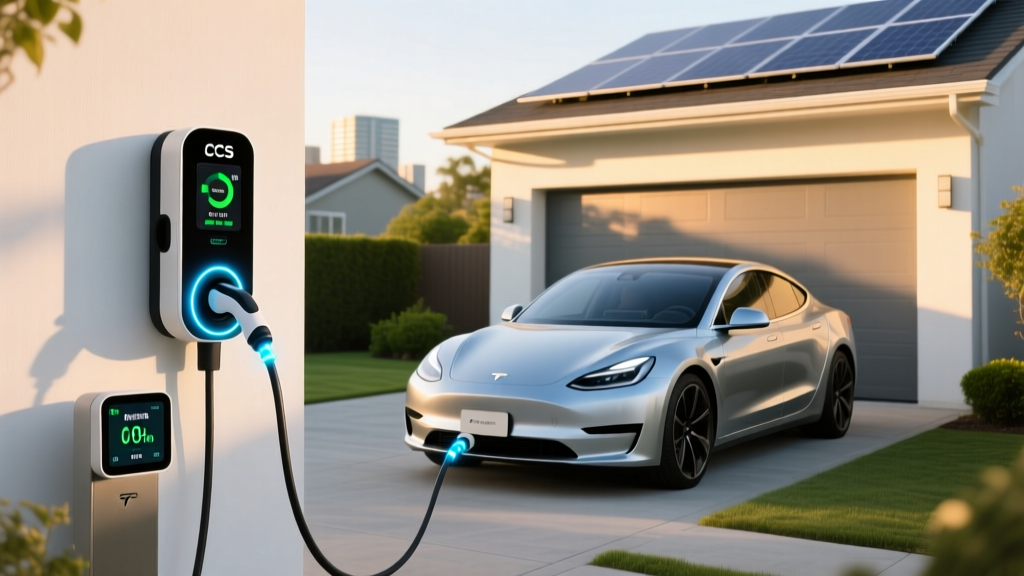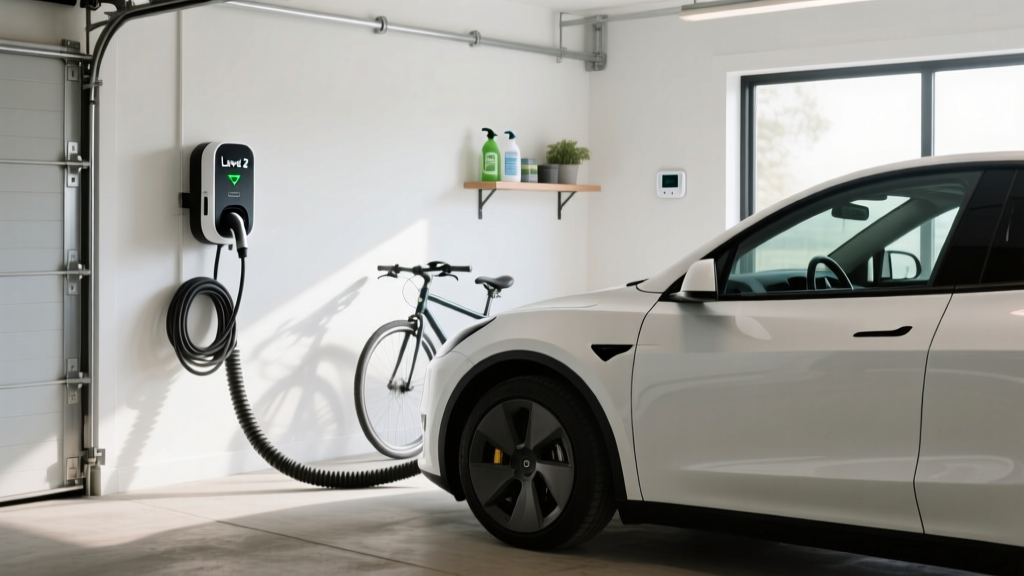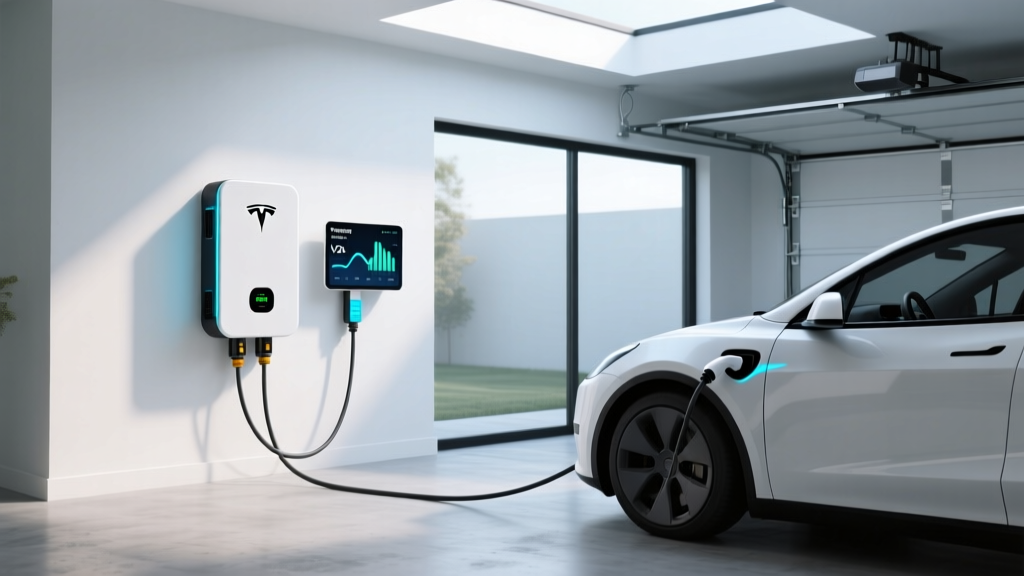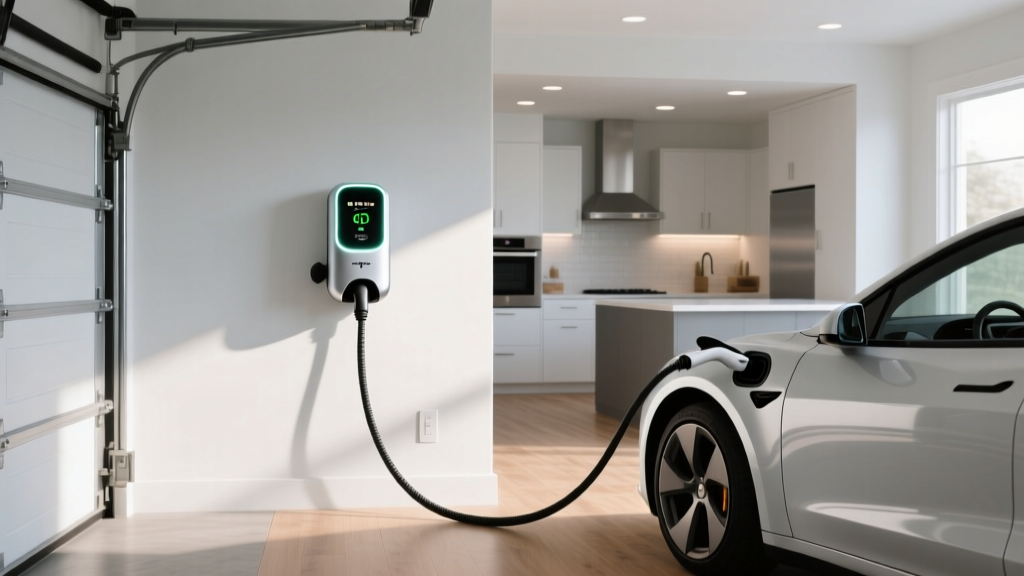
If you've searched for a rugged, high-output home EV charging solution, you've likely encountered the term Shelby Charger in EV forums and enthusiast circles. Whether you're evaluating a Shelby-branded Level 2 wallbox or simply searching for a heavy-duty charger that matches the performance ethos of American muscle — adapted for the electric era — this guide breaks down exactly what you need to know about home EV charging in 2026.
We'll cover charging levels, real installation costs (including the panel upgrade nobody warns you about), connector compatibility across every major brand, and the true cost-per-mile of electric versus gasoline driving. No fluff — just the data you need to make an informed decision.
Understanding EV Charging Levels: kW, kWh, and What They Mean
Before evaluating any charger — Shelby or otherwise — you need clarity on two terms that are constantly confused:
- kW (kilowatts) = power, or the rate at which energy flows. Think of it as the width of a water hose.
- kWh (kilowatt-hours) = energy, or the total amount of electricity stored in your battery. Think of it as the size of the bucket.
A 60 kWh battery charged at 11.5 kW will take roughly 5.2 hours from empty to full. That same battery on a 250 kW DC fast charger can reach 80% in about 18-25 minutes, depending on the charge curve. Here's how each level breaks down:
| Level | Voltage | Max Power (kW) | Miles of Range Added/Hour | Typical Use Case |
|---|---|---|---|---|
| Level 1 | 120V AC | 1.4 – 1.9 kW | 3 – 5 miles | Overnight trickle; PHEVs; emergency top-up |
| Level 2 | 240V AC | 7.2 – 19.2 kW | 20 – 70 miles | Daily home/workplace charging |
| DC Fast (Level 3) | 200–900V DC | 50 – 350+ kW | 150 – 1,000+ miles (equivalent) | Road trips; commercial fleets |
How Much Does It Cost to Install a Home EV Charger?
The total cost of a Level 2 home charging setup depends on three variables: the charger hardware, the electrical work required, and local permitting. Here's a realistic 2026 breakdown:
| Component | Low-End Estimate | High-End Estimate | Notes |
|---|---|---|---|
| Level 2 Charger (hardware) | $350 | $750 | 32A–48A smart chargers; Wi-Fi-enabled |
| Electrician labor | $500 | $1,500 | Depends on panel proximity and conduit run length |
| Electrical permit | $50 | $250 | Varies by municipality |
| Panel upgrade (if needed) | $1,500 | $4,000+ | Required if existing panel is 100A or at capacity |
| Total (no panel upgrade) | $900 | $2,500 | Most homes with 200A panels fall here |
| Total (with panel upgrade) | $2,400 | $6,500+ | Older homes, 100A service, or full panels |
What Electrical Upgrades Might You Need?
A Level 2 charger typically requires a dedicated 240V circuit rated at 40–60 amps, depending on the charger's output. The National Electrical Code (NEC) requires the circuit to be rated at 125% of the continuous load — so a 48A charger needs a 60A breaker and 6 AWG copper wire (or 4 AWG aluminum).
You'll likely need a panel upgrade if:
- Your home has a 100A main service panel (common in pre-1990 construction)
- Your existing 200A panel is near capacity (multiple large loads: electric range, dryer, HVAC, water heater)
- The panel has no available breaker slots
- Your utility requires a service upgrade for new high-draw circuits
How Fast Will Each Charging Level Add Range?
Charging speed depends on your EV's onboard charger capacity and battery size. Here are real-world 10–80% charging times for common battery sizes at different power levels:
| Battery Size (kWh) | Level 2 at 7.7 kW | Level 2 at 11.5 kW | Level 2 at 19.2 kW | DC Fast at 150 kW (peak) | DC Fast at 250 kW (peak) |
|---|---|---|---|---|---|
| 60 kWh (e.g., Chevy Equinox EV) | ~5.5 hrs | ~3.7 hrs | ~2.2 hrs | ~25 min | ~18 min |
| 80 kWh (e.g., Tesla Model Y) | ~7.3 hrs | ~4.9 hrs | ~2.9 hrs | ~28 min | ~18 min |
| 100 kWh (e.g., Ford F-150 Lightning Ext.) | ~9.1 hrs | ~6.1 hrs | ~3.6 hrs | ~38 min | ~25 min |
| 130 kWh (e.g., GMC Hummer EV) | ~11.8 hrs | ~7.9 hrs | ~4.7 hrs | ~50 min | ~35 min |
Which Connector and Charger Is Compatible with My EV?
Connector standards have consolidated significantly by 2026. Here's where each brand stands:
| Connector | Brands Using It | Adapter Needed? |
|---|---|---|
| NACS (Tesla / SAE J3400) | Tesla (all), Ford, GM, Rivian, Volvo, Polestar, BMW, Hyundai/Kia (2025+), Mercedes-Benz, Lucid, Fisker | None for these brands; CCS→NACS adapters available for legacy vehicles |
| CCS1 | VW, Audi (some legacy), older Hyundai/Kia (pre-2025), Stellantis, Honda (pre-2025), Subaru | NACS→CCS adapter needed to use Tesla Superchargers (~$200–$250) |
| CHAdeMO | Nissan Leaf (legacy only — discontinued for new models) | Limited adapter availability; CHAdeMO infrastructure declining |
For a home Level 2 charger, the connector on the unit matters. Most major charger manufacturers now ship with NACS connectors by default in 2026, with CCS1 available as a configurable option. If you own a CCS1-equipped EV, confirm the charger you select matches — or plan to use an adapter.
For authoritative details on charging standards, the U.S. Department of Energy's EV charging overview provides up-to-date specifications, and the Alternative Fuels Data Center maintains a searchable database of public charging stations by connector type.
Equipment Recommendations: Top Level 2 Chargers for 2026
If you're evaluating high-output home chargers — whether branded as a Shelby Charger or from another manufacturer — here's how the leading options compare on specs that matter:
ChargePoint Home Flex
- Power output: Up to 19.2 kW (80A circuit, adjustable down to 16A)
- Connector: NACS or CCS1 (configurable at purchase)
- Cable length: 23 feet
- Smart features: Wi-Fi, app scheduling, Alexa integration, energy tracking
- Price: ~$599 (hardware only)
- Outdoor rating: NEMA 4 (weather-resistant)
Emporia Level 2 Smart Charger
- Power output: Up to 11.5 kW (48A on a 60A circuit)
- Connector: NACS standard; CCS adapter included
- Cable length: 24 feet
- Smart features: Wi-Fi, solar integration, energy monitoring, load balancing
- Price: ~$399
- Outdoor rating: NEMA 4
Wallbox Pulsar Plus
- Power output: Up to 11.5 kW (48A)
- Connector: NACS or J1772/CCS1 options
- Cable length: 25 feet
- Smart features: Wi-Fi + Bluetooth, app control, Power Sharing for dual installs
- Price: ~$449
- Outdoor rating: NEMA 4X
Tesla Wall Connector
- Power output: Up to 11.5 kW (48A on 60A circuit)
- Connector: NACS native; J1772 adapter for non-Tesla EVs sold separately (~$120)
- Cable length: 24 feet
- Smart features: Wi-Fi, OTA updates, load sharing across multiple units
- Price: ~$425
- Outdoor rating: NEMA 3R (indoor/outdoor, less rain-tight than NEMA 4)
If the Shelby Charger you're evaluating is a 48A / 11.5 kW unit, it competes directly with the Emporia, Wallbox, and Tesla Wall Connector. Prioritize NEMA 4 or 4X outdoor rating if your install location is exposed, and confirm the unit supports your EV's connector natively — adapter reliance adds a failure point and minor efficiency loss.
How Much Does Charging Cost Per Mile vs. Gas?
This is where EV ownership economics either shine or disappoint — depending entirely on where and when you charge. Let's run the numbers using a mid-size EV averaging 3.5 miles per kWh (about 28.5 kWh/100 miles, similar to a 2026 Hyundai Ioniq 5 or Tesla Model Y):
| Scenario | Rate | Cost Per Mile | Annual Cost (12,000 mi) |
|---|---|---|---|
| Home charging (off-peak utility rate) | $0.09/kWh | $0.026 | $309 |
| Home charging (standard residential rate) | $0.16/kWh | $0.046 | $549 |
| Home charging (high-cost state, e.g., CA/MA) | $0.30/kWh | $0.086 | $1,029 |
| Public Level 2 (e.g., ChargePoint, EVgo) | $0.25–$0.40/kWh | $0.071–$0.114 | $857–$1,371 |
| DC Fast Charging (e.g., Electrify America) | $0.35–$0.55/kWh | $0.100–$0.157 | $1,200–$1,886 |
| Gasoline (28 MPG avg, $3.40/gal) | $3.40/gallon | $0.121 | $1,457 |
The takeaway is clear: home charging at off-peak rates delivers fuel costs at roughly 20–25% of gasoline. But if you rely exclusively on DC fast charging in a high-cost electricity market, your per-mile cost can equal or exceed gasoline. This is why home Level 2 installation isn't optional for most EV owners — it's the economic foundation of EV ownership.
Safety, Code Compliance, and Installation Best Practices
A Level 2 charger is a continuous high-amperage load running for hours. Proper installation isn't just about function — it's about fire safety and code compliance. Key requirements:
- Dedicated circuit: Your EV charger must be on its own breaker — never shared with another appliance.
- GFCI protection: NEC 2023 and later require GFCI protection for all 240V EV charging outlets (NEMA 14-50 or hardwired). Hardwired installations with built-in GFCI in the charger unit may satisfy this.
- Outdoor rating: Any charger or outlet exposed to weather must be rated NEMA 3R minimum; NEMA 4 or 4X is strongly preferred for rain, dust, and hose-directed water resistance.
- Wire gauge: 6 AWG copper for 48A chargers on 60A circuits; 4 AWG for 64A chargers on 80A circuits. Aluminum wire requires one gauge larger.
- Permit and inspection: Nearly all jurisdictions require an electrical permit and final inspection for EV charger installations. Skipping this can void your homeowner's insurance coverage in the event of an electrical fire.
Frequently Asked Questions
How much does it cost to install a home EV charger?
Expect $900–$2,500 for a standard Level 2 installation (hardware + electrician + permit) if your electrical panel has capacity. If a panel upgrade from 100A to 200A is required, total costs can reach $2,400–$6,500+. Always get a load calculation from a licensed electrician before committing.
How fast will each charging level add range?
Level 1 (120V) adds 3–5 miles of range per hour. Level 2 (240V) at 11.5 kW adds roughly 35–40 miles per hour for a mid-size EV. DC fast charging at 150 kW can add 150–200 miles in 15–20 minutes, though the rate tapers significantly above 80% state of charge.
Which connector/charger is compatible with my EV?
As of 2026, most new EVs use NACS (SAE J3400), including Tesla, Ford, GM, Rivian, Hyundai/Kia, BMW, and Volvo. Older CCS1 vehicles from VW, Stellantis, and pre-2025 Honda/Subaru can use NACS-to-CCS adapters (~$200–$250). CHAdeMO is limited to legacy Nissan Leaf models and infrastructure is declining.
How much does charging cost per mile vs. gas?
Home charging at off-peak rates costs roughly $0.026/mile — about 20% of the $0.121/mile gasoline cost at $3.40/gallon and 28 MPG. Public DC fast charging at $0.35–$0.55/kWh costs $0.10–$0.16/mile, approaching or exceeding gasoline costs. Home Level 2 charging is essential for EV economics to work.
What electrical upgrades might I need for a Level 2 charger?
You'll need a dedicated 240V, 40–60A circuit. If your panel is 100A, at capacity, or lacks open breaker slots, a panel upgrade to 200A (or a secondary sub-panel) will be required at $1,500–$4,000+. Some utilities offer rebates or load-management programs that can reduce this cost.
Is a hardwired charger better than a plug-in (NEMA 14-50) charger?
Hardwired installations avoid the GFCI breaker requirement (the charger's internal GFCI handles it), eliminate the outlet as a failure point, and support higher amperages (up to 80A circuits / 64A continuous). Plug-in NEMA 14-50 outlets offer portability but are limited to 40A continuous (50A breaker) and require a GFCI breaker (~$100–$150 additional). For most permanent home installations, hardwired is the preferred approach.
For the latest IRS rules on the Alternative Fuel Vehicle Refueling Property Credit — which can cover up to 30% of home charger installation costs (max $1,000) for eligible taxpayers in qualified census tracts — consult a tax professional. Eligibility depends on your location and income, and rules are subject to change.