Why the Salvage Tesla Supercharging Hack Keeps Coming Up
If you've browsed EV forums or YouTube comment sections, you've likely seen references to a "salvage Tesla Supercharging hack" — the idea that a Tesla written off by an insurance company and subsequently rebuilt can be coaxed back onto the Supercharger network through unofficial workarounds. The appeal is obvious: salvage-title Model 3s and Model Ys sell for 30–50% below clean-title market value, and free or low-cost Supercharging access was once a major ownership perk.
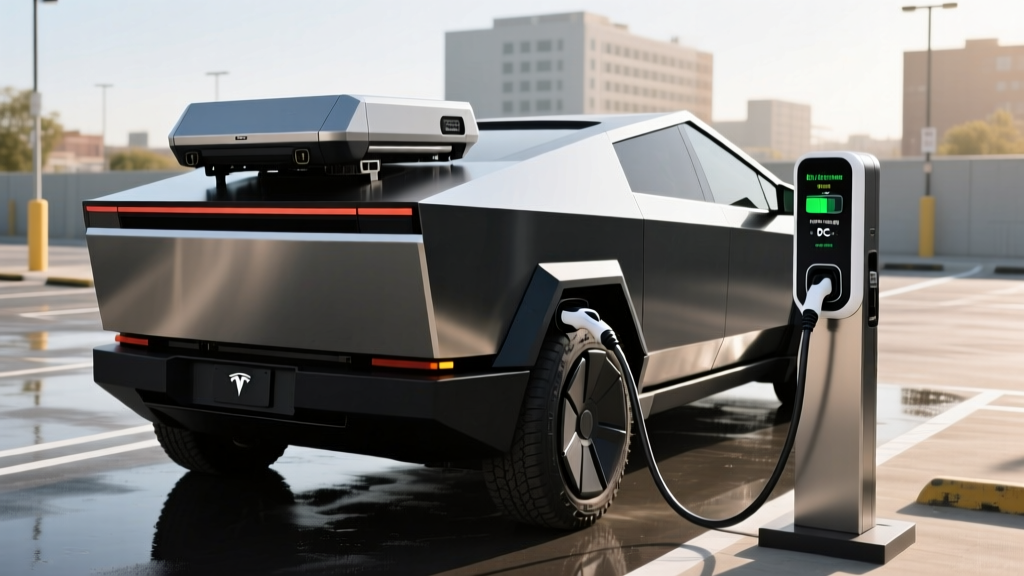
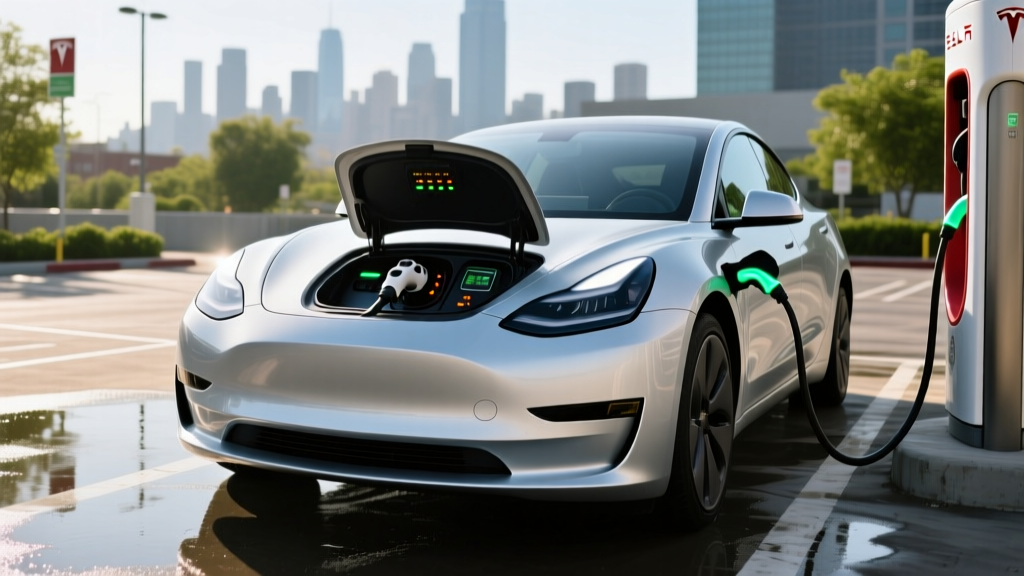
Here's the reality as of 2026: Tesla actively disables Supercharger access on vehicles that receive a salvage or rebuilt title. This isn't a software bug you can bypass with a clever OBD-II dongle — it's a deliberate, server-side restriction tied to the vehicle's VIN. Tesla flags the VIN during the insurance total-loss process, and once flagged, DC fast charging via Superchargers is permanently restricted at the network level. No amount of local software tinkering changes what Tesla's backend permits.
What Actually Happens to Supercharging on a Salvage Tesla
When an insurance company declares a Tesla a total loss, the vehicle's status is reported to title-branding databases (like NMVTIS). Tesla's systems cross-reference this data. The result:
- Supercharger access: Disabled. The car will physically plug in, but the stall will not initiate a charging session.
- Level 2 AC charging: Typically still works — both at home and at public Level 2 stations (ChargePoint, EVgo Level 2, etc.).
- Mobile Connector: Works normally for Level 1 (120V) and Level 2 (240V) home charging.
- CHAdeMO/CCS adapters: Third-party DC fast charging via adapters may work at non-Tesla networks, depending on the adapter and the car's firmware state.
This means a salvage Tesla isn't unchargeable — it's restricted from Tesla's proprietary DC fast-charging network. For owners who primarily charge at home and take shorter trips, this may be an acceptable trade-off for the lower purchase price.
Charging Levels Explained: What Works for a Salvage-Title Tesla
Whether you own a salvage Tesla or any other EV, understanding charging levels is essential. Power is measured in kilowatts (kW) — the rate of energy flow — while battery capacity is measured in kilowatt-hours (kWh), the total energy stored. Confusing these is the most common EV literacy mistake.
| Level | Voltage | Max Power (kW) | Miles of Range Added per Hour | Typical Use Case |
|---|---|---|---|---|
| Level 1 | 120V AC | 1.4–1.9 kW | 3–5 mi/hr | Overnight trickle; emergency |
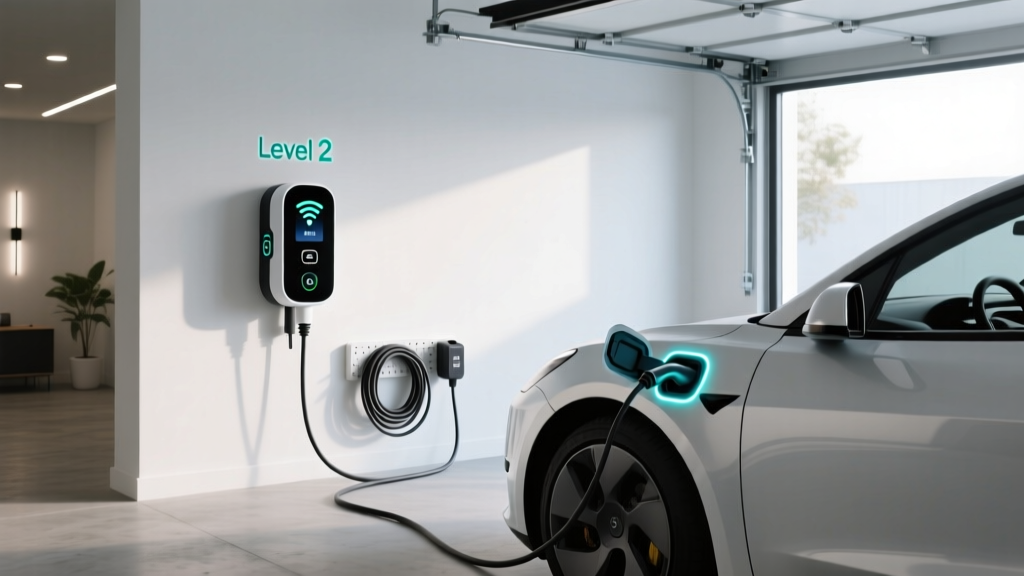
| Level 2 | 240V AC | 7.2–19.2 kW | 20–60 mi/hr | Home daily charging; workplace; public AC |
| DC Fast Charging | 400–800V DC | 50–350 kW | 150–1,000+ mi/hr | Road trips; rapid top-ups |
For a salvage-title Tesla Model 3 Long Range (82 kWh usable battery, ~341 mi EPA range):
- Level 1 (1.4 kW): ~4 mi/hr — a full charge from 10–80% takes roughly 40+ hours.
- Level 2 at 11.5 kW (48A): ~37 mi/hr — 10–80% in approximately 5 hours.
- Level 2 at 7.7 kW (32A): ~25 mi/hr — 10–80% in approximately 7.5 hours.
- DC Fast Charging (if available via CCS adapter at non-Tesla networks): A Model 3 can peak at ~250 kW, achieving 10–80% in roughly 25–30 minutes at a compatible station.
The charging curve matters: peak kW is only sustained at lower states of charge. Above 80% SoC, charge rates taper significantly to protect battery health. That 250 kW peak may only hold from ~10–35% SoC before dropping to 150 kW, then 100 kW, then lower still.
Home Charging Setup: Electrical Requirements and Installation Costs
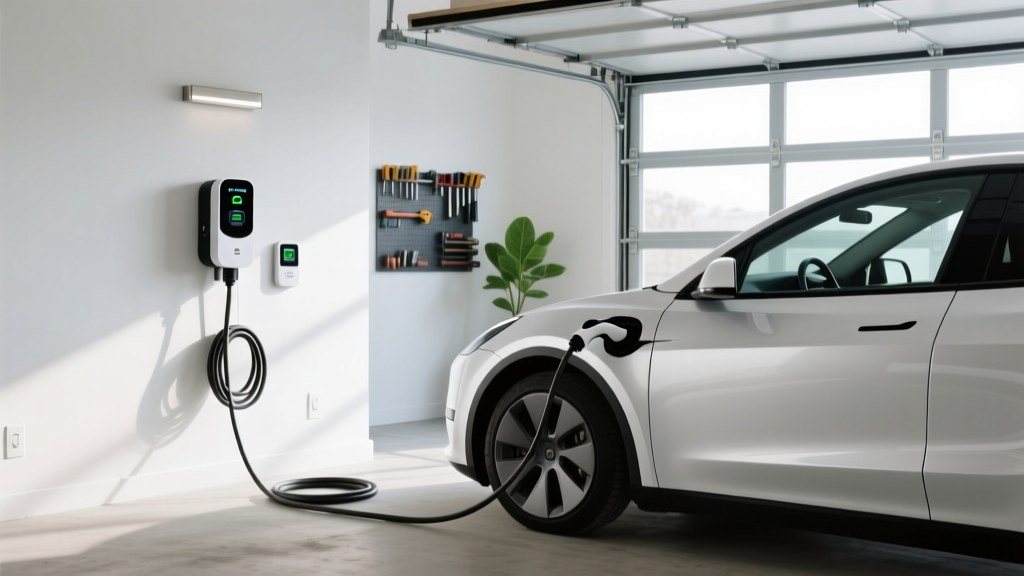
Since Supercharger access is off the table, a robust home Level 2 setup becomes the backbone of salvage Tesla ownership. Here's what's required:
Electrical Specifications
- Circuit: A dedicated 240V circuit. For a 48A continuous charger, NEC code requires a 60A breaker (continuous loads must be on circuits rated 125% of the load).
- Wire gauge: Typically 6 AWG copper (THHN/THWN) for a 60A circuit; 4 AWG for longer runs to mitigate voltage drop.
- Panel capacity: Your main electrical panel must have sufficient amperage headroom. A 200A panel is generally adequate; older homes with 100A or 150A service may need a panel upgrade.
- GFCI protection: 2026 NEC code (and most local jurisdictions) requires GFCI protection for EV charging circuits — either via a GFCI breaker or a charger with integrated ground-fault protection.
- Outdoor rating: If installing outdoors, the charger must carry a NEMA 4 or NEMA 4X rating for weather resistance.
Installation Cost Breakdown
| Item | Low End | High End | Notes |
|---|---|---|---|
| Level 2 Charger (hardware) | $400 | $750 | Quality 48A smart charger |
| Electrician labor (standard install) | $600 | $1,800 | Depends on panel-to-outlet distance |
| Electrical permit | $50 | $250 | Varies by municipality |
| Panel upgrade (if needed) | $1,500 | $4,500 | 100A→200A service upgrade |
| Total (no panel upgrade) | $1,050 | $2,800 | |
| Total (with panel upgrade) | $2,550 | $7,300 |
Many homeowners qualify for the Residential Clean Energy Credit (IRS §25C), which covers 30% of the cost of EV charging equipment and installation, up to $1,000. Consult a tax professional for eligibility specifics.
Connector Compatibility: NACS, CCS, and CHAdeMO
The connector landscape has consolidated significantly. As of 2026, the North American Charging Standard (NACS) — originally Tesla's proprietary connector — has become the de facto standard, adopted by Ford, GM, Rivian, Hyundai, and most major automakers. Here's how compatibility breaks down:
| Connector | Vehicles Using It (2026) | Availability at Public DCFC | Adapter Needed? |
|---|---|---|---|
| NACS (Tesla) | Tesla (all), Ford, GM, Rivian, Hyundai, Kia (new models) | Supercharger network + growing third-party | Non-Tesla EVs need OEM NACS adapter |
| CCS1 | Legacy models (VW ID.4 pre-2025, older Bolt, etc.) | Electrify America, EVgo, ChargePoint | Tesla→CCS adapter available (~$200) |
| CHAdeMO | Nissan Leaf (discontinued), Mitsubishi Outlander PHEV | Limited and declining | Not cross-compatible |
For salvage Tesla owners: Your car has a native NACS port. This works at any Tesla Supercharger (if access is enabled) and at third-party NACS stations. To use CCS1 stations (Electrify America, etc.), you'll need a Tesla-to-CCS adapter. However, if Tesla has disabled DC fast charging at the server level for your VIN, the CCS adapter workaround may also be blocked — this varies by firmware version and should be tested at a station before relying on it for a road trip.
Charging Cost Per Mile: Home vs. Public vs. Gas
One advantage of a salvage Tesla is that you're likely charging at home most of the time anyway. Here's how costs break down:
| Scenario | Rate | Cost per kWh | Cost per Mile (Model 3, 4 mi/kWh) |
|---|---|---|---|
| Home off-peak (utility TOU) | $0.08–$0.12/kWh | $0.10 avg | $0.025 |
| Home standard rate | $0.13–$0.18/kWh | $0.15 avg | $0.038 |
| Public Level 2 (ChargePoint, etc.) | $0.20–$0.35/kWh | $0.28 avg | $0.070 |
| DC Fast Charging (EA, EVgo) | $0.35–$0.55/kWh | $0.45 avg | $0.113 |
| Gas car (30 MPG, $3.50/gal) | — | — | $0.117 |
At home off-peak rates, a Model 3 costs roughly $0.025 per mile — about 4.7× cheaper than a 30 MPG gas car at $3.50/gallon. Even at public DC fast-charging rates, the Tesla is cost-competitive with gasoline. The savings compound: driving 12,000 miles/year at home rates costs ~$300 in electricity vs. ~$1,400 in gasoline.
Equipment Recommendations: Level 2 Chargers for Home
Since home charging is your primary refueling method with a salvage Tesla, invest in a quality Level 2 unit. Here are proven options as of 2026:
Tesla Wall Connector
- Power: 11.5 kW (48A) on a 60A circuit
- Connector: Native NACS — no adapter needed for Tesla
- Cable: 24 ft
- Smart features: Wi-Fi, OTA updates, power sharing between units
- Price: ~$475
ChargePoint Home Flex
- Power: Up to 12 kW (50A), configurable down to 16A
- Connector: NACS (2025+ models) or CCS/J1772
- Cable: 23 ft
- Smart features: Wi-Fi, app scheduling, Alexa integration
- Price: ~$599
Emporia Vue Level 2
- Power: 11.5 kW (48A)
- Connector: NACS or J1772 options
- Cable: 24 ft
- Smart features: Energy monitoring, solar integration, load management
- Price: ~$399
Grizzl-E Smart
- Power: 10 kW (40A)
- Connector: NACS or J1772
- Cable: 24 ft
- Smart features: OCPP-compatible, app control, extreme cold rated (-40°F)
- Price: ~$449
For salvage Tesla owners, the Tesla Wall Connector is the simplest path — native NACS, reliable, and well-priced. If you want energy monitoring or have solar panels, the Emporia Vue is an excellent alternative.
Realistic Road-Trip Charging Without Supercharger Access
This is where the salvage Tesla ownership experience diverges most sharply from a clean-title car. Without Supercharger access, road trips require planning around third-party DC fast-charging networks:
- Electrify America: Largest US DCFC network outside Tesla. CCS1 stations — you'll need a Tesla-to-CCS adapter, and DC fast-charging may still be VIN-blocked.
- EVgo: Mix of CCS and NACS stalls. Growing NACS deployment in 2025–2026.
- ChargePoint: Primarily Level 2; some DCFC locations.
- Tesla Superchargers with Magic Dock: Select Supercharger stalls have built-in CCS adapters ("Magic Dock") for non-Tesla EVs. However, your salvage Tesla's NACS port means you'd use the native connector — which is still VIN-blocked.
The practical impact: a salvage Tesla is an excellent local-use vehicle with home charging, but a compromised road-trip car. If your driving is 90%+ within a 100-mile radius of home, the Supercharger restriction is a manageable inconvenience. If you regularly drive 300+ miles, a clean-title vehicle or a non-Tesla EV with full CCS/NACS network access is a better choice.
Frequently Asked Questions
Can I restore Supercharger access on a salvage Tesla by replacing the MCU or battery?
No. The restriction is VIN-based on Tesla's servers. Replacing physical components does not change the VIN or remove the server-side flag. The only legitimate path to restoration would be Tesla corporate reversing the restriction, which they do not currently offer for salvage-title vehicles.
How much does it cost to install a home EV charger?
A standard Level 2 home installation (48A charger on a 60A circuit) costs $1,050–$2,800 including equipment, electrician labor, and permit — assuming your panel has sufficient capacity. If a panel upgrade from 100A to 200A service is needed, add $1,500–$4,500.
How fast will Level 2 charging add range to my Tesla?
At 11.5 kW (48A), a Model 3 Long Range gains approximately 37 miles of range per hour. A 10–80% charge (roughly 57 kWh) takes about 5 hours. At 7.7 kW (32A), expect ~25 mi/hr and ~7.5 hours for 10–80%.
Is a salvage Tesla a good deal despite no Supercharging?
It depends on your use case. If you charge at home and rarely take road trips exceeding 200 miles, the 30–50% purchase discount may outweigh the Supercharger loss. Factor in potentially higher insurance premiums for salvage-title vehicles and reduced resale value.
Can I use a CCS adapter to DC fast-charge a salvage Tesla at Electrify America?
Possibly, but it's not guaranteed. Some salvage-title Teslas retain CCS adapter functionality; others have all DC fast-charging disabled at the firmware level. Test at a nearby station before planning a road trip around this method.
Does a salvage title affect the Tesla battery warranty?
Yes. Tesla's 8-year/120,000-mile battery and drivetrain warranty is voided when a vehicle receives a salvage title. You're assuming full financial risk for any battery or drive-unit failure — a replacement battery can cost $12,000–$20,000+ depending on the model.
The Bottom Line
The "salvage Tesla Supercharging hack" is largely a myth. Tesla's server-side VIN restrictions are robust, and attempts to circumvent them carry safety and financial risks that far outweigh the benefit of Supercharger access. If you're considering a salvage-title Tesla, go in with eyes open: budget for a quality home Level 2 installation ($1,050–$2,800), accept that road-trip charging will be limited, and understand that you're self-insuring the battery and drivetrain. For the right buyer — one with reliable home charging and a local commute — the purchase-price savings can still make a salvage Tesla a rational, if unconventional, choice.