Robotic Charging: Hype, Reality, and What You Actually Need
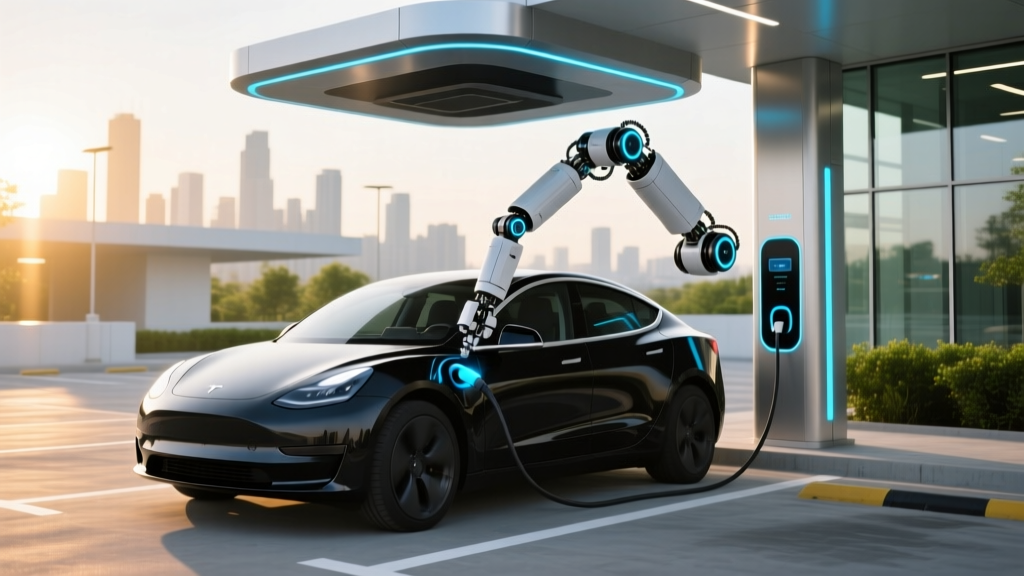
Picture this: you pull into your garage, step out, and a robotic arm snakes out from the wall, locates your EV's charge port, and plugs itself in. No cables to wrestle, no dirty hands, no forgetting to plug in on a cold night. This is the promise of robotic charging — automated, hands-free EV charging that's been teased by companies like Tesla, Volkswagen, and a wave of startups for nearly a decade.
But as of 2026, robotic charging remains largely confined to pilot programs, fleet depots, and concept demonstrations. For the vast majority of EV owners and shoppers, the practical question isn't "when will a robot plug in my car?" — it's "what's the best charging setup I can actually install today, and what will it cost?"
This guide covers where robotic charging stands right now, then gets into the nuts and bolts of what matters: charging levels, home installation costs, connector compatibility, per-mile charging economics, and the specific equipment you can buy today. Whether you're eyeing a robotic future or just need a reliable Level 2 charger in your garage by next month, the fundamentals below apply.
Where Robotic Charging Stands in 2026
Several companies have demonstrated robotic charging systems, but none are available as consumer products you can buy and install at home today:
- Tesla's "Snake" charger concept (first shown in 2015) never reached production. Tesla instead focused on expanding the Supercharger network and opening it to NACS-equipped competitors.
- Volkswagen's mobile charging robot concept, demonstrated in parking garages, remains a research project aimed at commercial fleet applications.
- Startups like EVAR (Electric Vehicle Autonomous Robot) and Zigzag-style robotic arms have been tested in controlled fleet and autonomous-vehicle depot environments, primarily for robotaxi fleets (Waymo, Cruise-style operations) where vehicles need to charge without human intervention between shifts.
- Wireless inductive charging (e.g., WiTricity, Plugless Power) is the closest consumer-adjacent technology — you park over a pad and charging begins without physical plugging. But power levels remain modest (typically 6-11 kW), efficiency is lower than wired charging, and aftermarket kits cost $3,000-$5,000+ installed.
Charging Levels: Speeds, Power, and Real-World Range Gains
Every EV owner needs to understand the three charging tiers. The critical distinction: kW (kilowatts) measures power — how fast energy flows. kWh (kilowatt-hours) measures energy — how much your battery holds. Think of kW as the width of a hose and kWh as the size of the bucket. Never confuse them.
| Level | Voltage | Power (kW) | Miles of Range Added/Hour | Typical Use Case |
|---|---|---|---|---|
| Level 1 | 120V AC | 1.0–1.9 kW | 3–5 mi/hr | Overnight trickle; PHEVs or low daily mileage |
| Level 2 | 240V AC | 3.3–19.2 kW | 12–75 mi/hr | Home garage, workplace, public destination |
| DC Fast Charge | 200–900V DC | 50–350+ kW | 150–1,200+ mi/hr (peak) | Road trips, highway corridors, commercial depots |
Real-World Charging Time Examples
Charging times depend on battery size (kWh), the charger's power output (kW), and the vehicle's onboard acceptance rate. Here are practical benchmarks for 2026's common EV battery sizes:
- 60 kWh battery (e.g., base Tesla Model 3 RWD, Nissan Leaf Plus): 10–80% on a 150 kW DC fast charger in ~22–28 minutes. On a 48A (11.5 kW) home Level 2: 0–100% in ~6 hours.
- 82 kWh battery (e.g., Hyundai Ioniq 5 Long Range, Ford Mustang Mach-E Extended Range): 10–80% on a 250 kW DC fast charger in ~18–22 minutes (Ioniq 5's 800V architecture excels here). On an 11.5 kW home Level 2: ~8.5 hours from empty.
- 100+ kWh battery (e.g., GMC Hummer EV, Rivian R1T Max Pack, Lucid Air Grand Touring): 10–80% on a 350 kW charger in ~20–35 minutes depending on charge curve. On a 48A home Level 2: 10–12+ hours from empty.
Charge curve reality check: No EV sustains its peak charge rate for the entire session. A vehicle rated for "250 kW peak" might hold that rate from 10–30% SoC, then taper to 150 kW, then drop below 50 kW above 80%. This is why manufacturers quote 10–80% times — the final 20% is painfully slow and best done at home overnight.
Home Charger Installation: Electrical Requirements and Costs
A Level 2 home charger is the single highest-impact upgrade for EV ownership. Here's what's involved electrically and financially.
Electrical Requirements
Most home Level 2 chargers require a dedicated 240V circuit, similar to what powers an electric dryer or oven. The specific amperage depends on the charger:
- 32A charger (7.7 kW): Requires a 40A breaker (NEC code mandates the circuit be rated 125% of continuous load).
- 40A charger (9.6 kW): Requires a 50A breaker.
- 48A charger (11.5 kW): Requires a 60A breaker.
- 80A charger (19.2 kW): Requires a 100A breaker — uncommon in residential, typically needs a panel upgrade.
Panel Upgrade: The Cost Variable Nobody Talks About
If your home has a 100A main electrical panel (common in homes built before the 1990s), you likely don't have spare capacity for a 40–60A EV circuit. An upgrade to a 200A panel typically costs $1,500–$3,500 depending on your utility, local code, and whether a new meter or service drop is needed. Homes with 200A panels usually have enough headroom.
A licensed electrician will perform a load calculation (per NEC Article 220) to determine if your panel can handle the added draw. Don't skip this — overloading a panel is a fire risk.
| Component | Typical Cost Range | Notes |
|---|---|---|
| Level 2 charger (hardware) | $350–$750 | Smart Wi-Fi chargers; dumb units from ~$200 |
| Electrical permit | $50–$200 | Varies by municipality; required in most jurisdictions |
| Electrician labor (standard install) | $400–$1,200 | Short run from panel to garage; conduit, wiring, outlet or hardwire |
| Electrical panel upgrade (if needed) | $1,500–$3,500 | 100A → 200A service upgrade |
| Long wire run / trenching | $500–$2,000+ | Detached garage or charger far from panel |
| Total (no panel upgrade) | $800–$2,150 | Most homes with 200A service |
| Total (with panel upgrade) | $2,300–$5,650 | Older homes or high-draw setups |
Federal incentive note: The §30D tax credit applies to vehicles, not chargers. However, the Alternative Fuel Vehicle Refueling Property Credit (IRC §30C) may cover up to 30% of home charger equipment and installation costs (capped at $1,000) if you live in an eligible census tract. Check IRS guidance on §30C and consult a tax professional — eligibility depends on your specific location and income.
Connector Compatibility: NACS, CCS, and CHAdeMO in 2026
The connector landscape has consolidated significantly since Ford, GM, Rivian, and nearly every major automaker adopted Tesla's North American Charging Standard (NACS) starting in 2024–2025. Here's where things stand:
| Connector | Brands Using It (2026) | Notes |
|---|---|---|
| NACS (Tesla) | Tesla (all), Ford, GM, Rivian, Hyundai/Kia (new models), Volvo/Polestar, BMW, Mercedes, Lucid | Industry standard for new vehicles; smaller, lighter connector |
| CCS1 | VW ID.4 (carryover), older Ford/GM/Hyundai models (pre-adoption) | Legacy connector; still supported at most public stations via adapter |
| CHAdeMO | Nissan Leaf (discontinued 2025 in US), Mitsubishi Outlander PHEV | Effectively deprecated for new vehicles |
Adapter Needs
If you own a CCS-equipped EV and want to use Tesla Superchargers, you'll need a CCS-to-NACS adapter. Ford and GM provide these to owners; aftermarket adapters (e.g., Lectron, A2Z) cost $150–$250. Conversely, NACS-equipped vehicles can use CCS stations with a NACS-to-CCS adapter (also ~$150–$250). For home Level 2 charging, most chargers now ship with a NACS connector or offer CCS/NACS variants — choose the one matching your vehicle's port.
Charging Cost Per Mile: EV vs. Gas
Charging economics depend heavily on where and when you charge. Here's a realistic breakdown using a 2026 average EV efficiency of 3.0 miles per kWh (typical for a midsize sedan/crossover) versus a gas car at 28 MPG combined:
| Scenario | Rate | Cost per kWh | Cost per Mile (EV) | Gas Equivalent (28 MPG @ $3.40/gal) |
|---|---|---|---|---|
| Home off-peak (utility time-of-use) | ~$0.09–$0.14/kWh | $0.12 avg | $0.04 | $0.12 |
| Home standard rate | ~$0.14–$0.20/kWh | $0.17 avg | $0.057 | $0.12 |
| Public Level 2 (ChargePoint, EVgo L2) | ~$0.25–$0.49/kWh | $0.35 avg | $0.12 | $0.12 |
| DC Fast Charge (Electrify America, Tesla Supercharger) | ~$0.35–$0.55/kWh | $0.45 avg | $0.15 | $0.12 |
The takeaway: Home charging is dramatically cheaper than gas — roughly one-third the per-mile cost on a time-of-use plan. Public DC fast charging, however, can exceed gas costs per mile. This is why home Level 2 installation is the single best financial decision an EV owner can make. According to fueleconomy.gov, most 2026 EVs achieve 100–130 MPGe combined, translating to significant fuel savings when charged at home.
Equipment Recommendations: Best Home Level 2 Chargers (2026)
Here are proven, widely available Level 2 chargers for home use. Each recommendation includes power output, connector, cable length, smart features, and approximate retail price:
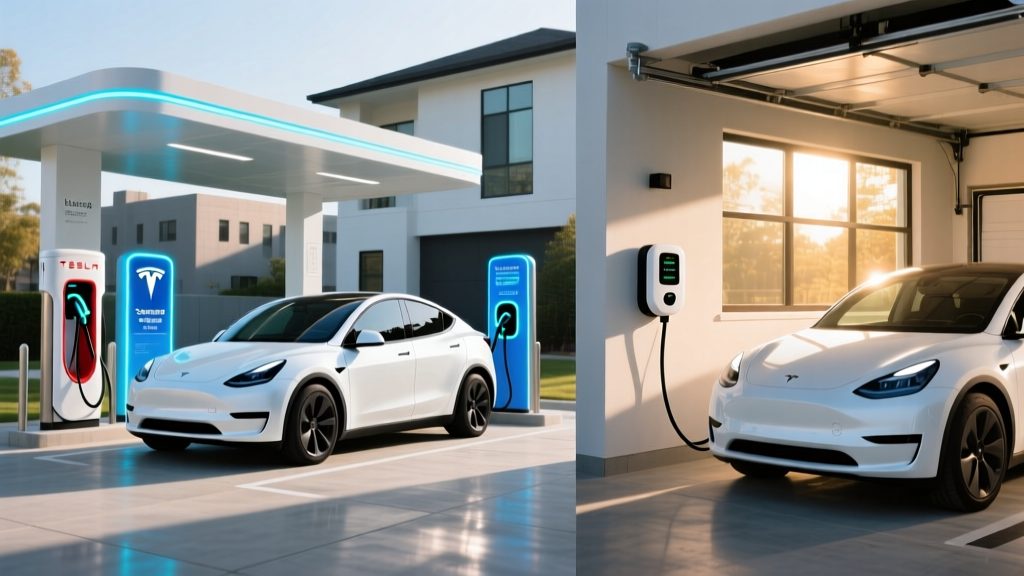
Tesla Wall Connector (Gen 4)
- Power: Up to 11.5 kW (48A)
- Connector: NACS native
- Cable length: 24 ft
- Smart features: Wi-Fi, OTA updates, load sharing (pair multiple units on one circuit), access control
- Price: ~$475
- Best for: Tesla owners and NACS-equipped EVs; cleanest install with Tesla vehicles
Emporia Vue / Emporia Level 2 EV Charger
- Power: Up to 11.5 kW (48A)
- Connector: NACS or CCS (configurable)
- Cable length: 24 ft
- Smart features: Energy monitoring via Emporia Vue panel integration, scheduling, solar-aware charging
- Price: ~$399 (charger) + Emporia Vue monitor
- Best for: Solar homes, energy-conscious owners who want whole-panel visibility
ChargePoint Home Flex
- Power: Up to 12 kW (50A), configurable down to 16A for lower-capacity panels
- Connector: NACS or CCS1 (select at purchase)
- Cable length: 23 ft
- Smart features: Wi-Fi, ChargePoint app scheduling, Alexa/Google Home, flexible amperage
- Price: ~$599
- Best for: Flexibility — adjustable amperage works with older panels without upgrade
Grizzl-E Smart
- Power: Up to 10 kW (40A)
- Connector: NACS or CCS1
- Cable length: 24 ft
- Smart features: Wi-Fi, OCPP compatibility, extreme cold rating (-40°F), rugged aluminum case
- Price: ~$449
- Best for: Cold-climate owners, outdoor installs, durability-first buyers
Safety, Code, and Installation Best Practices
EV charging draws significant continuous current for hours at a time. Cutting corners on electrical safety is not an option. Here's what the National Electrical Code (NEC) and best practices require:
- Dedicated circuit: Your EV charger must have its own dedicated breaker — no sharing with other outlets or appliances.
- GFCI protection: NEC 2020 and later require GFCI (Ground Fault Circuit Interrupter) protection for all EV charging outlets. Hardwired chargers may be exempt in some jurisdictions; check local code.
- Outdoor rating: If installing outside, the charger must carry a NEMA 4 (weatherproof) rating. Most quality chargers (Tesla Wall Connector, Grizzl-E) meet this. The electrical box and conduit must also be outdoor-rated.
- Hardwire vs. plug: Hardwiring (no plug, direct connection inside the charger) eliminates the need for a 240V receptacle and avoids NEC's GFCI breaker requirement for receptacles — which can nuisance-trip on some chargers. Many electricians recommend hardwiring for reliability.
- Wire gauge: 6 AWG copper for 48A circuits; 4 AWG for 60A+ runs. Your electrician will size this correctly based on run length and local code.
- Permit and inspection: Required in virtually all US jurisdictions. An unpermitted install can void home insurance claims and cause problems at sale time.
Robotic Charging vs. Today's Reality: What Should You Do?
If you're hoping robotic charging will eliminate the minor hassle of plugging in at home, consider this: a well-installed Level 2 charger with a cable management hook takes about 8 seconds to plug in when you park. That's the "problem" robotic charging aims to solve — and for most owners, it's not painful enough to justify waiting for technology that doesn't yet exist at consumer scale.
For fleet operators running autonomous vehicles or robotaxi services (SAE Level 4 operations like Waymo), robotic charging is a legitimate infrastructure need — vehicles can't plug themselves in, and human attendants add cost. Expect robotic solutions to debut in these controlled environments first, likely reaching limited commercial availability by 2027–2028.
For everyone else, the smart move in 2026 is to install a quality Level 2 home charger on a dedicated 240V circuit, take advantage of off-peak utility rates, and enjoy the $0.04/mile fueling cost that makes EV ownership financially compelling. The robot can wait.
Frequently Asked Questions
How much does it cost to install a home EV charger?
A typical Level 2 home charger installation costs $800–$2,150 if your electrical panel has sufficient capacity (200A service with spare breaker slots). If you need a panel upgrade from 100A to 200A, total costs range from $2,300–$5,650. The charger hardware itself runs $350–$750 for a smart, Wi-Fi-enabled unit.
How fast will each charging level add range?
Level 1 (120V) adds 3–5 miles per hour — suitable only for PHEVs or very low daily mileage. Level 2 (240V) adds 12–75 miles per hour depending on amperage, fully replenishing most EVs overnight. DC fast charging adds 150–1,200+ miles per hour at peak rates, enabling 10–80% charges in 18–35 minutes depending on battery size and charger power.
Which connector/charger is compatible with my EV?
For 2026 model-year vehicles, most new EVs use the NACS (Tesla) connector. If you drive a 2023 or earlier model, you likely have CCS1. CHAdeMO is limited to older Nissan Leafs. Match your home charger's connector to your vehicle's port, or use an adapter ($150–$250) for flexibility. Check your owner's manual or the EPA's EV listing for your specific vehicle's connector type.
How much does charging cost per mile vs gas?
Home off-peak charging costs approximately $0.04/mile — about one-third the cost of gasoline at $3.40/gal and 28 MPG ($0.12/mile). Standard home rates run ~$0.06/mile. Public DC fast charging at $0.45/kWh averages ~$0.15/mile, which can exceed gas costs. Maximize home charging for the best economics.
What electrical upgrades might I need?
The most common upgrade is a panel capacity increase from 100A to 200A ($1,500–$3,500). You may also need a new dedicated circuit with appropriate wire gauge (6 AWG for 48A), a GFCI breaker if using a receptacle, and possibly conduit runs if the charger is far from the panel. A licensed electrician's load calculation will determine exact requirements. Always pull a permit and schedule an inspection.
Is robotic charging available for home use?
No. As of 2026, robotic charging systems exist only in pilot programs, fleet depots, and autonomous-vehicle testing environments. No consumer-grade robotic charger is available for purchase or home installation. The closest hands-free option is wireless inductive charging (e.g., WiTricity), which costs $3,000–$5,000+ installed and delivers lower power (6–11 kW) than a standard wired Level 2 charger.