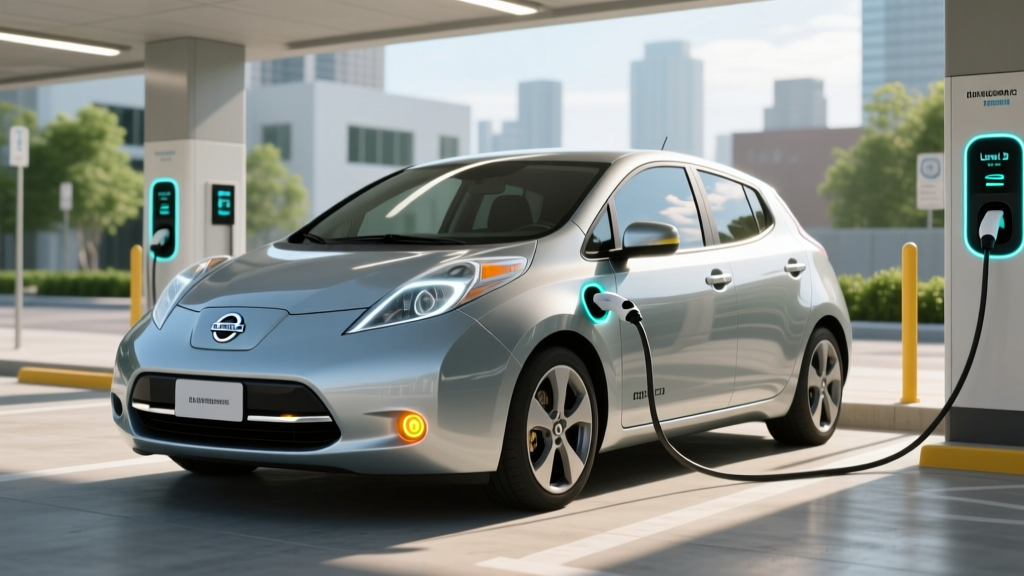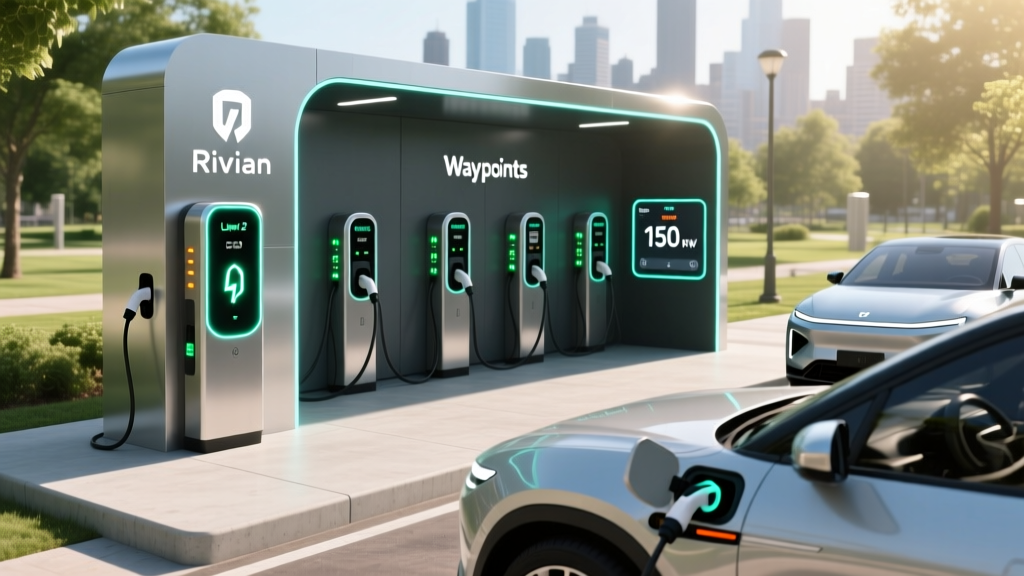
Rivian has been quietly building out its own charging footprint under the Rivian Waypoints brand, adding chargers at trailheads, parks, and destination venues that align with the adventure-vehicle ethos of the R1T and R1S. But Waypoints isn't a monolithic fast-charging network like Tesla Superchargers or Electrify America — it's a mix of Level 2 destination chargers and select DC fast-charging sites. Understanding what you'll actually find when you pull up matters, especially if you're planning a backcountry weekend or evaluating whether a Rivian fits your road-trip routine.
This guide breaks down what Rivian Waypoints charging stations offer in 2026, how they compare to public DC fast networks, and what Rivian owners (and non-Rivian drivers) need to know about connectors, speeds, and cost per mile.
What Are Rivian Waypoints Charging Stations?
Rivian Waypoints are branded charging locations selected and deployed by Rivian, typically at outdoor-recreation destinations: state and national parks, ski resorts, campgrounds, and trailhead parking areas. The program launched alongside the R1T and R1S deliveries and has expanded steadily. As of 2026, Waypoints locations include a mix of:
- Level 2 destination chargers (typically 11.5 kW to 19.2 kW) — intended for multi-hour stops where you're hiking, camping, or lodging.
- DC fast chargers at select hubs — Rivian has deployed higher-power chargers at certain high-traffic adventure corridors, though the bulk of Waypoints remains Level 2.
The strategic intent is clear: Rivian is placing chargers where its owners actually go, rather than competing head-to-head with highway-corridor networks like Electrify America or Tesla Superchargers. If you're driving I-70 across Colorado, you'll still rely on public DC fast networks. But if you're spending a weekend at a national forest campground, a Waypoints Level 2 charger can replenish your pack overnight.
Charging Levels Explained: Speeds in kW and Miles Per Hour
Before evaluating any charging stop — Waypoints or otherwise — you need a clear picture of what each level delivers. Power is measured in kW (kilowatts), which is the rate of energy flow. Energy stored in your battery is measured in kWh (kilowatt-hours). Confusing these two is the single most common EV literacy mistake. Think of kW as the speed of water flowing from a hose, and kWh as the total volume in the bucket.
| Level | Voltage | Power (kW) | Miles of Range Added Per Hour | Typical Use Case |
|---|---|---|---|---|
| Level 1 | 120V AC | 1.2–1.9 kW | 3–5 mi/hr | Overnight trickle; emergency top-up |
| Level 2 | 240V AC | 7.2–19.2 kW | 20–60 mi/hr | Home charging; destination/workplace |
| DC Fast (Level 3) | 400–800V DC | 50–350 kW | 150–1,000+ mi/hr (peak) | Highway road trips; quick top-ups |
For context, a Rivian R1S Dual-Motor with the standard 106 kWh battery pack (usable) gains roughly 25–30 miles of range per hour on an 11.5 kW Level 2 Waypoints charger. That's enough to fully recharge overnight during an 8–10 hour campground stay. On a DC fast charger capable of delivering the R1S's peak acceptance rate of approximately 220 kW, you can go from 10% to 80% in roughly 30–35 minutes under ideal thermal conditions.
Connector Compatibility: NACS, CCS, and the Rivian Transition
Connector standards have shifted significantly. As of the 2025 model year, Rivian transitioned to the NACS (North American Charging Standard) port — the Tesla-designed connector that has become the de facto industry standard. If you're driving a 2025 or 2026 Rivian R1T or R1S, your vehicle has a native NACS port.
For earlier Rivian models (2022–2024), the native port is CCS1 (Combined Charging System). Rivian provides a NACS-to-CCS adapter for these vehicles, enabling access to Tesla Superchargers and any NACS-equipped station.
| Model Year | Native Port | Adapter Needed For | Waypoints Compatibility |
|---|---|---|---|
| 2022–2024 R1T/R1S | CCS1 | NACS-to-CCS adapter (included by Rivian) for Tesla Superchargers | Direct plug at CCS-equipped Waypoints; adapter for NACS Waypoints |
| 2025–2026 R1T/R1S | NACS | CCS adapter for legacy CCS stations | Direct plug at NACS-equipped Waypoints |
| Rivian EDV (delivery van) | CCS1 | N/A (fleet-only) | N/A |
At Waypoints locations, Rivian has equipped chargers to serve its own fleet — meaning you'll find connectors matching the current production standard. As the network matures through 2026, expect NACS to dominate new deployments. If you drive a non-Rivian EV with NACS (such as a Ford F-150 Lightning, Hyundai Ioniq 5, or Tesla), many Waypoints chargers may be accessible, though Rivian has indicated priority access for Rivian vehicles at certain high-demand locations.
Cost to Charge: Waypoints vs. Public Networks vs. Home
Charging cost varies enormously depending on where and when you plug in. Here's a realistic breakdown of what Rivian owners can expect in 2026, measured in dollars per kWh and translated to cost per mile for an R1T Dual-Motor (approximately 2.0–2.2 kWh/mi in mixed driving, per EPA data on fueleconomy.gov):
| Charging Scenario | Typical $/kWh | Cost Per Mile (R1T Dual-Motor) | Notes |
|---|---|---|---|
| Home Level 2 (off-peak utility rate) | $0.08–$0.14 | $0.17–$0.30 | Best-case; varies by state/utility TOU plan |
| Home Level 2 (standard rate) | $0.14–$0.20 | $0.30–$0.42 | Without time-of-use optimization |
| Rivian Waypoints (Level 2) | Often complimentary; where metered: $0.20–$0.30 | $0.42–$0.63 (if metered) | Many Waypoints L2 chargers are free for Rivian owners |
| Public DC Fast (Electrify America, EVgo) | $0.35–$0.55 | $0.74–$1.16 | Peak rates in urban areas can exceed $0.60/kWh |
| Tesla Supercharger (via adapter) | $0.28–$0.40 | $0.59–$0.84 | Rivian NACS vehicles have direct access |
| Gasoline equivalent (25 MPG truck at $3.50/gal) | N/A | $0.14/mi | For cost comparison baseline |
The economics are clear: home Level 2 charging remains the cheapest way to fuel a Rivian, and Waypoints Level 2 chargers — where complimentary — represent a significant ownership perk. DC fast charging on public networks is the most expensive option, sometimes approaching or exceeding gasoline cost per mile depending on local rates. This is why Rivian's strategy of placing Level 2 chargers at overnight destinations is economically smart for owners: slow charging at low or zero cost beats expensive highway DC sessions.
Charging Time Examples: What to Expect With Rivian Battery Packs
Rivian offers multiple battery configurations for the R1T and R1S as of 2026. Charging time depends on the pack size, the charger's power output, and the vehicle's charge acceptance curve. Here are realistic estimates:
| Battery Pack | Usable Capacity | Level 2 (11.5 kW) | Level 2 (19.2 kW) | DC Fast (peak ~220 kW) 10–80% |
|---|---|---|---|---|
| Standard | ~106 kWh | ~9.2 hrs (0–100%) | ~5.5 hrs (0–100%) | ~30–35 min |
| Large | ~129 kWh | ~11.2 hrs (0–100%) | ~6.7 hrs (0–100%) | ~38–42 min |
| Max | ~149 kWh | ~13.0 hrs (0–100%) | ~7.8 hrs (0–100%) | ~45–50 min |
Real-world caveat: DC fast-charging times assume the battery is preconditioned (warmed to optimal temperature) and that you're charging in moderate ambient conditions. In cold weather (below 32°F), expect 10–80% times to increase by 15–25% due to slower lithium-ion charge acceptance at low cell temperatures. Rivian's thermal management system includes preconditioning when you navigate to a charger, which mitigates this — but always plan for longer stops in winter.
Finding and Using Rivian Waypoints Stations
Rivian Waypoints locations are integrated into the Rivian mobile app and the in-vehicle navigation system. When you search for charging, Waypoints chargers appear with Rivian branding, showing real-time availability, connector type, and power output. The app also indicates whether a given charger is complimentary or metered.
For non-Rivian EV drivers, Waypoints accessibility varies. Rivian has opened select locations to other EVs, particularly as NACS adoption has standardized connectors across the industry. However, some Waypoints chargers at private venues (resorts, campgrounds with restricted access) may remain Rivian-priority. Always check the Rivian app or the venue's website before planning a trip around a Waypoints stop in a non-Rivian vehicle.
For highway DC fast charging, Rivian owners in 2026 have robust options beyond Waypoints:
- Tesla Supercharger network — direct NACS access for 2025+ models; adapter required for 2022–2024 vehicles.
- Electrify America — CCS1 connectors (adapter for NACS vehicles) or NACS at newer stations.
- EVgo, ChargePoint, and Ionity — growing NACS availability.
Home Charging Setup for Rivian Owners: What You Actually Need
Most Rivian owners do the majority of their charging at home. Here's what a proper home Level 2 installation requires:
Electrical requirements: A Level 2 charger for a Rivian needs a 240V dedicated circuit. For maximum charging speed with the R1T or R1S (which can accept up to 19.2 kW AC on the onboard charger), you'll want a 60-amp or 80-amp circuit with a hardwired charger. A 48-amp charger on a 60-amp circuit delivers 11.5 kW — sufficient for overnight replenishment of most daily driving. For the full 19.2 kW, you need an 80-amp charger on a 100-amp circuit.
| Component | Cost Range | Notes |
|---|---|---|
| Level 2 charger equipment | $400–$1,200 | Varies by brand, power output, smart features |
| Electrician labor (standard install) | $500–$2,000 | Depends on run length from panel to garage/carport |
| Electrical permit | $50–$250 | Required in most jurisdictions; varies by municipality |
| Panel upgrade (if needed) | $1,500–$4,000 | Older homes with 100A service may need 200A upgrade |
| Total (no panel upgrade) | $950–$3,450 | Typical range for most homes with adequate panel capacity |
| Total (with panel upgrade) | $2,450–$7,450 | Worst-case for older homes |
Panel upgrade reality: If your home has a 100-amp electrical panel — common in homes built before 1990 — adding a 60-amp or 80-amp EV circuit may exceed your panel's capacity. An electrician will perform a load calculation to determine if an upgrade to 200-amp service is required. This is the single biggest variable in home charging cost, and it's not optional: the National Electrical Code (NEC) requires that your total calculated load not exceed 80% of your panel's rated capacity.
Safety and code requirements:
- Dedicated circuit: Your EV charger must be on its own dedicated breaker — not shared with other appliances.
- GFCI protection: NEC 2020 and later require GFCI protection for outdoor receptacles; hardwired chargers may have different requirements depending on your jurisdiction.
- Outdoor rating: If your charger is installed outdoors (carport, driveway), it must carry a NEMA 4 or equivalent weather-resistance rating.
- Permitting: Most municipalities require an electrical permit and post-installation inspection. Don't skip this — unpermitted work can void insurance claims and complicate home sales.
Recommended Home Chargers for Rivian R1T and R1S
Rivian's onboard charger accepts up to 19.2 kW AC (on 2025+ models; earlier models accept up to 11.5 kW). To maximize home charging speed, match your charger to your vehicle's acceptance rate and your electrical panel's capacity.
Emporia Vue Level 2 Charger
- Power output: Up to 48A / 11.5 kW (on 60A circuit)
- Connector: NACS (J1772 version also available)
- Cable length: 24 ft
- Smart features: Wi-Fi, app scheduling, energy monitoring, solar integration
- Price: ~$400–$500
- Best for: Budget-conscious owners with 2022–2024 Rivians (11.5 kW max AC)
ChargePoint Home Flex
- Power output: Configurable up to 80A / 19.2 kW (on 100A circuit)
- Connector: NACS or J1772 (configurable)
- Cable length: 23 ft
- Smart features: Wi-Fi, app scheduling, Alexa integration, flexible amperage
- Price: ~$700–$800
- Best for: 2025+ Rivian owners wanting maximum AC charge speed
Tesla Wall Connector (Universal)
- Power output: Up to 48A / 11.5 kW (on 60A circuit)
- Connector: NACS with integrated J1772 adapter
- Cable length: 24 ft
- Smart features: Wi-Fi, OTA updates, power sharing between multiple units
- Price: ~$600
- Best for: Multi-EV households with both NACS and J1772 vehicles
Wallbox Pulsar Plus
- Power output: Up to 48A / 11.5 kW (on 60A circuit)
- Connector: NACS or J1772
- Cable length: 25 ft
- Smart features: Wi-Fi + Bluetooth, app control, power boost load balancing
- Price: ~$550–$650
- Best for: Compact form factor; tight garage spaces
Frequently Asked Questions
Are Rivian Waypoints chargers free to use?
Many Rivian Waypoints Level 2 chargers are complimentary for Rivian owners, particularly at partner venues like campgrounds and resorts. However, some metered locations do charge a per-kWh fee, typically $0.20–$0.30/kWh. The Rivian app shows pricing before you initiate a session. DC fast Waypoints chargers, where available, are more likely to carry a fee.
Can non-Rivian EVs use Waypoints chargers?
Increasingly, yes — but it depends on the location. Rivian has opened select Waypoints stations to other EVs, especially as NACS has become the standard connector. Private-venue locations (gated resorts, members-only campgrounds) may restrict access to Rivian vehicles. Always verify in the Rivian app or with the venue before relying on a Waypoints charger in a non-Rivian EV.
How do I find Rivian Waypoints stations on a road trip?
Waypoints chargers appear in the Rivian app and in the vehicle's built-in navigation system. You can filter by charger type (Level 2 or DC fast), availability, and connector. For trip planning, the Rivian navigation system will automatically route through appropriate charging stops and precondition the battery for DC fast charging when a fast charger is your destination.
What's the difference between Waypoints and the Rivian Adventure Network?
Rivian has used both terms in communications. "Waypoints" generally refers to the destination-oriented Level 2 charging locations at parks, resorts, and trailheads. Rivian has also announced plans for higher-power DC fast-charging hubs along adventure corridors, which some communications refer to as part of the broader Rivian charging network. In practice, both fall under the Rivian charging ecosystem accessible through the app.
Do I still need public charging networks if I have access to Waypoints?
Absolutely. Waypoints is designed for destination charging — the slow, convenient kind that happens while you're doing something else. For highway road trips, you'll still rely on DC fast-charging networks like Tesla Superchargers, Electrify America, and EVgo. Rivian's NACS integration (on 2025+ models) gives you direct access to the Supercharger network, which remains the most reliable and extensive DC fast network in North America as of 2026.
How much does home charging cost compared to Waypoints and public DC fast charging?
Home Level 2 charging at off-peak utility rates ($0.08–$0.14/kWh) costs roughly $0.17–$0.30 per mile in an R1T Dual-Motor. Complimentary Waypoints chargers are free. Public DC fast charging ($0.35–$0.55/kWh) runs $0.74–$1.16 per mile — sometimes exceeding the cost of gasoline in a comparable truck. The economic case for EVs depends heavily on home charging access.
What electrical upgrades might I need for a home Level 2 charger?
If your home has a 200-amp electrical panel (standard in most homes built after 1990), you likely have sufficient capacity for a 60-amp EV circuit without an upgrade. Homes with 100-amp panels — or homes already running high-draw appliances (electric range, heat pump, dryer) — may need a panel upgrade to 200A service, costing $1,500–$4,000. A licensed electrician will perform a NEC-compliant load calculation to determine your specific needs.
For the latest Rivian Waypoints locations and availability, check the Rivian charging page. Federal tax credit eligibility for home charger equipment (up to $1,000 under §30C) varies by census tract and income — consult IRS guidance on the alternative fuel vehicle refueling property credit and a tax professional for your specific situation.