The 2026 Rivian R2 arrives as the brand's most accessible SUV, targeting buyers who want electric-adventure capability without the R1S price tag. But before you reserve one, you need to understand how the Rivian R2 range translates to real-world driving and what it takes to charge this SUV efficiently at home and on the road. This guide covers the R2's battery and charging specifications alongside a complete home charging installation blueprint — because the EV you buy is only as good as the charging setup behind it.
Rivian R2 Range, Battery, and Charging Specifications
Rivian has confirmed the R2 will offer multiple battery configurations. The standard-range variant targets an EPA-estimated 270+ miles, while the larger battery pack aims for 330+ miles on a full charge. Rivian has not published final kWh capacity figures as of early 2026, but industry analysis based on the R2's platform and efficiency targets suggests a usable battery in the 75–100 kWh range, likely using NMC (nickel manganese cobalt) chemistry for energy density.
| Specification | Standard Range (Est.) | Large Battery (Est.) |
|---|---|---|
| EPA Range | 270+ mi | 330+ mi |
| Battery Capacity (Usable) | ~75 kWh | ~100 kWh |
| Chemistry | NMC (expected) | NMC (expected) |
| Max DC Fast Charge Rate | ~175 kW | ~200+ kW |
| 10–80% DC Fast Charge | ~25 min | ~22 min |
| Level 2 Onboard Charger | 11.5 kW (48A) | 11.5 kW (48A) |
| Starting MSRP | ~$45,000 | ~$52,000 |
Rivian equips the R2 with an 11.5 kW onboard charger, meaning a properly configured home Level 2 station can replenish the battery at roughly 33–37 miles of range per hour — enough to fully recharge overnight from any realistic daily driving distance.
Understanding EV Charging Levels: Speeds and Range Recovery
EV charging breaks into three tiers. Understanding the difference between kW (power — how fast energy flows) and kWh (energy — how much the battery holds) is essential. Think of kW as the width of a pipe and kWh as the size of the tank you're filling.
| Level | Voltage | Max Power (kW) | Miles of Range Added Per Hour | Best For |
|---|---|---|---|---|
| Level 1 | 120V AC | 1.0–1.4 kW | 3–5 mi/hr | Overnight top-up, low daily mileage |
| Level 2 | 240V AC | 3.3–19.2 kW | 12–65 mi/hr | Home daily charging, workplace |
| DC Fast Charge | 400–800V DC | 50–350 kW | 150–300+ mi in 10–80% session | Road trips, rapid replenishment |
For the Rivian R2 with its 11.5 kW onboard charger, Level 2 charging at a 48-amp (11.5 kW) station will add roughly 35 miles of range per hour. A full charge from 10% to 100% on Level 2 takes approximately 8–10 hours depending on pack size — perfect for overnight charging. Level 1 on a standard 120V outlet adds only about 4 miles per hour, which works for plug-in hybrids with small batteries but is inadequate as a primary charging strategy for a 75–100 kWh pack.
DC fast charging bypasses the vehicle's onboard charger entirely, sending direct current straight to the battery. The R2's expected peak rate of 175–200+ kW means a 10–80% session takes roughly 22–25 minutes at a compatible high-power station. However, charging follows a curve: the battery accepts peak power only at lower states of charge, tapering significantly above 80% to protect cell longevity. That's why manufacturers quote 10–80% times rather than 0–100%.
Home Charger Installation: Electrical Requirements and Costs
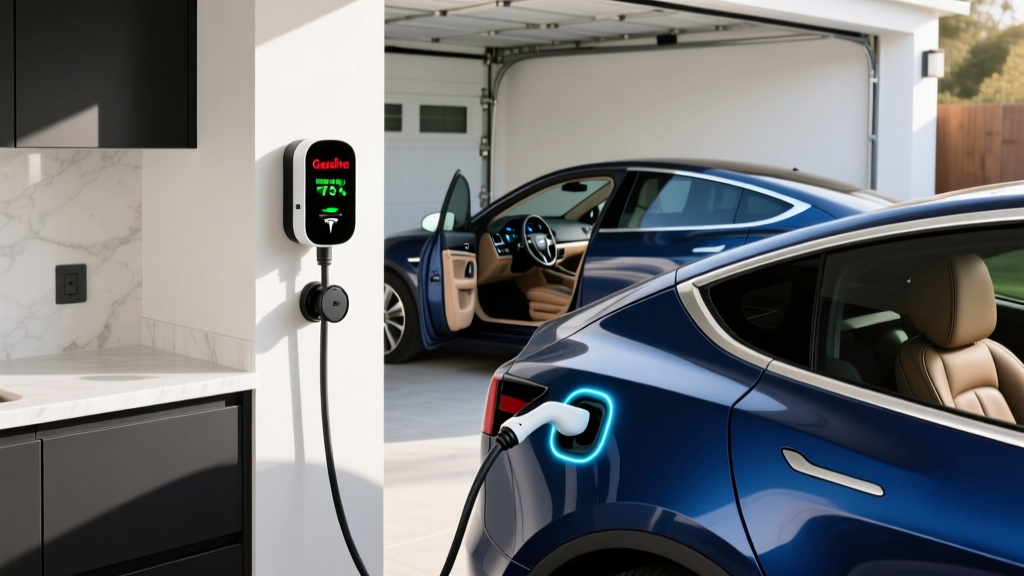
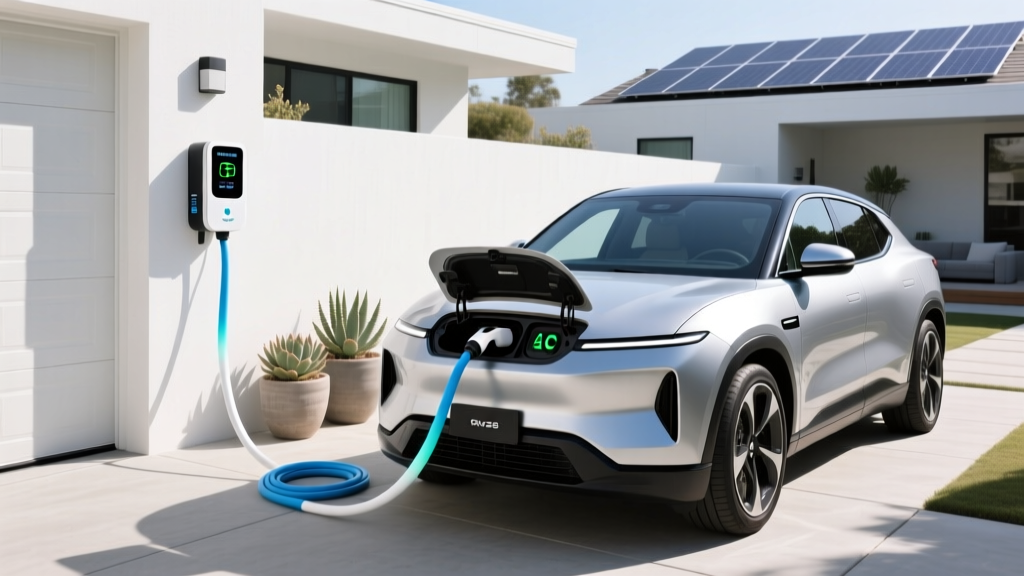
Installing a Level 2 home charger is the single most impactful upgrade for EV ownership. Here's what the R2 needs and what it will cost.
Electrical Requirements
To unlock the R2's full 11.5 kW Level 2 capability, you need a 240-volt circuit rated at 60 amps (which supports a continuous 48-amp charge). The National Electrical Code requires circuits to be rated at 125% of the continuous load, so a 48-amp charger requires a 60-amp breaker.
- Circuit: Dedicated 240V / 60-amp breaker (for 48A continuous charging)
- Wire gauge: 6 AWG copper (or 4 AWG aluminum) for runs up to ~50 feet
- Alternative: A 50-amp breaker / 40-amp charger delivers 9.6 kW — still adds ~29 mi/hr and may avoid a panel upgrade
- Outlet vs. hardwired: NEMA 14-50 receptacle offers portability; hardwired units allow higher amperage and eliminate the GFCI breaker requirement in many jurisdictions
Panel Upgrade Reality
Many homes built before 2000 have 100-amp or 150-amp electrical panels. Adding a 60-amp EV circuit to an already-loaded panel may require upgrading to a 200-amp service. This is the single biggest variable in installation cost.
| Component | Cost Range (No Panel Upgrade) | Cost Range (With 200A Panel Upgrade) |
|---|---|---|
| Level 2 Charger Equipment | $400 – $750 | $400 – $750 |
| Electrician Labor (2–6 hours) | $500 – $1,500 | $1,200 – $2,500 |
| Panel Upgrade (if needed) | $0 | $1,500 – $3,500 |
| Permit & Inspection | $50 – $250 | $100 – $400 |
| Conduit & Wiring Materials | $100 – $400 | $100 – $400 |
| Total Estimated Cost | $1,050 – $2,900 | $3,300 – $7,550 |
Always get a load calculation from a licensed electrician before assuming your panel can handle a new 60-amp circuit. Some utilities offer panel-upgrade rebates — check with your provider. The IRS §30D clean vehicle credit does not cover home charger installation for most taxpayers (the separate §30C alternative fuel infrastructure credit expired for most residential installations), but some state and utility programs do.
Connector Compatibility: What Plugs Into the R2?
The 2026 Rivian R2 comes equipped with the NACS (North American Charging Standard) port — the Tesla-derived connector that has become the industry standard. This is a significant advantage for access to the Tesla Supercharger network, which remains the most reliable DC fast-charging infrastructure in North America.
| Connector | Physical Standard | Networks | Vehicles Using It |
|---|---|---|---|
| NACS | Tesla-style compact plug | Tesla Superchargers, Electrify America (new stations), many others | Tesla, Rivian (2025+), Ford, GM, Hyundai/Kia (2025+), most new EVs |
| CCS1 | Combo connector (J1772 + DC pins) | Electrify America, EVgo, ChargePoint | Older VW, BMW, Hyundai/Kia (pre-2025), legacy EVs |
| CHAdeMO | Round DC connector | Limited; mostly legacy | Nissan Leaf, Mitsubishi Outlander PHEV |
| J1772 | Round AC connector (Level 1/2) | All Level 2 public stations | All non-Tesla EVs (adapter included with NACS vehicles for Level 2) |
For home Level 2 charging, most chargers now ship with a NACS connector or offer it as a configuration option. If you purchase a CCS-terminated home charger, you'll need a CCS-to-NACS adapter (approximately $150–$250) for the R2. Rivian includes a mobile charger with the vehicle that handles both 120V and 240V via interchangeable plugs, suitable for occasional use but not recommended as a permanent daily solution due to lower amperage ratings.
Charging Cost Per Mile: EV vs. Gas Comparison
The economic case for the R2 depends heavily on where and when you charge. Electricity pricing varies enormously by location and time of use.
| Scenario | Rate / Price | Cost Per Mile (R2 at 3.0 mi/kWh) | Annual Cost (12,000 mi) |
|---|---|---|---|
| Home Off-Peak (national avg.) | $0.12/kWh | $0.040 | $480 |
| Home Peak (national avg.) | $0.22/kWh | $0.073 | $880 |
| Public Level 2 (avg.) | $0.35/kWh | $0.117 | $1,400 |
| DC Fast Charging (avg.) | $0.48/kWh | $0.160 | $1,920 |
| Gas SUV (25 MPG combined, $3.50/gal) | $3.50/gallon | $0.140 | $1,680 |
At home off-peak rates, the R2 costs roughly $0.04 per mile — a 71% savings versus a comparable gas SUV at $0.14 per mile. Even at DC fast-charging rates, the R2 is roughly cost-competitive with gasoline on a per-mile basis, though the advantage narrows. The key takeaway: home charging is where the economics overwhelmingly favor electric. If you cannot charge at home, calculate your local public charging rates carefully before purchasing.
Time-of-use (TOU) electricity plans offered by many utilities allow you to schedule charging during off-peak hours (typically 10 PM – 6 AM), locking in the lowest rates. Most Level 2 home chargers and the Rivian app support scheduled charging to automate this.
Recommended Home Chargers for the Rivian R2
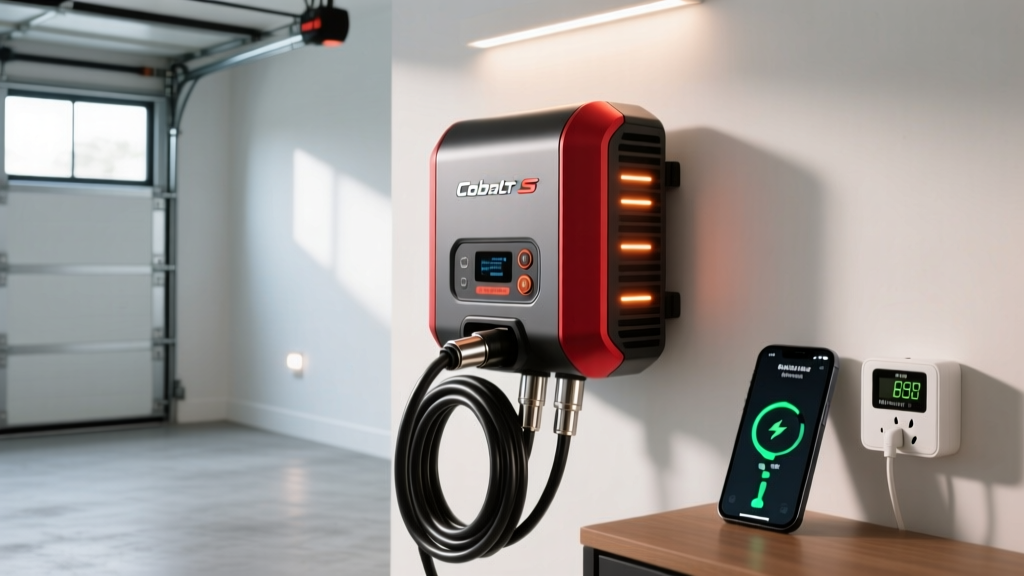
The R2's 11.5 kW onboard charger means you should target a 48-amp Level 2 station on a 60-amp circuit to maximize charging speed. Here are proven units that pair well with the R2's NACS port.
ChargePoint Home Flex (NACS)
- Power Output: Up to 12 kW (50A) on a 60A circuit
- Connector: NACS (native, no adapter needed)
- Cable Length: 23 feet
- Smart Features: Wi-Fi, app scheduling, energy reporting, Alexa integration
- Price: ~$550–$650
- Best For: Reliable daily charging with robust app ecosystem
Tesla Wall Connector (NACS)
- Power Output: Up to 11.5 kW (48A) on a 60A circuit
- Connector: NACS (native)
- Cable Length: 24 feet
- Smart Features: Wi-Fi, over-the-air updates, power sharing (multiple units on one circuit)
- Price: ~$475
- Best For: Value and clean integration with NACS vehicles
Emporia Vue Level 2 Charger
- Power Output: Up to 11.5 kW (48A) on a 60A circuit
- Connector: J1772 or NACS (select at purchase)
- Cable Length: 24 feet
- Smart Features: Real-time energy monitoring, solar integration, load management, app control
- Price: ~$400–$500
- Best For: Budget-conscious buyers wanting detailed energy data
All three units are hardwired-capable and outdoor-rated (NEMA 4). Hardwiring eliminates the need for a GFCI breaker (required for receptacles in most jurisdictions under NEC 2020/2023) and saves $50–$100 on the breaker alone. If you choose a NEMA 14-50 receptacle for portability, factor in a high-quality industrial-grade outlet — cheap receptacles have been linked to overheating in EV charging forums and NHTSA bulletins.
Safety, Permits, and Code Considerations
EV charging places a sustained high-amperage load on your home's electrical system — far more demanding than intermittent appliances like dryers or ovens. Proper installation is non-negotiable.
- Dedicated circuit: Your EV charger must be on its own dedicated breaker — never shared with other appliances.
- GFCI protection: NEC 2020 and later require GFCI protection for all receptacles used for EV charging. Hardwired installations are exempt from this requirement and are generally preferred by electricians for this reason.
- Outdoor rating: If your charger is mounted outside, both the unit and any conduit connections must carry a NEMA 4 (weather-resistant) rating.
- Permit and inspection: Most municipalities require an electrical permit for a new 240V circuit. The inspection ensures proper wire gauge, breaker sizing, grounding, and torque on connections. Skipping the permit risks insurance denial in the event of a fire.
- Load management: If your panel is near capacity, devices like the Emporia Vue charger or a standalone load-management system can dynamically reduce charging amperage when other circuits are active, potentially avoiding a costly panel upgrade.
According to the NHTSA and electrical safety organizations, the vast majority of EV charging incidents trace back to improper installation, undersized wiring, or damaged extension cords — not to the vehicles or chargers themselves. A licensed electrician and a passed inspection eliminate these risks.
Road Trip Charging: Public Networks and the R2
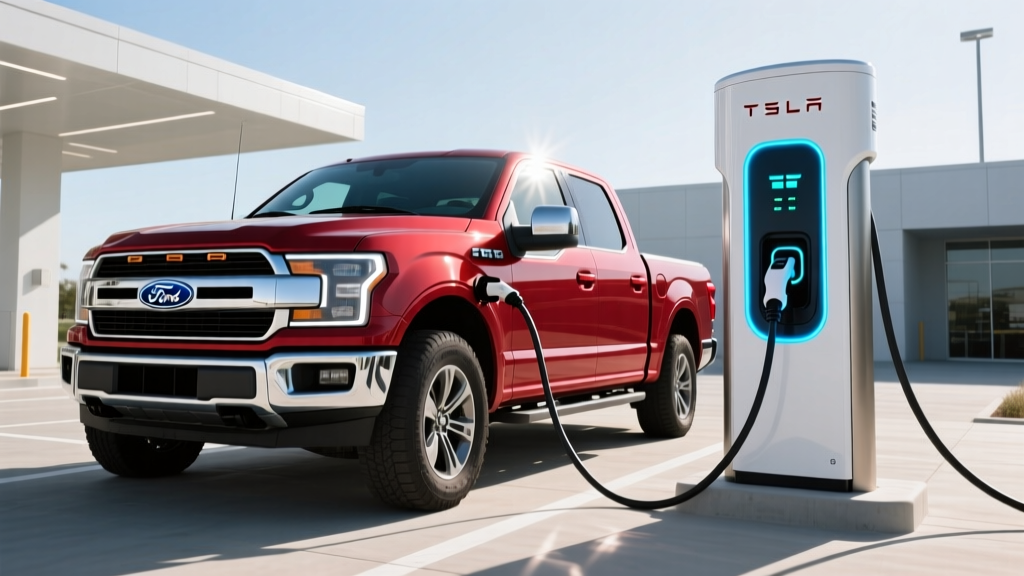
The R2's NACS port gives it native access to the Tesla Supercharger network — over 25,000 stalls across North America as of 2026, with V4 Superchargers capable of 250+ kW. On a road trip, plan for 10–80% DC fast-charging stops every 200–250 miles (accounting for real-world highway range loss), each lasting approximately 20–25 minutes.
Preconditioning the battery before a fast-charging stop is essential. The Rivian navigation system automatically begins battery preconditioning when you route to a charger, warming the cells to optimal temperature for maximum charge acceptance. Without preconditioning — especially in cold weather — peak charge rates can drop by 30–50%, extending your stop significantly. Always navigate to your charging stop rather than simply driving there.
For non-Tesla public DC fast chargers (Electrify America, EVgo), the R2's NACS port may require a NACS-to-CCS adapter at older stations that have not yet added native NACS cables. Check the fueleconomy.gov database and apps like PlugShare or A Better Routeplanner for real-time connector availability at your planned stops.
Frequently Asked Questions
How much does it cost to install a home EV charger for the Rivian R2?
Expect $1,050–$2,900 for a standard installation on an existing 200-amp panel, covering the charger ($400–$750), electrician labor ($500–$1,500), permit ($50–$250), and materials ($100–$400). If your home needs a panel upgrade from 100A or 150A to 200A, add $1,500–$3,500, bringing the total to $3,300–$7,550. Always get a professional load calculation first.
How fast will each charging level add range to the R2?
Level 1 (120V) adds roughly 3–5 miles per hour — too slow for daily use with a large battery. Level 2 (240V, 48A) adds approximately 35 miles per hour, fully recharging overnight. DC fast charging at 175–200+ kW can add 150–200 miles in a 10–80% session lasting 22–25 minutes.
Which connector is compatible with the Rivian R2?
The 2026 Rivian R2 uses the NACS connector natively, giving direct access to Tesla Superchargers and the growing number of NACS-equipped public stations. For older CCS-only public chargers, a NACS-to-CCS adapter (~$150–$250) may be needed. For home Level 2 charging, select a NACS-terminated charger for plug-and-play compatibility.
How much does charging the R2 cost per mile compared to gas?
At home off-peak rates ($0.12/kWh), the R2 costs approximately $0.04 per mile — a 71% savings versus a gas SUV at $0.14 per mile (25 MPG, $3.50/gallon). Even at public DC fast-charging rates ($0.48/kWh), the R2 costs about $0.16 per mile, still competitive with gasoline. Home charging is where the savings are maximized.
What electrical upgrades might I need for a home charger?
The most common upgrade is a panel capacity increase. If your home has a 100-amp or 150-amp service and is already running multiple high-draw appliances (electric range, dryer, HVAC), adding a 60-amp EV circuit may exceed your panel's capacity. A 200-amp upgrade costs $1,500–$3,500. Alternatively, a load-management device or a lower-amperage charger (32A/7.7 kW on a 40A circuit) can avoid the upgrade at the cost of slightly slower charging.
Does the Rivian R2 qualify for the federal EV tax credit?
The R2's eligibility for the IRS §30D clean vehicle credit depends on several factors including battery component sourcing, critical mineral requirements, buyer income caps ($150K single / $300K joint), and the vehicle's MSRP falling under the $80,000 SUV cap. Rivian's US-based manufacturing is favorable, but final credit eligibility for specific R2 trims should be confirmed with a tax professional and the IRS's updated qualified vehicle list at the time of purchase. The credit can be transferred to the dealer at point of sale as an instant discount.