If you're still driving a 2012 Jaguar XJ XJL Supercharged — that supercharged 5.0L V8 pushing 470 hp and returning roughly 15 MPG combined — you've likely felt the sting of $4.00+ premium fuel and the maintenance costs of a complex luxury sedan. Many owners of aging internal-combustion flagships are now evaluating the switch to a battery-electric vehicle. But the single biggest question isn't which EV to buy. It's: can I charge at home, and what will it cost to set up?
This guide walks through every layer of home EV charging installation — from electrical panel capacity to connector selection to real per-mile cost comparisons against the premium unleaded your XJ XJL Supercharged demanded. All figures reflect 2026 equipment pricing and current electrical code requirements.
Understanding the Three Charging Levels: kW, Miles Per Hour, and What You Actually Need
Before hiring an electrician, you need to understand the three charging levels. The distinction that trips up most new EV buyers: kW (kilowatts) measures power — how fast energy flows into the battery. kWh (kilowatt-hours) measures energy — the total capacity of the battery itself. Think of kW as the width of the pipe and kWh as the size of the tank.
| Level | Voltage / Amperage | Max Power (kW) | Miles of Range Added Per Hour | Typical Use Case |
|---|---|---|---|---|
| Level 1 | 120V / 12A | 1.4 kW | 3–5 mi/hr | Overnight trickle; PHEVs or low-mileage drivers |
| Level 2 | 240V / 32A–48A | 7.7–11.5 kW | 25–44 mi/hr | Primary home charging; covers 90%+ of daily needs |
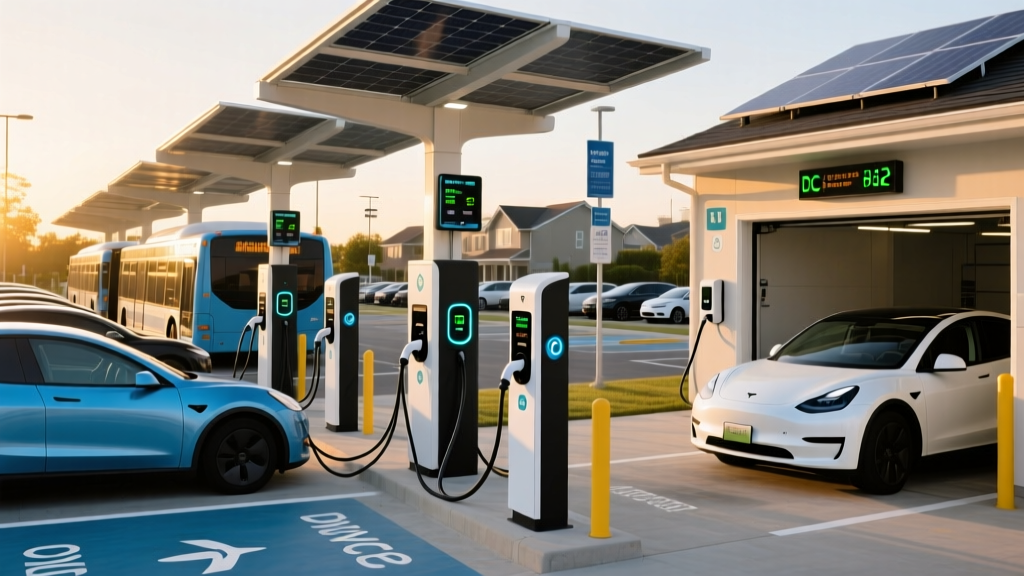
| DC Fast Charge | 400V–800V DC | 50–350 kW | 150–1,200+ mi/hr (peak) | Road trips; 10–80% in 15–35 minutes depending on vehicle |
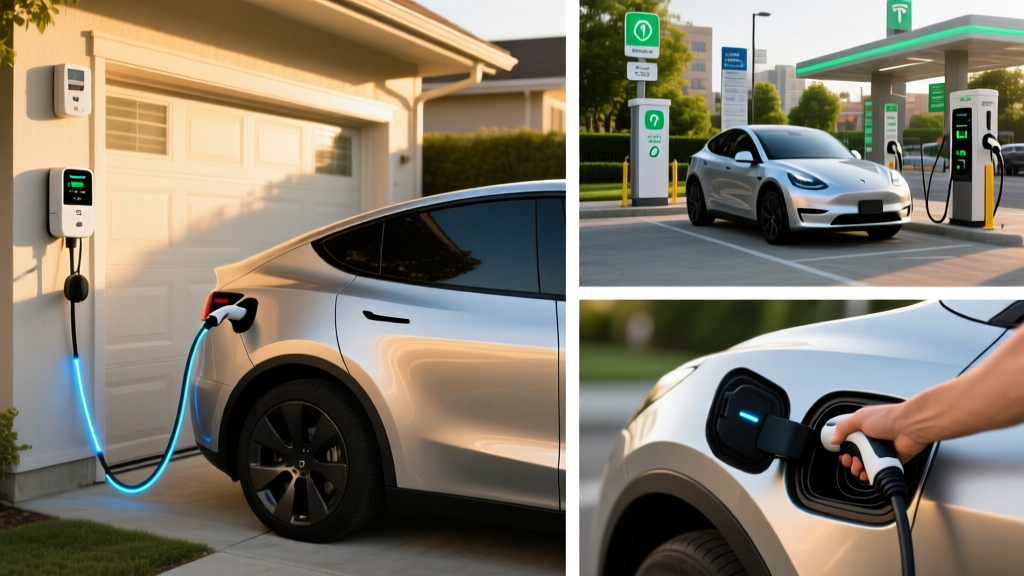
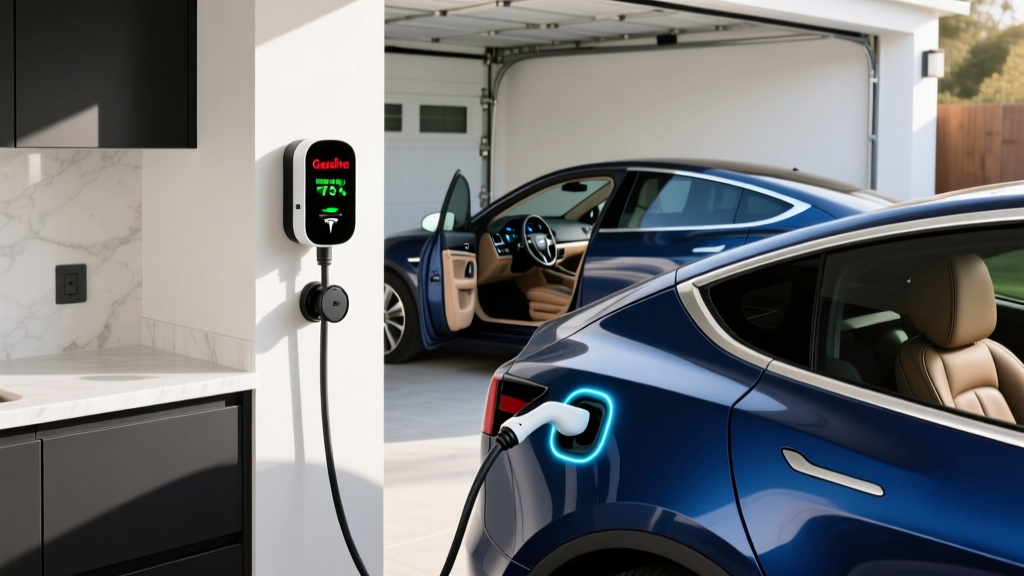
For a former Jaguar XJ owner accustomed to a 5-minute gas station stop, Level 2 home charging is the practical baseline. Plug in when you arrive home, wake up to a full battery every morning. A typical 75–100 kWh battery recharges fully overnight at 11.5 kW — roughly 8–10 hours from near-empty. Most EV owners charge from 20–80% daily, which takes 4–5 hours on a 48A Level 2 circuit.
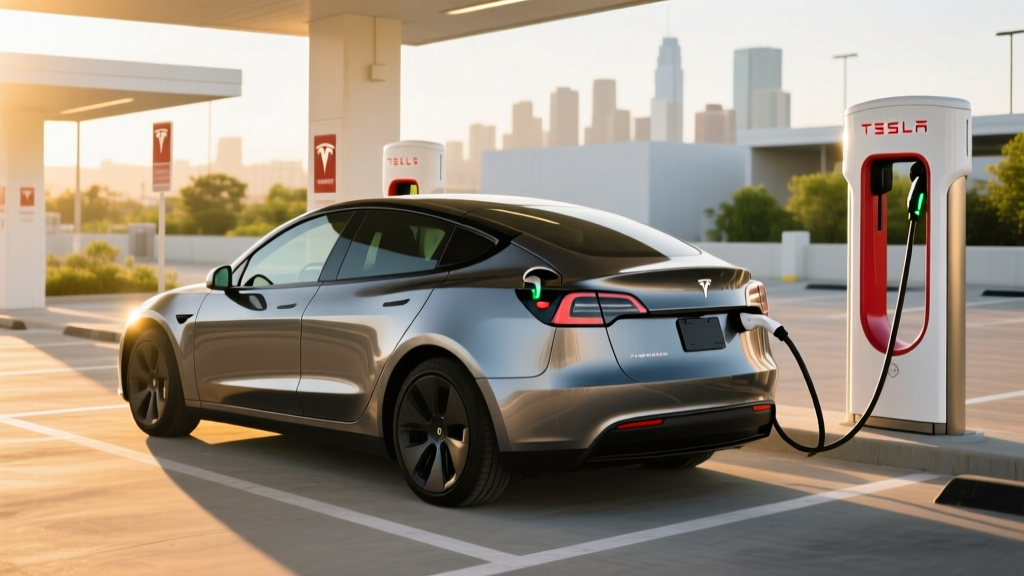
DC fast charging is for road trips. On a 2026 Tesla Model S (100 kWh battery, NACS connector), a V4 Supercharger delivering 250 kW can add 200 miles in roughly 15 minutes. On a Hyundai Ioniq 5 with 800V architecture and CCS1, a 350 kW Electrify America stall delivers 10–80% in approximately 18 minutes. These speeds are peak rates — charging slows significantly above 80% state of charge to protect battery longevity.
Home Charger Installation: Electrical Requirements, Panel Capacity, and Real Costs
Here's where your home's age matters enormously. Many homes built before 2000 — the kind of homes that might have housed a luxury sedan buyer a decade ago — have 100A or 150A electrical panels. A Level 2 EV charger drawing 40A continuous (48A breaker) represents a substantial new load.
Core Electrical Requirements for Level 2 Home Charging
- Voltage: 240V split-phase (same as your dryer or electric oven)
- Circuit amperage: 40A–60A dedicated breaker (continuous load is 80% of breaker rating, so a 50A breaker supports 40A continuous charging)
- Wire gauge: 6 AWG copper for 40A–50A circuits; 4 AWG for 60A
- Outlet vs. hardwired: NEMA 14-50 outlet offers portability; hardwired units allow higher amperage and avoid GFCI breaker nuisance trips common with 14-50 receptacles on 240V circuits
- GFCI protection: NEC 2020+ requires GFCI for 14-50 receptacles; hardwired units typically exempt
Panel Upgrade: The Cost Many Guides Ignore
A licensed electrician will perform a load calculation (NEC Article 220) before adding a 40A+ circuit. If your panel is already near capacity — running central AC, electric range, electric dryer, and a tankless water heater — you may need a panel upgrade from 100A/150A to 200A service, or even a full 400A service with a secondary sub-panel.
| Component | Low Estimate | High Estimate | Notes |
|---|---|---|---|
| Level 2 Charger (Equipment) | $350 | $750 | 32A–48A smart Wi-Fi charger; brands: ChargePoint, Emporia, Wallbox |
| Electrician Labor | $500 | $2,500 | Depends on run length from panel to garage; conduit, drywall patching |
| Electrical Permit | $50 | $350 | Varies by municipality; required for code compliance and insurance |
| Panel Upgrade (if needed) | $1,500 | $4,500 | 100A→200A service upgrade; older homes with Federal Pacific/Zinsco panels cost more |
| NEMA 14-50 Receptacle (optional) | $75 | $200 | Industrial-grade receptacle; Hubbell or Bryant recommended over generic |
| Total (No Panel Upgrade) | $900 | $3,750 | Most homes with 200A panels and short conduit runs |
| Total (With Panel Upgrade) | $2,400 | $8,250 | Older homes or those with maxed-out 100A–150A panels |
The panel upgrade is the single largest variable. Before committing to an EV purchase, get a licensed electrician's load calculation — not a free estimate from a charger-installation company with a sales quota. According to NFPA 70 (National Electrical Code), any new 240V circuit requires proper permitting and inspection.
If a panel upgrade isn't in your budget, load-managing chargers like the Emporia Vue with EV charger integration or the Wallbox Pulsar Max with Power Sharing can dynamically limit charging amperage based on real-time household consumption. These units monitor your panel's total draw and throttle the charger to prevent breaker trips — allowing Level 2 charging on a 100A panel without an upgrade, though at reduced speed (typically 16A–24A, or 10–18 miles of range per hour).
Connector Compatibility: NACS, CCS1, CHAdeMO, and the 2026 Landscape
The connector your EV uses determines which public chargers you can access and which home charger to buy. As of 2026, the North American market has consolidated heavily around NACS (North American Charging Standard, originally Tesla's proprietary connector), but millions of CCS1 vehicles remain on the road.
| Connector | Brands Using It (2026) | Home Charger Availability | Public Network Access |
|---|---|---|---|
| NACS (J3400) | Tesla (all), Ford, GM, Rivian, Volvo, Polestar, Hyundai/Kia (2025+), BMW, Mercedes-Benz | Tesla Wall Connector, ChargePoint Home Flex (NACS), Emporia V2 (NACS) | Tesla Supercharger (25,000+ stalls), Electrify America (NACS stalls rolling out) |
| CCS1 | VW ID.4 (through 2024), older Ford/GM/Hyundai models, Stellantis, legacy EVs | ChargePoint Home Flex (CCS), Emporia V2 (CCS), Grizzl-E | Electrify America, EVgo, ChargePoint public DC stations |
| CHAdeMO | Nissan Leaf (discontinued 2025), Mitsubishi Outlander PHEV (legacy) | Limited; most manufacturers discontinued CHAdeMO home units | Declining; some Electrify America and EVgo legacy stalls |
Adapter reality: If you buy a NACS-equipped EV but your home charger has a CCS1 cable (or vice versa), adapters exist. Tesla sells a CCS-to-NACS adapter (~$250), and third-party options from Lectron and A2Z are available. However, adapters add a failure point and are not recommended for daily home use — match your charger's connector to your vehicle.
Cost to Charge an EV vs. Fueling a 2012 Jaguar XJ XJL Supercharged
The 2012 Jaguar XJ XJL Supercharged with its 5.0L supercharged V8 requires premium 91+ octane fuel and achieves roughly 15 MPG combined per fueleconomy.gov. At $4.50/gallon for premium (a reasonable 2026 national average), that's $0.30 per mile in fuel alone.
Now compare that to home EV charging scenarios for a typical luxury EV like the 2026 BMW i5 eDrive40 (84.3 kWh usable battery, EPA range 295 miles, 3.6 mi/kWh efficiency):
| Charging Scenario | Cost per kWh | Cost to Add 200 Miles | Cost Per Mile |
|---|---|---|---|
| Home Level 2 (national avg. residential rate) | $0.16/kWh | $8.89 | $0.044 |
| Home Level 2 (off-peak TOU rate, e.g., overnight) | $0.08/kWh | $4.44 | $0.022 |
| Home Level 2 (California peak rate) | $0.34/kWh | $18.89 | $0.094 |
| Public Level 2 (ChargePoint, EVgo) | $0.25–$0.39/kWh | $13.89–$21.67 | $0.069–$0.108 |
| DC Fast Charge (Electrify America, idle-free) | $0.35–$0.56/kWh | $19.44–$31.11 | $0.097–$0.156 |
| Tesla Supercharger (V3/V4, avg.) | $0.28–$0.36/kWh | $15.56–$20.00 | $0.078–$0.100 |
| 2012 Jaguar XJ XJL Supercharged (premium fuel) | $4.50/gal | $60.00 | $0.300 |
Even at California's punishing peak electricity rates, home Level 2 charging costs roughly one-third what the XJ XJL Supercharged costs per mile in fuel. On off-peak rates, the savings are roughly 93%. Over 12,000 miles annually, a home-charged EV saves $2,500–$3,200 in fuel costs alone compared to the supercharged Jag.
This doesn't account for the XJ's $200+ annual oil changes, supercharger belt replacements, transmission fluid, or the timing chain guide issues that plague the 5.0L AJ-V8 engine past 80,000 miles.
Equipment Recommendations: 2026 Level 2 Home Chargers Worth Buying
After testing dozens of home chargers across multiple EVs and home electrical configurations, these are the units I recommend based on reliability, smart features, and value:
ChargePoint Home Flex (NACS or CCS1)
- Power Output: Up to 11.5 kW (48A on 60A circuit); adjustable down to 16A for limited panels
- Cable Length: 23 feet
- Smart Features: Wi-Fi, app scheduling, Alexa integration, energy-use tracking, utility demand-response programs
- Connector: NACS or CCS1 (choose at purchase)
- Price: $599 (frequently $549 on sale)
- Best For: Most homeowners; excellent app; flexible amperage adjustment avoids panel upgrades
Tesla Wall Connector (NACS)
- Power Output: Up to 11.5 kW (48A on 60A circuit)
- Cable Length: 24 feet
- Smart Features: Wi-Fi, OTA firmware updates, Power Sharing (link multiple units on one circuit), vehicle-specific access control
- Connector: NACS native; CCS1 vehicles require adapter
- Price: $450
- Best For: Tesla owners and NACS-standard vehicles (Ford, GM, Rivian, Hyundai/Kia 2025+)
Emporia V2 (NACS or CCS1)
- Power Output: Up to 11.5 kW (48A); software-adjustable
- Cable Length: 24 feet
- Smart Features: Integrates with Emporia Vue whole-home energy monitor; real-time load management; solar-aware charging
- Connector: NACS or CCS1
- Price: $399 (charger only); $599 with Emporia Vue panel monitor
- Best For: Homes with solar panels or those wanting detailed energy analytics; load-management avoids panel upgrades
Grizzl-E Smart (CCS1 or NACS)
- Power Output: Up to 10 kW (40A on 50A circuit)
- Cable Length: 24 feet
- Smart Features: Wi-Fi, OCPP protocol (future-proof for utility programs), extreme cold-rated (-40°F)
- Connector: CCS1 or NACS
- Price: $449
- Best For: Cold-climate garages; Canadian-built; no-nonsense durability
Safety, Code Compliance, and Inspection: What Your Electrician Must Get Right
EV charging places a sustained high-amperage load on your electrical system for 6–10 hours nightly. This isn't like running a dryer for 45 minutes. The NEC and your local authority having jurisdiction (AHJ) have specific requirements:
- Dedicated circuit: Your Level 2 charger must be on its own dedicated breaker — not shared with any other outlet or appliance. A 48A charger requires a 60A breaker (NEC 125% continuous-load rule).
- GFCI protection: Since NEC 2020, any NEMA 14-50 receptacle installed for EV charging requires GFCI protection. This is why many electricians now recommend hardwiring the charger instead — hardwired units are exempt from GFCI requirements and avoid the nuisance-trip problems that plague 240V GFCI breakers.
- Outdoor rating: If your charger is installed outside or in an unenclosed carport, the unit must carry a NEMA 4 (weatherproof) rating. All four chargers recommended above meet this standard.
- Conduit and wire: THHN/THWN copper conductors in EMT or PVC conduit from panel to charger location. Aluminum wire is cheaper but requires larger gauge and is not recommended for EV circuits due to thermal expansion concerns at termination points.
- Permit and inspection: Every jurisdiction requires a permit for new 240V circuits. Skipping this risks voiding homeowner's insurance if a fire originates from an unpermitted installation. Per the NFPA 70, the installation must pass inspection before energizing.
Charging Time Examples: How Long Does a Full Charge Actually Take?
Charging time depends on battery size (kWh) and charger power (kW). Here are real-world estimates for popular 2026 EVs on a 48A (11.5 kW) Level 2 home charger, assuming 90% charging efficiency (energy lost to heat and onboard-converter overhead):
- 2026 Tesla Model 3 Long Range (79 kWh usable): ~7.7 hours from 0–100%; ~5 hours for a typical 20–80% daily charge
- 2026 Hyundai Ioniq 5 (77.4 kWh usable): ~7.5 hours 0–100%; ~4.8 hours 20–80%
- 2026 BMW i5 eDrive40 (84.3 kWh usable): ~8.2 hours 0–100%; ~5.2 hours 20–80%
- 2026 Ford F-150 Lightning Extended Range (131 kWh usable): ~12.7 hours 0–100%; ~8.1 hours 20–80%
- 2026 Chevrolet Equinox EV (85 kWh usable): ~8.3 hours 0–100%; ~5.3 hours 20–80%
On DC fast chargers, the charge curve matters more than peak kW. A vehicle advertising "250 kW peak" may only sustain that rate between 10–30% SoC before tapering to 150 kW, then 75 kW, then 25 kW above 80%. This is why manufacturers quote 10–80% times rather than 0–100% — charging above 80% is painfully slow to protect lithium-ion cell longevity. Expect DC fast charging 10–80% in approximately:
- Hyundai Ioniq 5 / Kia EV6 (800V architecture): ~18 minutes at a 350 kW station
- Tesla Model 3/Y (400V): ~25–28 minutes at a V3/V4 Supercharger
- Ford F-150 Lightning (400V, large battery): ~38–42 minutes at a 150–175 kW station
Decision Framework: Should You Install Before or After Buying the EV?
Install the charger BEFORE your EV arrives if:
- Your home has a 100A or 150A panel and may need a service upgrade (permitting and utility coordination can take 4–8 weeks)
- Your garage is detached or the panel is on the opposite side of the house from your parking spot (long conduit runs require planning)
- You live in an HOA-governed community requiring architectural approval for exterior electrical work
- You want to claim the federal Residential Clean Energy Credit (§25D) — 30% of equipment and installation costs up to $1,000 for charger hardware through 2032, claimed on IRS Form 5695
Wait and use public charging initially if:
- You're renting and can't modify the electrical system
- Your daily commute is under 30 miles and a Level 1 (120V) trickle charge covers your needs temporarily
- You're buying a PHEV with 30–40 miles of electric range and can defer the Level 2 investment
Frequently Asked Questions
How much does it cost to install a home EV charger?
For a home with an adequate 200A electrical panel and a short conduit run (under 30 feet from panel to garage), expect $900–$3,750 total including equipment, electrician labor, and permit. Homes requiring a panel upgrade from 100A to 200A service should budget $2,400–$8,250. The federal §25D Residential Clean Energy Credit covers 30% of charger equipment costs (up to $1,000) through 2032 — check current IRS guidelines for eligibility.
How fast will each charging level add range?
Level 1 (120V) adds 3–5 miles per hour — suitable only for PHEVs or very low-mileage drivers. Level 2 (240V, 48A) adds 25–44 miles per hour depending on vehicle efficiency, fully recharging most EVs overnight. DC fast charging adds 150–1,200+ miles per hour at peak rate, but real-world road-trip stops are 15–35 minutes for 10–80% due to charge-curve tapering above 80%.
Which connector/charger is compatible with my EV?
For 2026 models, NACS (J3400) is the dominant standard used by Tesla, Ford, GM, Rivian, Hyundai, Kia, BMW, Volvo, and Mercedes-Benz. CCS1 is found on older models (2024 and earlier VW ID.4, legacy Ford/GM EVs). CHAdeMO is effectively discontinued. Match your home charger's connector to your vehicle's inlet — adapters exist for public charging but aren't ideal for daily home use.
How much does charging cost per mile vs. gas?
Home Level 2 charging at the national average residential rate ($0.16/kWh) costs roughly $0.044 per mile for a typical luxury EV. The 2012 Jaguar XJ XJL Supercharged at 15 MPG combined on premium fuel ($4.50/gal) costs $0.30 per mile — nearly 7× more. Off-peak home charging drops EV fuel cost to $0.022/mile. Even the most expensive DC fast charging ($0.56/kWh) undercuts the XJ's per-mile fuel cost by roughly half.
What electrical upgrades might I need?
The most common upgrade is a panel service increase from 100A or 150A to 200A, costing $1,500–$4,500. Homes with Federal Pacific or Zinsco panels (common in 1960s–1980s construction) must replace the entire panel regardless of amperage — these panels are known fire hazards and insurers may require replacement. If your garage is far from the panel, expect additional costs for conduit, trenching (for detached garages), and drywall repair. Load-managing chargers offer a workaround by dynamically limiting charge rate to stay within existing panel capacity.
Can I use a dryer outlet for EV charging?
Technically, a NEMA 14-50 outlet is the same receptacle used by electric dryers. However, sharing a circuit between dryer and EV charger violates NEC requirements for a dedicated circuit. Some EV owners use "smart splitters" (like the NeoCharge) that alternate power between dryer and charger — these are NEC-compliant when properly installed because only one device draws power at a time. But a dedicated circuit remains the gold standard for reliability and safety.
Does extreme cold affect home charging speed?
Yes. Below 32°F, lithium-ion batteries accept charge more slowly due to increased internal resistance. Most modern EVs precondition the battery when they detect an active charging session (or when you schedule departure via the app), warming the pack to optimal temperature. Expect 10–20% slower Level 2 charge rates in sub-freezing conditions, and significantly reduced DC fast-charge speeds if the battery isn't preconditioned. Garage installation mitigates this substantially.
Switching from a 2012 Jaguar XJ XJL Supercharged to a modern EV isn't just a fuel-source change — it's a fundamentally different ownership model. Instead of premium fuel stops and V8 maintenance, you're investing once in a home charging setup that delivers full "tanks" for $5–$9 overnight. Get the electrical assessment done first, choose a charger matched to your vehicle's connector, and insist on permitted, inspected work. The upfront cost pays for itself within 12–18 months of fuel savings alone.