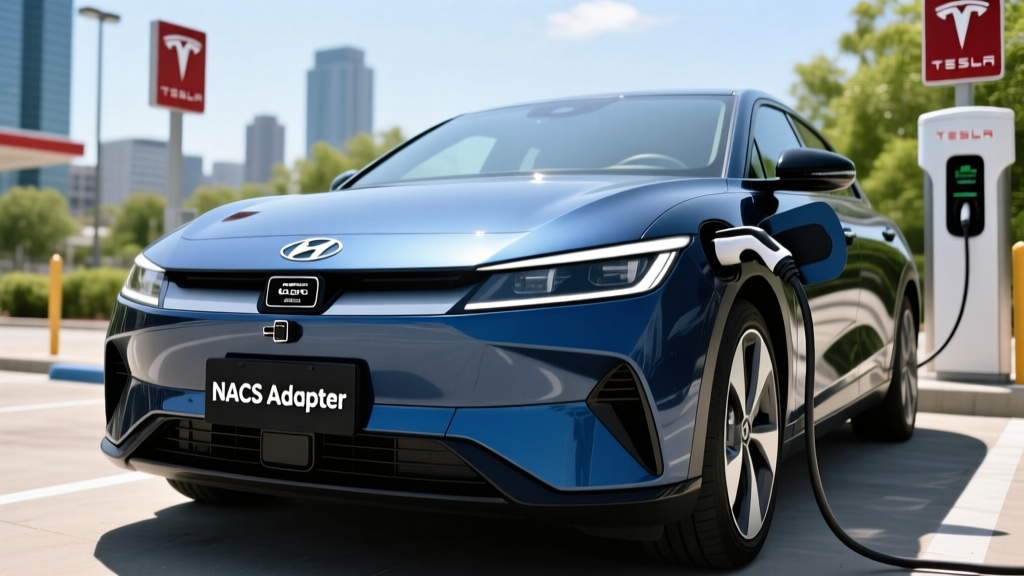
If you're researching the Rivian Max Pack kWh capacity and what it takes to actually keep a battery that large charged, you're asking the right question. The Max Pack — Rivian's largest battery option across the R1T and R1S lineup — carries a massive 149 kWh usable capacity. That delivers exceptional EPA range (up to 420 miles on the R1T Dual-Motor Max), but it also means charging logistics are fundamentally different from a smaller 75 kWh EV. You need more from your home charger, you'll spend more time at DC fast chargers unless you plan carefully, and your electrical panel may need an upgrade to support Level 2 speeds.
This guide breaks down exactly what it takes to charge a Rivian Max Pack at home and on the road — with precise kW and kWh figures, real installation costs, equipment recommendations, and per-mile cost comparisons versus gas. Whether you've already ordered a Max Pack or are weighing whether the larger battery makes sense for your lifestyle, this is the charging blueprint.
Rivian Max Pack Battery: 149 kWh by the Numbers
Before getting into charging infrastructure, here's the baseline spec you're working with. The Max Pack uses an NMC (nickel manganese cobalt) lithium-ion chemistry optimized for energy density — necessary to fit this much capacity into a truck or SUV platform without sacrificing cargo or passenger space.
| Spec | R1T Max Pack | R1S Max Pack |
|---|---|---|
| Battery Capacity (usable) | 149 kWh | 149 kWh |
| Chemistry | NMC | NMC |
| EPA Range (Dual-Motor) | ~420 mi | ~400 mi |
| EPA Range (Tri-Motor) | ~390 mi | ~370 mi |
| Max DC Fast Charge Rate | ~220 kW peak | ~220 kW peak |
| Level 2 Onboard Charger | 11.5 kW (48A) | 11.5 kW (48A) |
| Real-World Highway Range | ~330-360 mi | ~310-340 mi |
| Real-World Cold Weather (20°F) | ~280-310 mi | ~260-290 mi |
Charging Levels Explained: Speeds, kW, and Range Added Per Hour
The most critical EV literacy point: kW (kilowatts) measures power — how fast energy flows into your battery. kWh (kilowatt-hours) measures energy — the total capacity of your battery. Think of kW as the width of a hose and kWh as the size of the tank you're filling. A 149 kWh tank takes a lot longer to fill through a garden hose (Level 1) than a fire hose (DC fast charging).
| Level | Voltage / Amperage | Power (kW) | Miles of Range Added Per Hour | Time for 10-80% (approx.) |
|---|---|---|---|---|
| Level 1 (Standard Outlet) | 120V / 12A | ~1.4 kW | ~3-4 mi/hr | ~90+ hours |
| Level 2 (Home/Public AC) | 240V / 48A | 11.5 kW (max onboard) | ~28-32 mi/hr | ~9-10 hours |
| DC Fast Charging | 400V+ DC | Up to ~220 kW peak | ~450-550 mi/hr (at peak) | ~33-40 minutes |
A few critical details for Max Pack owners:
- Level 1 is impractical as a primary strategy. At ~3.5 miles of range per hour, fully replenishing a depleted Max Pack would take over 90 hours — nearly four full days. This is strictly a trickle-charge or emergency option.
- Level 2 at 11.5 kW is the daily workhorse. Rivian's onboard charger accepts up to 48 amps (11.5 kW) on Level 2. Overnight charging from 20% to 80% — roughly 90 kWh — takes about 8-9 hours, which aligns well with a typical overnight window.
- DC fast charging peaks at ~220 kW but doesn't sustain it. The charge curve tapers significantly above 80% state of charge (SoC). Expect the 10-80% session to average around 150-170 kW, which is why the total time lands around 33-40 minutes at a capable 350 kW station.
Home Level 2 Installation: Electrical Requirements, Costs, and Panel Upgrades
Charging a 149 kWh battery at home demands a properly spec'd Level 2 setup. Here's what's involved.
Electrical Requirements
To deliver the full 11.5 kW that the Rivian can accept, you need a 240V circuit rated for at least 60 amps. This follows the National Electrical Code (NEC) requirement that continuous loads (like EV charging) use no more than 80% of a circuit's rated capacity — so a 48A continuous draw requires a 60A breaker.
Key specifications your licensed electrician will evaluate:
- Circuit: Dedicated 60A, 240V breaker
- Wire gauge: 6 AWG copper (or 4 AWG aluminum) for runs up to ~50 feet; larger gauge for longer runs to prevent voltage drop
- Outlet vs. hardwired: A NEMA 14-60 receptacle offers flexibility (you can unplug the charger and take it if you move). Hardwired installations eliminate the receptacle and are preferred by some electricians for continuous high-draw applications.
- GFCI protection: NEC 2020 and later require GFCI protection for EV charging receptacles. Some chargers have built-in GFCI; confirm with your electrician to avoid nuisance tripping.
Does Your Panel Need an Upgrade?
This is where many homeowners encounter surprise costs. A 60A dedicated circuit is a significant draw. If your home has a 100A main panel (common in homes built before the 1990s), adding a 60A EV circuit may exceed your panel's capacity — especially if you also run electric dryers, ovens, or HVAC. A 200A panel is generally sufficient for most homes adding a single Level 2 charger, but your electrician will perform a load calculation per NEC Article 220 to confirm.
If a panel upgrade is needed — say from 100A to 200A — expect an additional $1,500 to $3,500 on top of the charger installation, depending on your utility's requirements and local labor rates.
Installation Cost Breakdown
| Component | Typical Range | Notes |
|---|---|---|
| Level 2 Charger (Equipment) | $400 – $750 | 48A smart charger; see picks below |
| Electrical Labor | $500 – $2,000 | Depends on run length, wall type, conduit needs |
| Materials (wire, conduit, breaker) | $150 – $500 | Longer runs and larger wire gauge increase cost |
| Permit & Inspection | $50 – $250 | Varies by municipality; some areas waive for EV installs |
| Panel Upgrade (if needed) | $1,500 – $3,500 | Only if existing panel lacks capacity |
| Total (no panel upgrade) | $1,100 – $3,500 | Most homes with 200A service |
| Total (with panel upgrade) | $2,600 – $7,000 | Homes with 100A service needing upgrade |
According to the U.S. Department of Energy, most homeowners spend between $1,000 and $2,500 for a straightforward Level 2 installation where the electrical panel has adequate capacity and the charger is located near the panel.
Connector Compatibility: NACS, CCS, and the Rivian Transition
Rivian's charging connector story has evolved significantly. Here's where things stand for 2025-2026 models and how it affects your charger and public charging choices.
| Model Year | Built-In Connector | Tesla Supercharger Access | CCS Station Access | Adapter Needed? |
|---|---|---|---|---|
| 2022-2024 | CCS1 | Via Rivian-provided NACS adapter | Native (no adapter) | NACS adapter for Superchargers |
| 2025+ | NACS (native) | Native (no adapter) | CCS1 adapter required | CCS1 adapter for non-Tesla DCFC |
What this means for your home charger: Most Level 2 home chargers sold in 2025-2026 ship with a J1772 connector (the North American AC standard). Rivian vehicles include a J1772-to-NACS adapter in the glovebox, so any standard Level 2 charger will work at home regardless of your model year. For hardwired installations, confirm the connector type with your charger manufacturer.
For public DC fast charging: If you have a 2025+ Rivian with native NACS, you'll plug directly into Tesla Superchargers (now widely open to NACS-equipped non-Tesla EVs via Magic Dock or native cable). For Electrify America, EVgo, and other CCS networks, you'll need a CCS1-to-NACS adapter — most automakers, including Rivian, are providing these or making them available for purchase. Always carry your adapter on road trips.
DC Fast Charging the Max Pack: Real-World Times and Charge Curve Reality
The 149 kWh Max Pack is a large battery, and charging speed matters enormously on road trips. Here's what to actually expect.
Rivian quotes a peak DC fast-charge rate of approximately 220 kW. At that rate, you're adding roughly 500+ miles of range per hour — but that peak rate only holds for a portion of the session. The charge curve looks roughly like this:
- 10-30% SoC: Ramp-up phase. The battery management system (BMS) warms the pack and ramps to peak rate. Expect 100-180 kW.
- 30-60% SoC: Peak sustain phase. This is where you'll see 200-220 kW if the station can deliver it and the battery is preconditioned.
- 60-80% SoC: Taper begins. Rate drops to ~120-160 kW as the BMS protects cell longevity.
- 80-100% SoC: Sharp taper. Rate drops below 50 kW. Charging from 80-100% can take as long as 10-80%. Never plan road-trip stops that require charging past 80% unless it's your final destination.
Real-world 10-80% charging times for the Max Pack:
- At a 350 kW CCS/NACS station (with preconditioning): ~33-38 minutes
- At a 150 kW station: ~50-58 minutes
- At a 50 kW CHAdeMO/legacy station: ~2.5-3 hours
Cost to Charge: Home vs. Public vs. Gas Comparison
With a 149 kWh battery, cost per kWh matters a lot. Here's how the economics break down across common scenarios.
| Scenario | Rate | Cost for Full 149 kWh | Cost Per Mile (est. 3.0 mi/kWh) |
|---|---|---|---|
| Home Off-Peak (Time-of-Use) | $0.08-0.12/kWh | $11.92 – $17.88 | $0.03 – $0.04 |
| Home Standard Rate | $0.14-0.18/kWh | $20.86 – $26.82 | $0.05 – $0.06 |
| Public Level 2 (ChargePoint, etc.) | $0.25-0.40/kWh | $37.25 – $59.60 | $0.08 – $0.13 |
| DC Fast Charging (EA, EVgo) | $0.35-0.55/kWh | $52.15 – $81.95 | $0.12 – $0.18 |
| Tesla Supercharger (varies) | $0.25-0.40/kWh | $37.25 – $59.60 | $0.08 – $0.13 |
| Gas Truck (20 MPG, $3.50/gal) | $0.175/mile | — | $0.175 |
| Gas Truck (15 MPG, $3.50/gal) | $0.233/mile | — | $0.233 |
The takeaway: home charging is where the economics win decisively. At off-peak residential rates, you're paying roughly 3-4 cents per mile — about one-fifth the cost of a comparable gas truck. Even at standard residential rates, you're at 5-6 cents per mile. Public DC fast charging narrows the gap considerably, and in high-cost states like California, some public chargers can approach or exceed gas-truck cost per mile.
For a Max Pack owner driving 12,000 miles annually and charging primarily at home on a time-of-use plan, annual fuel cost lands around $360-$480. A comparable gas truck at 18 MPG averaging $3.50/gallon would cost roughly $2,330. That's a savings of nearly $1,900 per year on energy alone.
Recommended Home Level 2 Chargers for the Rivian Max Pack
Given the Max Pack's 11.5 kW onboard charger and 149 kWh capacity, you want a Level 2 unit that can deliver the full 48 amps. Here are top picks as of 2026:
ChargePoint Home Flex
- Power: Up to 12 kW (50A) — configurable down to 16A
- Connector: J1772 (23-ft cable)
- Smart Features: Wi-Fi, scheduling, energy tracking, Alexa integration
- Price: ~$550-$650
- Best For: Flexibility across circuit sizes; robust app
Wallbox Pulsar Plus
- Power: Up to 11.5 kW (48A)
- Connector: J1772 (25-ft cable)
- Smart Features: Wi-Fi + Bluetooth, Power Sharing (for dual-charger setups), load management
- Price: ~$450-$550
- Best For: Budget-conscious buyers; compact form factor
Emporia Level 2 EV Charger
- Power: Up to 11.5 kW (48A)
- Connector: J1772 (24-ft cable)
- Smart Features: Wi-Fi, real-time energy monitoring, integrates with Emporia home energy system
- Price: ~$400-$450
- Best For: Energy monitoring enthusiasts; solar-integrated homes
Tesla Wall Connector (NACS homes)
- Power: Up to 11.5 kW (48A)
- Connector: NACS native (24-ft cable)
- Smart Features: Wi-Fi, OTA updates, Power Sharing, load management
- Price: ~$425-$475
- Best For: 2025+ Rivian owners (native NACS); multi-EV households with Tesla
Any of these chargers will deliver the full 11.5 kW your Rivian can accept. The choice comes down to connector preference (J1772 vs. NACS), smart features you value, and cable length needs based on your garage or driveway layout. All carry UL certification — never buy a non-certified charger, regardless of price.
Safety, Code, and Best Practices for Max Pack Home Charging
A 60A continuous circuit is one of the largest electrical loads in a residential setting. Follow these guidelines:
- Dedicated circuit only. Never share the EV charging circuit with other appliances. The NEC requires a dedicated breaker for EVSE (Electric Vehicle Supply Equipment).
- Outdoor-rated equipment. If your charger is installed outside (driveway, carport), ensure both the charger and the receptacle carry an outdoor/NEMA 4 rating. Indoor-rated units are not sealed against rain, dust, or temperature extremes.
- Surge protection. Consider a whole-home surge protector at your panel, especially in areas with frequent lightning. A $200-$400 investment protects your charger, your vehicle's onboard charger, and other electronics.
- Cable management. A 25-foot cable carrying 48A is heavy and stiff. Use a wall-mounted cable organizer to prevent tripping hazards and connector damage.
- Charge scheduling. Use your charger's app or the Rivian app to schedule charging during off-peak hours (typically 10 PM – 6 AM on time-of-use plans). This can cut your per-kWh cost by 30-50% and reduces grid strain.
- Don't routinely charge to 100%. NMC batteries last longest when kept between 20-80% SoC for daily use. Set your Rivian's charge limit to 80-85% for daily driving and only charge to 100% before long road trips. Rivian's battery warranty covers 8 years/175,000 miles with a minimum 70% capacity retention threshold.
Frequently Asked Questions
How much does it cost to install a home EV charger for a Rivian Max Pack?
For a straightforward installation with an adequate 200A panel and a short wire run, expect $1,100 to $3,500 total (equipment, electrician, materials, and permit). If your home has a 100A panel that needs upgrading to 200A, add $1,500 to $3,500, bringing the total to $2,600-$7,000. Always get multiple quotes from licensed electricians and confirm permits are included.
How fast will each charging level add range to the Max Pack?
Level 1 (120V): ~3-4 miles per hour — impractical as a primary strategy. Level 2 (240V, 48A): ~28-32 miles per hour — sufficient for overnight replenishment of daily driving. DC Fast Charging: at peak rates (~220 kW), you can add 100+ miles in roughly 12-15 minutes during the 30-60% SoC window. The full 10-80% session takes approximately 33-40 minutes at a 350 kW station.
Which connector and charger is compatible with my Rivian?
For home Level 2 charging, any J1772 charger works with all Rivian model years (2025+ models use the included J1772-to-NACS adapter). If you have a 2025+ Rivian with native NACS, a Tesla Wall Connector with NACS plug is also an option. For DC fast charging, 2022-2024 models use CCS1 natively and need a NACS adapter for Tesla Superchargers. 2025+ models use NACS natively and need a CCS1 adapter for non-Tesla DC networks.
How much does charging the Max Pack cost per mile versus a gas truck?
At home on off-peak electricity ($0.10/kWh), you'll pay approximately $0.03-$0.04 per mile — roughly one-fifth the cost of a gas truck getting 18 MPG at $3.50/gallon ($0.19/mile). At public DC fast chargers ($0.40-$0.55/kWh), cost rises to $0.13-$0.18 per mile, which narrows the gap significantly. The economics strongly favor home charging as your primary strategy.
What electrical upgrades might I need for a 48A Level 2 charger?
You need a dedicated 60A, 240V circuit. The most common upgrade is a panel replacement from 100A to 200A service, which costs $1,500-$3,500. Your electrician will perform a NEC Article 220 load calculation to determine if your existing panel can handle the additional 60A draw. Homes with 200A or larger panels and gas appliances (rather than electric) rarely need an upgrade. Older homes, all-electric homes, or homes with added loads (hot tubs, workshops) are more likely to need one.