Why the Rivian Amazon Van's Range Changes the Charging Conversation
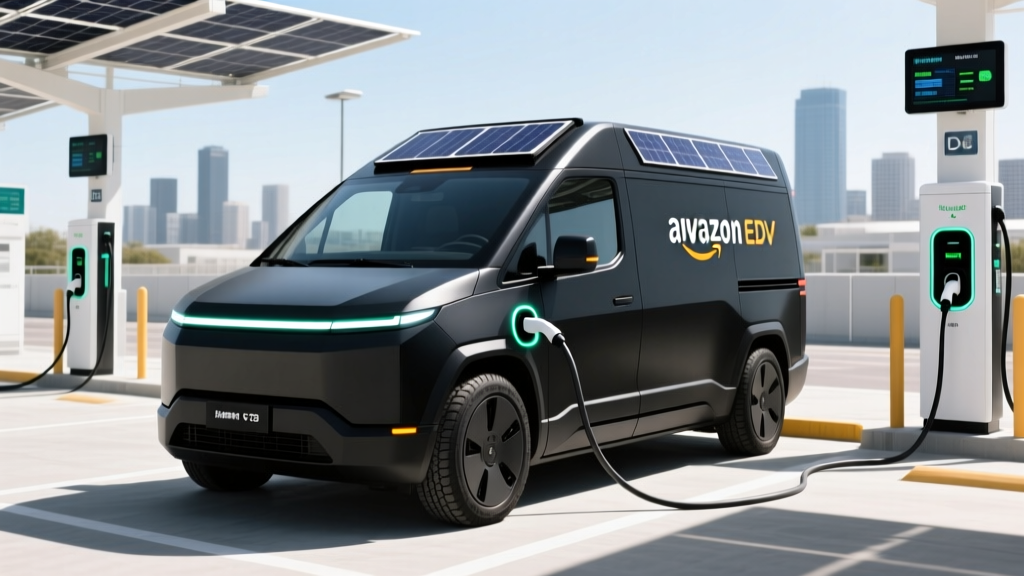
If you've seen a boxy blue-and-gray electric delivery van gliding through your neighborhood, you've likely spotted the Rivian Electric Delivery Van (EDV) — the purpose-built fleet vehicle Rivian manufactures exclusively for Amazon. With a curb weight north of 7,000 pounds and a battery pack dwarfing most consumer EVs, the EDV forces a rethink of everything from depot wiring to public fast-charging expectations. Understanding the Rivian Amazon van range and its charging architecture isn't just relevant for fleet managers — it's a masterclass in what large-battery EV ownership actually demands from the grid, the garage, and the wallet.
This guide breaks down the EDV's real-world range and efficiency, then zooms out into a complete home and depot charging blueprint that applies whether you're wiring up a Rivian R1T, a future commercial van, or any large-pack EV.
EPA-equivalent estimate: ~150 miles (varies by step-in body configuration). Real-world urban delivery routes with frequent stops and regen: 120–145 miles. Highway or cold-weather (below 35°F) routes: expect 95–115 miles due to aerodynamic drag, cabin heating, and battery chemistry limitations at low temperatures. Amazon has publicly noted some vans achieve up to 150 miles on optimized routes.
Charging Levels Explained: kW, Miles per Hour, and What They Mean
Before wiring anything, you need to internalize the single most important distinction in EV charging: kW (kilowatts) measures power — how fast energy flows. kWh (kilowatt-hours) measures energy — how much the battery holds. A 150 kW charger doesn't put 150 kWh into your battery; it delivers energy at a rate of 150 kilojoules per second. The larger the battery (in kWh), the longer any given kW rate takes to fill it.
| Level | Voltage / Amps | Power (kW) | Miles of Range Added per Hour | Best For |
|---|---|---|---|---|
| Level 1 | 120V / 12–16A | 1.4–1.9 kW | 3–5 mi/hr (sedan) / 1–2 mi/hr (large van) | Overnight trickle, PHEVs, emergencies |
| Level 2 | 240V / 16–80A | 3.8–19.2 kW | 12–60+ mi/hr depending on vehicle acceptance | Home daily charging, depot overnight |
| DC Fast Charging | 400–800V DC | 50–350+ kW | 150–1,000+ mi/hr (peak) | Road trips, fleet mid-shift top-ups |
For a vehicle with a ~140 kWh battery like the EDV-700, Level 1 is essentially useless (adding perhaps 1–2 miles of range per hour). Level 2 at 11.5 kW (a common 48A home circuit) adds roughly 15–20 miles per hour to a large van — meaning a full 10–100% charge takes 8–10 hours. DC fast charging at 150+ kW can take a large-pack van from 10% to 80% in approximately 35–45 minutes, depending on the charge curve taper.
How Much Does It Cost to Install a Home EV Charger?
Home Level 2 installation costs vary dramatically based on your electrical panel's capacity, the distance from panel to charger location, and local permitting fees. Here's a realistic breakdown for a typical 240V / 48A (11.5 kW) hardwired installation:
| Cost Component | Typical Range | Notes |
|---|---|---|
| Level 2 Charger Equipment | $400 – $750 | Smart Wi-Fi-enabled units; dumb units from $250 |
| Electrician Labor | $500 – $2,000 | Depends on run length, wall material, conduit needs |
| Electrical Permit | $50 – $200 | Required in most US jurisdictions |
| Panel Upgrade (if needed) | $1,500 – $4,000 | Older 100A panels often need upgrade to 200A |
| Total (no panel upgrade) | $950 – $2,950 | Most homes with 200A service |
| Total (with panel upgrade) | $2,450 – $6,950 | Common in pre-1990 homes |
If your home has a 100-amp electrical panel — common in houses built before the 1990s — adding a 48A (11.5 kW) EV charger will likely exceed your panel's safe load capacity. An electrician will perform a load calculation per NEC Article 220. Don't skip this step: an overloaded panel is a fire hazard, and your insurance company may deny claims if unpermitted work is discovered. Budget for a 200A upgrade if your electrician flags it.
Which Connector Is Compatible with Your EV?
The connector landscape has shifted significantly. As of 2025–2026, the North American Charging Standard (NACS) — originally Tesla's proprietary connector — has been adopted by Ford, GM, Rivian, Volvo, BMW, and most major automakers. Here's where things stand:
| Connector | Vehicles Using It (2026) | Adapter Needed? |
|---|---|---|
| NACS (Tesla-style) | Tesla (all), Rivian (2025+), Ford (2025+), GM (2025+), Volvo, BMW, others | CCS-to-NACS adapter for older CCS vehicles at Tesla Superchargers |
| CCS1 (Combo) | Hyundai, Kia, VW, older Rivian/Ford/GM models (pre-NACS switch) | NACS-to-CCS adapter to use Tesla Superchargers |
| CHAdeMO | Nissan Leaf (legacy), Mitsubishi Outlander PHEV | Limited DCFC availability; no adapter to NACS for DC |
For the Rivian EDV: The Amazon delivery van uses a proprietary fleet charging interface at Amazon depots, but consumer-facing Rivian vehicles (R1T, R1S, and upcoming R2) have transitioned to NACS as of the 2025 model year. If you own a 2022–2024 Rivian with CCS1, Rivian provides a NACS adapter for Supercharger access. Always verify your vehicle's specific charge port before purchasing home equipment.
Cost to Charge: Per-Mile Economics vs. Gasoline
Electricity pricing varies by region, time of day, and whether you're charging at home or on a public DC fast-charger. Here's a realistic cost comparison using national averages as of early 2026:
| Scenario | Rate ($/kWh) | Cost to Add 100 Miles* | Cost per Mile |
|---|---|---|---|
| Home (off-peak utility rate) | $0.08 – $0.14 | $2.40 – $4.20 | $0.024 – $0.042 |
| Home (national avg. residential) | $0.16 – $0.18 | $4.80 – $5.40 | $0.048 – $0.054 |
| Public Level 2 (network pricing) | $0.25 – $0.49 | $7.50 – $14.70 | $0.075 – $0.147 |
| DC Fast Charger (EA, EVgo, etc.) | $0.35 – $0.60 | $10.50 – $18.00 | $0.105 – $0.180 |
| Gasoline (25 MPG avg., $3.40/gal) | — | $13.60 | $0.136 |
*Based on a vehicle consuming ~3.0 kWh per 10 miles (30 kWh/100mi), typical for a midsize SUV or large sedan. Large vans like the EDV consume closer to 4.5–5.5 kWh/10mi, scaling costs proportionally.
The takeaway: home charging at off-peak rates delivers per-mile fuel costs at roughly one-quarter to one-third the cost of gasoline. Public DC fast charging, however, can approach or even exceed gas costs per mile — making home charging infrastructure a financial necessity, not a luxury.
Charging Time Examples: What to Expect with Common Battery Sizes
Charge time depends on battery capacity (kWh), the charger's power output (kW), and the vehicle's charge curve — the rate at which the battery accepts power, which tapers significantly above 80% State of Charge to protect cell longevity.
- Level 2 @ 11.5 kW: 0–100% in ~5.5 hours
- DC Fast @ 150 kW peak: 10–80% in ~20 minutes
- DC Fast @ 50 kW: 10–80% in ~50 minutes
- Level 2 @ 11.5 kW: 0–100% in ~9 hours
- DC Fast @ 200 kW peak: 10–80% in ~28 minutes
- DC Fast @ 50 kW: 10–80% in ~85 minutes
- Level 2 @ 11.5 kW: 0–100% in ~12+ hours
- Level 2 @ 19.2 kW (80A): 0–100% in ~7.5 hours
- DC Fast @ 150 kW: 10–80% in ~40–50 minutes (curve-dependent)
Charge curve reality: Peak kW ratings are not sustained. A vehicle advertising "200 kW DC fast charging" may only hold that rate between 10–30% SoC, then taper to 150 kW, then 100 kW, then 50 kW as it approaches 80%. The 10–80% time is the most useful real-world metric — it's what you'll experience on a road-trip stop.
Equipment Recommendations: Chargers That Deliver
Here are proven Level 2 chargers suited for homes and small fleet depots, selected for reliability, smart features, and connector flexibility:
- Power Output: Up to 12 kW (50A) / configurable down to 16A
- Connector: NACS (2025+ models) or CCS1/J1772
- Cable Length: 23 feet
- Smart Features: Wi-Fi, app scheduling, utility demand-response integration
- Price: ~$550–$650
- Power Output: Up to 11.5 kW (48A)
- Connector: NACS native; J1772 adapter included on Universal model
- Cable Length: 24 feet
- Smart Features: Wi-Fi, OTA updates, Power Sharing for multi-unit installs
- Price: ~$450–$600
- Power Output: Up to 11.5 kW (48A)
- Connector: J1772 (NACS adapter available separately)
- Cable Length: 24 feet
- Smart Features: Wi-Fi, energy monitoring, solar integration, load management
- Price: ~$350–$400 (best value pick)
- Power Output: Up to 10 kW (40A)
- Connector: J1772 (NACS version available)
- Cable Length: 24 feet
- Smart Features: OCPP-compatible, app control, extreme-cold rated (-40°F)
- Price: ~$450–$550
For homes with a Rivian (NACS-equipped 2025+), the Tesla Universal Wall Connector or ChargePoint Home Flex with NACS plug offers the most seamless experience. For mixed fleets or households with multiple EV brands, look for chargers with swappable connector heads or keep a certified adapter on hand.
Safety, Electrical Code, and Installation Best Practices
EV charging draws sustained high current for hours — more like an electric furnace than a phone charger. Cutting corners on safety is not an option. Here's what proper installation requires:
- Dedicated Circuit: Your EV charger must be on its own dedicated breaker — not shared with other outlets or appliances. A 48A charger requires a 60A breaker per NEC 80% continuous-load rule.
- GFCI Protection: NEC 2020 and later require GFCI protection for outdoor receptacles used for EV charging. Hardwired installations may have different requirements — your electrician will determine compliance per local code.
- Outdoor Rating: If your charger is mounted outside (garage exterior, driveway post), the unit must carry a NEMA 4 or IP65 weather rating. All recommended chargers above meet this standard.
- Wire Gauge: A 60A circuit typically requires 6 AWG copper wire (THHN in conduit) or 4 AWG for longer runs to minimize voltage drop. Your electrician will calculate this based on run distance.
- Permit and Inspection: Most municipalities require an electrical permit and post-installation inspection. This protects you legally and ensures your homeowner's insurance remains valid. Typical permit cost: $50–$200.
Frequently Asked Questions
How much does it cost to install a home EV charger?
A standard 240V / 48A Level 2 home charger installation typically costs $950–$2,950 when no panel upgrade is needed (equipment + electrician labor + permit). If your home requires a 200A panel upgrade — common in pre-1990 construction — total costs can reach $2,450–$6,950. Always get 2–3 quotes from licensed electricians and verify they include permit costs.
How fast will each charging level add range?
Level 1 (120V) adds roughly 3–5 miles per hour for a sedan, or just 1–2 for a large van. Level 2 (240V, 48A / 11.5 kW) adds 25–40 miles per hour for most consumer EVs and 15–20 for heavy commercial vans. DC fast charging at 150 kW can add 150–400+ miles per hour at peak rates, but tapers significantly above 80% SoC.
Which connector/charger is compatible with my EV?
As of 2026, most new EVs sold in North America use the NACS connector (Tesla's standard, now open). Vehicles from 2022–2024 may still have CCS1. CHAdeMO is limited to legacy Nissan Leaf and Mitsubishi models. Check your vehicle's charge port or owner's manual, and purchase a home charger with the matching connector — or use a manufacturer-approved adapter.
How much does charging cost per mile vs. gas?
Home charging at average residential rates ($0.16–$0.18/kWh) costs roughly $0.05–$0.054 per mile for a typical EV — about one-third to one-quarter the cost of gasoline at $3.40/gallon and 25 MPG. Off-peak home rates can push this below $0.03/mile. Public DC fast charging at $0.35–$0.60/kWh approaches or exceeds gasoline costs per mile.
What electrical upgrades might I need?
The most common upgrade is a panel replacement from 100A to 200A service ($1,500–$4,000), needed when your existing panel can't handle the continuous 48A load alongside normal household circuits. Other potential upgrades include adding a sub-panel near the garage, upgrading service entrance wiring, or installing a smart load-management device (like the Emporia or Wall Connector Power Sharing) that dynamically reduces charger amperage when other circuits are in use — potentially avoiding a panel upgrade entirely.
Does the Rivian Amazon van charge differently from consumer EVs?
Yes. The EDV charges primarily at Amazon depot hubs using fleet-grade Level 2 and DC infrastructure not available to the public. The van's ~140 kWh battery requires significantly longer charge times than consumer EVs at equivalent kW rates. Amazon has invested heavily in depot charging infrastructure across its delivery network, with many sites featuring 50–150 kW DC chargers optimized for overnight and between-shift top-ups.
Sources: fueleconomy.gov (EPA efficiency data), IRS §30D Clean Vehicle Credit guidelines, Rivian official specifications.