Understanding the Chevy Equinox EV Charger Type and Connector
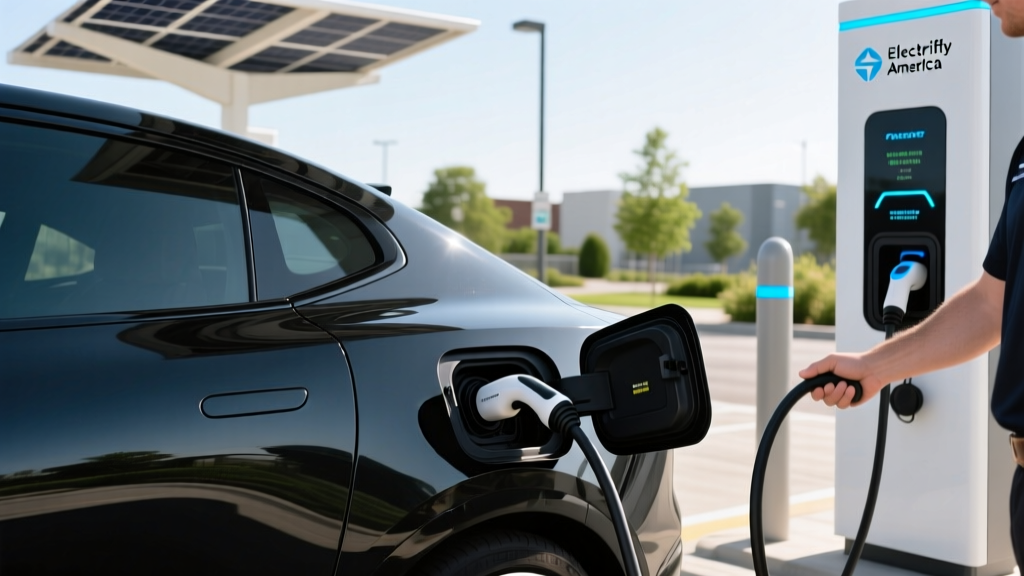
The 2026 Chevrolet Equinox EV uses the NACS (North American Charging Standard) connector — the Tesla-style plug that General Motors adopted across its EV lineup starting with the 2025 model year. If you're shopping for a home charger or planning road trips, this single fact determines which equipment you buy and which public networks you can use without an adapter.
Earlier 2024 Equinox EV models shipped with the CCS1 connector. If you own a 2024 model, GM provides a GM-approved NACS adapter for access to Tesla Superchargers. For 2025 and 2026 models, the native NACS port means no adapter is needed at Tesla Superchargers or any NACS-equipped public station.
Before we get into charger recommendations and installation costs, let's clarify the single most important distinction in EV charging: kW (kilowatts) measures power — how fast energy flows into your car. kWh (kilowatt-hours) measures energy — how much the battery holds. The Equinox EV's battery holds approximately 85 kWh of usable energy. A 19.2 kW Level 2 charger can deliver up to 19.2 kWh of energy per hour. Confusing these two units is the most common mistake new EV owners make.
Charging Levels Explained: Speeds and Range Added Per Hour
The Equinox EV supports three charging levels, each with dramatically different speeds. Here's what you can expect with the 85 kWh battery and an EPA-estimated 319 miles of range (FWD models). Real-world highway driving at 70+ mph typically yields 250–280 miles; cold weather (below 30°F) can reduce range by 15–30% depending on conditions.
| Level | Voltage / Amperage | Max Power (kW) | Miles of Range Added Per Hour | Typical Use Case |
|---|---|---|---|---|
| Level 1 | 120V / 12A | ~1.4 kW | ~3–5 miles | Emergency / overnight trickle |
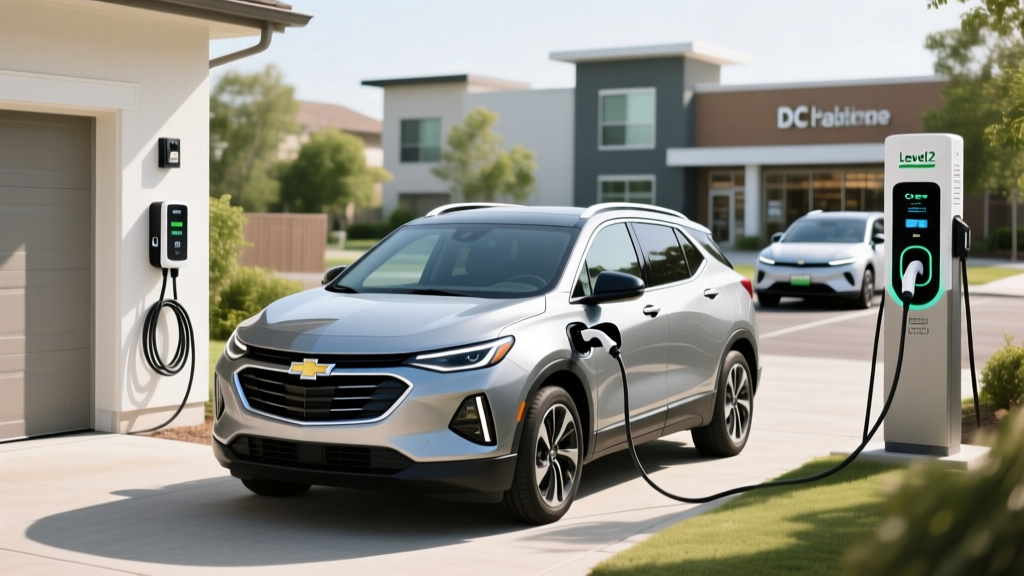
| Level 2 | 240V / 48A | ~11.5 kW | ~30–37 miles | Daily home charging |
| Level 2 (max) | 240V / 80A | ~19.2 kW | ~52–60 miles | Faster home / workplace |
| DC Fast | 400V+ architecture | ~150 kW (peak) | ~200+ miles in 20 min | Road trips |
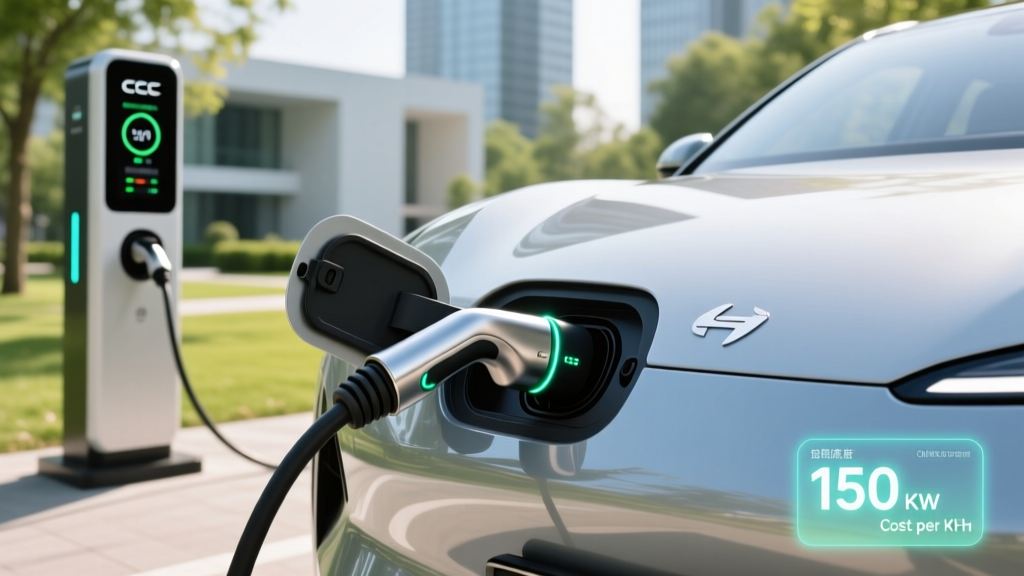
DC fast charging reality check: The Equinox EV peaks at roughly 150 kW on a capable DC fast charger, reaching 10–80% state of charge in approximately 20–25 minutes. However, charging speed follows a curve — it peaks between roughly 10–40% SoC, then tapers significantly above 80% to protect the battery. Charging from 80–100% on DC fast can take nearly as long as the 10–80% portion. For road trips, plan to charge to 80% and go.
Home Charger Installation: Electrical Requirements and Costs
Most Equinox EV owners will want a Level 2 home charger on a 240V circuit. The onboard charger accepts up to 19.2 kW (80A), but most home installations use a 40A or 48A circuit, delivering 9.6–11.5 kW — enough to fully replenish the 85 kWh battery overnight in roughly 8–10 hours.
Here's the electrical requirement breakdown:
- Minimum practical circuit: 240V / 40A (NEMA 14-50 outlet or hardwired), delivering ~9.6 kW
- Recommended circuit: 240V / 60A breaker (48A continuous), delivering ~11.5 kW
- Maximum onboard capability: 240V / 100A breaker (80A continuous), delivering ~19.2 kW — requires a 100A dedicated circuit and significant panel capacity
- Wire gauge: 6 AWG copper for 48A; 4 AWG or larger for 60A+ circuits
Panel Upgrade Considerations
Many homes built before 2000 have 100-amp electrical panels. Adding a 48A EV circuit consumes roughly 50% of that capacity, which may exceed safe load limits when combined with existing appliances (HVAC, electric range, dryer). A licensed electrician will perform a load calculation per NEC Article 220. If your panel can't support the additional circuit, a panel upgrade to 200A typically costs $1,500–$3,000 before the charger circuit is even installed.
Homes with 200A panels can almost always accommodate a 48A EV circuit without an upgrade.
| Component | Low Estimate | High Estimate | Notes |
|---|---|---|---|
| Level 2 charger (equipment) | $300 | $750 | Smart Wi-Fi chargers cost more |
| Electrician labor (standard install) | $400 | $1,200 | Varies by run length, wall type |
| Electrical permit | $50 | $250 | Required in most jurisdictions |
| Panel upgrade (if needed) | $1,500 | $3,000 | Only for 100A panels at capacity |
| Total (no panel upgrade) | $750 | $2,200 | Typical for 200A-panel homes |
| Total (with panel upgrade) | $2,250 | $5,200 | Older homes with 100A service |
Federal incentive: The IRS Residential Clean Energy Credit (§25C) offers a 30% credit on home EV charger equipment and installation, up to $1,000. This applies to the charger hardware and electrician labor. Consult a tax professional for eligibility specifics, as income limits and property requirements apply.
Connector Compatibility: NACS, CCS, and Public Charging Networks
With the 2025–2026 Equinox EV's native NACS port, your public charging access is broader than nearly any other non-Tesla EV on the road. Here's how the connector landscape maps to real-world networks:
| Connector | Native on Equinox EV? | Networks Available | Adapter Needed? |
|---|---|---|---|
| NACS (Tesla-style) | Yes (2025+) | Tesla Supercharger, Electrify America (select), EVgo (select), Rivian Adventure Network | No |
| CCS1 | No (2025+) | Electrify America, EVgo, ChargePoint, most non-Tesla DC networks | Yes — NACS-to-CCS adapter (~$150–$200) |
| CHAdeMO | No | Limited legacy stations (declining) | Not recommended — no common adapter |
Practical advice for 2024 Equinox EV owners (CCS1 port): Your vehicle charges natively at all CCS-equipped stations (Electrify America, EVgo, ChargePoint DC). To access Tesla Superchargers, you'll need GM's official NACS adapter. Carry it in your frunk at all times — Supercharger reliability generally exceeds other networks, according to multiple industry surveys.
For Level 2 public charging (shopping centers, workplaces, hotels), nearly all public Level 2 stations use a J1772 connector. The 2025–2026 Equinox EV's NACS port requires a J1772-to-NACS adapter for these stations. GM includes one with the vehicle; keep it in the car.
Recommended Level 2 Home Chargers for the Equinox EV
We evaluated chargers based on NACS native compatibility, power output, cable length, smart features, build quality, and price. All recommendations below are NACS-native (no adapter needed for your Equinox EV).
Emporia Vue Smart EV Charger (NACS)
- Power output: 11.5 kW (48A) or 19.2 kW (80A) configurable
- Cable length: 24 feet
- Smart features: Wi-Fi, scheduled charging, solar integration, energy monitoring via app
- Connector: NACS native
- Price: ~$400–$500
- Best for: Budget-conscious buyers who want smart scheduling and energy tracking
ChargePoint Home Flex (NACS)
- Power output: Up to 12 kW (50A) on a 60A circuit
- Cable length: 23 feet
- Smart features: Wi-Fi, Alexa integration, detailed session history, flexible amperage settings
- Connector: NACS native (2025+ model)
- Price: ~$550–$700
- Best for: Owners who want a well-established brand with robust app support
Tesla Wall Connector (NACS)
- Power output: Up to 11.5 kW (48A) on a 60A circuit
- Cable length: 24 feet
- Smart features: Wi-Fi, over-the-air updates, power sharing between multiple units, load management
- Connector: NACS native
- Price: ~$475
- Best for: Multi-EV households (power sharing lets two chargers share one circuit)
Grizzl-E Smart (NACS)
- Power output: Up to 11.5 kW (40A adjustable)
- Cable length: 24 feet
- Smart features: Wi-Fi, OCPP-compatible, adjustable amperage for panel-limited homes
- Connector: NACS native
- Price: ~$450–$550
- Best for: Cold-climate owners — rated to -40°F, heavy-duty build
Charging Cost: Home vs. Public vs. Gas Comparison
The Equinox EV's efficiency is rated at approximately 3.0–3.3 miles per kWh (around 100–110 MPGe combined, per fueleconomy.gov). Using that figure, here's what you'll actually spend per mile under different scenarios:
| Scenario | Rate | Cost Per Mile | Annual Cost (12,000 mi) |
|---|---|---|---|
| Home charging (off-peak utility rate) | $0.09/kWh | $0.029 | $348 |
| Home charging (national avg residential) | $0.17/kWh | $0.055 | $660 |
| Public Level 2 (ChargePoint, etc.) | $0.25–$0.35/kWh | $0.08–$0.11 | $960–$1,320 |
| DC Fast Charging (Electrify America) | $0.35–$0.55/kWh | $0.11–$0.18 | $1,320–$2,160 |
| Tesla Supercharger (NACS) | $0.25–$0.40/kWh | $0.08–$0.13 | $960–$1,560 |
| Gas equivalent (28 MPG, $3.40/gal) | $3.40/gallon | $0.121 | $1,452 |
The takeaway: if you charge primarily at home on a standard or time-of-use rate, the Equinox EV costs roughly one-third to one-half what a comparable gas SUV costs in fuel. Even exclusive DC fast charging is cost-competitive with gas in most markets, though it erodes the EV cost advantage significantly.
Money-saving tip: Many utilities offer EV-specific time-of-use (TOU) rates that drop to $0.06–$0.10/kWh between midnight and 6 AM. Set your charger's scheduled charging feature to start at midnight and you'll minimize costs while waking up to a full battery every morning.
Safety, Code, and Installation Best Practices
A Level 2 EV charger draws sustained high current for hours — more continuous load than almost any other household appliance. Proper installation isn't optional; it's a safety requirement.
- Dedicated circuit: Your EV charger must be on its own dedicated breaker. Never share a circuit with other appliances.
- GFCI protection: NEC 2023 and later require GFCI protection for all receptacles used for EV charging (including NEMA 14-50). Hardwired installations may have different requirements — your electrician will confirm local code.
- Outdoor rating: If installing outdoors (garage exterior, driveway), ensure the charger carries a NEMA 4 or NEMA 4X rating for weather resistance. All chargers recommended above meet this standard.
- Hardwired vs. plug-in: Hardwired chargers eliminate the receptacle as a failure point and may not require GFCI breakers (which can nuisance-trip). For 48A+ installations, hardwired is generally preferred.
- Permit and inspection: Most municipalities require an electrical permit for new 240V circuits. The inspection ensures code compliance and protects your home insurance coverage. Budget $50–$250 and 1–3 weeks for the process.
Always hire a licensed electrician — preferably one with EV charger installation experience. Ask for a load calculation before committing to a circuit size, and get at least two quotes. NHTSA and your local fire marshal both recommend against DIY electrical work for EV charging circuits.
Frequently Asked Questions
How much does it cost to install a home EV charger for the Equinox EV?
A typical Level 2 installation in a home with a 200A panel costs $750–$2,200 including the charger, electrician labor, and permit. If your home has a 100A panel that needs upgrading, total costs range from $2,250–$5,200. The federal §25C tax credit can offset 30% of equipment and installation costs, up to $1,000.
How fast will each charging level add range to the Equinox EV?
Level 1 (120V) adds roughly 3–5 miles per hour — too slow for daily use but adequate for overnight top-ups if your daily drive is under 40 miles. Level 2 (240V, 48A) adds 30–37 miles per hour, fully charging the 85 kWh battery in 8–10 hours. DC fast charging at 150 kW adds approximately 200 miles in 20 minutes (10–80% SoC).
Which connector and charger is compatible with my Equinox EV?
The 2025–2026 Equinox EV uses a NACS connector natively. This means direct compatibility with Tesla Superchargers and any NACS-equipped public station. For CCS stations, you'll need a NACS-to-CCS adapter. For public Level 2 (J1772), you'll need the J1772-to-NACS adapter GM includes with the vehicle. The 2024 model has a CCS1 port and needs a NACS adapter for Supercharger access.
How much does charging cost per mile compared to gas?
At home on the national average residential rate ($0.17/kWh), the Equinox EV costs about $0.055 per mile — roughly $660 per year for 12,000 miles. A comparable 28 MPG gas SUV at $3.40/gallon costs $0.121 per mile, or $1,452 annually. Home charging saves approximately $800/year. Public DC fast charging narrows the gap to $200–$500 in annual savings depending on rates in your area.
What electrical upgrades might I need for a home charger?
If your home has a 200A electrical panel (standard in most homes built after 2000), a 48A EV circuit usually installs without any panel upgrade. If you have a 100A panel — common in older homes — your electrician will perform a load calculation. If existing loads (HVAC, range, dryer) leave insufficient headroom, a panel upgrade to 200A costs $1,500–$3,000 and adds 1–2 days to the project timeline.
Can I use a Tesla Wall Connector with my Chevy Equinox EV?
Yes. The Tesla Wall Connector uses a NACS connector, which is the same native connector on the 2025–2026 Equinox EV. No adapter is required. The Wall Connector delivers up to 11.5 kW on a 60A circuit and supports Wi-Fi updates and multi-unit power sharing.