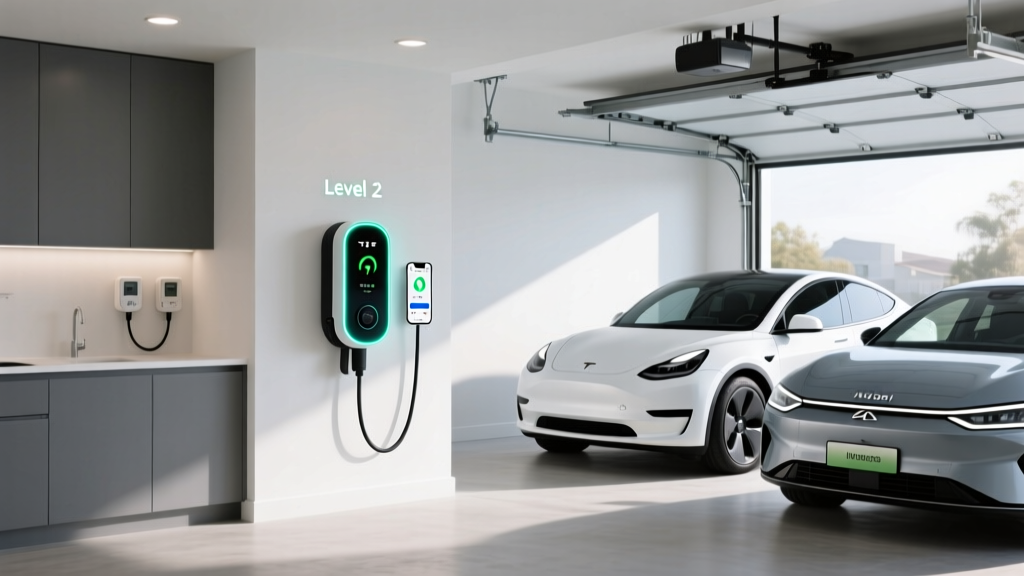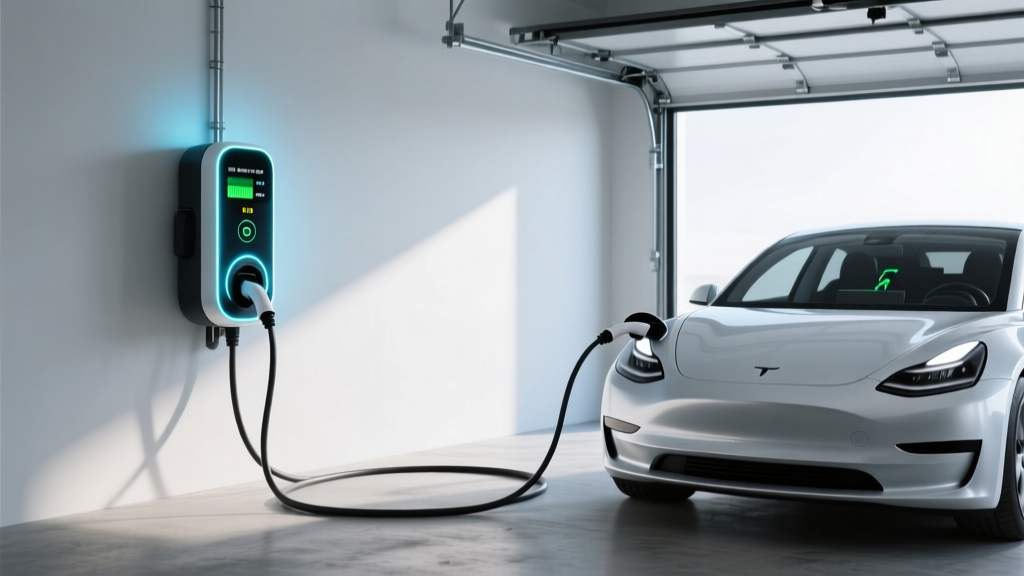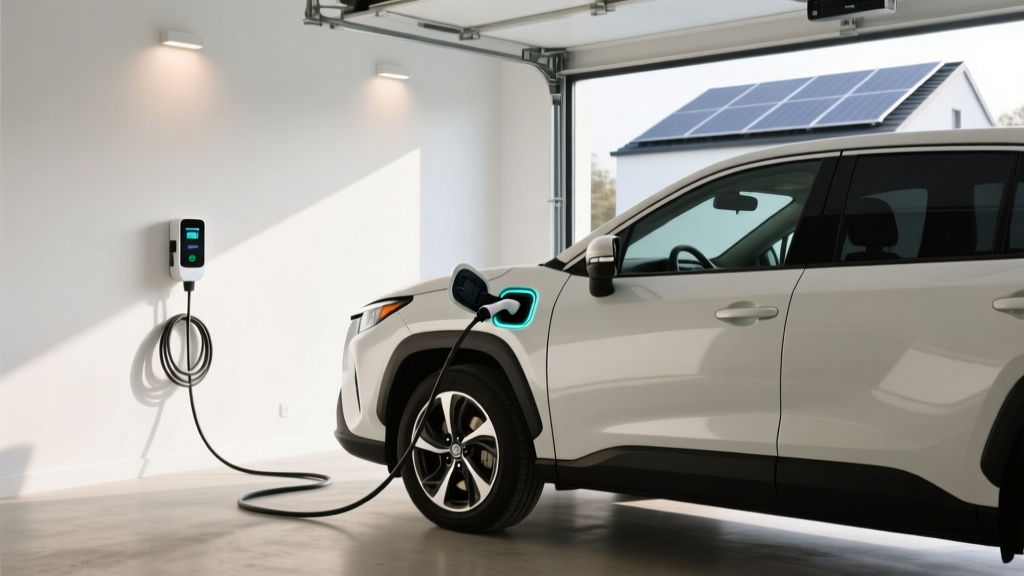
The Toyota RAV4 Prime remains one of the best-selling plug-in hybrids in America for good reason: a usable 42-mile EPA electric-only range, standard all-wheel drive, and 302 combined horsepower. But extracting the full value from that plug-in system depends entirely on how you charge it. A RAV4 Prime plugged into a standard 120V wall outlet takes over 12 hours to refill its battery. The same vehicle on a properly sized Level 2 home charger? Under three hours.
This guide walks you through exactly how each charging level affects your RAV4 Prime's electric range recovery, what home installation actually costs in 2026, which connectors and equipment to buy, and how charging cost per mile stacks up against the gas engine. Whether you've owned a RAV4 Prime for years or are researching before purchase, the numbers below will shape your daily driving experience.
RAV4 Prime Electric Range and Battery Specs
Before sizing a charger, you need to understand the energy reservoir you're filling. The current-generation RAV4 Prime uses an 18.1 kWh lithium-ion traction battery (NMC chemistry), of which roughly 14.9 kWh is usable capacity — Toyota maintains a buffer at the top and bottom to protect long-term battery health.
| Spec | Value |
|---|---|
| EPA Electric-Only Range | 42 miles |
| Real-World EV Range (highway, 70 mph) | ~34-37 miles |
| Real-World EV Range (cold, below 32°F) | ~28-32 miles |
| Battery Capacity (total / usable) | 18.1 kWh / ~14.9 kWh |
| Battery Chemistry | NMC (Nickel Manganese Cobalt) |
| Onboard Charger (AC max) | 6.6 kW |
| Combined System Horsepower | 302 hp |
| 0-60 mph | 5.7 seconds |
| EPA Combined MPGe (EV mode) | 94 MPGe |
| EPA Combined MPG (hybrid mode) | 38 MPG |
| Base MSRP (SE) | $44,615 |
| Hybrid Battery Warranty | 10 years / 150,000 miles |
Charging Levels Explained: Speeds and Range Added Per Hour
Understanding the difference between kW (power — the rate of energy flow) and kWh (energy — the total capacity of the battery) is essential. Think of kW as how fast water flows from a hose, and kWh as the size of the bucket you're filling. The RAV4 Prime's 6.6 kW onboard charger is the bottleneck for AC charging — no matter how powerful your home charger is, the car will only accept 6.6 kW maximum on AC power.
| Level | Voltage / Amps | Max Power (kW) | Time to Full Charge | Miles of EV Range Per Hour |
|---|---|---|---|---|
| Level 1 (standard outlet) | 120V / 12A | ~1.4 kW | ~12+ hours | ~3-4 mi/hr |
| Level 2 (home / public AC) | 240V / 32A | 6.6 kW (car-limited) | ~2.5 hours | ~15-17 mi/hr |
| DC Fast Charging | N/A | N/A | N/A | N/A |
Critical detail: The RAV4 Prime does not support DC fast charging. Its charge port accepts only AC power via a J1772 connector. This is typical for plug-in hybrids — the battery is small enough that Level 2 AC charging refills it quickly. For PHEV owners, a home Level 2 setup is the practical ceiling and the clear sweet spot.
Home Charger Installation: Electrical Requirements and Costs
A Level 2 home charger requires a dedicated 240-volt circuit, similar to what powers an electric dryer or oven. For the RAV4 Prime's 6.6 kW onboard charger, a 32-amp circuit (requiring a 40-amp breaker, per the 80% continuous-load rule in the National Electrical Code) is the ideal match. You can install a higher-amperage charger for future-proofing, but the RAV4 Prime won't draw more than 32 amps.
What Your Electrician Will Assess
- Electrical panel capacity: Do you have at least 40 amps of spare capacity on a 200-amp panel? Older homes with 100-amp service may need a panel upgrade.
- Circuit run distance: The farther the charger is from your panel, the more expensive the wiring (longer conduit, thicker gauge wire for longer runs).
- Permit requirements: Most jurisdictions require an electrical permit for a new 240V circuit — typically $50-$200.
- Indoor vs. outdoor: Outdoor installations require a NEMA 4-rated (weatherproof) enclosure and GFCI protection per NEC 2023 code updates.
| Component | Low Estimate | High Estimate |
|---|---|---|
| Level 2 charger (hardware) | $300 | $700 |
| Electrician labor (standard run) | $500 | $1,500 |
| Electrical permit | $50 | $200 |
| Panel upgrade (if needed) | $1,500 | $4,000 |
| Total (no panel upgrade) | $850 | $2,400 |
| Total (with panel upgrade) | $2,350 | $6,400 |
Federal Tax Credit for Home Charging Equipment
Under IRS §30C (Alternative Fuel Vehicle Refueling Property Credit), you may claim up to 30% of the cost of home charging equipment and installation, capped at $1,000. This credit is subject to income limitations and census-tract eligibility requirements. Check IRS.gov §30C guidelines for current-year rules and consult a tax professional to confirm eligibility.
Connector Compatibility: What Plugs Into a RAV4 Prime
The RAV4 Prime uses the J1772 connector for AC charging — the universal standard for all non-Tesla plug-in vehicles sold in North America. It does not have a DC fast-charge port, so NACS (Tesla), CCS1, and CHAdeMO connectors are irrelevant for this vehicle.
| Connector | Type | RAV4 Prime Compatible? | Notes |
|---|---|---|---|
| J1772 | AC Level 1 & 2 | Yes — native | Standard for all home/public AC charging |
| NACS (Tesla) | DC Fast / AC | No | Tesla Superchargers; not applicable to RAV4 Prime |
| CCS1 | DC Fast | No | BEV standard; RAV4 Prime has no DC port |
| CHAdeMO | DC Fast | No | Legacy DC standard (Nissan Leaf); not applicable |
Bottom line: Every Level 2 home charger sold in North America comes with a J1772 plug. You don't need an adapter. If you also own or plan to own a Tesla or a DC-fast-charge-capable BEV in the future, consider a charger with a swappable connector or buy a J1772-to-NACS adapter for the Tesla vehicle.
Level 2 Charger Equipment Recommendations for RAV4 Prime
Since the RAV4 Prime caps AC intake at 6.6 kW (32 amps), you don't need a 48-amp charger. However, buying a 40- or 48-amp unit gives you headroom for a future BEV without rewiring. Below are three proven options across price tiers.
Budget Pick: Emporia Level 2 Charger
- Power Output: 48A (11.5 kW max)
- Connector: J1772
- Cable Length: 24 ft
- Smart Features: Wi-Fi, energy monitoring, scheduling via app
- Price: ~$350
- Why for RAV4 Prime: Affordable, energy monitoring helps track charging cost, more than enough power.
Best Overall: ChargePoint Home Flex
- Power Output: Configurable 16-50A (up to 12 kW)
- Connector: J1772
- Cable Length: 23 ft
- Smart Features: Wi-Fi, app scheduling, Alexa integration, amperage configurable to match your circuit
- Price: ~$550
- Why for RAV4 Prime: Set to 32A to match the car exactly; future-proof to 50A for a BEV later.
Premium Pick: Grizzl-E Smart
- Power Output: 40A (9.6 kW)
- Connector: J1772
- Cable Length: 24 ft
- Smart Features: OCPP-compatible, works with utility demand-response programs
- Price: ~$500
- Why for RAV4 Prime: Built in Canada for extreme cold (-40°F rated), ideal for outdoor installs in northern climates.
Charging Cost Per Mile: Electricity vs. Gasoline
The RAV4 Prime's value proposition hinges on driving electric for daily commutes and using the hybrid gas engine only for longer trips. Here's what that actually costs per mile.
| Scenario | Rate | Efficiency | Cost Per Mile |
|---|---|---|---|
| Home charging (off-peak utility rate) | $0.12/kWh | 3.5 miles/kWh (94 MPGe) | $0.034/mi |
| Home charging (national avg. residential) | $0.17/kWh | 3.5 miles/kWh | $0.049/mi |
| Public Level 2 (network pricing) | $0.30/kWh | 3.5 miles/kWh | $0.086/mi |
| Gas engine (hybrid mode, 38 MPG) | $3.40/gallon | 38 MPG | $0.089/mi |
| Gas engine (hybrid mode, $4.00/gal) | $4.00/gallon | 38 MPG | $0.105/mi |
To maximize savings, set your charger's schedule to charge during off-peak utility hours (typically 10 PM – 6 AM, depending on your utility). A full 14.9 kWh refill at $0.12/kWh costs just $1.79 — for 42 miles of electric driving.
Charging Time Examples by Scenario
Because the RAV4 Prime's battery is small compared to a full BEV, charging times are measured in hours, not the multi-hour sessions BEV owners face. Here are real-world scenarios:
- Daily commute top-up (20 miles used, Level 1 at 1.4 kW): ~5 hours — easily replenished overnight on a standard outlet.
- Full battery depletion to full (Level 2 at 6.6 kW): ~2.5 hours — ideal for midday top-ups if you have workplace charging.
- Full battery depletion to full (Level 1 at 1.4 kW): ~12 hours — barely fits in an overnight window; not practical for daily full recharges.
- Weekend errand recovery (15 miles used, Level 2): ~1 hour — plug in when you get home, full before dinner.
The practical lesson: Level 1 is viable only if your daily electric driving is under 20 miles and you can leave the car plugged in for 10+ hours. For anyone driving the full 42-mile EV range daily, Level 2 is effectively mandatory.
Safety and Electrical Code Considerations
Home EV charging is safe when installed to code, but cutting corners creates real fire and shock risk. Key requirements your installation must meet:
- Dedicated circuit: Your Level 2 charger must be on its own dedicated breaker — never shared with other appliances. A 40-amp breaker for a 32-amp continuous load is NEC-compliant.
- GFCI protection: The 2023 NEC update requires ground-fault circuit interrupter protection for all outdoor EV charging outlets. Hardwired chargers with built-in GFCI protection satisfy this requirement.
- Outdoor rating: Any charger mounted outdoors must carry a NEMA 4 (or IP65+) rating to withstand rain, snow, and hose spray. All three chargers recommended above meet this standard.
- Cable management: Use a holster or cable retractor to keep the cord off the ground. Tripping over a charging cable in a garage or driveway is a surprisingly common injury source.
- No extension cords: Never use an extension cord with a Level 1 or Level 2 EV charger. If the cable doesn't reach, move the charger or have a new outlet installed.
Frequently Asked Questions
How much does it cost to install a home EV charger for the RAV4 Prime?
Expect $850 to $2,400 for a standard installation (equipment + electrician + permit) if your electrical panel has sufficient capacity. If your home requires a panel upgrade from 100A to 200A, add $1,500-$4,000. The IRS §30C credit may offset up to $1,000 of the total.
How fast will each charging level add range to the RAV4 Prime?
Level 1 (120V) adds roughly 3-4 miles of EV range per hour. Level 2 (240V, 32A) adds 15-17 miles per hour and can fully recharge the battery in about 2.5 hours. The RAV4 Prime does not support DC fast charging.
Which connector is compatible with my RAV4 Prime?
The RAV4 Prime uses the J1772 connector — the universal AC charging standard. Every Level 2 home charger sold in North America includes this connector natively. No adapters are needed.
How much does charging cost per mile vs. gas?
At a national average residential electricity rate of $0.17/kWh, driving in EV mode costs about $0.049 per mile. The gas hybrid engine at 38 MPG and $3.40/gallon costs $0.089 per mile. Home charging saves roughly 45-65% per mile depending on your electricity rate.
What electrical upgrades might I need?
The most common upgrade is a panel capacity increase from 100A to 200A service, needed in older homes with limited spare capacity. Your electrician will perform a load calculation (NEC Article 220) to determine if your existing panel can handle the additional 40-amp circuit. Other potential upgrades include adding a sub-panel if the run distance is long, or upgrading wiring in the garage area.
Can I just use the included Level 1 cord for daily charging?
You can, but only if your daily EV driving is under ~20 miles and the car is parked for 10+ hours. At 1.4 kW, Level 1 adds just 3-4 miles of range per hour. For drivers using the full 42-mile EV range, Level 1 cannot replenish the battery overnight and will leave you driving in hybrid (gas) mode by midday.
Does the RAV4 Prime qualify for the federal EV tax credit?
The RAV4 Prime is eligible for up to $7,500 under IRS §30D, but eligibility depends on buyer income limits, the vehicle's MSRP (must be under $80,000 for SUVs — the RAV4 Prime qualifies), battery component and critical mineral sourcing requirements, and point-of-sale transfer rules. The credit is subject to change; verify current-year rules at IRS.gov §30D and consult a tax professional before purchase.