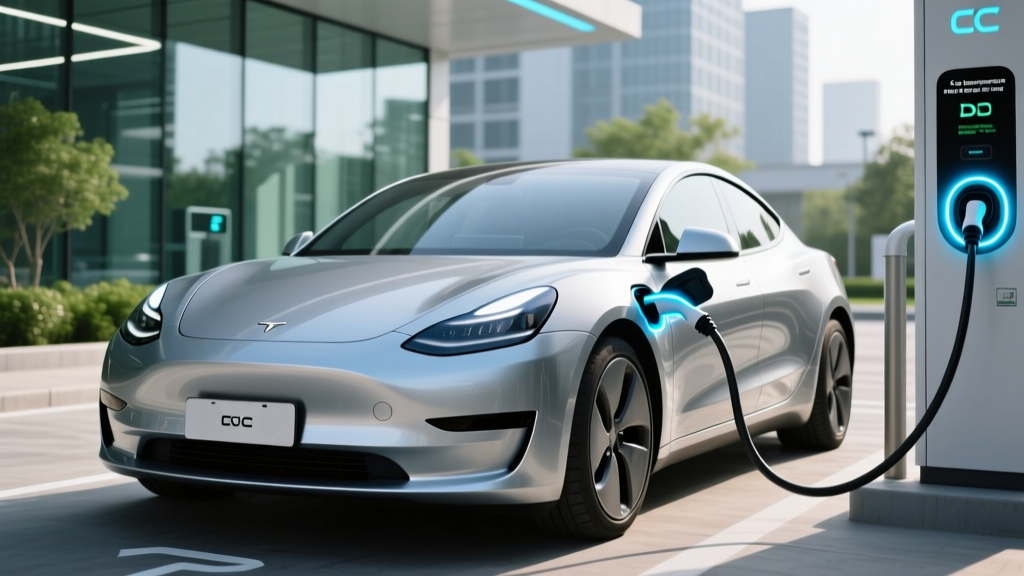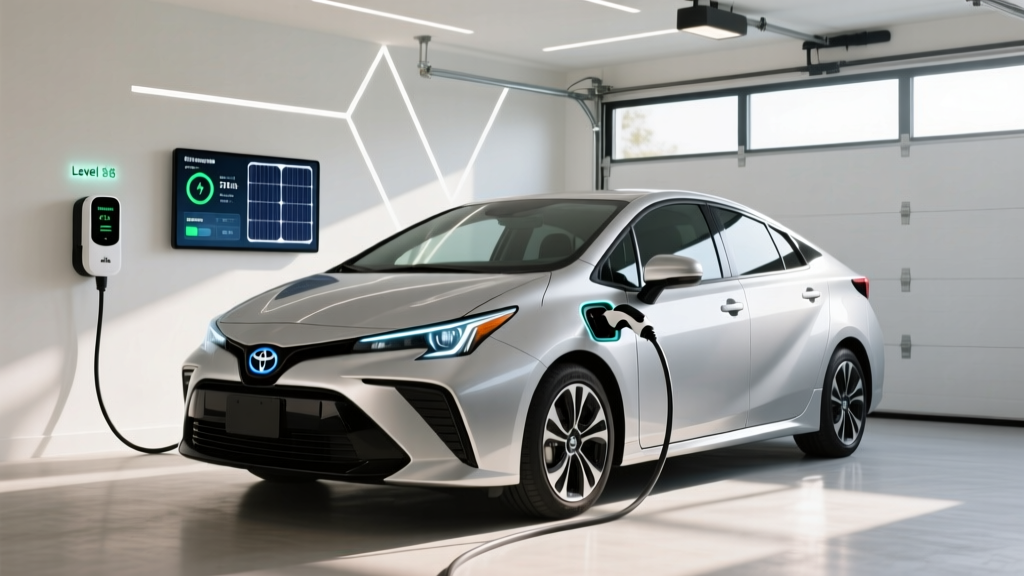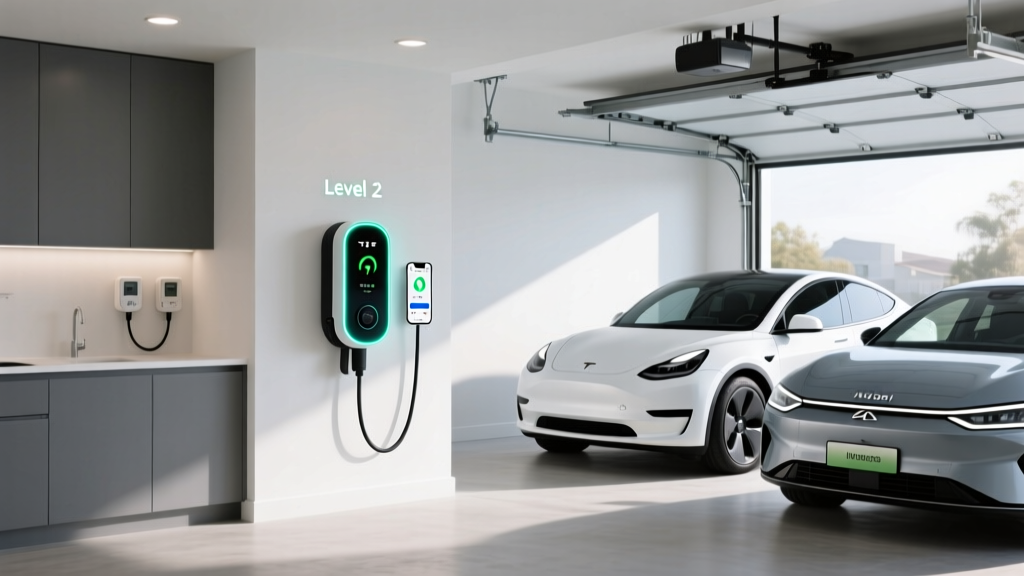
Getting a Level 2 home charger installed is the single highest-leverage upgrade any EV owner can make. Overnight charging at home eliminates daily range anxiety, avoids public charging markups, and keeps your battery in a healthier state of charge. But the cost of EV charger installation varies wildly — from a straightforward $600 setup to a $3,000+ project requiring a panel upgrade and trenching. This guide breaks down every line item so you can budget accurately and avoid surprise invoices from your electrician.
Understanding Charging Levels: What Speed Do You Actually Need?
Before pricing hardware, you need to understand what each charging level delivers. The distinction between kW (kilowatts) — the rate of power flow — and kWh (kilowatt-hours) — the total energy stored in your battery — is the single most important concept in EV ownership. Think of kW as the width of the pipe and kWh as the size of the tank.
| Level | Voltage | Power (kW) | Miles of Range Added per Hour | Best For |
|---|---|---|---|---|
| Level 1 | 120V AC | 1.4–1.9 kW | 3–5 mi/hr | PHEVs, overnight trickle, renters with no install option |
| Level 2 | 240V AC | 7.2–19.2 kW | 20–60 mi/hr | Daily home charging for all BEVs |
| DC Fast Charge | 400–800V DC | 50–350 kW | 150–800+ mi/hr (peak) | Road trips, emergency top-ups |
Most EV owners find Level 2 at 11.5 kW (48A circuit) to be the sweet spot. It fully replenishes a 75 kWh battery overnight in roughly 7 hours and costs far less to install than a 19.2 kW unit requiring heavier-gauge wiring. According to fueleconomy.gov, the average 2026 EV consumes about 30 kWh per 100 miles, meaning a 10-hour Level 2 session at 7.2 kW adds roughly 240 miles of range — enough for nearly any daily routine.
The Real Cost of EV Charger Installation: Line-Item Breakdown
The total price you'll pay breaks into four categories: the charger unit itself, electrician labor, materials (conduit, wire, breaker), and permitting. Here's what a typical 2026 installation looks like for a 48-amp hardwired Level 2 charger on a dedicated 60-amp circuit.
| Component | Low End | Typical | High End | Notes |
|---|---|---|---|---|
| Level 2 Charger Unit | $350 | $550 | $750 | 40A–48A smart chargers (ChargePoint, Wallbox, Emporia) |
| Electrician Labor | $300 | $600 | $1,200 | Varies by run length, wall type, local rates |
| Materials (Wire, Conduit, Breaker) | $100 | $250 | $500 | 6 AWG copper, 60A breaker; longer runs = more cost |
| Electrical Permit | $50 | $150 | $350 | Required in most jurisdictions; varies by municipality |
| Total (No Panel Upgrade) | $800 | $1,550 | $2,800 | Most homeowners fall in the $1,200–$2,000 range |
| Electrical Panel Upgrade (if needed) | $1,500 | $2,500 | $4,000 | Upgrading from 100A to 200A service; older homes |
When You'll Need a Panel Upgrade
If your home has a 100-amp electrical panel — common in homes built before 1990 — adding a 60-amp dedicated circuit for an EV charger may push your total load beyond safe capacity. An electrician will perform a load calculation per NEC Article 220. If your panel is maxed out, you'll need an upgrade to 200A service, adding $1,500–$4,000 to the project. This is the single biggest variable in the cost of EV charger installation and the one most online estimates conveniently omit.
Some utility companies offer rebates of $250–$750 for panel upgrades tied to EV adoption. Check with your local provider before scheduling work.
Electrical Requirements: What Your Circuit Actually Needs
A proper Level 2 installation requires a dedicated circuit — meaning no other outlets or appliances share the breaker. The National Electrical Code (NEC) requires that continuous loads (anything running 3+ hours, which includes EV charging) use no more than 80% of the circuit's rated capacity.
- 40A charger → requires a 50A breaker, 6 AWG copper wire
- 48A charger → requires a 60A breaker, 6 AWG copper wire (or 4 AWG for long runs)
- 80A charger → requires a 100A breaker, 3 AWG copper wire (rare in residential)
Hardwired installations are generally preferred over NEMA 14-50 outlets for chargers above 40A. A hardwired connection eliminates the receptacle as a potential failure point, avoids the NEC requirement for GFCI breakers on 14-50 outlets (which can cause nuisance tripping with some EVSEs), and may reduce your permit inspection friction. That said, a 14-50 outlet gives you portability if you move or want to take the charger with you.
Connector Compatibility: Will the Charger Fit Your EV?
The connector landscape shifted dramatically after 2023 when Ford, GM, Rivian, and most major automakers adopted the North American Charging Standard (NACS), originally developed by Tesla. By 2026, nearly all new EVs sold in the U.S. ship with a NACS port. If you own a pre-2025 EV with a CCS1 port, adapters are widely available.
| Connector | Brands Using It (2026) | Home Charger Support | Adapter Needed? |
|---|---|---|---|
| NACS (Tesla-style) | Tesla, Ford, GM, Rivian, Hyundai, Kia, Volvo, Polestar, BMW, Mercedes | Tesla Wall Connector, ChargePoint Home Flex (NACS), Wallbox Pulsar Plus (NACS) | No — native for most 2025+ EVs |
| CCS1 (J1772 Combo) | Pre-2025 Ford, GM, VW ID.4, older Hyundai/Kia, BMW i4/iX | ChargePoint Home Flex, Emporia Vue, Enel X JuiceBox | NACS-to-CCS adapter (~$150–$200) for Tesla Superchargers |
| CHAdeMO | Nissan Leaf (discontinued 2025), Mitsubishi Outlander PHEV (legacy) | Limited; most new home chargers don't offer CHAdeMO | Legacy only; no adapter to NACS for DC charging |
If you're buying a home charger in 2026, get a NACS-terminated unit unless you exclusively drive an older CCS vehicle. You can always use a NACS-to-J1772 adapter (~$100) for guests or a second car with a legacy port.
Charging Time Examples: How Long Does a Full Session Take?
Charging speed depends on your charger's kW output and your vehicle's onboard charger capacity. Here's how common 2026 EVs perform on a 48A (11.5 kW) Level 2 home charger, charging from 10% to 80% state of charge:
- Tesla Model Y (75 kWh battery, NMC): ~4.5 hours (10–80%) at 11.5 kW
- Ford F-150 Lightning Extended Range (131 kWh, NMC): ~8 hours (10–80%) at 11.5 kW; 19.2 kW onboard option reduces to ~5 hours
- Hyundai Ioniq 5 (84 kWh, NMC): ~5 hours (10–80%) at 11.5 kW; onboard charger limited to 10.9 kW
- Chevrolet Equinox EV (85 kWh, NMC): ~5.2 hours (10–80%) at 11.5 kW
- Toyota bZ4X (71.4 kWh, NMC): ~4.2 hours (10–80%) at 11.5 kW; onboard limited to 7.2 kW on some trims
For DC fast charging on road trips, the Hyundai Ioniq 5's 800V architecture peaks at 240 kW and hits 10–80% in approximately 18 minutes at a compatible 350 kW station. The Tesla Model Y peaks around 250 kW at V3 Superchargers but sustains that rate for only a portion of the session — the charging curve tapers significantly above 80%, which is why most road-trip charging stops target 80% rather than a full fill.
Cost to Charge: Home vs. Public vs. Gas
The economics of EV charging depend on your local electricity rate and whether you can charge during off-peak hours. The national average residential electricity rate in early 2026 sits around $0.17/kWh, but time-of-use (TOU) plans in states like California and Texas can drop off-peak rates to $0.08–$0.12/kWh. Here's a realistic cost-per-mile comparison using a 2026 Tesla Model Y (EPA-rated 31 MPGe combined, consuming ~30 kWh/100 miles):
| Scenario | Rate | Cost per 100 Miles | Cost per Mile |
|---|---|---|---|
| Home Off-Peak (TOU Plan) | $0.10/kWh | $3.00 | $0.03 |
| Home Standard Rate | $0.17/kWh | $5.10 | $0.05 |
| Public Level 2 (ChargePoint, EVgo) | $0.35/kWh | $10.50 | $0.11 |
| DC Fast Charge (Electrify America) | $0.48/kWh | $14.40 | $0.14 |
| Tesla Supercharger (average 2026) | $0.35/kWh | $10.50 | $0.11 |
| Gas Car (28 MPG combined, $3.40/gal) | $3.40/gallon | $12.14 | $0.12 |
Home charging on an off-peak plan delivers fuel costs roughly 75% lower than gasoline. Even at standard residential rates, home EV charging costs less than half what gas costs per mile. Public DC fast charging narrows the gap significantly — at $0.48/kWh, you're paying slightly more per mile than a fuel-efficient gas car. This is why home installation is the economic cornerstone of EV ownership.
Recommended Level 2 Home Chargers (2026)
These are the chargers we recommend based on reliability, smart features, and real-world performance. All units below support load-sharing (critical if you have a 200A panel and want to avoid an upgrade) and come with at minimum a 3-year warranty.
Tesla Wall Connector (Gen 4)
- Power: Up to 11.5 kW (48A)
- Connector: NACS native
- Cable Length: 24 ft
- Smart Features: Wi-Fi, OTA updates, Tesla app integration, power sharing with up to 6 units
- Price: ~$475
- Best For: Tesla owners and NACS-equipped EVs; cleanest integration with Tesla vehicles
ChargePoint Home Flex (NACS)
- Power: Up to 12 kW (50A) — adjustable down to 16A
- Connector: NACS (2025+ models); J1772 older stock
- Cable Length: 23 ft
- Smart Features: Wi-Fi, Alexa, scheduling, energy tracking, UL-listed
- Price: ~$550
- Best For: Multi-EV households; adjustable amperage lets you match your circuit
Emporia Level 2 EV Charger
- Power: Up to 11.5 kW (48A)
- Connector: NACS (2025+); J1772 with adapter
- Cable Length: 24 ft
- Smart Features: Integrates with Emporia Vue energy monitor, solar-aware scheduling, load management
- Price: ~$400
- Best For: Budget-conscious buyers with solar panels; best energy-monitoring integration
Wallbox Pulsar Plus (NACS)
- Power: Up to 11.5 kW (48A)
- Connector: NACS
- Cable Length: 25 ft
- Smart Features: Wi-Fi + Bluetooth, Power Sharing, Eco-Smart (solar matching), compact form factor
- Price: ~$550
- Best For: Tight garage spaces; smallest physical footprint of any 48A charger
Tax Credits and Utility Rebates That Reduce Your Install Cost
The federal Alternative Fuel Vehicle Refueling Property Credit (IRS Form 8911) covers 30% of the cost of home EV charger equipment and installation, up to a maximum credit of $1,000. However, this credit has significant limitations:
- It applies only to equipment placed in service at your primary residence
- The credit is non-refundable — you need sufficient tax liability to claim it
- Eligibility may depend on census-tract requirements targeting rural or low-income communities
- Consult a tax professional before assuming you'll receive the full amount
Many utility companies offer additional incentives. Pacific Gas & Electric, for example, has offered up to $750 in rebates for Level 2 installations, and some municipal utilities provide free or discounted TOU rate enrollment specifically for EV owners. Check with your utility's EV program page before scheduling installation — some rebates require pre-approval.
Frequently Asked Questions
How much does it cost to install a home EV charger?
A typical Level 2 home charger installation costs between $1,200 and $2,000 when your electrical panel has sufficient capacity. This includes a $400–$600 charger, $300–$800 in electrician labor, $150–$300 in materials, and a $50–$200 permit. If your home needs a panel upgrade from 100A to 200A service, add $1,500–$4,000 to the total.
How fast will each charging level add range?
Level 1 (120V) adds 3–5 miles of range per hour. Level 2 (240V, 48A) adds roughly 35–45 miles per hour depending on vehicle efficiency. DC fast charging can add 200+ miles in 20 minutes at peak rates, though the charge curve tapers significantly above 80% state of charge.
Which connector is compatible with my EV?
Nearly all 2025–2026 EVs use the NACS connector. Older vehicles (pre-2025) from Ford, GM, VW, and others may use CCS1. Check your vehicle's charge port or owner's manual. NACS-to-J1772 and NACS-to-CCS adapters are available for $100–$200 if you need to bridge compatibility.
How much does charging cost per mile compared to gas?
Home charging on a standard rate costs approximately $0.05/mile; on an off-peak TOU plan, it drops to about $0.03/mile. A comparable 28 MPG gas car at $3.40/gallon costs about $0.12/mile. Public DC fast charging at $0.48/kWh costs roughly $0.14/mile — slightly more than gas.
What electrical upgrades might I need?
If your home has a 100-amp electrical panel or your existing load is near capacity, you may need a 200-amp panel upgrade ($1,500–$4,000). You will also need a dedicated 50A or 60A breaker with appropriately gauged wiring (6 AWG or 4 AWG copper). Your electrician will perform an NEC Article 220 load calculation to determine requirements.
Can I install an EV charger myself?
Technically possible for experienced DIYers with 240V electrical knowledge, but strongly discouraged. Most jurisdictions require a permit and inspection for new 240V circuits. Unpermitted work can void homeowner's insurance coverage in the event of a fire and may cause issues during a home sale. Budget for a licensed electrician.