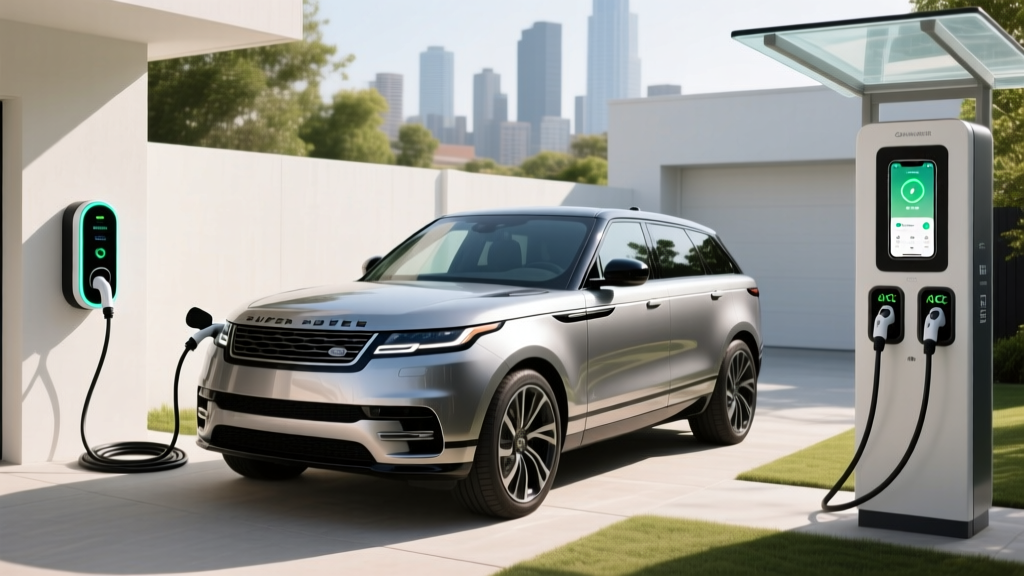
If you own or are considering a Range Rover Supercharged plug-in hybrid (PHEV), understanding how to charge it efficiently is the difference between saving real money on fuel and accidentally burning gas on every commute. The current-generation Range Rover P550e plug-in hybrid pairs a 3.0-liter inline-six with an electric motor and a 23.3 kWh (usable) lithium-ion battery, delivering an EPA-estimated 51 miles of electric-only range. That's enough to cover most daily commutes without a drop of gasoline — but only if you're set up to charge at home or work reliably.
This guide walks through every charging level, the exact electrical requirements for a home Level 2 install, connector compatibility, real costs per mile, and the equipment we recommend in 2026.
Charging Levels Explained: Level 1, Level 2, and DC Fast
Before plugging in anything, the distinction between kW (kilowatts) and kWh (kilowatt-hours) matters. kW measures power — the rate at which electricity flows into your battery. kWh measures energy — the total capacity of the battery itself. Think of kW as the width of a hose and kWh as the size of the bucket. The Range Rover PHEV's battery holds roughly 23.3 kWh of usable energy. How fast you fill that bucket depends entirely on the kW rate of your charger.
| Level | Voltage | Max Power (kW) | Miles of Range Added per Hour | 0–100% Time (23.3 kWh) |
|---|---|---|---|---|
| Level 1 (standard outlet) | 120V | ~1.4 kW | ~3–4 mi/hr | ~17–19 hours |
| Level 2 (home/public AC) | 240V | 7.2 kW (vehicle-limited) | ~18–22 mi/hr | ~3.5–4 hours |
| DC Fast Charging | — | ~50 kW (peak) | ~100+ mi/hr | ~25–35 min (10–80%) |
The Range Rover PHEV's onboard charger is rated at 7.2 kW for AC charging. That means even if you plug into a 48-amp Level 2 wall connector capable of delivering 11.5 kW, the vehicle will only draw 7.2 kW. This is a common limitation on PHEVs — the onboard charger is the bottleneck, not the wall unit. Plan your equipment purchase accordingly: a 32-amp or 40-amp Level 2 charger is sufficient and avoids overspending on capacity you can't use.
DC fast charging on the P550e uses a CCS1 connector and peaks around 50 kW. JLR has equipped the current generation with DC fast-charge capability, which is still uncommon among PHEVs (most competitors like the BMW X5 xDrive50e or Volvo XC90 Recharge are AC-only). This means on a road trip, you can top up at an Electrify America or EVgo station in roughly half an hour rather than waiting hours at a Level 2 destination charger.
Home Level 2 Installation: Electrical Requirements and Real Costs
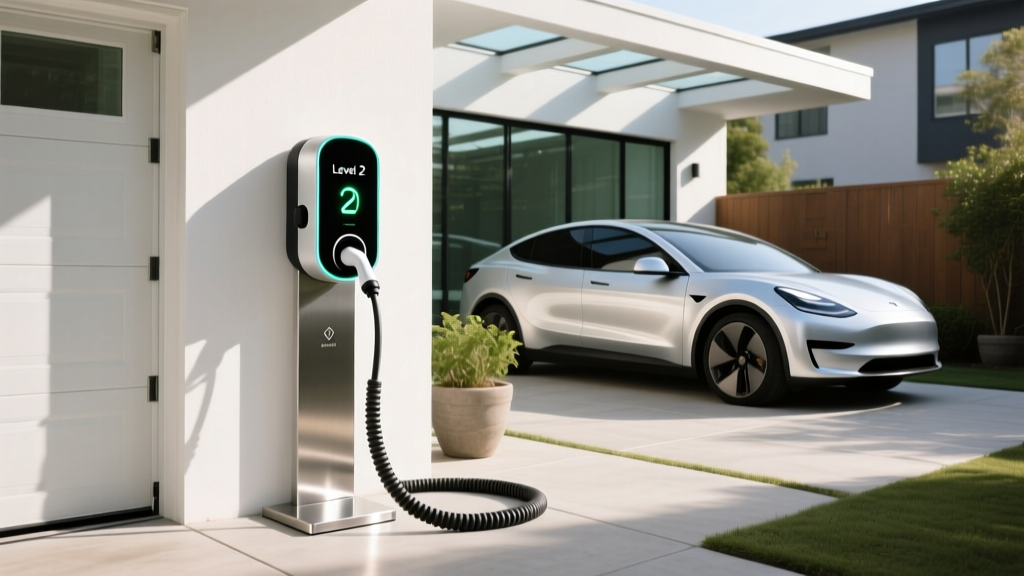
Level 1 charging from a standard 120V household outlet technically works, but at ~1.4 kW it takes nearly 18 hours to fully replenish the Range Rover's battery. For daily use, a Level 2 home charger running on a 240V circuit is the practical baseline.
Electrical Requirements
For a 40-amp Level 2 charger (the sweet spot for this vehicle), you'll need:
- A dedicated 240V / 50-amp circuit (the National Electrical Code requires circuits to be rated at 125% of continuous load, so a 40A charger needs a 50A breaker)
- A NEMA 14-50 receptacle or a hardwired connection (hardwired is preferred for outdoor installations and avoids GFCI nuisance-tripping issues common with 14-50 outlets)
- Sufficient panel capacity — ideally 200-amp service, which most modern homes have. Older homes with 100-amp panels may require a panel upgrade or a load-management device
Installation Cost Breakdown
| Item | Cost Range | Notes |
|---|---|---|
| Level 2 charger (equipment) | $350–$700 | 32A–48A smart charger, J1772 or NACS |
| Electrician labor | $400–$1,500 | Varies by run length, wall type, conduit |
| Electrical permit | $50–$200 | Required in most jurisdictions |
| Panel upgrade (if needed) | $1,500–$3,500 | 100A → 200A service; ~15–20% of homes |
| Total (no panel upgrade) | $800–$2,400 | Most common scenario |
| Total (with panel upgrade) | $2,300–$5,900 | Older homes with 100A service |
The wide range in electrician labor reflects real-world variability. If your electrical panel is in the garage next to where you'll park, expect the lower end. If the panel is in the basement and you need a 60-foot conduit run through finished walls to an outdoor parking spot, you're at the higher end. Always get at least two quotes from licensed electricians and confirm they pull a permit — unpermitted work can void homeowner's insurance claims.
Connector Compatibility: What Plugs Into a Range Rover PHEV?
The current-generation Range Rover P550e uses a CCS1 (Combined Charging System) port for both AC Level 2 and DC fast charging in North America. This is the same connector used by most non-Tesla EVs sold in the US through 2025.
| Connector Type | Compatible? | Notes |
|---|---|---|
| J1772 (AC Level 1/2) | ✅ Yes (upper portion of CCS1) | Standard for all AC charging; use a J1772-to-CCS adapter or plug directly |
| CCS1 (AC + DC Fast) | ✅ Yes — native port | Used at Electrify America, EVgo, most public DC stations |
| NACS (Tesla / North American Standard) | ⚠️ Adapter required | JLR has announced NACS adoption for future models; current P550e needs a CCS-to-NACS adapter for Tesla Superchargers |
| CHAdeMO | ❌ Not compatible | Legacy standard (Nissan Leaf, Mitsubishi); being phased out |
Starting in 2025–2026, JLR committed to adopting the NACS connector on new vehicles, but if your Range Rover PHEV was built before the switch, you'll need a CCS-to-NACS adapter (approximately $200–$250) to access Tesla Supercharger stations. For home charging, any standard J1772 Level 2 charger will plug directly into the CCS1 port's AC portion — no adapter needed.
Cost to Charge: Per-Mile Economics vs. Gasoline
The financial case for charging a PHEV at home hinges on your local electricity rate. Here's what the math looks like for the Range Rover P550e, which achieves roughly 2.0–2.3 kWh per mile in electric mode (or approximately 21–23 MPGe-equivalent efficiency on electricity, per fueleconomy.gov).
| Scenario | Rate ($/kWh) | Cost per Mile (Electric) | Cost per Mile (Gas, 19 MPG combined) |
|---|---|---|---|
| Home off-peak (utility TOU rate) | $0.08–$0.12 | $0.16–$0.28 | $0.19 (at $3.60/gal) |
| Home standard rate | $0.14–$0.18 | $0.28–$0.41 | $0.19 (at $3.60/gal) |
| Public Level 2 (ChargePoint, etc.) | $0.25–$0.49 | $0.50–$1.13 | $0.19 (at $3.60/gal) |
| DC Fast Charging (EA, EVgo) | $0.35–$0.55 | $0.70–$1.27 | $0.19 (at $3.60/gal) |
The takeaway: home charging at off-peak rates is the only scenario where electric miles cost less than gasoline miles in a heavy luxury SUV. At public DC fast-charging rates, you'll actually spend more per mile on electricity than on premium gasoline. This isn't unique to the Range Rover — it's true of most PHEVs and EVs when relying exclusively on public fast charging.
For a Range Rover PHEV owner who charges at home overnight on a time-of-use plan at $0.10/kWh and drives 40 electric miles per day, annual electric fuel cost is roughly $800–$1,100. The same 40 miles per day on premium gasoline at 19 MPG and $4.20/gallon costs about $3,230 per year. That's a potential savings of $2,000+ annually — but only if you actually plug in every night.
Recommended Level 2 Chargers for the Range Rover PHEV
Since the P550e's onboard charger maxes out at 7.2 kW (30 amps at 240V), you don't need the most powerful charger on the market. A 32-amp or 40-amp unit delivers the full charge rate with headroom. Here are three units that fit the bill:
ChargePoint Home Flex
- Power: Up to 12 kW (50A) — adjustable down to 32A/40A via app
- Connector: J1772 (plugs directly into Range Rover CCS1 port)
- Cable length: 23 feet
- Smart features: Wi-Fi, scheduling, Alexa/Google integration, energy tracking
- Price: ~$550–$650
- Best for: Flexibility — adjustable amperage means you can match it to your circuit without buying a different unit
Emporia Level 2 EV Charger
- Power: Up to 11.5 kW (48A)
- Connector: J1772
- Cable length: 24 feet
- Smart features: Wi-Fi, app-based scheduling, real-time cost tracking, solar integration
- Price: ~$350–$400
- Best for: Budget-conscious install — lowest cost among quality smart chargers
Wallbox Pulsar Plus
- Power: Up to 11.5 kW (48A)
- Connector: J1772 (NACS version also available for future-proofing)
- Cable length: 25 feet
- Smart features: Wi-Fi/Bluetooth, load balancing, Power Sharing for dual installations
- Price: ~$500–$600
- Best for: Compact form factor and load management if your panel is tight on capacity
For the Range Rover P550e specifically, the Emporia Level 2 is the value pick — at 48A it provides more power than the vehicle can use, and at ~$370 it leaves budget for a quality electrician install. If you want more granular scheduling and energy reporting, the ChargePoint Home Flex is the enthusiast choice.
Safety, Code, and Installation Best Practices
EV charging is a continuous high-draw electrical load — it runs at maximum current for hours at a time, which is harder on wiring than intermittent loads like an oven or dryer. A few non-negotiable safety points:
- Dedicated circuit: Your Level 2 charger must be on its own dedicated circuit. Do not share it with other appliances.
- GFCI considerations: The 2020 NEC requires GFCI protection for outdoor receptacles. However, many EV charger manufacturers (and experienced electricians) recommend hardwiring the charger instead of using a NEMA 14-50 outlet to avoid nuisance GFCI trips, which are common with high-draw EVSE units.
- Outdoor rating: If your charger is installed outside, ensure it's rated NEMA 4 (weatherproof). All three units above carry outdoor ratings.
- Wire gauge: A 50-amp circuit requires 6 AWG copper wire (or 4 AWG aluminum). Your electrician will size this correctly, but verify it on the permit documentation.
- Permit and inspection: Always get a permit. An inspector will verify wire gauge, breaker sizing, grounding, and GFCI compliance. This protects you and is required for any insurance claim related to electrical fire.
Charging Times for Common Scenarios
Real-world charging times for the Range Rover P550e's 23.3 kWh battery:
- Overnight at home (Level 2, 7.2 kW): 0–100% in ~3.5 hours. Plug in at 10 PM, fully charged by 1:30 AM. More than enough for a morning commute.
- Quick top-up at work (Level 2, 7.2 kW): 10–80% in ~2.5 hours. A half-day at the office replenishes most of the battery.
- DC fast charge on a road trip (50 kW peak): 10–80% in ~25–35 minutes. Note that charge speed tapers significantly above 80% — it's rarely worth waiting for a full charge at a DC station.
- Emergency Level 1 (120V, 1.4 kW): Adds ~3–4 miles of range per hour. An overnight charge yields roughly 30–35 miles — workable in a pinch but not a daily strategy.
One practical note on the DC fast-charge curve: the P550e will pull close to its 50 kW peak only between roughly 10% and 50% state of charge. Above 60%, the rate drops to 30 kW and below; above 80%, it falls to roughly 15 kW. This tapering is normal lithium-ion behavior and protects battery longevity, but it means the "10–80% in 25 minutes" spec is realistic while "0–100% in 35 minutes" is not.
Frequently Asked Questions
How much does it cost to install a home EV charger for a Range Rover PHEV?
Most homeowners spend between $800 and $2,400 for a complete Level 2 installation (charger + electrician + permit) assuming no panel upgrade is needed. If your home has an older 100-amp electrical panel, a panel upgrade to 200 amps adds $1,500–$3,500. Always get itemized quotes from at least two licensed electricians.
How fast will each charging level add range?
Level 1 (120V) adds about 3–4 miles of electric range per hour. Level 2 (240V at 7.2 kW) adds roughly 18–22 miles per hour. DC fast charging at 50 kW can add over 100 miles of range per hour, though the charge curve tapers significantly above 60–80% state of charge.
Which connector and charger is compatible with my Range Rover PHEV?
The current Range Rover P550e uses a CCS1 port. Any J1772 Level 2 charger will plug in directly for AC charging. For DC fast charging, use CCS1-equipped stations (Electrify America, EVgo). To access Tesla Superchargers, you'll need a CCS-to-NACS adapter (~$200–$250). CHAdeMO is not compatible.
How much does charging cost per mile vs. gas?
At home on an off-peak electricity rate of $0.10/kWh, the Range Rover PHEV costs roughly $0.20–$0.25 per electric mile. On premium gasoline at $4.20/gallon and 19 MPG combined, it costs about $0.22 per mile. Home charging on a time-of-use plan is the cheapest option; public DC fast charging at $0.40–$0.55/kWh costs $0.80–$1.25 per mile — significantly more than gas.
What electrical upgrades might I need?
You'll need a dedicated 240V/50A circuit with 6 AWG copper wiring. Homes with 200-amp panels typically have sufficient capacity. Homes with 100-amp service (common in pre-1990 construction) may require a panel upgrade or a smart load-management device like the Emporia VUE with automatic EV circuit throttling to avoid overloading the panel during peak usage.
Sources: U.S. EPA fueleconomy.gov for Range Rover P550e efficiency data; Land Rover USA official specifications; IRS.gov for Residential Clean Energy Credit rules.