The Real Cost to Charge at a Tesla Supercharger: 2026 Pricing
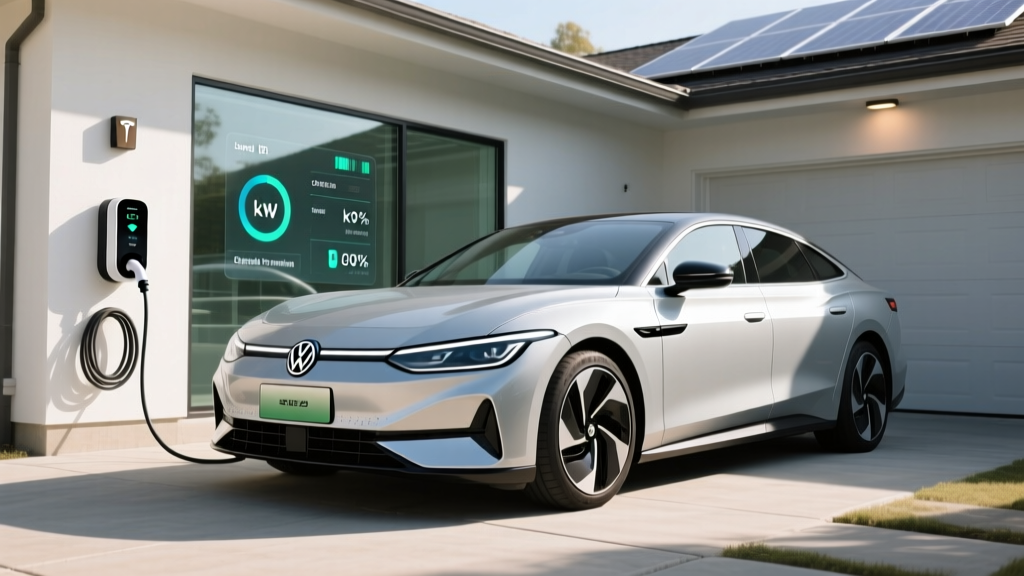
If you're weighing an EV purchase or optimizing your current charging habits, the question isn't just "where can I charge?" — it's "what does it actually cost?" The cost to charge at a Tesla Supercharger varies significantly by location, time of day, and membership tier, and comparing it against home Level 2 charging reveals a gap that can save or cost you hundreds of dollars per year.
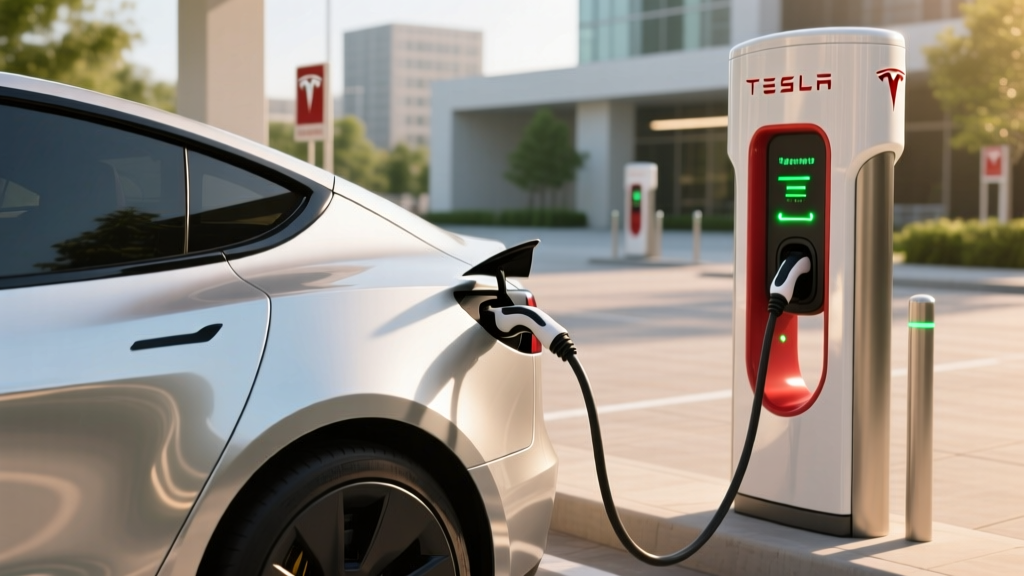
As of early 2026, Tesla Supercharger pricing in the United States typically ranges from $0.25 to $0.55 per kWh, depending on the station, local utility rates, and whether you're a Tesla vehicle owner or a non-Tesla EV driver using the network via the Tesla app. Tesla also offers a Membership plan ($12.99/month) that unlocks lower per-kWh rates for non-Tesla EVs — rates comparable to what Tesla owners receive automatically.
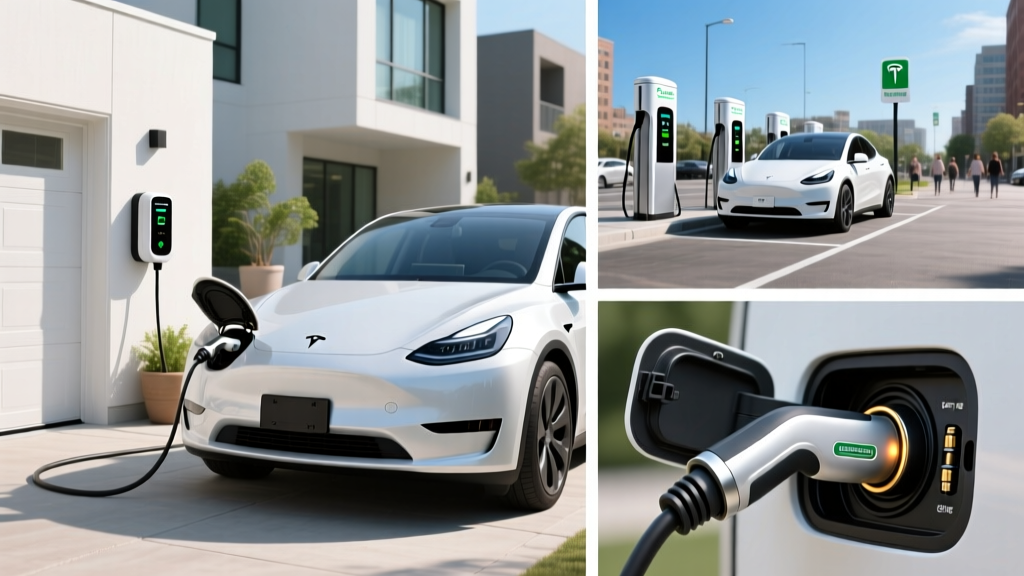
For a concrete example: charging a Tesla Model Y Long Range (75 kWh usable battery, EPA 310 miles) from 10% to 80% at a Supercharger requires roughly 52.5 kWh. At a national average Supercharger rate of $0.38/kWh, that session costs approximately $19.95. The same charge at home on a Level 2 charger at the U.S. residential average of $0.16/kWh costs just $8.40 — less than half.
Charging Levels Explained: Speed, Power, and Range Added
Before comparing costs, it's essential to understand the three charging levels available to EV owners. Power is measured in kW (kilowatts) — the rate of energy delivery — while battery capacity and energy consumed are measured in kWh (kilowatt-hours). Confusing these two is the most common EV literacy mistake. Think of kW as the speed of water flowing from a hose and kWh as the total gallons in the bucket.
| Level | Voltage / Amperage | Power (kW) | Miles of Range Added Per Hour | Best For |
|---|---|---|---|---|
| Level 1 (Standard Outlet) | 120V / 12A | 1.4 kW | 3–5 mi/hr | Overnight top-ups, PHEVs, low-mileage drivers |
| Level 2 (Home / Workplace) | 240V / 32–48A | 7.7–11.5 kW | 25–44 mi/hr | Daily home charging, overnight full charges |
| DC Fast Charging (Supercharger, EA, EVgo) | 400–800V DC | 50–350 kW | 150–1,000+ mi/hr (peak) | Road trips, quick top-ups, no home charging |
A critical real-world caveat: DC fast charging speeds are not sustained. A Tesla Model 3 Long Range may peak at 250 kW at a V3 Supercharger, but that peak only holds between roughly 10–30% state of charge (SoC). The charge curve tapers significantly above 50%, and drops sharply past 80%. This is why manufacturers and testers quote 10–80% charge times rather than 0–100% — charging the final 20% can take as long as the first 70%.
Typical 10–80% Charging Times by Battery Size
| Vehicle Example | Battery (kWh usable) | Level 2 (11.5 kW) | DC Fast (Peak kW) | 10–80% Time (DCFC) |
|---|---|---|---|---|
| Tesla Model 3 Long Range | 75 kWh (NMC) | ~4.5 hours | 250 kW (V3 Supercharger) | ~25 minutes |
| Tesla Model Y Long Range | 75 kWh (NMC) | ~4.5 hours | 250 kW (V3 Supercharger) | ~27 minutes |
| Ford F-150 Lightning Ext. Range | 131 kWh (NMC) | ~8 hours | 150 kW (CCS/NACS adapter) | ~41 minutes |
| Hyundai Ioniq 5 (Long Range AWD) | 77.4 kWh (NMC) | ~5 hours | 238 kW (350 kW station) | ~18 minutes |
| Chevrolet Equinox EV (3RS) | 85 kWh (NMC) | ~5.5 hours | 150 kW (NACS) | ~32 minutes |
Cost to Charge: Supercharger vs. Home vs. Gas Per Mile
The most useful metric for EV ownership economics isn't cost per session — it's cost per mile. This lets you directly compare against gasoline vehicles and across charging scenarios. Below, we model a Tesla Model Y Long Range (EPA 310 mi, 75 kWh battery, ~3.7 mi/kWh efficiency) against a comparable gas SUV averaging 26 MPG combined.
| Charging Scenario | Rate ($/kWh) | Cost for 10–80% (52.5 kWh) | Range Added (miles) | Cost Per Mile |
|---|---|---|---|---|
| Home Level 2 (national avg) | $0.16 | $8.40 | ~259 mi | $0.032/mi |
| Home Level 2 (off-peak TOU rate) | $0.09 | $4.73 | ~259 mi | $0.018/mi |
| Tesla Supercharger (avg) | $0.38 | $19.95 | ~259 mi | $0.077/mi |
| Tesla Supercharger (CA peak) | $0.52 | $27.30 | ~259 mi | $0.105/mi |
| Gas SUV (26 MPG, $3.45/gal) | — | $34.50 (for 259 mi) | 259 mi | $0.133/mi |
The takeaway: even at peak Supercharger pricing in expensive states, charging an EV still costs less per mile than fueling a comparable gas vehicle in most scenarios. But home charging is dramatically cheaper — typically 60–75% less than Supercharging and 75–85% less than gasoline per mile. For a driver covering 12,000 miles per year, the difference between home charging and exclusive Supercharger use is roughly $540–$870 annually.
According to fueleconomy.gov, the Tesla Model Y Long Range achieves 111 MPGe combined, translating to approximately 30 kWh per 100 miles — the efficiency figure used in these calculations.
Home EV Charger Installation: Costs, Electrical Requirements, and Panel Upgrades
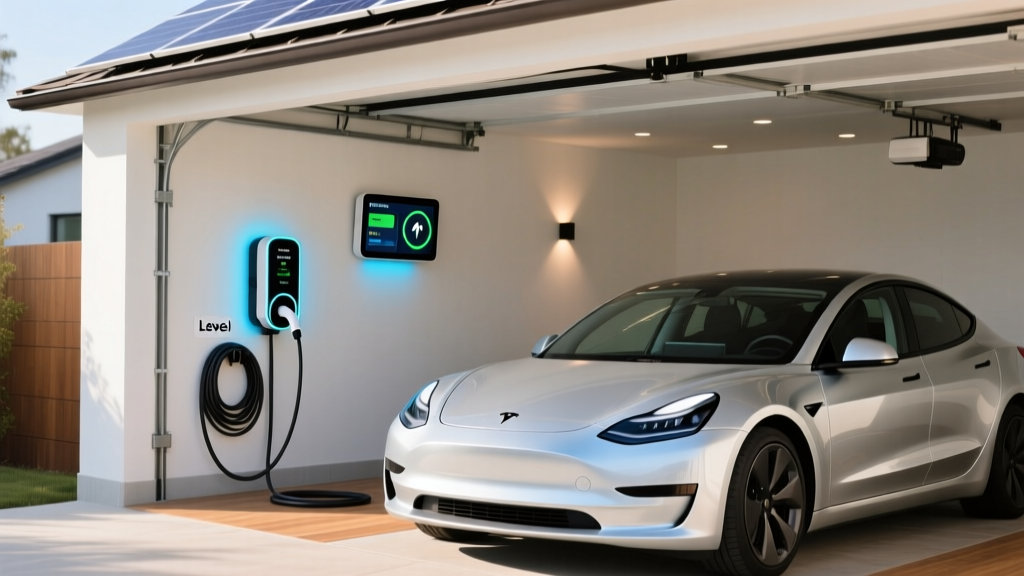
Installing a Level 2 home charger is the single highest-impact investment an EV owner can make for long-term cost savings and convenience. But the total cost extends well beyond the charger unit itself. Here's what's involved.
Electrical Requirements for Level 2 Charging
A Level 2 charger requires a 240-volt dedicated circuit, identical to what a clothes dryer or electric oven uses. The most common home installations are:
- 240V / 40A circuit → delivers up to 32A continuous (9.6 kW) — NEC requires circuits rated at 125% of continuous load
- 240V / 50A circuit → delivers up to 40A continuous (9.6 kW) or 48A (11.5 kW) on hardwired units
- 240V / 60A circuit → delivers up to 48A continuous (11.5 kW) — the maximum most residential chargers support
Most EVs have onboard chargers rated between 7.7 kW and 11.5 kW. A Tesla Model Y, for example, accepts up to 11.5 kW AC (48A), meaning a 60A circuit with a hardwired charger maximizes its Level 2 speed. A Ford F-150 Lightning's onboard charger accepts up to 19.2 kW AC (80A) on the optional Dual Connector setup, but most homes cannot support this without a significant panel upgrade.
Installation Cost Breakdown
| Component | Simple Install (panel nearby, no upgrade) | Moderate Install (long wire run, sub-panel) | Complex Install (panel upgrade required) |
|---|---|---|---|
| Level 2 Charger (Equipment) | $400–$700 | $400–$700 | $400–$700 |
| Electrician Labor | $300–$600 | $600–$1,500 | $1,500–$3,000 |
| Electrical Permit | $50–$150 | $50–$200 | $100–$300 |
| Panel Upgrade (100A → 200A) | Not needed | Not needed | $1,500–$3,500 |
| Conduit / Wire (long runs) | $0–$100 | $200–$600 | $300–$800 |
| TOTAL ESTIMATED COST | $750–$1,550 | $1,250–$3,000 | $3,800–$8,300 |
Connector Compatibility: NACS, CCS, and CHAdeMO in 2026
The connector landscape has shifted dramatically since 2023, when Ford, GM, Rivian, and most major automakers announced adoption of Tesla's North American Charging Standard (NACS) for their DC fast-charging ports. As of the 2026 model year, the vast majority of new EVs sold in the U.S. ship with a native NACS port.
| Connector | Brands Using It (2026 Models) | Adapter Needed for Tesla Superchargers? | Max DC Fast Charge Power |
|---|---|---|---|
| NACS (Tesla) | Tesla, Ford, GM, Rivian, Hyundai/Kia, BMW, Mercedes, Volvo, Polestar, Lucid, Toyota, Subaru | No — native compatibility | Up to 350 kW (V4 Superchargers) |
| CCS1 | Older models (pre-2025), some Stellantis vehicles, VW ID.4 (pre-2026 refresh) | Yes — CCS-to-NACS adapter (~$200–$250) required for Superchargers | Up to 350 kW |
| CHAdeMO | Nissan Leaf (discontinued), Mitsubishi Outlander PHEV (older models) | No compatible adapter for Superchargers; use Electrify America or other CHAdeMO networks | Up to 100 kW |
For Level 2 (AC) home charging, all non-Tesla EVs use the J1772 connector. Tesla provides a J1772 adapter with every vehicle, and most third-party Level 2 chargers ship with J1772 plugs — Tesla owners simply use the included adapter, or they can purchase chargers with a native NACS connector (increasingly common in 2026).
Recommended Home Level 2 Chargers: Equipment Comparison
Not all Level 2 chargers are equal. Below are four widely available, well-reviewed units suited to different needs and budgets. All support 240V operation and include the safety features required by NEC 2023/2026 codes.
Tesla Wall Connector
Power: 11.5 kW (48A, hardwired on 60A circuit)
Connector: Native NACS
Cable Length: 24 ft
Smart Features: Wi-Fi, OTA updates, power sharing (up to 6 units on one circuit), load management, access control
Price: ~$475
Best For: Tesla owners wanting maximum Level 2 speed with seamless integration
ChargePoint Home Flex
Power: Up to 12 kW (50A, NEMA 14-50 plug or hardwired)
Connector: J1772 (NACS adapter available)
Cable Length: 23 ft
Smart Features: Wi-Fi, app scheduling, Alexa/Google Home, amperage adjustable (16–50A), Energy Star certified
Price: ~$550–$650
Best For: Multi-EV households, renters who may want to unplug and move the unit
Emporia Vue EV Charger
Power: Up to 11.5 kW (48A, hardwired)
Connector: J1772 or NACS (configurable)
Cable Length: 24 ft
Smart Features: Integration with Emporia energy monitoring, solar-aware charging, TOU scheduling, app control
Price: ~$400–$500
Best For: Solar-panel owners who want to charge exclusively on excess solar production
Grizzl-E Smart
Power: Up to 10 kW (40A, NEMA 14-50 or hardwired)
Connector: J1772 (NACS version available)
Cable Length: 24 ft
Smart Features: OCPP-compatible, adjustable amperage, built-in GFCI, outdoor-rated (IP67), extreme-cold tested (-40°F)
Price: ~$450–$550
Best For: Outdoor installations in cold climates, budget-conscious buyers
Safety, Code, and Smart Charging Considerations
EV charging infrastructure must comply with the National Electrical Code (NEC), specifically Article 625 (Electric Vehicle Charging System Equipment). Key requirements include:
- Dedicated circuit: Your EV charger must be on its own breaker — it cannot share a circuit with other appliances.
- GFCI protection: NEC 2023 and later requires ground-fault circuit interrupter protection for all EVSE (Electric Vehicle Supply Equipment) outlets. Hardwired units have GFCI built in; plug-in units on NEMA 14-50 receptacles require a GFCI breaker, which adds $50–$100 to the electrical panel cost.
- Outdoor rating: If your charger is installed outdoors (carport, driveway), it must carry at minimum an IP55 rating (protected against water jets). IP67-rated units like the Grizzl-E can withstand temporary submersion and are recommended for flood-prone areas.
- Cable management: NEC requires that charging cables not create a trip hazard. Wall-mounted cable organizers or retractable reel systems ($30–$80) are recommended and sometimes required by local inspectors.
- Permit and inspection: Virtually all jurisdictions require an electrical permit for a new 240V circuit. The inspection ensures proper wire gauge, breaker sizing, grounding, and GFCI compliance. Permit fees typically range from $50–$300.
For smart charging, consider whether your utility offers a time-of-use (TOU) rate plan. Charging during off-peak hours (typically 10 PM – 6 AM) can cut your home charging cost by 40–60%. Most smart chargers listed above support scheduled charging via their companion apps, automatically starting sessions during off-peak windows.
Additionally, the IRS Residential Clean Energy Credit (§25C) may cover up to 30% of home EV charger equipment and installation costs (up to $1,000) — but this credit has specific eligibility requirements and is subject to change. Consult a tax professional and verify current-year rules on irs.gov before claiming.
Frequently Asked Questions
How much does it cost to install a home EV charger?
A straightforward Level 2 installation with an existing 200A panel and a short wire run typically costs $750–$1,550 total (charger + electrician + permit). If your home requires a panel upgrade from 100A to 200A service, expect total costs of $3,800–$8,300. Always get at least two quotes from licensed electricians and confirm they include permit and inspection fees.
How fast will each charging level add range?
Level 1 (120V) adds roughly 3–5 miles of range per hour — sufficient for plug-in hybrids and low-mileage BEV drivers. Level 2 (240V) adds 25–44 miles per hour, fully recharging most EVs overnight. DC fast charging adds 150–1,000+ miles per hour at peak rates, but real-world sessions average 15–35 minutes for a 10–80% charge due to the charge curve taper above 50% SoC.
Which connector and charger is compatible with my EV?
For 2026 model-year EVs, the vast majority use NACS for DC fast charging (including Tesla Superchargers). Older CCS-equipped vehicles need a CCS-to-NACS adapter ($200–$250) to access Superchargers. For Level 2 home charging, non-Tesla EVs use J1772 (Tesla includes a J1772 adapter with every vehicle). Check your vehicle's charge port or owner's manual to confirm.
How much does charging cost per mile compared to gas?
At the U.S. residential electricity average of $0.16/kWh, a Tesla Model Y costs approximately $0.032/mile to charge at home. At a Tesla Supercharger ($0.38/kWh average), it's $0.077/mile. A comparable 26-MPG gas SUV at $3.45/gallon costs $0.133/mile. Home charging saves roughly 75% per mile vs. gas; even Supercharging saves about 40%.
What electrical upgrades might I need for a home charger?
The most common upgrade is a panel upgrade from 100A to 200A service ($1,500–$3,500), required when your existing panel lacks capacity for a new 50–60A circuit. Other potential needs include: a new sub-panel if your charger is far from the main panel, conduit installation for long wire runs (50+ feet), GFCI breaker installation for plug-in (NEMA 14-50) setups, and utility service upgrades for homes with very old or undersized service drops. A licensed electrician's load calculation will determine your specific requirements.
Is it cheaper to charge at a Tesla Supercharger or at home?
Home charging is nearly always cheaper. At the national average rates, home Level 2 charging costs $0.032/mile while Supercharging costs $0.077/mile — a 58% difference. Over 12,000 annual miles, that's roughly $540 saved per year by charging at home. The Supercharger network's value is road-trip convenience, not daily cost optimization.
Does frequent Supercharger use degrade my battery faster?
DC fast charging generates more heat than Level 2 charging, which can accelerate battery degradation over time. However, modern EVs including all Tesla models have sophisticated thermal management systems that actively cool the battery during fast charging. Studies and fleet data suggest that exclusive DCFC use may add approximately 2–4% additional degradation over 100,000 miles compared to exclusive Level 2 charging. For most owners, this translates to roughly 10–15 fewer miles of range — a minor impact. Tesla's battery warranty covers capacity below 70% for 8 years or 120,000 miles.
Sources: EPA fueleconomy.gov, Tesla.com Supercharger pricing, IRS.gov tax credit guidance. Pricing and rates current as of early 2026 and subject to regional variation. Always verify local utility rates, Supercharger pricing in-app, and consult a licensed electrician for installation quotes.