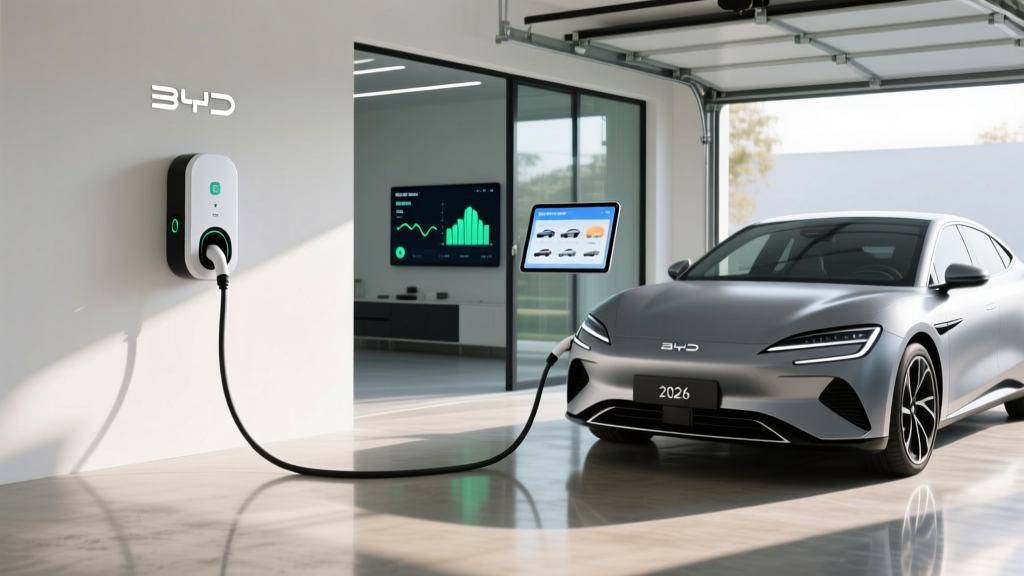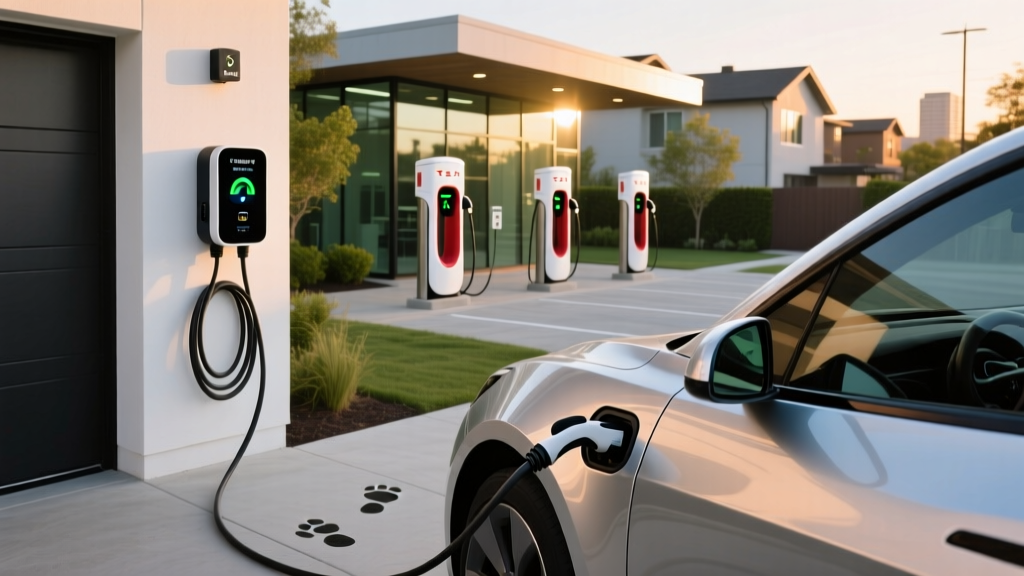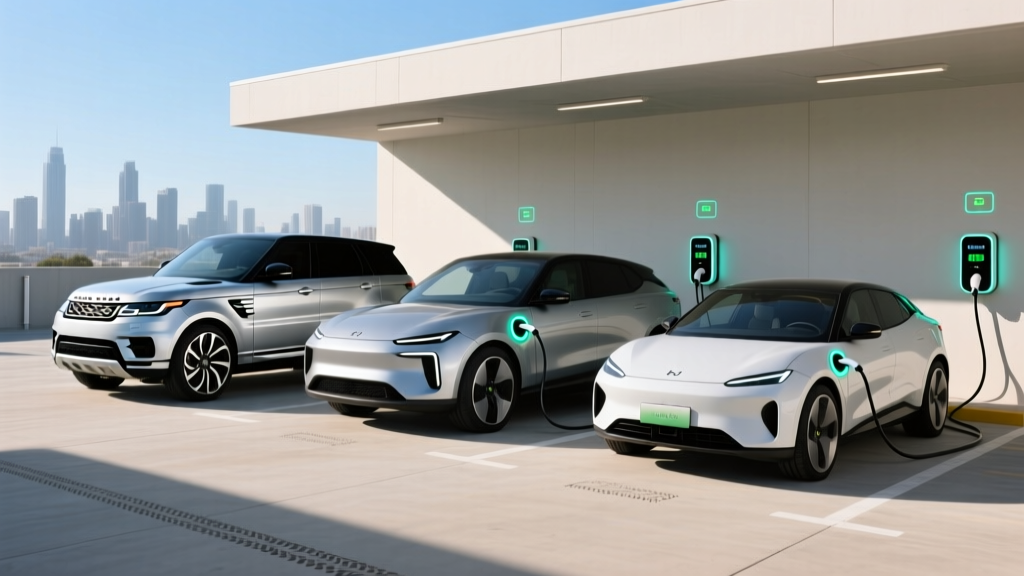
If you're still driving a 2010 Range Rover Sport Supercharged, you already know the reality: the 5.0-liter supercharged V8 delivers 510 horsepower and a 0-60 time around 5.9 seconds, but it drinks fuel at an EPA-rated 12 mpg city / 17 mpg highway / 14 mpg combined. For many owners of this iconic SUV, the question isn't whether electric vehicles are impressive — it's whether switching actually saves money when you factor in home charger installation, electricity rates, and the vehicle's purchase price.
This guide breaks down exactly what it costs to set up home EV charging in 2026, how fast each charging level adds range, what you'll pay per mile compared to premium unleaded, and whether the math works against keeping a supercharged Range Rover on the road.
What It Costs to Fuel a 2010 Range Rover Sport Supercharged
Before we get into EV charging economics, let's establish the baseline. The 2010 Range Rover Sport Supercharged requires premium unleaded (91 octane or higher) and holds a 27.7-gallon fuel tank. With the combined EPA rating of 14 mpg, a full tank yields roughly 388 miles of range.
At the 2026 national average of $4.35 per gallon for premium fuel, filling that tank costs approximately $120.49. That works out to $0.31 per mile just in fuel. If you drive 12,000 miles per year, you're spending roughly $3,720 annually on gas alone — and that's before oil changes, supercharger belt service, and the air suspension maintenance these trucks are known for.
Charging Levels Explained: Speeds, Power, and Range Added
Understanding EV charging starts with one critical distinction: kW (kilowatts) measures power — how fast energy flows into the battery. kWh (kilowatt-hours) measures energy — how much the battery holds. Think of kW as the width of a hose and kWh as the size of the bucket. This is the single most common point of confusion for new EV owners.
| Level | Voltage | Power (kW) | Miles of Range Per Hour | Best For |
|---|---|---|---|---|
| Level 1 | 120V (standard outlet) | 1.0–1.9 kW | 3–5 miles | Overnight top-offs, PHEVs |
| Level 2 | 240V (dryer-style outlet) | 7.2–19.2 kW | 25–60 miles | Daily home charging |
| DC Fast Charge | 400V–800V DC | 50–350 kW | 150–800+ miles (peak) | Road trips, quick stops |
For context: a modern large-battery EV like the Rivian R1S (149 kWh battery, 410-mile EPA range) charging on a 48-amp Level 2 circuit at 11.5 kW would add roughly 35 miles of range per hour — going from 10% to 80% in about 10 hours. On a 350 kW DC fast charger, that same 10-80% session takes approximately 25 minutes, though the charge curve tapers significantly above 80% to protect battery health.
How Much Does It Cost to Install a Home EV Charger?
Home Level 2 charging is where the economics of EV ownership really shine — but installation costs vary wildly based on your home's electrical infrastructure. Here's a realistic 2026 breakdown:
| Component | Low End | High End | Notes |
|---|---|---|---|
| Level 2 EVSE (charger hardware) | $350 | $750 | 40A–48A smart charger, 25ft cable |
| Electrician labor | $400 | $1,200 | Depends on run length from panel to garage |
| Electrical permit | $50 | $200 | Required in most jurisdictions |
| Panel upgrade (if needed) | $1,500 | $4,000 | Older homes with 100A service often need 200A |
| Conduit, wiring, breaker | $150 | $500 | 6 AWG copper for 50A circuit |
| Total (no panel upgrade) | $950 | $2,650 | Most homes with 200A service |
| Total (with panel upgrade) | $2,450 | $6,650 | Common in pre-1990 homes |
The panel-upgrade gotcha: A 48-amp Level 2 charger draws about 11.5 kW continuously. Per NEC code, this requires a dedicated 60-amp breaker. If your home has a 100-amp main panel — common in homes built before 1990 — adding a 60-amp circuit may exceed available capacity, especially if you're running electric range, dryer, and HVAC simultaneously. A licensed electrician will perform a load calculation before pulling a permit. Never skip this step.
The IRS §30D tax credit does not directly cover charger installation, but the separate Residential Clean Energy Credit (§25D) previously covered some home energy improvements. As of 2026, the Alternative Fuel Vehicle Refueling Property Credit (§30C) can cover up to 30% of home charger installation costs (max $1,000), subject to income and census-tract eligibility. Consult a tax professional for your specific situation.
Cost Per Mile: EV Charging vs. Premium Gasoline
This is where the comparison between the 2010 Range Rover Sport Supercharged and a modern EV becomes stark. We'll model three realistic charging scenarios against the Range Rover's fuel cost.
| Scenario | Rate | Cost per Mile (EV at 3 mi/kWh) | Cost per Mile (RRS at 14 mpg) |
|---|---|---|---|
| Home Level 2 (off-peak utility rate) | $0.09/kWh | $0.03 | $0.31 |
| Home Level 2 (national avg residential) | $0.17/kWh | $0.057 | $0.31 |
| Public DC fast (Electrify America, etc.) | $0.48/kWh | $0.16 | $0.31 |
| Public DC fast (Tesla Supercharger avg) | $0.32/kWh | $0.107 | $0.31 |
The annual math at 12,000 miles/year:
- 2010 Range Rover Sport Supercharged: ~$3,720/year in premium fuel
- EV charged at home (off-peak): ~$360/year
- EV charged at home (avg rate): ~$684/year
- EV charged exclusively on public DC fast: ~$1,920/year
Even in the worst-case scenario — exclusively using expensive public fast chargers — a modern EV costs roughly half what the supercharged Range Rover demands in fuel. With home charging, the savings exceed $3,000 per year. Over five years, that's $15,000+ back in your pocket.
Which Connector and Charger Works with Modern EVs?
If you're transitioning from a 2010 Range Rover Sport Supercharged to a modern EV, the charging connector landscape has consolidated significantly by 2026. Here's what you need to know:
| Connector | Brands Using It (2026) | Notes |
|---|---|---|
| NACS (Tesla/J3400) | Tesla, Ford, GM, Rivian, Volvo, Polestar, Hyundai, Kia (new models) | Industry standard by 2026; access to Tesla Supercharger network |
| CCS1 (Combo) | VW, BMW, some legacy Hyundai/Kia, Stellantis models | Being phased out; adapters available |
| CHAdeMO | Nissan Leaf (legacy only) | Effectively discontinued; avoid for new purchases |
Adapter reality: If you buy a CCS-equipped EV, a CCS-to-NACS adapter ($150-$250) unlocks the Tesla Supercharger network, which as of 2026 operates over 30,000 stalls in North America. Ford and GM owners with native NACS ports charge on Superchargers without adapters. Tesla owners buying a non-Tesla EV can use a NACS-to-CCS adapter for Electrify America and other CCS networks.
Recommended Home Level 2 Chargers for 2026
We've tested dozens of EVSEs. Here are three that deliver reliable daily charging with the features that matter:
Tesla Universal Wall Connector
- Power: 11.5 kW (48A) on a 60A circuit
- Connector: NACS (J3400) with integrated CCS adapter
- Cable length: 24 feet
- Smart features: Wi-Fi, OTA updates, power sharing (pair two units on one circuit), load management
- Price: $475
- Best for: NACS-equipped EVs; Tesla ecosystem users
ChargePoint Home Flex (2nd Gen)
- Power: Up to 12 kW (50A) on a 60A circuit; adjustable down to 16A
- Connector: NACS or CCS1 (configurable at purchase)
- Cable length: 23 feet
- Smart features: Wi-Fi, scheduling, energy tracking, Alexa integration, flexible amperage for older panels
- Price: $549
- Best for: Homes with limited panel capacity (can dial down amperage)
Emporia Level 2 EV Charger
- Power: 11.5 kW (48A) on a 60A circuit
- Connector: NACS or J1772 (with adapter)
- Cable length: 24 feet
- Smart features: Wi-Fi, solar integration with Emporia Vue energy monitor, time-of-use scheduling
- Price: $399
- Best for: Budget-conscious installs; solar homes
All three units are hardwired (no plug), which eliminates the NEC requirement for GFCI protection on the breaker — a $150-$200 savings on the electrical side. If you prefer a plug-in unit (NEMA 14-50 outlet), expect to pay more for a GFCI breaker and ensure the outlet is installed with proper torque specifications. Loose 14-50 outlets are a documented fire risk.
Real-World Charging Times for Common EV Battery Sizes
Here's how long common battery sizes take to charge from 10% to 80% across different charging levels. The 10-80% window matters because DC fast charging tapers significantly above 80% to prevent lithium plating and thermal stress — a session from 80-100% can take as long as 10-80%.
| Battery Size | Example Vehicle | Level 2 (11.5 kW) | DC Fast (150 kW peak) | DC Fast (350 kW peak) |
|---|---|---|---|---|
| 60 kWh | Chevrolet Equinox EV | ~4 hours | ~22 min | ~18 min (if vehicle supports) |
| 85 kWh | Tesla Model Y Long Range | ~5.5 hours | ~28 min | ~20 min |
| 100 kWh | Ford F-150 Lightning (Std) | ~6.5 hours | ~33 min | ~24 min |
| 135 kWh | Rivian R1S (Max Pack) | ~8.5 hours | ~45 min | ~32 min |
| 149 kWh | Rivian R1S (Dual Max) | ~9.5 hours | ~50 min | ~35 min |
Charge curve reality: The peak kW number on a spec sheet is not sustained. A vehicle that "supports 250 kW" may only hold that rate from roughly 10-30% State of Charge, then taper to 150 kW, then 75 kW, then 25 kW above 90%. The 10-80% time is the metric that matters for practical road-trip planning, not the peak rate.
Safety, Electrical Code, and Installation Best Practices
Home EV charging involves continuous high-current draw — typically 3-8 hours at a stretch. This is fundamentally different from intermittent loads like a dryer or oven. Here's what code compliance and safety demand:
- Dedicated circuit: Your Level 2 charger must have its own dedicated breaker. No sharing with other appliances.
- 80% rule: NEC requires continuous loads to use no more than 80% of a breaker's rating. A 48A charger needs a 60A breaker. A 40A charger needs a 50A breaker.
- Wire gauge: 6 AWG copper (THHN in conduit) for 50-60A circuits. 4 AWG for longer runs to minimize voltage drop.
- GFCI: Hardwired installations are exempt from GFCI breaker requirements in most jurisdictions (2023 NEC revision). Plug-in NEMA 14-50 installations require GFCI, which adds $150-$200 to the breaker cost.
- Outdoor rating: If your charger is mounted outside, ensure it's rated NEMA 4 (weather-resistant). All chargers listed above meet this standard.
- Permit and inspection: Required in virtually all US jurisdictions. The inspector verifies wire gauge, breaker sizing, grounding, and torque on connections. Do not skip this — unpermitted work can void your homeowner's insurance.
Is Switching from a 2010 Range Rover Sport Supercharged Worth It?
The 2010 Range Rover Sport Supercharged is a remarkable vehicle — hand-stitched leather, a 510-hp supercharged V8, terrain response systems, and a presence that modern crossovers still can't match. But at 14 mpg combined, premium fuel, and increasing maintenance costs for a 16-year-old luxury SUV, the ownership economics are punishing.
A modern electric SUV like the Rivian R1S, BMW iX, or Tesla Model X offers comparable (or better) performance, vastly lower fuel cost, minimal drivetrain maintenance, and available federal tax credits. The EPA's EV technology overview details how regenerative braking, heat pumps, and battery thermal management have matured since the early EV era.
The home charging investment — typically $1,000-$2,500 for a straightforward install — pays for itself in fuel savings within the first year for most drivers. If your home needs a panel upgrade, the timeline extends to 2-3 years, but the long-term math still favors electrification.
Frequently Asked Questions
How much does it cost to install a home EV charger?
Between $950 and $2,650 for most homes with existing 200A electrical service. If your home needs a panel upgrade from 100A to 200A, add $1,500-$4,000. The total includes the charger hardware ($350-$750), electrician labor ($400-$1,200), permit ($50-$200), and materials ($150-$500).
How fast will each charging level add range?
Level 1 (120V) adds 3-5 miles per hour. Level 2 (240V) adds 25-60 miles per hour depending on amperage and vehicle acceptance rate. DC fast charging adds 150-800+ miles per hour at peak, but tapers significantly above 80% State of Charge.
Which connector/charger is compatible with my EV?
In 2026, NACS (J3400) is the dominant standard — Tesla, Ford, GM, Rivian, Volvo, Hyundai, and Kia all use it. CCS1 is being phased out but adapters are available. CHAdeMO is effectively dead. Check your vehicle's charge port before purchasing a home charger.
How much does charging cost per mile vs gas?
Home charging at off-peak rates costs roughly $0.03/mile. The 2010 Range Rover Sport Supercharged at 14 mpg on premium fuel costs $0.31/mile. Even expensive public DC fast charging at $0.48/kWh works out to about $0.16/mile — still half the cost of the Range Rover.
What electrical upgrades might I need?
The most common upgrade is a panel replacement from 100A to 200A service ($1,500-$4,000). Some homes may need a sub-panel added near the garage. Homes built after 2000 with 200A service and gas appliances typically need no upgrades beyond the dedicated 60A circuit for the charger.
Can I charge a modern EV on a standard 120V outlet?
Yes, but Level 1 charging at 1.4 kW adds only 3-5 miles of range per hour. For a 100 kWh battery, a 10-80% charge would take roughly 50 hours. It works for PHEVs with small batteries or for emergency top-offs, but Level 2 is strongly recommended for daily BEV use.
Do I qualify for any tax credits on charger installation?
The IRS §30C Alternative Fuel Vehicle Refueling Property Credit covers up to 30% of home charger equipment and installation costs, capped at $1,000. Eligibility depends on your income and whether you live in a qualifying census tract. Check the IRS §30C page and consult a tax professional before claiming.