Why Owners Are Electrifying the 2008 Range Rover Sport Supercharged
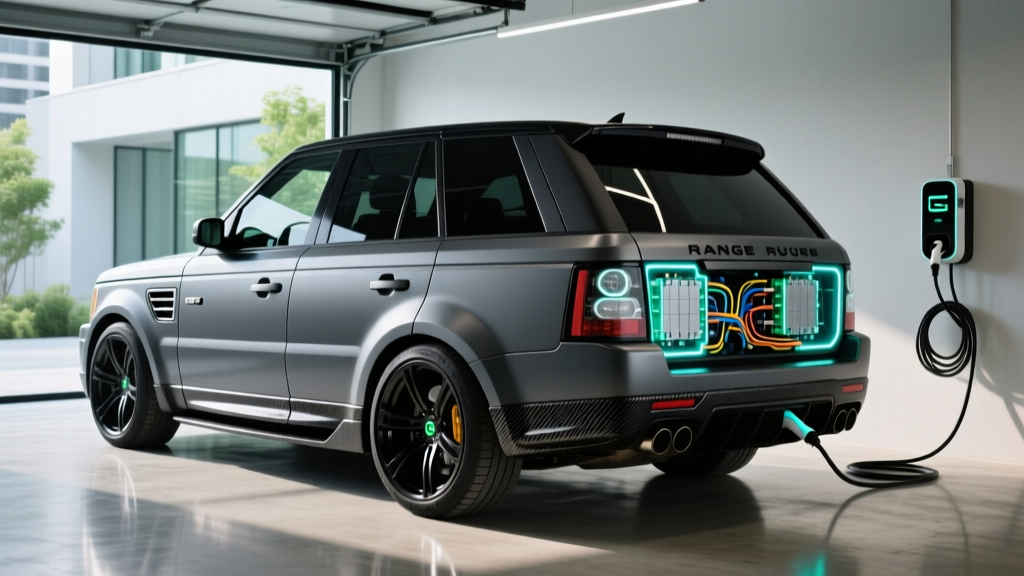
The 2008 Range Rover Sport Supercharged left the factory with a 5.0-liter supercharged V8 producing 390 horsepower, a 5-speed ZF automatic, and an EPA-rated 12 MPG combined. At the pump, that translates to roughly $0.28 per mile at current fuel prices. For a 5,400-pound luxury SUV with genuine off-road capability and a cult following, those running costs are a dealbreaker — which is precisely why EV conversions of the L320-generation Sport have gained traction among specialist shops and DIY builders.
Swapping the powertrain is only half the project. Designing a charging strategy that matches the conversion's battery capacity — typically 60–100 kWh in modern builds — determines whether your electrified Range Rover is a daily driver or a garage ornament. This guide covers every charging variable you need to plan before, during, and after a 2008 Range Rover Sport Supercharged EV conversion.
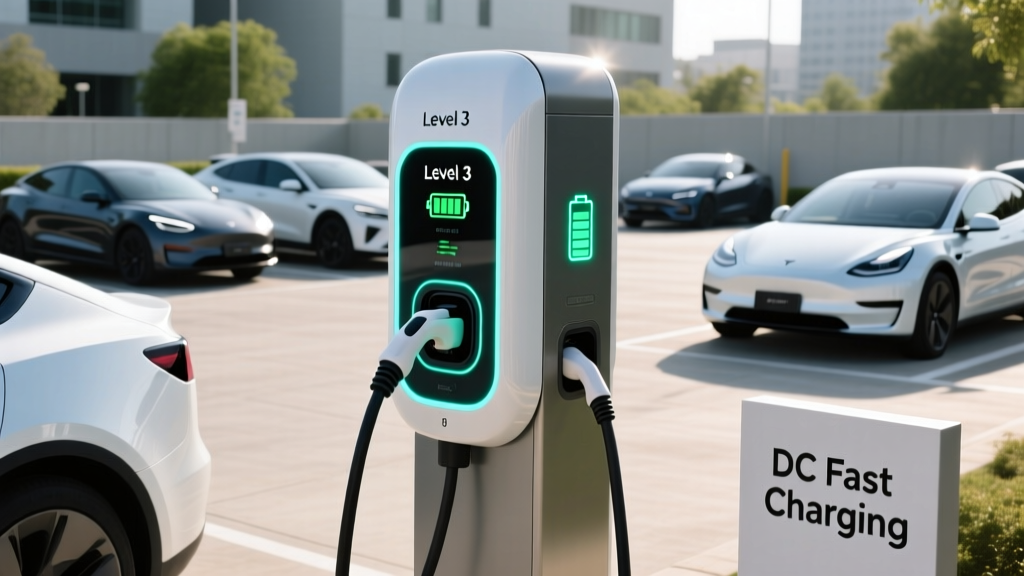
Charging Levels Explained: Speeds, kW Ratings, and Real-World Range Recovery
Before sizing your home equipment, understand the three charging tiers available to any EV — including a converted Range Rover Sport. The distinction between kW (power, or how fast energy flows) and kWh (energy, or how much the battery stores) is the single most important concept here. A 80 kWh battery charged at 7.2 kW takes roughly 11 hours from empty; that same battery at 150 kW DC can recover 80% in about 30 minutes.
| Level | Voltage / Amps | Max Power (kW) | Miles of Range per Hour | Typical Use Case |
|---|---|---|---|---|
| Level 1 (120V) | 120V / 12A | 1.4 kW | 3–5 mi/hr | Overnight trickle; emergency top-off |
| Level 2 (240V) | 240V / 32–48A | 7.7–11.5 kW | 22–40 mi/hr | Home daily charging; workplace |
| DC Fast Charge | 400–800V DC | 50–350 kW | 150–1,000+ mi/hr (peak) | Road trips; rapid top-ups |
For a 2008 Range Rover Sport Supercharged conversion with an estimated efficiency of 2.5–3.0 miles per kWh (heavy SUV, high drag coefficient of ~0.37, all-wheel drive), a Level 2 station delivering 7.7 kW adds roughly 20–23 miles of range per hour. Upgrade to an 11.5 kW unit and you're looking at 30–35 miles per hour — enough to fully replenish an 80 kWh pack overnight in about 7 hours.
Home Charging Installation: Electrical Requirements, Panel Upgrades, and Costs
Most EV conversions — the Range Rover Sport included — benefit most from a hardwired Level 2 home charger on a dedicated 240V circuit. Here's what that actually requires and what it costs in 2026.
Electrical Requirements for Level 2
- Circuit: Dedicated 40A or 50A double-pole breaker (NEC requires continuous loads to use only 80% of breaker capacity, so a 40A breaker supports a 32A charger; a 50A breaker supports 40A charging)
- Wire: 6 AWG copper for 50A circuits; 8 AWG for 40A circuits (THHN in conduit or NM-B cable)
- Outlet vs. hardwired: NEMA 14-50 receptacle offers portability; hardwired units allow higher amperage and avoid GFCI nuisance trips common on 50A receptacles
- Panel capacity: Your main service panel must have physical space for a double-pole breaker AND sufficient amperage headroom. A 200A panel with an existing 160A calculated load can typically accommodate a 40A EV circuit. A 100A panel in an older home often cannot.
When a Panel Upgrade Is Necessary
Homes built before 1990 frequently have 100A or 150A main panels. Adding a 40–50A continuous EV load may exceed the panel's rated capacity, requiring an upgrade to 200A service. This is a significant cost but also increases your home's resale value and future-proofs for solar, heat pumps, or a second EV.
| Component | Low Estimate | High Estimate | Notes |
|---|---|---|---|
| Level 2 Charger (Equipment) | $350 | $750 | 32A–48A smart charger, 24-ft cable |
| Electrician Labor | $500 | $2,000 | Depends on run length, wall type, conduit |
| Electrical Materials | $150 | $500 | Wire, conduit, breaker, junction boxes |
| Permit & Inspection | $50 | $300 | Varies by municipality |
| Panel Upgrade (if needed) | $1,500 | $4,000 | 100A → 200A service upgrade |
| Total (no panel upgrade) | $1,050 | $3,550 | Typical suburban install |
| Total (with panel upgrade) | $2,550 | $7,550 | Older home scenario |
According to the U.S. Department of Energy's Alternative Fuels Data Center, most straightforward Level 2 home installations without a panel upgrade fall in the $1,200–$2,500 range when equipment is included. The IRS Residential Clean Energy Credit (§25D) may cover 30% of charger equipment and installation costs (up to $1,000) for equipment placed in service through 2032, though this credit is subject to legislative changes — consult a tax professional for eligibility.
Connector Compatibility for EV Conversions: NACS, CCS1, and CHAdeMO
When commissioning an EV conversion, the charge port connector is one of the earliest decisions your conversion shop will make. This choice determines which public chargers you can use and which adapters you'll need.
| Connector | Standard | AC Level 2 | DC Fast Charge | Adoption Status |
|---|---|---|---|---|
| NACS (J3400) | SAE J3400 | Yes (single-phase) | Up to 350+ kW | Tesla native; adopted by Ford, GM, Rivian, Hyundai, and most major OEMs for 2025+ models. Dominant North American standard. |
| CCS1 (Combo) | SAE J1772 + DC pins | Yes (J1772 upper) | Up to 350 kW | Legacy standard on VW, BMW, older Ford/GM EVs. Being phased out in favor of NACS. |
| CHAdeMO | IEC 62196 Type 2 AA | No (separate J1772 for AC) | Up to 400 kW (rare) | Nissan Leaf, Mitsubishi. Declining infrastructure support in North America. |
For a 2008 Range Rover Sport Supercharged conversion: Most reputable conversion shops in 2026 install a NACS (J3400) charge port, as it provides access to the Tesla Supercharger network — the most reliable and extensive DC fast-charging infrastructure in North America. If your conversion uses a CCS1 port (common in kits sourced from European suppliers), you'll need a CCS-to-NACS adapter (~$200–$300) to access Superchargers. CHAdeMO is not recommended for new conversions due to shrinking public infrastructure.
Charging Cost Per Mile: Converted Range Rover Sport vs. Original V8
The financial case for converting a 2008 Range Rover Sport Supercharged to electric hinges on the cost-per-mile gap. Here's how charging costs compare to the original 5.0L supercharged V8 across common scenarios.
| Scenario | Cost per kWh / Gallon | Cost per Mile (EV Conv.) | Cost per Mile (V8 Stock) | Annual Savings (12k mi/yr) |
|---|---|---|---|---|
| Home Charging (Off-Peak TOU) | $0.09/kWh / — | $0.033 | — | — |
| Home Charging (Standard Rate) | $0.16/kWh / — | $0.059 | — | — |
| Public Level 2 | $0.28/kWh / — | $0.104 | — | — |
| DC Fast Charging (EA, etc.) | $0.40/kWh / — | $0.148 | — | — |
| Gasoline (Premium 91+ octane) | — / $3.80/gal | — | $0.317 | — |
| Blended Annual (80% home / 20% DCFC) | — | $0.052 | $0.317 | ~$3,180 |
Assumptions: EV conversion efficiency of 2.7 mi/kWh; stock V8 at 12 MPG combined (per fueleconomy.gov); premium gasoline at $3.80/gallon national average; electricity rates from EIA regional averages. Actual costs vary by utility, state, and driving pattern.
At 12,000 miles per year, a converted Range Rover Sport charging primarily at home on off-peak rates saves approximately $3,000–$3,400 annually in fuel costs alone. The conversion investment (typically $25,000–$50,000 depending on battery size and componentry) begins to pay for itself within 8–15 years on fuel savings, before factoring in eliminated oil changes, transmission fluid, supercharger belt replacements, and exhaust system maintenance.
Charging Time Estimates for Common Conversion Battery Sizes
EV conversions of the L320 Range Rover Sport platform typically use battery packs between 60 kWh and 100 kWh, depending on available space in the engine bay and rear cargo area, weight distribution targets, and budget. Here are charge times for each level across common pack sizes.
| Battery Size | Level 1 (1.4 kW) | Level 2 (7.7 kW / 32A) | Level 2 (11.5 kW / 48A) | DC Fast (50 kW) | DC Fast (150 kW)* |
|---|---|---|---|---|---|
| 60 kWh usable | ~30 hrs | ~5.5 hrs | ~3.7 hrs | ~50 min | ~22 min |
| 80 kWh usable | ~40 hrs | ~7.3 hrs | ~4.9 hrs | ~67 min | ~28 min |
| 100 kWh usable | ~50 hrs | ~9.1 hrs | ~6.1 hrs | ~84 min | ~35 min |
*DC fast charge times assume the battery management system (BMS) supports the peak rate. Many conversion-grade battery packs and BMS units cap DC charging at 50–80 kW to protect cell longevity. Confirm your pack's maximum C-rate with your conversion engineer. Also note that charging slows significantly above 80% State of Charge to protect battery health — the 80–100% top-off can take as long as the 10–80% session.
Equipment Recommendations: Level 2 Chargers for Your Converted Range Rover
The following chargers are proven, well-supported units suitable for a high-draw EV conversion. All prices are approximate MSRP as of early 2026.
Power: 48A (11.5 kW) hardwired / 40A (9.6 kW) NEMA 14-50
Connector: J1772 (NACS adapter available)
Cable Length: 24 ft
Smart Features: Wi-Fi, app scheduling, energy monitoring, solar integration
Price: ~$399
Best For: Budget-conscious installs with smart scheduling for off-peak TOU rates
Power: Up to 50A (12 kW) hardwired; adjustable 16A–50A
Connector: J1772 (NACS adapter included with newer units)
Cable Length: 23 ft
Smart Features: Wi-Fi, Alexa, app-based scheduling, load sharing for multi-charger setups
Price: ~$649
Best For: Flexible amperage adjustment — useful if panel capacity is tight
Power: 48A (11.5 kW) hardwired
Connector: NACS native
Cable Length: 24 ft
Smart Features: Wi-Fi, OTA updates, Power Sharing with multiple units, load management
Price: ~$475
Best For: NACS-ported conversions; cleanest integration with Supercharger ecosystem
Power: 40A (9.6 kW) NEMA 14-50 or hardwired
Connector: J1772
Cable Length: 24 ft
Smart Features: OCPP-compatible, app scheduling, IP67 outdoor rating
Price: ~$499
Best For: Outdoor or garage installs in extreme climates; rugged build quality
Safety, Code Compliance, and Installation Best Practices
The National Electrical Code (NEC) and your local jurisdiction's amendments govern every aspect of EV charger installation. Key requirements to confirm with your licensed electrician:
- Dedicated circuit: Your Level 2 charger must be on its own dedicated double-pole breaker — no sharing with other appliances or outlets.
- GFCI protection: NEC 2020 and later require GFCI protection for all EV charging outlets (receptacle-based installations). Hardwired chargers are generally exempt from the GFCI requirement, which avoids nuisance tripping that plagues NEMA 14-50 outlets on 50A circuits.
- Outdoor rating: If mounting outdoors, the charger must carry an IP55 or higher ingress protection rating. Use a weatherproof in-use cover for receptacle-based installs.
- Wire sizing: Undersized wire causes voltage drop, overheating, and fire risk. Your electrician will calculate the correct gauge based on circuit amperage and run length. Runs exceeding 100 feet may require upsized wire to limit voltage drop below 3%.
- Permit and inspection: Nearly all jurisdictions require an electrical permit for a new 240V circuit. The inspection verifies wire gauge, breaker sizing, grounding, and bonding. Skipping the permit risks insurance claim denial in the event of an electrical fire.
- Load calculation: Per NEC Article 220, your electrician must perform a load calculation to confirm your panel can handle the added EV circuit. This is where older 100A panels frequently fail, triggering a panel upgrade.
Frequently Asked Questions
How much does it cost to install a home EV charger for a Range Rover Sport conversion?
A typical Level 2 home installation without a panel upgrade runs $1,050–$3,550 including equipment, electrician labor, materials, and permits. If your home has an older 100A panel that requires a 200A service upgrade, total costs range from $2,550–$7,550. The IRS §25D Residential Clean Energy Credit may offset up to $1,000 (30%) of charger and installation costs — verify current eligibility with a tax professional.
How fast will each charging level add range to my converted Range Rover?
Level 1 (120V) adds roughly 3–5 miles per hour — essentially unusable for a heavy SUV conversion except as an emergency trickle. Level 2 (240V, 32–48A) adds 22–40 miles per hour, sufficient for overnight replenishment. DC fast charging at 50 kW or above can recover 100+ miles in 20–30 minutes, assuming your conversion's BMS supports that charge rate.
Which connector should my 2008 Range Rover Sport Supercharged conversion use?
In 2026, NACS (SAE J3400) is the recommended connector for any North American conversion. It provides native access to the Tesla Supercharger network, which has the highest uptime and coverage of any DC fast-charging network. If your conversion kit ships with a CCS1 port, a CCS-to-NACS adapter ($200–$300) enables Supercharger use.
How much does charging cost per mile compared to the original V8?
The stock 5.0L supercharged V8 costs approximately $0.32 per mile on premium gasoline at 12 MPG combined. A converted Range Rover Sport charging primarily at home on off-peak electricity costs roughly $0.03–$0.06 per mile — a savings of $0.26–$0.29 per mile, or about $3,100–$3,500 annually at 12,000 miles per year.
What electrical upgrades might my home need for a Level 2 charger?
The most common upgrade is a panel service increase from 100A to 200A, required when the existing panel lacks amperage headroom for a 40–50A continuous EV load. Other potential upgrades include adding sub-panels for detached garages, replacing aluminum branch wiring, or installing a smart load-management device (e.g., Emporia VUE with automatic load shedding) to avoid a full panel upgrade by dynamically limiting charger draw when other appliances are active.