Charging the Range Rover Sport EV: What Luxury SUV Owners Need to Know
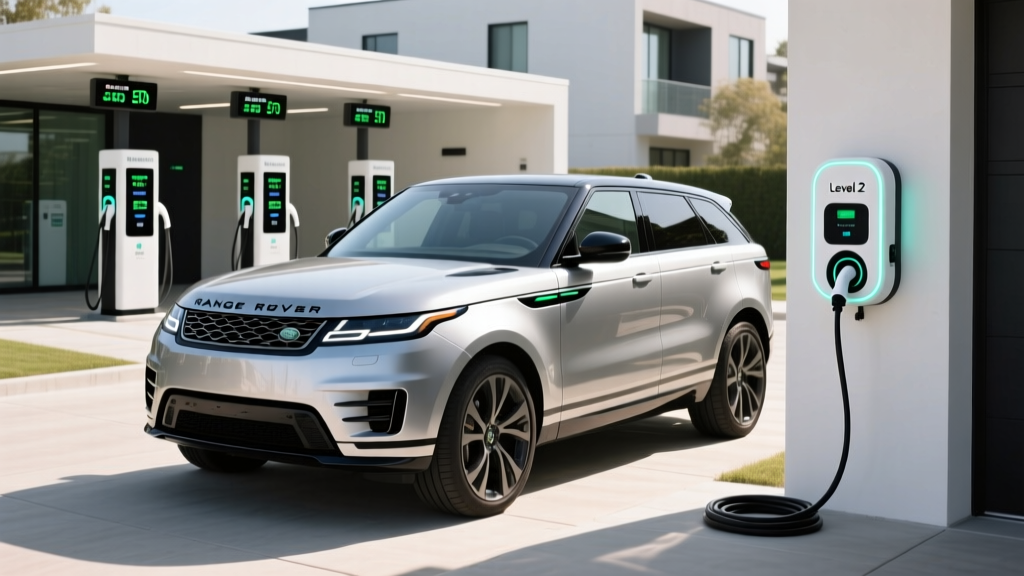
The Range Rover Sport EV marks Land Rover's first fully electric model, built on the modular Longitudinal Architecture (MLA) platform and arriving with an expected 117 kWh battery pack, dual-motor all-wheel drive, and a targeted EPA range of approximately 350 miles. For a vehicle with this much battery capacity, understanding your charging infrastructure is not optional — it determines whether daily ownership is effortless or frustrating.
This guide covers every charging scenario Range Rover Sport EV owners and reservation holders will face: home Level 2 installation (including electrical panel realities), public DC fast charging, connector compatibility, and real cost-per-mile comparisons against the gasoline Range Rover Sport.
Charging Levels Explained: How Fast Will Each Add Range?
There are three charging tiers available to Range Rover Sport EV owners. Understanding the difference between kW (power — the rate of energy flow, like water pressure) and kWh (energy — the battery's total capacity, like tank size) is critical. A 19.2 kW charger delivers energy at that rate; a 117 kWh battery stores that much total energy.
| Level | Voltage / Amps | Power (kW) | Miles Added per Hour | Best For |
|---|---|---|---|---|
| Level 1 (120V) | 120V / 12A | ~1.4 kW | ~3–4 mi/hr | Emergency/trickle only |
| Level 2 (240V) | 240V / 40–80A | 9.6–19.2 kW | ~22–48 mi/hr | Daily home charging |
| DC Fast Charge | 400V–800V DC | 50–250+ kW (peak) | ~150–350+ mi/hr (peak) | Road trips, rapid top-ups |
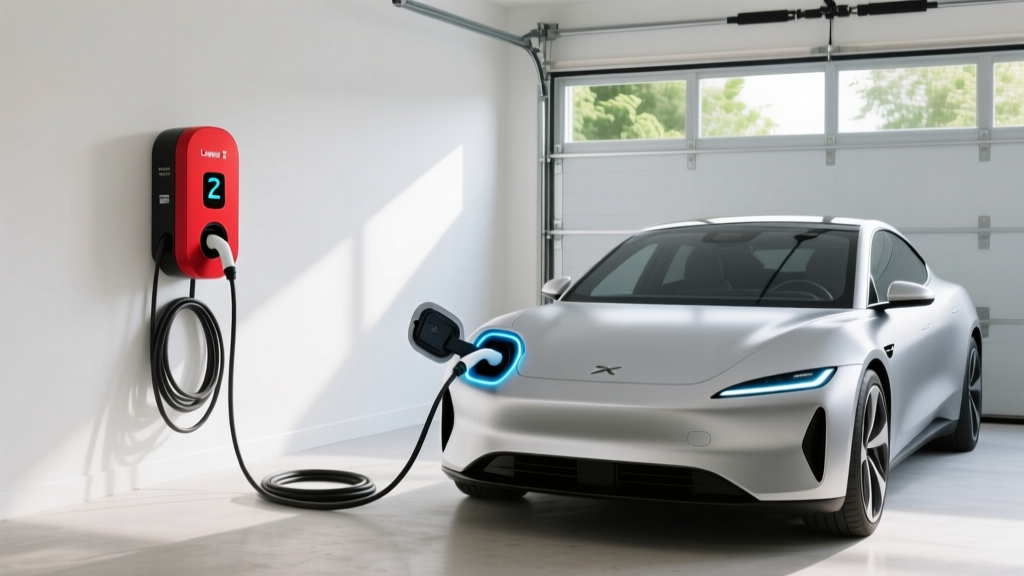
With the Range Rover Sport EV's large 117 kWh battery, Level 1 charging is effectively useless for regular use — it would take over 80 hours for a full charge. A properly installed Level 2 home charger is mandatory for practical ownership. At 11.5 kW (48A on a 60A circuit), expect roughly 10–11 hours to charge from 10% to 80%. At the maximum 19.2 kW (80A on a 100A circuit), that drops to approximately 6–7 hours, making overnight charging straightforward.
Home Charger Installation: Electrical Requirements and Costs
The single biggest variable in EV ownership satisfaction is home charging setup. For a luxury SUV with a 117 kWh battery, cutting corners on electrical infrastructure will mean painfully slow charging and potential safety issues.
Electrical Requirements for the Range Rover Sport EV
The Range Rover Sport EV will accept up to 19.2 kW on Level 2 AC charging (80 amps). To deliver this, you need a dedicated 100-amp circuit at 240V. Most homeowners opt for a 60-amp circuit (delivering 48A continuous / 11.5 kW), which provides a practical balance of charge speed and installation cost.
- Minimum recommended: 240V / 60A dedicated circuit → 11.5 kW continuous
- Optimal: 240V / 100A dedicated circuit → 19.2 kW continuous
- Wire gauge: 6 AWG copper (60A) or 3 AWG copper (100A)
- Breaker: Must be rated 125% of continuous load (per NEC 210.20)
Does Your Electrical Panel Need an Upgrade?
This is the cost most buyers underestimate. If your home has a 100-amp main panel (common in homes built before 2000), adding a 60A EV circuit will likely require a panel upgrade to 200 amps, costing $1,500–$3,500 before the charger install even begins. Homes with a modern 200A panel usually have sufficient headroom, but a licensed electrician must perform a load calculation per NEC Article 220.
Homes with older Federal Pacific or Zinsco panels should plan for mandatory replacement regardless of amp capacity — these panels are known fire hazards and will not pass inspection.
| Component | Typical Cost Range | Notes |
|---|---|---|
| Level 2 Charger (hardware) | $400–$750 | Smart Wi-Fi chargers; premium models up to $1,000 |
| Electrical Permit | $100–$400 | Varies by municipality; required for inspection |
| Electrician Labor (standard install) | $600–$1,800 | Short run from panel to garage; longer runs cost more |
| Conduit, Wire & Materials | $200–$600 | Depends on run length and wire gauge (6 AWG vs 3 AWG) |
| Panel Upgrade (if needed) | $1,500–$3,500 | 100A → 200A upgrade; not always required |
| Total (no panel upgrade) | $1,300–$3,550 | Most homes with modern 200A panels |
| Total (with panel upgrade) | $2,800–$7,050 | Older homes or those with hazardous panels |
Always hire a licensed electrician who will pull permits and schedule inspection. Unpermitted work can void homeowners insurance coverage and create serious fire risk — especially at the sustained high currents EV charging demands.
Connector Compatibility: NACS, CCS, and What the Range Rover Sport EV Uses
The EV charging connector landscape shifted dramatically between 2023 and 2025, with Ford, GM, Rivian, Volvo, and most major automakers adopting the North American Charging Standard (NACS), originally developed by Tesla. As a Jaguar Land Rover product, the Range Rover Sport EV's connector choice matters for long-term charging access.
| Connector | Brands Using It | Max Power | Adapter Needed? |
|---|---|---|---|
| NACS (J3400) | Tesla, Ford, GM, Rivian, Volvo, Hyundai (2025+) | Up to 350+ kW DC | CCS→NACS adapters available (~$200–$300) |
| CCS1 (Combo) | VW, BMW, Stellantis, JLR (current models) | Up to 350 kW DC | NACS→CCS adapter needed for Tesla Superchargers |
| CHAdeMO | Nissan Leaf (legacy); effectively discontinued | Up to 100 kW DC | Not compatible with modern EVs |
Jaguar Land Rover has indicated CCS1 compatibility for initial Range Rover Sport EV models, though the brand has signaled future NACS adoption across its lineup. If your vehicle ships with CCS1, a NACS-to-CCS adapter (such as the Lectron or A2Z adapter, typically $200–$300) will grant access to Tesla's Supercharger network — the most reliable DC fast-charging network in North America, with over 25,000 stalls.
For home Level 2 charging, all modern chargers use the universal J1772 connector, which is compatible with every EV sold in the US. NACS-equipped home chargers (like the Tesla Wall Connector) include a J1772 adapter in the box or are available with a J1772 cable.
DC Fast Charging: Road Trip Speeds and the Charge Curve Reality
The Range Rover Sport EV is expected to support DC fast charging at up to 200+ kW peak. However, peak kW is a marketing number — the sustained charge rate and the charge curve determine your actual road-trip experience.
Here is what the charge curve actually looks like for a large-battery EV like the Range Rover Sport EV:
- 10%–30% SoC: Near-peak rate (~180–200+ kW) — fastest charging window
- 30%–60% SoC: Sustained high rate (~150–180 kW) — still fast
- 60%–80% SoC: Tapering begins (~100–140 kW) — noticeably slower
- 80%–100% SoC: Heavy taper (~30–50 kW) — avoid charging past 80% on road trips
Expected 10–80% DC fast charge time: approximately 25–32 minutes at a 350 kW-capable station, assuming battery preconditioning is active. Without preconditioning (warming the battery to optimal temperature), expect 35–45 minutes in cool weather.
Always precondition your battery before arriving at a DC fast charger. The Range Rover Sport EV's navigation system should automatically begin thermal preconditioning when a charger is set as your destination. In cold weather, preconditioning can cut your 10–80% charge time by 30–40%.
Charging Cost Per Mile: EV vs. Gas Range Rover Sport
One of the strongest ownership arguments for the Range Rover Sport EV is the fuel-cost advantage — even in a luxury segment where buyers are less price-sensitive. Here is how the math works with the EV's estimated efficiency of ~2.1 kWh/mile (based on the vehicle's weight and aerodynamics) versus the gasoline Range Rover Sport's EPA combined rating of 19 MPG.
| Charging Scenario | Cost per kWh | Cost per Mile | Annual Cost (12,000 mi) |
|---|---|---|---|
| Home (off-peak utility rate) | $0.10–$0.14 | $0.21–$0.29 | $2,520–$3,480 |
| Home (standard residential rate) | $0.15–$0.20 | $0.32–$0.42 | $3,840–$5,040 |
| Public Level 2 (ChargePoint, etc.) | $0.25–$0.49 | $0.53–$1.03 | $6,360–$12,360 |
| DC Fast Charging (Electrify America, EVgo) | $0.35–$0.55 | $0.74–$1.16 | $8,880–$13,920 |
| Gas Range Rover Sport (19 MPG, $3.60/gal) | — | $0.19/mile | $2,280 |
The numbers reveal a nuanced picture: home charging on off-peak rates is the only scenario where the EV clearly beats gasoline on fuel cost, and even then the margin is modest. Public DC fast charging, which many apartment dwellers or frequent road-trippers may rely on heavily, can cost more than premium gasoline per mile.
The true cost advantage of the Range Rover Sport EV emerges when you factor in reduced maintenance (no oil changes, fewer brake replacements due to regenerative braking, no transmission fluid), potential federal and state incentives, and the federal §30D tax credit — though eligibility depends on MSRP caps ($80,000 for SUVs), buyer income limits ($300,000 joint / $150,000 single), and battery critical-mineral sourcing requirements that change annually. Consult a tax professional for your specific situation.
Recommended Home Chargers for the Range Rover Sport EV
With a 117 kWh battery, you want a charger that can deliver meaningful range overnight. Here are three proven Level 2 chargers suited to the Range Rover Sport EV's requirements:
ChargePoint Home Flex
- Power: Up to 12 kW (50A) on a 60A circuit; configurable down to 16A for smaller panels
- Connector: J1772 (25-foot cable)
- Smart Features: Wi-Fi, app scheduling, Alexa integration, energy tracking
- Price: ~$550–$700
- Best For: Flexibility — adjustable amperage works with older panels
Emporia Vue Level 2 Charger
- Power: Up to 11.5 kW (48A) on a 60A circuit
- Connector: J1772 (24-foot cable)
- Smart Features: Whole-home energy monitoring integration, solar-aware scheduling, load management
- Price: ~$400–$500
- Best For: Budget-conscious buyers who want smart load management
Tesla Wall Connector (Universal)
- Power: Up to 11.5 kW (48A) on a 60A circuit
- Connector: NACS native + J1772 adapter included (24-foot cable)
- Smart Features: Wi-Fi updates, load sharing (multiple units on one circuit), power sharing
- Price: ~$600–$650
- Best For: Multi-EV households with both NACS and J1772/CCS vehicles
For Range Rover Sport EV owners who want maximum Level 2 speed, consider the Grizzl-E Smart (up to 19.2 kW / 80A on a 100A circuit, ~$650–$800) — one of the few residential chargers that can deliver the EV's maximum AC charge rate, provided your electrical panel supports a 100A dedicated circuit.
Safety, Code, and Installation Best Practices
EV charging draws sustained high current for hours — unlike any other household appliance. This makes proper installation non-negotiable.
- Dedicated circuit: Your EV charger must have its own dedicated breaker — never share a circuit with other appliances (NEC 625.40).
- GFCI protection: NEC 2023 and later require GFCI protection for all EV charging outlets (NEC 625.54). Hardwired chargers with built-in ground-fault protection may exempt the breaker from GFCI requirements in some jurisdictions — confirm with your local inspector.
- Outdoor rating: If your charger is mounted outdoors (carport, driveway), ensure it carries a NEMA 4 or IP65 rating for weather resistance. The ChargePoint Home Flex and Grizzl-E both meet outdoor requirements.
- Cable management: A 25-foot cable is standard and recommended. Avoid extension cords — they introduce resistance, voltage drop, and fire risk at EV charging currents.
- Utility notification: Many utilities require notification before installing a Level 2 charger. Some offer rebates ($250–$1,000) or time-of-use rate plans that significantly reduce your charging cost. Check with your local utility before installation.
Frequently Asked Questions
How much does it cost to install a home EV charger for the Range Rover Sport EV?
Expect $1,300–$3,550 for a standard installation (60A circuit, Level 2 charger, permit, and electrician labor) if your home already has a 200-amp electrical panel. If a panel upgrade from 100A to 200A is needed, add $1,500–$3,500, bringing the total to $2,800–$7,050. Get at least three quotes from licensed electricians and confirm they will pull permits.
How fast will each charging level add range to the Range Rover Sport EV?
Level 1 (120V) adds roughly 3–4 miles per hour — essentially useless for a 117 kWh battery. Level 2 at 11.5 kW (48A) adds approximately 25–28 miles per hour, enough for a full overnight charge. DC fast charging at peak rate (~200 kW) can add 150+ miles in 15–20 minutes during the optimal 10–60% state-of-charge window.
Which connector does the Range Rover Sport EV use?
Initial Range Rover Sport EV models are expected to use the CCS1 (Combined Charging System) connector for DC fast charging and J1772 for Level 2 AC. A NACS-to-CCS adapter (~$200–$300) will be needed for Tesla Supercharger access until JLR transitions to NACS in future model years.
How much does charging the Range Rover Sport EV cost per mile vs gas?
Home charging on off-peak rates ($0.12/kWh) costs approximately $0.25/mile. The gasoline Range Rover Sport at 19 MPG with $3.60/gallon fuel costs roughly $0.19/mile. The EV's cost advantage grows with cheaper electricity (solar, time-of-use plans) and when factoring in reduced maintenance, but public DC fast charging at $0.45+/kWh can exceed gasoline cost per mile.
What electrical upgrades might I need for a home charger?
The most common upgrade is a panel increase from 100A to 200A service, needed in older homes that lack sufficient amperage headroom for a 60A EV circuit alongside existing household loads. Your electrician will perform an NEC Article 220 load calculation. Homes with Federal Pacific or Zinsco panels will require full replacement regardless. Some utilities offer panel-upgrade rebates — check before proceeding.
Can I charge the Range Rover Sport EV at Tesla Superchargers?
Yes, with a NACS-to-CCS adapter. Tesla has opened its Supercharger network to non-Tesla EVs, and CCS-equipped vehicles can access stalls via adapter. However, some Supercharger stalls have short cables designed for Tesla's rear-quarter charge port — verify cable reach for the Range Rover Sport EV's charge port location before relying on a specific station.
Sources: EPA fuel economy data at fueleconomy.gov, IRS clean vehicle credit rules at irs.gov, and Jaguar Land Rover preliminary specifications via landroverusa.com. Range Rover Sport EV specifications are preliminary and subject to change before retail delivery. Consult a licensed electrician for home installation specifics and a tax professional for credit eligibility.