The Range Rover Electric: Pricing, Battery, and What Charging Actually Looks Like
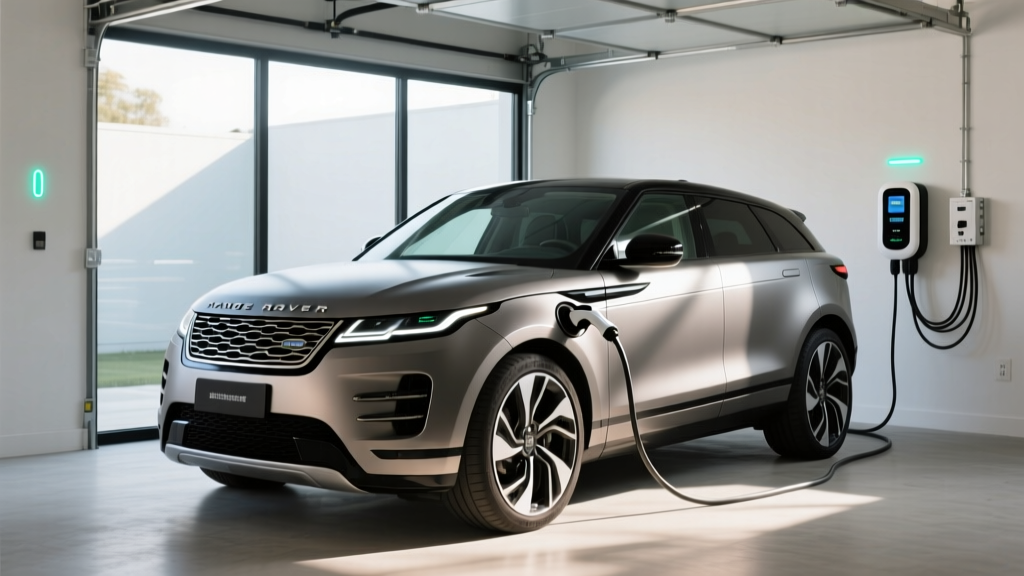
Land Rover's first all-electric flagship arrives for the 2026 model year as the Range Rover Electric (internally called the P550e variant on the MLA-Flex platform). With an announced starting MSRP around $130,000 before destination, the Range Rover EV price positions it against the BMW iX M60, Mercedes EQS SUV, and Tesla Model X. But luxury EV buyers quickly learn that the purchase price is only the first line item — daily charging infrastructure and electricity costs shape the ownership experience for years.
This guide breaks down the Range Rover EV price in context, its expected battery and charging specs, and — critically — what it costs to set up proper home charging for a large-battery luxury SUV. We'll also compare public charging costs to gasoline so you can evaluate the total energy spend.
Base MSRP: ~$130,000 | Battery: ~117 kWh usable (NMC) | EPA Range: est. 300–320 mi
Peak DC Fast Charge: ~200 kW (800V architecture) | 10–80% est.: ~28 min
Level 2 AC Charge: 11 kW onboard | 0–100% at 11 kW: ~11 hours
0–60 mph: est. 4.5 sec | HP: est. 550 hp | AWD standard
Note: Specs above are based on Jaguar Land Rover's announced preliminary figures for the MLA-Flex platform. Final EPA certification and MSRP by trim will be confirmed closer to the on-sale date. The Range Rover EV is not eligible for the §30D federal new EV tax credit, as its MSRP exceeds the $80,000 SUV cap and battery sourcing requirements remain unconfirmed per IRS guidelines.
Charging Levels Explained: How Fast Will Each Add Range?
Understanding charging speed starts with the distinction between kW (kilowatts — the rate of power delivery, like water pressure from a hose) and kWh (kilowatt-hours — the total energy stored, like gallons in a tank). The Range Rover Electric's ~117 kWh battery is the tank; the charger's kW rating determines how fast you fill it.
| Level | Power (kW) | Miles of Range / Hour | 10–80% Time (est.) | Best Use Case |
|---|---|---|---|---|
| Level 1 (120V) | 1.4 kW | ~3–4 mi/hr | ~55+ hours | Emergency / trickle only |
| Level 2 (240V, 48A) | 11.5 kW | ~30–35 mi/hr | ~7.5 hours (full) | Daily home charging |
| Level 2 (240V, 32A) | 7.7 kW | ~20–23 mi/hr | ~11 hours (full) | Budget home install |
| DC Fast (peak) | ~200 kW | ~500+ mi/hr (peak) | ~28 min (10–80%) | Road trips |
Real-world charging curve reality: The 200 kW peak only applies between roughly 10–40% State of Charge. Above 60%, the rate tapers significantly — expect ~80–100 kW from 60–80%, and a crawl from 80–100%. This is why manufacturers quote 10–80% times rather than 0–100%. On a road trip, plan your stops around the 10–80% window to minimize time plugged in.
How Much Does It Cost to Install a Home EV Charger?
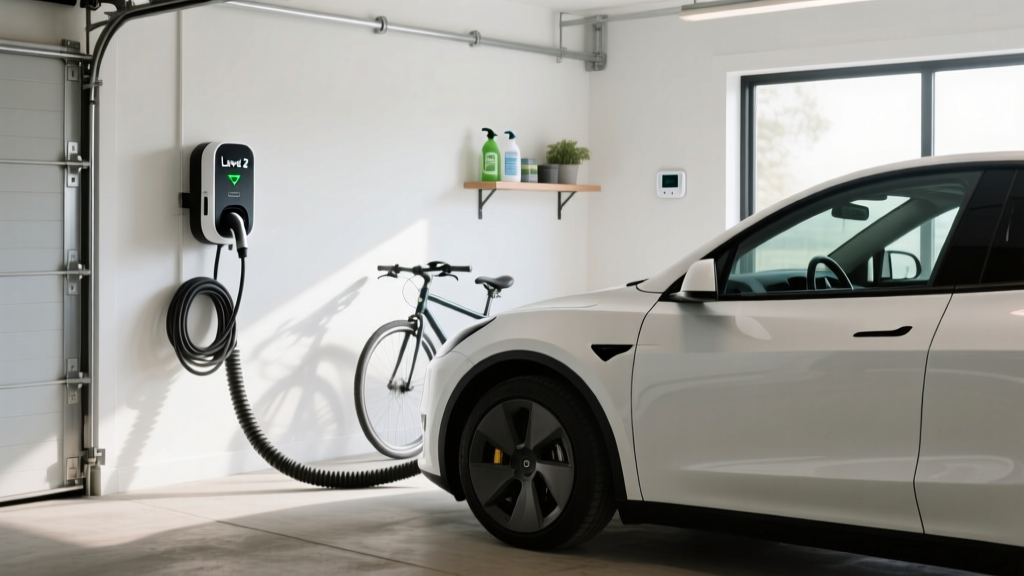
For a luxury EV with a 117 kWh battery, a 48-amp Level 2 charger on a dedicated 60-amp, 240V circuit is the practical minimum for overnight replenishment. Here's what that installation actually costs in 2026:
| Component | Budget Scenario | Typical Scenario | Complex Scenario |
|---|---|---|---|
| Level 2 EVSE (48A smart charger) | $400–$550 | $550–$700 | $600–$800 |
| Electrician labor (run 240V/60A circuit) | $500–$800 | $800–$1,500 | $1,500–$3,000 |
| Permit & inspection | $50–$150 | $100–$300 | $150–$400 |
| Electrical panel upgrade (if needed) | $0 | $0–$500 (sub-panel) | $2,000–$4,500 (200A service) |
| TOTAL | $950–$1,500 | $1,450–$3,000 | $4,250–$8,700 |
Panel upgrade gotcha: Many homes built before 2000 have 100-amp electrical service. Adding a 60-amp dedicated EV circuit to an already-loaded 100A panel may require upgrading to 200-amp service — a $2,000–$4,500 job. Always have a licensed electrician perform a load calculation before committing to a 48A charger. In some cases, stepping down to a 32A charger on a 40A circuit avoids the panel upgrade entirely, and still delivers ~20 miles of range per hour — adequate if you drive under 80 miles daily and plug in every night.
Which Connector and Charger Is Compatible with the Range Rover EV?
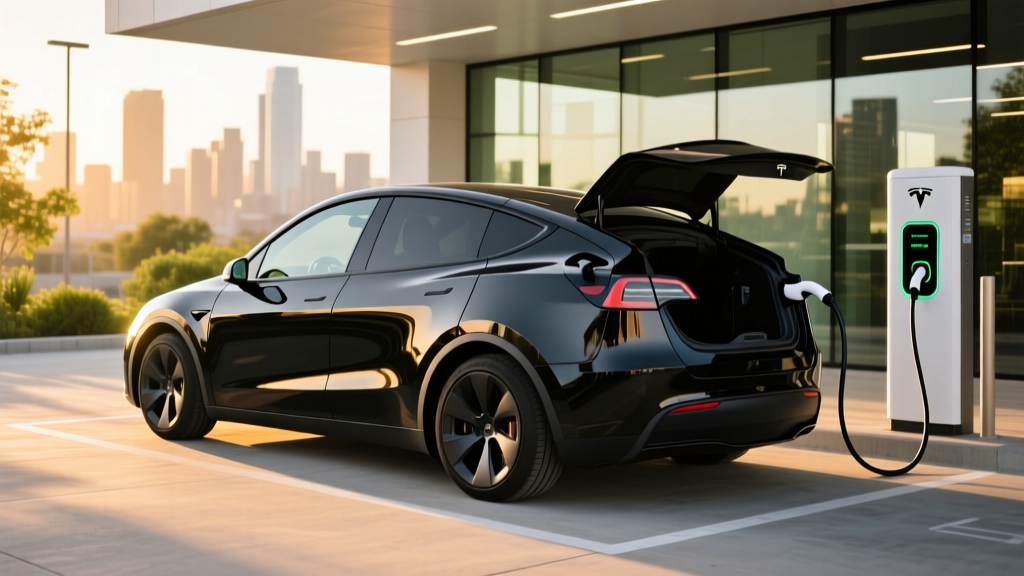
JLR has confirmed the Range Rover Electric will use the NACS (North American Charging Standard) connector for the North American market, aligning with the industry-wide shift to Tesla's charging standard. This means native access to Tesla Supercharger stalls (now open to non-Tesla EVs via the NACS standard) and third-party networks deploying NACS cables.
| Connector | Brands Using It | Range Rover EV Compatible? |
|---|---|---|
| NACS (Tesla) | Tesla, Ford, GM, Rivian, JLR, Volvo, Hyundai (2025+) | ✅ Native |
| CCS1 | Legacy VW, BMW, some Hyundai/Kia (pre-2025) | ⚠️ Via CCS-to-NACS adapter |
| CHAdeMO | Nissan Leaf (discontinued), Mitsubishi | ❌ No adapter available |
For home Level 2 charging, NACS and CCS1 share the same J1772-based AC charging protocol, so any J1772 Level 2 charger will work with the Range Rover Electric using the adapter JLR includes (or a NACS-equipped home charger such as the Tesla Wall Connector).
Recommended Home Chargers for the Range Rover Electric
Tesla Wall Connector (NACS)
- Power: Up to 11.5 kW (48A on 60A circuit)
- Connector: Native NACS — no adapter needed
- Cable length: 24 ft
- Smart features: Wi-Fi, OTA updates, load sharing between two units, power-sharing
- Price: ~$475
- Best for: Range Rover EV owners who want plug-and-go simplicity
ChargePoint Home Flex (J1772/NACS)
- Power: Up to 12 kW (50A on 60A circuit) — adjustable down to 16A
- Connector: Available in NACS or J1772
- Cable length: 23 ft
- Smart features: App scheduling, Alexa integration, detailed energy tracking, flexible amperage to avoid panel upgrades
- Price: ~$599–$699
- Best for: Homes with limited panel capacity (dial down to 32A or 40A)
Emporia Vue + EV Charger
- Power: Up to 11.5 kW (48A)
- Connector: J1772 (NACS adapter required)
- Cable length: 24 ft
- Smart features: Whole-home energy monitoring, solar integration, scheduling, grid-aware charging
- Price: ~$399 (charger) + $100–$300 (Vue panel monitor)
- Best for: Solar-equipped homes wanting to charge on excess production
Grizzl-E Smart (J1772)
- Power: Up to 10 kW (40A) or 12 kW (48A) — adjustable
- Connector: J1772
- Cable length: 24 ft
- Smart features: OCPP-compatible, works with multiple apps, rugged outdoor-rated build (NEMA 4)
- Price: ~$449–$549
- Best for: Outdoor installs, extreme climates, budget-conscious buyers
Cost to Charge: Electricity vs. Gasoline per Mile
The Range Rover Electric's ~117 kWh battery and estimated efficiency of ~2.5–2.8 mi/kWh (roughly 120 MPGe combined) make charging cost a meaningful ownership variable. Here's how different scenarios compare against the gas-powered Range Rover P400 (EPA ~21 MPG combined, premium fuel required):
| Scenario | Rate / Fuel Cost | EV Cost/Mile | Gas Cost/Mile |
|---|---|---|---|
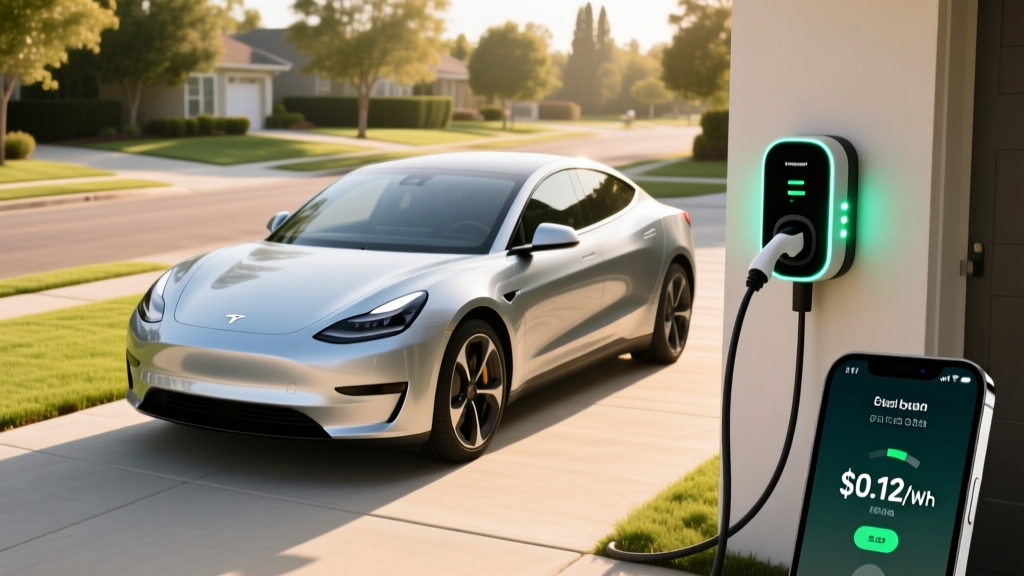
| Home (off-peak utility rate) | $0.12/kWh | $0.045 | — |
| Home (average US rate) | $0.17/kWh | $0.064 | — |
| Public Level 2 (network) | $0.30/kWh | $0.113 | — |
| DC Fast Charging (public) | $0.48/kWh | $0.180 | — |
| Gas Range Rover P400 (premium) | $4.80/gal, 21 MPG | — | $0.229 |
| Gas Range Rover P400 ($5.50/gal) | $5.50/gal, 21 MPG | — | $0.262 |
The takeaway: At home off-peak rates, the Range Rover EV costs roughly $0.045/mile in electricity — about 5× cheaper per mile than the gas Range Rover on premium fuel. Even at DC fast-charging prices ($0.48/kWh), the EV is still cheaper per mile than gasoline. However, if you rely exclusively on expensive public DC fast chargers, the savings narrow to roughly 20–30%. Home charging is where the economics work.
For a 12,000-mile/year driver, annual energy costs break down as:
- Home charging (off-peak): ~$540/year
- Home charging (avg rate): ~$768/year
- Gas Range Rover P400: ~$2,743/year
That's a potential annual savings of $1,975–$2,200 on energy alone — though this must be weighed against the EV's higher purchase price, potentially higher insurance premiums, and the Range Rover EV price premium over the P400.
Safety, Electrical Code, and Installation Best Practices
A Level 2 EV charger draws sustained high current for hours — more like an electric range than a phone charger. Proper installation isn't optional; it's critical for fire safety and insurance compliance:
- Dedicated circuit: The EV charger must have its own dedicated breaker — never shared with other appliances. A 48A charger requires a 60A breaker (NEC 80% continuous-load rule).
- GFCI protection: The 2023 NEC update requires GFCI protection for outdoor EV receptacles. Hardwired chargers (recommended) typically have built-in ground-fault protection and avoid the nuisance-tripping issues some users report with GFCI breakers on EV circuits.
- Hardwired vs. plug (NEMA 14-50): Hardwired installations are preferred for 48A+ chargers — they eliminate the receptacle as a failure point, avoid GFCI breaker requirements, and often qualify for higher amperage. A NEMA 14-50 outlet is fine for 32–40A portable chargers and adds flexibility, but must be installed with proper torque and strain relief.
- Outdoor rating: If the charger is mounted outside, ensure it carries a NEMA 4 or NEMA 4X rating (weatherproof). All chargers recommended above meet this standard.
- Permit and inspection: Most jurisdictions require an electrical permit for new 240V circuits. Skipping this risks insurance claim denial in the event of an electrical fire. Budget $100–$300 and 1–2 weeks for the process.
- Wire gauge: A 60A circuit requires 4 AWG copper or 2 AWG aluminum wire. Your electrician will size this based on run length — longer runs may need upsizing to prevent voltage drop.
Frequently Asked Questions
How much does it cost to install a home EV charger for the Range Rover EV?
Expect $1,450–$3,000 for a typical 48A Level 2 installation (charger + electrician + permit) if your electrical panel has capacity. If a panel upgrade to 200A service is needed, total cost can reach $4,250–$8,700. Always get a load calculation from a licensed electrician first.
How fast will each charging level add range to the Range Rover EV?
Level 1 (120V) adds roughly 3–4 miles per hour — impractical for a 117 kWh battery. A 48A Level 2 charger (11.5 kW) adds ~30–35 miles per hour, fully replenishing the battery overnight in ~11 hours. DC fast charging at ~200 kW peak can add ~200 miles in 15–20 minutes during the 10–50% SoC window.
Which connector does the Range Rover Electric use?
The 2026 Range Rover Electric uses the NACS (Tesla) connector for the North American market. This gives native access to Tesla Superchargers and any NACS-equipped public station. For older CCS1 public chargers, a CCS-to-NACS adapter will be needed.
How much does charging cost per mile vs. gasoline?
At home off-peak rates ($0.12/kWh), the Range Rover EV costs approximately $0.045/mile. The gas Range Rover P400 on premium fuel costs $0.229–$0.262/mile. Home charging saves roughly $0.18–$0.22 per mile — or about $2,000/year for a 12,000-mile driver.
What electrical upgrades might I need for a Level 2 charger?
If your home has 100-amp electrical service and the panel is already loaded, you may need a 200-amp service upgrade ($2,000–$4,500). Homes with 200A service and available breaker slots typically need only a new dedicated 60A circuit. A load calculation by a licensed electrician will determine your exact requirements. Some homeowners avoid panel upgrades by choosing a 32A charger (40A circuit) instead of 48A.
Is the Range Rover EV eligible for the federal EV tax credit?
No. The IRS §30D credit caps SUV eligibility at an $80,000 MSRP. The Range Rover Electric's ~$130,000 starting price exceeds this limit. Additionally, battery critical-mineral and component sourcing requirements must be met, which JLR has not confirmed. State-level incentives may still apply — check your local DMV or energy office.
Should I get a hardwired charger or a NEMA 14-50 outlet?
Hardwired is preferred for 48A chargers: it's safer, avoids GFCI breaker nuisance trips, and supports full amperage. A NEMA 14-50 outlet makes sense if you want portability (e.g., taking a mobile charger between homes) or plan to charge at 32–40A. For the Range Rover EV's large battery, hardwired 48A is the optimal daily setup.
Sources: Range Rover Electric preliminary specifications via Land Rover USA; EV charging safety standards per the National Electrical Code (NEC 2023); federal tax credit rules per IRS §30D; electricity rate data from the U.S. Energy Information Administration.