Does Range Rover Have an Electric Car? The Short Answer for 2026
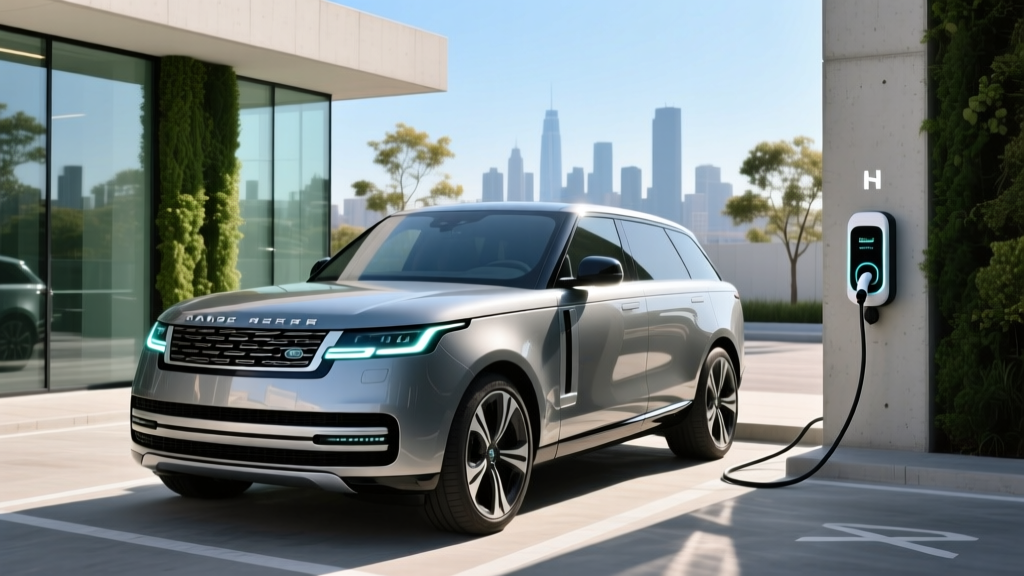
If you've been asking "does Range Rover have an electric car?" — the answer in 2026 is finally yes. The Range Rover Electric (internally designated the SV Electric) went on sale in late 2025 as Land Rover's first fully battery-electric vehicle, built on the MLA-Flex architecture shared with the current-generation Range Rover. It slots into the ultra-luxury EV SUV segment alongside the BMW iX M60, Mercedes EQS SUV, and the upcoming electric Porsche Cayenne.
But owning a luxury EV isn't just about the badge — it's about understanding how to charge it, what it costs, and whether your home electrical system can support it. This guide covers the Range Rover Electric's charging profile end-to-end, from the 100 kWh battery and 220 kW DC fast-charging capability to the real cost of installing a Level 2 home charger and the per-mile economics compared to a gas Range Rover.
2026 Range Rover Electric — Key Specs at a Glance
| Battery Capacity | 100 kWh usable (NMC lithium-ion, 800V architecture) |
| EPA Range (Est.) | ~270–300 miles (official EPA certification pending; WLTP: 314 mi) |
| Peak DC Fast Charge | 220 kW (10–80% in ~25 minutes) |
| Level 2 AC Charge | 11 kW onboard charger (full charge in ~10 hours) |
| Connector | CCS1 (NACS adapter available from JLR) |
| Horsepower | ~543 hp (dual-motor AWD) |
| 0–60 mph | ~4.4 seconds |
| Base MSRP | ~$130,000 (SE); ~$160,000+ (Autobiography) |
| Battery Warranty | 8 years / 100,000 miles (≥70% capacity retention) |
Charging Levels Explained: Level 1, Level 2, and DC Fast Charging
Before we get into home installation and costs, you need to understand the three charging levels available to Range Rover Electric owners. The distinction between kW (kilowatts — the rate of power flow, like water pressure) and kWh (kilowatt-hours — the total energy stored, like the size of the tank) is critical. Your Range Rover Electric has a 100 kWh battery. A 10 kW charger delivers 10 kWh of energy per hour of charging.
| Level | Voltage / Amperage | Power (kW) | Miles Added/Hour | 100 kWh Full Charge Time | Best Use Case |
|---|---|---|---|---|---|
| Level 1 | 120V / 12A | ~1.4 kW | ~3–4 mi/hr | ~70+ hours | Emergency / overnight trickle only |
| Level 2 | 240V / 48A | ~11.5 kW | ~28–32 mi/hr | ~9–10 hours | Daily home charging (ideal) |
| DC Fast | 400–800V DC | Up to 220 kW peak | ~500+ mi/hr (at peak) | 10–80% in ~25 min | Road trips, public stations |
Key insight on the charging curve: The Range Rover Electric's 800V architecture allows it to sustain high charge rates longer than older 400V EVs. However, like all lithium-ion batteries, the charge rate tapers significantly above 80% State of Charge (SoC) to protect battery longevity. On a 220 kW DC fast charger, you'll see peak rates from roughly 10–50% SoC, then a gradual taper. Charging from 80–100% on DC fast can take as long as the 10–80% portion — which is why we recommend charging to 80% on road trips and topping off at home on Level 2.
How Much Does It Cost to Install a Home EV Charger?
For a luxury EV like the Range Rover Electric, a properly installed Level 2 home charger is essentially mandatory. Level 1 charging on a standard 120V outlet adds only ~3–4 miles per hour — meaning a depleted 100 kWh battery would take nearly three full days to recharge. That's not practical for a vehicle in this price class.
Here's a realistic cost breakdown for installing a 48-amp (11.5 kW) Level 2 charger at a typical US home in 2026:
| Cost Component | Typical Range | Notes |
|---|---|---|
| Level 2 Charger (Equipment) | $400 – $800 | 48A smart charger (ChargePoint, Wallbox, Emporia) |
| Electrician Labor | $600 – $2,000 | Varies by run length, wall type, local rates |
| Electrical Permit | $50 – $300 | Required in most jurisdictions; varies by city/county |
| 60A Circuit Breaker + Wiring | $100 – $400 | 6 AWG copper wire for a 48A continuous load |
| Electrical Panel Upgrade (if needed) | $1,500 – $4,000 | Required if your panel is 100A or has no spare capacity |
| Total (No Panel Upgrade) | $1,150 – $3,500 | Most homes with a 200A panel and short wire run |
| Total (With Panel Upgrade) | $2,650 – $7,500 | Older homes with 100A service or maxed-out panels |
Will You Need a Panel Upgrade?
This is the single biggest variable in home charger installation cost. The Range Rover Electric's 11 kW onboard charger draws up to 48 amps continuously. Per the National Electrical Code (NEC), continuous loads must be on a circuit rated at 125% of the load — so you need a 60-amp dedicated circuit with a 60A breaker.
If your home has a 200-amp electrical panel with available breaker slots and sufficient load capacity (most homes built after 2000), you're likely fine. If you have a 100-amp panel (common in homes built before the 1980s) or your panel is already near capacity with HVAC, electric oven, dryer, and other large loads, your electrician will recommend upgrading to 200A service. This involves replacing the panel, getting a utility meter upgrade, and potentially trenching — adding $1,500–$4,000 to the project.
Pro tip: Before calling an electrician, check your panel's main breaker rating (it's printed on the main breaker switch) and count available slots. Take a photo and send it with your quote request — most electricians can give you a ballpark over email.
Connector Compatibility: CCS1, NACS, and the Range Rover Electric
The 2026 Range Rover Electric ships with a CCS1 (Combined Charging System) port, which is the standard used by most non-Tesla EVs sold in the US. However, the North American charging landscape has shifted heavily toward the NACS (North American Charging Standard), originally developed by Tesla and now adopted by Ford, GM, Rivian, and many others for 2025+ models.
Here's what this means for Range Rover Electric owners:
| Connector | Networks Supported | Range Rover Electric Status |
|---|---|---|
| CCS1 | Electrify America, EVgo, ChargePoint, most non-Tesla networks | Native — built-in port |
| NACS (Tesla) | Tesla Supercharger network, growing NACS-native stations | Requires CCS-to-NACS adapter (~$200–$300 from JLR or third-party) |
| CHAdeMO | Legacy Nissan Leaf infrastructure (declining) | Not compatible — no adapter available; irrelevant for new EVs |
| J1772 (Level 2 AC) | All public Level 2 stations, home chargers | Native — CCS1 port includes J1772 AC pins |
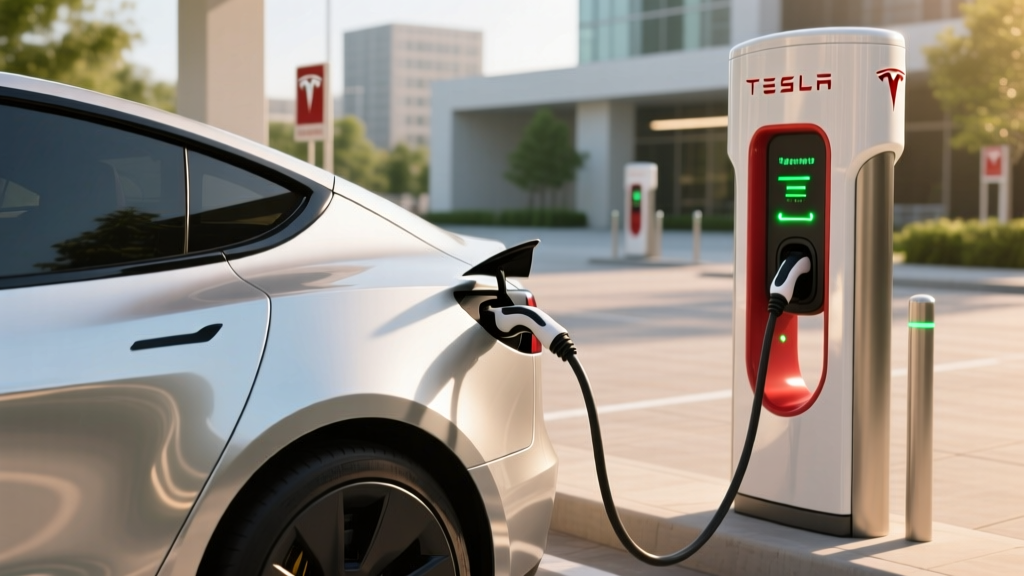
Practical advice: The Tesla Supercharger network remains the most reliable and widespread DC fast-charging network in the US, with over 25,000 stalls as of early 2026. Buying a CCS-to-NACS adapter is strongly recommended for Range Rover Electric owners who plan to road-trip. JLR has indicated it will offer a first-party adapter; aftermarket options from brands like Lectron and A2Z are also available. Check that any adapter is rated for the full 220 kW the Range Rover Electric can accept — some budget adapters are limited to 150 kW.
How Much Does Charging Cost Per Mile vs. a Gas Range Rover?
One of the strongest ownership arguments for the Range Rover Electric over a gas V8 Range Rover (which returns roughly 18 MPG combined) is fuel cost savings. Here's a side-by-side comparison using national average energy prices in 2026:
| Scenario | Rate | Cost Per Mile | Annual Cost (12,000 mi) |
|---|---|---|---|
| Home Charging (Off-Peak) | $0.13/kWh | $0.043 | $516 |
| Home Charging (Peak/Standard) | $0.22/kWh | $0.073 | $876 |
| Public Level 2 (ChargePoint, etc.) | $0.30/kWh | $0.10 | $1,200 |
| DC Fast Charging (Electrify America) | $0.48/kWh | $0.16 | $1,920 |
| Gas Range Rover V8 (18 MPG) | $3.50/gallon | $0.194 | $2,333 |
The takeaway: At an assumed efficiency of ~3.0 miles per kWh (roughly 33 kWh/100mi for the Range Rover Electric based on its weight and aerodynamics), home off-peak charging costs about 78% less per mile than fueling a gas Range Rover V8. Even exclusive DC fast charging on the road is still ~17% cheaper per mile than gasoline. Most owners who charge at home 80%+ of the time will spend $600–$900/year on electricity versus $2,300+ on gas.
Note: These calculations assume the Range Rover Electric achieves approximately 3.0 mi/kWh in mixed driving. Heavy loads, towing, cold weather, and sustained highway speeds above 75 mph will reduce efficiency to roughly 2.5–2.7 mi/kWh, raising per-mile costs proportionally.
Recommended Home Chargers for the Range Rover Electric
The Range Rover Electric's 11 kW (48A max) onboard charger means you want a Level 2 unit that can deliver at least 48 amps on a 60A circuit. Here are three chargers that pair well with this vehicle:
ChargePoint Home Flex
- Power Output: Up to 50A (12 kW) — adjustable via dip switches
- Connector: J1772 (CCS1 AC compatible)
- Cable Length: 23 feet
- Smart Features: Wi-Fi, app scheduling, Alexa, energy reports, load sharing
- Price: ~$699
- Why it works: Flexible amperage lets you match your circuit; robust app; UL-listed
Wallbox Pulsar Plus
- Power Output: 48A (11.5 kW)
- Connector: J1772 (CCS1 AC compatible)
- Cable Length: 25 feet
- Smart Features: Wi-Fi + Bluetooth, Power Sharing (two units on one circuit), app control
- Price: ~$649
- Why it works: Compact form factor; excellent for garages with two EVs via Power Sharing
Emporia Vue + EV Charger
- Power Output: 48A (11.5 kW)
- Connector: J1772 (CCS1 AC compatible)
- Cable Length: 24 feet
- Smart Features: Whole-home energy monitoring integration, solar-aware charging, app scheduling
- Price: ~$599 (charger) + $149 (Vue monitor)
- Why it works: Best value with integrated home energy monitoring; ideal for solar-equipped homes
All three chargers are UL-listed, NEMA 4 rated (suitable for indoor or outdoor installation), and support scheduled charging to take advantage of off-peak utility rates. The Range Rover Electric's onboard charge timer can also manage scheduling independently if you prefer not to use the charger's app.
Safety, Electrical Code, and Permit Requirements
Installing a 60-amp, 240-volt circuit is a significant electrical project. Here are the non-negotiable safety and code requirements per the National Electrical Code (NEC) Article 625 and typical local building codes:
- Dedicated circuit: The EV charger must be on its own dedicated 60A double-pole breaker — no sharing with other appliances.
- Wire gauge: 6 AWG copper (THHN/THWN) for runs up to ~100 feet; 4 AWG for longer runs to minimize voltage drop.
- GFCI protection: NEC 2020 and later require GFCI protection for all 240V EV charging outlets (NEMA 14-50 or hardwired). Hardwired installations may use a GFCI breaker.
- Outdoor rating: If installing outdoors, the charger must be rated NEMA 4 (weather-resistant), and the conduit/wiring must be rated for wet locations.
- Permit and inspection: Most municipalities require an electrical permit ($50–$300) and a post-installation inspection. Skipping this can void your homeowner's insurance coverage for electrical fires.
- Utility notification: Some utilities require notification before adding a large continuous load. Check if your utility offers an EV-specific time-of-use (TOU) rate — many offer off-peak rates as low as $0.06–$0.10/kWh for overnight charging.
Critical warning: Do not use a standard NEMA 14-50 outlet (the kind used for electric ranges) without verifying it's on a properly rated circuit with a GFCI breaker. Multiple reports of melted 14-50 receptacles under sustained EV charging loads have prompted most electricians to recommend hardwired installations for 48A chargers — they're safer, eliminate a failure point, and often cost the same.
Federal Tax Credits and Incentives for Home Charging
The IRS §30C Alternative Fuel Vehicle Refueling Property Credit offers up to $1,000 (30% of equipment + installation costs) for home EV charger installations, subject to these requirements:
- The charger must be installed at your primary residence
- Your home must be located in an eligible census tract (lower-income or non-urban areas — check the IRS eligibility tool)
- The credit is non-refundable (it reduces your tax liability but won't generate a refund beyond it)
- Equipment and installation must be placed in service during the tax year
Additionally, many utilities and states offer rebates for Level 2 charger purchases — typically $250–$750. Check your local utility's EV program page. Combined with the federal credit, some homeowners can offset 50–70% of their total installation cost.
Frequently Asked Questions
Does Range Rover have an electric car available to buy right now?
Yes. The Range Rover Electric began deliveries in late 2025 and is available for order in 2026 through Land Rover dealerships. Starting MSRP is approximately $130,000 for the SE trim, with the Autobiography variant exceeding $160,000. Production is limited, and wait times may extend several months depending on configuration.
How fast will each charging level add range to the Range Rover Electric?
Level 1 (120V) adds about 3–4 miles per hour — impractical for daily use. Level 2 (240V, 48A) adds roughly 28–32 miles per hour, fully recharging the 100 kWh battery overnight in about 9–10 hours. DC fast charging at a 220 kW station can add approximately 170 miles of range in 25 minutes (10–80% SoC).
Can I use Tesla Superchargers with the Range Rover Electric?
Not natively — the Range Rover Electric has a CCS1 port. However, you can use Tesla Superchargers that have the "Magic Dock" CCS adapter built in, or purchase a CCS-to-NACS adapter (~$200–$300) to access the full Supercharger network. Tesla has opened many Supercharger stalls to non-Tesla EVs via the Magic Dock system.
What electrical upgrades might I need for a home charger?
If your home has a 200-amp electrical panel with available breaker slots, you likely need only a new 60A double-pole breaker and a wire run to your garage or parking spot ($1,150–$3,500 total). If your panel is 100-amp or already near capacity, you'll need a panel upgrade to 200A service, adding $1,500–$4,000 to the project. A licensed electrician can assess this during a site visit.
Is the Range Rover Electric eligible for the $7,500 federal EV tax credit?
Based on the vehicle's MSRP (above the §30D cap of $80,000 for SUVs), the Range Rover Electric does not qualify for the federal §30D new clean vehicle credit. The MSRP cap is strict — vehicles above the threshold are ineligible regardless of battery sourcing or buyer income. However, the §30C home charger credit (up to $1,000) and various state/local incentives may still apply. Consult a tax professional for your specific situation.
How much does charging cost per mile vs. a gas Range Rover?
Home off-peak charging costs approximately $0.04–$0.05 per mile, compared to roughly $0.19 per mile for a gas V8 Range Rover getting 18 MPG at $3.50/gallon. Even exclusive DC fast charging at $0.48/kWh comes in at about $0.16/mile — still cheaper than gasoline. Annual fuel savings for a typical driver (12,000 miles/year) range from $1,400 to $1,800.