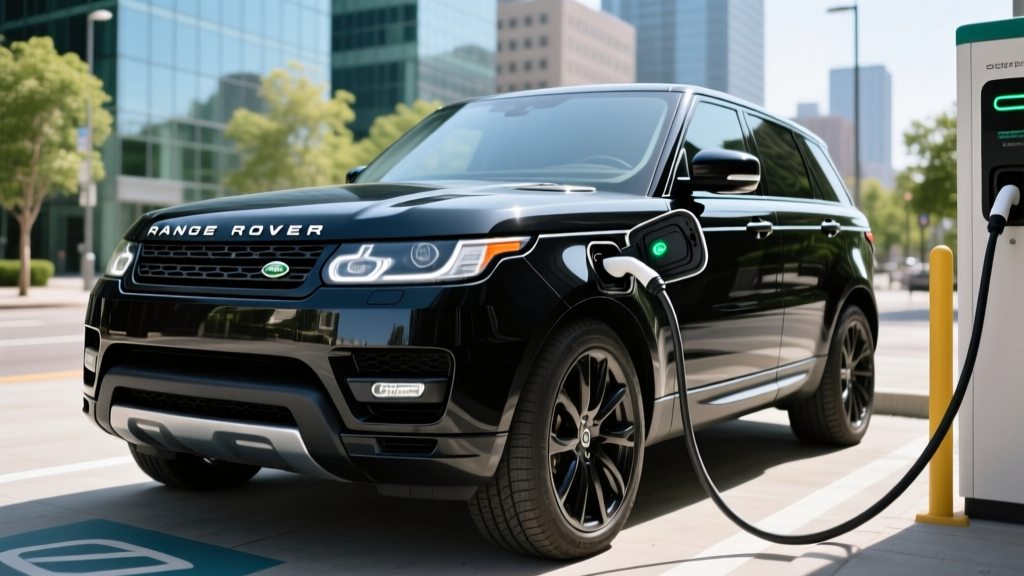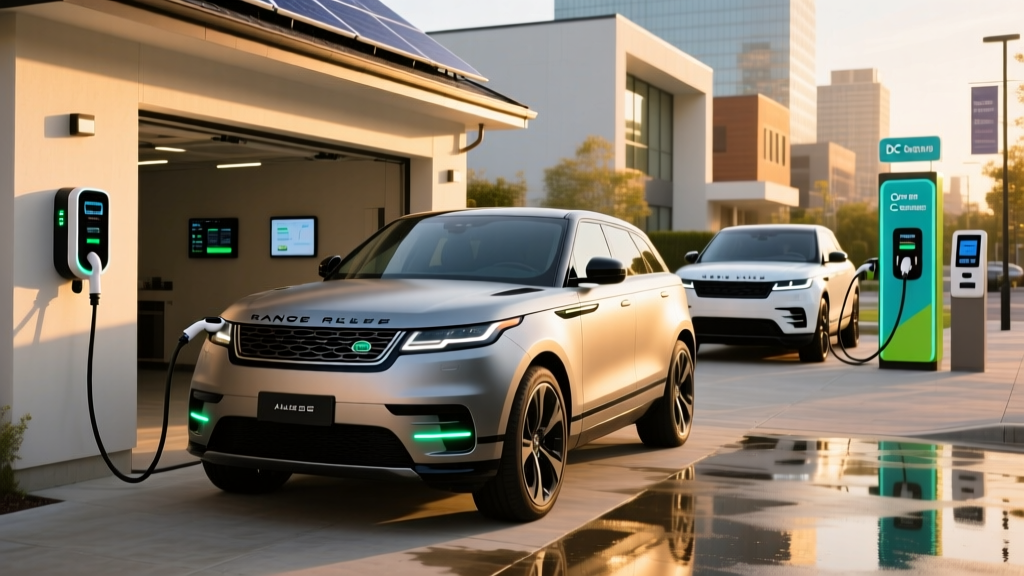
The upcoming Range Rover All-Electric marks Jaguar Land Rover's flagship entry into the luxury EV SUV segment. Built on JLR's modular Longitudinal Architecture (MLA-Flex) with an 800-volt electrical system, this full-size luxury SUV promises DC fast-charging capability that rivals dedicated EV platforms. But owning a large-battery luxury EV means understanding exactly how charging works — from the home Level 2 setup you'll rely on daily to the public DC fast-charging network you'll use on road trips.
This guide breaks down every charging scenario Range Rover All-Electric buyers will face: what equipment you need, what your electrical panel can handle, how much installation actually costs, and how charging expenses compare to filling up a gas Range Rover. All figures for the Range Rover All-Electric are based on JLR's preliminary announcements and industry estimates for the MLA-Flex 800V platform; final EPA-certified specs will be confirmed closer to the vehicle's on-sale date.
Range Rover All-Electric: Expected Battery and Charging Specs
While JLR has not published final EPA-certified figures, the Range Rover All-Electric is expected to feature a large lithium-ion battery pack (estimated 100–120 kWh usable capacity) paired with an 800V architecture. That 800V system is the key differentiator: it enables higher DC fast-charging power without requiring excessive current, reducing charging times significantly compared to older 400V systems.
| Specification | Estimated Value |
|---|---|
| Battery capacity (usable) | 100–120 kWh (final TBD) |
| Battery chemistry | NMC (nickel manganese cobalt) — expected for energy density |
| Electrical architecture | 800V nominal |
| Max DC fast-charge rate | Up to ~250–350 kW (preliminary) |
| AC Level 2 onboard charger | 11–22 kW (3-phase dependent on market) |
| Charging connector (North America) | NACS (JLR confirmed Tesla Supercharger access) |
| EPA range (estimated) | 300–350 miles (preliminary) |
| Battery warranty | 8 years / 100,000 miles (JLR standard EV warranty) |
Charging Levels Explained: Speed, Power, and Range Added
Understanding EV charging requires distinguishing between kW (kilowatts), which measures power — how fast energy flows into the battery — and kWh (kilowatt-hours), which measures energy — the total capacity of the battery. Think of kW as the width of a hose and kWh as the size of the tank. A wider hose (higher kW) fills the tank faster, but the tank size (kWh) determines how far you can drive.
| Level | Voltage | Power (kW) | Miles of Range per Hour | Typical Use Case |
|---|---|---|---|---|
| Level 1 | 120V AC | 1.0–1.4 kW | 3–5 miles/hr | Emergency/overnight trickle; insufficient for large batteries |
| Level 2 (Home) | 240V AC | 7.2–19.2 kW | 20–60 miles/hr | Daily home charging; primary ownership method |
| DC Fast Charging | 400–800V DC | 50–350 kW | 150–700+ miles/hr (peak) | Road trips; rapid top-ups on public networks |
What This Means for the Range Rover All-Electric
With an estimated 110 kWh battery, Level 1 charging is essentially impractical — a full charge would take 80–110 hours. Level 2 at 11.5 kW (a common 48-amp home charger) would fully replenish the battery in approximately 10–11 hours, ideal for overnight charging. On a 350 kW DC fast charger, the 800V architecture should enable a 10–80% charge in roughly 18–25 minutes, though sustained rates will taper as the battery fills — peak kW is never maintained across the full charging curve.
Home Charger Installation: Electrical Requirements and Costs
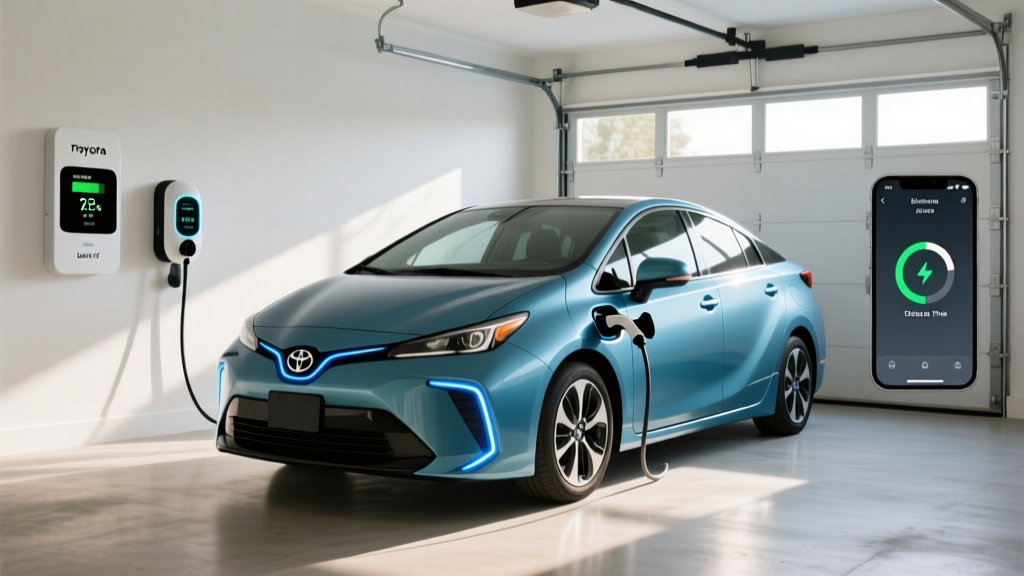
The Range Rover All-Electric's large battery makes a properly specified home Level 2 charger essential. Relying on Level 1 (120V) would require multiple days for a full charge. Here's what a home installation entails.
Electrical Requirements
A Level 2 home charger for a large-battery EV typically requires:
- Circuit: Dedicated 240V circuit, either 40-amp (for a 32A/7.7 kW charger) or 60-amp (for a 48A/11.5 kW charger)
- Breaker: Properly sized double-pole breaker matching the circuit amperage
- Wire gauge: 6 AWG copper for 60A circuits; 8 AWG for 40A circuits (varies by run length and local code)
- Panel capacity: Minimum 100A service, though 200A is strongly recommended for homes adding a 48A EV charger alongside existing loads
Do You Need a Panel Upgrade?
This is the hidden cost that catches many homeowners off guard. If your home has a 100-amp electrical panel and already runs central A/C, an electric oven, and a dryer, adding a 48-amp (11.5 kW) EV charger may exceed your panel's capacity. A licensed electrician will perform a load calculation (per NEC Article 220) to determine if your panel can handle the additional draw. If not, a panel upgrade to 200A service typically costs $1,500–$3,500 depending on your utility and local requirements.
Home Charger Installation Cost Breakdown
| Component | Basic Install (40A/7.7 kW) | Standard Install (60A/11.5 kW) | Complex Install (panel upgrade + 60A) |
|---|---|---|---|
| EVSE equipment (charger unit) | $350–$550 | $500–$750 | $500–$750 |
| Electrician labor | $400–$800 | $600–$1,200 | $800–$1,500 |
| Materials (wire, conduit, breaker) | $150–$350 | $200–$500 | $250–$600 |
| Permit and inspection | $50–$200 | $50–$200 | $50–$200 |
| Panel upgrade (if needed) | N/A | N/A | $1,500–$3,500 |
| Total estimated cost | $950–$1,900 | $1,350–$2,650 | $3,100–$6,550 |
The federal Alternative Fuel Vehicle Refueling Property Credit (IRS Form 8911) may cover up to 30% of home charging equipment and installation costs, capped at $1,000, subject to income limits and census-tract eligibility. Consult a tax professional for your specific situation.
Connector Compatibility: NACS, CCS, and the Range Rover All-Electric
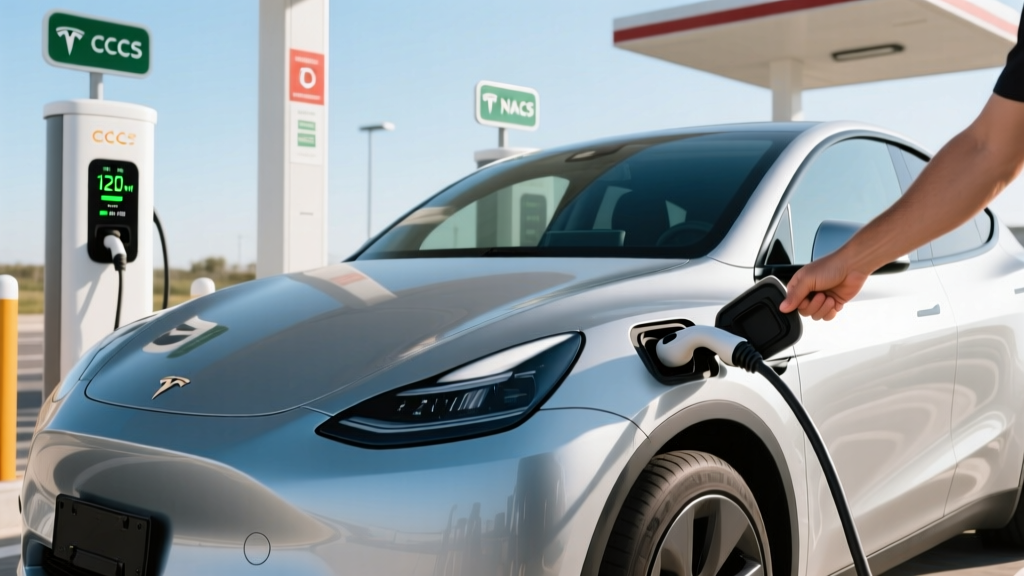
JLR has confirmed that the Range Rover All-Electric will adopt the NACS (North American Charging Standard) connector in North America, aligning with the industry-wide shift to Tesla's charging standard. This is significant for public charging access.
| Connector | Used By | DC Fast Charge? | Network Access |
|---|---|---|---|
| NACS (Tesla standard) | Tesla, Ford, GM, Rivian, JLR, Volvo, Hyundai/Kia (2025+), and most major OEMs | Yes | Tesla Supercharger network (17,000+ stalls), plus NACS-equipped Electrify America, EVgo stations |
| CCS1 | Legacy non-Tesla EVs (2024 and earlier models from VW, BMW, Mercedes, etc.) | Yes | Electrify America, EVgo, ChargePoint DC network |
| CHAdeMO | Nissan Leaf (discontinued), Mitsubishi Outlander PHEV | Yes | Limited; being phased out in North America |
With a native NACS port, the Range Rover All-Electric will access the Tesla Supercharger network without an adapter — a major advantage for road-trip charging reliability. For any remaining CCS-only public chargers, JLR is expected to offer a CCS-to-NACS adapter (similar to what Ford and GM provide), though most new public DC fast-charging installations now include NACS connectors.
Charging Time Estimates: 10–80% Scenarios
Charging speed is not linear. EV batteries charge fastest between approximately 10–50% State of Charge (SoC), then taper progressively to protect battery health. The "peak kW" figure advertised is only sustained for a portion of the session. Here's what Range Rover All-Electric owners can expect:
| Charging Method | Power | 10–80% Time (est.) | Miles Added in 30 Min |
|---|---|---|---|
| Level 1 (120V outlet) | 1.2 kW | ~64 hours (impractical) | ~15 miles |
| Level 2 (48A / 240V) | 11.5 kW | ~7 hours | ~170 miles |
| DC Fast (150 kW station) | 150 kW | ~40 minutes | ~150 miles |
| DC Fast (250 kW station) | 250 kW | ~25 minutes | ~220 miles |
| DC Fast (350 kW station) | 350 kW (800V) | ~18–22 minutes | ~270 miles |
Cost to Charge: Home vs. Public vs. Gas Comparison
One of the strongest ownership arguments for the Range Rover All-Electric over its gasoline sibling is the per-mile fueling cost. Here's how the numbers break down across different charging scenarios.
| Scenario | Rate | Cost per Full Charge (~110 kWh) | Cost per Mile (est. 320 mi range) |
|---|---|---|---|
| Home (off-peak utility rate) | $0.12/kWh | $13.20 | $0.041/mile |
| Home (average US rate) | $0.17/kWh | $18.70 | $0.058/mile |
| Public Level 2 (network) | $0.25–$0.40/kWh | $27.50–$44.00 | $0.086–$0.138/mile |
| DC Fast Charging (public) | $0.35–$0.55/kWh | $38.50–$60.50 | $0.120–$0.189/mile |
| Gas Range Rover (16 MPG combined, $3.60/gal) | $3.60/gallon | ~$72.00 (20-gal tank) | $0.225/mile |
Even at public DC fast-charging rates, the Range Rover All-Electric should cost roughly 30–50% less per mile to "fuel" than a gasoline Range Rover. With predominantly home charging at off-peak rates, the savings widen dramatically — approximately 80% less per mile. Over 15,000 miles of annual driving, home charging saves an estimated $2,700–$3,200 per year compared to premium gasoline.
Recommended Home EV Chargers for the Range Rover All-Electric
Given the Range Rover All-Electric's large battery and expected 11+ kW onboard AC charger, a 48-amp (11.5 kW) Level 2 home charger is the recommended specification. This maximizes overnight charging speed and ensures the battery is fully replenished by morning even after a long drive day.
ChargePoint Home Flex (NACS)
- Power output: Up to 11.5 kW (48A) on a 60A circuit
- Connector: NACS (native); CCS adapter available
- Cable length: 23 feet
- Smart features: Wi-Fi, app scheduling, utility demand-response integration, energy tracking
- Price: ~$650–$750
- Best for: Smart scheduling, utility rebate programs
Tesla Wall Connector (NACS)
- Power output: Up to 11.5 kW (48A) on a 60A circuit
- Connector: NACS (native)
- Cable length: 24 feet
- Smart features: Wi-Fi, firmware updates, power-sharing with second unit, load management
- Price: ~$475–$550
- Best for: Value, reliability, NACS-native simplicity
Emporia Level 2 Smart Charger
- Power output: Up to 11.5 kW (48A) on a 60A circuit
- Connector: NACS (2025+ models); J1772 with adapter for older stock
- Cable length: 24 feet
- Smart features: Real-time energy monitoring, solar integration, whole-home energy dashboard
- Price: ~$400–$500
- Best for: Solar-equipped homes, energy-conscious owners
Safety and Electrical Code Considerations
EV charger installation is governed by the National Electrical Code (NEC) and local building codes. Key requirements for a safe, code-compliant installation include:
- Dedicated circuit: The EV charger must be on its own dedicated circuit — it cannot share a circuit with other appliances or outlets. This prevents overloads and nuisance breaker trips.
- GFCI protection: NEC 2020 and later require GFCI (Ground Fault Circuit Interrupter) protection for EV charging outlets in garages and all outdoor installations. Many modern EVSE units include built-in GFCI protection; hardwired installations may require a GFCI breaker.
- Outdoor rating: If installing outside, the EVSE unit must carry a NEMA 4 or NEMA 4X rating for weather resistance. All three recommended chargers above carry outdoor ratings.
- Permit and inspection: Virtually all jurisdictions require an electrical permit for EV charger installation. The work must be inspected by the local authority having jurisdiction (AHJ) to ensure code compliance. Unpermitted work can void homeowner's insurance coverage in the event of an electrical fire.
- Wire sizing and conduit: Wire gauge must match the circuit amperage and run length per NEC Table 310.16. Longer runs may require larger wire to prevent voltage drop exceeding 3%.
Always hire a licensed electrician experienced with EV charger installations. According to the National Fire Protection Association, improper EV charging installations are a growing concern as adoption accelerates — professional installation protects your home and your investment.
Frequently Asked Questions
How much does it cost to install a home EV charger for the Range Rover All-Electric?
A standard Level 2 home charger installation (60A circuit, 48A charger, no panel upgrade) typically costs $1,350–$2,650 including equipment, electrician labor, materials, and permits. If your home requires an electrical panel upgrade to 200A service, total costs can reach $3,100–$6,550. The federal Alternative Fuel Vehicle Refueling Property Credit may offset up to $1,000 of these costs.
How fast will each charging level add range to the Range Rover All-Electric?
Level 1 (120V) adds approximately 3–5 miles per hour — essentially useless for a 110 kWh battery. Level 2 at 11.5 kW (48A, 240V) adds roughly 30–35 miles per hour, fully charging overnight. DC fast charging at 250–350 kW on an 800V system can add 200+ miles in 20–25 minutes during a 10–80% session.
Which connector does the Range Rover All-Electric use?
JLR has confirmed NACS (North American Charging Standard) for the Range Rover All-Electric in North America. This provides native access to the Tesla Supercharger network without an adapter. A CCS adapter may be offered for legacy CCS-only public chargers, though most new public installations now include NACS connectors.
How much does charging cost per mile compared to gas?
Home charging at the US average electricity rate ($0.17/kWh) costs approximately $0.058 per mile. A gasoline Range Rover at 16 MPG combined with $3.60/gallon fuel costs approximately $0.225 per mile — nearly four times more. Even public DC fast charging at $0.45/kWh costs roughly $0.155/mile, still significantly less than gasoline.
What electrical upgrades might I need for a home charger?
The most common upgrade is a panel capacity increase from 100A to 200A service, required when adding a 60A dedicated EV circuit to a home with existing high-draw appliances. Other potential upgrades include adding sub-panels, upgrading the utility service drop, or installing a load-management device (like the Emporia or Tesla Gateway) that dynamically limits charger draw to avoid panel overload — a lower-cost alternative to a full panel upgrade.
Will the Range Rover All-Electric qualify for the federal EV tax credit?
Eligibility for the §30D New Clean Vehicle Credit depends on several factors current at time of purchase: the vehicle's MSRP must not exceed $80,000 (SUVs), the buyer's adjusted gross income must fall below $300,000 (joint) / $225,000 (head of household) / $150,000 (individual), and the battery must meet critical-mineral and battery-component sourcing requirements that tighten annually. Given the Range Rover All-Electric's expected MSRP well above $100,000, it will likely exceed the MSRP cap and not qualify for the federal credit. Always verify current rules with the IRS and a tax professional before purchasing.