You pull up to a public charger, plug in your Tesla Model Y, and watch the screen. Instead of the 250 kW peak you expected, the car displays a much lower number — or a warning that the charge rate is limited by the charging station. It's one of the most common frustrations for Tesla owners, and it happens at home, too, when a Level 2 wall connector can't deliver its full rated amperage.
This guide breaks down exactly why your Tesla's charge rate gets throttled by the station (or your home's electrical panel), what each charging level actually delivers in real-world miles per hour, and how to size your home installation so you never see that limitation message again.
The Three Charging Levels: kW, Miles Per Hour, and 10–80% Times
Before diagnosing a bottleneck, you need to understand what each level can deliver. A critical distinction: kW (kilowatts) measures power — the rate at which energy flows. kWh (kilowatt-hours) measures energy — the total capacity of your battery. A 75 kWh battery charged at 7 kW takes roughly 10 hours from empty; at 150 kW DC, the same battery fills far faster but tapers as it approaches full.
| Level | Voltage / Amps | Max Power (kW) | Miles of Range Per Hour | Typical 10–80% Time (75 kWh Battery) |
|---|---|---|---|---|
| Level 1 (120V) | 120V / 12A | 1.4 kW | 3–5 mi/hr | ~38 hours |
| Level 2 (240V) | 240V / 32–48A | 7.7–11.5 kW | 25–44 mi/hr | ~5–8 hours |
| DC Fast (Supercharger/CCS) | 400–800V DC | 150–350 kW | 500–1,000+ mi/hr | 15–28 minutes |
Real-world note: DC fast charging doesn't sustain peak kW for the entire session. A Tesla Model 3 Long Range (82 kWh usable, NMC chemistry) might peak at 250 kW at 10% SoC but taper to under 100 kW above 60%, averaging roughly 150 kW across the 10–80% window. That's why manufacturers quote 10–80% times rather than full-charge times.
Why Your Tesla Says "Charge Rate Limited by Charging Station"
When your Tesla's touchscreen displays this message, the car is telling you that the station — not the car's onboard charger or battery — is the bottleneck. Here are the most common causes:
1. The Station's Maximum kW Output Is Below Your Car's Acceptance Rate
A Tesla Model Y Long Range can accept up to 250 kW at a V3 Supercharger. If you plug into a destination charger rated at 11.5 kW (48A at 240V), the car will only draw 11.5 kW — that's the station's ceiling. This isn't a malfunction; it's physics.
2. Shared Power at Multi-Stall Sites
Many public Level 2 and older DC fast-charging sites split a single transformer across multiple stalls. At a Supercharger V2 site with paired stalls (e.g., 1A and 1B), the 150 kW is shared. If another car is plugged into the paired stall, your maximum drops — sometimes to 75 kW or less. Tesla's V3 and V4 Superchargers largely eliminated this by giving each stall dedicated power.
3. Home Electrical Panel Constraints
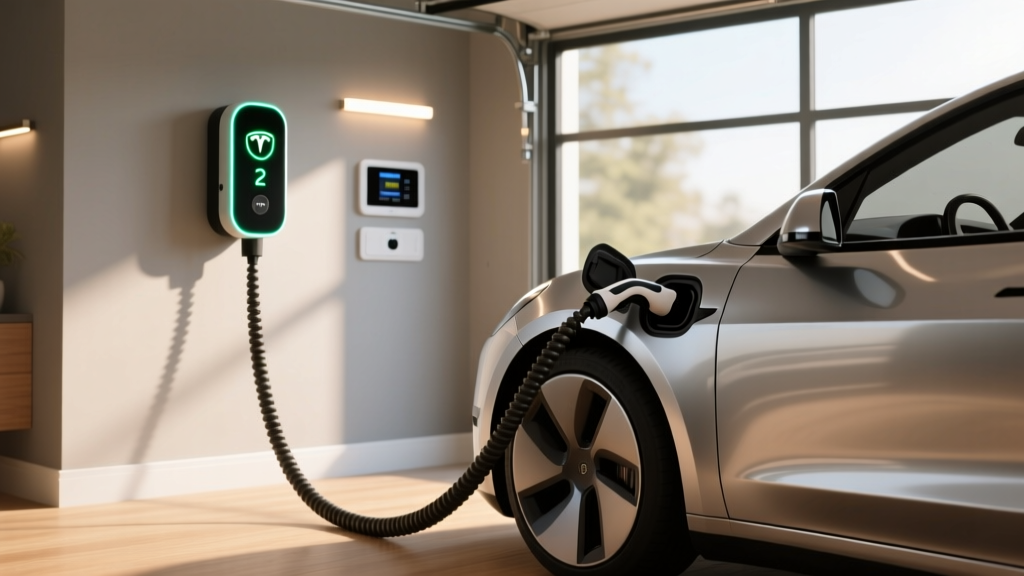
You might install a 48A Tesla Wall Connector capable of 11.5 kW, but if your electrician sets the breaker to 40A (to comply with the 80% continuous-load NEC rule), your effective output drops to 9.6 kW. If your panel is maxed out, the electrician may need to dial it back further to 32A or even 24A, limiting your charge rate accordingly.
4. Onboard Charger Limits (Non-Tesla EVs at Level 2)
While this guide focuses on Teslas, it's worth noting: many non-Tesla EVs have onboard chargers limited to 7.7 kW or 11.5 kW. Even if you plug into a 19.2 kW Level 2 station, the car won't accept more than its onboard charger allows. Tesla's onboard charger handles up to 11.5 kW (48A) on current Model 3/Y and 17.2 kW on Model S/X.
5. Cable and Connector Limitations
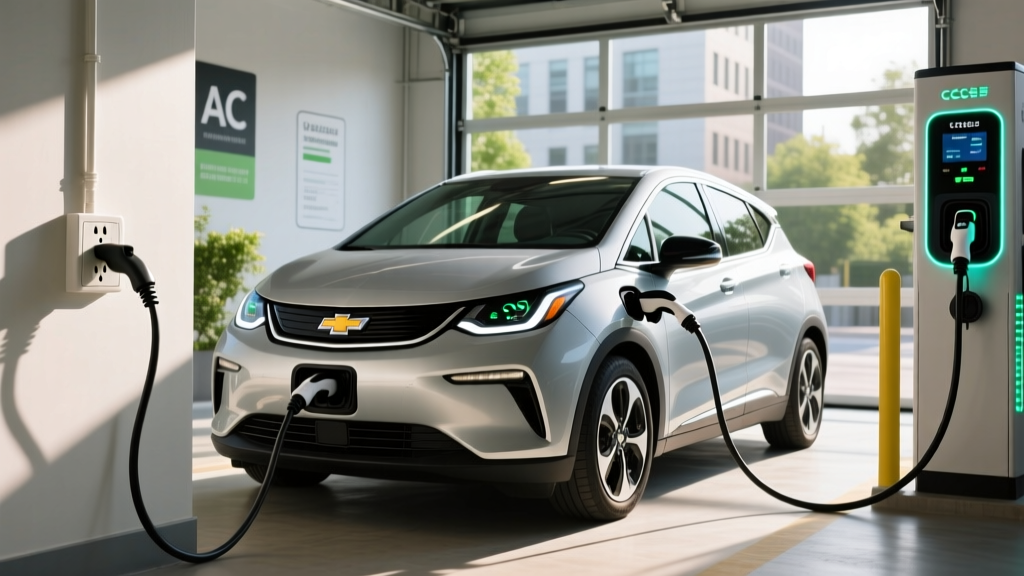
Using an adapter (e.g., J1772-to-Tesla or CCS-to-NACS) or an undersized extension cord on Level 1 can introduce resistance that the car detects, triggering a safety throttle. Always use the cable and connector rated for the station's full output.
Home Charger Installation: Electrical Requirements and Real Costs
If you're seeing "charge rate limited" at home, the fix usually involves upgrading your electrical circuit — or your entire panel. Here's what a proper Level 2 installation requires.
Electrical Specifications for a Full-Speed Tesla Home Charger
- Voltage: 240V (standard for Level 2, same as a dryer outlet)
- Amperage: 60A breaker for a 48A continuous charge (NEC requires breaker rated at 125% of continuous load)
- Wire gauge: 6 AWG copper (or 4 AWG aluminum) for a 60A circuit
- Dedicated circuit: The EV charger must have its own breaker — no sharing with other appliances
- GFCI protection: Required by NEC 2020 and later for outdoor receptacles; hardwired units may be exempt depending on local code
When You Need a Panel Upgrade
If your home has a 100A main panel (common in homes built before 1990), adding a 60A EV circuit may exceed your panel's capacity. A licensed electrician will perform a load calculation per NEC Article 220. If the calculation shows insufficient headroom, you'll need a panel upgrade to 200A — a significant but common upgrade that also benefits future electrification (heat pumps, induction stoves).
| Component | Cost Range | Notes |
|---|---|---|
| Level 2 Charger Equipment (Tesla Wall Connector, ChargePoint, Emporia) | $350–$700 | 48A smart chargers; Wi-Fi enabled |
| Electrician Labor (standard install, panel to garage <50 ft) | $500–$1,500 | Varies by region and wire run length |
| Permit and Inspection | $50–$300 | Required in most jurisdictions |
| Panel Upgrade (100A → 200A, if needed) | $1,500–$3,500 | Major cost; not always required |
| Total (no panel upgrade) | $900–$2,500 | Most common scenario |
| Total (with panel upgrade) | $2,400–$6,000 | Older homes with 100A service |
Always hire a licensed electrician and pull a permit. Unpermitted work can void your homeowner's insurance and create fire risk. The National Electrical Contractors Association maintains a directory of certified professionals.
Connector Compatibility: NACS, CCS1, and CHAdeMO in 2026
The connector landscape has consolidated significantly. Tesla's North American Charging Standard (NACS) is now the dominant plug, with Ford, GM, Rivian, Volvo, and most other automakers adopting it for 2025+ models. Here's where things stand:
| Connector | Used By | Max DC kW | Adapter Needed for Tesla? |
|---|---|---|---|
| NACS (Tesla) | Tesla (all years), Ford, GM, Rivian, Volvo, Polestar, others (2025+) | Up to 350 kW (V4 Supercharger) | None — native on Teslas |
| CCS1 | Legacy non-Tesla EVs (2024 and earlier models from VW, Hyundai, BMW) | Up to 350 kW | Tesla CCS adapter (~$175) for Supercharger access |
| CHAdeMO | Nissan Leaf, Mitsubishi Outlander PHEV (legacy) | Up to 100 kW | No Tesla adapter available; network is shrinking |
| J1772 (Level 2 AC) | All non-Tesla EVs for Level 2 | Up to 19.2 kW | Tesla includes J1772 adapter with every vehicle |
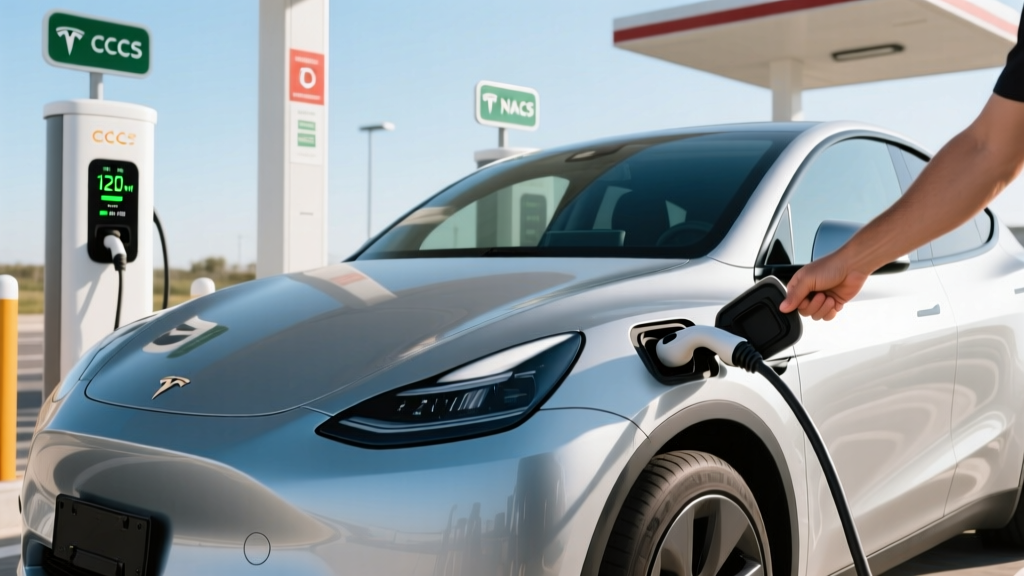
For Tesla owners: your car comes with a NACS connector (native) and a J1772 adapter for non-Tesla Level 2 stations. If you need to use a CCS1 public fast charger, Tesla sells a CCS adapter. As of 2026, the vast majority of new public DC fast chargers in the U.S. include NACS cables, so adapter needs are diminishing.
Cost to Charge: $/kWh Scenarios and Cost Per Mile vs. Gas
One of the strongest arguments for home charging is cost. But public DC fast charging can approach — or exceed — gasoline costs per mile depending on your local rates.
| Scenario | Rate ($/kWh) | Cost to Add 200 Miles (Model Y, ~3.5 mi/kWh) | Cost Per Mile |
|---|---|---|---|
| Home, off-peak utility rate | $0.08–$0.14 | $4.57–$8.00 | $0.023–$0.040 |
| Home, standard rate (no TOU plan) | $0.15–$0.22 | $8.57–$12.57 | $0.043–$0.063 |
| Public Level 2 (workplace, shopping) | $0.20–$0.35 | $11.43–$20.00 | $0.057–$0.100 |
| DC Fast Charger (Electrify America, EVgo) | $0.35–$0.55 | $20.00–$31.43 | $0.100–$0.157 |
| Tesla Supercharger (varies by location) | $0.25–$0.40 | $14.29–$22.86 | $0.071–$0.114 |
| Gasoline comparison (28 MPG, $3.40/gal) | — | $24.29 | $0.121 |
The takeaway: home charging on an off-peak or time-of-use (TOU) plan delivers fuel costs roughly 60–80% below gasoline. Exclusive reliance on DC fast charging erases most of that advantage. According to fueleconomy.gov, the 2026 Tesla Model Y Long Range achieves 119 MPGe combined — translating to roughly $0.04/mile on average U.S. electricity rates vs. $0.12/mile for a comparable gas SUV.
Equipment Recommendations: Top Level 2 Chargers for Tesla Owners
If you're installing a home charger and want to avoid the "charge rate limited" message, choose equipment that matches your car's onboard charger capacity. Here are top picks for 2026:
Tesla Wall Connector (Gen 4)
- Power Output: Up to 11.5 kW (48A at 240V)
- Connector: NACS native
- Cable Length: 24 ft
- Smart Features: Wi-Fi, OTA updates, load sharing between multiple units, power-sharing for limited panels
- Price: ~$475
- Best for: Tesla-only households wanting seamless integration and the ability to daisy-chain two units on one 60A circuit
Emporia Vue Level 2 Charger
- Power Output: Up to 11.5 kW (48A)
- Connector: J1772 (use included Tesla adapter) or NACS version available
- Cable Length: 24 ft
- Smart Features: Energy monitoring, solar integration, scheduled charging, load management
- Price: ~$399
- Best for: Homes with solar panels or those wanting detailed energy tracking via the Emporia app
ChargePoint Home Flex
- Power Output: Up to 12 kW (50A, configurable down to 16A for limited panels)
- Connector: J1772 (Tesla adapter included) or NACS pigtail version
- Cable Length: 23 ft
- Smart Features: Alexa integration, flexible amperage dial, detailed session history
- Price: ~$699
- Best for: Mixed-fleet households (Tesla + non-Tesla EVs) or homes needing flexible amperage without rewiring
All three chargers are UL-listed, rated for indoor and outdoor installation (NEMA 4 enclosure), and compatible with NEMA 14-50 receptacles or hardwired connections. Hardwiring is preferred for 48A+ installations — a NEMA 14-50 outlet is rated for 50A but some utilities and inspectors prefer hardwired for continuous EV loads.
Safety, Code, and the 80% Continuous Load Rule
The National Electrical Code (NEC) classifies EV charging as a continuous load — meaning it can run for 3 hours or more. For continuous loads, the circuit must be rated at 125% of the actual draw. This is why a 48A charger requires a 60A breaker (48 × 1.25 = 60).
Key safety requirements:
- Dedicated circuit: No shared outlets or appliances on the EV breaker
- Proper wire gauge: 6 AWG copper minimum for 60A; undersized wire creates fire risk
- GFCI protection: Required for outdoor receptacles (NEC 2020+); hardwired units may be exempt in some jurisdictions
- Outdoor rating: If mounted outside, the charger must carry a NEMA 4 or NEMA 4X rating for weather resistance
- Permit and inspection: Virtually all jurisdictions require a permit for new 240V circuits — skip this and you risk insurance denial in the event of an electrical fire
If your electrician recommends a lower amperage than the charger's maximum (e.g., wiring a 48A charger to a 40A breaker for 32A continuous output), that's not cutting corners — it's code compliance for your panel's available capacity. Most Tesla Wall Connectors and smart chargers allow amperage configuration in software to match the installed breaker.
Frequently Asked Questions
How much does it cost to install a home EV charger?
A standard Level 2 installation with no panel upgrade costs between $900 and $2,500, including equipment ($350–$700), electrician labor ($500–$1,500), and permit fees ($50–$300). If your home has a 100A panel that needs upgrading to 200A, add $1,500–$3,500. Always get a load calculation from a licensed electrician before committing.
How fast will each charging level add range to my Tesla?
Level 1 (120V) adds 3–5 miles per hour — enough for overnight top-ups on low-mileage days. Level 2 (240V, 48A) adds 35–44 miles per hour, fully replenishing a Model Y Long Range overnight. DC fast charging at a V3 Supercharger (250 kW) adds roughly 200 miles in 15 minutes during the 10–80% window.
Which connector and charger is compatible with my Tesla?
All Teslas use the NACS connector natively. For home Level 2, the Tesla Wall Connector is the simplest choice. For public Level 2 stations with J1772 connectors, use the J1772 adapter included with your Tesla. For non-Tesla DC fast chargers using CCS1, Tesla sells a CCS adapter. As of 2026, most new public DC fast chargers include NACS cables.
How much does charging cost per mile compared to gas?
Home charging on a standard rate costs roughly $0.04–$0.06 per mile for a Tesla Model Y, compared to about $0.12 per mile for a 28 MPG gas SUV at $3.40/gallon. That's a 50–70% savings per mile. However, exclusive use of DC fast charging at $0.35–$0.55/kWh can push costs to $0.10–$0.16 per mile — close to or above gas. See the cost table above for detailed scenarios.
What electrical upgrades might I need for a home charger?
The most common upgrade is a panel replacement from 100A to 200A service ($1,500–$3,500) if your existing panel lacks capacity for a 60A dedicated EV circuit. Other potential needs: replacing a Federal Pacific or Zinsco panel (known fire hazards, often flagged during inspection), adding a sub-panel in the garage if the main panel is far away, or upgrading the utility service drop for homes with very high total loads. A licensed electrician's load calculation will determine exactly what's needed.
Can I charge faster by using a NEMA 14-50 outlet instead of hardwiring?
A NEMA 14-50 outlet is rated for 50A, which means a 40A continuous draw (9.6 kW) — slightly less than the 48A (11.5 kW) available with a hardwired 60A circuit. For most Tesla owners, the difference is about 3 extra miles per hour of charging. Hardwiring is generally preferred for reliability and code compliance, but a 14-50 outlet offers portability if you might move the charger.
The bottom line: when your Tesla tells you the charge rate is limited by the station, it's giving you accurate, actionable information. At home, the fix is usually a properly sized 60A circuit with a quality 48A wall connector. On the road, it means choosing V3/V4 Superchargers or high-power CCS stations over older, shared-power stalls. Size your home installation correctly, and you'll wake up to a full battery every morning without ever seeing that limitation message.