The Reality of Porsche Wireless Charging for the Taycan
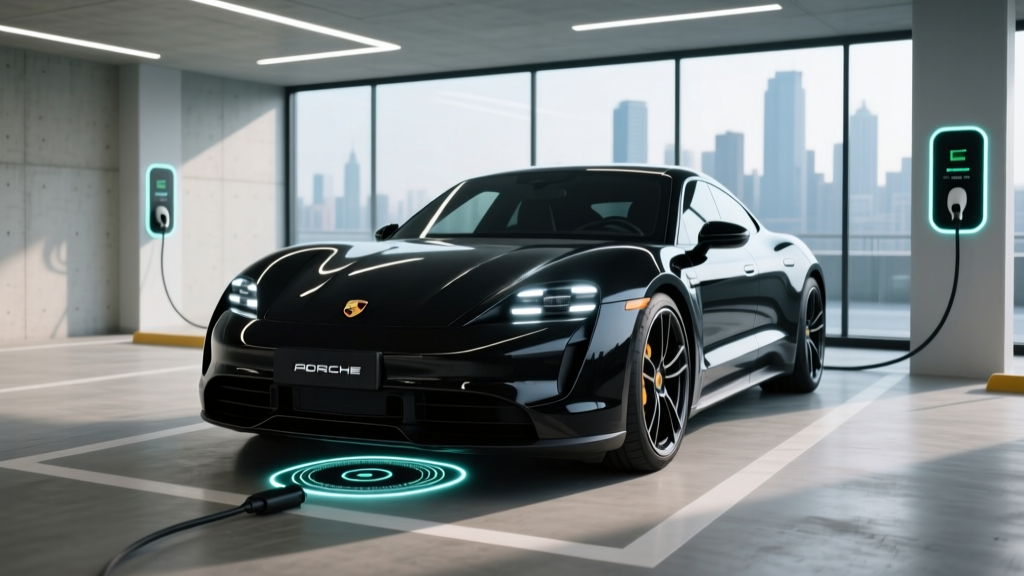
If you've been searching for Porsche wireless charging, you're not alone. The concept of simply parking over a pad and letting the electrons flow—no cables, no plugs—is the holy grail of EV convenience. Porsche has demonstrated inductive charging prototypes and has been actively developing the technology in partnership with Qualcomm and other suppliers. But as of early 2026, Porsche has not released a production wireless charging system for the Taycan or any other consumer model.
What does exist is a robust wired charging ecosystem that makes the Taycan one of the fastest-charging EVs on the market, alongside emerging wireless standards from the SAE (J2954) that could pave the way for future Porsche adoption. Here's everything you need to know about where Porsche wireless charging stands, what speeds inductive charging can deliver today, and how to set up the fastest, most practical home charging solution for your Taycan right now.
How Wireless EV Charging Works (and Why Porsche Is Cautious)
Wireless EV charging, also called inductive charging, uses electromagnetic fields to transfer energy between a ground-mounted transmitter pad and a receiver pad mounted under the vehicle. The SAE J2954 standard, finalized for light-duty vehicles, supports power levels up to 11 kW for residential use and up to 500 kW in heavy-duty applications.
For a Porsche Taycan with its 83.7 kWh (usable) or 93.4 kWh (usable, Performance Battery Plus) battery pack, an 11 kW wireless pad would add roughly 25–30 miles of range per hour—comparable to a wired Level 2 charger on a 40-amp circuit. That's adequate for overnight replenishment, but it falls far short of the Taycan's 270 kW DC fast-charging capability.
Porsche's engineering priorities center on efficiency, thermal management, and charging speed. Current inductive systems operate at roughly 85–92% efficiency, compared to 95–98% for a wired Level 2 connection. That 8–13% energy loss generates heat in the pads and means higher electricity costs over time. For a brand that engineered the Taycan's 800-volt architecture specifically to minimize charging times, wireless charging's current limitations make it a tough fit for production rollout.
Charging Levels Explained: Speeds in kW and Miles Per Hour
Whether you're waiting for wireless or plugging in today, understanding charging levels is essential. Here's how each tier performs with a Taycan-class battery:
| Level | Voltage | Power (kW) | Miles of Range Added Per Hour | Typical Use Case |
|---|---|---|---|---|
| Level 1 | 120V AC | 1.0–1.9 kW | 3–5 mi/hr | Emergency/trickle; standard outlet |
| Level 2 | 240V AC | 3.3–19.2 kW | 12–55 mi/hr | Home & destination charging |
| DC Fast | 400–800V DC | 50–350 kW | 150–400+ mi/hr (peak) | Road trips, highway corridors |
| Wireless (Inductive) | N/A (magnetic) | 3.6–11 kW | 10–30 mi/hr | Experimental/fleet; not consumer-available |
Key distinction: kW (kilowatts) measures the rate of energy transfer—like water pressure from a hose. kWh (kilowatt-hours) measures the total energy stored in the battery—like the size of the tank. A 19.2 kW Level 2 charger fills the Taycan's 93.4 kWh battery from 10–80% in roughly 4 hours. A 270 kW DC fast charger does it in about 22 minutes under ideal conditions.
Setting Up Level 2 Home Charging for Your Taycan
Since Porsche wireless charging isn't yet a production reality, a hardwired Level 2 station is the gold standard for Taycan owners. The Taycan's onboard charger accepts up to 19.2 kW on AC power (with the optional 19.2 kW onboard charger; standard is 9.6 kW on earlier models, 11 kW on some trims). This means you can recoup a full day's driving in just a few hours of overnight charging.
Electrical Requirements and Panel Considerations
A 19.2 kW charger requires a 240V, 80-amp dedicated circuit. Most homes have a 100-amp or 200-amp main electrical panel. An 80-amp EV circuit represents a significant load—roughly 40–80% of a 100-amp panel's total capacity—which often necessitates a panel upgrade to 200 amps in older homes.
For a more moderate 9.6 kW charger (40-amp circuit) or 11.5 kW charger (48-amp circuit), most 200-amp panels can accommodate the load without an upgrade, provided you don't have other major 240V appliances (electric range, dryer, HVAC) running simultaneously at full draw.
Installation Cost Breakdown
| Component | Cost Range | Notes |
|---|---|---|
| Level 2 Charger Equipment | $500–$1,300 | Varies by power output, smart features, cable length |
| Electrician Labor (standard install) | $800–$2,500 | Depends on panel proximity, conduit run, wall type |
| Electrical Permit | $50–$250 | Varies by municipality |
| Panel Upgrade (if needed) | $1,500–$4,000 | 100A to 200A upgrade; not always required |
| Total (no panel upgrade) | $1,350–$4,050 | Most common scenario for 200A homes |
| Total (with panel upgrade) | $2,850–$8,050 | Older homes with 100A service |
Always hire a licensed electrician familiar with EV charging loads. The National Electrical Code (NEC) requires EV chargers to be on a dedicated circuit with appropriate overcurrent protection. For outdoor installations, ensure the charger carries a NEMA 4 or NEMA 4X rating and that the circuit includes GFCI protection as required by NEC 2020 and later.
Connector Compatibility: What Plugs Into a Porsche Taycan?
The Taycan sold in North America uses the CCS1 (Combined Charging System) connector for both Level 2 AC and DC fast charging. However, the North American charging landscape is shifting rapidly toward the NACS (North American Charging Standard), originally developed by Tesla and now adopted by nearly every major automaker.
Porsche has announced that future models will transition to NACS, and adapters are available for current CCS1-equipped Taycans to access Tesla Supercharger stations. Here's the connector landscape:
| Connector | Type | Taycan Compatibility | Notes |
|---|---|---|---|
| CCS1 (J1772 + DC pins) | AC Level 2 + DC Fast | Native (built-in port) | Standard on all Taycan model years |
| NACS (Tesla) | AC Level 2 + DC Fast | Adapter required | CCS1-to-NACS adapter enables Supercharger access |
| J1772 | AC Level 1/2 only | Native (upper portion of CCS1) | Used by most public Level 2 stations |
| CHAdeMO | DC Fast only | Not compatible | Largely discontinued; no adapter available |
For home charging, any J1772-connector Level 2 station will plug directly into the Taycan. For DC fast charging on road trips, the Electrify America network (CCS1 native) remains the most accessible option, though the growing Supercharger network via adapter adds significant coverage.
Charging Cost: Per-Mile Breakdown vs. Gasoline
One of the strongest ownership arguments for the Taycan is fuel cost savings, particularly if you charge at home on off-peak electricity rates.
| Scenario | Rate | Cost Per Mile (Taycan) | Cost Per Mile (Gas, 22 MPG Combined) |
|---|---|---|---|
| Home Off-Peak | $0.12/kWh | $0.04 | $0.16 (at $3.50/gal) |
| Home Standard | $0.18/kWh | $0.06 | $0.16 |
| Public Level 2 | $0.30/kWh | $0.10 | $0.16 |
| DC Fast Charging | $0.48/kWh | $0.16 | $0.16 |
At the Taycan's average efficiency of roughly 3.0–3.3 miles per kWh (depending on trim and driving style), home charging on off-peak rates delivers a per-mile cost about 75% lower than a comparable gasoline sports sedan. Even at public DC fast-charging rates, the Taycan is cost-competitive with gas.
The Taycan 4S, for example, carries an EPA-estimated 235 miles of range (Performance Battery Plus). According to fueleconomy.gov, its combined efficiency is approximately 79 MPGe. Real-world highway driving at 75+ mph typically yields 200–215 miles before needing a charge, with cold weather (below 32°F) reducing range by 15–25%.
Equipment Picks: Best Level 2 Chargers for the Taycan
Given the Taycan's ability to accept up to 19.2 kW on AC power, you have flexibility. Here are proven units organized by use case:
Best for Maximum Speed: Porsche Mobile Charger Connect
Power: Up to 9.6 kW (40A) | Connector: J1772/CCS1 | Cable: 23 ft | Smart Features: Wi-Fi, app scheduling, load management | Price: ~$1,170 (included with some Taycan trims)
Porsche's own unit integrates directly with the My Porsche app and supports load management to avoid tripping breakers when other appliances draw power. Limited to 9.6 kW, which adds roughly 27 miles of range per hour.
Best for High Power: ChargePoint Home Flex
Power: Up to 12 kW (50A) on NEMA 14-50 or up to 19.2 kW (80A) hardwired | Connector: J1772 | Cable: 23 ft | Smart Features: Wi-Fi, Alexa, scheduling, energy tracking | Price: ~$699 (50A plug-in) / ~$799 (hardwired)
One of the few residential chargers that can deliver the Taycan's full 19.2 kW AC rate when hardwired on an 80-amp circuit. The ChargePoint app is reliable and provides detailed charging history.
Best Value: Emporia Vue Level 2 Charger
Power: Up to 11.5 kW (48A) | Connector: J1772 | Cable: 24 ft | Smart Features: Wi-Fi, solar integration, load management | Price: ~$399
An excellent budget option that still delivers meaningful speed. The solar-integration feature is ideal if you have rooftop panels. Lacks the polish of premium brands but delivers reliable daily charging.
DC Fast Charging: Taycan's 800-Volt Advantage
Where the Taycan truly excels is DC fast charging. Thanks to its 800-volt architecture (most competitors use 400V), the Taycan can accept up to 270 kW at compatible DC fast chargers, enabling a 10–80% charge in approximately 22 minutes under ideal thermal conditions.
Real-world charging curves matter here. The Taycan sustains peak power longer than most EVs, typically holding above 200 kW from 10% to roughly 45% State of Charge before tapering. By 80% SoC, the rate drops to roughly 80–100 kW. This means a 10–80% session on a 350 kW Electrify America station averages around 150–170 kW sustained—not the 270 kW peak, but still class-leading.
For optimal DC fast-charging performance, always precondition the battery by entering a fast-charger destination into the Porsche navigation system. This warms the battery to the ideal temperature window (roughly 95–104°F / 35–40°C) and can shave 5–8 minutes off your charging session, particularly in cold weather.
Will Porsche Ever Offer Wireless Charging?
Porsche has not announced a production timeline for wireless charging on the Taycan or the Macan EV. However, the company has filed patents related to inductive charging alignment systems and has participated in SAE J2954 standards development. The most likely scenario is that wireless charging debuts on a future Porsche model—possibly a next-generation vehicle—as a premium convenience option rather than a retrofit for current Taycans.
The infrastructure challenge is significant: wireless charging requires precise parking alignment (within roughly 2 inches for optimal efficiency), ground-mounted transmitter pads that must be professionally installed, and vehicle-side receiver hardware that adds weight and cost. Until these hurdles are addressed at scale, wired Level 2 charging remains faster, cheaper, more efficient, and universally compatible.
For the latest on Porsche's EV technology roadmap, check Porsche's official newsroom.
Frequently Asked Questions
Is Porsche wireless charging available for the Taycan in 2026?
No. Porsche has demonstrated wireless charging prototypes and holds related patents, but no production wireless charging system is available for any current Porsche consumer vehicle. All Taycan charging in 2026 uses wired CCS1/J1772 connectors for AC and CCS1 for DC fast charging.
How much does it cost to install a home EV charger for a Taycan?
Expect $1,350–$4,050 for a standard Level 2 installation (equipment, electrician, and permit) if your home already has a 200-amp electrical panel. If a panel upgrade from 100A to 200A is needed, add $1,500–$4,000, bringing the total to $2,850–$8,050.
How fast will a Level 2 charger add range to my Taycan?
At 9.6 kW (40A), you'll gain roughly 27 miles of range per hour. At 19.2 kW (80A, hardwired), that increases to about 50–55 miles per hour. A full overnight charge (8–10 hours) at 9.6 kW will fully replenish the Taycan's battery.
Which connector and charger is compatible with my Taycan?
The Taycan uses CCS1 natively for AC and DC charging. Any J1772-connector Level 2 home charger is compatible. For Tesla Supercharger access, you'll need a CCS1-to-NACS adapter. CHAdeMO is not compatible.
How much does charging cost per mile compared to gas?
Charging at home on off-peak rates ($0.12/kWh) costs roughly $0.04 per mile—about 75% less than a gas vehicle getting 22 MPG at $3.50/gallon ($0.16/mile). Public DC fast charging at $0.48/kWh is roughly cost-equivalent to gasoline at $0.16/mile.
What electrical upgrades might I need for a Taycan home charger?
A 19.2 kW charger requires an 80-amp dedicated 240V circuit, which may require a panel upgrade in homes with 100-amp service. A 9.6 kW charger (40-amp circuit) or 11.5 kW charger (48-amp circuit) typically fits within a 200-amp panel without upgrades. Always consult a licensed electrician for a load calculation.