If you've spent years enjoying the supercharged 3.8L V6 in a Pontiac Grand Prix GTP — that instant torque off the line, the familiar whine of the Eaton M90 blower — you already understand one thing that puts you ahead of most first-time EV buyers: torque is addictive. The difference is that an electric motor delivers it from 0 RPM, without a supercharger, a transmission kickdown, or a single drop of premium fuel.
Making the jump from a Grand Prix GTP Supercharged (or any legacy performance sedan) to a modern battery-electric vehicle means rethinking "refueling" entirely. You won't visit gas stations. Instead, you'll charge at home, at work, and on road trips using a mix of AC and DC power. This guide walks through every layer of that transition — the electrical requirements, the real costs, the hardware, and what your daily routine will actually look like.
Charging Levels Explained: How Fast Each One Adds Range
Before we get to hardware or cost, you need to understand the three charging levels and — critically — the difference between kW (kilowatts), which is the rate of power delivery, and kWh (kilowatt-hours), which is the total energy stored in your battery. Think of kW as how fast water flows from a hose, and kWh as the size of the bucket. A bigger kW number means faster charging. A bigger kWh battery means more range.
| Level | Voltage | Max Power (kW) | Miles of Range Added per Hour | Best For |
|---|---|---|---|---|
| Level 1 | 120V AC | 1.4–1.9 kW | 3–5 miles | Overnight top-offs, PHEVs, low-mileage drivers |
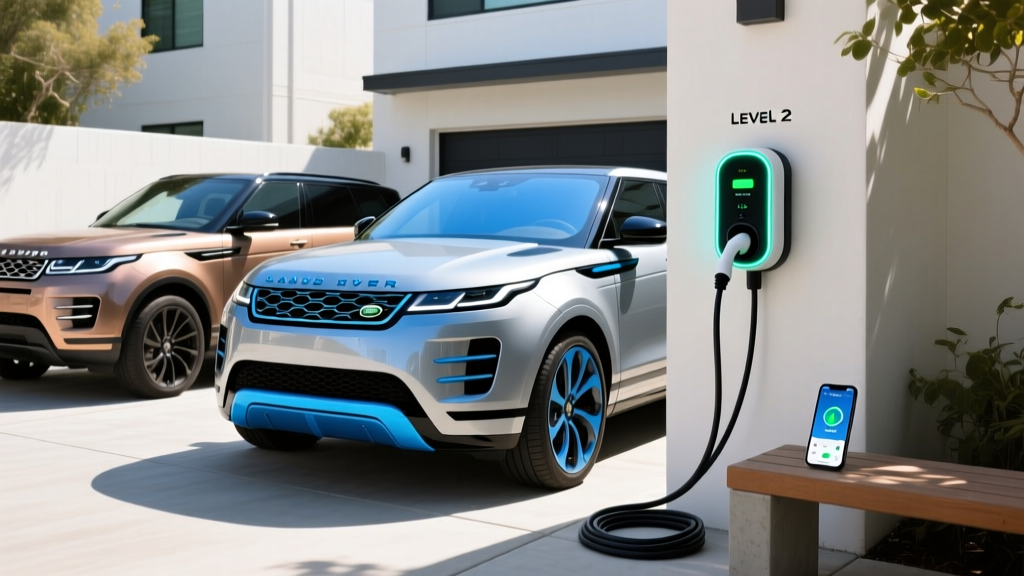
| Level 2 | 240V AC | 7.2–19.2 kW | 20–60+ miles | Daily home charging, workplace charging |
| DC Fast Charging (DCFC) | 400–800V DC | 50–350+ kW | 150–1,200+ miles (theoretical) | Road trips, quick top-ups on the go |
A few real-world caveats: DC fast charging speeds peak at a low state of charge (typically 10–30%) and taper significantly above 80%. A vehicle rated for a "peak 250 kW" charge rate may sustain that for only 5–8 minutes before dropping to 150 kW, then 100 kW, then 50 kW as the battery fills. This is called the charge curve, and it's why manufacturers quote 10–80% charging times rather than 0–100%. For example, a Hyundai Ioniq 5 with a 77.4 kWh battery at a 350 kW charger can go from 10–80% in roughly 18 minutes — but that last 20% can take another 20+ minutes. Always plan road-trip stops around 10–80%, not a full charge.
How Much Does It Cost to Install a Home EV Charger?
This is the single most common question from new EV buyers, and the honest answer is: it depends heavily on your home's electrical panel. Here's a realistic breakdown for a Level 2 home charger installation in 2026:
| Component | Typical Range | Notes |
|---|---|---|
| Level 2 charger (hardware) | $300–$700 | Smart Wi-Fi chargers with 25-ft cables, 40–48A |
| Electrician labor | $400–$1,500 | Depends on run length from panel to garage/carport |
| Permit fees | $50–$200 | Varies by municipality; some waive EV permits |
| Electrical panel upgrade (if needed) | $1,500–$4,000 | Required if panel is 100A or maxed out; 200A is standard for EV-ready homes |
| Total (no panel upgrade) | $750–$2,400 | Most homes with a 200A panel and short run |
| Total (with panel upgrade) | $2,250–$6,400 | Older homes with 100A service or full panels |
Homes built after 2000 usually have 200-amp panels with spare capacity, making a Level 2 install relatively straightforward. If you're coming from an older home — the kind of garage where a Grand Prix GTP might have lived for two decades — you may need a panel upgrade. A licensed electrician can perform a load calculation to determine whether your current panel can handle a 40-amp or 50-amp dedicated circuit for EV charging. Don't skip this step: running a 48A charger on a shared or undersized circuit is a fire hazard and a code violation.
Electrical Requirements: What Your Home Needs
A Level 2 home charger requires a 240-volt dedicated circuit — the same type of circuit that powers your electric dryer or oven. Here's what that means in practice:
- 40-amp circuit (for a 32A continuous charger): requires 8 AWG copper wire, a 2-pole 40A breaker. This is the most common residential setup and works with chargers like the ChargePoint Home Flex at its 32A setting.
- 50-amp circuit (for a 40A continuous charger): requires 6 AWG copper wire, a 2-pole 50A breaker. Supports faster charging on vehicles with larger onboard chargers.
- 60-amp circuit (for a 48A continuous charger): requires 4 AWG copper wire, a 2-pole 60A breaker. Needed for maximum Level 2 speed on vehicles like the Ford F-150 Lightning or Tesla Model S.
National Electrical Code (NEC) requires that continuous loads (anything running 3+ hours, which includes EV charging) must not exceed 80% of the circuit's rated capacity. So a 50-amp breaker supports a maximum 40-amp continuous charge. Your electrician will size everything accordingly.
Safety requirements include:
- A GFCI (Ground Fault Circuit Interrupter) breaker or outlet for any outdoor installation
- A NEMA 14-50 outlet (if using a plug-in charger) or a hardwired connection (preferred for 48A+ installations)
- Outdoor-rated (NEMA 4) enclosures for any charger mounted outside a garage
- Proper conduit and wire routing per local code
Connector Compatibility: NACS, CCS, and CHAdeMO in 2026
The connector landscape has consolidated significantly since 2024. Here's where things stand:
| Connector | Brands Using It (New Vehicles) | Public Network Availability |
|---|---|---|
| NACS (North American Charging Standard / Tesla) | Tesla, Ford, GM, Rivian, Volvo, Polestar, Hyundai, Kia, BMW, Mercedes-Benz, and most others | Tesla Superchargers (open to all via NACS), Electrify America, ChargePoint, EVgo adding NACS cables |
| CCS1 (Combined Charging System) | Legacy vehicles (pre-2025 models from VW, some Stellantis, older Hyundai/Kia) | Electrify America, EVgo, ChargePoint — still widely available |
| CHAdeMO | Nissan Leaf (legacy only — discontinued) | Dwindling; some older Electrify America and EVgo stations |
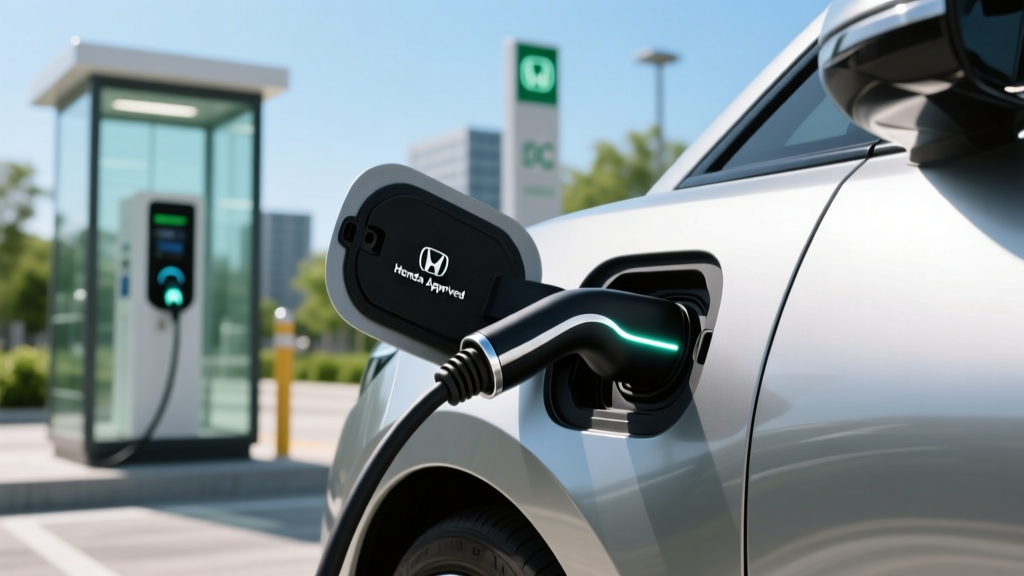
By 2026, NACS is the dominant standard. If you're buying a new EV, it almost certainly has a NACS port — or if it's a 2024–2025 CCS-equipped model, the manufacturer provides or sells a CCS-to-NACS adapter for access to Tesla Superchargers. Home Level 2 chargers use a J1772 connector (for CCS vehicles) or a NACS connector; many newer home chargers ship with NACS or include a J1772-to-NACS adapter in the box.
For public DC fast charging, Tesla Superchargers now welcome non-Tesla vehicles with NACS ports. Electrify America and EVgo have been adding NACS cables alongside their existing CCS connectors. If you drive a CCS-equipped vehicle, check whether your automaker offers an adapter — Ford, GM, and Rivian all provide them.
How Much Does Charging Cost Per Mile vs. Gas?
This is where the economics shift dramatically from your Grand Prix GTP days. The GTP's 3.8L supercharged V6 was rated at roughly 18 MPG city / 28 MPG highway (fueleconomy.gov). At $3.50/gallon for premium fuel (which the GTP required), you were paying roughly $0.16–$0.19 per mile just in fuel.
| Scenario | Cost per kWh or Gallon | Efficiency | Cost Per Mile |
|---|---|---|---|
| Home charging (off-peak/utility rate) | $0.10–$0.15/kWh | 3.0 mi/kWh (avg EV) | $0.03–$0.05 |
| Home charging (standard rate) | $0.15–$0.20/kWh | 3.0 mi/kWh | $0.05–$0.07 |
| Public Level 2 charging | $0.25–$0.40/kWh | 3.0 mi/kWh | $0.08–$0.13 |
| DC fast charging (public) | $0.35–$0.55/kWh | 3.0 mi/kWh | $0.12–$0.18 |
| Pontiac Grand Prix GTP (premium gas) | $3.50/gallon | 22 MPG combined | $0.16 |
| Average new gas car (regular) | $3.20/gallon | 28 MPG combined | $0.11 |
Home charging on an off-peak utility rate is the cheapest "fuel" you'll ever buy — typically one-third to one-quarter the per-mile cost of the GTP's premium gas. Even public DC fast charging is often cheaper per mile than the supercharged 3800 Series II/III V6 sipping premium. Over 15,000 miles per year, a typical EV owner charging mostly at home saves $1,200–$1,800 annually versus a vehicle getting 22 MPG on premium.
Pro tip: many utilities offer time-of-use (TOU) plans with off-peak rates as low as $0.06–$0.08/kWh between 10 PM and 6 AM. Set your charger's scheduling feature to charge during these windows and your cost per mile drops to $0.02–$0.03.
Equipment Recommendations: Which Home Charger Should You Buy?
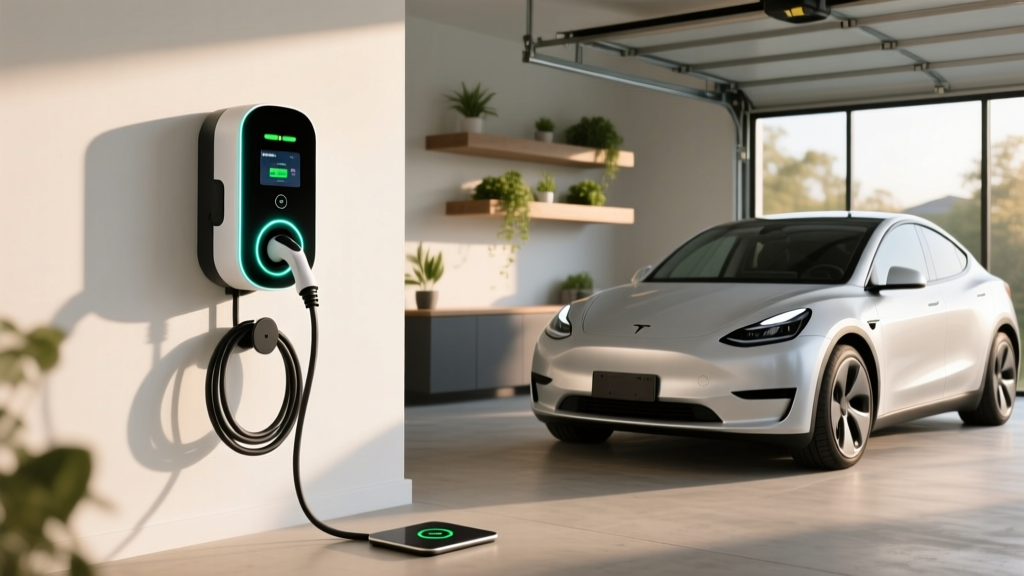
Here are four Level 2 chargers that represent the best options across different needs and budgets in 2026:
ChargePoint Home Flex (NACS or J1772)
- Power output: Up to 50A (12 kW on a 240V/60A circuit); adjustable down to 16A
- Connector: Available in NACS or J1772
- Cable length: 23 feet
- Smart features: Wi-Fi, app scheduling, energy tracking, Alexa integration
- Price: ~$550–$650
- Best for: Versatile amperage adjustment lets you match your panel's capacity without overspending on electrical work
Tesla Wall Connector (NACS)
- Power output: Up to 48A (11.5 kW)
- Connector: NACS native
- Cable length: 24 feet
- Smart features: Wi-Fi, OTA updates, power sharing (link multiple units on one circuit), Tesla app integration
- Price: ~$475
- Best for: Tesla owners and NACS-equipped vehicles; best value at 48A
Emporia Vue Level 2 Charger
- Power output: Up to 48A (11.5 kW)
- Connector: J1772 (NACS adapter available)
- Cable length: 24 feet
- Smart features: Wi-Fi, app control, integrates with Emporia home energy monitor, solar-aware charging
- Price: ~$400
- Best for: Budget-conscious buyers who want smart features and solar integration
Grizzl-E Smart (J1772)
- Power output: Up to 40A (9.6 kW)
- Connector: J1772
- Cable length: 24 feet
- Smart features: Wi-Fi, OCPP compatibility, adjustable amperage
- Price: ~$450
- Best for: Cold-climate durability (rated to -40°F), Canadian-built, rugged outdoor use
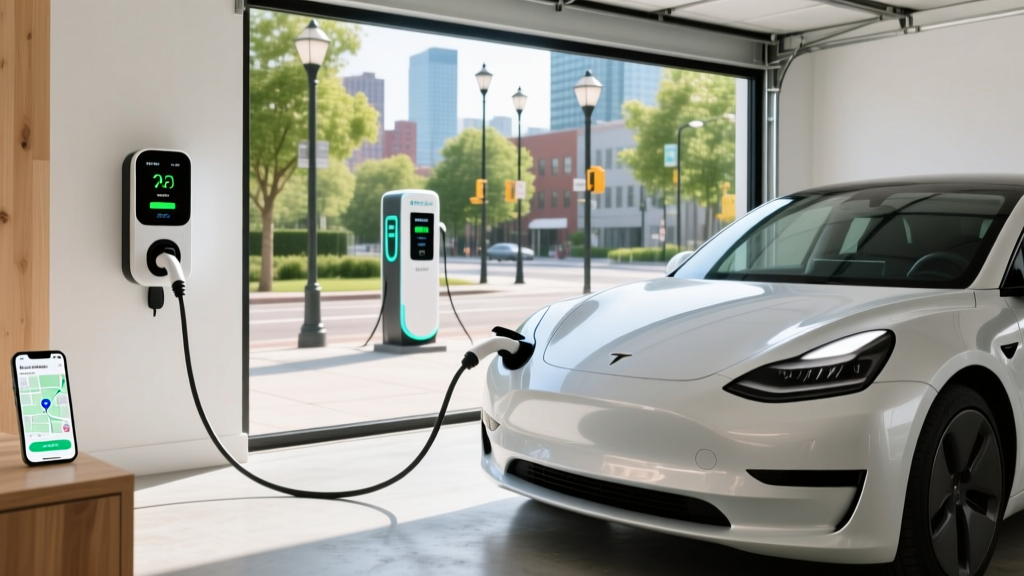
For most new EV buyers in 2026, the Tesla Wall Connector (if your vehicle is NACS-equipped) or the ChargePoint Home Flex (for maximum flexibility) are the top picks. Both support 48A or close to it, both offer smart scheduling for off-peak rates, and both have strong reliability track records.
Charging Times for Common Battery Sizes
How long a charge takes depends on three factors: your battery's usable capacity (kWh), your charger's power output (kW), and your vehicle's maximum onboard AC charge acceptance rate. Here are real-world examples:
| Vehicle Example | Battery (kWh usable) | Level 2 at 11.5 kW (48A) | DCFC Peak Rate | DCFC 10–80% Time |
|---|---|---|---|---|
| Tesla Model 3 Long Range | 75 kWh | ~4.5 hours | 250 kW | ~25 min |
| Hyundai Ioniq 5 (Long Range) | 77.4 kWh | ~4.7 hours | 350 kW (800V) | ~18 min |
| Ford F-150 Lightning (Extended) | 131 kWh | ~8 hours | 150 kW | ~45 min |
| Chevrolet Equinox EV | 85 kWh | ~5.2 hours | 150 kW | ~30 min |
| BMW i4 eDrive40 | 81.5 kWh | ~5 hours | 200 kW | ~31 min |
Notice that Level 2 charging at home always takes multiple hours — and that's fine. You plug in when you get home and wake up to a full battery every morning. The comparison to your GTP's 5-minute gas stop only matters on road trips, where DC fast charging fills the gap. Plan road-trip charging stops around the 10–80% window; the taper above 80% makes topping off to 100% at a DCFC station a poor use of time.
Frequently Asked Questions
How much does it cost to install a home EV charger?
A typical Level 2 home charger installation costs $750–$2,400 if your electrical panel has sufficient capacity (200A service with spare breaker slots). If your home needs a panel upgrade — common in homes built before 1990 or with original 100A service — add $1,500–$4,000. Always get a load calculation from a licensed electrician before committing to a specific charger amperage.
How fast will each charging level add range?
Level 1 (120V) adds 3–5 miles of range per hour. Level 2 (240V, 40–48A) adds 20–45 miles per hour depending on your vehicle's efficiency. DC fast charging can add 100–250+ miles in 15–30 minutes, depending on the station's kW output and your vehicle's charge curve. For daily driving of 30–50 miles, a Level 2 charger replenishes your daily use in 1–2 hours overnight.
Which connector and charger is compatible with my EV?
If you're buying a new EV in 2026, it almost certainly uses the NACS connector. Home Level 2 chargers are available in NACS or J1772; choose the one matching your vehicle's port, or use an adapter. For DC fast charging, Tesla Superchargers now serve NACS-equipped vehicles from all brands. CCS-equipped vehicles (typically 2024 or earlier models) can access Electrify America and other networks directly, or use a manufacturer-provided CCS-to-NACS adapter for Supercharger access.
How much does charging cost per mile vs. gas?
Home charging at average utility rates ($0.13/kWh) costs roughly $0.04–$0.05 per mile for a typical EV getting 3 miles per kWh. Compare that to a Pontiac Grand Prix GTP Supercharged at 22 MPG combined on premium ($3.50/gal), which costs about $0.16 per mile. Even public DC fast charging at $0.45/kWh ($0.15/mile) is competitive with gas. Over 15,000 miles annually, home charging saves $1,200–$1,800 per year versus the GTP.
What electrical upgrades might I need?
The most common upgrade is a 200-amp panel replacement if your home currently has 100A service — this costs $1,500–$4,000 depending on your region and utility connection requirements. You may also need a new 2-pole breaker (40A, 50A, or 60A depending on charger amperage), proper-gauge wiring (8/6/4 AWG), and a NEMA 14-50 outlet or hardwired junction box. Older homes may need a service mast upgrade or utility transformer replacement. Your electrician will identify these during the initial assessment.
Can I charge my EV with solar panels?
Yes. Smart chargers like the Emporia Vue and ChargePoint Home Flex can integrate with home energy management systems to prioritize solar-generated electricity for charging. If your solar system produces excess energy during the day, you can schedule charging to coincide with peak production, effectively driving on sunshine at near-zero marginal cost. This requires a solar system sized to cover both household loads and EV charging — typically 8–12 kW of panels for a home with one EV.
Switching from a supercharged performance sedan to an EV doesn't mean giving up the instant-torque thrill — it means trading gas stations for a wall connector in your garage, premium fuel bills for $0.04-per-mile home charging, and oil changes for over-the-air software updates. The charging infrastructure in 2026 is mature enough that the transition is practical for the vast majority of drivers. The key is getting your home electrical setup right from day one: a proper load calculation, a correctly sized circuit, and a quality smart charger will make your EV ownership experience effortless.