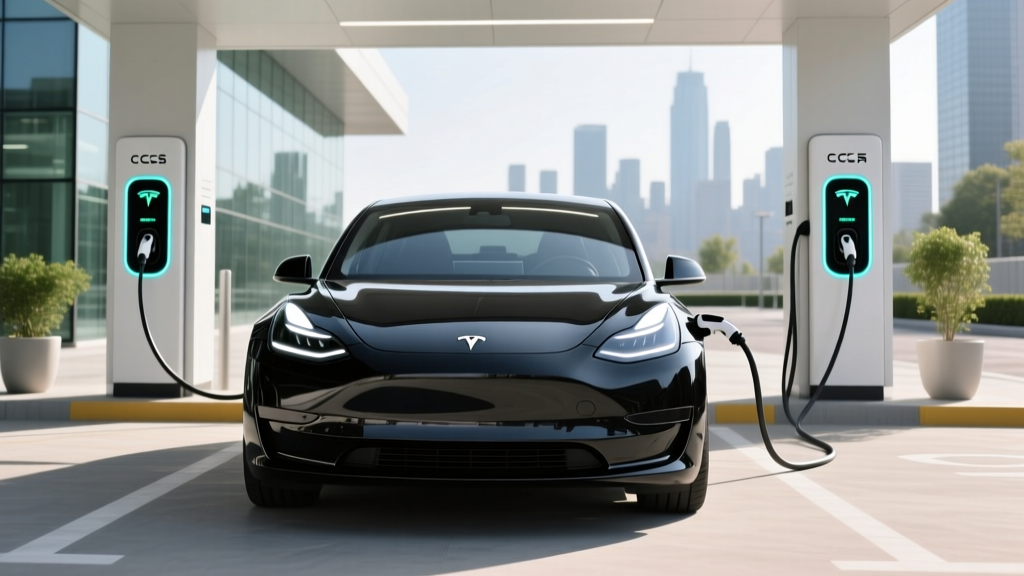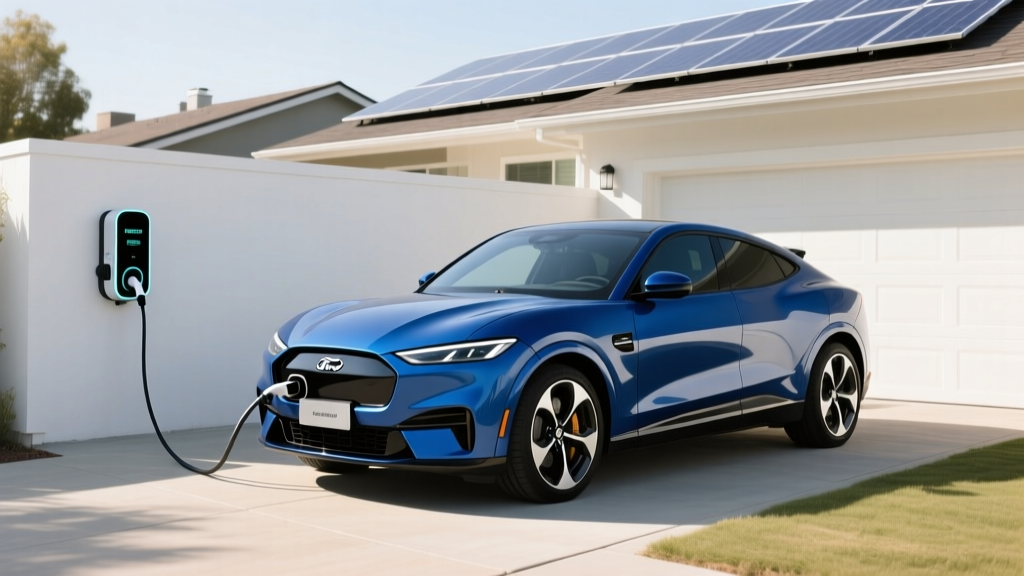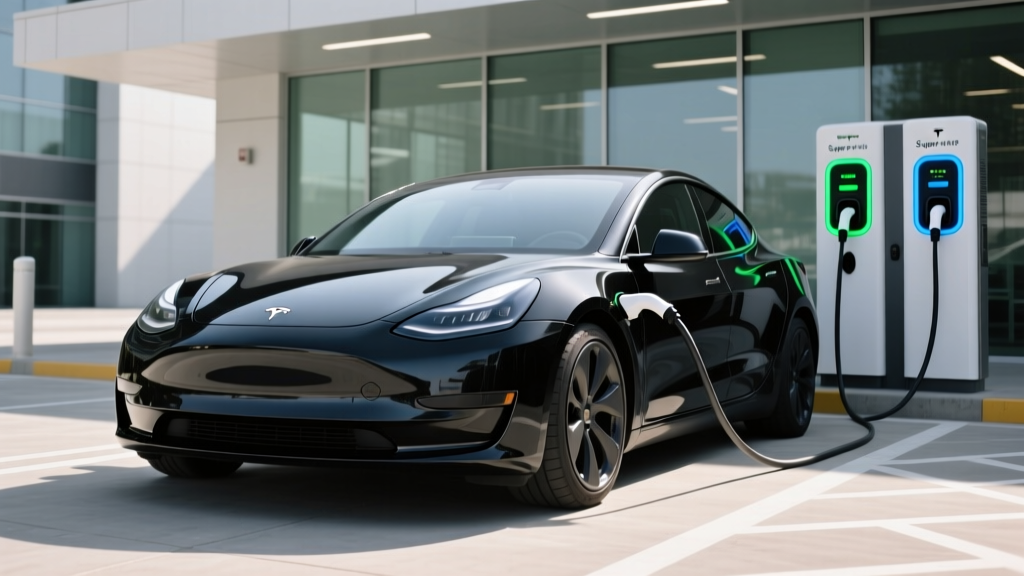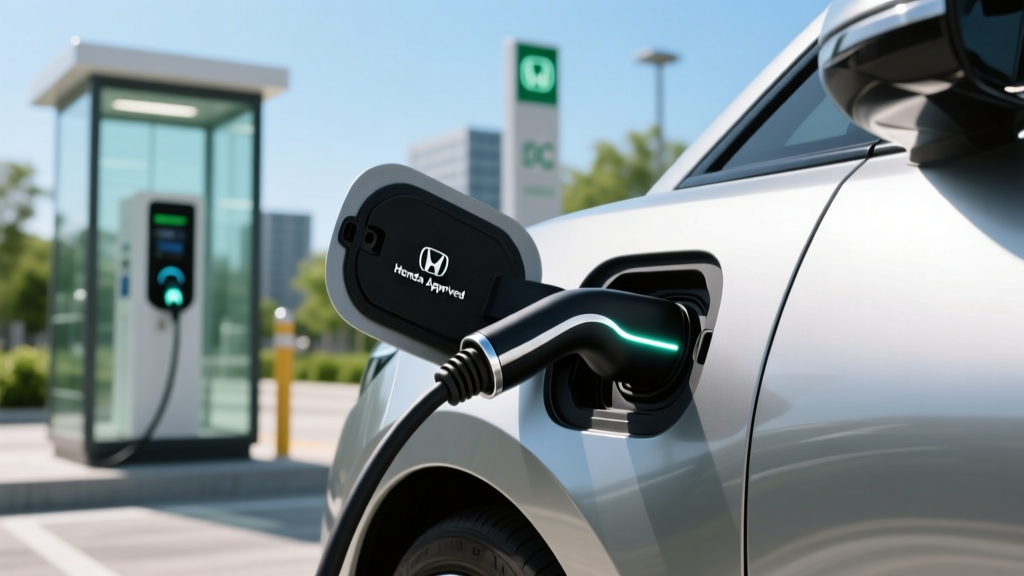
Honda is in the middle of a connector transition that directly affects how and where you can DC fast charge. If you own a Honda Prologue (2024–2026) or are eyeing the upcoming 2026 Honda 0 Series EVs, the phrase you'll keep seeing is Honda approved NACS CCS DC fast charging adapter — a piece of hardware that unlocks Tesla's Supercharger network for vehicles originally built with CCS1 charge ports. This guide breaks down exactly which Honda EVs need the adapter, how fast they actually charge on each network, what home charging setup you'll need, and what the real per-mile cost looks like compared to gasoline.
Honda's Connector Situation in 2026: CCS1 vs. NACS
The Honda Prologue, built on GM's Ultium platform, launched with a CCS1 (Combined Charging System) port. For 2024 and 2025 model years, that means native compatibility with Electrify America, EVgo, and other CCS networks — but not Tesla Superchargers without an adapter. Honda has confirmed that future models built on its own e:Architecture (the 2026 Honda 0 Series) will adopt the North American Charging Standard (NACS) port natively, aligning with the industry-wide shift.
For current Prologue owners, Honda has approved and offered a NACS adapter that enables access to Tesla's V3 and V4 Supercharger stalls. This is the Honda approved NACS CCS DC fast charging adapter — essentially a CCS1-to-NACS dongle rated for DC fast charging current levels. Here's how connector compatibility breaks down across Honda's electrified lineup:
| Honda Model | Model Year | Native Port | NACS Adapter Needed? | CCS Networks | Tesla Supercharger |
|---|---|---|---|---|---|
| Prologue | 2024–2025 | CCS1 | Yes (Honda-approved adapter) | Native | Via adapter |
| Prologue (refreshed) | 2026 | CCS1 / NACS transition | Check trim/build date | Native (CCS) | Adapter or native |
| Honda 0 Series (Saloons/SUV) | 2026+ | NACS (expected) | No | Via CCS adapter | Native |
| Clarity Plug-In Hybrid | 2017–2021 | J1772 (AC only) | N/A — no DC port | N/A | N/A |
The Clarity PHEV, discontinued after 2021, uses a J1772 port for Level 1 and Level 2 AC charging only. It has no DC fast charging capability, so the NACS/CCS adapter question doesn't apply. For Prologue owners, the adapter is the critical bridge.
Charging Levels Explained: kW, Miles Per Hour, and Real Times
Before we get to adapter specifics, let's lock down the fundamentals. kW (kilowatts) measures power — the rate at which energy flows into your battery. kWh (kilowatt-hours) measures energy — the total capacity of the battery. A 85 kWh battery charged at 85 kW for one hour would theoretically go from empty to full; in practice, charge curves taper, so it takes longer.
Here's how each charging level performs for a Honda Prologue (85 kWh usable battery, NMC chemistry):
| Charging Level | Power (kW) | Voltage / Amperage | Miles of Range Added Per Hour | 10–80% Time (Prologue) |
|---|---|---|---|---|
| Level 1 (120V household) | 1.2–1.4 kW | 120V / 12A | ~3–5 mi/hr | ~50+ hours (not practical) |
| Level 2 (240V home/public) | 7.2–11.5 kW | 240V / 32–48A | ~22–37 mi/hr | ~7–9 hours |
| DC Fast (CCS — Electrify America) | Up to 150 kW peak | 400–500V DC | ~190 mi in ~30 min | ~32–35 minutes |
| DC Fast (NACS — Tesla V3 Supercharger) | Up to 150 kW (adapter-limited) | 400V DC | ~190 mi in ~30 min | ~33–37 minutes |
A critical nuance: the Prologue's DC fast charging peaks around 150 kW on CCS networks. When using the Honda approved NACS CCS DC fast charging adapter at a Tesla V3 Supercharger (rated 250 kW), the Prologue will still be limited by its onboard charge acceptance — roughly 150 kW peak. The adapter doesn't bottleneck you; the vehicle's battery management system does. Tesla V4 Superchargers with CCS-native support may offer slightly different handshake protocols, but throughput remains vehicle-limited.
How Much Does It Cost to Install a Home EV Charger?
Most Honda Prologue owners will want a Level 2 home charger for daily use. The Prologue's onboard charger accepts up to 11.5 kW on Level 2 (48 amps), which adds roughly 37 miles of range per hour — enough to fully replenish overnight.
Installation costs vary enormously depending on your home's electrical panel, the distance from the panel to the charger location, and local permit fees. Here's a realistic breakdown:
| Cost Component | Simple Install (panel nearby, 200A service) | Complex Install (panel upgrade, long conduit run) |
|---|---|---|
| Level 2 Charger Equipment (40A–48A smart charger) | $400–$700 | $400–$700 |
| Electrical Permit | $50–$200 | $100–$350 |
| Electrician Labor (240V/50A or 60A dedicated circuit) | $500–$1,200 | $1,500–$3,000 |
| Electrical Panel Upgrade (100A → 200A, if needed) | $0 (not needed) | $1,500–$3,500 |
| Conduit, Wiring, and Materials | $100–$300 | $400–$1,000 |
| Total Estimated Cost | $1,050–$2,400 | $3,900–$8,550 |
The panel upgrade is the cost bomb that catches older-home owners off guard. If your home has a 100-amp main panel — common in houses built before the 1990s — adding a 50A or 60A dedicated circuit for EV charging may push you over the panel's safe load capacity. A licensed electrician will perform a load calculation per NEC Article 220. If you're over, a panel upgrade to 200A (or even 400A for homes with heat pumps and EVs) becomes mandatory.
Electrical Requirements for Prologue Home Charging
To get the Prologue's full 11.5 kW Level 2 rate, you need:
- A 240V, 60-amp dedicated circuit (allowing 48A continuous draw per NEC 80% rule)
- A NEMA 14-60 outlet or hardwired connection (hardwired preferred for outdoor installs — eliminates GFCI breaker nuisance trips)
- 6 AWG copper wire (or 4 AWG aluminum) for runs up to ~50 feet; thicker gauge for longer runs
- A GFCI-protected breaker if using a receptacle (NEC 2020+ requirement for EV outlets in many jurisdictions)
- NEMA 4 or NEMA 4X rated enclosure for any outdoor-mounted charger
Which Home Chargers Work Best with the Honda Prologue?
Since the Prologue uses a CCS1/J1772 connector for AC Level 2 charging (the same physical connector used for Level 2 across all non-Tesla EVs), any quality J1772 Level 2 charger will work. You do not need the NACS adapter for home Level 2 charging — that adapter is only for DC fast charging at Tesla Superchargers.
Here are proven options matched to the Prologue's 11.5 kW onboard charger capability:
ChargePoint Home Flex (up to 50A)
- Power Output: Up to 12 kW (50A) — matches Prologue near-perfectly
- Connector: J1772 (CCS1 AC compatible)
- Cable Length: 23 feet
- Smart Features: Wi-Fi, scheduled charging, energy tracking, Alexa integration
- Price: ~$550–$650
- Best For: Prologue owners wanting app-based scheduling and utility rate optimization
Emporia Level 2 Smart Charger (48A)
- Power Output: Up to 11.5 kW (48A) — exact match for Prologue's onboard charger
- Connector: J1772
- Cable Length: 24 feet
- Smart Features: Wi-Fi, solar integration, real-time energy monitoring, load management
- Price: ~$400–$500
- Best For: Budget-conscious buyers; solar-home integration
Grizzl-E Smart (40A)
- Power Output: Up to 9.6 kW (40A)
- Connector: J1772
- Cable Length: 24 feet
- Smart Features: Wi-Fi, OCPP protocol, adjustable amperage
- Price: ~$450–$550
- Best For: Cold-climate durability (rated to -40°F), Canadian-built quality
If you're on a tighter electrical budget (say, a 40A circuit instead of 60A), the Grizzl-E at 9.6 kW still adds roughly 30 miles of range per hour — plenty for overnight replenishment of daily driving.
Cost to Charge: Per-Mile Breakdown vs. Gasoline
The economic case for the Prologue hinges on charging cost. Let's compare real scenarios using the Prologue's efficiency of approximately 2.0 kWh/mile (roughly 100 MPGe combined, per EPA data):
| Charging Scenario | Cost per kWh | Cost per Mile (Prologue) | Equivalent Gas MPG at $3.50/gal |
|---|---|---|---|
| Home — Off-Peak Utility Rate (overnight) | $0.08–$0.12 | $0.16–$0.24 | ~15–22 MPG equivalent cost |
| Home — Standard Residential Rate | $0.14–$0.18 | $0.28–$0.36 | ~10–13 MPG equivalent cost |
| Public Level 2 (ChargePoint, workplace) | $0.20–$0.35 | $0.40–$0.70 | ~5–9 MPG equivalent cost |
| DC Fast — Electrify America (CCS) | $0.35–$0.55 | $0.70–$1.10 | ~3–5 MPG equivalent cost |
| DC Fast — Tesla Supercharger (via adapter) | $0.28–$0.45 | $0.56–$0.90 | ~4–6 MPG equivalent cost |
| Gasoline Baseline (Honda Passport AWD, 22 MPG combined) | $3.50/gal | $0.16/mile (wait — $3.50/22 = $0.159) | N/A |
Wait — that last row is the surprise. At $3.50/gallon and 22 MPG combined (the Honda Passport AWD, a comparable ICE vehicle), the gasoline cost is roughly $0.16 per mile. That means home off-peak charging is competitive with or cheaper than gasoline, but DC fast charging on road trips is actually more expensive per mile than a comparable gas SUV.
This is the honest math that EV ownership guides often gloss over. The Prologue saves money when you charge at home. On road trips relying exclusively on DC fast charging, your fuel cost may equal or exceed a fuel-efficient gas vehicle. The Prologue's advantage is that most owners charge at home 80–90% of the time.
The Honda Approved NACS CCS DC Fast Charging Adapter: What to Know Before You Buy
Here are the specifics on the adapter itself:
- What it does: Physically converts the Prologue's CCS1 DC charge port to accept a NACS (Tesla) connector, enabling DC fast charging at Tesla Supercharger V3 and V4 stalls.
- Rated capacity: The adapter passes through up to the vehicle's maximum DC acceptance rate (~150 kW for the Prologue). It does not increase or limit the vehicle's charge rate.
- AC charging note: For Level 2 AC charging at Tesla Destination Chargers (which use NACS connectors), a separate NACS-to-J1772 AC adapter is needed. The DC fast charging adapter does not handle AC charging. Tesla's Universal Wall Connector with integrated J1772 is an alternative for home use.
- Availability: Honda has distributed approved adapters through its dealer network and Honda parts channels. Pricing has ranged from $200–$400 depending on the supplier and whether it's bundled with a Prologue purchase or lease incentive.
- Warranty: Using a Honda-approved adapter preserves your vehicle's battery and electrical system warranty. Third-party adapters not endorsed by Honda may void coverage for charge-related issues.
One real-world caveat: Supercharger stalls are designed for Tesla vehicles with NACS ports located on the driver-side rear. The Prologue's CCS port is on the driver-side rear quarter as well, but cable reach can be tight at some older V3 stalls with shorter cables. You may occasionally need to park at an angle or use a stall at the end of a row. Tesla's newer V4 stalls with longer cables and CCS-native support mitigate this.
Safety, Electrical Code, and Installation Best Practices
Whether you're installing a home Level 2 charger or simply using the NACS adapter at public stations, safety fundamentals matter:
Home Charger Installation Code Requirements
- Dedicated circuit: Your Level 2 charger must be on its own dedicated breaker — not shared with other appliances. A 48A charger requires a 60A breaker (NEC continuous-load 80% rule).
- GFCI protection: NEC 2020 (Article 625.54) requires GFCI protection for all EV receptacles. Hardwired chargers are exempt from this requirement, which is why many electricians recommend hardwiring — it eliminates nuisance GFCI trips that plague some receptacle installations.
- Outdoor rating: Any charger or outlet exposed to weather must carry a NEMA 4 (splash-resistant) or NEMA 4X (corrosion-resistant) rating. In while-in-use covers are required for outdoor receptacles.
- Permit and inspection: Virtually all jurisdictions require an electrical permit for a new 240V circuit. The inspection ensures wire gauge, breaker sizing, grounding, and bonding meet NEC standards. Don't skip this — unpermitted work can void homeowners insurance claims.
- Load management: If your panel is near capacity, consider a smart charger with load-management capability (like the Emporia or ChargePoint). These devices monitor your home's total draw and dynamically reduce charging amperage to prevent panel overload — potentially avoiding a costly panel upgrade.
Public DC Fast Charging Safety with the Adapter
When using the Honda approved NACS CCS DC fast charging adapter at Tesla Superchargers, follow the same precautions as any DC session: ensure the adapter is fully seated in the charge port before initiating the session, inspect the adapter pins for debris or corrosion periodically, and don't disconnect under load (always stop the session via the vehicle or app first). The Prologue's battery management system handles thermal preconditioning automatically when you navigate to a charge station — this warms or cools the NMC battery to the optimal temperature for fast charging, reducing charge time and protecting long-term battery health.
Frequently Asked Questions
How much does the Honda approved NACS CCS DC fast charging adapter cost?
Honda-approved adapters have been priced between $200 and $400 through dealer networks. Some Prologue lease and purchase incentives have included the adapter at no additional cost. Check with your local Honda dealer for current availability and pricing, as Honda's adapter program has evolved since the Prologue's 2024 launch.
Will using a NACS adapter void my Prologue's battery warranty?
Using a Honda-approved adapter will not void your warranty. Honda's EV battery warranty covers 8 years/100,000 miles with a minimum 70% capacity retention threshold. However, using unapproved third-party adapters that cause damage to the charge port or electrical system may not be covered. Always use Honda-endorsed equipment for DC fast charging.
How fast does the Prologue charge at a Tesla Supercharger with the adapter?
The Prologue peaks at approximately 150 kW on DC fast charging, regardless of whether you're using a CCS station or a Tesla Supercharger with the adapter. A 10–80% charge takes roughly 33–37 minutes at a V3 Supercharger (250 kW stall, but vehicle-limited to ~150 kW). The charge curve tapers significantly above 80% SoC — charging from 80–100% can add another 25–30 minutes.
Can I use the NACS adapter for Level 2 AC charging at Tesla Destination Chargers?
No. The DC fast charging adapter is designed exclusively for DC fast charging. Tesla Destination Chargers (found at hotels, restaurants, and shopping centers) provide AC Level 2 power through a NACS connector. To use these, you need a separate NACS-to-J1772 AC adapter (commonly available from Lectron, Tesla, or other brands for ~$150–$250). Some Prologue owners carry both adapters for maximum compatibility.
What electrical panel size do I need for home Level 2 charging?
A 200-amp main service panel is generally sufficient for adding a 48A (11.5 kW) Level 2 charger, assuming your home doesn't have heavy simultaneous loads (electric heat, electric water heater, electric dryer all running at once). Homes with 100A panels will likely need an upgrade to 200A, which costs $1,500–$3,500. A licensed electrician can perform a NEC Article 220 load calculation to determine if your existing panel can handle the addition.
Is the Prologue's battery LFP or NMC chemistry?
The Honda Prologue uses GM's Ultium platform with NMC (nickel manganese cobalt) battery chemistry. NMC offers higher energy density than LFP (lithium iron phosphate), which is why the Prologue achieves up to 308 miles of EPA range in a relatively compact battery pack. For longevity best practices, limit routine charging to 80% SoC and avoid frequent 100% charges — NMC batteries degrade faster at high states of charge. Reserve 100% charges for road trips.
Does the Prologue qualify for the federal EV tax credit?
Federal tax credit eligibility under IRS §30D depends on MSRP caps ($80,000 for SUVs like the Prologue), buyer income limits ($300,000 joint / $150,000 single modified AGI), and battery component/critical mineral sourcing requirements that tighten annually. The Prologue, built on GM's Ultium platform in Mexico, has faced sourcing-rule challenges. As of 2026, check the latest eligibility at IRS.gov or ask your dealer about point-of-sale transfer availability. Rules change frequently — always verify before purchasing.
The Honda approved NACS CCS DC fast charging adapter is a practical bridge for Prologue owners who want access to Tesla's industry-leading Supercharger network without giving up CCS compatibility. For daily driving, a home Level 2 charger remains the cheapest and most convenient solution — budget $1,050–$2,400 for a straightforward install, more if your panel needs upgrading. On road trips, the adapter adds roughly 17,000+ Supercharger stalls to your charging map, turning the Prologue into a genuinely cross-country-capable electric SUV.