If you own a Polestar 2 or Polestar 3 in North America, the charging landscape has shifted dramatically. Starting in 2024, Polestar joined the wave of automakers adopting the North American Charging Standard (NACS), granting owners access to Tesla's Supercharger network via a Polestar NACS adapter. By the 2026 model year, Polestar vehicles are shipping with native NACS ports, but for the thousands of 2022–2025 models still on the road with CCS1 connectors, that adapter is the key to unlocking over 20,000 additional fast-charging stalls nationwide.
This guide covers everything you need to know: how the Polestar NACS adapter works, what it means for your DC fast-charging options, how to set up Level 2 charging at home, what electrical upgrades might be required, and exactly what you'll pay per mile compared to gasoline. We'll also recommend specific home chargers that pair well with Polestar's onboard charging capabilities.
Understanding the Polestar NACS Adapter and Connector Compatibility
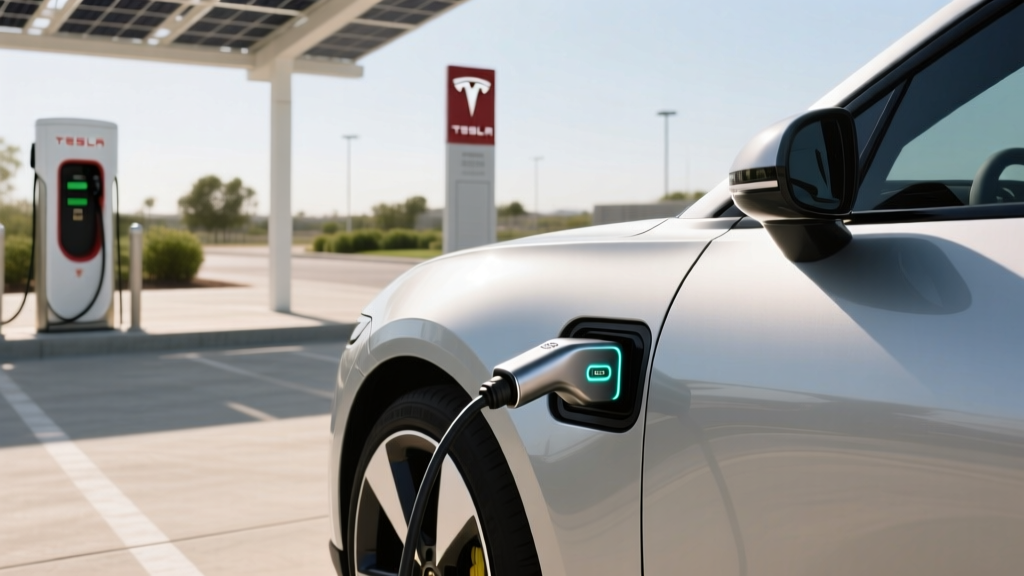
The Polestar NACS adapter is a CCS1-to-NACS dongle that physically converts your Polestar's CCS1 charge port to accept Tesla's NACS connector — the same compact plug used on every Tesla Supercharger stall. Polestar began shipping these adapters to eligible owners and making them available for purchase through the Polestar app and authorized dealers.
Here's why this matters: the Tesla Supercharger network is the largest, most reliable DC fast-charging network in the United States, with over 20,000 V3 and V4 stalls as of early 2026. Before NACS access, Polestar owners relied primarily on Electrify America, EVgo, and ChargePoint DC fast chargers — networks that, while improving, still trail Tesla in uptime and geographic coverage.
| Model Year | Native Port | NACS Adapter Needed? | CCS1 Charging | Tesla Supercharger Access |
|---|---|---|---|---|
| 2022–2023 Polestar 2 | CCS1 | Yes — Polestar NACS adapter | Native | Via adapter |
| 2024–2025 Polestar 2 | CCS1 | Yes — Polestar NACS adapter | Native | Via adapter |
| 2025–2026 Polestar 3 | CCS1 (early) / NACS (late) | Check your build date | Native (CCS1 builds) | Native or via adapter |
| 2026+ Polestar 4 | NACS | No | Via NACS-to-CCS adapter | Native |
Important note on adapter compatibility: The Polestar NACS adapter is specifically engineered and software-approved for Polestar vehicles. Using third-party CCS-to-NACS adapters (such as those from Lectron or A2Z) may work physically, but Polestar only guarantees charging performance, safety protocols, and warranty coverage with their OEM adapter. Always verify adapter firmware is up to date via the Polestar app before your first Supercharger session.
Charging Levels Explained: Speeds, Times, and Range Added
EV charging operates across three tiers. Understanding the difference between kW (kilowatts — the rate of power delivery, like water pressure from a hose) and kWh (kilowatt-hours — the total energy stored, like gallons in a tank) is essential. Your Polestar's battery capacity is measured in kWh; the charger's output is measured in kW.
| Level | Voltage / Power | Typical kW Output | Miles of Range Added per Hour | Best Use Case |
|---|---|---|---|---|
| Level 1 | 120V AC / 12–16A | 1.4–1.9 kW | 3–5 mi/hr | Emergency / overnight trickle (PHEVs) |
| Level 2 | 240V AC / 32–48A | 7.7–11.5 kW | 25–44 mi/hr | Daily home charging (ideal for Polestar) |
| DC Fast Charge (CCS1) | 400V+ DC / up to 200 kW | 50–205 kW peak | 180–600+ mi/hr (peak) | Road trips via Electrify America, EVgo |
| DC Fast Charge (NACS / Supercharger) | 400V+ DC / up to 250 kW | 50–250 kW peak | 200–750+ mi/hr (peak) | Road trips via Tesla Superchargers |
Polestar 2 charging specifics: The 2024–2025 Polestar 2 Long Range Single Motor has a 78 kWh (usable) NMC lithium-ion battery and an EPA-estimated range of 320 miles. Its onboard AC charger accepts up to 11 kW on Level 2 (three-phase) or 7.4 kW on single-phase 240V — common in US homes. On DC fast charging, the Polestar 2 peaks at approximately 205 kW, achieving a 10–80% charge in roughly 27–30 minutes under ideal conditions (battery preconditioned, ambient temperature 65–80°F).
Polestar 3 charging specifics: The Polestar 3 Long Range carries a 107 kWh (usable) NMC battery with an EPA-estimated range of 315 miles (Dual Motor). It supports up to 11 kW AC Level 2 and peaks at approximately 250 kW on DC fast charging, with a 10–80% time of around 25–30 minutes.
Real-World Range Reality Check: The EPA's 320-mile estimate for the Polestar 2 Long Range assumes mixed driving. Expect approximately 260–285 miles on sustained highway driving at 70–75 mph, and as low as 220–240 miles in sub-freezing winter conditions (below 32°F) due to battery heating demands and reduced regenerative braking efficiency. Plan fast-charging stops accordingly on road trips.
How Much Does It Cost to Install a Home EV Charger?
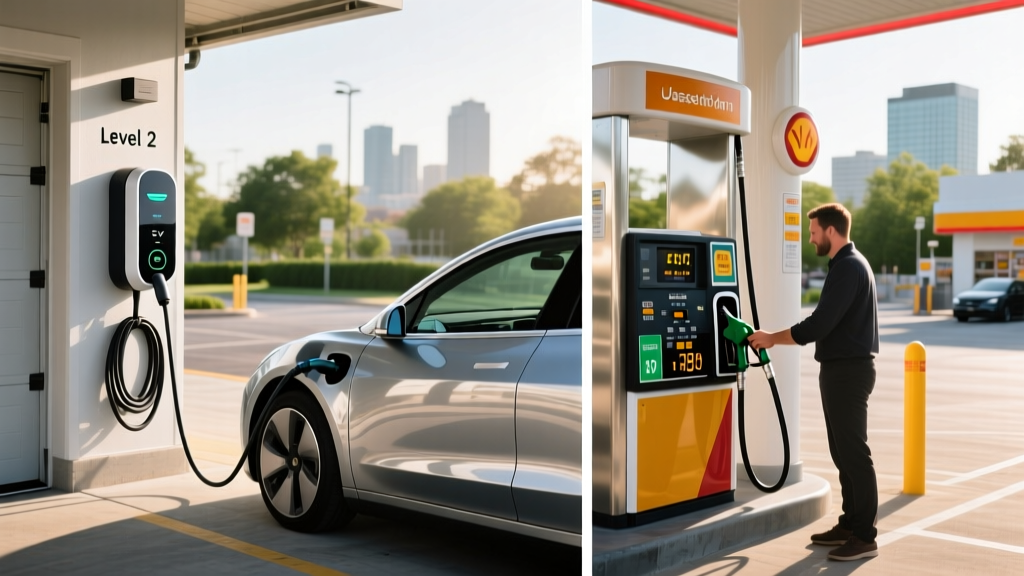
Home Level 2 charging is the backbone of practical EV ownership. For a Polestar 2 or 3, a properly installed 240V Level 2 charger will replenish your battery overnight — typically adding 200–300 miles of range in an 8–10 hour session, more than enough for daily driving.
Installation costs vary widely depending on your home's electrical panel capacity, the distance from the panel to the charging location, and local permit requirements. Here's a realistic breakdown:
| Component | Low Estimate | High Estimate | Notes |
|---|---|---|---|
| Level 2 Charger (hardware) | $400 | $750 | 32A–48A smart chargers (Grizzl-E, ChargePoint, Wallbox) |
| Electrician labor | $500 | $2,000 | Depends on run length, conduit, and wall type |
| Electrical permit | $50 | $250 | Varies by municipality; some jurisdictions waive for EV installs |
| Panel upgrade (if needed) | $1,500 | $4,000 | Required if panel is 100A or less and near capacity |
| Total (no panel upgrade) | $950 | $3,000 | Most common scenario for 200A panel homes |
| Total (with panel upgrade) | $2,450 | $7,000 | Older homes with 100A service |
What Electrical Upgrades Might I Need?
A 48-amp Level 2 charger requires a dedicated 60-amp circuit (the National Electrical Code requires circuits to be rated at 125% of the continuous load: 48A × 1.25 = 60A). A 32-amp charger needs a 40-amp circuit.
Your electrician will perform a load calculation on your electrical panel to determine if there's sufficient capacity. Homes with 200-amp service and modern panels typically accommodate a 60A EV circuit without issue. Homes with 100-amp panels — common in pre-1990 construction — often require an upgrade to 200A, which is the single largest cost variable.
Alternatives to a panel upgrade: Some homeowners opt for a lower-amperage charger (32A on a 40A circuit) to avoid panel work. Smart load-management devices like the SPAN panel or Circuitshare-enabled chargers can also dynamically share capacity between your EV charger and other high-draw appliances, avoiding the need for a full panel replacement.
Federal Tax Credit for Home Charging Equipment
The IRS §30C Alternative Fuel Vehicle Refueling Property Credit covers up to 30% of the cost of home EV charging equipment and installation, capped at $1,000 per tax year. Eligibility depends on your census tract meeting certain income or rural-area criteria. Consult a tax professional and verify current-year rules on irs.gov before claiming.
How Much Does Charging Cost per Mile vs. Gasoline?
One of the strongest financial arguments for a Polestar is the per-mile fuel cost. Electricity prices vary by region, utility rate plan, and whether you charge at home or on public networks. Here's a realistic comparison using national averages and the Polestar 2 Long Range Single Motor (320 mi EPA, 78 kWh battery):
| Scenario | Cost per kWh or Gallon | Effective Efficiency | Cost per Mile |
|---|---|---|---|
| Home charging (off-peak utility rate) | $0.12/kWh | 3.8 mi/kWh (26 kWh/100mi) | $0.032/mi |
| Home charging (standard rate) | $0.17/kWh | 3.8 mi/kWh | $0.045/mi |
| Public Level 2 (ChargePoint, etc.) | $0.28/kWh | 3.8 mi/kWh | $0.074/mi |
| DC Fast Charge (EA, EVgo) | $0.43/kWh | 3.8 mi/kWh | $0.113/mi |
| Tesla Supercharger (via NACS adapter) | $0.30/kWh (avg.) | 3.8 mi/kWh | $0.079/mi |
| Gas vehicle (30 MPG combined) | $3.40/gal | 30 mi/gal | $0.113/mi |
| Gas vehicle (25 MPG combined) | $3.40/gal | 25 mi/gal | $0.136/mi |
The bottom line: Home charging on an off-peak rate plan delivers fuel costs roughly one-third that of gasoline. Even DC fast charging at public networks roughly matches or beats the cost per mile of a 30 MPG gas car. Tesla Supercharger pricing for non-Tesla vehicles has become more competitive in 2025–2026, averaging $0.28–$0.34/kWh depending on location and time of day — often cheaper than Electrify America's peak rates.
Over 15,000 miles of annual driving, a Polestar 2 owner charging primarily at home on a $0.14/kWh rate spends approximately $830/year on electricity, compared to $1,700/year on gasoline for a 30 MPG vehicle at $3.40/gal — a savings of roughly $870 annually.
Recommended Home Chargers for Polestar Owners
The Polestar 2's onboard AC charger maxes out at 11 kW (three-phase) or 7.4 kW (single-phase 240V, 32A). The Polestar 3 supports up to 11 kW AC. This means a 48-amp home charger provides headroom and future-proofing, but a 32-amp unit will still fully recharge either vehicle overnight. Here are three chargers we recommend:
ChargePoint Home Flex (NACS or J1772)
- Power output: Up to 12 kW (50A, adjustable down to 16A)
- Connector: Available in NACS (native) or J1772 (with CCS adapter for Polestar CCS1 models)
- Cable length: 23 feet
- Smart features: Wi-Fi, ChargePoint app scheduling, utility demand-response integration, Alexa support
- Price: ~$599 (NACS version, 2026)
- Why it works for Polestar: Flexible amperage lets you match your circuit capacity; NACS version is ideal for 2026 Polestar 4 owners or future-proofing
Grizzl-E Smart (J1772)
- Power output: Up to 11.5 kW (48A, adjustable)
- Connector: J1772 (compatible with Polestar CCS1 via the vehicle's CCS inlet — no adapter needed for home Level 2)
- Cable length: 24 feet
- Smart features: Wi-Fi, OCPP compatibility, app-based scheduling, load sharing
- Price: ~$499
- Why it works for Polestar: Rugged, Canadian-built, outdoor-rated (NEMA 4), excellent for garage or driveway installs; adjustable amperage handles older panels
Wallbox Pulsar Plus (J1772)
- Power output: Up to 11.5 kW (48A)
- Connector: J1772
- Cable length: 25 feet
- Smart features: Wi-Fi + Bluetooth, myWallbox app, Power Sharing (multi-charger load balancing), solar integration
- Price: ~$549
- Why it works for Polestar: Compact form factor, solar-aware charging for homes with PV panels, excellent app for tracking kWh usage and cost
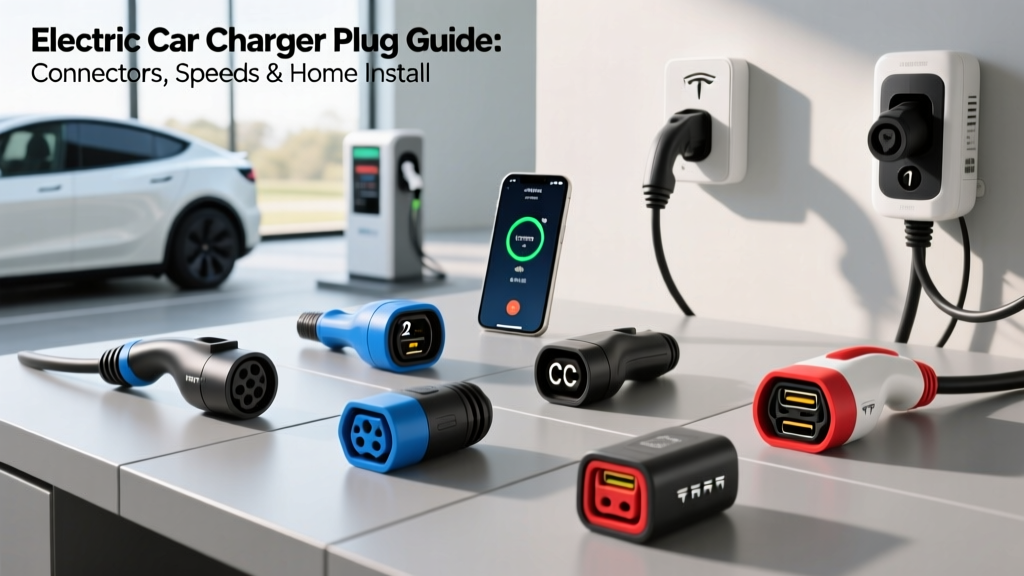
Key note on home charging connectors: For Polestar vehicles with CCS1 ports (2022–2025 models), Level 2 home charging uses the J1772 connector — the top portion of the CCS1 inlet. You do not need the Polestar NACS adapter for home Level 2 charging. The NACS adapter is only required for DC fast charging at Tesla Superchargers. A J1772 home charger plugs directly into your Polestar's CCS port.
Safety, Electrical Code, and Installation Best Practices
EV charging draws sustained high current for hours — far longer than a dryer or oven cycle. Proper installation isn't optional; it's a safety requirement. Here are the critical code and safety considerations your electrician should follow:
- Dedicated circuit: Your Level 2 charger must be on its own dedicated circuit — never shared with other appliances. A 48A charger needs a 60A breaker; a 32A charger needs a 40A breaker.
- GFCI protection: The 2020 and 2023 National Electrical Code (NEC) require GFCI (Ground Fault Circuit Interrupter) protection for all EV charging outlets. Many modern chargers have built-in GFCI; hardwired installations may require a GFCI breaker at the panel.
- Outdoor rating: If your charger is installed outdoors, it must carry a NEMA 4 or NEMA 4X rating for weather resistance. All three chargers recommended above meet this standard.
- Wire gauge: A 60A circuit requires 6 AWG copper wire (THHN in conduit) or 4 AWG aluminum. Your electrician will size wire based on run length and local code.
- Permit and inspection: Nearly all jurisdictions require an electrical permit for EV charger installation. A post-install inspection ensures code compliance and protects your home insurance coverage.
- NEMA 14-50 outlet vs. hardwired: A NEMA 14-50 outlet (50A, 240V) offers portability — you can take the charger when you move. Hardwired installations support up to 60A and eliminate the outlet as a potential failure point. For 48A charging, hardwired is required.
Panel capacity red flag: If your electrician tells you your panel is "close to maxed out," take it seriously. Running a 60A EV circuit on an overloaded panel risks tripped main breakers, overheated bus bars, and in extreme cases, electrical fires. The load calculation is non-negotiable.
Using the Polestar NACS Adapter at Tesla Superchargers: What to Expect
Once you have the Polestar NACS adapter in hand, the Supercharger experience is straightforward but has a few nuances worth knowing:
- Set up in the Tesla app: Download the Tesla app, create an account, and add your Polestar as a non-Tesla vehicle. You'll link a payment method and use the app to initiate charging at Supercharger stalls.
- Plug in: Attach the NACS adapter to your Polestar's CCS1 port, then plug the Supercharger's NACS cable into the adapter. The adapter locks into place — give it a firm push until it clicks.
- Initiate charging: Open the Tesla app and tap "Start Charging" for the stall number you're parked at. Charging begins within seconds.
- Charging speed: Tesla V3 Superchargers deliver up to 250 kW. However, the Polestar 2's peak DC acceptance is ~205 kW, and the Polestar 3 peaks at ~250 kW. Expect the Polestar 2 to charge at roughly 180–205 kW in the 10–50% SoC range, tapering to ~80 kW above 60%, and ~40 kW above 80%. The Polestar 3 will sustain higher rates longer due to its larger battery.
- Preconditioning: Unlike Teslas, which automatically precondition the battery when navigating to a Supercharger, Polestar's preconditioning must be manually activated via the vehicle's climate/charging settings or triggered when you set a DC fast charger as a navigation destination in the Polestar navigation system. A cold battery charges significantly slower — preconditioning is essential for achieving peak charge rates.
Charging time example (Polestar 2, 78 kWh battery, V3 Supercharger):
- 10% → 80% SoC: approximately 27–32 minutes (with preconditioned battery)
- 10% → 50% SoC: approximately 12–15 minutes
- 80% → 100% SoC: approximately 35–45 minutes (significant taper — avoid charging past 80% on road trips unless necessary)
According to fueleconomy.gov, the 2025 Polestar 2 Long Range Single Motor achieves 107 MPGe combined (31 kWh/100mi). This efficiency figure is useful for estimating your charging costs and comparing against gas vehicles.
Frequently Asked Questions
How much does the Polestar NACS adapter cost?
Polestar has offered the NACS adapter at no cost to eligible owners of 2022–2025 Polestar 2 and 2025 Polestar 3 vehicles as part of their Supercharger access rollout. For replacement or additional adapters, pricing through Polestar's parts channel is typically around $200–$250. Check the Polestar app or your local dealer for current availability and pricing.
Can I use third-party CCS-to-NACS adapters with my Polestar?
Third-party adapters from brands like Lectron or A2Z EV physically fit the CCS1 port and may initiate a charge at Tesla Superchargers. However, Polestar only validates and warranties charging performance with their OEM adapter. Third-party adapters may lack proper thermal management, firmware communication, or safety interlocks. For reliable, warranty-protected charging, stick with the Polestar NACS adapter.
How fast will each charging level add range to my Polestar 2?
Level 1 (120V): approximately 3–5 miles per hour. Level 2 (240V, 32A): approximately 25–30 miles per hour. Level 2 (240V, 48A): approximately 35–44 miles per hour (though the Polestar 2's onboard charger limits AC intake to ~7.4 kW / 32A on single-phase, so expect ~28 mi/hr max on most US home chargers). DC Fast Charging (Supercharger or CCS): approximately 180–200 miles in 20 minutes under ideal conditions.
Do I need an adapter to charge at home with my CCS1 Polestar?
No. Home Level 2 chargers use a J1772 connector, which plugs into the upper portion of your Polestar's CCS1 inlet. No adapter is needed for home charging. The Polestar NACS adapter is only for DC fast charging at Tesla Superchargers.
What happens if my home doesn't have enough electrical capacity for a Level 2 charger?
You have several options: (1) Upgrade your electrical panel from 100A to 200A ($1,500–$4,000). (2) Install a lower-amperage charger (16A or 24A) that draws less from the panel. (3) Use a smart load-management system that dynamically reduces charger output when other appliances are running. (4) Rely on workplace or public Level 2 charging combined with occasional DC fast charging. Your electrician can advise on the most cost-effective path.
Is DC fast charging bad for my Polestar's battery long-term?
Occasional DC fast charging has minimal impact on battery health. However, exclusively relying on DC fast charging (daily or near-daily) can accelerate degradation over time due to sustained high temperatures and high C-rates. Polestar's battery management system actively manages thermal conditions and includes a buffer (the 78 kWh usable capacity is less than the gross cell capacity). For optimal longevity, charge at home on Level 2 for daily use and reserve DC fast charging for road trips. Polestar's battery warranty covers 8 years / 100,000 miles with a minimum 70% capacity retention threshold, per Polestar's official specifications.
How does the Polestar NACS adapter affect charging speed at Superchargers?
The adapter itself introduces negligible resistance and does not meaningfully reduce charge speed. Your Polestar's onboard DC charge acceptance rate is the limiting factor — ~205 kW for the Polestar 2 and ~250 kW for the Polestar 3. On a V3 Supercharger (250 kW max), the Polestar 2 will charge at its native peak rate without bottleneck from the adapter.