Polestar 2 Long Range: Charging Specs at a Glance
The Polestar 2 Long Range (2025–2026 model years) packs an 82 kWh usable lithium-ion NMC battery and an EPA-estimated range of up to 320 miles (Single Motor) or 299 miles (Dual Motor with Performance Pack). But range is only half the equation — how quickly and cheaply you replenish that battery determines your daily ownership experience.
This guide covers every charging scenario a Polestar 2 Long Range owner will encounter: overnight Level 2 at home, Level 1 trickle charging, DC fast charging on road trips, and the real cost per mile compared to a gas sedan. We also break down home charger installation costs, electrical panel requirements, and which equipment to buy.
Charging Levels Explained: kW, Speeds, and Miles Per Hour
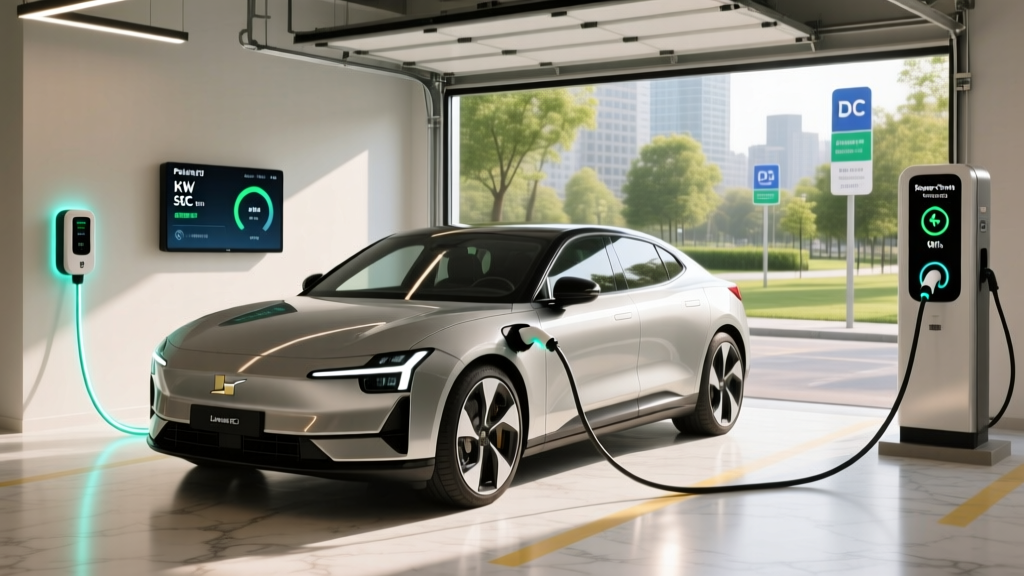
Before we get into equipment and costs, let's nail down the three charging levels and what they mean for your Polestar 2. A critical distinction: kW (kilowatts) measures power — the rate at which energy flows. kWh (kilowatt-hours) measures energy — the total capacity of your battery, like gallons in a fuel tank. Your Polestar 2 Long Range holds 82 kWh of usable energy; the charger's kW rating determines how fast that tank fills.
| Level | Voltage / Amperage | Max Power (kW) | Miles of Range Per Hour | Best Use Case |
|---|---|---|---|---|
| Level 1 | 120V / 12A | ~1.4 kW | 3–5 mi/hr | Overnight top-up, emergencies |
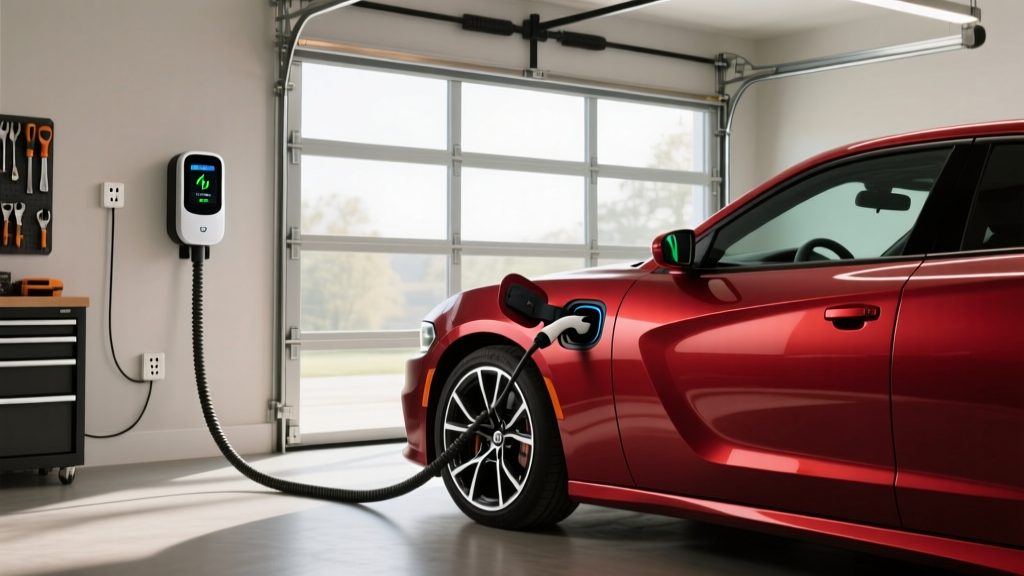
| Level 2 | 240V / 32–48A | 7.7–11.5 kW | 25–40 mi/hr | Daily home charging, workplace |
| DC Fast Charge | 400V+ DC | Up to 205 kW | ~800+ mi/hr (peak) | Road trips, highway corridors |
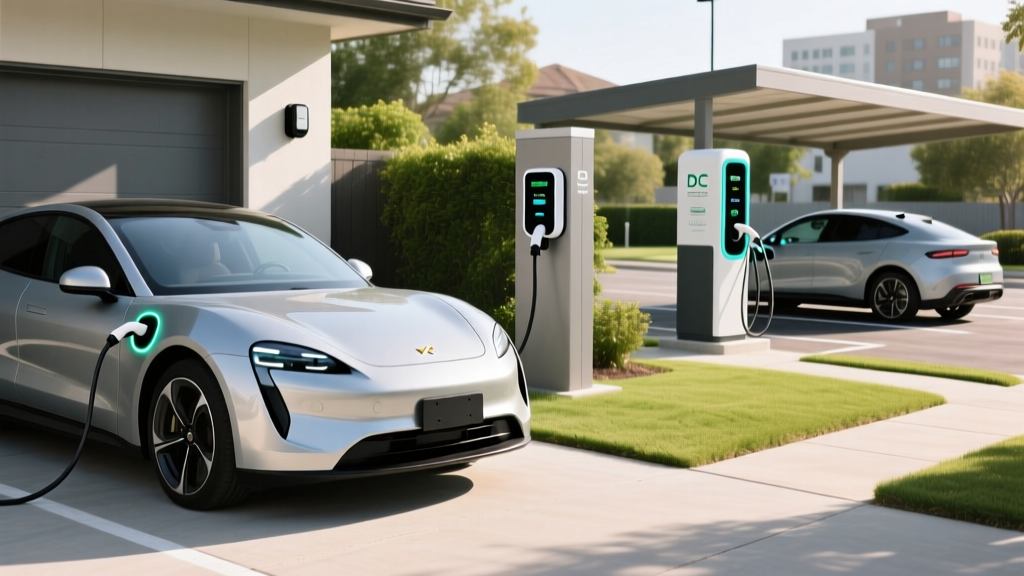
The Polestar 2 Long Range's onboard AC charger accepts up to 11 kW on Level 2 (three-phase where available, or ~7.4 kW on single-phase 240V/32A circuits common in US homes). On DC fast charging, the 2025–2026 Long Range peaks at 205 kW, enabling a 10–80% charge in approximately 26–28 minutes under ideal thermal conditions.
That peak rate doesn't hold for the entire session. Like all EVs, the Polestar 2's charging curve tapers significantly above 80% State of Charge (SoC) to protect battery health. A 10–80% session at a 200+ kW charger might take 27 minutes, but pushing from 80–100% can add another 20–25 minutes. For road trips, plan to charge to 80% and move on — it's far more time-efficient.
Home Charger Installation: Electrical Requirements and Costs
Charging at home is where the Polestar 2 ownership experience transforms. Wake up every morning with a full battery, and your daily "fueling" takes zero extra time. But installation isn't as simple as plugging in an appliance.
What Your Electrical Panel Needs
A Level 2 charger for the Polestar 2 typically requires a 240V dedicated circuit on a 40-amp or 50-amp breaker (delivering 32A or 40A continuous to the vehicle, per NEC 80% continuous-load rules). Here's what determines whether your home can support this:
- Panel capacity: Most modern homes have 200-amp service panels, which usually accommodate a 40–50A EV circuit without issue. Older homes with 100A panels may need a service upgrade ($2,000–$5,000+).
- Available breaker slots: You need two adjacent slots for a 240V double-pole breaker.
- Load calculation: A licensed electrician will perform a NEC Article 220 load calculation to verify your panel has headroom for the additional draw.
- Wire run distance: Longer runs from panel to garage/driveway require thicker-gauge copper wire, increasing material cost.
Installation Cost Breakdown
| Component | Typical Cost Range | Notes |
|---|---|---|
| Level 2 Charger (Hardware) | $400 – $750 | Smart Wi-Fi chargers, 32–48A |
| Electrician Labor | $500 – $2,000 | Depends on wire run, wall type, conduit |
| Electrical Permit | $50 – $300 | Varies by municipality |
| Panel Upgrade (if needed) | $2,000 – $5,000+ | 100A → 200A service upgrade |
| Total (no panel upgrade) | $950 – $3,050 | Most homes fall in $1,200–$2,000 |
| Total (with panel upgrade) | $2,950 – $8,050+ | Older homes, high-load panels |
Always get at least two quotes from licensed electricians. Ask specifically about the load calculation result, wire gauge planned (6 AWG for 50A circuits is standard), and whether the installation includes a GFCI breaker if your local code requires it for outdoor or garage installations.
Connector Compatibility: NACS, CCS1, and Adapter Realities
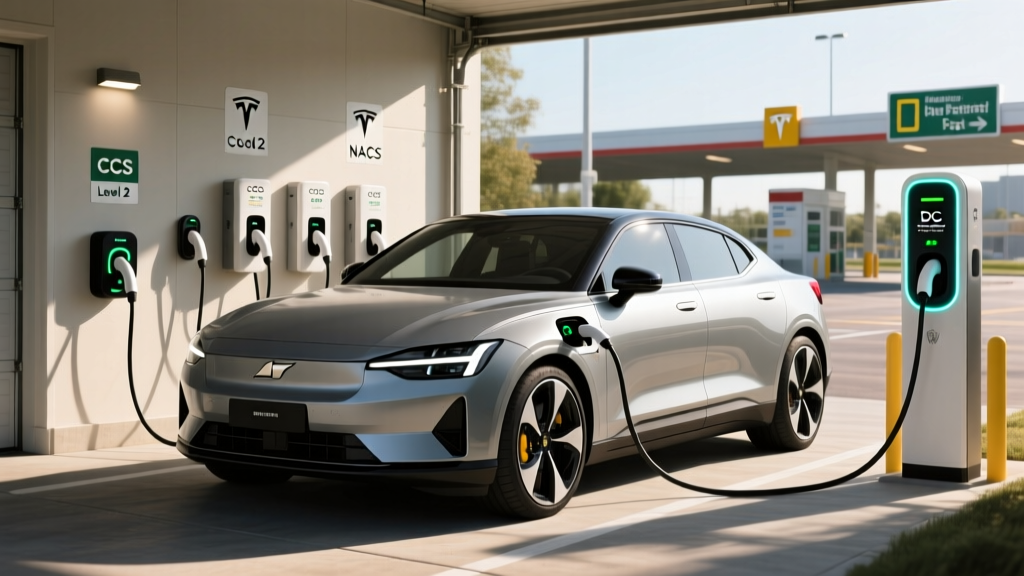
The Polestar 2 sold in North America through the 2024 model year came equipped with a CCS1 (Combined Charging System) port for both AC Level 2 and DC fast charging. Starting with the 2025 model year, Polestar began transitioning to the NACS (North American Charging Standard) connector — the Tesla-designed plug now adopted industry-wide.
| Connector | Polestar 2 Model Years | Network Access | Adapter Needed? |
|---|---|---|---|
| CCS1 | 2021–2024 | Electrify America, EVgo, ChargePoint, Ionity (EU) | CCS→NACS adapter for Tesla Superchargers (~$200–$300) |
| NACS | 2025–2026+ | Tesla Supercharger network + growing NACS stations | NACS→CCS adapter for legacy Electrify America stations (~$200–$300) |
| CHAdeMO | Not natively supported | Rare, mostly legacy Nissan Leaf infrastructure | Not recommended; adapters are expensive and unreliable |
If you own a 2021–2024 Polestar 2 with CCS1, you can access the Tesla Supercharger network using an official or third-party CCS-to-NACS adapter. Polestar has confirmed compatibility with approved adapters — check your owner's manual or Polestar's official support page for the current approved adapter list. For 2025+ NACS-equipped models, carry a NACS-to-CCS adapter for the remaining Electrify America and third-party stations still using CCS1 connectors.
For home Level 2 charging, the connector difference matters less. Most home chargers ship with either a J1772 connector (universal for AC charging on CCS vehicles) or a NACS plug. A simple J1772-to-NACS adapter (often included with the car) bridges the gap. Confirm your charger's plug matches your car's AC inlet before purchasing.
Cost to Charge: Home vs. Public vs. Gas Comparison
One of the strongest arguments for the Polestar 2 Long Range is the per-mile energy cost — especially when charging at home on off-peak rates. Here's how the numbers stack up across different scenarios.
| Scenario | Rate ($/kWh) | Cost for Full 82 kWh Charge | Cost Per Mile (320 mi range) |
|---|---|---|---|
| Home Off-Peak (utility rate) | $0.10–$0.14 | $8.20–$11.48 | $0.026–$0.036 |
| Home Standard Rate (US avg) | $0.17 | $13.94 | $0.044 |
| Public Level 2 (workplace/mall) | $0.25–$0.35 | $20.50–$28.70 | $0.064–$0.090 |
| DC Fast Charge (public) | $0.35–$0.55 | $28.70–$45.10 | $0.090–$0.141 |
| Gas Sedan (28 MPG avg, $3.50/gal) | — | $40.00 (equivalent distance) | $0.125 |
The takeaway: home charging on a time-of-use plan makes the Polestar 2 Long Range roughly 3–4× cheaper per mile than a comparable gas sedan. Even public DC fast charging at the highest rates is competitive with gasoline on a per-mile basis. The efficiency figure to watch is the Polestar 2's EPA-rated consumption of approximately 25–27 kWh/100 miles (equivalent to ~120–130 MPGe combined, per fueleconomy.gov). Highway driving at sustained speeds pushes this to 29–33 kWh/100 mi, which will increase your per-mile cost proportionally.
Best Home Chargers for the Polestar 2 Long Range
The Polestar 2's 11 kW onboard AC charger (three-phase) means most US homes with single-phase 240V power will max out at roughly 7.7 kW (240V × 32A). A 48-amp charger (delivering 11.5 kW) can future-proof your setup for a three-phase home or your next EV with a larger onboard charger. Here are three chargers that pair well with the Polestar 2:
ChargePoint Home Flex
- Power Output: Up to 12 kW (240V / 50A)
- Connector: J1772 (NACS adapter available)
- Cable Length: 23 feet
- Smart Features: Wi-Fi, app scheduling, Alexa, load sharing
- Price: ~$699
- Best For: Flexible amperage (adjustable 16–50A via DIP switches), robust app
Tesla Wall Connector
- Power Output: Up to 11.5 kW (240V / 48A)
- Connector: NACS native (J1772 adapter included)
- Cable Length: 24 feet
- Smart Features: Wi-Fi, OTA updates, Power-Share for two vehicles
- Price: ~$475
- Best For: 2025+ NACS Polestar 2 owners, budget-conscious buyers
Emporia Vue Smart Charger
- Power Output: Up to 11.5 kW (240V / 48A)
- Connector: J1772 (NACS version available)
- Cable Length: 24 feet
- Smart Features: Solar integration, energy monitoring, scheduling
- Price: ~$399
- Best For: Solar-panel owners, energy-usage visibility
For most Polestar 2 Long Range owners on single-phase US residential power, a 32-amp or 40-amp circuit is the sweet spot — it delivers 7.7 kW or 9.6 kW respectively, which refills the 82 kWh battery from 20% to 100% in roughly 8–10 hours. That's ideal for overnight charging. If your commute is under 60 miles round-trip, you'll rarely need a full charge cycle anyway.
DC Fast Charging Times and the Charge Curve Reality
The Polestar 2 Long Range supports DC fast charging at up to 205 kW peak (2025+ models; earlier 2021–2024 models peak at 150 kW). Here's what that translates to in real charging sessions:
| SoC Window | 2025+ (205 kW peak) | 2021–2024 (150 kW peak) | Miles Added (approx.) |
|---|---|---|---|
| 10% → 80% | ~26–28 min | ~35–37 min | ~224–256 miles |
| 10% → 50% | ~12–14 min | ~16–18 min | ~128 miles |
| 80% → 100% | ~20–25 min | ~22–28 min | ~64 miles |
The charge curve is the reason you see "205 kW peak" rather than a sustained rate. The Polestar 2 will hold near-peak speeds between roughly 15% and 45% SoC, then gradually taper through 55–70%, and drop sharply above 80%. Battery preconditioning — available via the Polestar app or navigation-routed preconditioning when you set a DC charger as your destination — is essential for achieving these peak rates, especially in cold weather. Without preconditioning, a cold battery may limit initial charge rates to 50–80 kW until the cells warm up, adding 10–15 minutes to your session.
Safety, Permits, and Code Considerations
EV charger installations involve high-current 240V circuits — the same class of electrical service as your dryer or oven. Cutting corners here risks fire, equipment damage, or insurance claim denial.
- Dedicated circuit required: NEC code mandates that a Level 2 EV charger operates on its own dedicated breaker — no sharing with other appliances.
- GFCI protection: Many jurisdictions now require GFCI (Ground Fault Circuit Interrupter) breakers for garage and all outdoor receptacles. Confirm with your local building department; some EV charger manufacturers recommend against GFCI breakers due to nuisance tripping — check compatibility.
- Outdoor-rated equipment: If your charger mounts outdoors, it must carry a NEMA 4 or IP55+ weather rating. All three chargers recommended above meet this standard.
- Permit and inspection: Nearly all US jurisdictions require an electrical permit for a new 240V circuit. The inspection ensures proper wire gauge, breaker sizing, grounding, and conduit. Budget $50–$300 for the permit and expect a 1–2 week timeline.
- Utility notification: Some utilities require notification before adding a large load. This can also unlock special EV time-of-use rates that slash your charging cost.
Frequently Asked Questions
How much does it cost to install a home EV charger for a Polestar 2?
Most Polestar 2 owners spend between $1,200 and $2,000 for a complete Level 2 home charger installation (hardware + electrician + permit) when no panel upgrade is needed. If your home has a 100-amp panel that needs upgrading to 200A, total costs can reach $4,000–$8,000. The charger hardware itself runs $400–$750 for quality smart chargers.
How fast will each charging level add range to my Polestar 2 Long Range?
Level 1 (120V standard outlet) adds roughly 3–5 miles per hour — fine for overnight top-ups if your daily drive is under 30 miles. Level 2 (240V home charger at 32A) adds approximately 25–30 miles per hour, fully replenishing the 82 kWh battery overnight in 9–11 hours. DC fast charging at peak rate can add 150+ miles in 15 minutes.
Which connector does my Polestar 2 use — CCS or NACS?
2021–2024 model-year Polestar 2 vehicles use the CCS1 connector. Starting with the 2025 model year, Polestar transitioned to the NACS (Tesla-style) connector. If you have a CCS-equipped Polestar 2 and want to use Tesla Superchargers, you'll need a CCS-to-NACS adapter (~$200–$300). For home Level 2 charging, a J1772 plug works on CCS vehicles, and a J1772-to-NACS adapter bridges the gap for newer models.
How much does charging a Polestar 2 cost per mile vs. a gas car?
Charging at home on average US electricity rates ($0.17/kWh), the Polestar 2 Long Range costs roughly $0.044 per mile — about one-third the cost of a 28 MPG gas sedan at $3.50/gallon ($0.125/mile). On off-peak utility rates ($0.10–$0.14/kWh), the cost drops to $0.026–$0.036 per mile. Even public DC fast charging at $0.48/kWh averages $0.12/mile, still competitive with gasoline.
What electrical upgrades might my home need for a Level 2 charger?
Homes with 200-amp electrical panels and available breaker slots typically need no upgrades beyond the new 240V circuit. Homes with 100-amp panels, maxed-out breaker boxes, or aluminum wiring may require a panel upgrade ($2,000–$5,000+), a sub-panel installation, or a service lateral upgrade. A licensed electrician's load calculation (per NEC Article 220) is the definitive answer — get this assessment before purchasing your charger. Some utilities and states offer rebates of $500–$1,500 that offset panel upgrade costs; check Energy.gov's home charging resources for current programs.
Does the Polestar 2 Long Range qualify for the federal EV tax credit?
Federal §30D tax credit eligibility depends on the vehicle's battery sourcing, critical minerals content, MSRP cap ($55,000 for sedans), and your adjusted gross income ($150,000 single / $300,000 joint filers). The credit can be up to $7,500 and, as of 2024+, can be transferred to the dealer as a point-of-sale discount. Rules change frequently — consult the IRS clean vehicle credit page and a tax professional for your specific situation before relying on credit amounts in your purchase decision.