Why Pickup Trucks Blocking Tesla Charging Stations Is a Real Problem
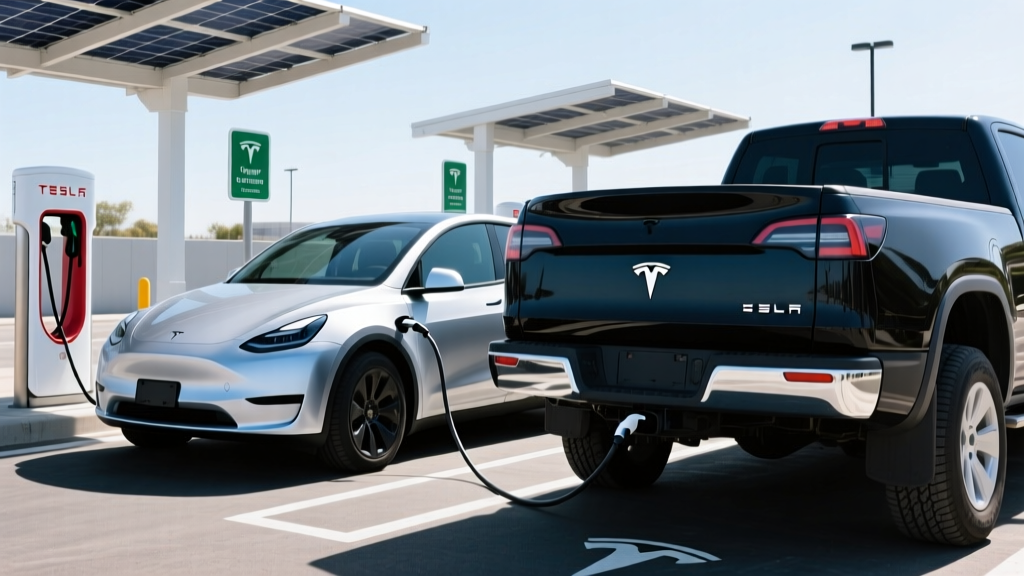
It's a scene playing out at Supercharger plazas and public EV stations across the country: a diesel or gas pickup truck parked squarely across one or two charging stalls, engine idling or empty, while EV drivers circle the lot with dwindling range. The phenomenon of pickup trucks blocking Tesla charging stations — and CCS-equipped chargers more broadly — has become one of the most frustrating pain points in public EV charging. Whether it's intentional "ICEing" (Internal Combustion Engine vehicles occupying EV spaces) or simply a lack of awareness about pull-through stall etiquette for large trucks towing trailers, the result is the same: stranded EV drivers and wasted time.
The problem is amplified by the fact that modern electric trucks like the Ford F-150 Lightning, Rivian R1T, and Chevrolet Silverado EV are themselves large pickups that require pull-through or oversized stalls. When a gas truck blocks a standard pull-in stall, and an electric truck can't fit into the remaining spaces, the cascading effect can shut down an entire charging plaza during peak travel.
This guide tackles what you can do when you encounter blocked chargers, how to plan around the problem, and — most importantly — how to set up reliable home charging so you're never dependent on public infrastructure for your daily needs.
Understanding Charging Levels: What Speeds Are We Talking About?
Before we get into workarounds and home installations, let's nail down the three charging levels every EV owner needs to know. The distinction between kW (kilowatts, the rate of power delivery) and kWh (kilowatt-hours, the total energy stored in your battery) is critical and often confused. Think of kW as how fast water flows from a hose, and kWh as the size of the bucket you're filling.
| Level | Voltage | Power (kW) | Miles of Range Per Hour | Best For |
|---|---|---|---|---|
| Level 1 | 120V AC | 1.0–1.9 kW | 3–5 mi/hr | Overnight top-ups, PHEVs, emergencies |
| Level 2 | 240V AC | 3.3–19.2 kW | 12–75 mi/hr | Daily home charging, workplace, destinations |
| DC Fast Charging | 400–800V DC | 50–350+ kW | 150–1,200+ mi/hr | Road trips, rapid top-ups |
For context, a Tesla Model Y with a 75 kWh (usable) battery charging at a Level 2 home station delivering 11.5 kW will go from 10% to 80% in roughly 5–6 hours. That same vehicle on a 250 kW V4 Supercharger can hit 10–80% in approximately 18–22 minutes, though the charge curve tapers significantly above 80% — you'll rarely see peak kW sustained for the entire session.
What to Do When Pickup Trucks Block EV Chargers
Here's the practical playbook when you pull up to a station and find pickup trucks blocking Tesla charging stations or any public charger:
Immediate Workarounds
- Check for pull-through stalls: Many newer Supercharger V4 plazas and Electrify America stations include pull-through stalls designed for trucks with trailers. These are often marked differently on your in-car navigation or charging app.
- Use your network app to reroute: Tesla's Supercharger map, PlugShare, and ChargePoint apps show real-time stall availability. If one plaza is blocked, the next one 15 miles away might have open stalls.
- Document and report: Most charging networks have in-app reporting for blocked or broken stalls. Tesla's Supercharger support line and Electrify America's customer service both accept photo reports. Some municipalities with EV parking ordinances will issue citations for ICEing.
- Leave a polite note: If you have time, a non-confrontational note on the windshield explaining that the space is reserved for EVs charging can educate drivers who genuinely don't know.
Know Your Rights (Where They Exist)
As of 2026, over 30 U.S. states have some form of anti-ICEing law that allows ticketing or towing of combustion vehicles parked in designated EV charging spaces. However, enforcement varies wildly. States like California, Florida, and Washington have active enforcement, while others have laws on the books but rarely enforced. Check your state's DMV or attorney general's office for specifics — local EV advocacy groups like Plug In America often maintain updated state-by-state trackers.
How Much Does It Cost to Install a Home EV Charger?
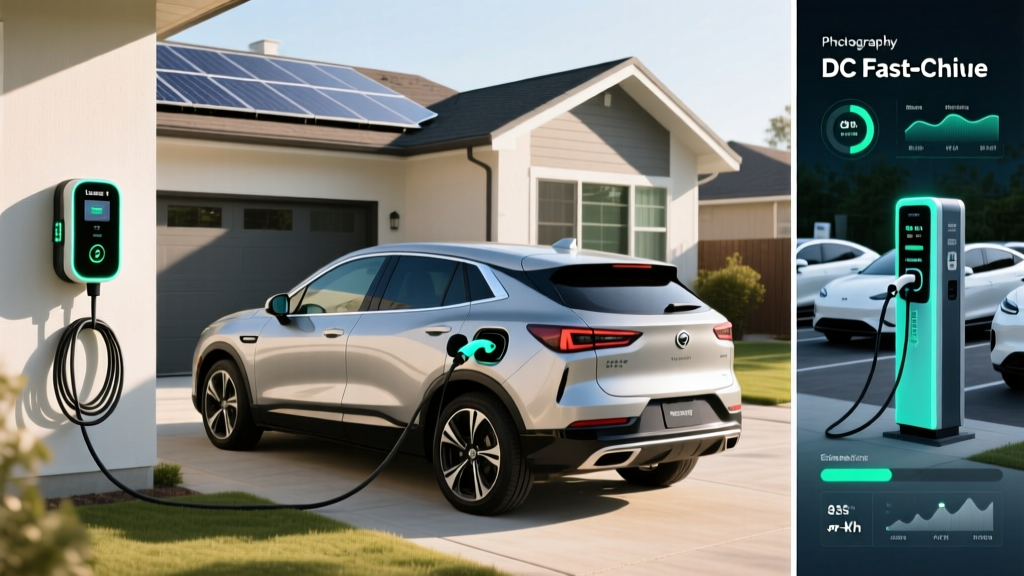
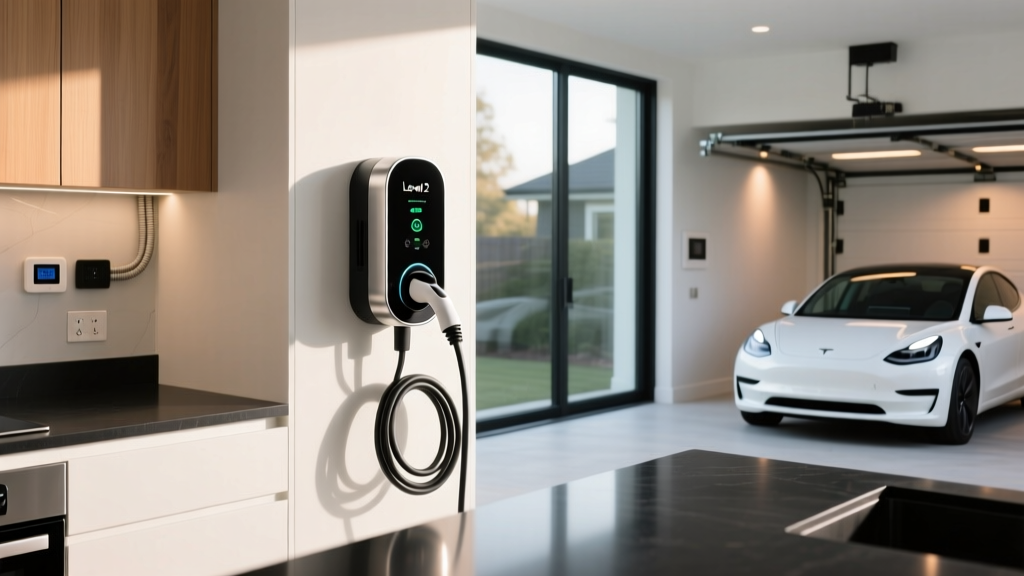
The most reliable solution to public charging headaches is a home Level 2 installation. Here's what it actually costs in 2026, broken down honestly — because many online estimates gloss over the variables that can double your bill.
| Component | Typical Range | Notes |
|---|---|---|
| Level 2 EVSE (charger hardware) | $350–$800 | Smart chargers with WiFi/app: $500–$800; basic hardwired units: $350–$500 |
| Electrician labor (standard install) | $500–$1,500 | Depends on run length from panel to garage/carport |
| Electrical permit | $50–$250 | Varies by municipality; some bundle with inspection |
| Panel upgrade (if needed) | $1,500–$4,000 | Required if your panel is 100A or maxed out; 200A upgrade typical |
| Conduit/wiring materials | $100–$400 | Long runs (50+ ft from panel) increase cost |
| Total (no panel upgrade) | $900–$2,950 | Most homes with 200A service fall in this range |
| Total (with panel upgrade) | $2,400–$6,950 | Older homes with 100A or 150A panels |
Electrical Requirements You Need to Know
A standard Level 2 home charger requires a 240V dedicated circuit. The most common setup is a NEMA 14-50 outlet on a 50-amp breaker, which safely delivers 40 amps continuous (the National Electrical Code requires circuits to be rated 125% above continuous load). This yields approximately 9.6 kW — enough to add roughly 30–40 miles of range per hour on most EVs, fully recharging overnight.
For faster home charging, some EVs (like the Ford F-150 Lightning with its optional 19.2 kW onboard charger) can accept up to 80 amps, requiring a 100-amp breaker and heavier-gauge wiring. This is a more involved install and typically costs $500–$1,000 more in electrician labor and materials.
Do You Need a Panel Upgrade?
This is the question that separates a $1,500 install from a $5,000 one. If your home has a 200-amp main panel with available capacity, you're likely fine. If you have a 100-amp panel (common in homes built before 1990) or your panel is already near capacity with HVAC, electric range, dryer, and other loads, a licensed electrician will need to perform a load calculation. A panel upgrade to 200A or even 400A service may be necessary. Some utilities offer rebates for panel upgrades that support EV charging — check with your local provider.
The IRS §30D tax credit for clean vehicles does not cover home charger installation directly, but the separate Residential Clean Energy Credit (§25D) expired for standalone charger installs at the end of 2025. Some state and utility rebate programs still cover $250–$1,000 of charger hardware and installation — check your state energy office and utility provider for current programs.
Which Connector Is Compatible With Your EV?
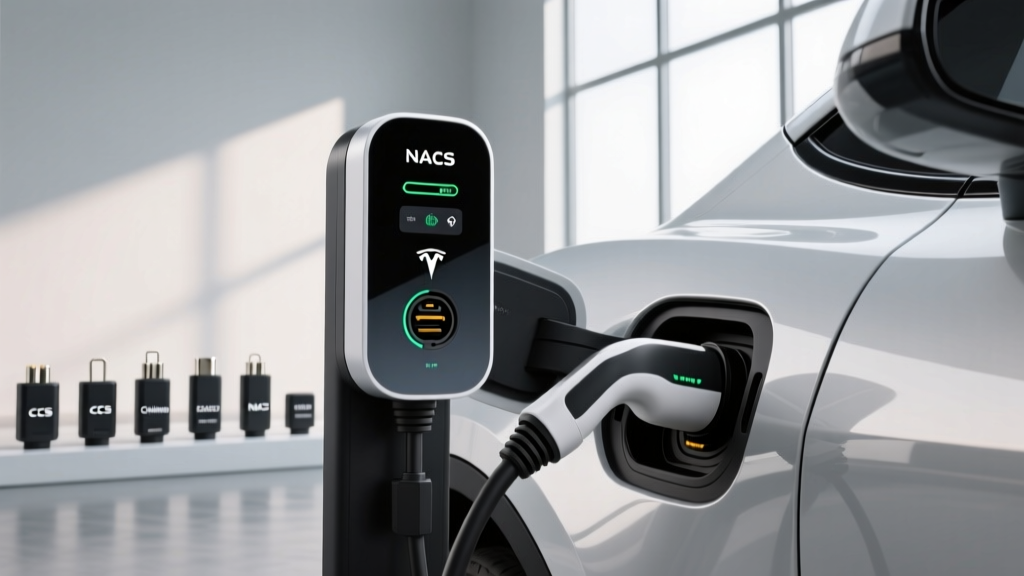
The connector landscape in 2026 has largely consolidated around NACS (the Tesla-designed North American Charging Standard), but millions of CCS1-equipped vehicles are still on the road, and adapters are a key part of the equation.
| Connector | Brands Using It (Native) | DC Fast Charge Networks | Adapter Needed? |
|---|---|---|---|
| NACS (J3400) | Tesla (all years), Ford (2025+), GM (2025+), Rivian (2025+), Volvo/Polestar (2025+), most new 2026 models | Tesla Supercharger, Electrify America (new stalls), EVgo, ChargePoint | Not needed for native NACS vehicles |
| CCS1 | Hyundai/Kia (pre-2026 models), Volkswagen ID.4 (pre-2026), BMW iX/i4, most 2022–2024 EVs | Electrify America, EVgo, ChargePoint, legacy CCS networks | NACS-to-CCS adapter ($150–$250) for Supercharger access |
| CHAdeMO | Nissan Leaf (legacy only, no new U.S. sales) | Limited legacy stations; declining | No reliable CHAdeMO-to-NACS adapter exists |
For home Level 2 charging, most wall connectors now ship with NACS plugs as standard. If you own a CCS1-equipped vehicle, either purchase a NACS-to-CCS adapter or choose a home charger that still offers a J1772/CCS cable option. The ChargePoint Home Flex and Emporia Level 2, for example, are available in both NACS and J1772 configurations.
How Much Does Charging Cost Per Mile vs. Gas?
One of the strongest arguments for home charging — and for tolerating the occasional blocked public charger — is the cost advantage. Here's a realistic 2026 comparison:
| Scenario | Cost per kWh | Vehicle Efficiency | Cost per Mile |
|---|---|---|---|
| Home Level 2 (national avg, off-peak TOU rate) | $0.13/kWh | 3.5 mi/kWh (e.g., Tesla Model Y) | $0.037/mi |
| Home Level 2 (California peak rate) | $0.32/kWh | 3.5 mi/kWh | $0.091/mi |
| Public Level 2 (ChargePoint, EVgo) | $0.25–$0.49/kWh | 3.5 mi/kWh | $0.071–$0.140/mi |
| DC Fast Charging (Tesla Supercharger avg) | $0.28–$0.40/kWh | 3.5 mi/kWh | $0.080–$0.114/mi |
| DC Fast Charging (Electrify America peak) | $0.48–$0.64/kWh | 3.5 mi/kWh | $0.137–$0.183/mi |
| Gas vehicle (28 MPG combined, $3.45/gal) | — | 28 MPG | $0.123/mi |
| Gas pickup (19 MPG combined, $3.45/gal) | — | 19 MPG | $0.182/mi |
The takeaway: home charging at off-peak rates delivers fuel costs roughly one-third that of a gasoline car. Even public DC fast charging is generally competitive with or cheaper than gasoline on a per-mile basis. But if you're relying exclusively on expensive public fast chargers in high-cost states like California, your savings narrow considerably — another reason home charging is the priority.
According to fueleconomy.gov, the EPA-rated efficiency for popular 2026 EVs ranges from about 3.0 mi/kWh (larger electric trucks like the Silverado EV) to 4.2 mi/kWh (efficient sedans like the Hyundai Ioniq 6). Use your vehicle's actual efficiency for precise calculations.
Charging Time Examples: What to Expect
Real-world charging times depend on battery size, starting state of charge, ambient temperature, and the vehicle's charge curve. Here are representative examples for common 2026 EVs:
| Vehicle | Battery (usable kWh) | Peak DC kW | 10–80% DC Fast | Level 2 Home (11.5 kW) |
|---|---|---|---|---|
| Tesla Model Y (Long Range) | 75 kWh | 250 kW | ~20 min | ~5.5 hours |
| Ford F-150 Lightning (Extended) | 131 kWh | 150 kW | ~45 min | ~9.5 hours (at 11.5 kW); ~4.5 hrs (at 19.2 kW) |
| Hyundai Ioniq 5 | 77.4 kWh | 350 kW (800V) | ~18 min | ~5.8 hours |
| Chevrolet Equinox EV | 85 kWh | 150 kW | ~35 min | ~6.5 hours |
| BMW i4 eDrive40 | 81.5 kWh | 200 kW | ~28 min | ~6.0 hours |
Critical nuance on charge curves: Peak kW ratings are not sustained rates. A vehicle rated at 250 kW peak may only hold that rate from roughly 10–30% SoC before tapering to 150 kW, then 100 kW, and finally 40–50 kW above 80%. This is why the 10–80% metric matters more than the peak number. Charging from 80–100% on DC fast charging can take as long as the 10–80% session — which is why road-trip strategy focuses on staying in the 10–80% window.
Recommended Home Charging Equipment for 2026
Based on real-world performance, build quality, smart features, and value, these are the top Level 2 home chargers to consider:
Tesla Wall Connector (Gen 4)
- Power output: Up to 11.5 kW (48A on a 60A breaker)
- Connector: NACS native
- Cable length: 24 ft
- Smart features: WiFi, OTA updates, Power Sharing (link multiple units on one circuit), integrated Tesla app
- Price: ~$475
- Best for: Tesla owners and any NACS-equipped vehicle
ChargePoint Home Flex
- Power output: Up to 12 kW (50A adjustable, configurable 16–50A to match your circuit)
- Connector: Available in NACS or J1772
- Cable length: 23 ft
- Smart features: WiFi, ChargePoint app with scheduling, Alexa integration, amperage flexibility
- Price: ~$599 (NACS) / ~$549 (J1772)
- Best for: Multi-EV households, flexible amperage needs
Emporia Vue Level 2 EV Charger
- Power output: Up to 11.5 kW (48A)
- Connector: NACS or J1772
- Cable length: 24 ft
- Smart features: WiFi, energy monitoring via Emporia app, solar integration, TOU rate scheduling
- Price: ~$399
- Best for: Budget-conscious buyers who want smart features and energy tracking
Grizzl-E Smart (United Chargers)
- Power output: Up to 10 kW (40A) or 11.5 kW (48A)
- Connector: J1772 or NACS
- Cable length: 24 ft
- Smart features: OCPP-compatible, app scheduling, rugged outdoor-rated aluminum enclosure
- Price: ~$499–$599
- Best for: Outdoor installations in harsh climates (rated to -40°F)
Safety, Electrical Code, and Installation Best Practices
Home EV charger installation is not a DIY project. Here's what the National Electrical Code (NEC) and best practices require:
- Dedicated circuit: Your Level 2 charger must be on its own dedicated breaker — not shared with other appliances. A 50A breaker for a 40A charger is the most common configuration.
- GFCI protection: NEC 2020 and later requires GFCI (Ground Fault Circuit Interrupter) protection for all EV charging outlets. Most modern hardwired EVSEs have built-in ground-fault protection; if you're using a NEMA 14-50 receptacle, a GFCI breaker is required.
- Outdoor rating: If your charger is installed outdoors (carport, driveway pedestal), the EVSE must carry a NEMA 4 or NEMA 4X weather rating. All recommended chargers above meet this standard.
- Permit and inspection: Virtually all jurisdictions require an electrical permit for EV charger installation. The permit ensures a licensed inspector verifies the work meets code. Skipping this can void your homeowner's insurance coverage for electrical fires.
- Wire gauge: For a 50A circuit, 6 AWG copper wire is standard. Longer runs (over 50 feet) may require 4 AWG to prevent voltage drop. Your electrician will calculate this.
Always hire a licensed electrician familiar with EV charger installations. The NHTSA doesn't regulate home charging directly, but your local building department and the NEC set the enforceable standards. Ask your electrician for references from previous EV installs — the work is straightforward for someone experienced but error-prone for generalists unfamiliar with continuous-load calculations.
Planning Around Public Charging Deserts and Blocked Stations
Even with a perfect home setup, road trips and destination charging require public infrastructure. Here's how to minimize the impact of pickup trucks blocking Tesla charging stations and other public-charging frustrations:
- Precondition your battery: Navigate to a Supercharger or DC fast station using your car's built-in navigation (Tesla, Ford, GM all do this automatically). The vehicle will warm the battery to optimal charging temperature, which can shave 5–10 minutes off your session and improve peak charge rate.
- Charge to 80%, then move on: Because the charge curve tapers dramatically above 80%, staying to 100% wastes time and blocks the stall for others. If you need more range, stop again 100 miles down the road — you'll charge faster starting from a lower SoC.
- Have a backup station in your route: Apps like A Better Routeplanner (ABRP) and PlugShare let you identify alternate chargers within 10–20 miles of your planned stop. If your primary station is blocked or has broken stalls, you won't be caught scrambling.
- Use off-peak hours: Highway Supercharger plazas are most congested between 11 AM and 3 PM on weekends and holidays. Charging at 7 AM or after 8 PM dramatically reduces the chance of encountering blocked stalls or long queues.
Frequently Asked Questions
How much does it cost to install a home EV charger?
For most homes with existing 200A electrical service, a Level 2 home charger installation runs between $900 and $2,950, including hardware ($350–$800), electrician labor ($500–$1,500), and permits ($50–$250). Homes needing a panel upgrade from 100A to 200A should budget an additional $1,500–$4,000, bringing the total to $2,400–$6,950.
How fast will each charging level add range?
Level 1 (120V) adds 3–5 miles of range per hour. Level 2 (240V) adds 12–75 miles per hour depending on amperage and your vehicle's onboard charger capacity. DC fast charging adds 150–1,200+ miles per hour at peak rate, though real-world sessions average 10–80% in 18–45 minutes depending on the vehicle.
Which connector or charger is compatible with my EV?
In 2026, most new EVs use the NACS connector. Older models (2022–2024) from Hyundai, Kia, Volkswagen, and BMW typically use CCS1. You can use a NACS-to-CCS adapter (~$150–$250) to access Tesla Superchargers with a CCS vehicle. CHAdeMO is effectively discontinued in the U.S. market. For home charging, purchase a wall connector matching your vehicle's native connector or use the appropriate adapter.
How much does charging cost per mile vs. gas?
Home charging at the national average electricity rate ($0.13/kWh) costs roughly $0.037 per mile in a typical EV — about one-third the cost of gasoline at $3.45/gallon in a 28 MPG car ($0.123/mi). Public DC fast charging at $0.28–$0.48/kWh costs $0.08–$0.18 per mile, which is still competitive with or cheaper than gasoline for most vehicles.
What electrical upgrades might I need for a home charger?
The most common upgrade is ensuring you have a 200A main panel with sufficient spare capacity. If your panel is 100A or near capacity, a panel upgrade ($1,500–$4,000) will be required. You'll also need a dedicated 50A (or larger) breaker, appropriate wire gauge (6 AWG copper minimum for 50A), and a GFCI-protected circuit. A licensed electrician will perform a load calculation to determine your exact needs.
Are there any tax credits or rebates for home charger installation in 2026?
The federal §25D Residential Clean Energy Credit for standalone EV charger installation expired at the end of 2025. However, many state programs, municipal incentives, and utility rebates still offer $250–$1,000 toward charger hardware and installation. Check with your state energy office and local utility for current offerings. The IRS §30D clean vehicle credit applies to vehicle purchases, not charger installations.