The Critical Role of Weatherproofing in Outdoor EV Charging
Installing a Level 2 EV charger outdoors exposes your expensive electrical equipment to some of nature's harshest elements: driving rain, freezing snow, intense UV radiation, and airborne dust. While modern chargers like the ChargePoint Home Flex or Tesla Wall Connector are designed with outdoor use in mind, the installation methodology dictates the longevity and safety of the system. Poor weatherproofing doesn't just lead to premature equipment failure; it introduces severe shock and fire hazards.
As an expert best practice, weatherproofing must be approached holistically. It is not merely about buying a unit with a high water-resistance rating; it encompasses the enclosure, the conduit transitions, the wiring methods, and the physical cable management. According to the U.S. Department of Energy, proper installation by qualified professionals adhering to local codes is paramount for outdoor charging infrastructure to ensure safety and optimal performance over the lifespan of the vehicle.
Decoding NEMA and IP Ratings for EV Chargers
When selecting an outdoor EV charger or an exterior junction box, you will encounter two primary ingress protection standards: NEMA (National Electrical Manufacturers Association) and IP (Ingress Protection). Understanding the distinction is vital for selecting the right gear for your specific climate.
The National Electrical Manufacturers Association (NEMA) defines enclosure types that account for environmental factors specific to North American electrical codes, including ice formation and corrosion. Conversely, IP ratings (defined by IEC 60529) focus strictly on solid and liquid ingress.
| Rating Standard | Classification | Protection Level | Best Use Case |
|---|---|---|---|
| NEMA | Type 3R | Rain, sleet, and external ice formation. | Mild climates; covered carports. |
| NEMA | Type 4 | Watertight; protects against splashing water and hose-directed water. | Standard outdoor driveway installations. |
| NEMA | Type 4X | Same as Type 4, but with added corrosion resistance (usually stainless steel or fiberglass). | Coastal areas with salt air; heavy industrial zones. |
| IP | IP55 | Dust protected; protected against low-pressure water jets. | Standard outdoor wall mounts. |
| IP | IP65 | Dust-tight; protected against low-pressure water jets from any direction. | Exposed driveways with heavy rainfall. |
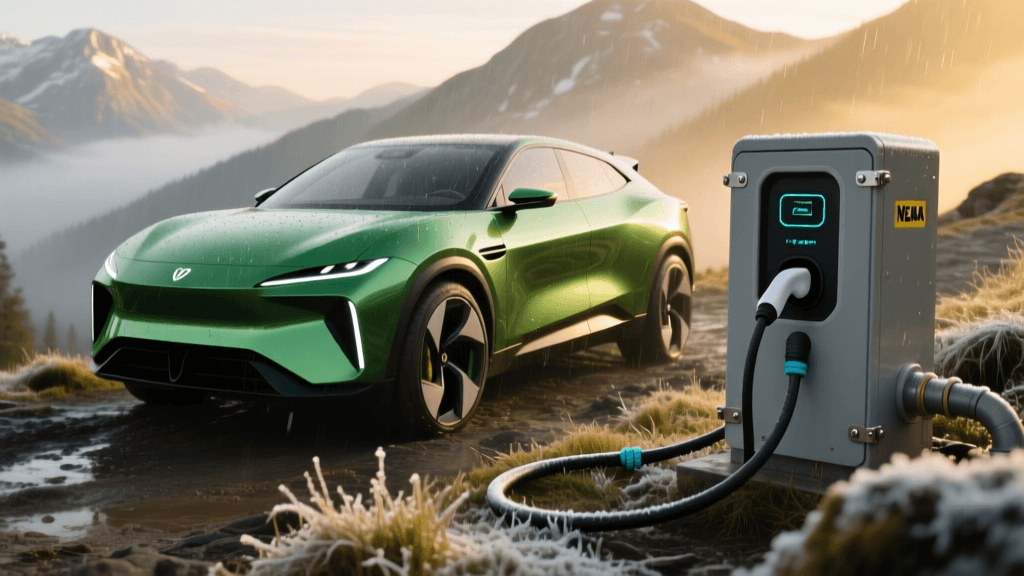
Expert Tip: Always aim for a minimum of NEMA 4 or IP65 for fully exposed outdoor installations. If you live within five miles of the ocean, the salt spray will rapidly degrade standard metal enclosures; insist on NEMA 4X rated polycarbonate or stainless steel backboxes.
Hardwired vs. Receptacle: The Weatherproofing Debate
One of the most crucial decisions in an outdoor installation is whether to hardwire the EV charger or plug it into an exterior NEMA 14-50 receptacle. From a strict weatherproofing perspective, hardwiring is the undisputed best practice.
When you use a receptacle, you introduce a mechanical connection point that is highly susceptible to moisture ingress, thermal expansion, and corrosion. Even with a premium Hubbell weatherproof 'in-use' cover, the NEMA 14-50 plug pins can oxidize over time, leading to increased resistance, voltage drop, and potentially melted plugs. Hardwiring eliminates this vulnerable junction, allowing the charger's internal NEMA 4 rated enclosure to serve as the sole, continuous weatherproof barrier. If you must use a receptacle for portability, ensure the weatherproof cover is cast aluminum with a deep gasket seal, and apply a dielectric grease to the plug pins during every insertion.
Conduit, Wiring, and the Essential Drip Loop
The transition from your home's electrical panel to the exterior charger is where many DIY installations fail. To protect the wiring from physical damage and UV degradation, use Liquid-Tight Flexible Metal Conduit (LFMC) or rigid PVC conduit rated for outdoor use.
Sealing the Conduit Transitions
Moisture loves to travel along the inside of conduit via capillary action or condensation. To prevent water from entering your electrical panel or the EV charger's internal terminal block, you must use sealing fittings.
- Duct Seal: Pack conduit ends with electrical duct seal (a moldable, non-hardening putty) to block airflow and moisture.
- Silicone Sealant: Where the conduit meets the exterior siding or the charger backbox, use a 100% silicone outdoor sealant (like GE Silicone II). Never use acrylic or latex caulks, which will crack and peel under UV exposure and thermal cycling.
The Drip Loop Mandate
Whether you are running flexible conduit or managing the EV charging cable itself, always incorporate a drip loop. A drip loop is a U-shaped dip in the cable or conduit positioned just before it enters the weatherproof enclosure. Gravity forces any water running down the cable to pool at the bottom of the loop and drip off onto the ground, rather than tracking directly into the charger's terminal housing.
GFCI Protection and NEC Code Compliance
Water and electricity are a lethal combination, making Ground Fault Circuit Interrupter (GFCI) protection non-negotiable for outdoor charging. The National Fire Protection Association (NFPA 70), which publishes the National Electrical Code (NEC), strictly mandates GFCI protection for outdoor EV charging setups.
If you are installing a NEMA 14-50 receptacle outdoors, the breaker in your main panel must be a GFCI breaker. However, if you hardwire your EV charger, the NEC generally exempts the circuit from requiring a GFCI breaker at the panel, because modern hardwired Level 2 chargers (like the Emporia Vue or Tesla Wall Connector) have highly sensitive, integrated GFCI protection built directly into their internal circuitry. This is another major weatherproofing and safety advantage of hardwiring: you avoid the nuisance tripping that outdoor GFCI breakers often experience during heavy rainstorms or humidity spikes.
UV Degradation and Cable Management Best Practices
Weatherproofing isn't just about keeping water out; it is also about protecting the equipment from solar radiation. Prolonged exposure to ultraviolet (UV) light will cause standard PVC cable jackets to become brittle, crack, and expose the live copper wiring inside.
Most premium EV chargers come with UV-rated charging cables, but leaving a 20-foot cable coiled on the driveway or hanging loosely against a sun-baked wall will accelerate wear. Implement the following cable management strategies:
- Wall-Mounted Retractors: Install a heavy-duty, UV-stabilized cable retractor (such as the EV Cable Holder or Tasker retractable mount) to keep the cable suspended off the ground and out of puddles.
- Avoid Sharp Bends: Never zip-tie an EV cable tightly. Maintain a bend radius of at least 3 inches to prevent internal wire fatigue and micro-fractures in the outer weatherproof jacket.
- Shade Sails and Awnings: If your charger is mounted on a south-facing wall with zero overhead protection, consider installing a small polycarbonate awning or shade sail directly above the unit to reduce ambient operating temperatures and UV exposure.
Expert Maintenance Checklist for Outdoor Installations
Even the most meticulously weatherproofed outdoor EV charger requires periodic inspection. Adopt this bi-annual maintenance routine to ensure ongoing safety:
- Inspect the Enclosure Gasket: Open the charger's front faceplate and inspect the rubber O-ring or foam gasket. If it is compressed, cracked, or brittle, replace it immediately to maintain the NEMA 4 seal.
- Check Conduit Sealant: Examine the silicone sealant where the conduit enters the wall and the charger. Poke it gently; if it has lost its adhesion or shows signs of peeling, scrape it out and reapply fresh 100% silicone.
- Examine the Charging Cable: Run your gloved hand along the entire length of the charging cable. Feel for any abrasions, flat spots, or stiff, cracked sections of the outer jacket.
- Clean the Connector Pins: Use a dedicated electrical contact cleaner and a microfiber cloth to wipe down the J1772 or NACS charging connector pins. Remove any bug splatter, road grime, or oxidation that could cause a poor connection and subsequent overheating.
By treating weatherproofing as a comprehensive system rather than a single product feature, you ensure that your outdoor EV charging setup remains safe, efficient, and durable for years to come, regardless of the climate you call home.