What Does "On Power Charging Station" Actually Mean for EV Owners?
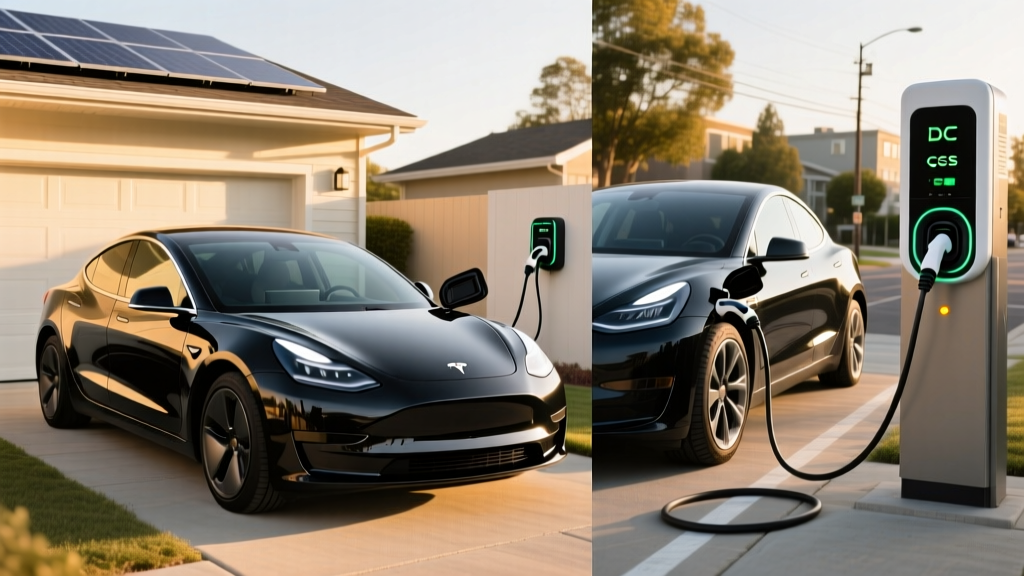
When you see the phrase "on power charging station" in EV discussions, it usually refers to a hardwired or plugged-in Level 2 home charging setup — the kind of 240-volt station that delivers the bulk of an electric vehicle owner's daily electrons. It can also describe a public DC fast-charging plaza where you pull in, plug up, and get back on the road in 20 minutes. Either way, the goal is the same: put electrons into your battery pack as efficiently and cheaply as your electrical infrastructure allows.
This guide breaks down every layer of that decision. We'll cover the three charging levels with real kW and miles-per-hour numbers, walk through what your home's electrical panel can (and can't) handle, compare connector standards now that the industry has largely consolidated around NACS, and recommend specific hardware with exact power outputs and pricing. No fluff — just the numbers you need to plan your install and budget.
Charging Levels Explained: Speeds, Power, and Range Added Per Hour
Every EV charging scenario falls into one of three levels. Here's what each delivers in practice, with real-world miles of range added per hour of charging based on a typical mid-size EV consuming roughly 3.5 miles per kWh (around 285 Wh/mile — think Hyundai Ioniq 5 or Tesla Model Y efficiency):
| Level | Voltage | Power (kW) | Miles of Range/Hour | Typical Use Case |
|---|---|---|---|---|
| Level 1 | 120V AC | 1.2–1.9 kW | 3–5 mi/hr | Overnight trickle; PHEVs; emergency backup |
| Level 2 | 240V AC | 3.3–19.2 kW | 12–65 mi/hr | Home daily charging; workplace; destination |
| DC Fast Charge | 400–900V DC | 50–350 kW | 150–800+ mi/hr (peak) | Road trips; rapid top-ups; fleet depots |
Level 1 plugs into a standard household outlet and adds roughly 35 miles overnight (10 hours). It's adequate for plug-in hybrids with small batteries (10–18 kWh) or BEV owners who drive under 30 miles daily. Everyone else will want Level 2.
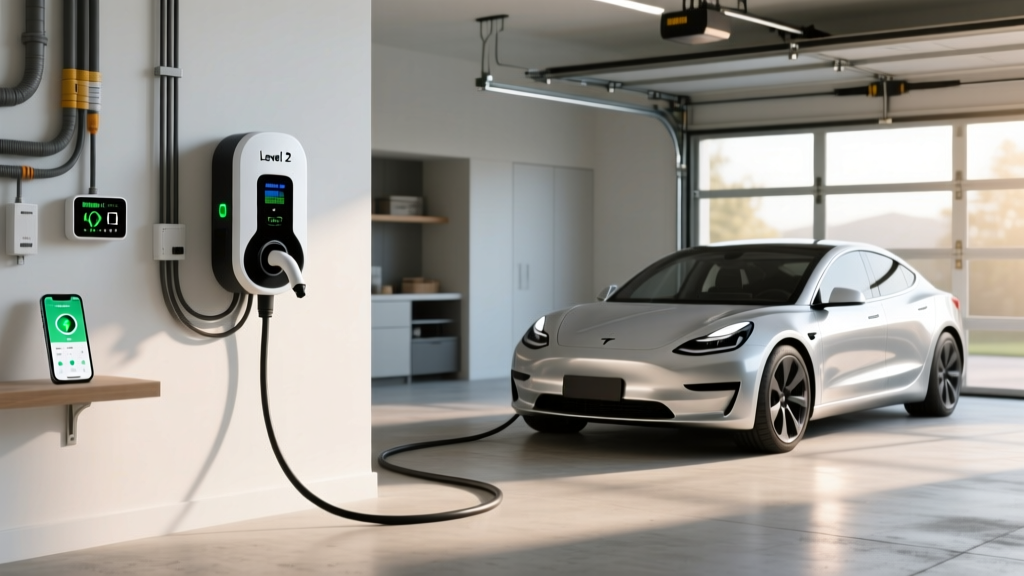
Level 2 is the home-charging workhorse. A 48-amp (11.5 kW) station on a 240V circuit adds roughly 40 miles of range per hour — enough to fully replenish a 75 kWh battery in about 7 hours overnight. Most home installations run 32A or 48A, delivering 7.7 kW or 11.5 kW respectively.
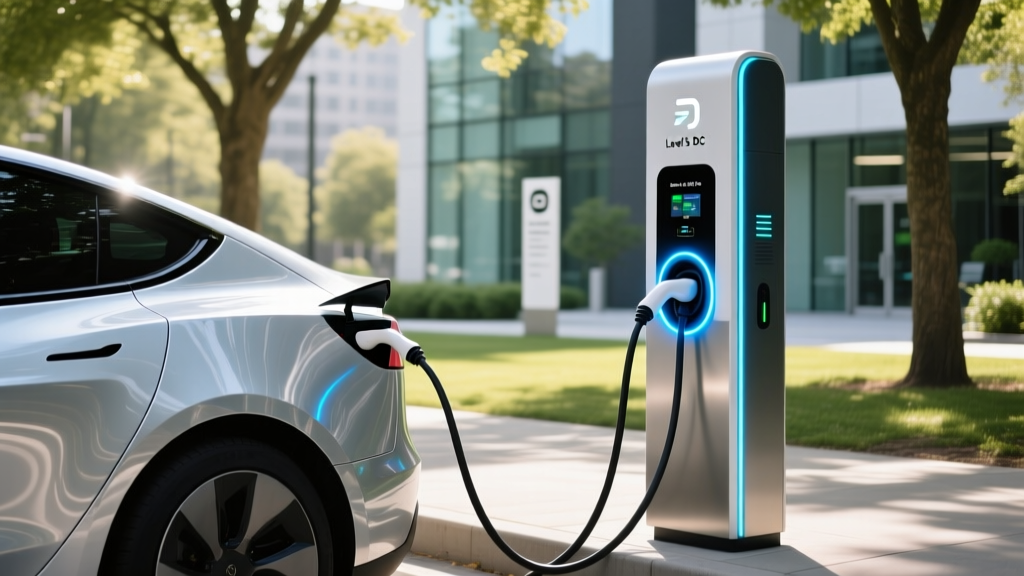
DC Fast Charging bypasses the car's onboard charger and feeds DC current directly to the battery. Peak rates on modern 800V architectures (Hyundai/Kia E-GMP, Porsche Taycan, Lucid Air) can hit 250–350 kW, adding 10–80% in 18–22 minutes. But remember the charge curve: peak kW is sustained only between roughly 10–50% state of charge, then tapers sharply above 80% to protect battery chemistry.
Home Installation: Electrical Requirements, Panel Upgrades, and Real Costs
The single biggest variable in home charging setup isn't the charger itself — it's whether your electrical panel can support a dedicated 240V circuit. Here's what a typical Level 2 installation demands:
- Circuit amperage: 40A breaker for a 32A charger (NEC requires 125% overhead), or 60A breaker for a 48A charger
- Voltage: 240V, single-phase (standard US residential split-phase)
- Wire gauge: 6 AWG copper for 48A; 8 AWG for 32A (varies by run length and local code)
- Dedicated circuit: The EV charger must have its own breaker — no sharing with dryers, ranges, or HVAC
- GFCI protection: NEC 2020 and later require GFCI breakers for outdoor receptacles; hardwired installations may be exempt in some jurisdictions
Do You Need a Panel Upgrade?
If your home has a 100-amp main panel (common in homes built before the 1990s), adding a 48A EV circuit will likely exceed available capacity. The NEC 220.82 load calculation determines whether your panel can handle the addition. Many older homes need a 200-amp service upgrade, which is the single largest line item in an EV charging install.
Homes with existing 200A panels usually have sufficient headroom, especially if you can use a smart panel or load-management device (like the Emporia VUE with an EV charger integration) to dynamically share capacity with other large loads.
| Component | Simple Install (panel has capacity) | Complex Install (panel upgrade needed) |
|---|---|---|
| Level 2 Charger (hardware) | $400–$750 | $400–$750 |
| Electrical permit | $50–$200 | $100–$350 |
| Electrician labor (run circuit, mount station) | $500–$1,500 | $1,500–$3,000 |
| Panel upgrade (100A → 200A) | $0 | $1,500–$4,000 |
| Conduit/wire (long runs, 50+ ft) | $100–$400 | $300–$800 |
| Total estimated cost | $1,050–$2,850 | $3,800–$8,900 |
Always get at least two quotes from licensed electricians and ask specifically whether the quote includes the permit, load calculation, and any necessary conduit work. According to the National Electrical Contractors Association, regional labor rates vary by 30–50%, so your mileage will literally vary.
Connector Compatibility: NACS, CCS1, CHAdeMO, and Adapter Realities
The connector landscape has consolidated dramatically. As of the 2025–2026 model years, nearly every major automaker has adopted the North American Charging Standard (NACS) — the connector Tesla developed and opened to the industry. Here's where each brand stands:
| Connector | Brands Using It (2025–2026) | Notes |
|---|---|---|
| NACS (Tesla-style) | Tesla, Ford, GM, Rivian, Volvo, Polestar, Mercedes, Nissan (new models), Honda (2025+), Hyundai/Kia (2025+), BMW, Subaru, Lucid | Becoming the universal standard; native on new vehicles |
| CCS1 | Remaining 2023–2024 models on the road; some VW ID.4 (pre-2025) | Legacy — still supported at public stations but declining on new vehicles |
| CHAdeMO | Nissan Leaf (discontinued), Mitsubishi Outlander PHEV (older) | Effectively obsolete for new vehicles; stations being phased out |
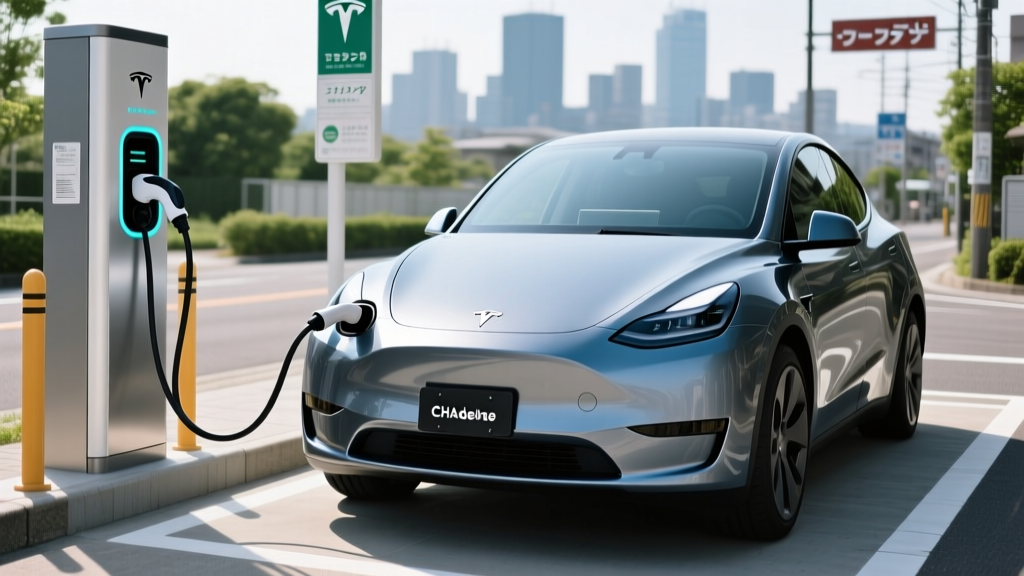
If you're buying a new EV in 2026, it almost certainly has a NACS port. If you own a CCS-equipped vehicle from 2022–2024, adapters are available: Tesla sells a CCS-to-NACS adapter (~$250), and third-party options from Lectron and A2Z exist. For home Level 2 charging, the J1772 connector remains the standard plug end, but most new home chargers now ship with a NACS plug or include a J1772-to-NACS adapter in the box.
Cost to Charge: Home vs. Public vs. Gas — The Per-Mile Math
Charging cost is where EVs shine — but only if you charge at home on off-peak electricity rates. Public DC fast charging can approach or exceed gasoline cost per mile in some markets.
| Scenario | Rate ($/kWh) | Cost for 75 kWh Fill | Cost Per Mile (at 3.5 mi/kWh) |
|---|---|---|---|
| Home off-peak (utility time-of-use) | $0.08–$0.12 | $6.00–$9.00 | $0.023–$0.034 |
| Home standard rate (no TOU plan) | $0.14–$0.18 | $10.50–$13.50 | $0.040–$0.051 |
| Public Level 2 (ChargePoint, EVgo) | $0.25–$0.49 | $18.75–$36.75 | $0.071–$0.140 |
| DC Fast Charge (Electrify America, Tesla Supercharger) | $0.30–$0.55 | $22.50–$41.25 | $0.086–$0.157 |
| Gasoline equivalent (28 MPG avg, $3.40/gal) | — | $9.11 (per 75 kWh equivalent) | $0.121 |
At home on a time-of-use plan, an EV costs roughly 3–4 cents per mile to fuel — a quarter of what a 28 MPG gas car burns. But rely exclusively on DC fast charging at $0.45/kWh, and your per-mile cost climbs to 13–16 cents, which can exceed gasoline in some scenarios. The economic case for EVs is strongest when you can install that home Level 2 station and charge overnight.
For a detailed breakdown of utility rate structures and EV-specific plans, check resources from the U.S. Department of Energy.
Charging Time Examples: 10–80% for Common Battery Sizes
How long does a charge session actually take? Below are real-world 10–80% times for representative battery sizes at different charging levels. Note that DC fast-charge times depend heavily on the vehicle's maximum charge acceptance rate and battery preconditioning.
| Battery Size | Example Vehicles | Level 2 (11.5 kW / 48A) | DC Fast (peak rate) | 10–80% Time (DC) |
|---|---|---|---|---|
| 60 kWh | VW ID.4 Std Range, Chevy Equinox EV | ~4.5 hrs (full) | 150 kW | ~28 min |
| 75 kWh | Tesla Model Y LR, Ford Mustang Mach-E ER | ~6 hrs (full) | 250 kW | ~22 min |
| 84 kWh | Hyundai Ioniq 5 (2025+), Kia EV6 | ~6.5 hrs (full) | 240 kW (800V) | ~18 min |
| 100 kWh | Tesla Model S, Rivian R1S (Max Pack) | ~8 hrs (full) | 250 kW | ~30 min |
| 118 kWh | GMC Hummer EV, Chevy Silverado EV | ~10 hrs (full) | 350 kW | ~35 min |
Equipment Recommendations: Top Home Level 2 Chargers
Below are proven Level 2 home charging stations with exact specs. All prices are approximate MSRP as of early 2026 and exclude installation.
Tesla Wall Connector (Gen 4)
- Power output: 11.5 kW (48A) on a 60A circuit
- Connector: NACS native (J1772 adapter included)
- Cable length: 24 ft
- Smart features: Wi-Fi, OTA updates, Tesla app scheduling, load sharing between multiple units, Powerwall integration
- Price: ~$475
- Best for: Tesla owners and NACS-equipped vehicles; cleanest ecosystem integration
ChargePoint Home Flex
- Power output: Up to 12 kW (50A) — adjustable from 16A to 50A via DIP switches
- Connector: J1772 standard (NACS adapter available separately)
- Cable length: 23 ft
- Smart features: Wi-Fi, ChargePoint app, Alexa integration, flexible amperage lets you match your panel capacity
- Price: ~$699
- Best for: Homes with limited panel capacity (dial down to 32A); CCS and J1772 vehicles
Emporia Vue Level 2 Charger
- Power output: 11.5 kW (48A) on a 60A circuit
- Connector: J1772 (NACS adapter available)
- Cable length: 24 ft
- Smart features: Integrates with Emporia VUE energy monitor for real-time load management, solar-aware scheduling, automatic amperage adjustment to avoid panel overload
- Price: ~$399
- Best for: Homes with solar panels or tight panel capacity; best value-per-kW on the market
Grizzl-E Smart (United Chargers)
- Power output: 10 kW (40A) on a 50A circuit
- Connector: J1772 (NACS adapter available)
- Cable length: 24 ft
- Smart features: OCPP-compatible, works with multiple apps, adjustable amperage, built-in load balancing
- Price: ~$549
- Best for: Canadian and northern US climates (rated to -40°F); rugged outdoor installs
Safety, Code, and Installation Best Practices
A Level 2 charging station is a significant permanent electrical load — equivalent to running an electric oven continuously for 8 hours. Proper installation isn't optional; it's a safety requirement. Here's what to verify:
- Dedicated circuit: NEC 625.40 requires EVSE to have a dedicated branch circuit. No multi-outlet sharing.
- NEMA 14-50 vs. hardwired: A NEMA 14-50 receptacle offers portability (take your charger when you move) but requires a GFCI breaker under NEC 2020+ for outdoor installations, adding $100–$200 to the breaker cost. Hardwired connections avoid the GFCI requirement in many jurisdictions and eliminate the failure point of a receptacle.
- Outdoor rating: If mounting outside, the charger must carry a NEMA 4 or NEMA 4X rating for weather resistance. All chargers listed above carry appropriate outdoor ratings.
- Permit and inspection: Most municipalities require an electrical permit for a new 240V circuit. The inspection verifies wire gauge, breaker sizing, grounding, and GFCI compliance. Skipping the permit risks insurance claim denial in the event of an electrical fire.
- Load calculation: Your electrician should perform an NEC Article 220 load calculation to confirm your panel can handle the EV circuit plus all existing loads simultaneously. If the calculation shows insufficient capacity, options include a panel upgrade, a load-management device, or reducing the charger's amperage setting.
Frequently Asked Questions
How much does it cost to install a home EV charger?
A straightforward Level 2 installation in a home with a 200A panel and a short wire run typically costs $1,050–$2,850 total (charger + electrician + permit). If your home needs a panel upgrade from 100A to 200A service, expect the total to reach $3,800–$8,900. Always get itemized quotes that separate equipment, labor, and permit fees.
How fast will each charging level add range?
Level 1 (120V) adds 3–5 miles per hour. Level 2 (240V, 48A) adds roughly 40 miles per hour for an average-efficiency EV. DC fast charging at 150–250 kW can add 150–400+ miles of range per hour at peak, though the charge curve means the effective rate over a full 10–80% session averages lower.
Which connector/charger is compatible with my EV?
If your EV is a 2025–2026 model, it almost certainly uses NACS. Older CCS vehicles (2022–2024) can use adapters for NACS-equipped chargers. For home Level 2, most chargers ship with J1772 or NACS plugs — check your vehicle's charge port and choose accordingly, or buy a charger that includes both.
How much does charging cost per mile vs gas?
Home charging on a time-of-use plan costs roughly 3–4 cents per mile. Public DC fast charging runs 9–16 cents per mile. A comparable gas car at 28 MPG with $3.40/gallon fuel costs about 12 cents per mile. The savings are massive when you charge at home, but diminish if you rely exclusively on expensive public fast chargers.
What electrical upgrades might I need?
Homes with 100A panels typically need a service upgrade to 200A (costing $1,500–$4,000). Even 200A homes may need a load-management device if they already run electric heat, a dryer, and an oven. A licensed electrician can perform an NEC load calculation to determine your exact requirements. Some utilities offer rebates for panel upgrades tied to EV adoption — check with your provider.
Can I claim a tax credit for home charger installation?
The federal Alternative Fuel Vehicle Refueling Property Credit (IRC §30C) was extended and can cover up to 30% of home charger hardware and installation costs, capped at $1,000 per year. However, eligibility depends on census-tract requirements and other criteria. Consult the IRS §30C page and a tax professional to confirm your qualification.