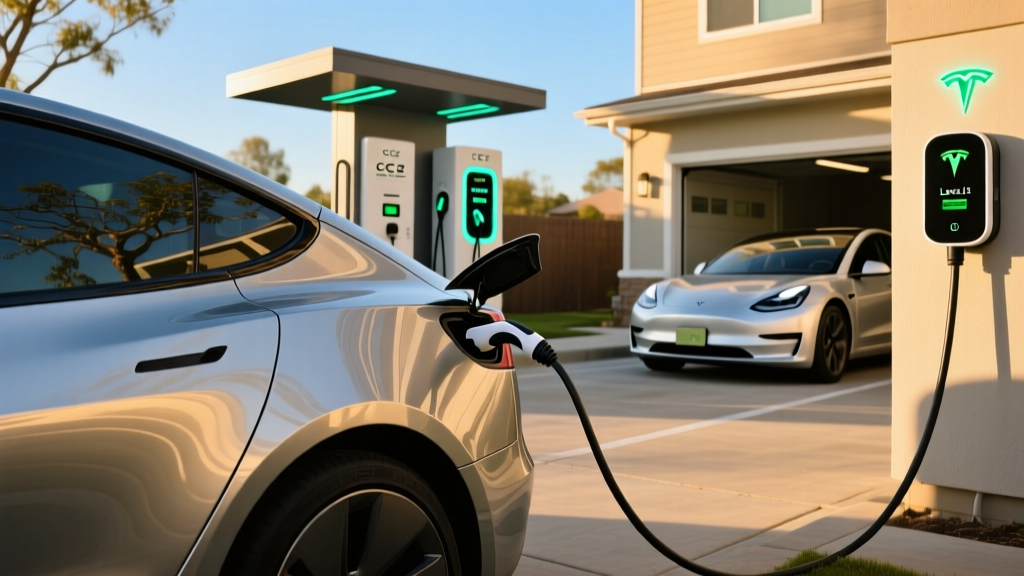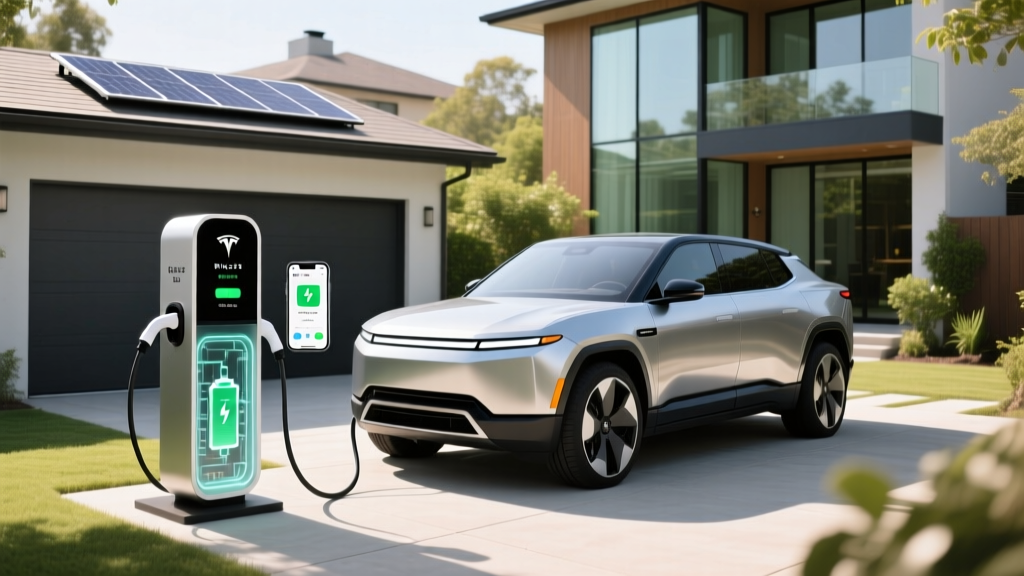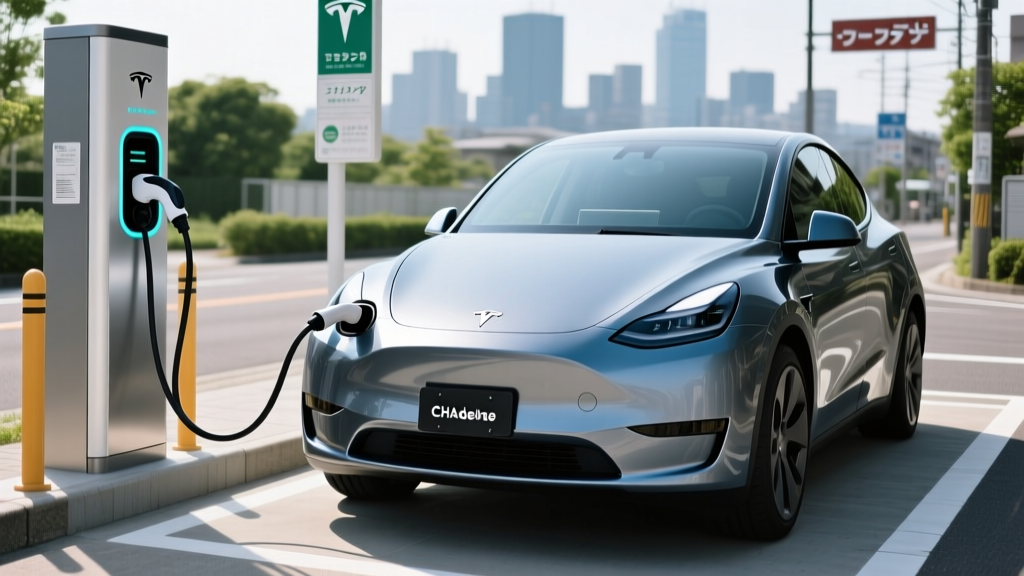
If you own a Tesla and plan to drive in Japan — or you've imported a Japanese-market EV with a CHAdeMO port — you've likely searched for clarity on Tesla CHAdeMO adapter Japan compatibility. The short answer: Tesla's official CHAdeMO adapter exists, but using it in Japan involves nuances around connector standards, network authentication, and charging speeds that most guides gloss over. This article breaks down the adapter's real-world usability in Japan, then zooms out to cover everything you need to know about EV charging levels, home installation costs, connector compatibility, and per-mile charging economics in 2026.
Understanding the Tesla CHAdeMO Adapter and Japan's Charging Network
Tesla produced a CHAdeMO adapter primarily for the Japanese market, where CHAdeMO has historically been the dominant DC fast-charging standard. The adapter connects to the Tesla vehicle's proprietary charge port (pre-NACS) and allows charging at CHAdeMO-equipped stations. However, there are critical limitations:
- Peak charge rate: The Tesla CHAdeMO adapter is limited to approximately 50 kW — far below what modern CCS or NACS DC fast chargers deliver (150–350 kW).
- Network authentication: Japan's major CHAdeMO networks (eNex, E-Mobility Power, NCS) often require RFID cards or Japan-specific mobile apps. Foreign Tesla app credentials will not authenticate at most Japanese public chargers.
- CHAdeMO's declining footprint: As of 2026, Japan is gradually adding CCS2 and NACS chargers, but CHAdeMO still dominates public DC infrastructure with over 8,000 connectors nationwide according to Japan's Ministry of Economy, Trade and Industry.
For US-based Tesla owners, the CHAdeMO adapter has limited utility since most American CHAdeMO stations have been eclipsed by CCS and Tesla's NACS network, which opened to non-Tesla EVs in 2024. If you're importing a Japanese-market EV (like a Nissan Leaf or Mitsubishi Outlander PHEV) to the US, the adapter situation reverses: you'd need a CHAdeMO-to-CCS adapter for American public DC chargers, which are available from third-party manufacturers like Setec at roughly $200–$400.
| Standard | Primary Region | Peak DC kW | Key EVs |
|---|---|---|---|
| NACS (Tesla) | North America | Up to 350 kW (V4 Supercharger) | Tesla, Ford, GM, Rivian, Hyundai (2025+) |
| CCS1 | North America, EU (CCS2) | Up to 350 kW | VW, BMW, Kia, most non-Tesla pre-2025 |
| CHAdeMO | Japan, legacy global | Up to 400 kW (rare), typically 50–90 kW | Nissan Leaf, Mitsubishi, older Tesla (adapter) |
Charging Levels Explained: Speeds, Power, and Range Added Per Hour
Before discussing installation or costs, it's essential to distinguish kW (kilowatts) — the rate of power delivery — from kWh (kilowatt-hours) — the total energy stored in your battery. A 75 kWh battery charged at 7.2 kW takes roughly 10.4 hours from 0% to 100%. Here's how the three charging levels compare in practice:
| Level | Voltage / Amperage | Power (kW) | Miles of Range Per Hour | Best For |
|---|---|---|---|---|
| Level 1 (120V) | 120V / 12A | ~1.4 kW | 3–5 mi/hr | Overnight top-ups, PHEVs |
| Level 2 (240V) | 240V / 32–48A | 7.7–11.5 kW | 25–44 mi/hr | Daily home charging |
| DC Fast Charging | 200–800V DC | 50–350 kW | 150–1,000+ mi/hr (peak) | Road trips, rapid top-ups |
Real-world charging time examples (10% to 80% SoC):
- Tesla Model Y (75 kWh battery, NACS): ~18 minutes at a 250 kW V3 Supercharger; ~55 minutes on a 50 kW CHAdeMO charger via adapter.
- Hyundai Ioniq 5 (77.4 kWh, CCS/NACS): ~18 minutes at a 350 kW CCS charger; ~25 minutes at 150 kW.
- Nissan Leaf (60 kWh, CHAdeMO): ~40–50 minutes at a 50 kW CHAdeMO station; the Leaf's CHAdeMO port caps at ~50 kW even at higher-rated stations.
Home EV Charger Installation: Electrical Requirements and Costs
Installing a Level 2 home charger is the single highest-impact upgrade for EV ownership. Here's what's involved electrically and financially:
Electrical Requirements
- Circuit: A dedicated 240V circuit, typically 40A or 60A, depending on charger amperage.
- Breaker sizing: EV chargers are continuous loads under NEC Article 625, meaning the circuit must be rated at 125% of the charger's maximum draw. A 40A charger requires a 50A breaker; a 48A charger requires a 60A breaker.
- Wire gauge: 6 AWG copper for 50A circuits; 4 AWG for 60A circuits (varies by run length and local code).
- Panel capacity: Most modern homes with a 200A electrical panel can accommodate a 40–48A EV circuit. Older homes with 100A service will likely need a panel upgrade ($1,500–$3,500) or a load-management device like the Emporia Load Management Controller (~$150) that throttles charger draw when household demand is high.
- Permit: Nearly all US jurisdictions require an electrical permit for EV charger installation, typically $50–$200.
Installation Cost Breakdown
| Component | Low End | High End | Notes |
|---|---|---|---|
| Level 2 Charger (hardware) | $250 | $700 | Depends on brand, amperage, smart features |
| Electrician labor | $400 | $1,500 | Varies by panel proximity, wall material, conduit run |
| Electrical permit | $50 | $200 | Jurisdiction-dependent |
| Panel upgrade (if needed) | $1,500 | $3,500 | 100A → 200A service upgrade |
| Total (no panel upgrade) | $700 | $2,400 | |
| Total (with panel upgrade) | $2,200 | $5,900 |
The IRS §30D tax credit does not cover home charger installation for most taxpayers in 2026 — the Alternative Fuel Vehicle Refueling Property Credit (§30C) expired for most residential installations at the end of 2025, though some census-tract-based eligibility may persist. Consult a tax professional for your specific situation.
Charging Cost Per Mile: Home vs. Public vs. Gas
One of the strongest ownership arguments for EVs is lower fueling cost — but the gap narrows significantly on public DC fast chargers. Here's a realistic comparison using a mid-size EV averaging 3.5 miles per kWh (approximately 100 MPGe combined):
| Scenario | Rate | Cost Per kWh | Cost Per Mile |
|---|---|---|---|
| Home (off-peak utility rate) | $0.10–$0.14/kWh | $0.12 avg | $0.034 |
| Home (standard rate) | $0.15–$0.22/kWh | $0.18 avg | $0.051 |
| Public Level 2 (ChargePoint, etc.) | $0.25–$0.49/kWh | $0.35 avg | $0.10 |
| DC Fast (Electrify America, EA Pass+) | $0.40–$0.56/kWh | $0.48 avg | $0.137 |
| Gasoline (28 MPG avg, $3.40/gal) | $3.40/gal | — | $0.121 |
At home off-peak rates, EV charging costs roughly 70% less per mile than gasoline. On DC fast chargers, however, costs can exceed gasoline per mile — making home charging the economic linchpin of EV ownership. Tesla Supercharger rates for non-Tesla EVs average $0.45–$0.55/kWh in 2026, while Tesla owners with membership plans pay closer to $0.28–$0.35/kWh.
Equipment Recommendations: Best Level 2 Home Chargers for 2026
Tesla Wall Connector (Gen 3)
- Power: Up to 11.5 kW (48A on 60A circuit)
- Connector: NACS (Tesla native); J1772 adapter included
- Cable: 24 ft
- Smart features: Wi-Fi, OTA updates, power sharing with second unit, access control
- Price: ~$475
- Best for: Tesla owners; also works with NACS-equipped Ford, GM, Rivian
ChargePoint Home Flex
- Power: Up to 12 kW (50A, configurable down to 16A)
- Connector: J1772 (works with all non-NACS EVs; NACS adapter available)
- Cable: 23 ft
- Smart features: Wi-Fi, app scheduling, Alexa integration, energy reporting
- Price: ~$550–$650
- Best for: Non-Tesla EVs; flexible amperage for older panels
Emporia Vue EV Charger
- Power: Up to 11.5 kW (48A)
- Connector: J1772 (NACS adapter available)
- Cable: 24 ft
- Smart features: Integrated with Emporia home energy monitor, load management, solar-aware charging
- Price: ~$400
- Best for: Budget-conscious buyers; solar-panel homes
Safety, Code, and Connector Considerations
EV charger installation is governed by NEC Article 625 and local electrical codes. Key safety requirements include:
- Dedicated circuit: Your EV charger must be on its own breaker — no sharing with dryers, ovens, or HVAC.
- GFCI protection: 2023 NEC revisions require GFCI protection for outdoor EV receptacles. Hardwired installations may be exempt in some jurisdictions, but hardwiring is generally preferred for reliability (eliminates plug-receptacle heat risk).
- Outdoor rating: If mounting outdoors, the charger must carry a NEMA 4 or IP65 rating. All recommended chargers above meet this standard.
- Cable management: NEC requires the cable not to cross pedestrian walkways at heights below 6'6" — wall-mount retractors or holsters solve this.
Always hire a licensed electrician familiar with NEC 625. Ask whether your installation will be hardwired (more reliable, higher amperage possible) or plug-in via a NEMA 14-50 receptacle (portable, but limited to 40A continuous under NEC derating rules).
Frequently Asked Questions
Does the Tesla CHAdeMO adapter work at all Japanese charging stations?
Physically, yes — the adapter fits Japan's CHAdeMO connectors. However, most Japanese public networks (eNex, E-Mobility Power) require Japan-issued RFID cards or domestic mobile app accounts for session authentication. Tourists and short-term visitors should obtain a prepaid charging card at major convenience stores (7-Eleven, Lawson) or rental agencies that support EV tourists.
How much does it cost to install a home EV charger?
Expect $700–$2,400 for a standard installation (charger + electrician + permit) if your panel has adequate capacity. If your home has a 100A panel that needs upgrading to 200A, add $1,500–$3,500. Hardwired installations on a nearby panel with short conduit runs land at the low end; long runs through finished walls push costs higher.
How fast will each charging level add range?
Level 1 (120V) adds 3–5 miles per hour — sufficient for PHEVs with small batteries but impractical for full BEVs. Level 2 (240V, 40–48A) adds 25–44 miles per hour, fully recharging most EVs overnight. DC fast charging (50–350 kW) can add 150–1,000+ miles per hour at peak rates, though charging curves taper significantly above 80% SoC.
Which connector is compatible with my EV?
In North America, 2025+ models from Ford, GM, Rivian, and others use NACS (Tesla's connector). Most pre-2025 non-Tesla EVs use CCS1. Japanese-market vehicles like the Nissan Leaf use CHAdeMO. Tesla vehicles built before late 2025 use a proprietary port that is physically NACS-compatible. Check your vehicle's charge port or owner's manual for the definitive answer.
How much does charging cost per mile vs. gas?
Home off-peak charging costs approximately $0.03–$0.05 per mile — roughly 60–75% less than gasoline at $3.40/gal and 28 MPG. Public DC fast charging at $0.45–$0.55/kWh costs $0.13–$0.16 per mile, which can exceed gasoline costs. The economic advantage of EVs depends heavily on consistent home charging access.
What electrical upgrades might I need for a home charger?
The most common upgrade is a panel capacity increase from 100A to 200A service ($1,500–$3,500). If your panel is near capacity but you don't want a full upgrade, a load-management device (~$150–$300) can dynamically reduce charger draw when other appliances are running. Homes with 200A panels and moderate existing loads rarely need upgrades for a 40A EV circuit.
Sources: fueleconomy.gov (EPA efficiency data), IRS §30D clean vehicle credits, Japan METI charging infrastructure statistics 2025.