If you own a non-Tesla electric vehicle, you have probably stared at a Supercharger map and wondered: can I actually use those stalls? The answer in 2026 is yes — but the path depends heavily on whether your car supports a NACS adapter, requires a vehicle mod, or can access Tesla's "Open Supercharger" network directly. This guide breaks down exactly which cars can use Superchargers, what hardware you need, what it costs, and the real-world charging speeds you can expect.
Why the Supercharger Network Matters for Non-Tesla Owners
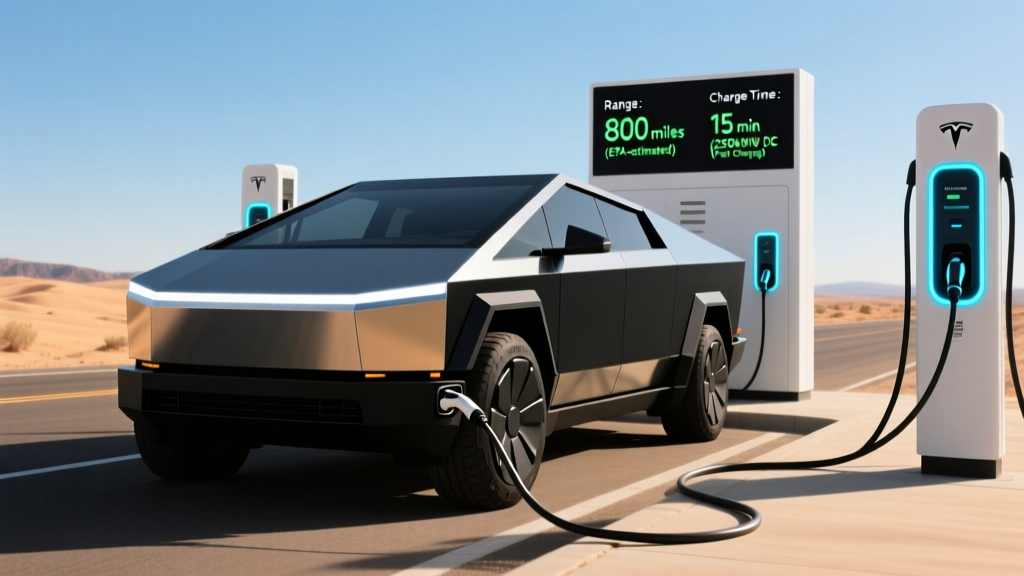
Tesla operates over 30,000 Supercharger stalls globally and has opened select locations to non-Tesla vehicles through the Magic Dock (built-in CCS adapter) and through native NACS ports on vehicles from Ford, GM, Rivian, Volvo, and others. The Supercharger network remains the most reliable DC fast-charging ecosystem in North America, with uptime consistently above 99% at V3 and V4 stalls. For non-Tesla EV owners, accessing this network can eliminate the reliability headaches that plague some third-party networks.
But "cars that can use Superchargers" is not a simple yes-or-no list. It depends on three factors: your vehicle's charge port type (CCS1, NACS, or CHAdeMO), whether Tesla has opened the specific station to non-Tesla vehicles, and whether you are using a manufacturer-approved adapter or an aftermarket vehicle mod.
Charging Levels Explained: Speeds in kW and Miles Per Hour
Before evaluating Supercharger access, you need to understand the three charging levels and how they differ in power output (kW) and energy delivered (kWh). Remember: kW measures power (how fast energy flows), while kWh measures energy (how much the battery holds). Confusing these is the single most common EV literacy gap.
| Level | Voltage / Amperage | Power (kW) | Miles of Range Added Per Hour | Typical Use Case |
|---|---|---|---|---|
| Level 1 | 120V / 12A | 1.4 kW | 3–5 mi/hr | Overnight trickle; PHEVs |
| Level 2 | 240V / 32–48A | 7.7–11.5 kW | 25–44 mi/hr | Home daily charging |
| DC Fast (V3 Supercharger) | 400V+ / up to 615A | Up to 250 kW | ~1,000 mi/hr (peak) | Road trips; rapid top-ups |
| DC Fast (V4 Supercharger) | 400–800V / up to 615A+ | Up to 350 kW (cable-cooled) | ~1,300+ mi/hr (peak) | Next-gen fast charging |
Real-world context: a V3 Supercharger rated at 250 kW will only deliver peak power at low states of charge (typically 10–30% SoC). Above 50% SoC, the charge curve tapers significantly. A typical session from 10–80% on a 75 kWh battery at a V3 stall takes roughly 25–35 minutes depending on battery temperature and chemistry. Expect 80–100% SoC charging to slow to Level 2 speeds as the battery management system protects cell health.
Which Cars Can Use Superchargers in 2026?
Here is the current landscape of non-Tesla vehicles that can access Supercharger stalls, broken down by method:
Native NACS Port Vehicles (Direct Access)
Starting with the 2025 model year, several manufacturers adopted the North American Charging Standard (NACS) port natively. These vehicles plug directly into any Supercharger without an adapter:
- Ford F-150 Lightning & Mustang Mach-E (2025+): Native NACS; full Supercharger access
- GM (Chevrolet, Cadillac, GMC) (2025+): Ultium-platform vehicles with native NACS — Equinox EV, Blazer EV, Silverado EV, Cadillac Lyriq, GMC Sierra EV
- Rivian R1T & R1S (2025+): Native NACS as of dual-motor refresh
- Volvo EX30, EX90, EX40 (2025+): Native NACS
- Polestar 3 & 4 (2025+): Native NACS
- Toyota bZ4X (2026 refresh): Switched to NACS from CCS1
CCS1 Vehicles Using Manufacturer-Approved NACS Adapters
If your EV has a CCS1 port and was built before the NACS transition, you can access Superchargers using an OEM-approved adapter. These are sold or provided by the automaker:
- Ford (2022–2024 Mach-E, F-150 Lightning): Ford-supplied NACS adapter, ~$230
- GM (pre-2025 Ultium EVs): GM-approved adapter available through dealers
- Rivian (2022–2024 R1T/R1S): Rivian NACS adapter, provided free to original owners, ~$200 replacement
- Hyundai/Kia (CCS1 models): As of early 2026, Hyundai and Kia have announced NACS adapters for Ioniq 5, Ioniq 6, EV6, and EV9 — availability varies by region
Magic Dock Stations (No Adapter Required)
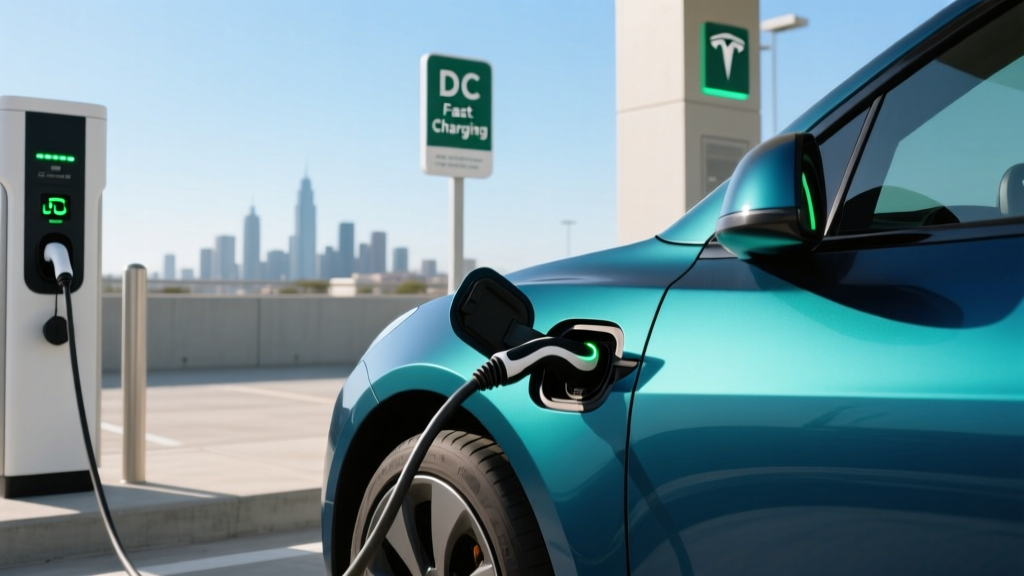
Tesla has deployed the "Magic Dock" — a built-in CCS adapter at select Supercharger stalls — allowing any CCS1-equipped EV to charge without carrying a separate adapter. These stations are identified in the Tesla app and on third-party maps. Availability remains limited to specific metro areas and highway corridors.
Aftermarket Vehicle Mods (NACS Port Retrofits)
Some specialty EV shops offer NACS port retrofit kits that replace or supplement the factory CCS1 port. These vehicle mods involve rewiring the charge port harness and reprogramming the vehicle's charging controller. Costs typically range from $1,500 to $3,000 installed.
| Connector Type | Brands Using It (2026) | Supercharger Access | Adapter Needed? |
|---|---|---|---|
| NACS (native) | Tesla, Ford (2025+), GM (2025+), Rivian (2025+), Volvo, Polestar, Toyota (2026 bZ4X) | Full access, all open stalls | None |
| CCS1 | Hyundai, Kia, VW, BMW, Mercedes, pre-2025 Ford/GM/Rivian | Open Superchargers + Magic Dock stations | NACS-to-CCS adapter (OEM recommended) |
| CHAdeMO | Nissan Leaf (legacy) | No Supercharger access | No viable adapter exists |
Real-World Charging Times: 10–80% at Supercharger Stalls
Peak kW ratings do not tell the full story. What matters is sustained power across the charging session. Here are realistic 10–80% times for common battery sizes at a V3 Supercharger (250 kW peak), assuming the vehicle can accept that rate and the battery is preconditioned:
- 60 kWh battery (e.g., base Model 3 RWD equivalent): ~18–22 minutes
- 75 kWh battery (e.g., Ford Mach-E Extended Range): ~25–30 minutes
- 85–100 kWh battery (e.g., F-150 Lightning Extended Range, Rivian R1T Max Pack): ~30–40 minutes
- 110+ kWh battery (e.g., GMC Sierra EV, Silverado EV Max Range): ~38–50 minutes
Critical nuance: if you are using a NACS-to-CCS adapter, some adapters limit peak charge rate to 150 kW or 200 kW due to thermal constraints in the adapter housing. Check your adapter's rated maximum before planning road-trip stops. Ford's official adapter, for instance, supports up to 250 kW, but some third-party adapters cap at 150 kW, adding 5–10 minutes to a 10–80% session.
Home Charging Setup: What You Actually Need
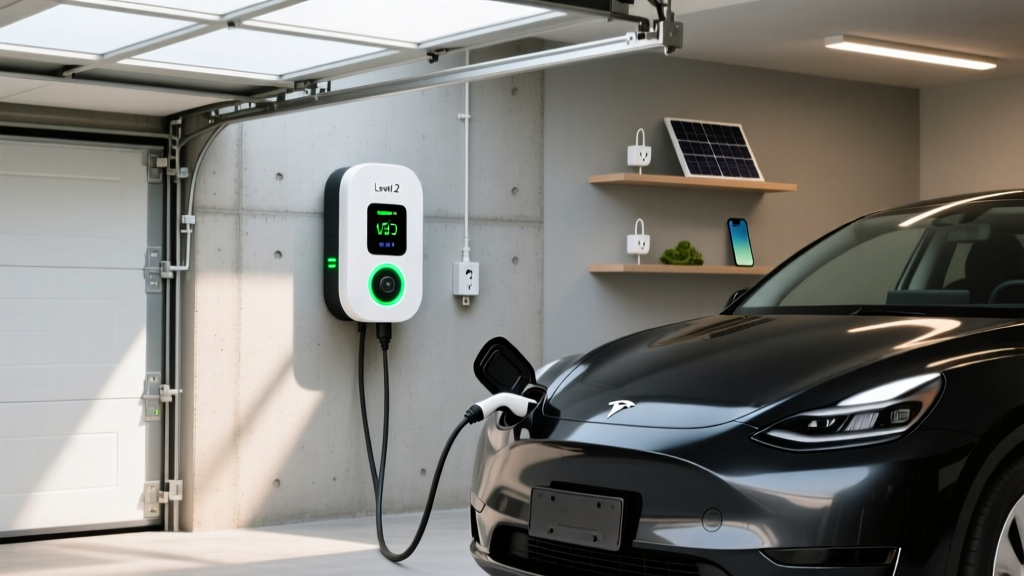
Most EV owners do 80% or more of their charging at home. If you are investing in Supercharger access for road trips, you still need a solid Level 2 home setup for daily use. Here is what a proper installation requires.
Electrical Requirements
A Level 2 home charger requires a 240V dedicated circuit. The most common configurations:
- NEMA 14-50 outlet: 240V / 50A breaker, delivers up to 40A continuous (9.6 kW). This is the most versatile option — you can unplug the charger and use the outlet for other equipment.
- Hardwired 60A circuit: 240V / 60A breaker, delivers up to 48A continuous (11.5 kW). Higher power, no plug, requires an electrician for any changes. Preferred for high-capacity EVs like the F-150 Lightning.
- NEMA 6-20 outlet: 240V / 20A breaker, delivers up to 16A continuous (3.8 kW). Budget option for PHEVs or low-mileage commuters.
Panel Upgrade Considerations
If your home has a 100A electrical panel (common in homes built before 1990), adding a 50A EV circuit may exceed your panel's capacity — especially if you run electric HVAC, an electric dryer, and an electric range simultaneously. A panel upgrade to 200A typically costs $1,500–$3,500. An electrician will perform a load calculation to determine if your existing panel can handle the EV circuit. Do not skip this step.
| Cost Component | Low Estimate | High Estimate | Notes |
|---|---|---|---|
| Level 2 Charger Equipment | $250 | $700 | Varies by brand, power, smart features |
| Electrician Labor (standard install) | $400 | $1,200 | Depends on run length, conduit, wall type |
| Permit & Inspection | $50 | $250 | Required in most jurisdictions |
| Panel Upgrade (if needed) | $1,500 | $3,500 | 100A → 200A service upgrade |
| Total (no panel upgrade) | $700 | $2,150 | Typical scenario for modern homes |
| Total (with panel upgrade) | $2,200 | $5,650 | Older homes with 100A panels |
The federal Alternative Fuel Vehicle Refueling Property Credit (IRS Form 8911) may cover up to 30% of home charger equipment and installation costs, capped at $1,000. Eligibility depends on census-tract requirements and is subject to change — consult a tax professional before claiming.
Level 2 Charger Equipment Recommendations
Not all Level 2 chargers are equal. Here are three proven options across price points, all supporting the J1772 connector standard (compatible with all non-Tesla EVs; Tesla owners use a J1772-to-Tesla adapter, which ships with most Tesla vehicles):
Budget Pick: Emporia Vue Smart Charger
- Power: 48A (11.5 kW) hardwired or 40A (9.6 kW) plug-in
- Connector: J1772
- Cable length: 24 ft
- Smart features: Wi-Fi, scheduling, solar integration, energy monitoring
- Price: ~$399
- Best for: Cost-conscious buyers who want smart scheduling
Best Overall: ChargePoint Home Flex
- Power: Up to 50A (12 kW) — configurable via dip switches
- Connector: J1772
- Cable length: 23 ft
- Smart features: Wi-Fi, Alexa, app scheduling, flexible amperage
- Price: ~$549
- Best for: Most EV owners; adjustable amperage fits any panel
Premium Pick: Tesla Wall Connector (J1772)
- Power: Up to 48A (11.5 kW)
- Connector: J1772 (2024+ universal version)
- Cable length: 24 ft
- Smart features: Wi-Fi, OTA updates, power sharing (multiple units on one circuit)
- Price: ~$475
- Best for: Mixed-vehicle households (Tesla + non-Tesla)
All three units are UL-listed and rated for indoor or outdoor installation (NEMA 4 rating for outdoor use). For outdoor installs, ensure your electrician uses a weatherproof junction box and GFCI breaker per NEC Article 625 requirements.
Cost to Charge: Home vs. Public vs. Supercharger
One of the strongest arguments for EV ownership is fuel cost savings — but the math depends on where and when you charge.
| Charging Scenario | Avg. $/kWh | Cost Per Mile* | Annual Cost (12,000 mi) |
|---|---|---|---|
| Home (off-peak utility rate) | $0.10–$0.14 | $0.03–$0.04 | $360–$480 |
| Home (standard rate, no TOU) | $0.15–$0.20 | $0.045–$0.06 | $540–$720 |
| Tesla Supercharger (V3) | $0.28–$0.36 | $0.08–$0.11 | $960–$1,320 |
| Public Level 2 (ChargePoint, EVgo) | $0.20–$0.35 | $0.06–$0.10 | $720–$1,200 |
| Gas equivalent (25 MPG, $3.40/gal) | — | $0.14 | $1,632 |
*Cost per mile assumes an EV efficiency of 3.0–3.5 miles per kWh (typical for midsize crossovers like the Mach-E or Ioniq 5). Cold weather and highway driving reduce efficiency to ~2.5 mi/kWh, increasing cost per mile by 20–30%.
The takeaway: home charging on an off-peak rate delivers roughly 75% fuel cost savings versus gas. Even exclusive Supercharger use saves 30–40% versus gasoline. But if you cannot charge at home and rely entirely on public DC fast charging, your savings shrink significantly — and may approach the cost of a fuel-efficient hybrid.
Safety, Code, and Installation Best Practices
EV charging involves sustained high-current draw — often for 6–10 hours at a time. This is fundamentally different from plugging in a dryer for 45 minutes. Proper installation is non-negotiable.
- Dedicated circuit: Your EV charger must be on its own dedicated breaker. Never share a circuit with other appliances.
- GFCI protection: NEC 2023 (Article 625.41) requires GFCI protection for all EV supply equipment. Your electrician should install a GFCI breaker or use a charger with built-in ground-fault protection.
- Outdoor rating: If your charger is mounted outside, it must carry a NEMA 4 (or higher) rating. All three chargers recommended above meet this standard.
- Wire gauge: A 50A circuit requires 6 AWG copper wire; a 60A circuit requires 4 AWG. Undersized wiring creates a fire hazard.
- Permit and inspection: Most municipalities require an electrical permit for EV charger installation. The inspection ensures code compliance and protects your homeowner's insurance coverage.
Frequently Asked Questions
How much does it cost to install a home EV charger?
A standard Level 2 home charger installation costs $700–$2,150 when no panel upgrade is needed. If your home requires a 100A-to-200A panel upgrade, total costs range from $2,200–$5,650. Equipment itself runs $250–$700, with the remainder being licensed electrician labor and permits. The federal refueling property credit (IRS Form 8911) may offset up to $1,000 of this cost if you meet census-tract eligibility requirements.
How fast will each charging level add range?
Level 1 (120V) adds 3–5 miles per hour — adequate only for PHEVs with small batteries. Level 2 (240V, 40–48A) adds 25–44 miles per hour, fully recharging most EVs overnight in 6–10 hours. DC fast charging at a V3 Supercharger (250 kW peak) can add 200+ miles in 15–20 minutes, though sustained rates taper above 50% state of charge.
Which connector or charger is compatible with my EV?
Check your vehicle's charge port: if it is NACS (the smaller, Tesla-style plug), you can use Superchargers directly. If it is CCS1 (the larger, two-pin-plus-combo plug), you need a NACS-to-CCS adapter from your vehicle manufacturer. CHAdeMO vehicles (mainly older Nissan Leafs) have no Supercharger access path. For home Level 2 charging, all non-Tesla EVs use the J1772 connector standard.
How much does charging cost per mile vs. gas?
Home charging at off-peak rates costs approximately $0.03–$0.04 per mile, compared to $0.14 per mile for a 25 MPG gas car at $3.40/gallon — a 70–75% savings. Even Supercharging at $0.32/kWh averages $0.08–$0.11 per mile, still 20–40% cheaper than gas. See the cost-per-mile table above for detailed scenarios.
What electrical upgrades might I need?
If your home has a 200A panel with available capacity, you likely need only a new 50A or 60A breaker and a wire run to your garage or driveway. If your panel is 100A or nearly at capacity, you will need a panel upgrade ($1,500–$3,500). Homes with 150A panels are borderline — a load calculation by a licensed electrician will determine feasibility. Some utilities offer managed charging programs that allow a lower-amperage install to avoid panel upgrades.
Can I use a third-party NACS adapter on my CCS car?
Physically, yes — several third-party NACS-to-CCS adapters are available from brands like Lectron and A2Z. However, we strongly recommend using the adapter sold or approved by your vehicle manufacturer. OEM adapters are tested for thermal management and communication protocol compatibility with your car's battery management system. Third-party adapters may not properly handle charge-rate negotiation, which can cause session failures or, in worst cases, connector overheating.
Do vehicle mods (NACS port retrofits) void my warranty?
Almost certainly, yes. Replacing or modifying the high-voltage charge port harness constitutes an unauthorized alteration to the EV powertrain. Under the Magnuson-Moss Warranty Act, the manufacturer must prove the mod caused the failure to deny a claim — but in practice, any high-voltage system issue following a port retrofit will face intense scrutiny. The warranty-safe path is always an OEM-approved adapter.
Sources: fueleconomy.gov, irs.gov — Alternative Fuel Vehicle Refueling Property Credit, manufacturer specifications from Ford, GM, Rivian, and Tesla press rooms.