Understanding Nissan Leaf EV Range: What the EPA Numbers Actually Mean
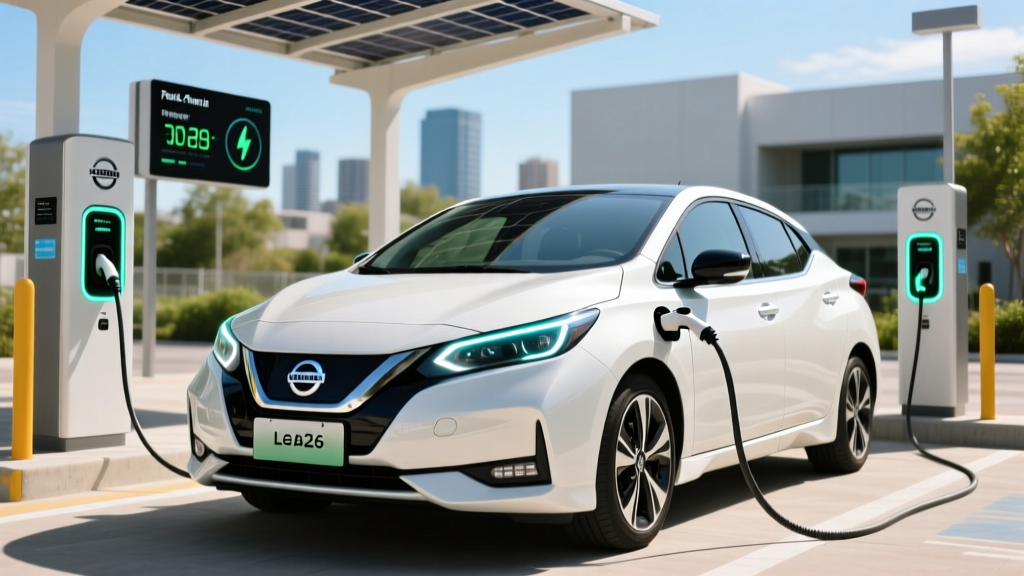
The 2026 Nissan Leaf comes in two battery configurations, and understanding your Nissan Leaf EV range starts with knowing which one you have. The base Leaf S carries a 40 kWh battery pack (usable capacity ~38 kWh) with an EPA-estimated 149 miles of range. The Leaf SV Plus steps up to a 60 kWh pack (~58 kWh usable) delivering 212 miles EPA.
| Trim | Battery (kWh) | EPA Range | MPGe Combined | kWh/100mi |
|---|---|---|---|---|
| Leaf S | 40 (38 usable) | 149 mi | 114 MPGe | 29 |
| Leaf SV Plus | 60 (58 usable) | 212 mi | 111 MPGe | 30 |
Charging Levels Explained: How Fast Will Each Add Range?
Charging speed is measured in kilowatts (kW), which represents power—the rate at which energy flows into your battery. The battery capacity itself is measured in kilowatt-hours (kWh), representing total energy stored. Confusing these units is the most common EV literacy mistake.
| Level | Power (kW) | Miles Added/Hour | 10-80% Time (60 kWh) | Best Use Case |
|---|---|---|---|---|
| Level 1 (120V) | 1.4 kW | 4-5 mi/hr | ~35 hours | Emergency/overnight trickle |
| Level 2 (240V) | 6.6 kW | 22-25 mi/hr | ~7 hours | Daily home charging |
| DC Fast (CHAdeMO) | 50-100 kW | 150-200 mi/hr | 45-60 minutes | Road trips |
The 2026 Leaf's onboard charger maxes out at 6.6 kW for Level 2 charging, meaning even if you install a 48-amp (11.5 kW) home charger, the Leaf will only draw 6.6 kW. For DC fast charging, the Leaf uses the CHAdeMO connector standard, accepting up to 100 kW on the SV Plus (50 kW on the base S).
Home Charger Installation: Electrical Requirements & Costs
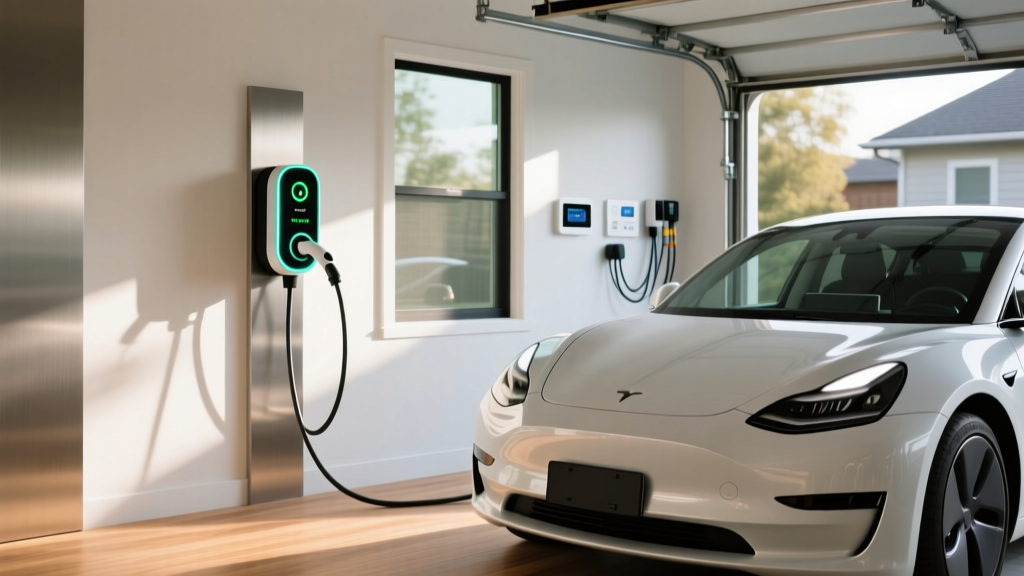
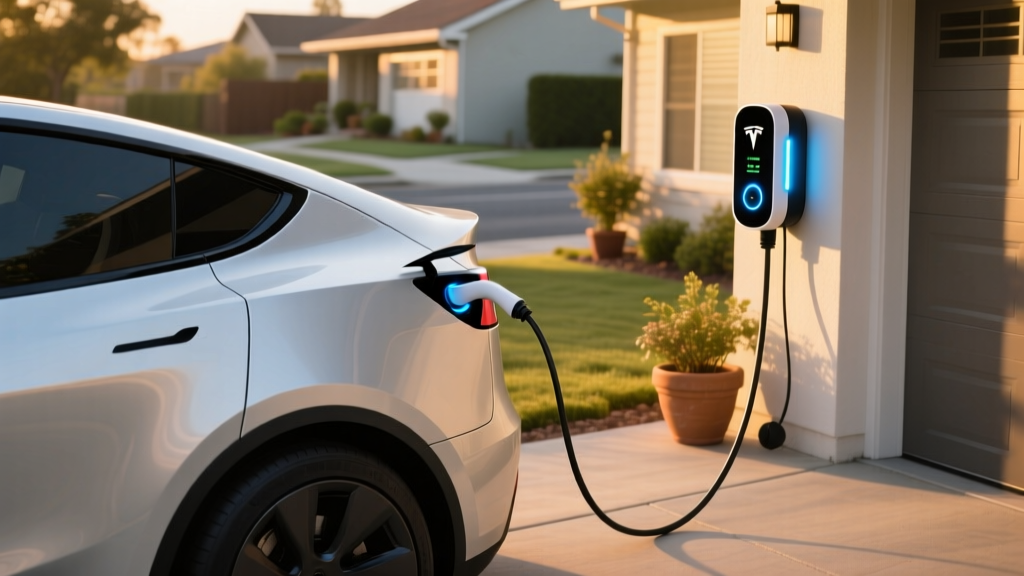
Installing a Level 2 home charger for your Nissan Leaf requires a dedicated 240-volt circuit. For a 6.6 kW charger, you'll need a 30-amp circuit (24 amps continuous draw × 1.25 safety factor = 30A minimum). Most electricians recommend a 40-amp circuit for future-proofing, even though the Leaf won't use the extra capacity.
What Electrical Upgrades Might I Need?
Before installation, assess your electrical panel's capacity. Most homes built after 1990 have 200-amp service, which typically supports a 40-amp EV circuit without upgrades. However, older homes with 100-amp service or panels already near capacity (running electric ranges, dryers, HVAC) may require:
- Panel upgrade: $1,500-$3,000 to replace a 100A panel with 200A service
- Load management device: $300-$600 to automatically reduce charger power when other appliances run
- Circuit installation: Running new 6-gauge wire from panel to garage/carport
| Component | Cost Range | Notes |
|---|---|---|
| Level 2 Charger (32-40A) | $350-$700 | Hardwired or NEMA 14-50 plug |
| Electrician labor | $500-$1,500 | Depends on wire run distance |
| Permit & inspection | $100-$300 | Required in most jurisdictions |
| Panel upgrade (if needed) | $1,500-$3,000 | Only for 100A or maxed-out panels |
| Total (no panel upgrade) | $950-$2,500 | Typical installation |
| Total (with panel upgrade) | $2,450-$5,500 | Older homes |
Safety & Code Requirements: Your installation must include a dedicated circuit (no sharing with other appliances), GFCI protection for outdoor installations, and a weatherproof enclosure if mounted outside. The National Electrical Code (NEC Article 625) governs EV charging installations—your electrician should pull a permit and schedule inspection to ensure compliance.
Connector Compatibility: CHAdeMO, CCS, and the NACS Transition
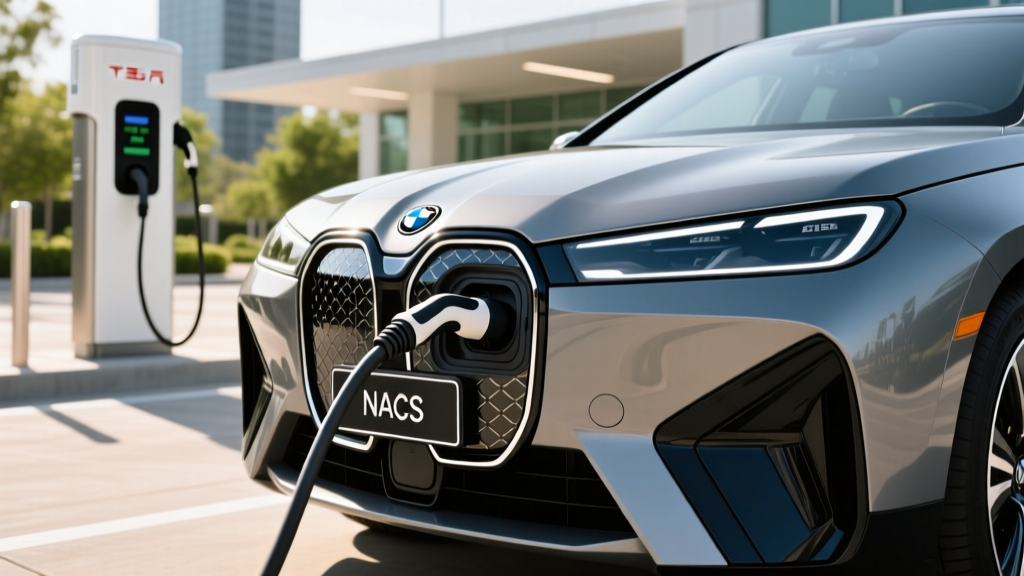
The 2026 Nissan Leaf uses the CHAdeMO connector for DC fast charging and the J1772 connector for Level 1/2 AC charging. This puts the Leaf in a challenging position as the industry shifts toward NACS (Tesla's connector, now adopted by Ford, GM, Rivian, and others) and CCS1 (used by most non-Tesla EVs until 2024).
| Connector | Brands Using It | DC Fast Network Access |
|---|---|---|
| NACS (Tesla) | Tesla, Ford, GM, Rivian, Volvo, Polestar | Tesla Supercharger (17,000+ stalls) |
| CCS1 | Hyundai, Kia, BMW, VW, legacy non-Tesla | Electrify America, EVgo, ChargePoint |
| CHAdeMO | Nissan Leaf, Mitsubishi Outlander PHEV | Declining—~2,500 stalls nationwide |
Adapter Options for Leaf Owners
As of 2026, no CHAdeMO-to-NACS adapter exists that supports DC fast charging safely. You can purchase a J1772-to-NACS adapter (~$150) for Level 2 charging at Tesla Destination Chargers, but you cannot access Tesla Superchargers with a Leaf. Your DC fast-charging options remain limited to CHAdeMO-equipped stations, which are increasingly rare outside urban centers.
Charging Cost Analysis: Home vs. Public vs. Gas
The cost advantage of home charging is where Leaf owners see the biggest savings. Here's the breakdown based on national averages:
| Scenario | Rate | Cost/Mile (Leaf) | Cost/Mile (30 MPG Gas Car) |
|---|---|---|---|
| Home (off-peak) | $0.13/kWh | $0.039 | $0.117 |
| Home (peak) | $0.22/kWh | $0.066 | $0.117 |
| Public Level 2 | $0.30/kWh | $0.090 | $0.117 |
| DC Fast Charging | $0.45/kWh | $0.135 | $0.117 |
At $3.50/gallon gas and 30 MPG combined, a gas car costs $0.117/mile. Home charging your Leaf at off-peak rates saves $0.078/mile—roughly $780 per year for a 10,000-mile driver. However, exclusive DC fast charging actually costs more than gas, highlighting why home charging access is critical for EV economics.
Recommended Home Chargers for Nissan Leaf
Since the Leaf's onboard charger caps at 6.6 kW (28 amps), you don't need a 48-amp charger. A 32-amp unit provides headroom and future-proofing without overspending.
Emporia Level 2 Smart Charger
- Power: 48A max (Leaf draws 28A)
- Connector: J1772 (direct Leaf compatibility)
- Cable: 24 ft
- Smart features: Wi-Fi, energy monitoring, scheduling
- Price: $399
- Best for: Budget-conscious smart charging
ChargePoint Home Flex
- Power: Up to 50A (adjustable)
- Connector: J1772
- Cable: 23 ft
- Smart features: App control, Alexa integration, load sharing
- Price: $699
- Best for: Premium smart home integration
Grizzl-E Smart
- Power: 40A
- Connector: J1772
- Cable: 24 ft
- Smart features: OCPP protocol, over-the-air updates
- Price: $549
- Best for: Cold-weather durability (-40°F rated)
Nissan Leaf Charging Times: Real-World Examples
Charging time depends on battery size, starting state of charge (SoC), and charger power. Here are typical scenarios for the 60 kWh Leaf SV Plus:
Scenario 1: Overnight Home Charge (Level 2, 6.6 kW)
Arrive home at 20% SoC (roughly 42 miles remaining). Plug in at 10 PM. By 6 AM (8 hours), you've added ~53 kWh, reaching 95% SoC—more than enough for daily driving. The Leaf's charging slows above 80% to protect battery health, so the final 20% takes disproportionately longer.
Scenario 2: Road Trip DC Fast Charge (CHAdeMO, 100 kW)
Pull into a CHAdeMO station at 15% SoC. The Leaf will accept peak power (~95 kW) from 15-50% SoC, then taper to ~60 kW through 70%, and drop to ~30 kW above 80%. A 10-80% charge takes 45-55 minutes in ideal conditions (battery preconditioned, moderate temperature). In cold weather without preconditioning, expect 60-75 minutes.
Frequently Asked Questions
How much does it cost to install a home EV charger for my Nissan Leaf?
Expect $950-$2,500 for a typical installation (charger + electrician + permit) if your electrical panel has capacity. If you need a panel upgrade from 100A to 200A service, add $1,500-$3,000, bringing the total to $2,450-$5,500. Get three quotes from licensed electricians and verify they pull permits—unpermitted work can void home insurance and cause sale issues.
How fast will each charging level add range to my Leaf?
Level 1 (120V household outlet): 4-5 miles per hour. Level 2 (240V home charger at 6.6 kW): 22-25 miles per hour. DC Fast (CHAdeMO at 50-100 kW): 150-200 miles per hour at peak, though charging slows significantly above 80% SoC. For a 60 kWh Leaf, Level 2 adds ~175 miles overnight (8 hours); DC fast adds ~150 miles in 45 minutes (10-80%).
Which connector and charger is compatible with my Nissan Leaf?
The 2026 Leaf uses J1772 for Level 1/2 AC charging (compatible with all home chargers) and CHAdeMO for DC fast charging. You cannot use Tesla Superchargers or CCS-equipped stations without adapters, and no safe CHAdeMO-to-NACS DC adapter exists. For home charging, any J1772 Level 2 charger works—just know the Leaf caps at 6.6 kW regardless of charger rating.
How much does charging cost per mile vs. gas?
Home charging at off-peak rates ($0.13/kWh) costs $0.039/mile—67% cheaper than a 30 MPG gas car at $3.50/gallon ($0.117/mile). Public Level 2 ($0.30/kWh) costs $0.090/mile (23% savings). DC fast charging ($0.45/kWh) costs $0.135/mile—actually more expensive than gas. The economics only work if you can charge at home most nights.
What electrical upgrades might I need for a home charger?
You'll need a dedicated 240V circuit (30-40A recommended). If your home has 100-amp service or your panel is near capacity (running electric range, dryer, HVAC, water heater), you may need a panel upgrade to 200A ($1,500-$3,000). A load management device ($300-$600) can avoid panel upgrades by automatically reducing charger power when other appliances draw heavily. Have an electrician perform a load calculation before committing to installation.
Does the Nissan Leaf qualify for the federal EV tax credit?
The 2026 Leaf's eligibility under IRS §30D depends on battery sourcing, your income, and MSRP caps. As of 2026, the credit is up to $7,500 but requires: buyer AGI under $150K (single) / $300K (joint), vehicle MSRP under $55K (cars), and battery components/minerals meeting domestic sourcing thresholds that tighten annually. Check fueleconomy.gov for current eligibility—the Leaf S ($28,140) and SV Plus ($36,190) both clear the MSRP cap, but battery sourcing rules may limit the credit to $3,750 or $0 depending on model year and production date.
Bottom Line: Is the Nissan Leaf Still Viable in 2026?
The Leaf remains one of the most affordable new EVs, with the S starting at $28,140 and SV Plus at $36,190 (both before potential tax credits). For urban commuters with home charging and short commutes, the 149-212 mile range is adequate. However, the air-cooled battery degrades faster in hot climates, the CHAdeMO connector limits road-trip viability as infrastructure shifts to NACS/CCS, and the 6.6 kW Level 2 cap means slower home charging than competitors like the Hyundai Ioniq 5 (10.9 kW) or Tesla Model 3 (11.5 kW).
If you can charge at home, drive under 100 miles daily, and live in a moderate climate, the Leaf's low entry price and cheap operating costs make sense. If you need road-trip flexibility, live in extreme heat, or plan to keep the car 8+ years, consider the Ioniq 5 or Chevrolet Equinox EV—both offer liquid-cooled batteries, NACS/CCS compatibility, and faster charging for $5,000-$8,000 more.
Sources: EPA Fuel Economy, Nissan USA, IRS Clean Vehicle Credits