Trading a Supercharged Frontier for an EV: Why Your Garage Wiring Matters Now
If you've spent years behind the wheel of a 2003 Nissan Frontier supercharged — that 2.4L KA24DE with the Eaton M62 blower pushing a modest but fun 210 horsepower — switching to an electric vehicle is a seismic shift. You're trading a whining supercharger and 18-mpg combined fuel economy for instant torque, regenerative braking, and a vehicle you "refuel" at home. But before you plug in, your garage needs to be ready. The average home EV charger installation runs between $800 and $3,500 depending on your electrical panel, and getting this wrong means slow charging, tripped breakers, or worse — a fire hazard.
This guide breaks down everything a former ICE truck owner needs to know about setting up home and public EV charging in 2026: charging levels, real-world speeds in kW (power) and kWh (energy), connector compatibility, installation costs, and the best Level 2 hardware to buy right now.
Charging Levels Explained: Level 1, Level 2, and DC Fast Charging
EV charging is categorized into three tiers. The critical distinction every new EV owner must understand: kW (kilowatts) measures the rate of power delivery — like water pressure from a hose — while kWh (kilowatt-hours) measures the total energy stored in your battery — like the size of the tank. A charger rated at 11.5 kW can deliver 11.5 kWh of energy in one hour.
| Level | Voltage | Max Power (kW) | Miles of Range Added Per Hour | Typical Use Case |
|---|---|---|---|---|
| Level 1 (120V) | 120V AC | 1.2–1.9 kW | 3–5 miles/hr | Overnight top-ups, PHEVs, emergency |
| Level 2 (240V) | 240V AC | 3.3–19.2 kW | 12–75 miles/hr | Daily home charging, workplace |
| DC Fast Charging | 400–800V DC | 50–350 kW | 150–1,200+ miles/hr | Road trips, highway corridors |
Real-world context: If you're coming from a 2003 Frontier where a fill-up took 5 minutes at any gas station, DC fast charging is the closest analog. A modern EV like the Hyundai Ioniq 5 (84 kWh battery, NMC chemistry) can charge from 10% to 80% in approximately 18 minutes on a 350 kW charger, though sustained rates taper significantly above 80% to protect battery health. Level 2 is your daily workhorse — plug in at night, wake up to a full battery every morning.
Home Charger Installation: Electrical Requirements and Cost Breakdown
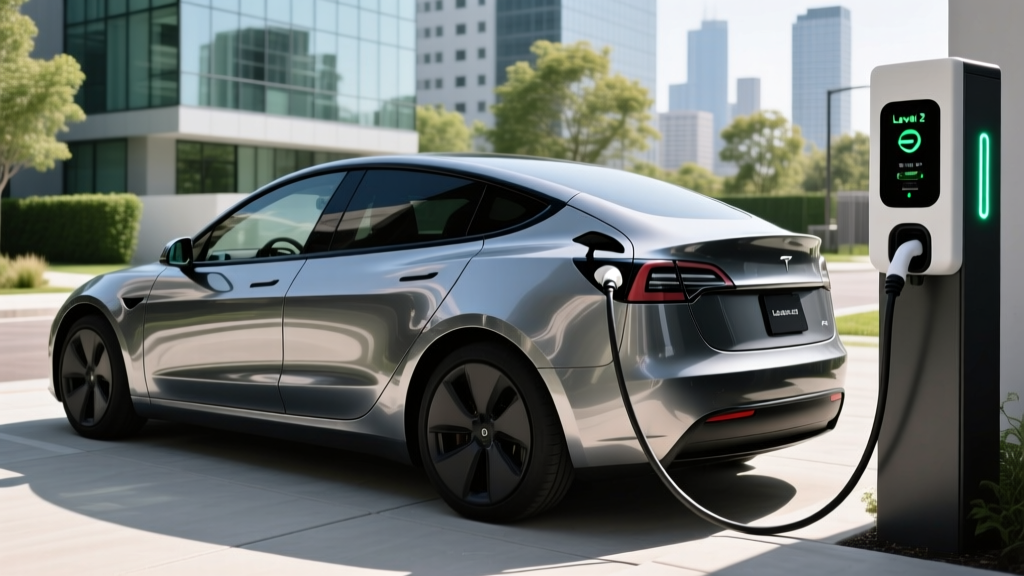
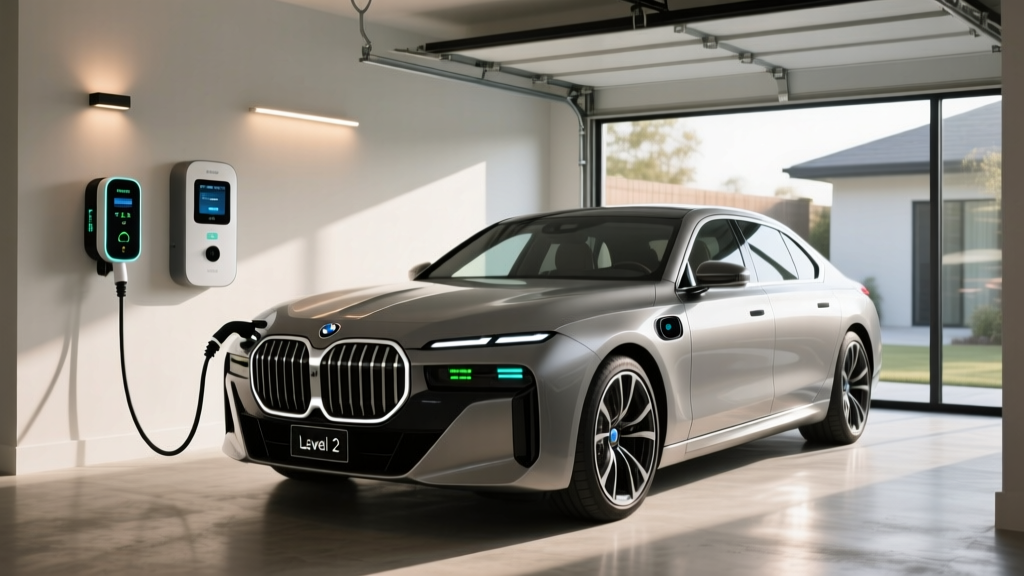
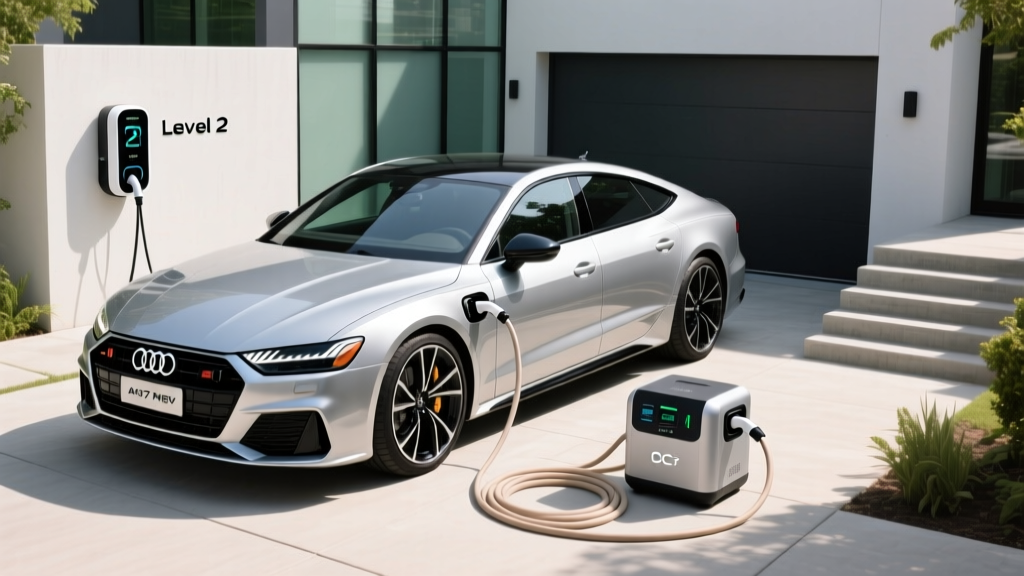
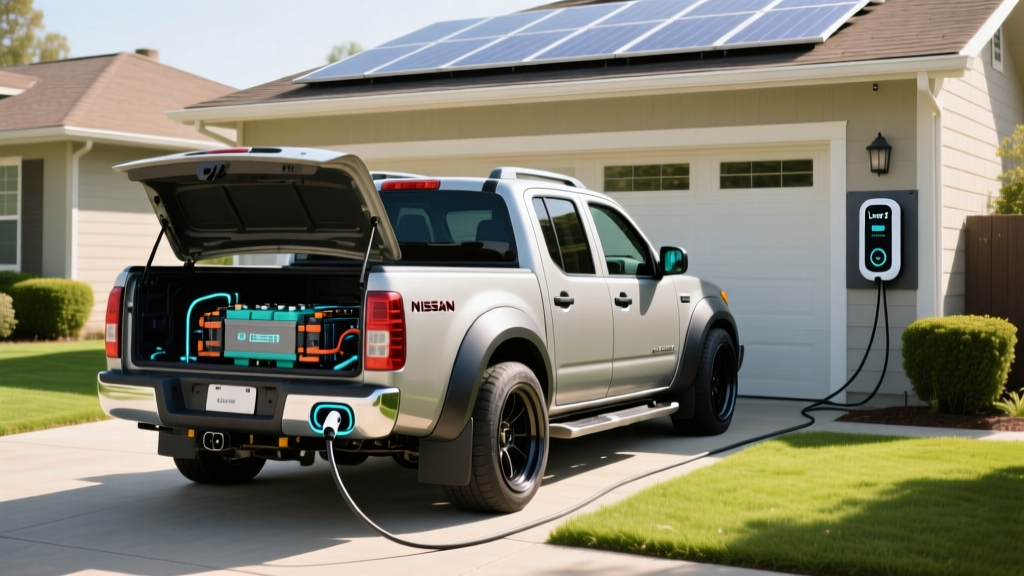
Installing a Level 2 home charger requires a dedicated 240V circuit, much like what your electric dryer or oven uses. The most common setup in 2026 is a 40-amp or 48-amp circuit on a NEMA 14-50 outlet or hardwired connection. Here's what the numbers look like:
| Component | Typical Cost Range | Notes |
|---|---|---|
| Level 2 EVSE Equipment | $350–$750 | Smart chargers with Wi-Fi; 32A–48A |
| Electrician Labor (2–6 hrs) | $400–$1,800 | Varies by run length from panel to garage |
| Electrical Permit | $50–$200 | Required in most jurisdictions |
| Panel Upgrade (if needed) | $1,500–$4,000 | Upgrading from 100A to 200A service |
| Total (no panel upgrade) | $800–$2,750 | Most homes with 200A service |
| Total (with panel upgrade) | $2,300–$6,750 | Older homes with 100A panels |
The panel-upgrade gotcha: If your home was built before 1990 — around the era your supercharged Frontier was designed — you may still have a 100-amp electrical panel. Adding a 40A or 48A EV circuit to an already-loaded 100A panel risks overloading it. A licensed electrician will perform a load calculation per NEC Article 220 to determine if an upgrade is required. Don't skip this step.
What Electrical Upgrades Might I Need?
Beyond the panel itself, consider these potential upgrades:
- Conduit and wiring run: If your panel is in the basement and your garage is 60+ feet away, expect higher labor costs for running 6 AWG copper wire through conduit.
- GFCI breaker: The 2023 NEC (adopted by most states by 2026) requires GFCI protection for all EV outlets. A 240V/50A GFCI breaker costs $80–$150 and is mandatory for NEMA 14-50 receptacles.
- Outdoor-rated installation: If your parking spot is a driveway or carport, you'll need a NEMA 4-rated (weatherproof) charger enclosure and outdoor-rated conduit.
- Smart panel or load management: Devices like the Emporia VUE or Span smart panel can dynamically manage charging load to avoid panel overload without a full service upgrade — a $500–$1,200 alternative in some cases.
Always hire a licensed electrician and pull a permit. Unpermitted work can void your homeowner's insurance and create serious fire risk with sustained high-amperage loads.
Connector Compatibility: NACS, CCS1, and CHAdeMO in 2026
The connector landscape has consolidated significantly since the early 2020s. Here's where things stand for 2026 model-year vehicles:
| Connector | Brands Using It (Native) | DC Fast Charge Standard | Adapter Needed? |
|---|---|---|---|
| NACS (Tesla / SAE J3400) | Tesla, Ford, GM, Rivian, Volvo, Polestar, Nissan (2025+), Hyundai/Kia (2025+) | Tesla Supercharger network + NACS-equipped public stations | CCS-to-NACS adapters available (~$200) for legacy CCS vehicles |
| CCS1 (Combined Charging System) | VW, BMW, older Hyundai/Kia, Stellantis, Honda (pre-2025) | Electrify America, EVgo, ChargePoint DC stations | NACS-to-CCS adapter needed for Tesla Superchargers |
| CHAdeMO | Nissan Leaf (legacy), Mitsubishi Outlander PHEV (older) | Limited and declining network | No reliable adapter to NACS/CCS; plan around CCS/EA stations |
Key takeaway for former ICE owners: Unlike gas pumps, which are universally compatible, you must verify your EV's native connector before buying a home charger or planning road trips. In 2026, NACS is the dominant North American standard. If you buy a Ford F-150 Lightning or a Chevy Equinox EV, you'll charge natively on Tesla Superchargers. If you're driving a 2023 VW ID.4 with CCS1, you'll need an adapter for Supercharger access.
For home Level 2 charging, all vehicles use the SAE J1772 connector (or NACS, which handles Level 2 as well). Most home chargers ship with a J1772 plug, and Tesla/NACS vehicles include a J1772-to-NACS adapter in the glovebox.
Cost to Charge: Per-Mile Comparison vs. Your Old Frontier
One of the biggest ownership advantages of switching from a supercharged Frontier — which realistically returned 16–19 mpg combined — to an EV is fuel cost. Here's how charging costs break down per mile:
| Scenario | Rate | Vehicle Efficiency | Cost Per Mile |
|---|---|---|---|
| Home Level 2 (off-peak utility rate) | $0.11/kWh | 3.0 mi/kWh (105 MPGe) | $0.037/mile |
| Home Level 2 (avg US residential) | $0.17/kWh | 3.0 mi/kWh | $0.057/mile |
| Public Level 2 (ChargePoint, etc.) | $0.25–$0.49/kWh | 3.0 mi/kWh | $0.083–$0.163/mile |
| DC Fast Charging (Electrify America) | $0.43–$0.56/kWh | 2.8 mi/kWh (highway) | $0.154–$0.200/mile |
| 2003 Nissan Frontier SC (gas) | $3.35/gallon | 17 mpg combined | $0.197/mile |
| 2026 gas truck (25 mpg, $3.35/gal) | $3.35/gallon | 25 mpg combined | $0.134/mile |
The math is clear: Home charging at off-peak rates saves roughly 80% per mile compared to fueling a supercharged Frontier. Even DC fast charging on road trips is competitive with gas. According to fueleconomy.gov, the average 2026 EV achieves 100–130 MPGe combined, making electricity the cheaper fuel in nearly every US market. However, if you rely exclusively on public DC fast charging at $0.50+/kWh, your savings narrow considerably — home charging access is the economic linchpin of EV ownership.
Charging Time Examples: What to Expect with Common Battery Sizes
Charging time depends on battery capacity (kWh), the charger's power output (kW), and the vehicle's onboard charger limit. Here are real-world estimates for popular 2026 EV battery sizes:
| Battery Size | Example Vehicle | Level 1 (1.4 kW) | Level 2 (11.5 kW / 48A) | DC Fast 10–80% |
|---|---|---|---|---|
| 18 kWh | PHEV (e.g., Toyota RAV4 Prime) | ~12 hours | ~2 hours | N/A (no DC port on most PHEVs) |
| 62 kWh | Nissan Leaf / compact EV | ~44 hours | ~6 hours | ~35 min (50 kW CHAdeMO) |
| 77 kWh | Ford Mustang Mach-E (Std Range) | ~55 hours | ~7.5 hours | ~25 min (150 kW CCS/NACS) |
| 84 kWh | Hyundai Ioniq 5 (Long Range) | ~60 hours | ~8 hours | ~18 min (350 kW, 800V) |
| 100 kWh | Tesla Model S / F-150 Lightning Ext | ~71 hours | ~10 hours | ~28 min (250 kW NACS) |
| 131 kWh | Ford F-150 Lightning (Ext Range) | ~94 hours | ~13 hours | ~40 min (150 kW, large pack taper) |
Charging curve reality check: Peak DC fast-charging rates (e.g., 350 kW) are only sustained between roughly 10% and 50% state of charge. Above 80%, the battery management system dramatically reduces charge rate to protect cell health — this is called the charge curve taper. That's why manufacturers quote 10–80% times rather than 0–100%. Charging from 80% to 100% on DC fast charging can take as long as the 10–80% session. For daily driving, charge to 80% at home on Level 2 and save the DC fast charger for road trips.
Best Home Level 2 Chargers for 2026: Equipment Picks
Based on power output, build quality, smart features, and connector compatibility, here are the top home Level 2 EVSE units available in 2026:
ChargePoint Home Flex (2nd Gen)
- Power Output: Up to 12 kW (50A / 240V)
- Connector: J1772 (NACS adapter included for 2025+ models)
- Cable Length: 23 feet
- Smart Features: Wi-Fi, Alexa, scheduling, energy tracking via app
- Price: ~$599
- Best For: Most homeowners; flexible amperage settings from 16A to 50A via DIP switches
Tesla Wall Connector (Gen 4)
- Power Output: Up to 11.5 kW (48A / 240V)
- Connector: NACS native (J1772 adapter available)
- Cable Length: 24 feet
- Smart Features: Wi-Fi, OTA updates, power sharing between two units, vehicle-specific access control
- Price: ~$475
- Best For: Tesla, Ford, GM, and other NACS-native owners; excellent value
Emporia Vue EV Charger
- Power Output: Up to 11.5 kW (48A / 240V)
- Connector: J1772 (NACS version available)
- Cable Length: 24 feet
- Smart Features: Integrates with Emporia VUE energy monitor for solar-aware charging, load management, circuit-level energy tracking
- Price: ~$399
- Best For: Homes with solar panels or those wanting detailed energy analytics without a panel upgrade
Grizzl-E Smart (United Chargers)
- Power Output: Up to 10 kW (40A / 240V)
- Connector: J1772
- Cable Length: 24 feet
- Smart Features: OCPP-compatible, adjustable amperage, extreme cold rated to -40°F, rugged aluminum enclosure
- Price: ~$549
- Best For: Cold-climate and outdoor installations; built like a tank
Safety and Code Considerations
EV charging involves sustained high-current draw — often 40 to 48 amps for 6–10 hours straight. This is fundamentally different from a dryer that cycles on and off. Safety is non-negotiable:
- Dedicated circuit: Your EV charger must have its own dedicated breaker — never share a circuit with other appliances. A 48A charger requires a 60A breaker (NEC requires 125% overcurrent protection for continuous loads).
- GFCI protection: Required for all receptacle-based (plug-in) EV chargers per the 2023 NEC, now enforced in most jurisdictions by 2026. Hardwired units may not require a separate GFCI breaker in some local codes — check with your electrician.
- Outdoor rating: For driveway or carport installs, the charger must be rated NEMA 4 (watertight) or NEMA 4X (corrosion-resistant). Never use an indoor-rated unit outdoors.
- Cable management: A 24-foot cable dragging on a garage floor becomes a trip hazard. Wall-mounted cable organizers or retractable reel systems ($50–$150) keep things tidy and safe.
- Utility notification: Some utilities require you to notify them when adding an EV load. In return, many offer time-of-use (TOU) rate plans with off-peak electricity as low as $0.06–$0.09/kWh — a massive savings incentive.
For detailed electrical code requirements, consult the NFPA 70 National Electrical Code and your local building department. A licensed electrician will handle permitting and inspection — this is not a DIY project.
Frequently Asked Questions
How much does it cost to install a home EV charger?
A typical Level 2 home charger installation costs between $800 and $2,750 when no panel upgrade is needed. This includes the EVSE unit ($350–$750), electrician labor ($400–$1,800), and permit fees ($50–$200). If your home requires a 200-amp panel upgrade, add $1,500–$4,000. According to the IRS, the federal Alternative Fuel Vehicle Refueling Property Credit (Form 8911) may cover up to 30% of home charging equipment and installation costs (up to $1,000), subject to income and census-tract eligibility.
How fast will each charging level add range?
Level 1 (120V) adds 3–5 miles of range per hour — adequate for PHEVs with small batteries but impractical for full EVs. Level 2 (240V, 48A) adds 25–45 miles per hour depending on vehicle efficiency, easily replenishing a daily commute overnight. DC fast charging adds 150–1,200+ miles per hour at peak rates, with typical 10–80% sessions lasting 18–40 minutes depending on battery size and charger power.
Which connector or charger is compatible with my EV?
Check your vehicle's charge port. For 2026 models, most new EVs from Tesla, Ford, GM, Rivian, Hyundai, Kia, and Nissan use NACS (SAE J3400). Older or carryover models from VW, BMW, and Honda may still use CCS1. The Nissan Leaf (discontinued after 2025) used CHAdeMO. For home Level 2 charging, a J1772 plug works universally with an adapter, or a native NACS Wall Connector works with all NACS-equipped vehicles.
How much does charging cost per mile vs. gas?
Home charging at the US average residential rate of $0.17/kWh costs approximately $0.05–$0.06 per mile for a typical EV achieving 3 miles per kWh. Compare that to the 2003 Nissan Frontier supercharged at 17 mpg combined and $3.35/gallon gas: $0.197 per mile. That's a 70%+ fuel cost reduction. Even public DC fast charging at $0.48/kWh yields roughly $0.16/mile — still cheaper than the Frontier.
What electrical upgrades might I need?
The most common upgrade is a 200-amp panel replacement for homes with older 100-amp service ($1,500–$4,000). You may also need a GFCI breaker ($80–$150), new conduit runs for long distances from panel to garage, or a smart load-management device to avoid a panel upgrade entirely. Homes with solar panels may benefit from a bi-directional or solar-aware charger to maximize self-consumption.
Can I charge my EV with a standard 120V outlet?
Yes, but it's slow. Level 1 charging at 120V delivers roughly 1.4 kW, adding about 4 miles of range per hour. For a 77 kWh battery, a full charge takes 55+ hours. Level 1 is practical only for PHEVs with 18–25 kWh batteries or as a backup when traveling. For daily BEV use, a 240V Level 2 installation is strongly recommended.