What Is the Average Range of an Electric Car in 2026?
If you shop the 2026 EV market, the average range of an electric car lands between 250 and 320 miles on the EPA cycle, with the sales-weighted median hovering around 280 miles. Outliers stretch in both directions: a base Nissan LEAF still sits near 150 miles, while a Lucid Air Grand Touring clears 500 miles and a Chevrolet Silverado EV pushes past 400 miles on the largest pack.
Sticker range is only half the story. Real-world results depend on speed, temperature, and terrain. On a 70-mph highway run in 30°F weather, expect to lose 20–35% of the EPA number. In mild city driving with regen, many owners beat EPA by 5–10%.
EPA vs reality: A 2026 Tesla Model Y Long Range is rated at 320 miles EPA. Plan for ~240–270 miles on a cold interstate trip, ~290–310 miles in 65°F city/suburban duty, and ~200–230 miles towing a small trailer at highway speed.
Once you know how far your EV actually goes, the next question is how quickly each charging level puts those miles back. That's where kW (power — the rate of flow) and kWh (energy — what's stored in the pack) diverge, and why a 250-mile car can take 40 hours or 18 minutes to refill depending on the plug you use.
Charging Levels Explained: How Fast Each Adds Range
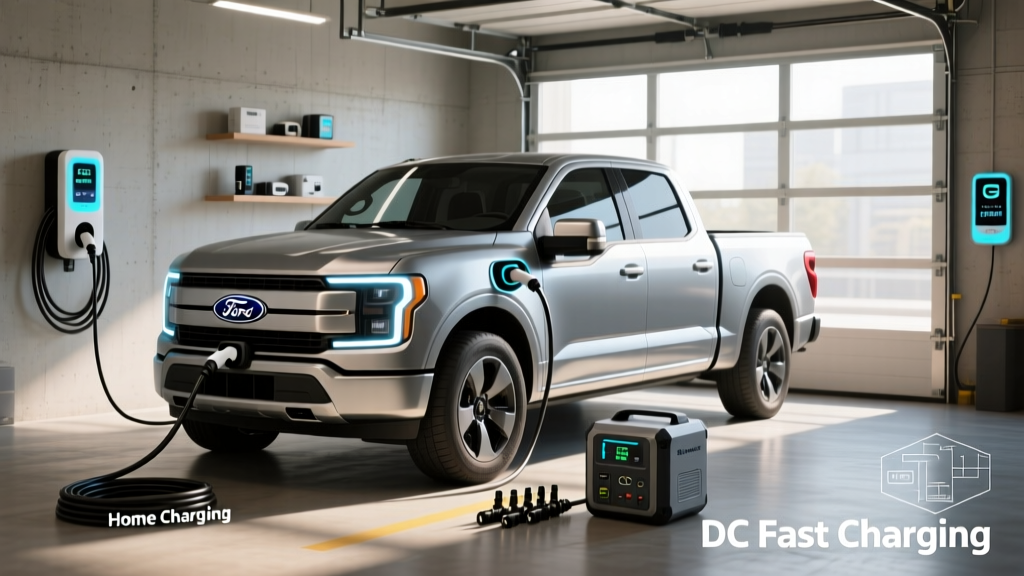
Think of the battery as a 60–100 kWh bucket. Level 1 is a garden hose, Level 2 is a fire hose, and DC fast charging is a hydrant. Below is what each level actually delivers in usable miles per hour of charging, assuming a typical efficiency of 3.0–3.5 miles per kWh.
| Level | Voltage / Amps | Power (kW) | Miles of Range per Hour | Typical Use |
|---|---|---|---|---|
| Level 1 (120V) | 120V / 12A | ~1.4 kW | 3–5 mi/hr | Overnight top-ups, PHEVs, emergencies |
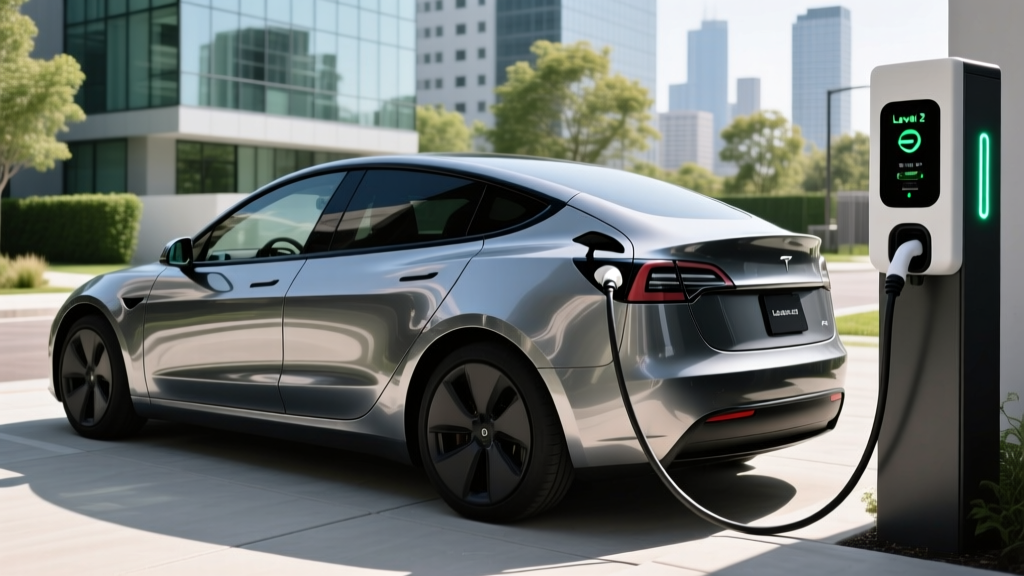
| Level 2 (240V) | 240V / 32–48A | 7.7–11.5 kW | 22–40 mi/hr | Daily home charging, workplaces, hotels |
| DC Fast (CCS/NACS) | 400–800V DC | 50–350 kW peak | 150–250+ mi in 15–20 min | Road trips, corridor travel |
A couple of non-negotiable physics notes. First, the vehicle's onboard charger caps Level 2 speed — a 11.5 kW wallbox can't push 11.5 kW into a car limited to 7.7 kW onboard. Second, DC fast chargers advertise peak kW, but the sustained rate matters more. A 250 kW peak often averages 130–170 kW across the 10–80% session because the charge curve tapers as the pack warms and fills.
Charging Time Examples for Common Battery Sizes
Here's how long it takes to refill from 10% to 80% state of charge — the window most drivers actually use on road trips, since charging above 80% slows dramatically to protect the cells.
| Vehicle (Usable Pack) | Level 2 at 11.5 kW | DC Fast — Peak / Avg | 10–80% Time |
|---|---|---|---|
| Hyundai Ioniq 5 (77.4 kWh, 800V) | ~4.5 hours | 240 kW peak / ~170 kW avg | ~18 minutes |
| Tesla Model Y LR (75 kWh, NACS) | ~4.5 hours | 250 kW peak / ~150 kW avg | ~25 minutes |
| Ford F-150 Lightning Ext. (131 kWh) | ~8 hours | 150 kW peak / ~110 kW avg | ~40 minutes |
| Chevy Equinox EV (85 kWh) | ~5 hours | 150 kW peak / ~110 kW avg | ~30 minutes |
Preconditioning matters. If you navigate to a DC fast charger in the car's route planner, the thermal system warms the pack en route, which can shave 5–10 minutes off the session in cold weather. Skip preconditioning at 35°F and you may see peak power capped below 50 kW for the first several minutes.
Which Connector Fits My EV?
North America has largely consolidated around NACS (the Tesla-style plug, now formally SAE J3400), but legacy vehicles and some 2024–2025 models still carry CCS1. Nissan LEAF and the Mitsubishi Outlander PHEV use CHAdeMO. Adapters bridge the gaps, but with important caveats.
| Connector | Brands / Models | DC Fast Network Access | Adapter Notes |
|---|---|---|---|
| NACS (J3400) | Tesla (all), Ford, GM, Rivian, Volvo, Polestar, Hyundai/Kia (2025+), most 2026 models | Tesla Supercharger, Electrify America NACS stalls, EVgo NACS | CCS-to-NACS adapters available (~$200–$300); verify vehicle approval |
| CCS1 | Legacy VW ID.4, BMW i4/iX pre-2025, some 2024 Hyundai/Kia | Electrify America, EVgo, ChargePoint DC | NACS-to-CCS adapters enable Supercharger access where permitted |
| CHAdeMO | Nissan LEAF, Mitsubishi Outlander PHEV | Declining network; plan routes carefully | No reliable CHAdeMO-to-NACS adapter for DC; use native stations |
Before buying any adapter, confirm with your automaker that it's approved for DC fast charging on your specific model year. Some adapters are rated for Level 2 only, and using an unapproved DC adapter can void warranty coverage on the charge port.
How Much Does It Cost to Install a Home EV Charger?
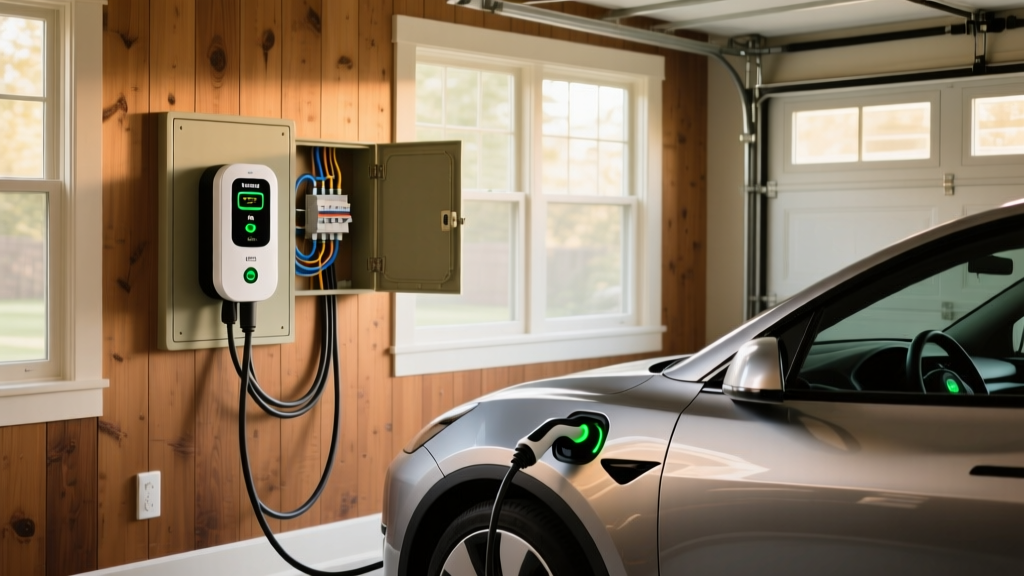
A quality Level 2 home setup on an existing 240V circuit can cost as little as $500 (just the wallbox). A new dedicated 60A circuit with a hardwired 48A charger typically runs $1,200–$2,500. Homes with older 100A or 150A panels may need a service upgrade to 200A, which adds $2,000–$4,500 on top.
| Component | Typical Cost Range | Notes |
|---|---|---|
| Level 2 wallbox (40–48A) | $400–$750 | Smart Wi-Fi models at upper end |
| Electrician: 60A circuit, 50-ft run | $600–$1,500 | Conduit length and wall material drive variance |
| Permit and inspection | $75–$300 | Required in most jurisdictions for new circuits |
| Panel upgrade to 200A (if needed) | $2,000–$4,500 | Older homes, larger loads |
| Total typical install | $1,200–$2,500 | Without panel upgrade |
Two code points that matter. The National Electrical Code requires EV circuits to be rated at 125% of continuous load — a 48A charger needs a 60A breaker. Outdoor installations should use a NEMA 4-rated enclosure or a hardwired unit, and many AHJs (local inspectors) now require GFCI protection on 240V EV receptacles, which can add $80–$150 for a compliant breaker.
Before hiring anyone, check whether your utility or state offers a rebate for the charger or the panel upgrade. Many programs cover $300–$1,000 and require a licensed, permitted install to qualify.
Level 2 Charger Picks: What to Actually Buy
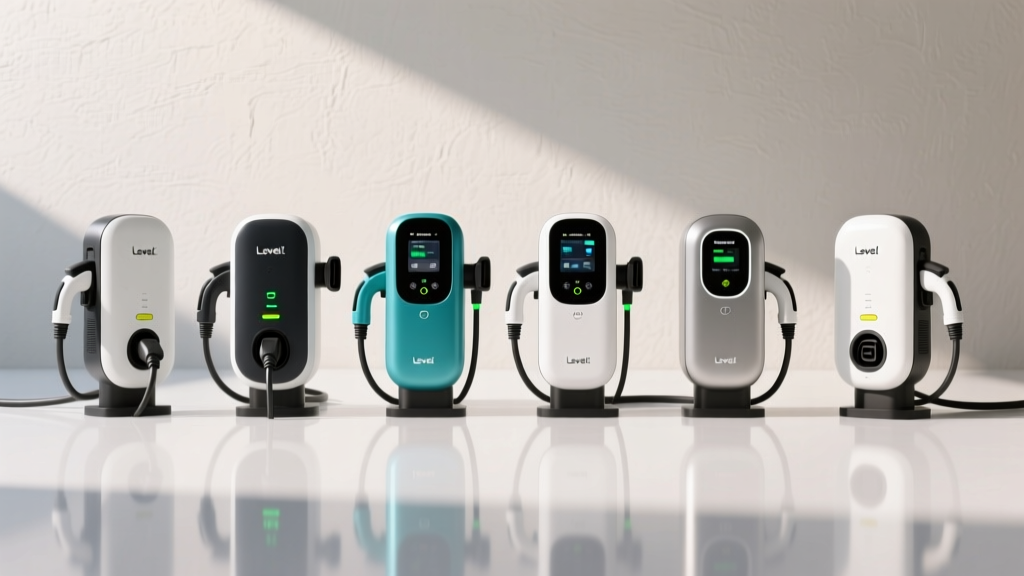
These units cover the most common 2026 EVs and share a few baseline requirements: at least 40A output, a 24-foot cable, NACS or CCS connector matching your car, and UL/ETL listing. Smart features (Wi-Fi, scheduling, load sharing) add convenience but aren't mandatory.
Emporia Vue Level 2 (48A)
Power: 11.5 kW max, 48A hardwired or 40A NEMA 14-50
Connector: NACS or CCS1, 24-ft cable
Smart: Wi-Fi scheduling, solar-aware charging, energy monitoring
Price: ~$400–$450
Best for: Budget-conscious buyers who want smart features without a subscription.
ChargePoint Home Flex (up to 50A)
Power: 12 kW max at 50A (NACS) / 40A (CCS1)
Connector: NACS or CCS1, 23-ft cable
Smart: App scheduling, Alexa, utility demand-response programs
Price: ~$550–$650
Best for: Utility program participants and multi-EV households (load sharing).
Tesla Wall Connector (48A)
Power: 11.5 kW at 48A
Connector: NACS native, 24-ft cable; CCS adapter sold separately
Smart: Wi-Fi updates, Power-Share between two units
Price: ~$475
Best for: Tesla owners and NACS-native 2025+ EVs.
Grizzl-E Smart (40A)
Power: 9.6 kW at 40A
Connector: NACS or J1772 (with adapter), 24-ft cable
Smart: Optional Wi-Fi module, otherwise plug-and-charge
Price: ~$450–$550
Best for: Cold climates (rated to -40°F) and outdoor mounts.
Cost to Charge Per Mile vs Gas
The single biggest ownership advantage of an EV is fuel cost, but it depends heavily on where and when you plug in. Below uses an efficiency baseline of 3.2 miles/kWh (roughly a 2026 Model Y or Ioniq 5) and 30 MPG for a comparable gas crossover.
| Scenario | $/kWh | Cost per Mile | Gas Equivalent (30 MPG, $3.40/gal) |
|---|---|---|---|
| Home off-peak (utility TOU rate) | $0.10–$0.14 | $0.03–$0.04 | $0.11 |
| Home average blended | $0.16 | $0.05 | $0.11 |
| Public Level 2 (ChargePoint, EVgo L2) | $0.25–$0.35 | $0.08–$0.11 | $0.11 |
| DC fast (EA, EVgo, Tesla idle-free) | $0.35–$0.55 | $0.11–$0.17 | $0.11 |
At home on a time-of-use plan, most EV owners spend roughly one-quarter to one-third what a gas car spends per mile. Exclusively using DC fast charging erases that advantage and can cost more than gas on some networks, especially with idle fees and peak pricing. The economic case for an EV rests on reliable home or workplace charging — plan your install before you take delivery.
The federal IRS §30D credit and the separate 30C alternative fuel refueling credit (up to $1,000 for home charger equipment in eligible census tracts) can further offset upfront and infrastructure costs. Both have income caps, sourcing rules, and geographic limits — confirm eligibility with a tax professional before counting on them.
Safety, Code, and the Panel-Upgrade Gotcha
Level 2 charging is a continuous load running for hours, which is why shortcuts are dangerous and uninsurable. Insist on:
- A dedicated circuit sized 125% above the charger's max draw (60A breaker for a 48A charger).
- Hardwired connection or a NEMA 14-50 receptacle installed with the correct torque and a GFCI breaker where required.
- An outdoor-rated enclosure (NEMA 4) if the unit is exposed to rain or snow.
- A permit and final inspection — required nearly everywhere, and essential for insurance coverage if a fault occurs.
The panel-upgrade gotcha deserves emphasis. A 200A service can typically support a 60A EV circuit alongside normal household loads. A 100A or 150A panel in an older home, especially one already running electric heat, a dryer, and an oven, may fail the utility's load calculation. In those cases, either upgrade the service ($2,000–$4,500) or install a smart load-management device like the Emporia Smart Panel or Span.IO integration, which throttles the charger when the house peaks.
Frequently Asked Questions
How fast will each charging level add range?
Level 1 adds 3–5 miles per hour, Level 2 adds 22–40 miles per hour depending on amperage, and DC fast charging adds 150–250+ miles in a 15–20 minute session. Real-world DC speeds depend on pack size, temperature, and the taper above 80%.
How much does it cost to install a home EV charger?
Expect $1,200–$2,500 for a permitted 60A circuit with a 48A smart wallbox, assuming no panel upgrade. Older homes with 100A or 150A service may need a $2,000–$4,500 panel upgrade on top.
Which connector or charger is compatible with my EV?
Most 2026 EVs use NACS. Older VW, BMW, and some 2024 Hyundai/Kia models use CCS1. Nissan LEAF and Mitsubishi Outlander PHEV use CHAdeMO. Match your wallbox connector to your car, or use an automaker-approved adapter.
How much does charging cost per mile compared to gas?
Home off-peak charging costs about $0.03–$0.04 per mile — roughly one-third the cost of a 30 MPG gas car at $3.40/gallon. Public DC fast charging at $0.40–$0.55/kWh costs $0.13–$0.17 per mile, often more than gas.
What electrical upgrades might I need?
You may need a dedicated 60A breaker, a new 240V circuit run, a GFCI breaker for outdoor receptacles, and possibly a panel upgrade to 200A if your existing service can't pass the utility's load calculation with the EV added.
Does the average range of an electric car change in winter?
Yes. Expect 15–30% less range below freezing due to cabin heating and reduced battery efficiency. A heat pump (standard on most 2026 EVs) cuts that loss roughly in half compared to resistive heating. Preconditioning the cabin and pack while plugged in recovers much of the lost range.
Sources: fueleconomy.gov (EPA range and MPGe data), IRS 30C refueling credit, manufacturer specification sheets for 2026 model-year vehicles.