Trading Your 2004 Nissan Frontier Supercharged for an EV: What Changes at the "Pump"
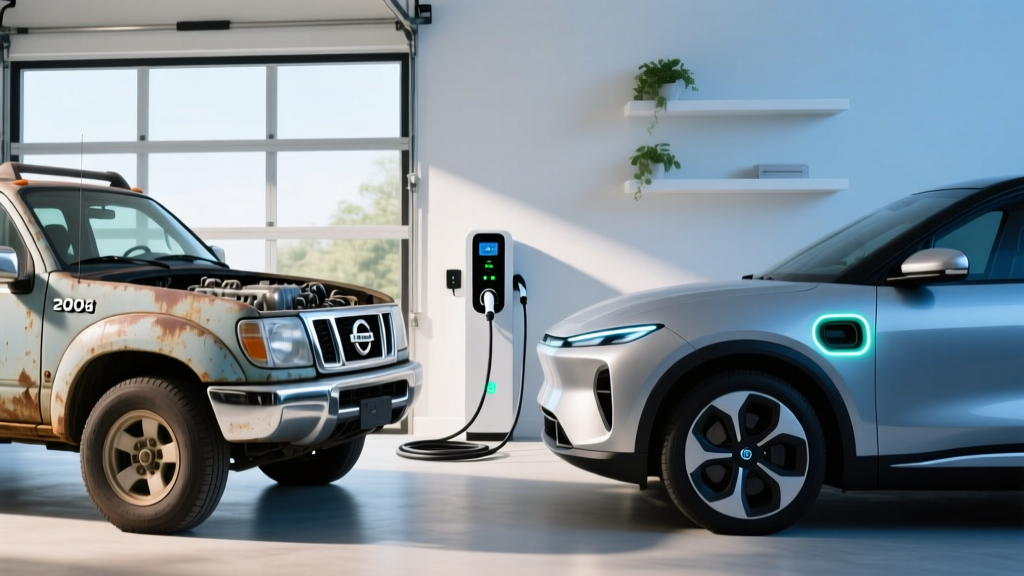
If you've been driving a 2004 Nissan Frontier Supercharged — that 3.3L V6 pushing roughly 210 hp and returning about 15–17 MPG combined — the jump to a battery-electric vehicle is a paradigm shift. You're not just swapping powertrains; you're fundamentally changing how, where, and how much you pay to "refuel." Where the Frontier needed a $45 fill-up every 250 miles, a modern EV like the Ford F-150 Lightning or Chevrolet Silverado EV can cover similar distances for $10–$15 in electricity, provided you've set up your charging correctly.
This guide walks you through every decision point: understanding charging levels, sizing your home electrical setup, picking the right connector, calculating real per-mile costs, and choosing specific charger hardware. No marketing fluff — just the numbers and specs you need.
Charging Levels Explained: kW, kWh, and Miles Per Hour
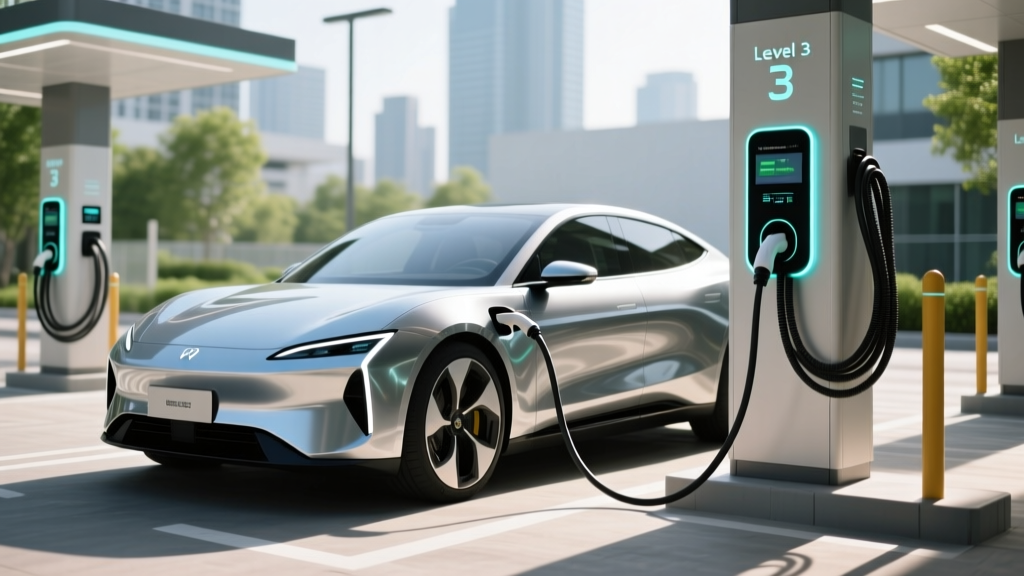
Before any hardware decision, you need clarity on the single most common EV confusion: kW (kilowatts) measure power — the rate at which energy flows. kWh (kilowatt-hours) measure energy — the total capacity of your battery. Think of kW as the flow rate of a hose and kWh as the size of the bucket you're filling. A 60 kWh battery charged at 10 kW takes roughly 6 hours from empty; that same battery at 150 kW DC fast-charges to 80% in about 25 minutes.
| Level | Voltage | Max Power (kW) | Miles of Range Added Per Hour | Typical Use Case |
|---|---|---|---|---|
| Level 1 | 120V AC | 1.2–1.9 kW | 3–5 miles | Overnight top-up for PHEVs or low-mileage commutes |
| Level 2 | 240V AC | 7.2–19.2 kW | 20–60 miles | Primary home and workplace charging |
| DC Fast Charge | 400–800V DC | 50–350 kW | 150–1,000+ miles (equivalent rate) | Road trips and rapid top-ups |
Home Level 2 Installation: Electrical Requirements, Permits, and True Costs
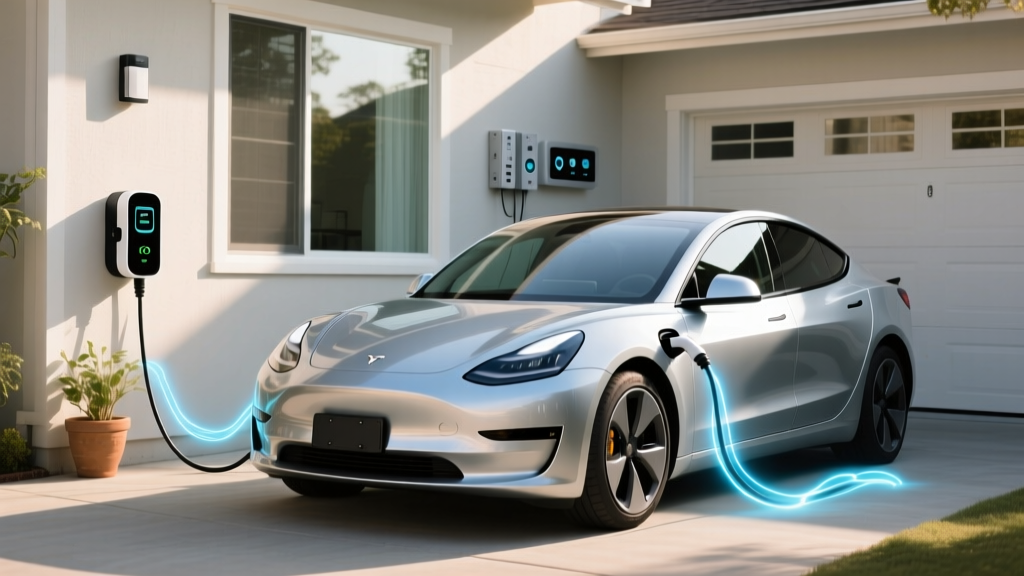
Most EV owners do 80–90% of their charging at home on a Level 2 circuit. Here's what's actually involved beyond plugging in.
Electrical Requirements
A typical Level 2 home charger runs on a 240V dedicated circuit, similar to an electric dryer or oven. The most common setup is a 40-amp circuit delivering 32 amps continuous (NEC code requires circuits rated at 125% of continuous load, so a 32A charger needs a 40A breaker). Higher-power units may require 50A or 60A circuits.
If you're coming from a home built in the early 2000s — around the era of that 2004 Frontier — you may have a 100A or 150A main electrical panel. Adding a 40A EV circuit could push you close to capacity, especially if you already run electric heat, an electric dryer, and an electric range. A licensed electrician will perform a load calculation to determine if your panel can handle the addition.
Panel Upgrade: The Cost No One Warns You About
If your panel maxes out, you'll need a service upgrade — typically from 100A/150A to 200A. This is the single biggest variable in home charger installation cost. A panel upgrade can run $1,500–$3,500 depending on your utility, local code, and whether a new meter base or service mast is needed.
| Component | Low End | High End | Notes |
|---|---|---|---|
| Level 2 Charger (hardware) | $300 | $750 | 32A–48A smart Wi-Fi charger |
| Electrician labor (standard install) | $400 | $1,200 | Varies by run length, conduit, wall type |
| Electrical permit | $50 | $200 | Required in most jurisdictions |
| Panel upgrade (if needed) | $1,500 | $3,500 | 100A→200A service upgrade |
| Total (no panel upgrade) | $750 | $2,150 | Most common scenario for 200A-panel homes |
| Total (with panel upgrade) | $2,250 | $5,650 | Older homes with 100A/150A service |
Safety and Code Considerations
- Dedicated circuit: Your EV charger must have its own breaker — no sharing with other appliances.
- GFCI protection: NEC 2023/2026 requires GFCI protection for EV charging outlets in garages and outdoors. Hardwired units often have built-in GFCI.
- NEMA 14-50 vs. hardwired: A NEMA 14-50 outlet gives you portability (take the charger when you move), but hardwired installations avoid the $80–$150 GFCI breaker cost and eliminate a common failure point.
- Outdoor rating: If mounting outside, ensure the charger carries a NEMA 4 or IP55+ rating for weather resistance.
- Permit and inspection: Skipping permits risks insurance claim denial if an electrical fire occurs. Always pull the permit.
Connector Compatibility: NACS, CCS1, CHAdeMO, and Adapters
The connector landscape has consolidated significantly. As of 2026, NACS (North American Charging Standard) — originally Tesla's proprietary connector — is the dominant standard. Nearly every major automaker (Ford, GM, Rivian, Volvo, Hyundai, Kia, BMW, and more) has adopted NACS on new vehicles. CCS1 (Combined Charging System) remains on many 2023–2025 model-year vehicles still on the road. CHAdeMO is effectively legacy, found on older Nissan Leaf and Mitsubishi Outlander PHEV models.
| Connector | Brands Using It (2026) | DC Fast-Charge Network Access | Adapter Needed? |
|---|---|---|---|
| NACS (native) | Tesla, Ford, GM, Rivian, Volvo, Polestar, Hyundai, Kia, BMW, Mercedes | Tesla Supercharger + most new Electrify America / EVgo stalls | No — native fit |
| CCS1 | Older VW ID.4, Chevy Bolt (pre-2026), some Stellantis models | Electrify America, EVgo, ChargePoint DC | CCS-to-NACS adapter (~$200) for Supercharger access |
| CHAdeMO | Nissan Leaf (legacy), Mitsubishi Outlander PHEV | Limited and shrinking network | No widely available adapter; CHAdeMO stalls are disappearing |
If you're buying a used CCS1 EV: Manufacturers like Ford and GM offer CCS-to-NACS adapters (often $150–$250) enabling access to Tesla's Supercharger network — over 25,000 stalls in North America. This adapter is arguably the single most valuable accessory for a CCS1 vehicle in 2026.
Charging Cost Per Mile: EV Electricity vs. Your Frontier's Gas Bill
Let's put real numbers behind the cost difference. The 2004 Nissan Frontier Supercharged with its 3.3L V6 averaged about 15 MPG combined. At $3.50/gallon (a reasonable 2026 national average), that's $0.233 per mile just in fuel.
Now compare with a 2026 EV averaging 3.0 miles per kWh (typical for a midsize electric SUV like the Hyundai Ioniq 5 or Tesla Model Y):
| Charging Scenario | $/kWh | Cost Per Mile (at 3 mi/kWh) | Savings vs. Frontier (per 1,000 mi) |
|---|---|---|---|
| Home off-peak (utility rate) | $0.08–$0.14 | $0.027–$0.047 | $186–$206 saved |
| Home standard rate | $0.15–$0.20 | $0.050–$0.067 | $166–$183 saved |
| Public Level 2 (ChargePoint, etc.) | $0.25–$0.49 | $0.083–$0.163 | $70–$150 saved |
| DC Fast Charge (Electrify America / EVgo) | $0.35–$0.55 | $0.117–$0.183 | $50–$116 saved |
| Tesla Supercharger (avg 2026) | $0.25–$0.38 | $0.083–$0.127 | $106–$150 saved |
| 2004 Frontier Supercharged (gas) | $3.50/gal | $0.233 | — |
The takeaway: even at the most expensive public DC fast-charging rates, the EV still beats your old Frontier's fuel cost per mile. But home charging is where the economics sing — at off-peak utility rates, you're paying roughly one-fifth what gasoline costs per mile. Over 15,000 miles annually, that's $2,800–$3,100 in fuel savings alone.
Charging Time Examples: How Long Does It Actually Take?
Charge time depends on battery size (kWh) and the power (kW) your vehicle can accept. Here are real-world benchmarks for common 2026 EVs:
| Vehicle (Example) | Battery (kWh usable) | Peak DC kW | 10–80% DC Fast Time | Level 2 (11.5 kW) Full Charge |
|---|---|---|---|---|
| Chevy Equinox EV | 85 kWh | 150 kW | ~34 minutes | ~7.5 hours |
| Hyundai Ioniq 5 | 77.4 kWh | 240 kW (800V) | ~18 minutes | ~6.5 hours |
| Ford F-150 Lightning (Ext.) | 131 kWh | 150 kW | ~52 minutes | ~11 hours |
| Tesla Model Y (Long Range) | 75 kWh | 250 kW | ~22 minutes | ~6.5 hours |
| BMW iX xDrive50 | 105.2 kWh | 200 kW | ~35 minutes | ~9 hours |
Charge curve taper matters: Most EVs accept peak kW only between ~10–40% SoC. Above 50%, the rate drops. Above 80%, it drops sharply — charging from 80–100% can take as long as 10–80%. This is why road-trip strategy focuses on 10–80% charges: you're in and out in 18–35 minutes, not waiting an extra 25 minutes for the last 20%.
Equipment Recommendations: Specific Chargers Worth Buying in 2026
Emporia Vue / Emporia Level 2 Charger
- Power: 48A (11.5 kW on 60A circuit) or 40A (9.6 kW on 50A circuit)
- Connector: NACS (native), J1772 available
- Cable length: 24 ft
- Smart features: Wi-Fi, app scheduling, solar integration, energy monitoring, load management
- Price: ~$350–$400
- Best for: Budget-conscious buyers wanting full smart features and solar-aware charging
ChargePoint Home Flex
- Power: Configurable 16A–50A (up to 12 kW on a 60A circuit)
- Connector: NACS or J1772 (swappable)
- Cable length: 23 ft
- Smart features: Wi-Fi, app-based scheduling, Alexa integration, detailed session history
- Price: ~$550–$650
- Best for: Buyers wanting a proven brand with flexible amperage to match their circuit
Tesla Wall Connector
- Power: 48A (11.5 kW on 60A circuit)
- Connector: NACS native; J1772 adapter included for non-Tesla EVs
- Cable length: 24 ft
- Smart features: Wi-Fi, power sharing (link two units on one circuit), OTA updates
- Price: ~$475
- Best for: Tesla owners or mixed-EV households wanting a premium, reliable unit
Grizzl-E Smart
- Power: 40A (9.6 kW on 50A circuit)
- Connector: J1772 or NACS
- Cable length: 24 ft
- Smart features: OCPP compatibility, app control, adjustable amperage
- Price: ~$400–$450
- Best for: Cold-climate buyers — rated to -40°F, built in Canada, extremely rugged
A note on the federal §30D alternative fuel infrastructure credit: The IRS offers a tax credit of up to $1,000 for home EV charger installation (30% of equipment + labor costs, capped at $1,000). Eligibility depends on your census tract meeting certain criteria. Check IRS.gov's §30C guidance and consult a tax professional before claiming.
Public Charging Networks: What to Expect Beyond Your Garage
While home charging covers daily needs, public charging is your road-trip lifeline. As of 2026, the major networks include:
- Tesla Supercharger: ~28,000+ stalls in North America; now open to NACS-equipped non-Tesla EVs. Most reliable network, 150–350 kW stalls. Pricing: $0.25–$0.38/kWh average.
- Electrify America: 4,500+ DC stalls, 150–350 kW. CCS1 and NACS connectors. Pricing: $0.37–$0.55/kWh (membership discounts available).
- EVgo: 3,500+ DC stalls, 50–350 kW. Mixed connectors. Pricing: $0.35–$0.49/kWh.
- ChargePoint: Largest Level 2 network, growing DC presence. Pricing varies by site host.
Reliability has improved substantially since 2023, but it's still wise to check PlugShare or the network's app for real-time stall status before routing to a remote station. Source: fueleconomy.gov EV technology overview for efficiency comparisons.
Frequently Asked Questions
How much does it cost to install a home EV charger?
For a standard Level 2 installation on an existing 200A panel, expect $750–$2,150 all-in (charger + electrician + permit). If your home needs a panel upgrade from 100A/150A to 200A, add $1,500–$3,500, bringing the total to $2,250–$5,650. Always get a load calculation from a licensed electrician first.
How fast will each charging level add range?
Level 1 (120V) adds 3–5 miles per hour — adequate for plug-in hybrids with 25–40 miles of electric range. Level 2 (240V) adds 20–60 miles per hour depending on amperage, easily replenishing a full battery overnight. DC fast charging adds 150+ miles in 15–20 minutes for most modern EVs.
Which connector/charger is compatible with my EV?
Check your vehicle's charge port. For 2026 model-year vehicles from Tesla, Ford, GM, Hyundai, Kia, Rivian, BMW, Volvo, and most others, it's NACS. For older CCS1 vehicles, a CCS-to-NACS adapter ($150–$250) unlocks Supercharger access. CHAdeMO vehicles (older Nissan Leaf) have limited and shrinking public charging options.
How much does charging cost per mile vs. gas?
At home off-peak rates ($0.10/kWh), an efficient EV costs about $0.03/mile. Even at expensive DC fast chargers ($0.50/kWh), it's around $0.17/mile. Compare that to the 2004 Nissan Frontier Supercharged at roughly $0.23/mile on gas. Home charging saves $180–$200+ per 1,000 miles driven.
What electrical upgrades might I need?
The most common upgrade is a panel service increase from 100A or 150A to 200A, needed when your existing panel doesn't have headroom for a 40A–60A dedicated EV circuit. Some utilities also offer "smart panel" solutions or managed charging programs that let you avoid a panel upgrade by dynamically limiting charger draw when other appliances cycle on. Ask your electrician about load-management options before committing to a panel upgrade.
Can I use a regular 120V outlet to charge my EV?
Yes, but slowly. Level 1 charging at 120V/12A delivers about 1.4 kW, adding roughly 3–5 miles of range per hour. For a 75 kWh battery, a full charge from empty takes 50+ hours. Level 1 works for plug-in hybrids or EVs driven fewer than 30 miles daily, but most BEV owners will want Level 2 for practical daily use.